Ripon Cathedral and the Saxon Crypt

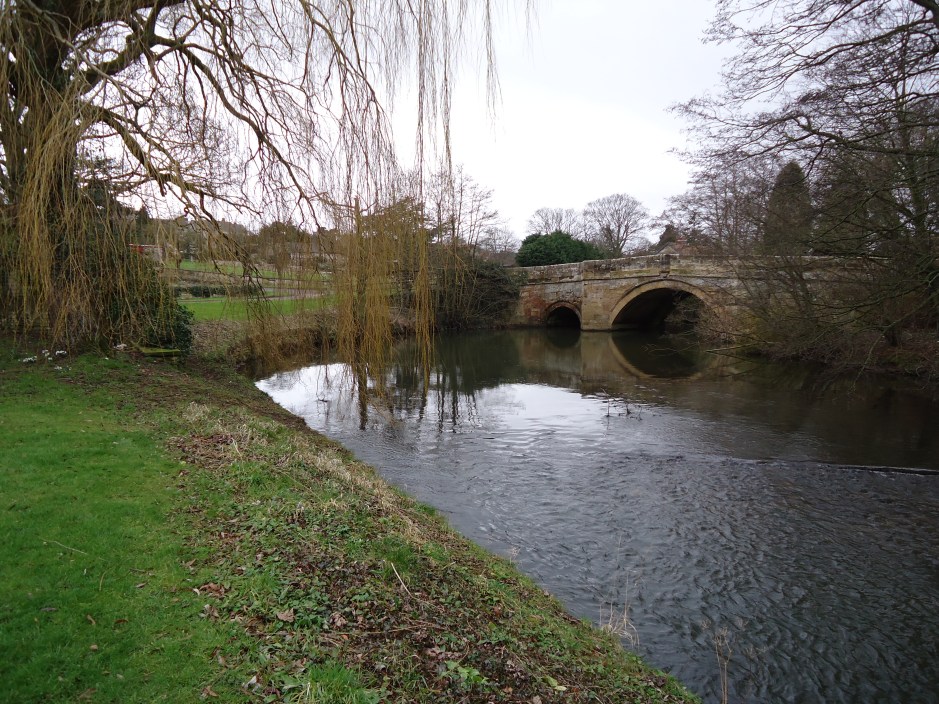
I could not leave Ripon without visiting its ancient cathedral. The ancient building has a fascinating history, the oldest part of which still exists. The ancient Saxon crypt of the original church founded by St Wilfred (AD 634-709) not only still exists, but is open to the public for exploration. Accessed via a narrow staircase and a short narrow tunnel, the small rooms are amazingly peaceful.

(By the way, I’m an author, not a professional photographer!)

St Wilfred influenced the decision of the christian church to move away from the Celtic Church and follow the Roman church. The decisive move been made in 664AD at The Synod of Whitby when the calculation of Easter was decided by following the Roman method. He had a fascinating life and survived many life threatening events.

The main building is a delightful mix of Norman and Gothic styles, reflecting the many periods of history it has survived through. Far from feeling like a museum, which provides cold facts for the casual visitor this is a living house of God. When I visited there were Bible readings in progress, yet we were made welcome giving the palace a warm, homely feel. Other activities were in progress at the same time. There is no set fee to pay, but donations are requested and voluntary.

My visit was quite short as I was en-route to a conference but Ripon is certainly a place I would happily revisit as I am sure that I did not explore all its treasures.

Further sources of information:


[Featured image / The Association of English Cathedrals]

Crime and Punishment – Part 2

In my exploration around Ripon’s three amazingly well preserved law and order museums I was touched at the ease at which a person’s life, regardless of their age or sex, or the seriousness of the crime, could be devastated by incarceration, transportation or death.

The Police and Prison museum was mentioned in an earlier post.

The Courtroom, however, is based upon a Victorian courtroom and has been well preserved. It presents some shocking facts about how crime was dealt with from before this period too. The ‘Quarter Sessions’ were held at: Epiphany, Easter, Midsummer and Michaelmas and trial was by jury. Sentences passed here could send people to be punished in the market square or for more serious crimes to the County Assizes to hang.

From the seventeenth century the court could also sentence a ‘criminal’ to transportation to the colonies for up to 14 years. This could be instead of a death penalty. It was thought that criminal behaviour could spread so by removing it the problem it would literally go away by sending them to…

“His Majesties Colonies over the seas… preventing the communication of the cantagion.”

This was an extremely cruel system as many failed to return. Forgery was a capital offence, but this could be reduced to transportation. We usually link this to sending prisoners to New South Wales, Australia (1788-1868) as dramatised in the TV series Banished, but before this convicts were sent to the Americas from as early as 1610 to 1770’s.

Special gaols (jails) were built to house debtors. These were self-funding as inmates had to pay, if able, which made it difficult for them to clear the actual debts they were imprisoned for.

Suicide was judged as a crime and the bodies of such poor souls would be buried at crossroads rather than in consecrated ground.

Lesser sentences included whipping (for both sexes) pilloried or placed in stocks, was done publicly to humiliate and shame. Fines could be levied, but if the person was poor there was little point to this. When the standard of living improved then fines became more popular and they raised money to build more prisons, which were expensive to build and run.

A person could be bound over to keep the peace. It seemed normal for the harsher sentences to be levied against offenders who had already been before the court.

The last case of a man to be held in the stocks was in 1857. It was interesting to learn hat it was the Methodist and Evangelical Christians, who had previously been behind the banishment of slavery, who helped change public opinion and the law against such public cruelty as a punishment.

Vagrants and the poor had a different fate. If they stayed within the law and did not steal in order to feed their family they could end up in the harsh regime that was the workhouse. Ripon’s Workhouse certainly provides plenty of information about the long days and the harsh life of the individuals and families that were made to work there. Families were split, even mother’s from their children.

From being stripped and bathed at the entrance, to the early rise and long hours picking oakham (the threads were literally unpicked by hand (the phrase ‘money for old rope’ was born) to harder labour of breaking rocks. They did nothing to encourage people to stay willingly, but to make them work in the absence of any social welfare, they were places to avoid if possible.

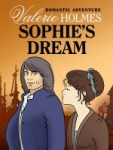
Sophie's Dream Sophie’s Dream is to find an exciting life away from her strict education in a workhouse. She applies, with references, through an agency for a position as Governess in New South Wales. Along with other young women, she is chaperoned to their new life, beyond the social barriers in England. Abandoned on the quayside of Sydney, Sophie discovers the agency is a sham. Her instincts lead her to Mr Matthias Wells and a very different world opens up to her.

Sophie’s Dream is also available to buy on Smashwords!

More about crime and justice within the era:

Spring Offers!

Spring time has arrived at last and with it the chance to read a selection of my titles at only £0.99/$1.50 each! The selection of titles includes warm love stories set against mixed with adventure, mystery (or  a mixture of both!) set in the beautiful North Yorkshire countryside of the early nineteenth century.


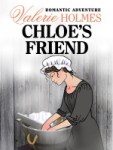
Chloe's FriendChloe’s Friend: Miss Chloe Branton has been found a position as a laundry maid in a wealthy country house. The work is hard and she is slight, but she stays knowing the arrangement is to keep her away from her father’s enemies. Mr Thaddeus Poole, is an unlikely person to offer her help, but Chloe does not know if he will betray her or be a true friend.


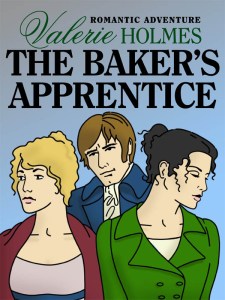
The Baker’s Apprentice: Molly Mason dreams of escaping from the control of Mrs Cresswell, her step-mother, by becoming an apprentice to her friend who owns the local bakery. This ill thought-out plan is stopped when Juniper Cresswell’s fiancé, war hero Lt. Cherry, returns accompanied with a soldier who had been presumed dead. The soldier brings with him suspicions of murder, mystery and the key to Molly’s heart.


Truth, Love & LiesTruth, Love & Lies: Major Luke Stainbridge returns to his beloved estate in England after being held prisoner by Napoleon, to discover he has been replaced by an impostor. Meanwhile, Miss Florence Swan, naively, ventures out into the world alone to avoid the drudge of life in a cotton mill.  Two lives are in chaos. Two destinies combine: will the love of truth be enough to destroy a sinister network of lies?


Felicity Moon: Miss Felicity Moon jeopardises her position, her life and her future when she strikes the Lord of the manor in self-defence and is forced to leave his household. Squire Moon, her father, is in gaol charged with bank-rolling smugglers and the storing of contraband. She has one last chance to save herself from ruin in the form of a reference written for a Mr Lucas Packman, a man her father dislikes intensely. She has a stark choice to make: trust Packman or her obey her incarcerated father.


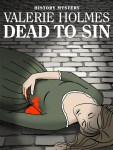
Dead to Sin (A Penn Mystery – Book 1): Nicholas Penn is summoned to Gorebeck Gaol to visit a man accused of the rape and murder of five wenches. Having been found holding the body of the last victim in his arms his plight seems sealed. Nicholas is torn between a sense of duty and his feelings of hurt and disgust when being in the presence of the accused. The tables turn abruptly, and Nicholas becomes the incarcerated, duped and incensed he is sworn to find the man, Wilson, before another victim dies.


Betrayal of Innocence: Lydia works desperately hard at Bagby Hall in order to keep her ailing father from the poorhouse. She is a loyal person, but is racked with guilt as she knows her friend, Miss Georgette, is being cruelly used by Lord and Lady Bagby. It is only when she fears Miss Georgette’s life may be in danger that she acts  – but how?

Crime and Punishment – Dead to Sin

The early nineteenth century in England was a harsh time of poverty for many. When soldiers and sailors were no longer needed to fight the wars that had dogged England from the end of the previous century, many men returned victorious having fought for their King (or Prince Regent) and country only to face unemployment. With little or no social support they often turned to crime to feed themselves and their families. With the increase in crimes, came new laws and harsher sentences.
Ripon Museum
I recently stopped by one of North Yorkshire’s finest museums in the little city of Ripon. Ripon is an unspoilt cathedral city that has maintained its characteristics of a delightful market town with plenty of historical places of interest to visit. It is also an excellent base for venturing into the Yorkshire Dales or the North Yorkshire Moors!

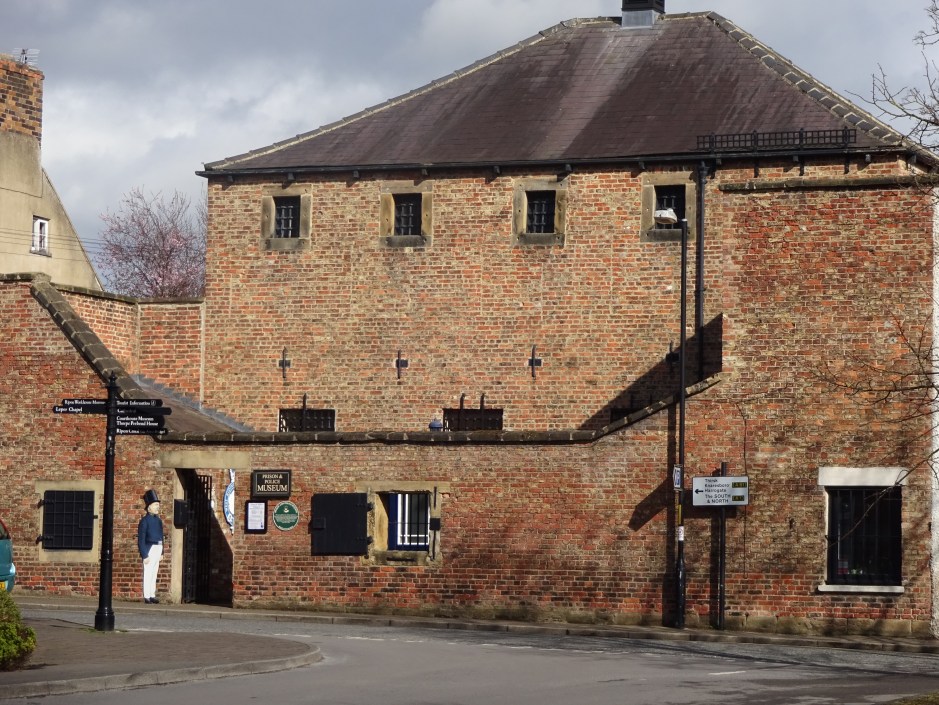
Ripon Museum comprises of three museums, all to do with the city’s historic law and order buildings that have been lovingly maintained. The photos below were taken in the Prison & Police Museum in St Marygate. It was a prison from 1686-1879 and a police station from 1880-1959.

When I first visited the prison I was writing Dead to Sin. Although the existing building was Victorian, the cells hold exhibits which relate to its earlier history and the development of crime and punishment, cruel and harsh as it was. Nowadays, the museum is clean, whitewashed and immaculately presented. Obviously in the time of Nicholas Penn it would be far from this.

The first chapter of Dead to Sin begins with Nicholas Penn bracing himself as he enters this dark, fettered world.


Nicholas Penn took one last deep breath of fresh air outside the high stone walls of the Gorebeck lock up. He glanced back at the cobbled square of the market town; wagons rattled, farmers haggled, women bartered, children’s laughter melted into the animals’ pitiful cries, the noise of which was in turn drowned out by the banter of the bidders. All was chaotic, all stank, yet there was colour and life here amongst the continuous whirl of people trading their wares.

             A heavy lock was turned in the barrier in front of him. Nicholas breathed deeply, his broad chest glad of what fresh air there was as his mind dreaded the prospect of seeing what he would find within the cold walls – and who. The reinforced wooden door creaked and groaned as the warder pulled it open, grating the edge against the stone.

             He pulled the high collar of his coat close, covering the ends of his shoulder length locks. ‘Trapped sunshine’ his mother had poetically described his wayward curls when he was a cosseted child. Now straighter, they had matured and grown like Nicholas himself. No sunshine would filter through behind this door. The rain started to pour down. Nicholas was silently led inside along a narrow stone corridor; he was taken further into the building’s bowels, down a spiral metal staircase to an airless chasm where six bolted black doors lined the dimly lit passage. Disembodied coughs could be heard even through the iron-wood barriers, which incarcerated their prey. Nicholas intuitively pulled out his kerchief and held it over his mouth. Gaol fever was to be avoided by the wise man who had the option to, but the inmates of this place had little chance to do that. The warder turned another key in the door lock at the end of the narrow corridor.

             “Ten minutes!” he growled back at Nicholas. The man had a curvature of the spine and did not look up at Nicholas’s straight frame. Instead, he shuffled back.

             Nicholas grunted what could have been his agreement or a simple acknowledgement. The turnkey gestured for Nicholas to enter.

             With some reluctance, Nicholas stepped into the small dank cell, ducking slightly so that his round hat did not contact the top of the door’s stone frame. What light and fresh air there was from the open grate that served as a window, was lost to the rain water, which now poured in, bringing with it the filth washed down from the market street above. The cell’s air stank of damp and excrement. Nicholas stood equidistant from the slime covered walls, not wanting his new riding coat to touch anything in the place.

             The cell was putrid. Under his highly polished boots was a stone-flagged floor strewn with soiled hay. Nicholas fought back memories, bleak, barefooted memories, as he glared at the figure in front of him. Like the cell, the man locked within it was unwashed, unshaven and unkempt. His appearance was in stark contrast to the man’s usually immaculate presence. The figure was seated on a small stool, wrapped in a flea-infested woollen blanket, leaning against the edge of the moist wall. Even in such discomfiture he seemed to be calm in manner, resigned perhaps to his fate. Nicholas wondered if this was true. To most people in his circumstance it would have been the case, or a near breakdown of spirits, but not Wilson. Nicholas knew the man too well. He was as hard as the stone walls which held him, to the depth of the heart that beat strong within his chest.

             Ebony eyes looked up at him as the door lock was slammed shut behind Nicholas who was trying hard not to show his inner fear, or his loathing of small airless spaces as much as his abhorrence for the pathetic looking creature in front of him.

             “You came, Nick!” the voice announced, louder than Nicholas had expected it to. That tone was almost as if he was annoyed at his late appearance. This was not the whispered breathy word of a dispirited soul. The confidence, the strength and the defiance were still there in his comments even if he looked to be in a physically weakened state.

Abigail Moor – The Cruck Inn

Abigail Moor KEC_1Abigail has to flee her home to escape from a forced marriage. This love story wrapped around an adventure takes the heroine away from the comfortable country manor house which has always been her home, onto the wilds of the North Yorkshire moors, to the beauty of the ancient city of York. From here she must seek refuge in the busy seaport of Whitby to discover who she really is.

She embraces her destiny and, accompanied by her maid, makes for The Cruck Inn, a coaching inn, on the moor road where her quest begins. Here, Abigail has her first experience of what the real world is like beyond her sheltered life Beckton Manor. The Cruck Inn was named after the design of the North Yorkshire cruck-built buildings. Spout House is an excellent example of an early inn which still exists in Bilsdale. I visited it when researching the area and was amazed at how well it was preserved. It is literally like taking a step back in time. Abigail Moor: The Darkest Dawn is available at Amazon and Smashwords.

Here are some photos I took of the amazing time capsule that is Spout House.


For the love of baking!

The Baker’s Apprentice is now available to download in eBook format for all eBook readers at a special price of $1.50 from Smashwords!

I love baking because it sparks memories of time spent in a warm kitchen with my mother and aunty, chatting and laughing as we enjoyed eating some of the results of our labour. From a young age I would bake the basics for the house: cakes, scones, puddings and pies. The smell of freshly made bread or scones return me to part of my childhood that will forever bring a burst of nostalgic warmth on a cold winter’s day.

A friend commented that among my titles, which focus on my North Yorkshire villages in the early nineteenth century, I had not based one around a bakery. Not everyone had their own oven, so the village bakery traditionally played an important part of village life. One comment sparked an idea and Molly Mason sprang to mind; an impetuous heroine who does not lack the courage to leave the home she dislikes, but has not the foresight to realise the hard work behind the ‘cosy’ surroundings she imagines sharing when helping her friend who runs the village bakery.

Often in life we see our own problems and look at the greener grass growing elsewhere without considering the effort that is needed to sustain the lawn.

TBA KECThe Baker’s Apprentice is set in a fictitious North Yorkshire market town that pops up in many of my titles called Gorebeck. In this story it is in a state of transition as newer Georgian terrace houses line a road replacing the older timber and cottage buildings. Some people will always welcome change seeing it as an opportunity, or others as a threat – they crave the familiar and as the old saying goes ‘If it ain’t broke don’t fix it’. It is at a crossroads for routes north to Newcastle, south to York, east to Whitby and west to Harrogate.

I will talk more about Gorebeck in future as I look at asylums, churches, market towns, inns, new and old money, mills and coaching routes in future posts.

In this story, Molly Mason carries hatred in her heart, convinced her father was murdered or driven to an early grave and seeks to escape from his wife and discover the truth. Sometimes though the truth is not what we want to hear.

An Interview with Ian Skillicorn

Ian SkillicornWhat better way to usher in the New Year than to share an inspiring interview with Ian Skillicorn who is a very talented and successful writer, publisher, speaker, director, voiceover artist, translator and producer.

Welcome to my blog, Ian! I hope I have not omitted any of the many hats that you wear within your fascinating career.

Thanks for having me! Well, those are all of the various hats I’ve worn over a twenty-five year career to date, but fortunately I haven’t had to wear all of them at the same time!

You obviously have a natural love of language: written and audio, both in English and translation. When and where did this love of words and story-telling begin?

From a very early age. My parents are (and grandparents were) great readers, and so there were always lots of books around the place. The weekly visit to the library was really important in introducing me to a variety of authors, and firing my imagination. At weekends my parents took us to museums, art galleries and historic sites around the country, which gave me a lasting appreciation of art and history, and all sorts of stories about people through the ages. I also had a couple of very supportive English teachers at secondary school who encouraged my own writing efforts. I recently discovered that one of them is a friend of one of my authors, and we have since been in touch, which was lovely.

Did your early career, working for a national magazine in Milan, give you the exposure to the industry that you needed to realise your own literary ambitions and projects?

Not directly, to be honest. I came back from Italy with six years’ solid work experience but at that time, in the 1990s, I think people were expected to follow a much more rigid career path than they are nowadays. I had never worked in the UK, and although I wanted to get into publishing, I found I was over-qualified for some jobs, but didn’t have the relevant experience in this country for others. I ended up taking what was for me the obvious easy route – becoming a freelance translator. It was something I had enjoyed doing in Italy, but literary translation work in the UK was hard to come by, so I went into translating for businesses. It wasn’t really what I wanted to do, but I suppose I was lucky I had it to fall back on. The upside was that being freelance meant I had the flexibility to work on developing my own projects as well. It took many years of working seven days a week, doing lots of projects for free, financing some myself, and numerous false starts before I was finally able to give up the day job. Now I do work in publishing again, with my own imprint, and in the end I was the one who gave me a job!

That has to be one of the main benefits of being self-employed.
Hardacre by CL SkeltonIn 2006 you founded www.shortstoryradio.com. How passionate are you about broadening the market for short story writers?

Very. Short Story Radio was one of those projects I developed in my own time, and initially at my own expense. I often read comments online and in print from creative people who say they refuse ever to work for free, but I don’t completely subscribe to that view. Even if you are passionate about your craft and believe in yourself, in the early days of your career sometimes the only way to get noticed is by creating your own opportunities. Through working on Short Story Radio I learned that there was an appetite for short stories in English not only in this country, but around the world. I met many talented writers and actors, some of whom are now good friends, and realised how difficult it was for short story writers to find paying outlets for their work. After a while I applied for a grant from Arts Council England. My application was successful and that support from ACE financed work for a lot of writers, actors and technicians, and raised the profile of Short Story Radio and its content. It was also a very important morale boost for me, and the start of building up an audio production business which led to many interesting commissions over a number of years. For most of the Short Story Radio writers it was their first experience of being broadcast, and a number have gone on to have successful writing careers.

Do you see a growing trend for shorter fiction evolving both through audio (The Story Player) and eBooks?

I do. However, I think enthusiasm for the short story among readers hasn’t yet caught up with the form’s popularity among writers. It’s often said that the short story is perfect for today’s busy, time-poor lives, but hearing that always makes me cringe. Good writing should be savoured no matter what the length, not because it is “convenient”. I don’t like the idea of a short story being considered the literary equivalent of “wash and go”. That said, I’m sure that new technologies will present all sorts of opportunities for creating, selling and experiencing short stories. We’re only just at the beginning.

Do You Take This Man by Sophie King coverYour connection with short fiction was further strengthened when you founded National Short Story Week in 2010, which has best-selling author Katie Fforde as its patron. What would you say is the essence of a good short story?

That’s a tough question! I suppose it depends on the opinion of the individual reader and their tastes. Personally, I enjoy stories which manage to say something about the human condition, and which I can relate to even if my life is nothing like those of the protagonists. I think that’s why the stories of authors such as Saki and Katherine Mansfield, mostly written more than 100 years ago, are still fresh and relevant today. Their themes are timeless and universal.

If I could just say something about National Short Story Week. One of the best outcomes, which wasn’t actually an original aim, has been the enthusiasm and involvement of schools and their pupils, librarians and teachers. The National Short Story Week Young Writer competition, for year 7 and 8 pupils, is now in its fourth year and going from strength to strength. I can highly recommend the anthology of last year’s winning stories – The Mistake. It reached Number 51 on Amazon’s book charts last November, and has raised funds for Teenage Cancer Trust. The children’s creativity, imagination and use of language are very impressive. If we are serious about championing the short story form, surely the best way to do this is to get people interested in writing and reading short stories from an early age.

The Property of a Gentleman cover artworkThat is excellent and inspiring for the future.

In 2012 you created your own publishing imprint Corazon Books (I love the tag line: Great stories with heart!). It was launched with a novel by bestselling author Sophie King. However, you have just published an out of print title The Property of a Gentleman by Catherine Gaskin who died in 2009. What inspired you about Catherine’s work and do you intend to publish more of her titles?

I was very lucky to launch my business with a title by Sophie King, who is a great writer (and whose work inspired the Corazon tag line!) and a lovely person. I have been familiar with Catherine Gaskin’s work since I was young, when my mother and grandmothers were reading her novels. Although I knew and loved the books, I didn’t know much about the author before I published The Property of a Gentleman. I have since done some research on her life, and was fascinated to discover she wrote her first book, which became a bestseller, while still at school! I have received many nice comments from readers since Corazon Books started reissuing her novels, and it has been very gratifying to see The Property of a Gentleman back in the bestsellers charts both in the UK and Australia. Corazon Books has also recently published Sara Dane, which is probably Catherine Gaskin’s best known work. The Lynmara Legacy is out in February 2015, and will be followed by Promises in the spring.

I heard you speak at three events last year: Society of Author’s day event in Bristol, R.N.A. conference and at the H.N.S workshop. You inspire, entertain and inform people especially about eBooks. How do you view the major changes happening within this very new industry today impacting upon what for decades has been a very set publishing industry in the future?

Thank you, that’s very nice of you to say so. I really enjoy talking at conferences and giving workshops. When so much of the average working day can be spent in front of a pc screen, it’s a good opportunity to get out there and meet like-minded people, and to share ideas and experiences. Obviously we are living through a period of huge technological change, in many aspects of our lives. The publishing industry is clearly going through a major transformation and as such there will be winners and losers. I think it’s too early to say who will be the winners and who the losers. You have to be able and willing to reappraise and adapt quickly.

What is next for Ian?

I’m very excited about the books lined up for publication by Corazon Books this year, which include a number of novels by new talents and other projects I can’t talk about just yet. Plans for National Short Story Week 2015 and the Young Writer competition are already under way. I’m looking forward to doing more ebook workshops for the Society of Authors in March, and at Sheffield Hallam University in April. I also have a long list of ideas I want to pursue, which are currently at different stages of development!

Thank you for taking the time to share your work and experience with us and every best wish for your continued success with all your projects in 2015.

Thank you very much for having me on your blog Valerie, I’ve enjoyed it. Best wishes to you, and for your writing, and to all of your readers too.

More From Ian:

Bolton Castle

When I was touring North Yorkshire and the Yorkshire Dales National Park this summer, researching scenes for the Penn Mysteries, I was lucky enough to discover the medieval gem that is Bolton Castle.

In the heart of Wensleydale Richard II’s Lord Chancellor of England, Sir Richard le Scrope had the castle built between 1379 and 1399. It is in a remarkable state of repair and is still owned by Lord Bolton who is a direct descendant of its founder.

We had a lovely day exploring its battlements, rooms, stores, armoury, dungeon, kitchen and courtyard. Actors provided a medieval play and archers put on a display. Tents surrounded the entrance showing how people lived in medieval England – a joy to the sound, smells and skills of the time.

Before we left the tea rooms provided a truly lovely light meal in ancient surroundings. If you are in the area during the holiday season, I would recommend a visit. The area is absolutely beautiful for hiking or simply touring.

Pantomimes & Fairy Tales

Christmas would not be Christmas in the UK without the onset of the pantomime season.  Theaters up and down the land give way to the colourful, family, slap-stick humour of the pantomime. Celebrities appear in the most surprising roles to join in the seasonal fun. One of the most popular titles is the adaptation of the beloved fairy-tale Cinderella.

Poor Cinderella is a persecuted heroine. She has lost her own mother and father and is left in the ‘care’ of her step-mother and her daughters – the ugly sisters.

The origins of Cinderella can be traced back through different cultures at various times in history from: Greek mythology, Chinese fable, seventeenth century France in Perrault’s verison in 1697 and the Brothers Grimm’s Ashenputtel to name but a few.

It is a universal theme. Beauty is more than skin deep and so is ugliness. Cinderella’s rescuer can be magical, human, a tree – or in my version on this Cinderella theme, a combination of faith, hope and love in human form who seeks justice for my poor Ellie. Of course, the greatest of these is love 🙂

York

I am so lucky that in the course of doing my research for my own titles I have been able to visit some fascinating historic places. York is the one that encapsulates time as now other. If you were a Roman, it was known as Eboracum. If you had lived there through the Saxon era, then it would have been called Eoforwick. Perhaps it is better known historically as Jorvik because of the state of the art Jorvik museum which brings Viking York back to life.

Walking through the city’s narrow lanes is like seeing all eras of time side-by-side. Medieval wooden structures stand next to Georgian houses and over them all are the famous towers of a grand cathedral known as The Minster.

There are far too many aspects of this fantastic place to mention in one post so I am sharing some photos of the city with you that I discovered when researching locations for Abigail Moor.