Celebrating: The Romantic Comedy Novel Award shortlist!

Romantic comedy

The Romantic Comedy Novel Award

Every author has their own unique story to tell about how and why they came to be a novelist. Read on to find out the stories behind the talented authors shortlisted for the prestigious award, as they reveal them, and the inspiration behind their lovely novels.

The Garden of Forgotten Wishes – Trisha Ashley

Bantam Press

After several years of writing domestic satire to increasingly rave rejections, I had two short novels in a different genre published in the early eighties. But then I reverted to what I really wanted to write and, after several more years in the wilderness I met my wonderful agent, Judith Murdoch, who made me see that I was really writing romantic comedy…without enough romance.

Someday at Christmas – Lizzie Byron

Coronet, Hodder & Stoughton

I wrote this for all the fat people out there who are so often relegated to the funny best friend in stories. Or, worse, have to lose weight to get what they want. I hope Someday at Christmas shows them that they don’t have to have everything figured out yet and can still love and be loved without having to change a thing about themselves.

Christmas at the Island Hotel – Jenny Colgan

Sphere, Little, Brown

One Winter’s Night – Kiley Dunbar

Hera Books

The inspiration behind One Winter’s Night (and its prequel, One Summer’s Night) is my love for Shakespeare and beautiful Stratford-upon-Avon, my happy place. Like Kelsey Anderson, my main character, I moved to the town to work as a tour guide in my twenties, and like Kelsey I met my own leading man there. Stratford will forever be linked in my mind with adventure, romance and stunning scenery – the key ingredients in my stories.

Sunny Days and Sea Breezes – Carole Matthews

Sphere, Little, Brown

I won a short story competition in Writing Magazine and did the most sensible thing I’ve ever done. I spent the prize money on a writing course. The tutor told me that my work-in-progress was good enough to send to an agent. He took me on straight away and sold the book within a week which became Let’s Meet on Platform 8. I never imagined that it would launch a career that would last twenty-four years and see me write thirty-four books.

The Switch – Beth O’Leary

Quercus

My fierce, funny grandmother inspired me to write The Switch, which is about a grandmother and granddaughter swapping lives. But my inspiration to first start writing is harder to pin down… as it was so long ago! I have loved to write stories since I was old enough to hold a pen. I used to write stories about fairies on the back of printouts my mum needed for work (she was always very understanding!

The winner will be announced on the 8th March 2021.

Please feel free to leave a comment or like the post.

Celebrating: The Katie Fforde Debut Romantic Novel shortlist!

unnamed (4)

The Katie Fforde Debut Romantic Novel

Bestselling author Katie Fforde lives in the beautiful Cotswold countryside with her family and is a true country girl at heart. Each of her books explores a different profession or background and her research has helped her bring these to life. She’s been a porter in an auction house, tried her hand at pottery, refurbished furniture, delved behind the scenes of a dating website, and she’s even been on a Ray Mears survival course. She loves being a writer; to her there isn’t a more satisfying and pleasing thing to do. She particularly enjoys writing love stories. She believes falling in love is the best thing in the world, and she wants all her characters to experience it, and her readers to share their stories.

Every author has their own unique story to tell about how and why they came to be a novelist. Read on to find out the stories behind the talented authors shortlisted for the prestigious award, as they reveal them, and the inspiration behind their lovely novels.

Cow Girl – Kirsty Eyre

HarperCollins UK

Cow Girl was inspired by my mum, my friend and a herd of cows. Billie’s voice came first (my friend), then the setting (the smells and sounds of a dairy farm in Yorkshire), then the battle (my mum, like Billie’s dad, had a brain tumour). Misogyny. Romance. Homophobia. Charity pantomime cow races. The story is as much about female friendship as it is about romance, the herd a silent, reassuring feminist ally.

Eyre - cow girl coverEyre cow girl author

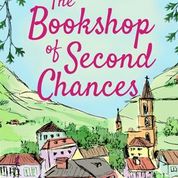
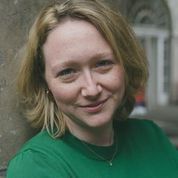
The Bookshop of Second Chances – Jackie Fraser

Simon & Schuster

I’m usually inspired by a place – sometimes a building – or the idea of a particular kind of character or relationship. I started writing The Bookshop of Second Chances while on holiday in Dumfries and Galloway in the Scottish Lowlands, inspired by the little towns strung out along the A75. This gave me my setting, and I knew I wanted to write about older people and the challenges and opportunities of starting again in your forties.

Fraser bookshop second chances coverFraser - bookshop second chances author

The Silent Treatment – Abbie Greaves

Century, Cornerstone

Like many authors, I’d always wanted to write a novel, but the problem was finding a story with the legs to walk 80,000+ words! When I read a newspaper article about a man who hadn’t spoken to his wife for twenty years, I became fascinated with the idea of a silence settling at the heart of a relationship and I knew there was enough there to sustain a whole book. THE SILENT TREATMENT was born.

Greaves silent treatment coverGreaves silent treatment author

This Is Not A Love Story – Mary Hargreaves

Trapeze

I have always found writing easy – that sounds pretentious, but I don’t mean it to; for me, putting the contents of my brain into written words is always easier than speaking them aloud. I spent my childhood and teenage years daydreaming and weaving new worlds in my imagination, and decided to finally bite the bullet and write This Is Not A Love Story when I was 23. It’s the best thing |’ve ever done!

Hargreaves not a love story coverHargreaves not a love story author

A New Life for Ariana Byrne – Liz Hurley

Hera Books

Why I write? Well, oddly enough because someone asked me to. Or rather they asked if I knew anyone that could write a lifestyle column for the local newspaper. I own a bookshop so presumably they thought I knew loads of authors. I did, but not anyone suitable. So, I volunteered. And I loved it. I have always written letters and diaries, this was just an extension. From there it was an inescapable slide into fiction! And I’m loving the ride.

Why I wrote Ari

The idea for a story came fully formed with a whole series of adventures for each sister. I wanted something that just pushed the boundaries of everyday life but still actually plausible. It had to be happy and uplifting and I felt that inheriting a great big old house, a title and loads of money would be just the start. And of course I had to set it in Norfolk, the happiest place in the world. But then I’m a Norfolk dumpling, so I would say that.

Hurley new life for AB coverHurley new life for AB author

The Authenticity Project – Clare Pooley

Bantam Press

My life, six years ago, appeared idyllic. In reality, I was grappling with a self-destructive addiction to alcohol.

I knew I had to quit drinking, and as therapy, started a blog into which I poured out the truth.

That act of authenticity transformed my life, and the lives of thousands of people who read it. Which made me wonder: what would happen if other people told their innermost truths to strangers?

And that was the inspiration for my novel: The Authenticity Project.”

Pooley authenticity project coverPooley authenticity project author

The winner will be announced on the 8th March 2021.

Please feel free to leave a comment or like the post.

Celebrating: The Goldsboro Books Contemporary Romantic Novel Shortlist!


RNA Contemporary


The Goldsboro Books Contemporary Romantic Novel 

Goldsboro Books is the UK’s leading independent bookshop, specialising since 1999 in first editions, signed, collectable and exclusive books. Situated in Cecil Court in London’s West End, and – as of December 2020 – Brighton’s famous Lanes, it has gained a reputation for championing debut authors, as well as creating the UK’s largest book collectors’ club, and is influential in selling large quantities of hard-back fiction. 

Every author has their own unique story to tell about how and why they came to be a novelist. Read on to find out the stories behind the talented authors shortlisted for the prestigious award, as they reveal them, and the inspiration behind their lovely novels.

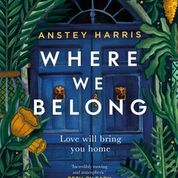
Where We Belong – Anstey Harris  

Simon & Schuster  

It has been a goal of mine, for a long time, to write a novel featuring someone with a learning disability whose disability doesn’t define them and whose story arc isn’t connected to that disability. Wrapping that up in a love story made it even more valuable thing to write about – love is the thing that binds us, that makes the world go round, and something we all have a right to experience. 

Harris -where we belong coverHarris - where we belong author

My One True North  – Milly Johnson  

Simon & Schuster  

I never wanted to be anything else but a novelist. Even when the sensible part of me was saying, ‘Get a proper job. Girls like you don’t become them,’ I never stopped dreaming. But such dreams need hard work behind them to come true so I gave it my all. I wanted to write books that made readers feel the way I did when reading the best ones: a willing prisoner trapped in the pages. 

Johnson- one true north coverJohnson- one true north author 

One Day In Summer – Shari Low  

Boldwood Books  

One Day In Summer was inspired by every woman I’ve ever known who put their own dreams to one side to take care of their family. The main character, Agnetha, wakes on her 40th birthday, having spent the last twenty years caring for her parents, her daughters, and the husband who left her for her best friend. It’s her time now. And Agnetha, just like all those other women, deserves another shot at life and at love.  

Low- day in summer authorLow- day in summer cover

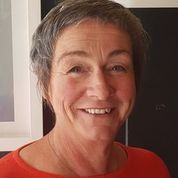
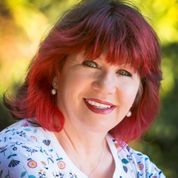
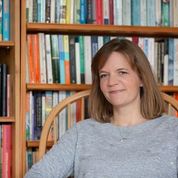
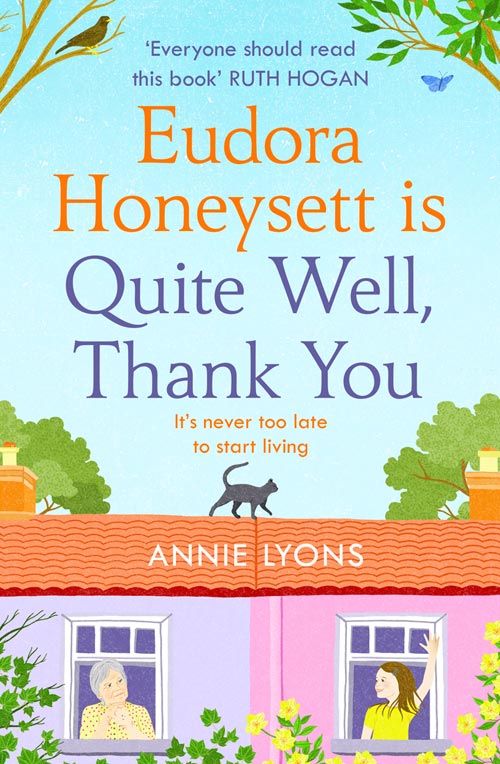
Eudora Honeysett is Quite Well, Thank You  – Annie Lyons  

One More Chapter, HarperCollins   

Eighty-five-year-old Eudora Honeysett is inspired in part by my mum. She also lived through the Second World War and they share that ‘dig for victory’ resilience. The irrepressible Rose, who befriends a reluctant Eudora, is inspired by every ten-year-old I’ve ever known bringing sparkle and relentless curiosity about life, death and everything in between! Their adventures with the recently-widowed Stanley help Eudora to reconsider this ‘noisy, moronic world’ and come to terms with her past. 

Lyons Eudora honeysett - authorEudora Honeysett (1)

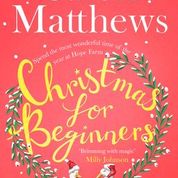
Christmas For Beginners  – Carole Matthews  

Sphere, Little, Brown  

I won a short story competition in Writing magazine and did the most sensible thing I’ve ever done. I spent the prize money on a writing course. The tutor told me that my work-in-progress was good enough to send to an agent. He took me on straight away and sold the book within a week which became Let’s Meet on Platform 8. I never imagined that it would launch a career that would last twenty-four years and see me write thirty-four books.  

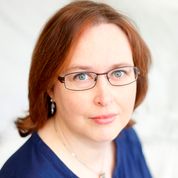
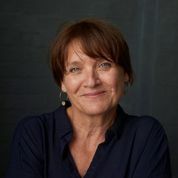
Matthews - christmas for beginners coverMatthews - christmas for beginners author

The Little Shop in Cornwall  – Helen Pollard  

Bookouture  

I always want my books to provide an escape from everyday life for my readers, transporting them to somewhere special. Since I love creating fictitious places set within a real region, what could be more fun than to dream up my very own pretty coastal Cornish village for The Little Shop in Cornwall? Beach, harbour, wooded cliffs, fishermen’s cottages… Perfect. As I was writing, I would sometimes forget that Porthsteren only exists in my imagination! 


Pollard- shop in cornwall coverPollard shop in cornwall - author

Mix Tape  – Jane Sanderson  

Bantam Press  

I’ve always listened to and loved music, but the idea for this novel actually arrived in a eureka moment; a waking thought one morning, that I should write a novel which harnessed and celebrated the power of song to speak to the heart. A girl and a boy lost to each other, then finding their way back, through music – that was the central premise, and it was pure joy for me as a writer to capture those heady, heart-hammering emotions inspired by the perfect song.  

Sanderson mix tape authorSanderson mix tape cover

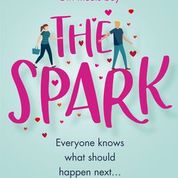
The Spark  – Jules Wake  

One More Chapter, HarperCollins  

Normally my books are about couples who gradually fall in love over the course of a book. With this story I wanted to explore those lovely falling in love moments from the outset but of course if they fall in love straight away, there is no story. The Spark was born when I thought about what conflicts might spoil that early happiness and how the characters will overcome them.   

Wake the spark authorWake the spark cover  

The winner will be announced on the 8th March 2021.

Please feel free to leave a comment or like the post.

A warm winter welcome to romance writer, Suzanne Snow!

image004

Welcome, Suzanne, and congratulations on the upcoming release of The Cottage of New Beginnings! Before you tell me about the book let’s go back to when you began your writing career. Was writing books always something you wanted to do?  

Yes, I’ve wanted to be a writer since I was very young. I read all the time as a child and loved to make up stories about adventurous girls and their ponies. I always hoped to be an author one day.

Reading your website it is clear that you love romance set against a rural setting.  Are you definitely inspired by setting rather than a character initially?

A landscape is usually the first thing that draws me to create a story. It might be a village or a beautiful view, but there’s always a community at the heart of my writing. Once I have my setting, I begin to imagine the characters who might live there, and those who might be newly arrived and why. I hope to convey a real sense of place in my writing.

Does family and faith play a strong part in your plots as they do in your life?

Friendship and family are very much part of my writing and faith is something shared by a few of my characters but not all. Charlie and Sam Stewart, the young vicar of Thorndale and his wife, have proved popular with readers and they do return in later stories. Sam in particular is mischievous with a lovely heart, and great fun to write.

What character traits do you think are essential in a hero/heroine?

I write heroes who are sensitive without being overly sentimental; and honourable, even if that is not immediately apparent. Kindness, an ability to understand when they are wrong and passionate also go a long way.

I like heroines to be independent, have confidence and warmth. Both hero and heroine need to have some self-awareness, along with the opportunity and willingness to change and develop.

Do you always aim to deliver a feel-good story with a happy ending?

I do, yes. I read romantic fiction as well as write it, and I so enjoy characters falling in love, whether that’s a gradual realisation or something more immediate. As an author, I hope for my readers to feel uplifted, following characters working out their differences to consider a future together.

Since joining the RNA you have been taken on by an agent and signed a three-book deal (huge congratulations on that!). How important has being a member of the RNA been in finding your route to publication?

I don’t think I can overstate the importance of the RNA to unpublished romantic writers. I’ve made great friends and received lots of support since joining and benefitted from opportunities to learn, and Conference is just one of them. I believe it’s important to discover how publishing works, along with the roles of industry professionals such as editors and agents, whether you plan to follow a traditional or indie route to publication.

image002

What is your favourite part of the writing process?

I love to actually just write a draft, something I mostly do early in the mornings. When the story is flowing well and the characters are making themselves heard, then it’s a complete joy and difficult to stop. Editing is also something I find very satisfying, and I enjoy going back and finding ways to improve the manuscript.

What is your least?

I’d probably say the amount of time I manage to spend distracting myself researching something online when I should be writing!

How have you coped with life during a pandemic?

Life has changed, as for so many people, and my husband now works from home and my son is studying mostly online for his A levels. We are thankful to have close family nearby and have been able to support one another during the pandemic and very much appreciate the community we are a part of. The house is busier now and we are all adapting to a new way of working. I’ve also realised how many simple things we took for granted, like meeting up with family and friends for a meal, and I’m really looking forward to being able to hug my wider family again.

I think we are all waiting that day. Having come this far on the road to publication what advice would you give to anyone considering joining the RNA’s New Writers’ Scheme?

Join, if you possibly can, the opportunities to develop your knowledge and make friends are so brilliant. And once you are a member, do try and get the best from your membership by taking part in the activities on offer, whether that’s social media, online learning, chapter meetings (currently all online) and attending events. The RNA is excellent at welcoming people, and Conference, once it is able to run again, is a real highlight and not to be missed if at all possible.

Garden of Little Rose medium

What is next for Suzanne?

Right now I’m finishing my Christmas story, which is set in Thorndale, and I’m looking forward to the publication of my second novel, The Garden of Little Rose, in February 2021. After that I’ll be planning my fifth book and hopefully spending some time on a tiny Hebridean island for research, rules permitting.

That sounds lovely!

Thank you for the opportunity to be included on your website, Valerie, I’ve really enjoyed answering your questions.

Suzanne x

You are very welcome. If any readers have any other questions please leave them below.

Merry Christmas, Suzanne and good luck with the book!

Congratulations to Melissa Oliver – winner of the Joan Hessayon Award 2020!

Have you stopped celebrating yet?

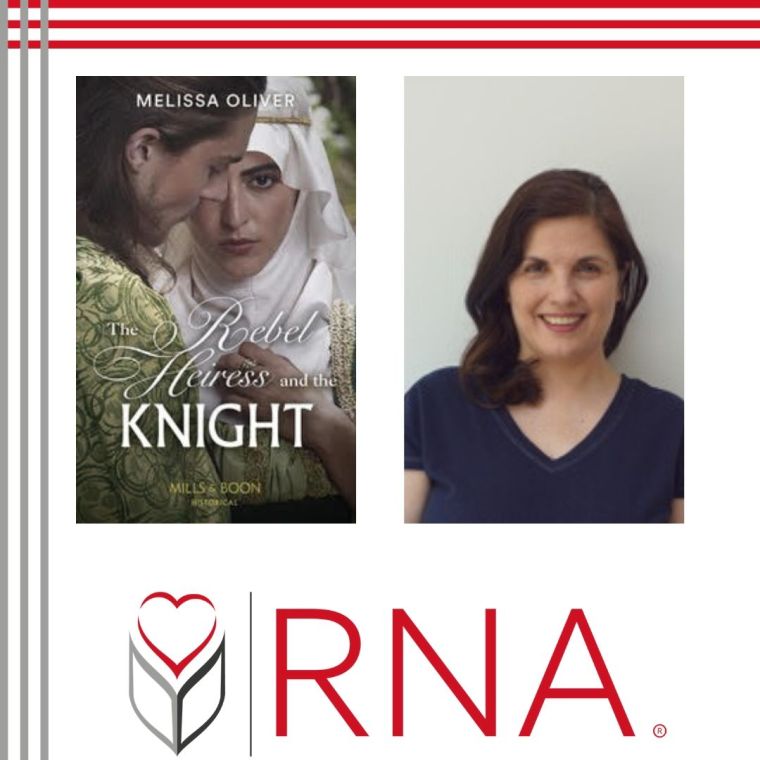
I’m thrilled and utterly elated to be the winner of the 2020 RNA Joan Hessayon award for The Rebel Heiress and the Knight.

I had a wonderful time celebrating over the weekend with my husband, Jack, our three daughters, and lots of lovely messages from family and friends. There was lots of bubbles, cake, a lovely pub lunch, and even a family game of Cluedo!

Going back to the beginning of your desire to write – when did you realise that you needed/wanted to write fiction?

It probably started as a child. I had a fervent imagination and loved nothing better than to escape into the wilds of make believe. The writing bug really caught when I was a little older but to be honest, a lack of confidence and self- belief held me back from pursuing my dream. It wasn’t until I was in my thirties with young children at home, and working part- time, that I began to question what it was that I really wanted to do in life. That itch to be a writer had never gone away and so I decided to do something about it. I have to add, however, that it has taken many, many years to realise that dream!

Were you always in love with writing romance?

I enjoy many genres from thrillers, whodunit, classics, to every kind of historical fiction but I LOVE romance, especially historical romance more than any other and have done so ever since I was a teenager. From Jane Austen, Georgette Heyer, Anya Seyton, to Daphne du Maurier and many, many others.

How helpful has being a member of the New Writers’ Scheme been to you developing your talent?

The New Writer’s Scheme and the RNA have been amazingly supportive in my writing. The detailed feedback that you get back from an anonymously assigned reader has been incredibly valuable to develop and hone my writing skills.

Was The Rebel Heiress and the Knight your first completed novel?

Yes, The Rebel Heiress and the Knight was my first fully completed novel. Previously, I had written screen & radio plays, and I once started a YA thriller that never went anywhere. I do believe that it’s good to try different things creatively until you find your voice, so nothing is wasted – at least, that’s what I tell myself.

What drew you to the C13?

I love anything historical and once I had created the general outline of my story, it was a question of working out which era would work best.  Eventually, I felt that the early 13th century with King John’s turbulent reign was the perfect foil for my story.

Your heroine has a dramatic backstory, did this give her character more depth?

Absolutely. I knew that I wanted my characters to feel ‘real’ within the context of the story, and whilst there was a huge amount of external conflict, I knew I had to explore why they behaved in the way they did, to make the story work. This is especially true of Eleanor, who is a quite extraordinary character for the times she lived in.

Few will know who Fulk FitsWarin lll is – how did the link happen to the legend of Robin Hood?

The life and times of Fulk FitzWarin III ( Foulke le FitzWaryn) was intriguing, romantic, dangerous and pretty incredible. The parallels between what happened to him and Robin Hood are strikingly familiar. FitzWarin was forced to become a rebel and later an outlaw after Whittington Castle and his hereditary lands were confiscated by King John. He lived for many years in woods & forests with his band of outlaws and even his right-hand man was apparently called John. He never gave up the claim of his birth right and did eventually win it back, but only after much heartache and strife. He also won the hand of the heiress Maud le Vavasour, who some believe to be the inspiration behind Maid Marian. There were other real-life inspirations for the legend of Robin Hood such as Herewerd the Wake and Eustace the Monk but in my opinion, no one epitomised Robin as well as Fulk did.

What has working with Harlequin Mills and Boon been like?

It has been amazing working with Harlequin Mills and Boon. They have a wonderful, collaborative team who are very supportive and insightful. In particular, my editor, Charlotte Ellis, who has been a pleasure to work with.

What is next for Melissa Oliver?

The Rebel Heiress and the Knight is part of a linked series, The Notorious Knights. The next book, Her Banished Knight’s Redemption, is William Geraint’s story (he’s a secondary character in the first book) and is due to be published Jan/ Feb 2021. I’ve also signed another two- book deal with Harlequin Mills and Boon, so I’m currently writing the next Notorious Knights book.

I wish you every success in your writing career.
What a great start!

Introducing the short list for the prestigious RNA Joan Hessayon Award 2020!

JH 20 all covers banner

Every author has their own unique story to tell about how and why they came to be a novelist.

Read on to find out the stories behind the talented shortlisted authors for the prestigious award as they reveal the themes that are at the heart of their lovely novels.

Zoe Allison, Impervious, Totally Bound

After years of hard work and burn out in Medicine I came to realise how much I loved writing and what a release it was – a balm for the soul. I wrote a couple of opinion pieces for a medical newsletter and after that tried my hand at writing children’s picture books. As my own children grew I got back into reading romance and remembered what I enjoyed most about the genre – the happy endings. I decided to write my own romances, with the strong heroines and non-toxic heroes that I craved to see in the books I read.

Jan Baynham, Her Mother’s Secret, Ruby Fiction

On retirement, I joined a local writing group. Once my stories started getting longer, I undertook a novel-writing course, enjoying the challenge to explore my characters in more depth and delve further into their stories. Joining the RNA New Writers’ Scheme was the best decision I made on my journey to becoming a published novelist.
I love writing about families and the skeletons lurking in their cupboards. In ‘Her Mother’s Secret’, my main character, Elin, has a well-hidden secret. The novel explores the bond between a mother and her daughter, forbidden love, cultural differences and a search for true identity.

Laura Bambrey, The Beginner’s Guide to Loneliness, Simon & Schuster

The theme of The Beginner’s Guide to Loneliness was dictated by my main character, Tori. As I spent time getting to know her, looking past her severe anxiety and issues with specific phobias I realised that, right at her very core, she was chronically lonely. This sent me off on a fascinating trail of research. Loneliness has so much stigma attached to it – it’s a strangely taboo subject and something that is very difficult to discuss – but we’ve all experienced it at some point in our lives. I hope this book helps to open up those conversations.

Victoria Garland, Finding Prince Charming, DC Thompson

My first attempt at writing was at the age of twelve. I was given a typewriter for Christmas and started pounding out my own version of a Nancy Drew mystery. Remember those? Fast forward three decades to when I joined the RNA’s New Writers’ Scheme. After having several short stories published in My Weekly I decided to write a pocket novel for them. I was asked for a sparkling Cinderella story for Christmas and Finding Prince Charming was born. I had an absolute blast writing it, playing with the fairy tale theme and falling madly in love with the hero.

Rosemary Goodacre, Until We Meet Again, Hera

As RNA members know, the New Writer Scheme is a great way for debut novelists to have work critiqued by professionals, and I’m very grateful for this opportunity.
The centenary of the Great War reminded me of this tragic period of history. What must it have been like to have been suddenly swept into it? My characters, Amy and Edmond, had to be special people. They fall in love as war breaks out, snatching days and weekends together, uncertain of their future. Only their love brings them through disaster.

This slideshow requires JavaScript.

Annette Hannah, Wedding Bells at the Signal Box Cafe, Orion Dash

About fifteen years ago the Signal Box near where I live became automated and I always thought it a shame that such a lovely building should be neglected and boarded up. I often visualised it as a café and when my protagonist Lucy needed a venue for her wedding planning business, I decided to use the old Signal Box as inspiration and followed my dream even if it was just in my imagination. Writing a book has been my lifelong ambition and to have achieved it feels fantastic. Being a contender for the Joan Hessayon Award is a wonderful rite of passage.

Stephanie Harte, Risking It All, Aria

I’d dreamt of writing a book for years but had been put off by the daunting task. Filled with self-doubt, I talked myself out of the idea every time it resurfaced until I plucked up the courage to put pen to paper and join the New Writers’ Scheme.
In Risking It All, Gemma’s forced into a life of crime to clear her husband, Nathan’s debt after he secretly borrows money from a gangster. Her loyalty is pushed to the limit as she battles with her conscience. Losing Gemma could be the price Nathan has to pay for his reckless behaviour.

Stefania Hartley, Sun, Stars and Limoncello, Totally Bound

When I moved to the UK from Sicily, my English was too poor to imagine that I could ever write anything. Eventually, my Italian became rusty too. But one day I discovered that I could write articles about my subject (I was a Science teacher). After twenty years, I finally knew English well enough to write! It was as exhilarating as sprouting wings. I started writing about anything that excited me and memories of my Sicilian youth popped up more and more. Now I love to share with others those memories and stories of hot Sicilian summers, sun-drenched passion and sparkling seas.

Kirsten Hesketh, Another Us, Canelo

My debut, Another Us, is inspired by my son who was diagnosed with mild Aspergers when he was ten. A few years later, sorting through some of the bumpf I’d been given at the time, I stumbled across a statistic which claimed that eight out of ten marriages with a child on the spectrum end before that child is sixteen. Our son was already sixteen by this point and I decided the statistic was rubbish. But what if I’d known about it earlier on? Might I have reacted differently, behaved differently? And so the idea behind Another Us was born.

Sharon Ibbotson, The Marked Lord, Choc Lit

As a child, I never wanted to be a novelist. I wanted to be a nun. But after my parents informed me that I was neither Catholic nor was being a nun like it was in ‘The Sound of Music’ I started to consider other options. I loved reading – in fact, I still believe I am a better reader than I am a writer – and I started writing when I lost a copy of a library book I never got to read the end of, making up my own conclusions to the story and seeing where I could take the characters I had fallen in love with. I wrote ‘The Marked Lord’ when I was pregnant, sitting in my garden and dreaming of home (Australia plays a large role in this story). It’s all about second chances and letting go of past hurts, both physical and emotional. It was a lovely book to write and I’m still very fond of it (I am also still very fond of ‘The Sound of Music’ but then who isn’t?)

This slideshow requires JavaScript.

Emma Jackson, A Mistletoe Miracle, Orion Dash

“Back in 2013 I went along to see the Christmas lights being turned on in Alfriston village with my partner and one-year-old daughter. It was a bitter night, but the buoyant atmosphere and chocolate-box setting set my mind racing with possibilities for a Christmas novel. From that spark of an idea, A Mistletoe Miracle, a festive romantic comedy, grew. Slowly. I squeezed in writing in the evenings and children’s naptimes over the next six years and in 2019 joined the RNA NWS, knowing that if I wanted to be published it was up to me to start taking my writing seriously.”

Lynn Johnson, The Girl From The Workhouse, Hera

I didn’t mean to become a novelist. In my fifties, I began researching my family tree and discovered things I never knew about my mother’s family. At my local writing group, I started to write short stories. The Girl From the Workhouse, was one of those very early stories and it grew – but was I writing history or fiction? I decided on fiction. And my biggest stumbling block took time to resolve itself. Dare I give my Grandma a boyfriend who was not my Grandad? Once I had the answer, my writing flowed. Fifteen years later…success!

Nina Kaye, The Gin Lover’s Guide to Dating, Orion Dash

My childhood dream to write became real when I turned to writing to support my rehabilitation from a difficult illness, and to provide escape from it. Recently, I’ve completed another story inspired by this time, and I hope to share this in the future.

The key ingredients of The Gin Lover’s Guide to Dating are the beauty of Edinburgh’s setting, personal experience in the hospitality industry, and (of course) my appreciation of gin! Real life issues are an important touchstone for my writing, as is the light-hearted side of life.

Lucy Keeling, Make It Up To You, Choc Lit

I wrote my first story when I was 8 and not to toot my own horn, but it was good. It had Ice Monsters roaming the streets. From then on, every few months I would get this urge to write. As I got older, I would manage a solid three chapters before I ran out of steam. It was only when I discovered that I could plan out a story, that it didn’t have to just magically spill from my fingertips, that I actually managed to finish one. Now, the only ice monsters I write about are the ones that melt with a HEA.

Ruth Kvarnström-Jones, Halleholm – Lovisa’s Choice, Printz Publishing

One is seldom too sick to scroll through Facebook. That said, as a copywriter flattened by pneumonia back in 2012, even scrolling depleted my energy supply pretty pronto. Until I saw a meme that suggested one had an obligation to use up every ounce of talent before one died. Must write my novel! Energy inexplicably refreshed, I began making notes for Halleholm- Lovisa’s Choice.
Set in the chocolate-box environs of the Stockholm Archipelago, Halleholm – Lovisa’s Choice is a modern-day Romeo and Juliet saga: the tale of a multi-generational family feud that nearly rips apart a town and shatters one woman’s dream.

This slideshow requires JavaScript.

Mairibeth MacMillan, The Viking’s Cursed Bride, Tirgearr

When I was wee, I got a tape recorder as a birthday present. My friends then spent several summers voicing the characters in the radio plays that I wrote – I still have some of the tapes! Later, when I took a career break from teaching drama, my interest in writing was rekindled and I completed degrees in creative writing and playwriting. I became interested in using writing to explore the stories associated with place, and most of my initial ideas are inspired by visits to particular buildings or places. The Viking’s Cursed Bride was initially inspired by a visit to Dumbarton Rock.

Melissa Oliver, The Rebel Heiress and the Knight, Mills and Boon Historical

My debut is a sweeping medieval romance, set against the back-drop of the Baron’s Conflict, which began in 1215. There’s a nod to the legend of Robin Hood- which, in turn, took its inspiration from the real-life story of Fulk FitzWarin III.
King John demands that his trusted knight; Sir Hugh de Villiers marries the reluctant widow; Lady Eleanor Tallany, and also quashes local outlaws…. Unknown to Hugh, his new wife and the outlaw are one and the same.
Through twists, turns, and intrigue; Hugh and Eleanor’s spark of attraction need to overcome standing on opposing lines, or extinguish forever.

Maggie Richell-Davies, The Servant, Sharpe Books

Novels were always a portal through which to roam the moors with Heathcliffe and Cathy, to take the waters at Bath with Beau Brummel, or to fall in love with Darcy, so it was inevitable to yearn to write my own. Then a visit to London’s Foundling Museum, with its heart-breaking scraps of fabric and ribbon left by women in the hope they might, one day, be able to reclaim their precious child, inspired me to write The Servant, the story of a poor eighteenth-century girl battling to survive the injustices of the age – and to find love.

Jacqueline Rohen, How To Marry Your Husband, Arrow

J Rohen

Written by Jacqueline’s family: From childhood, Jacqueline was an avid reader and budding writer. She found ideas for stories everywhere, notebook at the ready. One such inspirational nugget was Mick Jagger’s public statement that he and Jerry Hall were never officially married; the story stuck with Jacqueline for years, finally evolving into the plot of her debut romantic novel. Eventually, Jacqueline’s own romance led her to chimpanzee conservation in Uganda where, forcing herself to become a morning person, she determinedly set aside the time necessary to fulfil her dream of being a published author. She would have been so proud to be nominated.

Kathleen Whyman, Wife Support System, Hera

Working as a magazine journalist, Kathleen always aspired to be a novelist, but got slightly sidetracked over the years by work, children and Mad Men box sets. It was her eight-year-old daughter’s words – ‘Stop talking about writing a book and just write one’ – that gave her the push she needed to write Wife Support System.
The novel, published by Hera Books, was inspired by Kathleen’s own feeble attempt to juggle a career with childcare, never-ending house ‘stuff’ and, outrageously, occasionally some time for herself. She is still struggling.
Kathleen’s next novel, Second Wife Syndrome, has been shortlisted for the Comedy Women in Print prize 2020.

Fiona Woodifield, The Jane Austen Dating Agency, Bloodhound Books

I have always wanted to be a writer, ever since my childhood love of reading spilled into the desire to write stories of my own. In 2018, I sent the manuscript for my first novel, The Jane Austen Dating Agency off to the fantastic RNA New Writer’s Scheme and had lovely feedback.

The Jane Austen Dating Agency focuses on a heroine who has spent rather too much time reading romantic novels, so her reality fails to live up to the dream. She joins a regency dating agency where she meets some wonderful friends, some rather interesting and familiar characters, to the Jane Austen fan at least and discovers her true self.

This slideshow requires JavaScript.

Meet historical fiction author, Elizabeth Bailey

I am really delighted to invite my fellow Sapere Books author, Elizabeth Bailey, as my guest this month.

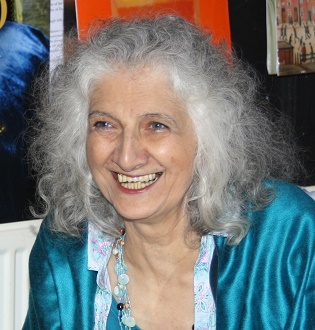
Elizabeth Bailey author photo

Welcome, Elizabeth!

My first question has to be where did your love of storytelling and writing begin?

My father read to us and my older sister made up stories for my brother and me, thus fostering an early interest in literature. I can’t remember when stories were not part of my life. Difficult to recall when I began to write them. In school, for festivals, and for pleasure.

My first fairy tale featured a hero who had to rid the lake of a plague of giant spiders in order to win the princess – hence romance. But the darker side was there too in an epic tragi-poem of a sailor who murders the mermaid who loves him. Shades of the future there?

There is a touch of horror in there for me too – spiders!

Do you find switching between the two very different genres of romance and crime keeps your writing fresh?

To be honest, I don’t switch much. I’m either writing romances one after another, or mysteries ditto, whatever happens to be driving the bread and butter. I contributed to anthologies with five other authors, producing a string of Regencies which became the Brides by Chance Regency Adventures. My Lady Fan mysteries had languished when I lost my first publisher. When Sapere picked them up, I began a feverish assault on those and haven’t swapped back yet. I write the occasional snippet of something completely different when the mood strikes.

in honour bound 500

You touch on the paranormal in some novels, is this an area of research that you find fascinating?

I am absolutely sold on the supernatural. Powers above the norm, which I believe we all possess if we can access them. Telepathy is everywhere. You think of someone out of the blue and then they ring you up. Magic. Saying which, I was hooked on the Harry Potter series and I’m a sucker for fairy tales. As for past lives, we have all lived many times before. Far too much proof for doubt. One of my paranormals is based on an incident from one of my own past lives. I have no truck with the prevalent one-life belief!

That is fascinating. I admire your certainty.

In the ‘Lady Fan Series’ your protagonist is a woman who has to overstep the conventions of a lady in her day. This is a difficult challenge for an author and is a factor I also try to balance. How do you enable her to complete her investigations in a credible way for the period?

This is why I gave her Lord Francis. He is both husband and champion, her protector, and he can go where Ottilia can’t. If she does venture where ladies don’t, she is always accompanied by a stout male guardian – Francis or her Barbadian steward. Nevertheless, she still gets into dangerous situations. Her medical lore is gained from helping her brother doctor Patrick, with whom she lived for years before her launch into solving murders.

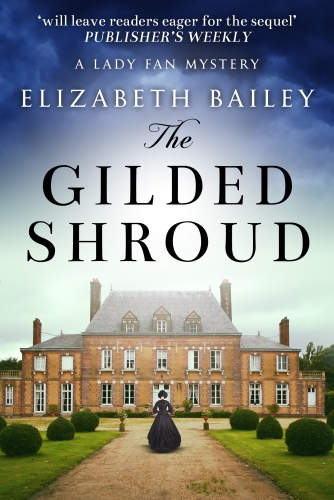
The Gilded Shroud 500 x

Her background is “the middling sort” – genteel but not moving in the first circles. She observes the aristocratic milieu she is now in with an outsider’s eye, and she is free of the shibboleths governing the behaviour of ladies in that strata. That’s why she oversteps the bounds of convention, relying on her status for impunity. She has married into the elite where eccentricity is tolerated. In other words, she gets away with it!

Writing a series with recurring characters means that they have to continue to grow and develop with each new novel. How do you keep track of their biographies so that this development is consistent?

Wow, I have no idea! Every story has its own “bible” with cast, places, etc and snippets of potential plot, all of which I add to as I go along. The basics are copied into the new bible for a new book. If I’m missing one, I get it from an old bible. I probably ought to keep a spreadsheet, but I know I’d never manage to keep it up! I’ve always written this way – a cast/plot document and a text document, plus research docs, discarded text in a temp doc in case I need to retrieve it.

How I keep track is a mystery, but I do. So far. The characters who keep coming back are a fistful really. When other family members intrude, it’s usually in a minor way and about the only thing I have to figure out is how old they are now. Francis and Ottilia have developed without much help from me. They evolve story by story. I do enjoy their relationship. They have their ups and downs, but I find readers are engaged by their enduring love story.

When I began the series, I determined to marry them off after the first book because a personal bugbear of mine is those off/on romances that persist through a whole series. Why can’t they just get it together? Instead, I decided to give each story a secondary romance, but in the event, it turned out my hero and heroine are still very much the romantic couple in every story. I didn’t plan it. They just are, those two!

You have had some fascinating career roles to date: acting, directing, teaching and of course writing. Has each one contributed something to your current profession of being an author?

Absolutely. Theatre has shaped my writing. Dramatic structure parallels story structure in terms of build-up, highs and lows, climax and denouement, not forgetting cliff-hanger scene endings, “curtain” in drama. There’s also motivation, emotional journey, conflict (inner and external), character, dialogue, sub-text – the spaces between the words and character introspection. As an actress, these things became part of me. As a teacher, I had to dissect them. Ditto as a director, viewing my “staged drama” as a whole moving picture. The difference is that words encourage the reader to watch “the play” in their imagination.

You have been blessed with cross-cultural experience and travelled widely throughout your life. Do you agree that these aspects of life help to deepen an author’s ability to create engaging characters and plots?

I think it has given me a large tolerance of other cultures. Perhaps most telling, an understanding that human nature is pretty much the same, nation to nation. Such cultural differences as there are consist by and large of moral standards and artistic appreciation. But the human condition is what it is throughout. We all run the gamut of emotions and struggle with our personal demons as we try to survive. Observation enables you to engage as you mirror the inhabitants of the world around you.

Who or what would you say has had a strong influence on your life/work ethic?

My values echo my father’s. A true gentleman, he had wide tolerance, liberal ideals, intelligence. Articulate, funny, considerate and kind, he was a big teddy bear to me. As to work ethic, I imagine my mother’s bundle-of-energy personality must have rubbed off on me. Not that I could keep up! But I do have her drive to push through and get things done.

You have been published and self-published. What would you say are the main advantages or disadvantages of each?

Oh, this is a hard one. These days, you can’t talk of leaving promotion to others because both avenues require you to play your part in touting the books. I think traditional publishers help with visibility and take the burden off in terms of editing, proofing, formatting, book cover design and initial launch. On your own, you have to do it all and that’s tough. On the plus side, you have artistic control and personal satisfaction, even if sales are not as easy to promote.

counts charade front 500

What advice would you give your younger self if you could as you set out on a life as an author?

Well, this is interesting because I am constantly giving advice to new authors. I’m not sure I would give the same advice to my younger self because things were very different in publishing when I started out. I had also already struggled to make it as an actor so persistence was not new to me. I think I would say: “Just do it. You’ll regret it if you don’t.”

What is next for Elizabeth Bailey?

Here’s where I reveal the dream! If I get my dearest wish, it will be a TV series of Lady Fan. That would put the icing on the cake of my writing career.

Thank you for taking the time to answer all my questions and I wish you every success in your career and in life. I hope you realise your dream!


Catching up with Nicola Cornick!


Nicola author

Welcome back, Nicola!

Thank you very much! It’s a pleasure to be here.
What have you been doing since you stepped down from being chair of the RNA?

It was only after I stepped down at RNA Chair that I truly realised what an intense two years it had been so the first thing I did was to go on a long holiday, which was a wonderful break and also a way of marking the end of what had been a very important and significant part of my writing life. Then I came back and got stuck into my latest manuscript which is a dual time novel set in the 15th century with the mystery of the Princes in the Tower at its heart.

The role of RNA Chair was one I enjoyed enormously and I did all I could to further the cause of romantic fiction during my time on the committee, but I was very happy to hand it on to the next generation of romantic fiction writers. They are doing a truly stellar job during the most difficult and unpredictable situation that could have hit us all and I admire them so much for it, and all the member of the RNA who are making this 60th anniversary year very special despite the challenges.
What was it about the protagonist’s story that attracted you to the lady behind The Forgotten Sister?

My dual time fiction centres on women whom I think of as being in the footnotes of history, those characters whose stories have been told usually from a male perspective or not at all. In this instance I was drawn to Amy Robsart, wife of Robert Dudley who was, of course the favourite of Queen Elizabeth I. Both Elizabeth and Dudley are big characters whose love story tends to dominate the narrative and Amy is usually portrayed, if she’s mentioned at all, as a helpless victim who dies in mysterious circumstances. I wanted to give Amy some agency and tell the story of her life and death from her own perspective, and also to look at how the legend and myths about her grew after her death.

ForgottenSister_51 (002)
How did you learn about the history of Lady Diana Spencer of The Woman in the Golden Dress?

There’s a room at Lydiard House in Swindon, where I am a trustee that is devoted to Lady Diana Spencer and her artistic work. The very first time I stepped into the “blue closet” as it’s known, I was enchanted by her drawings and the designs she did for Wedgwood. I went away to read more about her and her life. It was intriguing to discover that not only was she an ancestor of the late Princess of Wales as well as her namesake, but that their personal lives had some uncanny parallels.


The Woman in the Golden Dress_04 (002)
What are the specific challenges of writing an absorbing dual time novel?

For me the challenges are huge, firstly because I’m not by nature a planner but a dual time novel really does need careful plotting in order to weave the two timelines together successfully. Then there’s the challenge of fitting what is essentially two stories into one book and giving them both sufficient depth. Also, there is the issue of making sure that the present and the historical strands are both equally compelling. Most authors have a preference for writing one over the other but it’s our job to make sure the readers enjoy them both equally.
What do you do to stay fit – physically and mentally in this lock down situation?

I find that my physical and mental health are connected even more closely than usual at the moment. We’re all under enormous stress and living through an unprecedented situation and we all have to find the means to cope. I make sure that I take a walk each day – I’m fortunate to have a dog so I always have a walking companion and we’ve been exploring all the walks in our local area. I also do a Pilates class each week via zoom and an additional workout each week. That’s about the best I can do as I have an auto-immune condition that varies considerably from day to day in its effects; if I’m not feeling great, I will still go out and sit in the garden so I get fresh air and sunshine.
Mentally I find that having a schedule each day helps me to concentrate and I also limit the number of times I watch or read the news. Keeping in touch with friends and family remotely and having the dog to cuddle are the other two essentials for me!
How has the current situation affected the voluntary work you do with the Guide Dogs?

QRLR0126

We’ve had to put our work with Guide Dogs on hold at present as it isn’t possible to train puppies in all of the things that they need to do with shops, libraries and other venues closed and travel at a minimum. Fortunately, it’s still possible to do plenty of training in things like obedience, and to keep dogs entertained and interested with other games and activities! There’s going to be a lot of work to do when we’re all allowed to go out again!

I wish you, your new novel and hope that you and guide dog, Lucy, stay safe and have lots of hugs! 


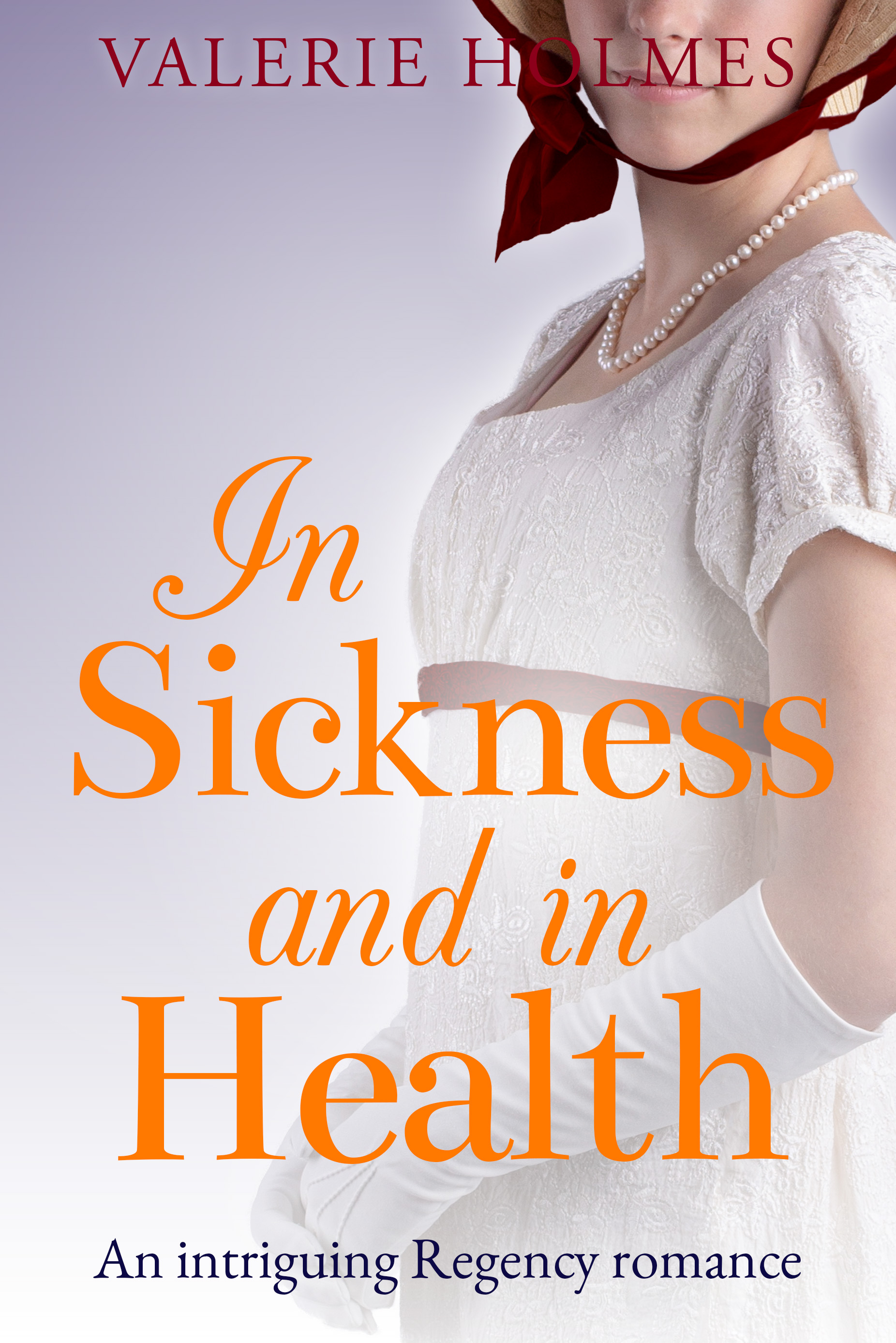
In Sickness and In Health

In Sickness and in Health
Class prejudice is inbuilt within our culture going back centuries. In In Sickness and In Health Sophia and Isaac are meant to be together, but like so many people whose love was thwarted within the early nineteenth century, propriety, social divisions, war and need prevented this from happening.

Survival of the under classes depended upon their good health and equally good fortune as there was no health care, and knowledge of the human condition was limited, superstition and trial and error were rife. Therefore, being healthy to provide a living was essential. Isaac can provide for Sophia through his good fortune and hard work, but will not be a ‘cripple’ and a burden to her.

He and Sophia are a love match. However, he would not have dared approach Sophia if she had not been so open and honest with her desire for him. Naivety and youthful passion resulted in Isaac being sent away; his father dies in his absence. Yet, Joshua was forever proud of his son and would only wish Isaac happiness with Sophia.

Love finds a way, but at a high cost.

I have always been fascinated by the major changes that happened in the early nineteenth century. It was a period of great conflict and change: a time of war, pressgangs, and extreme social, agricultural, religious and political changes. All these impacted on the ordinary people who were left behind, whilst the wars with Napoleon dragged on.

The countryside was changing as mills were being built and cottage industries suffered, along with their communities. The population gravitated to these places of work and life in the countryside changed.

The government taxed its people harshly, whilst still fearing the possibility of a revolution as had happened in France. It was hardly surprising then that smuggling and opportunists abounded, yet in plying the trade they gave coin to an enemy. Some gangs were known for their violence, others were less so and merely supplied a ready market that crossed over social rank and was often funded by a moneyed man.

With the onset of the Industrial Revolution, Luddite activities and the growth of new money, lives were changing and the old money was feeling threatened.

In the cities ‘society’ had strict rules: influence and connections were so very important.
In my books the settings are more remote. These influences mean nothing when a character is dealing with survival, either their own or someone who they have met. So boundaries are crossed, rules of society are broken or are made irrelevant.

Most of my titles are set in an area of the country that I love: North Yorkshire, with its beautiful coast and moors.

My villages of Beckton and Gorebeck are based upon typical North Yorkshire market towns, such as: Guisborough, Yarm, Thirsk, Helmsley. By 1815 both have their own small mills situated just outside the towns.

This slideshow requires JavaScript.

Ebton is based on the well known Victorian town of Saltburn-by-Sea,only my version is as I imagine it to have been at the turn of the nineteenth century.

Love is a timeless essential of life. Throughout history, love in all its forms is a constant: be it passionate, caring, needy, manipulative, possessive or one that is strong enough to cross barriers of culture or faith. When two souls meet in a situation which takes them out of their normal social strata or into a shared danger, a relationship forms as the adventure unfolds.

If you have enjoyed reading any of my titles I would really appreciate it if you could take a moment to leave a review either on Amazon or Goodreads, or wherever you wish.
It is helpful to read feedback and I am always interested in what my readers think, or would like to read next.

Stay safe in these difficult times everyone wherever you are in the world!

If you are a new writer or need advice on a work-in-progress I also offer an independent manuscript appraisal service and/or mentoring, always aiming to give constructive and professional, honest feedback. I have worked as a creative writing tutor for over fifteen years. You can contact me here for information and fees.

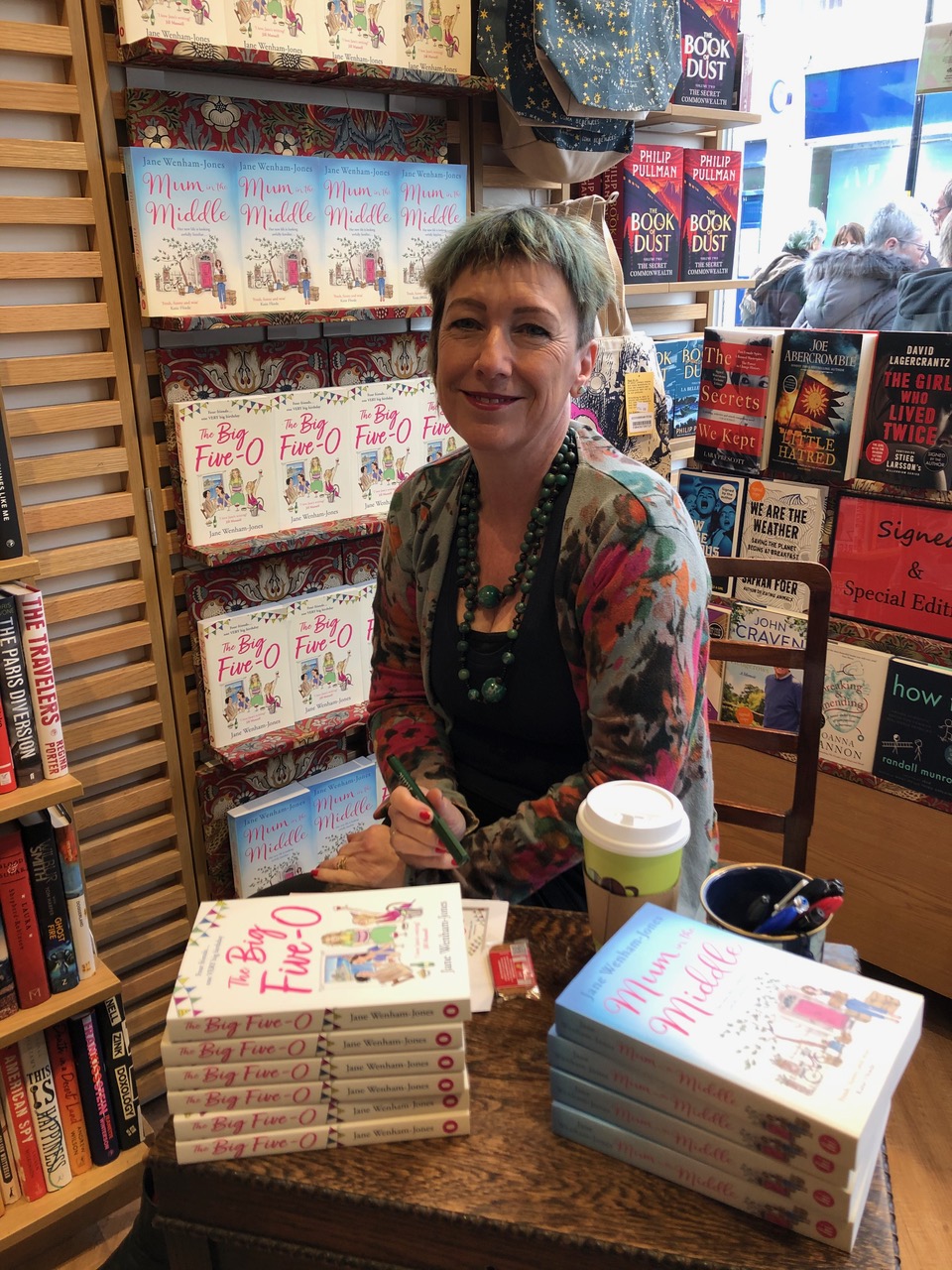
Meet bestselling author, journalist, interviewer, tutor, agony aunt and speaker, Jane Wenham Jones

Welcome, Jane!

IMG_3647

You grew up with quite a varied and strong literary heritage in your family. Were you encouraged to write and develop your own ideas from childhood, surrounded by books and such talent?

Yes, I was always encouraged to read and to write. My father wrote some textbooks (he was an English teacher), my mother writes poetry, my grandfather Frank Brookesmith had a memoir I Remember the Tall Ships published in his 80s (Foyles put on a window display!).  And his daughter, my aunt Shelagh Macdonald, won the Whitbread Prize (as it was then) for the Children’s Book of the Year back in 1977. Sadly,  she now has severe dementia and her decline was the inspiration for the mother in my last novel, Mum in the Middle. Uncles various have also been published in different ways and a couple of cousins are journalists. So writing was always seen as A Good Thing.

When did your first break as a published writer happen? Was it non-fiction or fiction first?

Short stories for women’s magazines. I started writing these when I was at home with a toddler and my brain had all but atrophied. When that toddler locked me in a cupboard and I had to talk him through phoning 999* to get me out, I realised how many stories there are all around us. And ended up publishing about a hundred of them. (For the full dramatic saga see my first non-fiction book Wannabe a Writer?)

Of all the impeccable research you have completed, is there one project or person that has intrigued, touched or surprised you more than you expected?

I often seem to include a storyline about some form of mental illness. That is in my family too.

D5A_8244 (1)
Picture by Encade

Many of the real issues such as dementia and cancer included are very serious and are given total understanding and respect for the impact they have on the character diagnosed and those supporting them. How do you balance this with the overall tone of your books which is humorous and optimistic?

It’s odd isn’t it, really? But humour has always been my way of getting through. There is a lot of black comedy in the worst things that happen to us, if you know where to look. And I think it is possible to still find humour and optimism in everyday life even when the chips are really down. So I suppose I don’t have any problem writing about bleak issues and amusing encounters side by side.  I recently found some parodies I wrote for my sisters after  our parents had split up in my late teens, and everyone was being even more bonkers than usual, and they made us all laugh hysterically all over again  – even though it was all quite appallingly  dysfunctional at the time.

827869-4 BigFiveO PB v3

You capture the essence and conflicts within strong female friendship groups well. Have you been strongly influenced by female friends/peers in your own life?

Friends are everything. Both the male and female variety. But I have some wonderful women friends who have been amazingly supportive to me. Both in the publishing world – lovely pals in the RNA for example – and in my personal life.

Over the course of your novels have you noticed the social trends affecting women changing dramatically such as: the boomerang effect, empty nesters, and the sandwich effect between younger and older generations?

Absolutely! I was very aware of this when writing both Mum in the Middle and The Big Five OWomen in their forties and fifties can no longer be pigeonholed. I wrote recently that my earliest memory of my grandmother was of  a tiny, silver-haired old lady who wore a pinny, was keen on gardening and polished the teapot a lot. I calculate now that at the time, she was younger than I am! Her parents were long gone and all of her four children had their own homes. Today women of this age will still have ambitions for their careers, might have teenagers at home, or kids even younger, or be supporting adult offspring who can’t afford a place of their own. They’ll still expect to scrub up well for a hot night out, will probably go to the gym, or dance classes or be training for a marathon, and may well be online dating.  Just at the time when their elderly parents start kicking off! We are the stretched generation – in more ways than one!

I’ve also had reason  to revisit my third novel that was published in 2005 – One Glass is Never Enough. Re-reading the opening pages – which is a party scene –  for the first time in a decade, I was struck by how some of the sexual banter I had included would be considered  unacceptable in the current climate. The world has moved on a pace since I started writing – which rather dates me, doesn’t it? 🙂

Mum in the Middle

What has being a member of the Romantic Novelists’ Association meant to you over the years?

A great deal. Prominent members like Katie Fforde, Jill Mansell and Judy Astley have been exceptionally kind and supportive to me and when I first pitched up to a conference knowing nobody, Catherine Jones made me laugh till  I cried.  So many, many lovely RNA members have become good friends  and are a constant source of inspiration and joy. I have especially loved acting as compere at the RNA awards for the last eight years. It is one of the  annual highspots.

What was the most important piece of advice that you were given that you would like to pass on to as yet unpublished writers?

 “Get the story down.”

But my own best piece of advice is: Marry someone rich!

Each author has their own favoured way of working. Do you have a strong work ethic: rise early, write late, or with such a hectic and varied schedule work as you move from event to event?

Oh it’s utter chaos. If I’m on a deadline, I get myself out of bed early and glue myself to the chair – out of sheer panic. But generally, on a day at home, I potter about, and tidy the airing cupboard, think I’ll make some bread, send emails and then suddenly – EEK – it’s 4pm and I’ve not even opened the manuscript. But I do do a lot of different things – so it is quite hard to stick to a rigid routine. I usually get there in the end.

How and when did you venture into interviewing and public speaking?

The speaking came about from being asked to talk to a local  “Ladies’ Dining Club” when my first novel was published.  I think they were a bit shocked – usually they had someone talking about flower-arranging or the history of the rubber stamp. But I had a really fun evening and then I got other bookings from word-of-mouth. The Rotary and Rotarians and such-like .

The interviewing started when I’d been on a panel at the Guildford Book Festival and the then director, the late Glenis Pycraft, invited me to chair a similar panel the following year. It grew from there and now I work at several different festivals each year and am a founder member of BroadstairsLit here where I live, which is huge fun.  I really love interviewing on stage. And I’ve been lucky enough to chat to a lot of top authors.

Do you embrace technology and social media with enthusiasm?

I would like to! But I’m not the best at it. I enjoy twitter (@JaneWenhamJones) but I’m a bit sporadic about it – so I’ve never really built that  up. And I’m hit and miss with facebook also – it’s all feast or famine.  I don’t fully understand how to best utilise my author page either (yes I know I should find out but it’s too easy to lose your life in this stuff.)  I’m envious of people who seem to just slide it in to their lives and have zillions hanging on their every word.  For example, I love Instagram –  which I came late to – but still haven’t properly grasped this “my story” business. I need a friendly seven-year old to instruct me…
What has been the highlight of your writing career to date?

I always think that the wonderful thing about this game is that every day there is the potential for something uplifting to happen. A foreign rights sale or a lovely review or a little surge in the amazon ratings. The are all highlights at the time.  It was exciting when Prime Time was shortlisted for the RNA awards some years ago and when Perfect Alibis was optioned by the BBC. Tho unfortunately that came to nothing in the end. Playing the chat show host for Peter James at Brighton’s Theatre Royal to an audience of over 700 was pretty fab…

What are your inspirations or ambitions now?

Oh the screen rights, my own TV show – you know the usual modest stuff… 🙂

 What project are you currently working on?

                             A 10th book and the 2020 programme for BroadstairsLit


IMG_6774

I love your hairstyle and wondered if there was a point when you decided that you were going to redefine your image, or if it was something that has just developed over time?

It started with my very first novel Raising the Roof.  I thought it would be a laugh to dye my hair the colour of the book jacket – which was turquoise and purple, as they all were then! You couldn’t get the fun colours you can now, so I had hair extensions put in, in the right shades and thus begun my love affair with multi-coloured locks. Everyone’s at it these days but I was a pioneer! People used to stop me in the street to comment on it.

What do you do to keep yourself fit away from the computer and to relax?

Yoga, walking, reading – of course. In the summer I play bad tennis if I can find anyone equally bad to join me. Two years ago I took custody of a tiny, flea-ridden, runt-of-the-litter black kitten and I have turned into a mad cat lady with bells on. Much time is spent admiring the now-huge-and-glossy creature that is Nugget (named by my son after a hop they make real ale with – spelled with two Ts – and not a deep-fried chicken snack) and attending to his every whim.  He totally rules the roost and has brought me huge pleasure. I definitely feel calmer and happier since he’s been around. Even when he wakes me at 3.am with a mouse in his jaws…

What is next for Jane Wenham-Jones?

A nice glass of Macon blanc villages I think…. possibly with some crisps….

Many thanks for taking the time to answer all of my questions and sharing some insight into your amazingly varied world.

I wish you every success in 2020 – Merry Christmas, Jane!

And to you – thanks for having me xxxx