

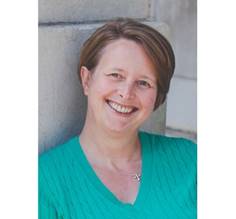
I am delighted to welcome novelist, poet, philosopher, former barrister and fashion model Diana Janney as my May guest.
Thank you, Diana, for giving up some of your precious time to answer my questions.
Have you always been a deep thinker, even as a child, searching for answers and looking beyond the obvious to try and understand life?
Reflection and deep thinking have been important to me for as far back as I can remember. As a child, ‘why’ was my favourite word! My late father was a clergyman and he and my mother spent a lot of time discussing big questions as a family and with others, which I enjoyed. I became interested in Philosophy through Latin A level, fascinated by Cicero and Ovid in particular, as well as the poems of Catullus. In my latest novel A Man of Understanding, I have translated part of a Horace ode, which reminded me of those school days! Before going to university to read Philosophy, I had already become fascinated by Eastern Philosophy, and it was a wonderful experience to expand that love of Philosophy at UCL. I’m not sure that I would say that I try to understand life, as this would be an impossible task, but I do search for answers to big questions, especially those related to ethics, aesthetics, personal identity, faith and religion, and the concept of choice, freewill and moral responsibility. I enjoy the exploration of the questions even if there are no answers.

Your careers to date have been varied and impressive, but would you say that your love of creative writing and poetry developed first and has weaved through your professional life until it became your central focus?
My love of creative writing and poetry developed during my schooldays when it became clear that I had a talent for both. Philosophy became very much a part of my life during my years at UCL, first as an undergraduate and then as a postgraduate in Philosophy. That fascination continues to the present day. In all my novels so far (and in the next) I weave philosophy as well as poetry into the plot as I believe they both offer so much on which to reflect. Having been a barrister gave me the opportunity to be a mouthpiece for those I represented, and it helped me to be persuasive in argument, both of which are good training for being a writer, and Philosophy encouraged me to reflect on important issues, which I weave into my novels.
A Man of Understanding, your third novel, is described as a story of bereavement and healing. This sounds so positive, as anyone who has grieved the loss of a close loved one – particularly early in life, will know, that healing is a difficult and very personal journey. How was your own life affected by your father’s death and is this healing part of your shared experience?
The death of my father came as a tragic shock to me and my mother. I was an only child, as were both my parents, so the family was already small before we lost him. It was impossible not to admire his positive approach to dying and the strength of his faith. In my writing about loss and grieving, I seek to do justice to the positivity he showed at that time and during his life. In my novels, I want to share that experience in a way that may help others to see that the loss of loved ones does not mean that the lessons we learnt from them disappear when they do. We reflect on what they showed us during their existence, and in some ways those lessons become stronger through losing those we love. It is at times of loss and tragedy that we reflect most strongly on what really matters in life. We often turn to creative ways of expressing what we are feeling inside, as recently bereaved Blue discovers through the relationship that grows, after the sudden death of his parents, between him and the philosopher-poet grandfather Horatio Hennessy whom he has never met.

Being shortlisted for The People’s Book Prize 2023 was obviously a huge achievement as it reflects the readers’ choice. Your novels are written with a unique and enthusiastic insight into their subject matter. Do you write the book that is in your heart and how do you balance this with the commercial side of the publishing industry, of writing for a target market?
Thank you, Valerie. In fact, I was the Runner-Up in The People’s Book Prize, which was an even greater achievement, especially as the Patron Emeritus of the Prize is Frederick Forsyth, and the late Dame Beryl Bainbridge was the Founder. It was a great honour for me. I always write from the heart and from my knowledge and reflections, and it moves me when I read how much my writing has moved others. That is what matters most to me. My target market is always those who enjoy moving and thought-provoking literary fiction with interesting characters and an unpredictable plot. There are a lot of novels published that are quite predictable and are not thought-provoking but nevertheless they sell well, and people enjoy them. The publishing industry needs variety as there are so many readers in the world. But I would not write anything that did not reflect my own questions, knowledge and creativity. Fortunately, my writing seems to appeal to readers, and it is wonderful also to be published in translation in lots of different countries and to have international appeal. I believe that to be a successful writer, it is important to write about what you know (which can include research if necessary) and, as Horatio says to Blue in A Man of Understanding, about what moves you, what stirs your soul.
Do you aim to make your books accessible to people who have had little opportunity to study, or exposure to, the classics or philosophy?
Accessibility is important when weaving philosophy and the classics into novels. It requires interesting characters who really bring these subjects alive, which is what I always aim to do. These subjects do not have to be dry and difficult to understand. Blue is a twelve-year-old boy, and he is fascinated by them. My books appeal to both those who already have a knowledge of philosophy and the classics, and those who do not and are surprised by how much they enjoy these subjects in my writing.
Do you have any plans to publish an anthology of your themed poems?
I haven’t considered an anthology of my themed poems. Maybe I should! They have certainly proved very popular. Some of my poems in my novels are specifically related to the plots, which might not fit easily with an anthology. In my next novel, there is also poetry, but of a very different style.
When not studying, writing, and working what do you do to relax?
Most of my time is spent in writing, especially at the moment as I am finishing my next novel. But I love to play chess, table tennis, swim, play my violin, spend lots of time with my husband discovering new places, new concerts, new plays, new restaurants, new recipes, new people and new music to play together (my husband plays the piano). Of course, returning to old places, concerts, restaurants, recipes, friends, music is also enjoyable! I also find meditation a good way to relax.
Mallorca features in your novels, is it a place that you have strong links to?
My husband and I have spent a lot of time in Mallorca over the years. It is a place we will always return to. Our first ever holiday together was there. My first novel and my latest novel are both set in Mallorca, which says a lot about my love of the island! The north of Mallorca, in the mountains, was the ideal setting for A Man of Understanding as the arts and aesthetics are fundamental to the plot and this area is not only celebrated for its contribution to the arts and culture generally but the island is also a work of art in itself.

The title of your novel is similar to a quote from the Bible. How much has your own faith driven you to succeed and overcome life’s challenges?
Yes, the title is derived from Proverbs 10:23 ‘…a man of understanding hath wisdom.’ Success is such a big word that means something different to each of us, I think. What I hope for most is that I succeed in helping readers reflect on different topics, such as: ways of overcoming loss and grief, exploring their creative side and embracing the importance of the arts and aesthetics in spiritual development, reflecting on the importance of love (as Aristotle teaches, through learning the importance of understanding and respecting the self as well as others), reflecting on religious and philosophical questions from different perspectives, remembering who and what really matters. I believe that my own faith has guided me towards an understanding of where my true talents lie (in the biblical sense of that word), which is what urges me on to write as I do. My faith has also helped and tested me in times of life’s challenges.
Do you create your characters from elements of people you have known or met professionally, or do they walk onto your mind as you write and develop the plot?
There are aspects of myself in my novels, and in The Infinite Wisdom of Harriet Rose, there are aspects of my family in Harriet’s. In A Man of Understanding, I drew the characters from my imagination, they are all unique, with a few touches of myself and my grandfathers (one I knew, the other died before I was born) in poet-philosopher Horatio Hennessy. The characters certainly help to develop the plot – who would dare not to listen to what Horatio had to say?!
Latin is used in the classics, medicine, and law; do you think that basic Latin should still be taught in schools?
The idea of Latin not being taught in schools horrifies me. I found Latin very useful when learning other languages, as it is in the English language. There is something very special about being able to translate the words of some of the world’s greatest thinkers.
What do you hope that your readers take away from reading your books?
A strong sense of the importance of valuing love and reflection and creativity. Also, the title, so that if they enjoyed it, they will recommend it to others!
Have you ever had to deal with work being rejected?
I don’t think that writers should think in terms of rejection. I would call rejection of work a publisher not making an offer to publish, for which there can be a number of reasons (some linked to the work itself, some to the publisher, some to the market at the time of submission). As with most published authors, not every publisher who has received my work has made me an offer to publish, whilst there have been many discerning publishers who have!
What advice would you give new writers starting out?
Reflect long and hard on whether writing is where your true talent lies. It isn’t enough just to like the idea of being a writer. You need to enjoy it, you need to feel you have something to say, you need to be observant (of people and the world around you). Write about what you know. Write about what matters to you. Don’t try to write like someone else. Be yourself. Be unique. Be patient. Listen to your characters. Write your story, however long it takes, until you feel sad that you have reached the end and that you are leaving your characters and their life behind.
What is next for Diana?
Right now – supper! Writing-wise, I have almost completed the first draft of my next novel, which is being published next year. I am fulfilling my own criteria in that I am enjoying writing it immensely, I love the characters, the plot, the research, the knowledge I’m gaining through creating it, including about myself. It matters to me. It moves my soul. And I don’t want to say goodbye to the characters!
Thank you for taking the time to answer my interview questions. I wish you every ongoing success.
It was my pleasure. Thank you for your interesting questions.




 valerie holmes, author