Bolton Castle

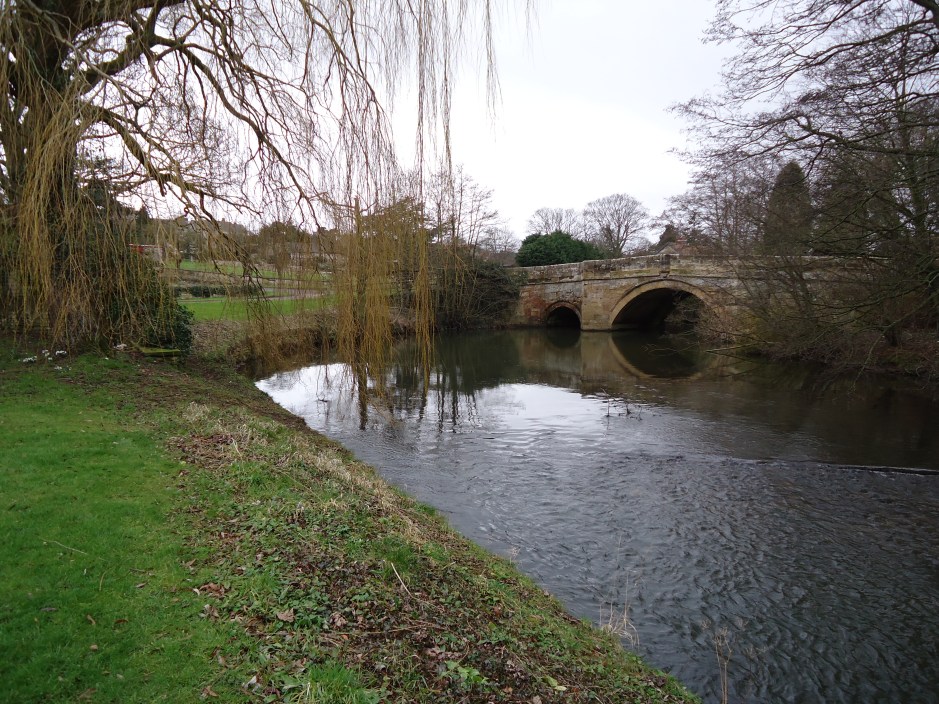
When I was touring North Yorkshire and the Yorkshire Dales National Park this summer, researching scenes for the Penn Mysteries, I was lucky enough to discover the medieval gem that is Bolton Castle.

In the heart of Wensleydale Richard II’s Lord Chancellor of England, Sir Richard le Scrope had the castle built between 1379 and 1399. It is in a remarkable state of repair and is still owned by Lord Bolton who is a direct descendant of its founder.

We had a lovely day exploring its battlements, rooms, stores, armoury, dungeon, kitchen and courtyard. Actors provided a medieval play and archers put on a display. Tents surrounded the entrance showing how people lived in medieval England – a joy to the sound, smells and skills of the time.

Before we left the tea rooms provided a truly lovely light meal in ancient surroundings. If you are in the area during the holiday season, I would recommend a visit. The area is absolutely beautiful for hiking or simply touring.

Pantomimes & Fairy Tales

Christmas would not be Christmas in the UK without the onset of the pantomime season.  Theaters up and down the land give way to the colourful, family, slap-stick humour of the pantomime. Celebrities appear in the most surprising roles to join in the seasonal fun. One of the most popular titles is the adaptation of the beloved fairy-tale Cinderella.

Poor Cinderella is a persecuted heroine. She has lost her own mother and father and is left in the ‘care’ of her step-mother and her daughters – the ugly sisters.

The origins of Cinderella can be traced back through different cultures at various times in history from: Greek mythology, Chinese fable, seventeenth century France in Perrault’s verison in 1697 and the Brothers Grimm’s Ashenputtel to name but a few.

It is a universal theme. Beauty is more than skin deep and so is ugliness. Cinderella’s rescuer can be magical, human, a tree – or in my version on this Cinderella theme, a combination of faith, hope and love in human form who seeks justice for my poor Ellie. Of course, the greatest of these is love 🙂

Flat bottoms and Yorkshire Cobles

One of my fondest memories of growing up in the coastal town of Redcar was walking along the promenade with my father and seeing the flat-bottomed fishing boats being pulled up onto the beach after they crashed through the breakers on the shore-line.

People went down to meet them on the fine sand of the beach to see what they had to sell of their catch. I would eagerly peer inside. Fresh fish meant just that: mackerel, cod or crab to name but a few, depending on the season.

Sadly, this scene is no longer common. The boats that once lined the promenade are few. All along the bay towns of the northeast coast, the fishing industry has diminished.

In Phoebe’s Challenge, she instantly looks upon the distant boats and the sweeping bay as a scene of beauty when she sees the bay open up before her for the very first time. This story is based on a village I call Ebton, which has striking resemblances to Saltburn.

In my previous blog post on Cobles and Contraband, I talked about the versatility of the cobles (often called cobbles locally) and their use in smuggling at the turn of the nineteenth century. When the sea wall was being built at the end of the eighteenth century many men were housed in the small towns of Coatham and Redcar. They supplemented their income, like the local people, by working in gangs to bring contraband ashore from the colliers and luggers that would hover illegally off the coast. They would then distribute it before the beleaguered customs service could catch them. They would have been vastly outnumbered anyway.

One historic boat, which does still have pride of place in its own museum, is the Zetland Lifeboat.

In October 1802 this oldest surviving lifeboat in the world arrived at the small coastal town of Redcar in North Yorkshire. In its time it has been used to save over 500 lives and the service that began with it has continued to work in the exceptionally dangerous conditions of rescues in the North Sea. Grace Darling was an exceptionally brave lady who risked her own life to save others. The RNLI continues to save lives. These days their boats do not need pulling down to the edge of the water, but they face the same dangerous, treacherous seas as their forefathers.

Roses are Dead: Burglary and Intent

Occasionally I drift away from my love of history for a change of pace and venture into a contemporary world of suspense, love and adventure. This usually happens when something in reality has struck a nerve, such as when a friend’s home was burgled.

Jen’s world is turned upside down when she should be at a happy beginning in her life. She is hounded by a string of unnerving events and then someone breaks into her home; her new sanctuary.

We read about burglaries all the time. However, they are not only a violation of a person’s belongings and space, but also their peace of mind. How quickly a person bounces back from such an experience will depend upon the individual and the extent of the theft and damage.

Doubts can linger regarding the motivation behind the crime – Was it a random event? Was I targeted? Did they know my work pattern so that I would not be there? Do they know me?

In fiction we can play with these questions, keeping the answers and consequences within our control. However, in reality, overcoming such a personal violation can take a lot of time. Authors often focus on the crime and catching the criminals, but I respect that for the victim this is only part of the process of healing and restoring that inner peace.

If you want to read Jen’s story, Roses are Dead is available from Amazon and Smashwords.

Yorkshire Parkin


My earliest memories from my young life in the small coastal town in North Yorkshire include running into my Aunty Mary’s house and smelling the fresh baking coming from her kitchen. She was a lovely lady who would bake a cake for anyone in need, simply as a gift to share, or to have something in to offer a visitor with a cup of tea.

She was not wealthy, her home was ordinary, but the feel of homeliness within it was something money cannot buy. Among her many recipes was my favourite chocolate cake with lovely icing that seemed to dissolve on your tongue as the cake melted away. The next memorable taste sensation, which I always associated with November, was her sumptuous ginger cake – Parkin.

This warming winter treat was rich in spices, sugar, ginger, oats and treacle. It was not for a calorie controlled diet, but for a comfort food that when warmed would leave you full for hours.

In my stories, cooks occasionally share their treats with the young miss of the households – like Hannah and Abigail. Parkin is often linked to Guy Fawkes night and bonfires, but to me it is a trip into nostalgia and many lovely visits to a lady who taught me the meaning of giving and a loving home.

Here is a simple recipe to follow from the BBC Good Food website.

York

I am so lucky that in the course of doing my research for my own titles I have been able to visit some fascinating historic places. York is the one that encapsulates time as now other. If you were a Roman, it was known as Eboracum. If you had lived there through the Saxon era, then it would have been called Eoforwick. Perhaps it is better known historically as Jorvik because of the state of the art Jorvik museum which brings Viking York back to life.

Walking through the city’s narrow lanes is like seeing all eras of time side-by-side. Medieval wooden structures stand next to Georgian houses and over them all are the famous towers of a grand cathedral known as The Minster.

There are far too many aspects of this fantastic place to mention in one post so I am sharing some photos of the city with you that I discovered when researching locations for Abigail Moor.

Congratulations to Cindy!

I was delighted to read today that Cindy Kirk has just become the President of Romance Writers’ of America, which has a membership of over ten thousand.
The RWA represents romance writers in the same capacity as the Romantic Novelists’ Association does in England and the Romance Writers’ of Australia.

These wonderful organisations are focused on advancing the professional interests of career-focused romance writers. They offer a network which is helpful and informative to their members as well as holding events, conferences and high profile competitions such as The RITA, RoNA and ARRA awards. Two of my own titles: Hannah of Harpham Hall and Moving On were short-listed for the now named RONA Rose award. I have been a member of the RNA for many years and find their willingness to guide new writers inspiring.

You can read more about Cindy in my interview with her earlier this year. I hope she has a really marvellous time promoting the organisation she so obviously loves.

The Laundry Maid’s Lye

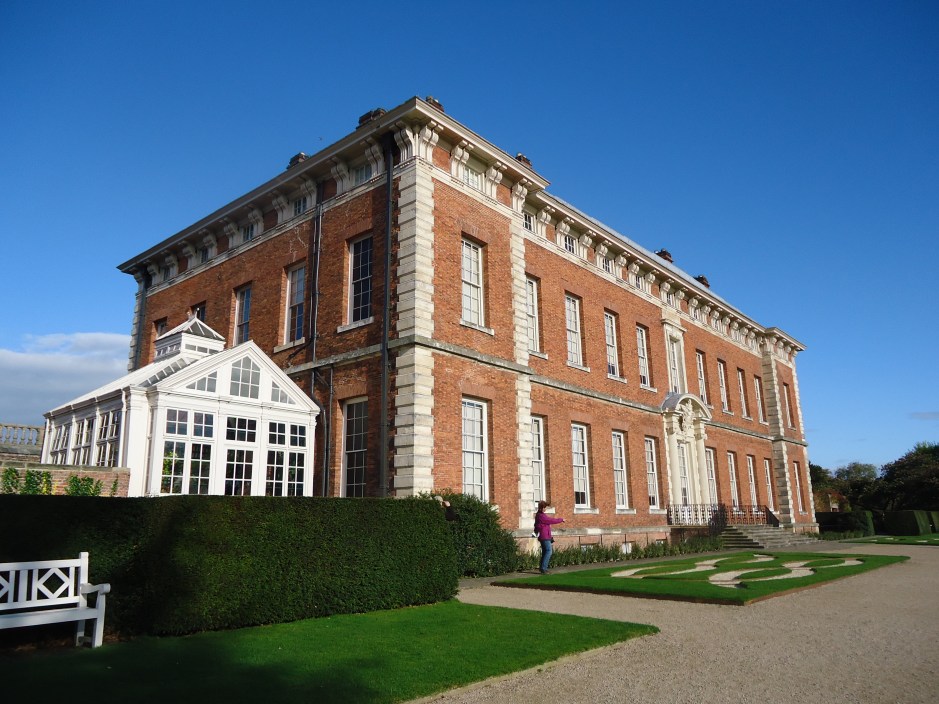
I have just revisited the beautiful Georgian house and grounds of Beningbrough Hall, north of the ancient city of York. It was as I walked around the laundry in the grounds of the house, crossing through the archway of the bell-tower, that I created the heroine Miss Chloe Branton and Mr Tobias Poole.

The life of a laundry maid was hard. In the days before running hot and cold water, it had to be either hauled from a well or stream or pumped up from an underground source. Once they had the water they then had to heat it and use substances such as lye soap to soak, wash or scrub the garments, which was hard on the hands. Even the garments were more difficult to maintain as before modern textiles, dyes and methods of controlled cleaning the garments may have to be unpicked to separate delicate lace, from wool or silk and each section cleaned or washed separately. Materials were not colorfast and were often heavy. A careless laundry maid could cause shrinkage, pilling and ruin a garment and easily lose her already lowly position.

It was a hard life, but it was also an excellent place for someone to be hidden away for a short time. Chloe was unused to hard work, in a building with a cold stone-flagged floor, lifting heavy loads. She needed help and a good friend to survive.

A Christmas Gift!

A Christmas Gift by Ruby Jackson has just been released!

A Christmas Gift, Ruby Jackson
Sally Brewer has always wanted to be an actress. When war breaks out and her drama school closes she is sure the dream has ended. She finds a job as general dog’s body at a small theatre but works hard to learn as much as possible. Invited to a London theatre, she buys a beautiful cloak in a second hand shop. Is it the cloak, the valuable ring she finds in the lining, Sebastian, the former child star who rescues her from unpleasantness at the theatre or ‘just Jon’, the enigmatic sailor whose wife had owned the cloak and the ring but Sally’s life changes. As bombs fall on London she works tirelessly to raise the morale of service personnel everywhere but can she herself survive the message that reads, ‘Missing in Action’?

You can find it on Amazon and read about the author here.

The Captain’s Creek – Pressing Times

Maggie Chase discovers an injured stranger hiding between two rocks as he flees for his life on the beach. Rapidly, she is forced to make a choice: reveal his whereabouts to the fast approaching press gang, or hide him from their sight.

The Impress Service was set up to make sure that the Royal Navy had the needed number of sailors to man its ships. It was harsh and unfair as the press gangs were notorious for their raids, often ignoring the set age-limits of between 18-55, in an era when it was difficult to prove your age when plucked off the street.

The coastal towns were rife with smuggling. Robin Hood’s Bay, for example, had a network of tunnels and passages linking the houses built on its steep banks. Although these were designed to move and hide contraband, they also proved useful when the press gang arrived. The womenfolk fought off the gang with anything they had to hand whilst their menfolk hid. They were a tough and hardy people, which is why the service wanted good seafaring men at a time when paid volunteers were not enough in number to fight Napoleon’s threat. Criminals who had chosen to serve a different type of sentence in the Royal Navy were often weakened by illness because of their previous incarceration. Therefore, the press gang swooped on the unsuspecting and gained a ruthless reputation as a result.

The eBook of The Captain’s Creek is available from Smashwords and Amazon directly or from most eBook sellers.