An Interview with Freda Lightfoot

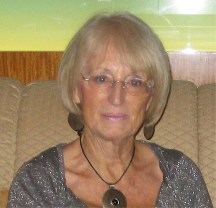
Freda L-close up 6My very special guest for Christmas is prolifically successful historical author, Freda Lightfoot, with an insight into her career and sharing with us how she now enjoys the best of two worlds.

You have served a very interesting writing apprenticeship in order to attain the success you now enjoy. Could you share some of the key moments with us?

My first published piece was called An Elizabethan Toothache, published by Today’s Guide in 1972. I followed this small success with pieces on how to pass various badges, how-to’s, crosswords, quizzes and puzzles, then short stories and a serial, all of which sold to Guide and Brownie magazines and annuals. Fiction was what I really wanted to write but amidst all the child rearing and running a book shop, time to write was hard to come by. It wasn’t until I sold the business and moved out into the country that I started writing articles and short stories for adult magazines. My first success with a novel was a historical romance for Mills & Boon called Madeiran Legacy. I went on to write four more before my plot lines were becoming far too complicated and I wanted to write about real women.

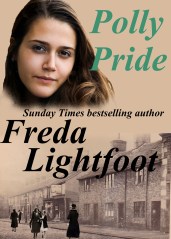
Polly Pride-webYour Lancashire routes have provided a strong background for your Sagas. Have you used some of your own family’s historical experiences within the fiction?

Indeed I have, many times. My grandmother was the spark for Big Flo in Polly Pride. She’d had a hard life but was a real stoic, as Lancashire women were in those days. And the idea for the story came from my Great Aunt Hannah, who did exactly as Polly did and sold or pawned her furniture in order to buy a piece of carpet from a ship in Liverpool. Then she cut it up and sold the squares on the market. But her husband didn’t object as Polly’s did. Family stories may be the inspiration, but the story is fiction.

I often advise new writers that in order to succeed you need to be determined and dedicated. You seem to have these attributes in abundance as you have owned a small holding and a bookshop as well as becoming a successful writer and now live in an olive grove in Spain. Do you have a strong work-ethic, which you apply to your writing routine? 

I dare say that is true, maybe I inherited it from my grandmother, and a long line of Lancashire and Yorkshire weavers. But then I love my work so it is no hardship to spend hours each day at the job. I put my heart and soul into my stories, which is absolutely essential. You must lose your inhibitions and be entirely sincere, but yes, it does take hard work and dedication. I’d say it demands the three p’s, which stand for practise, persistence, and passion for your craft.

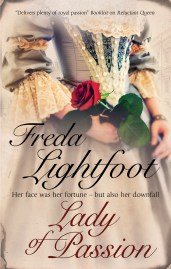
Lady of PassionYour fictionalised biographies must need meticulous research, even more so than historical sagas. How long do you spend researching a new project? Roughly how long do you take to write a completed first draft? 

When I reach a certain stage with my work in progress, I start a little preliminary research on the next book, which gradually builds, taking several months altogether. All my books demand a good deal of research, for which I have a substantial library, plus interviews for my sagas. I’ve met some marvellous old folk who share their working lives and memories with me. The biographical historicals do take longer though, as you can’t make it up, and I like to be as accurate as possible. It’s rather like detective work trying to build the character and life of a real person. Fascinating.

Breaking into the eBook market was another bold move, which has certainly worked. Could you share any tips on how you made this a success? 

I entered the digital market back in 2010, which were pioneering days for ebooks but I taught myself how to do the necessary formatting and put them up by way of experiment to see what would happen. Nothing much did at first but when the UK came on board in December 2011 and Santa Claus delivered a load of Kindles, they really took off. The more books you publish, the more you sell. But they must be good, page-turning stories, well-written and not rushed, error-free and properly edited with good commercial covers.

You now live in Spain. How did this move come about? 

It all began back in 1997 when we bought a holiday home here, a little village house high in the mountains 20 kilometres from the coast. We fell in love with the village and found we were spending more and more time here, so finally bought a piece of land with an olive grove on it and built ourselves a house for our so-called retirement. Of course, writers don’t retire, but we love spending our winters here, and summers in the UK.

Will Spain feature more in your future novels?

I do have one or two ideas, so watch this space. It could happen.

You have the best of both worlds – Would you share a couple of things that you love most about your home country and your new one?

We do have the best of both worlds as here in Spain we can avoid the British winter. Almeria is the last designated desert in mainland Europe so in the daytime we can enjoy some sunshine and gardening, and as the nights grow cold we can light a fire and be cosy. The Spanish people are very friendly and we have a good life here with many friends of all nationalities. In the UK I love taking part in writer’s events, talks and conferences, visiting stately homes, and enjoying all things British.

Could you give a seasonal insight as to how Christmas in Spain varies to our traditional one in England?

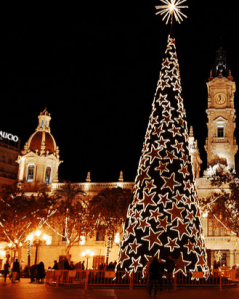
l-ayuntamiento_valencia_navidad-reidrac-14_12_08-cc20.jpg

One of the joys of living in Spain is that there isn’t the same commercial fuss made. Feliz Navidad will be up there in twinkling lights, and pontsettias everywhere, the Nativity scene ‘Nacimiento’ can be seen in plazas as well as many Spanish homes and shop windows, but Christmas itself is fairly low key.

Christmas Eve, Nochebuena, is when the main Christmas meal is taken, often roast lamb or suckling pig, a feast that takes place quite late, as do all Spanish fiestas, starting around 10 p.m. and going on until the small hours. Some families will sing carols around the nativity scene which remains without the baby until the stroke of midnight. Others go to midnight Mass ‘La misa del Gallo’, Rooster Mass, named after the bird who announced the birth of Christ. Many people, of course, like the rest of us, just watch the Christmas programme’s on TV while enjoying the traditional Turrón (nougat), or mantecas (a range of butter-based biscuits) with cava.

The big celebration for the Spanish is Fiesta de Los Reyes, Three Kings Day on January 6th. What we would call Epiphany. Traditionally, this is when Spanish children get their presents, not on Christmas Day from Papa Noel, although these days some enjoy gifts on both days. By then we’re packing our Christmas decorations away, but the Spanish are still partying.

What is next for Freda?

I’m currently working on another saga, which I never talk about until it is done. After that I plan to write a sequel for Polly Pride, and also another biographical historical in my royal mistresses series about Sarah Lennox, who had the chance to marry George III, but blew it. I do like to have lots to look forward to.

More by Freda:

An Interview with Nicola Cornick

Nicola Cornick - profileWelcome to my blog, Nicola. I must confess that your childhood interests me. I have visited many stately homes and heritage sites over the years and the idea of going to school in the dower house of C18 Harewood House fascinates me. Was this where your love of history and academic research began?

Thank you very much for inviting me to visit today! It’s a pleasure to be here.

I think I was very lucky to go to school in an 18th century house! It was definitely inspirational. There was a very grand staircase, a beautiful “winter garden” where we took our art lessons and lots of old nooks and crannies to explore. The house was surrounded by parkland too so we could run wild in the grounds and we could tell each other scary ghost stories on the dark winter evenings! I think that being in such a historic atmosphere intrigued me and sparked my curiosity; I wanted to learn about the house and its past occupants and from there my love of history developed.

Could you tell us about the work you do at the National Trust’s Ashdown House?

I’d love to! I work as a guide and historian at Ashdown House, a stunning 17th century hunting lodge in Oxfordshire. I show people around the house and give them a guided tour telling them about the history of the house and the Craven family who owned it. It’s a fabulous, romantic-looking place and the history is rich and romantic too! I also do lots of research into the history of the house. I’m learning about it all the time and the more I discover the more fascinating it becomes. We’ve just found some secret tunnels leading off from the wine cellar!

Your first Regency novel was published in 1998. What is it about this era that appeals to you so much?

I’ve always loved the Regency era as a writer and a reader. Like so may readers I started with the books of Georgette Heyer and their wit and the beautiful way that Heyer evokes the era really enthralled me. I love the elegance and the manners and the fascinating contrast between the outward show and the intense emotions that may be hidden beneath the surface. One of the challenges for a writer is to find a way for those emotions to be expressed within the constraints of the behaviour of the time.

How did your breakthrough into publication happen?

I had a long journey to publication. My first book, True Colours, was twelve years in the writing because I was also working full time and could only snatch short periods of time to write. Mills & Boon rejected my first attempt as having too much adventure and not enough romance. I re-wrote it twice more before they finally accepted it.

Who or what was your biggest inspiration in becoming a fiction author?

There have been so many people who have inspired me. The writing of authors such as Mary Stewart and Daphne Du Maurier fired me with the desire to be a writer when I was in my teens. My teacher, Mrs Chary, inspired in me a huge love of history and for that I will always be grateful to her. I always knew that it was historical fiction that I wanted to write. The other big influence was my wonderful grandmother, whose collection of historical novels I devoured and with whom I watched costume dramas on a Sunday night!

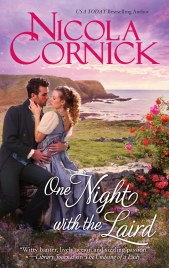
One Night with the Laird - US copyYou are an enthusiastic traveller on a world-wide scale, but for your latest series you have headed north of the border and changed period for The Lady and the LairdOne Night with the Laird out this month and the final book Claimed by the Laird, which will be published next year. What triggered this change in location and direction?

I do love travelling and have been lucky enough to visit some amazing places all around the globe. One of my favourite places, though, is Scotland and I have wanted to set a book there for years. It was fascinating to research Scotland in the early 19th century and see the similarities and differences in politics and culture compared with south of the border. It was huge fun to write the Scottish Brides trilogy!

What is next for Nicola?

I have lots of exciting plans for next year.  There are several new Regency ideas I’m going to be working on, plus a book inspired by Ashdown House!

Thank you for taking the time to answer my questions and for sharing some of your unique experiences with us.

Thank you!
More by Nicola:

An interview with Trisha Ashley

267398_163150827092202_2914025_nI am excited to welcome the lovely Trisha Ashley, an award-winning and best-selling author of humorous romantic fiction. 

How much have your entertaining novels been influenced by your own studies, hobbies and work experience?

There are elements of my interests and experiences woven in all of them, of course, but like most novelists I tend to use turning points and situations in my own life as jumping off points to explore new directions my characters can take – because after all, they’re not me and they would do things very differently.  They constantly surprise me.

      There is, of course, rather a lot about food in my books and all the research has taken its toll on my figure – but then, you have to suffer for your art.   I also love animals and gardens – especially roses – and often, too, my novels reveal the enduring power of good friendships and the supporting love of families, however dysfunctional they may at first appear.

      I’ve had a series of part time jobs over the years to support my writing and I think probably the seasonal work for the National Trust was the most useful.  For a few years I spent six days a week either in the draughty front hall of a large gloomy mansion, or in a little wooden hut at the entrance to the lovely Bodnant Garden in North Wales.  Now, those gardens were really inspiring and I was lucky enough to be there when a new young (and handsome) head gardener, Troy Scott Smith, had just taken over and was slowly revitalising it.  I think you can date my passions for roses, mazes and knot gardens to this time…

      But all of life’s experiences, good or bad, can be composted down and used to grow something fresh and new: nothing need be wasted.

When did the Muse enter your life? I hope he gets on with Dog.

I don’t think I can do better than to quote the update I put at the top of my quarterly newsletters for new subscribers:

      The plot so far: Except when she is occasionally let out to enjoy a couple of days of frenetic partying in London, or to give a talk, Trisha lives in beautiful North Wales, together with the neurotic Border Collie foisted onto her by her student son and an equally neurotic but also vain, bad-tempered and chancy Muse.  Muse, whose first name is Lucifer, slipped into her head and took up residence while she was reading Paradise Lost at school and refuses to leave.  He is male, steely-blue, wears a lot of leather, is winged, has talons (so that’s where her blue nail varnish went, then) and is devilishly handsome, if you like that kind of thing.  He only eats words, but gets through a lot of Leather Food and Trisha is starting to suspect that he does more with it than just rub it into his wings…

     Lately, Muse has been writing a hiss-and-tell account of his life with Trisha, called The Muse Report, though due to the fact that he eats his words almost as fast as he writes them, it could be quite some time before this appears in print.

      Muse takes little notice of Dog, except to eye the name tag on his collar when hungry…

Meeting your agent, Judith Murdoch, was a major turning point in your career.  What key advice would you offer to, as yet, unpublished authors?

There’s too much temptation now to rush out your first novel yourself as an e-book, so if you take that route I’d advise you to have your novel independently edited, and consider the constructive criticism you receive very carefully.  You want your novel to be perfect and whole, not some poor, half-formed creature, and with a first novel you aren’t going to spot what’s wrong with it yourself.

      If you’re lucky enough to be taken on by an agent or publisher, of course, they will tell you what’s wrong with it and being able to accept and work with constructive criticism is something you need to embrace if you’re taking writing seriously.

Are you a very planned and disciplined writer, plotting an outline in advance or do you start with a scene, character or situation and go from there?

I am character driven and, since I write in first person, must get to understand my heroine and her background first. Then I put her into a situation and see where she goes, and the book unrolls before me as I write like a magic carpet.  I don’t know where we’re going until we get there.

You have achieved success as a writer despite having macular degeneration. For those unfamiliar with the condition, would you  please share with us how you have worked around this?

 I have had myopic macular degeneration and very poor eyesight (minus 20) for many years, but the MD has been getting increasingly worse recently.  Macular degeneration means that blind patches increasingly appear on your retina and although I automatically focus around them, when tired that gets harder to do and my vision generally blurs.

      I have little night sight either, so tend to fall off kerbs etc and have been known to try and flag down any dark and vaguely taxi-shaped vehicle in London at night…

      There’s currently no treatment for my kind of MD and I’m supposed to take regular breaks from the computer screen…

      I am exploring new ways of writing at the moment in case I ever get to the point where I can’t see the screen at all, but this isn’t easy since I’ve been touch typing my books since I was fifteen and made the transition to word processors and then computers as soon as they appeared.

      At the moment, I write on screen in large print, but still have lots of room to increase the font size if necessary, so it’s okay.  I print everything out to work on.  But then, I’ve always needed to see my words on paper before they become real.

Please tell us about your new novel?
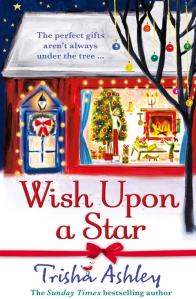
Wish Upon a Star jacketWish Upon a Star will be released on November 7th and has a Sticklepond setting, the village in West Lancashire where some of my other books are set.  It’s very much about following your star, wherever it may lead you and however hard the going gets.

    Single mum Cally’s life revolves around her little girl, Stella, who has serious health problems and when her condition suddenly worsens, they move in with her mother in the remote village of Sticklepond, while she tries to raise enough money to take Stella to America for a potentially life-saving operation.

      Cally only realises quite how tough it’s been shouldering everything alone when all the villagers – and especially laid-back and charming baker Jago – rally round to help.  All Cally wants for Christmas is a miracle to save Stella and with Jago’s help she may yet discover that all the best presents aren’t always found under the Christmas tree…

What is next for Trisha Ashley?

      I’m very happy to say that next year Avon will be doing a new edition of one of my long out of print novels, Every Woman for Herself.  I know you shouldn’t have favourites among your children, but I have to admit that this book is the closest to my heart.  It’s set in Yorkshire, where the Rhymer family, Emily, Charlotte, Anne and Branwell (the result of a failed attempt by their father to recreate the Bronte family situation) slowly return home, one by one to the haven of Upvale – only to find that things are about to change, forever.

      Every Woman for Herself was voted one of the three best romantic novels of the last fifty years in a reader poll, which was a truly wonderful moment, and I’m constantly being asked by readers where they can buy a copy, so I’m delighted it will soon be out again in paperback and e-book formats.  I’m adding a couple of new recipes to the end, too and it will also, of course, have a lovely new cover.

Thank you so much for having me on the blog, Valerie, and I wish everyone lots of very happy reading!
Good husband material high resMore by Trisha:

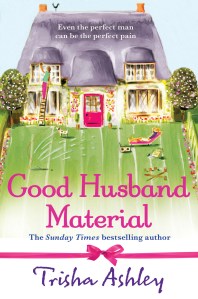
Another warm, wise and witty offering from Sunday Times bestseller Trisha Ashley.

James is everything Tish has ever wanted in a husband – she’s married a man who even her mother approves of. He’s handsome, dependable, and will make an excellent father – unlike Tish’s first love, the disreputable Fergal. Her teenage sweetheart abandoned her for a music career and now lives a typical celebrity lifestyle. Fergal broke her heart – James helped mend it.

Now, they’ve bought a cottage in the country. The next step – kids and a lifetime of domestic bliss. Well, that’s the plan. And even if James has a slight tendency to view the village pub as a second home, their relationship is still in pretty good shape after seven years of marriage. So why is marriage to Mr Right making her long for Mr Wrong?

◆ July’s News

July has been a lovely, sunny and busy month. The RNA’s conference in Sheffield was interesting, well organised and friendly, as always. So much to learn and so many people to meet.

Pia Fenton, aka Christina Courtenay was welcomed as our new chairman and I am delighted to have her as my guest interviewee for July along with the talented Henriette Gyland.

 Pheobe’s Challenge is now FREE as a summer promotion on www.smashwords.com – an exciting romantic adventure as Phoebe escapes from a cotton mill and the grip of the evil Benjamin Bladderwell…

I hope everyone is having a lovely summer and look forward to sharing some more news and another interesting interview in August.

Val

An interview with Pia Fenton, a.k.a. Christina Courtenay

ChristinaCourtenayMarch2013I am delighted to welcome award-winning author and new chair of the Romantic Novelists’ Association, Pia Fenton, who writes as Christina Courtenay.
Congratulations on becoming the chair of the RNA. How much of an influence has the RNA had on your own career?
I think it’s safe to say that without the RNA I wouldn’t be published at all!  I found my way to the association at a time when I was about to give up on writing and it changed everything for me.  When I sent in my first m/s to the New Writers’ Scheme and got a critique back from someone who took my writing seriously and liked what I’d done, it was an amazing feeling.  And although there was a lot wrong with that first novel, I was basically on the right track and needed to be told what my mistakes were, so that was really helpful.  The other thing the RNA has done for me is give me wonderful writing friends and critique partners – I can never thank them enough!

Childhood is a time when imaginations really develop. Do you think that yours influenced your writing style and interests?

 Yes, absolutely.  I was hooked on fairy tales with handsome princes and happy ever afters and that’s what I want now too, albeit a grown up version.  I was also always interested in history, so for me writing historicals was inevitable.

Would you agree that your work reflects your unique cross-cultural experience?

I think so, yes, as most of my books feature heroes and heroines from different cultures who have to overcome their differences and realise that we are all the same underneath.  Also that no one culture is necessarily right about everything, we have to compromise.  Being half Swedish and half English I can see things from two sides, and having lived abroad has given me a different perspective on things as well.

Could you give us an insight into your own preferred way of working when you set out on a new novel adventure?

It’s a bit messy I’m afraid!  It usually starts with a scene that appears in my head, often triggered by something or someone (a handsome actor?) and then the rest of the story develops from there.  That scene can be anywhere in the book, so sometimes I work backwards, sometimes forwards.  As I said, it’s a bit chaotic but somehow it always works out in the end!  And incidentally, I always know how I want it to end, even if I don’t know anything else.

In August your first YA novel is published by Choc Lit. Could you tell us about it and if this is a permanent change of direction for you?

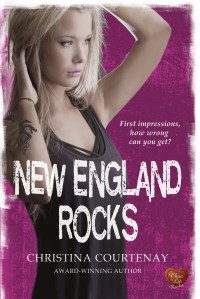
As I’d been writing historicals for many years, with all the research that entails, I decided to give myself permission to write something else just for fun last year.  The result was a contemporary YA book that needed no research and reflected the sort of high school experience I would have liked to have had myself.  Here is the blurb for New England Rocks:-

NER FrontFirst impressions, how wrong can you get?

When Rain Mackenzie is expelled from her British boarding school, she can’t believe her bad luck. Not only is she forced to move to New England, USA, she’s also sent to the local high school, as a punishment.
Rain makes it her mission to dislike everything about Northbrooke High, but what she doesn’t bank on is meeting Jesse Devlin…
Jesse is the hottest guy Rain’s ever seen and he plays guitar in an awesome rock band!
There’s just one small problem …  Jesse already has a girlfriend, little miss perfect Amber Lawrence, who looks set to cause trouble as Rain and Jesse grow closer.
But, what does it matter? New England sucks anyway, and Rain doesn’t plan on sticking around…
Does she?

I hadn’t intended to send it to my publisher, but eventually I did and Choc Lit decided they wanted to start a YA line, which was great!  I’ve since allowed myself some more time off from the historicals, so this is the first in a series.  The second one will hopefully be out next year.  But I’ll still be writing historicals and time slips as well.

What is next for Christina Courtenay?

I’ve just finished writing the third book in the Kinross trilogy, Monsoon Mists.  It’s gone off to Choc Lit to see if it passes muster, so now I can concentrate on something else for a while.  In February next year I have another time slip novel coming out, The Secret Kiss of Darkness – I love time slips, so am very excited about that – and as I said, after that hopefully number two in the YA series.

Sincerest thanks for taking the time to complete this interview.

Thank you very much for inviting me!

More by Christina:

  • New England Rocks, paperback out on 7th August:-

An interview with Henriette Gyland

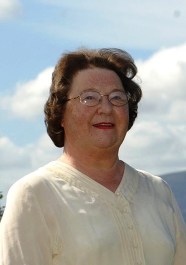
Author photo - HNS Conference 2012, v2 - cropped (1)I have the pleasure of welcoming novelist Henriette Gyland as my guest of the month. Her second novel, The Elephant Girl is due to be published on the 7th July 2013. 

I read in a recent interview that you have an ‘ideas box’. How and when did this begin?

I’ve had this box for years. I used to toss anything in there – newspaper clippings, notes from talks, overheard conversations etc. Even conversations I’d “heard” in my own head. I then discovered that I had real problems deciphering my own reasons for keeping a particular item and ended up throwing stuff away. Now I carefully date the note or clipping, and scribble my reasons in the margin, whether it’s a short story idea or an idea for a longer piece. I also bundle notes together if they relate to the same idea or theme. So there’s a certain method now to what used to be just madness!

How would you describe your work?

Some genres are easier to pin down than others, but mine is tricky because it straddles two of them – crime and romance. Romantic suspense or romance mystery explains it quite well, but I also add a hefty dose of difficult family or personal issues, social topics, political comment. The Elephant Girl is a very loose reworking of Cinderella, which is a fairy tale with a LOT of family stuff going on in it!

What has been your proudest or most memorable moment of your career to date?

There have been a few – being awarded the Katie Fforde Bursary, winning the New Talent Award at the Festival of Romance – but I think the absolute proudest moment to date was when my first novel Up Close was heralded as “Nora Roberts territory” by Sarah Broadhurst in The Bookseller. I’m a huge fan of Nora Roberts, so this was really the best kind of compliment.

I love the cover design of The Elephant Girl. What inspired the idea for this intriguing novel? Did it start by rummaging through your ideas box?

9781781890202

The idea is based on a real-life horrific murder, witnessed by the victim’s young child, and also the old maxim that elephants never forget anything, hence the title. The pendant on the cover is one the main character, Helen, inherits from her dead mother. This story didn’t come from the Ideas Box because I wrote it very shortly after the real crime had happened, and although in some ways I feel a bit strange about creating a story out of another person’s tragedy, I think as writers we just can’t help ourselves sometimes.

Is there one piece of advice that you were given as a new writer which you consider helped you to make the breakthrough as a writer?

When I met the lovely Katie Fforde, about ten years ago, she told me to “keep the faith”. And I she was right. Perseverance and the belief that one day you will get published is the only way to survive the numerous rejections leading up to it.

What do you choose to read to relax?

I’ve just finished Scarlet, the second in a series by Marissa Meyer and now have to wait until 2014 for the next one (sigh). I’m also hoping that C J Sansom will write another Tudor mystery novel in his Shardlake series, but in the meantime I’ve started reading Blackout by my favourite writer, the American sci-fi author Connie Willis. As always, I find every sentence of hers a genuine delight.

What is next for Henriette?

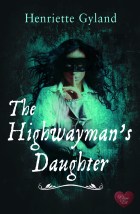
THD_front4 - shaded eyesMy next novel is a complete departure from anything I’ve written so far. It’s a swash-buckling historical tale set in the Georgian period, with highwaymen, a spirited heroine, and a mystery at its core. Well, mystery is my trademark, isn’t it?
My thanks for being my guest. I wish you every further success with your fascinating novels.

More by Henriette:

An interview with Jean Fullerton

June 2013 Web 1Welcome, Jean!

In 2006 you won the Harry Bowling Prize. How much of an impact upon your writing career did this have?

I can’t even begin to tell you how much winning the Harry Bowling changed my life and writing career. It was my big break. It got me my lovely agent Laura and my first two book contract with Orion. It literally changed everything.

Your love and passion for the history of the East End of London is obvious through your work. Growing up in the shadow of The Tower of London must have been amazing, when did the inspiration come to you to create stories within this setting?

I absolutely adore my birth place of East London and use real places and have my characters walking past actual shops and houses if I can. My family have lived in and around the Hawksmoor church of St George’s in the East since the 1820s. I have drawn on my family heritage for my stories, such as the local charity school, public houses and market. I even had my first heroine Ellen O’Casey living in the old house I lived in as a child.

Do you always create the characters and place them in the accurate historical setting, or do you also use real life personal histories as a basis for them?

I am passionate about historical accuracy and do put my characters in the right time and place. I don’t push the edges of history and so if there weren’t steam boats on the Thames until 1842 then I won’t put one in a story set in 1840.

What is your favourite period of history to read or write about?

My life-long love of all things historical started when I was about 5 or 6 and a very young Roger Moore rode on to our 10 inch black and white TV screen as Ivanhoe. This love grew to fruition when I read Katherine by Anna Seton as a teenager. I love all areas of European history and before settling on East London as my place to weave stories I wrote books set in 10th century Wales, 13th century Scotland, during Hereward the Wake’s rebellion in the Fenlands, in Boston just before the American War of Independence and in the Caribbean during the ages of piracy.

I’m still an avid historical reader and as long as the story is historically accurate and pulls me in I’m happy to read any period. I’m also very fond of alternative histories i.e. what would have happened if Harold had won the Battle of Hastings?

You work very hard as a full-time lecturer as well as a writer. Does this affect the way in which you work? Do you plot ahead and schedule, or still let the story evolve on the page/computer screen?

The only way my full-time job really impacts on my writing is that I have to write in the evenings and at weekends. I do plot out my work on a grid as you can see from the first chapter of Call Nurse Millie below. With so many subplots in my books I find it easy to keep track of characters by plotting out the story. I even colour code the scenes on a grid with a particular colour for some characters to ensure I keep an eye on how often they appear.

Scene Events date
1 VE day Millie delivers a baby as street prepares for a Victory party. blancmange pilchards 8/5/45
2 Gets back & has to take over as the superintendent is drunk.
3 Argues with one of the nurses. Phone rings to say her father’s ill
4 At her father’s bedside with her mother as peace is announced. Churchill spoke at 3pm
5 Calls her Aunt Ruby. King at 9pm?
6 Ch2 Goes back to work and meets her friend Connie

Of course, it’s not written in stone and it changes as I go along but it helps keep me on track. It’s very easy to get lost in a 140,000 word novel. Even your own!

I also have a work schedule on which I mark dates when I should have reached a certain point of the story. I usually start writing for a February deadline after Easter with an aim to finish before Christmas. Of course it doesn’t always work out that way but so far the system has helped me hit my deadline with a week or two to spare.

You are an inspiration to many, overcoming dyslexia to become an author. Have you any advice you could give as to how you determinedly set about achieving this goal?

I’m quite happy having dyslexia as I feel it is one of the components of my creativity. If you’re dyslexic at college or work there has to be provision made for you. There’s no such arrangements are in place in publishing. You just have to work very hard and get professional to edit your work.

The aim for any unpublished writer is to get off the slush pile and to do this your submission to an agent or editor must be word perfect. I would advise anyone who has dyslexia to have their manuscript professionally copy edited. And note that doesn’t mean your friend who’s better than you at English. I know it costs money but it is an investment. I actually did a night duty in a care home each month to fund my copy edits.

As a fellow graduate of the RNA’s New Writers’ Scheme I still remember some of the advice that I was given whilst being an unpublished author. What advice do you consider helped you to make the breakthrough into print?

Firstly, if it took me three years to become a nurse, another two to qualify as a district nurse and a further three to become a lecturer, why on earth would I think I could learn the craft of writing overnight?  Very few first books are of a publishable standard. Mine wasn’t. Learn your craft!

Write what you love. If you’re chasing a bandwagon by the time you’ve jumped on its left town.

And persevere. Getting published is a long, hard road but you’ll never achieve it unless you stick with it.

Click to view this book on Amazon.co.uk

Susan Lamb, the Head of Fiction at Orion books asked me to write this book. Orion publishes Call the Midwife along with Jennifer Worth’s other three books. Susan thought as I’m a District and Queen’s Nurse and an East Ender I would be the perfect person to write a fictitious account of a District Nurse and Midwife’s life and work in post-war East London.

I was apprehensive at first but my wonderful editorial team were so sure I could bring the duel strands of my background and profession together in Millie’s story I decided to give it a go. I’m so glad I did because I had a wonderful time researching my own profession and creating Millie’s family, friends and patients.

I started Millie’s story on VE day May 1945. As the troops begin to return home we see the inhabitants of London attempt to put their lives back together.

For 25-year-old Millie, a qualified nurse and midwife, the jubilation at the end of the war is short-lived as she tends to the needs of the East End community around her. But while Millie witnesses tragedy and brutality in her job, she also finds strength and kindness. And when misfortune befalls her own family, it is the enduring spirit of the community that shows Millie that even the toughest of circumstances can be overcome.

Through Millie’s eyes, we see the harsh realities and unexpected joys in the lives of the patients she treats, as well as the camaraderie that is forged with the fellow nurses that she lives with. Filled with unforgettable characters and moving personal stories, this vividly brings to life the colourful world of post-war East London.

What is next for Jean Fullerton?

Well hopefully a new contract very soon for Millie’s friend and fellow nurse, Connie Byrne’s story set this time in and around Spitalfields and Shoreditch again in the immediate post-war period. Then who knows? I have dozens of stories in my head that I’d like to write so that should keep me out of trouble for a good while yet.

Thanks for such very good questions, Val, and giving me the chance to tell people about my writing life.

More by Jean:

An interview with Gwen Kirkwood

Welcome, Gwen!

Your warm-hearted family sagas are based in rural Scotland. When and where did your love affair with Scotland’s beautiful country and history begin?

I have three Scottish grandparents so I had a yearning to see Scotland for myself. I came to Dumfriesshire to work as a milk officer, inspecting dairy farms. The work was not as I had expected but the people were very friendly and I loved the warmth of the red sandstone buildings and the beautiful landscapes with fresh green hills and glens and lots of trees. I have never wanted to leave, especially not after I met and married my husband, a Scottish dairy farmer.

Are any of your wonderful characters based on real people or are they all purely of your own creation?

My characters are all fictional but I think writers must be influenced by people they have met, even if it is only subconsciously. I had a wonderful mother-in-law so a few of my older characters may have some of her kindness and wisdom. We can read of bad characters every day in the newspapers. I have three adult children who keep me up to date with the opinions of their generation. My grandchildren are of varying ages and I often include children. Writers keep on learning and developing and so do the characters but I have never written about a real person.

You took a six year career break. When you returned to your writing did you feel as if your work had changed at all?

I don’t think my writing changed. I still wrote another series of four in a family saga following the generations. My books are shorter, 100,000 words or less now, but that is due to the policy of different publishers.

To date, what has been the most memorable or significant event within your writing career?

I had written four short romances but it was a tremendous boost to my confidence when an agent sold my first long saga to Headline in a very short time. A good editor can have a big influence and Jane Morpeth helped me a lot.

Secondly, I rarely enter competitions but after a long gap from writing it was a lovely surprise to win the Elizabeth Goudge trophy in 2000 when it was resurrected by the RNA for the millennium. It was judged by Richard Lee of the Historical Novel Society.

What top tip would you give new writers wanting to become published writers in today’s market place?

Persevere. Try to write a little every day, even if it is only a couple of sentences. Keep a notepad handy. Consider the strengths and weaknesses of your characters, or improve your plot, while you are travelling, ironing, peeling the vegetables. Thinking time is important too. Listen to the advice of agents and editors, not friends. If you do self-publish pay a reputable copy-editor to check your work first.

You have seen many changes within the publishing industry. What do you think of the new emphasis on social networking and Internet presence?

Honestly? I hate it – well some of the time! I want to be left in peace to write, BUT writing used to be an isolated occupation so I am pleased we now have opportunities for keeping in touch with other writers, getting and giving help, as well as marketing. Networking has become essential so I do my best, but it can take up a lot of time.

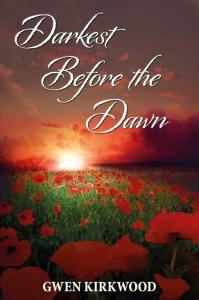
Your new book Darkest Before the Dawn has a very strong cover. Can you tell us something about this novel and what inspired you to write it?

This is the fifth in a series of 5 novels beginning with Dreams of Home at the end of World War II. Darkest Before the Dawn brings the series up to present day with the third generation of the Caraford family. Two of the characters are quite young with problems belonging to their generation so it could almost be a young adult novel, although I did not set out to make it that way. However, it also brings farming up to date with robots for milking cows, arguments between the generations about changes, as well as an unexpected and rather satisfying love affair for two of the older characters.

Darkest Before the Dawn

Joe Lennox becomes bitter and deranged and blames Billy Caraford when his son is killed in a car accident, but Billy has lost his best friend and is badly injured himself. Despite the misgivings of his parents he is still determined to be a farmer. He summons his courage to go to university but privately he regards himself as a cripple now. He is convinced no woman could love him or want to be his wife.

Kimberley is orphaned when her father dies. She moves to Scotland with her aunt but she is nervous about changing schools until Billy helps her find new friends. Both Kim and her aunt become involved in the affairs of the Caraford family and as Kim grows into a lovely young woman she finds the strength of character to confront problems and fight for the life and the love she craves.

What is next for Gwen Kirkwood?

I am going back to the 1800’s and this will be a single novel rather than a series. It has less emphasis on farming but is still set in Scotland. No title yet.

My thanks for taking the time to answer the questions in such an honest and open way. I shall look forward to reading Darkest Before the Dawn when it is available later this month!

More by Gwen:

An interview with Christina Jones

A very warm welcome to this month’s award-winning author, Christina Jones.

Katie Fforde described An Enormously English Monsoon Wedding as “warm, witty and wonderful”. I love the title of this book.  What inspired this novel?

My editor suggested that I should write a summery/weddingy/villagey book as the first in a new series of village-based stories. It threw me a bit to start with, as most of the weddingy themes have been covered a zillion times – but as my daughter recently had a fusion wedding (hers went wonderfully smoothly, I must add – nothing like poor Erin’s!) so I’d learnt a lot about marrying together two totally different religions and styles of wedding ceremony. I knew I had to use the experience – so An Enormously English Monsoon Wedding is the happy result!

What do you consider is at the heart of your novels that makes them so appealing?

Probably their ordinariness (is that a word??). I write about normal people doing normal jobs, nothing and no-one high-powered or high-flying. I also include all ages, genders, and all other diversities. Something for everyone – like real life. They live in small rural communities, everyone knows everyone else, and I suppose it’s all a bit cosy. My whole aim with my books is to create warmth, security, happiness, a few laughs, escapism, and hopefully a massive dollop of feel-good factor. Like everyone else, my real life has had enough sadness – I was determined there’d never be any sadness in my books!

I love the way you create your own villages and the communities that interlink. What was the inspiration for your characters, their world and the stories which they have inspired?

The village where I grew up. No question. It was a very close, rural, working class community, and gave me a fabulously grounded and secure start in life. My friends from back then are still my friends now and we all share the happy memories and the luxury of a perfect childhood. Now I live somewhere very similar, and I watch people and listen to them talking in the corner shop and the pub and just pinch bits here and there! Again, it’s all very safe and cosy – not too twee, I hope – but sort of real and the kind of world that everyone can recognise.

I read in an interview that your cats share your workspace as they do your home. How did you first come to rescue them?

I grew up with animal-loving parents who took in waifs and strays. We had dogs that were going to be shot or drowned before my dad stepped in; cats that had eyes/legs/tails etc missing; ferrets, rabbits and hens that wandered in and out of the kitchen; and ducks that were destined for the dinner table before my mum did a midnight raid on their pen! Nothing was ever turned away. I sort of gravitated towards cats when I first had my own home – via our local vet who had a litter of dumped motherless kittens – and it grew from there. My cats have come from vets, from Cats Protection (the ones no-one wants – too old/scared/injured – oh, and feral in some cases!), word of mouth, and just strays who have turned up and moved in (cats seem to know when there’s a cushy billet!). When I met my husband, he also had rescue cats, so by the time we married and merged our broods we had 11. We’ve never looked back!

What fictional hero/heroine has inspired or impressed you as a reader?

Probably an unpopular choice – but Scarlet O’Hara and Rhett Butler. Manly because Gone With The Wind is one of my all-time favourite books and also because they were both real people, with flaws and not very nice sides to their characters but I understood their dreams, desires and motivations. They simply walked off the page for me and despite them not really having a Happy Ever After; no other fictional romantic couple can hold a candle to them in my opinion.

You are an award winning author, but what do you consider the highlight of your career to date since you became published in 1997?

There have been a lot of highlights (and some lowlights as well!) and over the years I’ve won awards, been to some amazing places, met some very famous people, done telly and radio programmes, and had more fun than I surely deserved, but I suppose it was that first publishing deal for Going The Distance. Seeing my first book in print, on bookshelves, being chosen for WH Smith’s Fresh Talent… honestly, a dream come true – and a feeling that will never, ever be forgotten or recreated.

You are a writer that many new writers aspire to and respect. What would be your three top tips for anyone wanting to succeed in the industry today?

  1. There honestly are no rules to creating a fictional world – so don’t over-do the “I must study all the manuals/latest info etc” because it’ll only confuse and worry you. Write what’s in your heart – write the story you alone want to write, not what you think you should be writing because it’s trendy or current – write for yourself. If you love your story and your characters it’ll show on the page and everyone else will fall in love with it/them too.
  2. Don’t feel you have to write every day. Write the way that suits you. Some people write 10,000 words a day, others write 500. Some (like me) know that if the words aren’t there then it’s best to forget writing until they are and go and scrub the kitchen floor or go for a walk or chat with friends or read or watch telly, whatever – be yourself and do what’s right for you. Just don’t feel pressurised to be like everyone else.
  3. Don’t overwrite – don’t keep going back and rewriting. You can write the life out of your story by constant tweaking. Usually those first bubbling, brilliant ideas that just pour out on to the page are the best ones!

What is next for Christina Jones?

I’m just writing the next novel in the new series – That Red-Hot, Rock’n’Roll Summer – which is about a summer fete that, thanks to Tiggy, who works in the local American Diner, and Marilyn Monoroe look-alike, Cordelia, somehow morphs into a mini-Glasto in the village of Daisybank, much to the horror of the very stuffy and traditional fete committee. And of course nothing goes exactly to plan (understatement!), and Tiggy and Cordelia find lots of love and laughter along the way…. I have ideas and notes for the next two after that as well!

Thank you for taking the time out of your busy schedule to take part in the interview.

Thank you so much for asking me. It’s been an absolute pleasure to be included here. I’ve loved it! Thank you!!!

More by Christina:

An interview with Linda Mitchelmore

LINDA WRITING ROOMI am delighted to welcome prolific short story writer and successful Choc Lit author, Linda Mitchelmore.

When did you first realise that you wanted to be an author?  
I did things rather back to front. I didn’t consciously start out to be a writer. One Christmas – back in the day – there was a short story writing competition in Woman’s Own. On Christmas Day evening, my family were all glued to the TV – something I don’t get a huge lot of pleasure from as I am deaf. So I thought I’d have a go at the short story competition for something to do. To my utter amazement my short story was short-listed  and published. And I was paid for it. The old cash registers behind my eyes started to ring and I thought, hey, I could make money from all the ‘stuff’ that goes around in my mind…

Your stories have sold internationally. How many have you had published to date? 
I’ve lost count of the exact number of short stories I’ve had published but it is definitely 300+ now. I’ve also had a story broadcast on radio – the irony of that not lost on me.

Writing short stories and longer fiction involve two very different disciplines. What attracted you to short fiction initially, and how much of a challenge was it making the switch to longer fiction? 
Short fiction is just that – short. 750 word stories are quite popular with some magazine editors. I tend to write 1000 word or 2000 word stories as they’re the lengths that tend to fit into most magazine slots. When working on a short story I don’t have to think too much about viewpoints – I only ever write one character’s viewpoint into a short story. I don’t have to have sub-plots, and foreshadowing is something that – depending on the story – doesn’t raise its head much. So they are much quicker to write. When I first started writing I had two teenage children at home, a husband (still got him!) and a part-time job as well as ageing parents and parents-in-law to be doing things for. Short story writing was easier to fit in around all that. Writing longer fiction – 80,000 words or so – seemed a natural progression for me once I had more time to write it. The same premise of ‘person, problem and plot’, with a ‘beginning, middle and an end’, is the same for short stories and novels. The only difference is the time it takes to tell the story.

Your novel, the first of a trilogy, ‘To Turn Full Circle’ is set in your beautiful home county of Devon. Please tell us something about the inspiration behind it? 
The seeds of To Turn Full Circle were sown when I was helping my husband research some family history. We discovered that his great uncle, George, had fished out of Brixham. George had had two trawlers. One of them was lost to the sea in a storm (although with no loss of life) and George had a bad accident on board the other one which meant he had to come off the sea and lost his livelihood. He had to move his wife and daughter back in with his mother. I had a ‘What If’ moment! What if it wasn’t a man who had lost his home because of circumstances, but a young girl? And ‘What If’ the sea still controlled her struggle to survive? And so, To Turn Full Circle was born.
When you begin a new project does your initial idea start with a character, situation, place or theme or does it vary? 
For me a story always starts with an emotion or a feeling – something deep inside my main character. In To Turn Full Circle’s story it was Emma’s determination to survive which drives the story.

You have two more novels to write to complete this trilogy. What do you see as the next challenge for Linda Mitchelmore? 
Writing the next two books is keeping me busy at the moment. I do, however, have a contemporary novel under consideration – the heroine is older than Emma. The feeling driving this story – tentatively called Red is for Rubies – is regret. Most of us have them and in Red is for Rubies, my hero and heroine have lived – apart – with their own regrets for a long time. Will they get a chance to redeem themselves?

Also, I have now signed a contract with Choc Lit for a novella – Hope For Hannah. It will be an e-book initially and out in the close future.

My thanks for a very insightful interview, Linda.

More by Linda:

CHOC LIT LOVE MATCH Layout 1