Exploring Poldark and Heathcliff: Literary Inspirations in Fiction

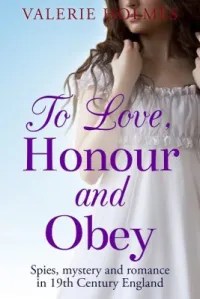
When a fellow author described To Love Honour and Obey as “Where Heathcliff meets Poldark” I was delighted.
Emily Bronte’s Wuthering Heights was set in West Yorkshire and carefully recreated for TV near Skipton, North Yorkshire, my home county.

Cornwall is a place that inspired my love of historical fiction through the works of E.V. Thompson, Daphne Du Maurier and of course Winston Graham

Click here to read for free on KindleUnlimited, Kindle or in traditional paperback and see if you agree!

Both Cornwall and Yorkshire are counties I love to revisit.

The dramatic and beautiful North Yorkshire moors and coast where I set my novels have similar characteristics to the rugged wild scenes of Cornwall.

Both have flat sandy beaches and coves rife for smuggling pre and during the Napoleonic wars.

Growing up I loved exploring the bay towns of Whitby, Staithes, Saltburn by the Sea and Robin Hood’s Bay where my imagination could run free as I walked my dogs along the beaches, dunes and cliff paths of the area.
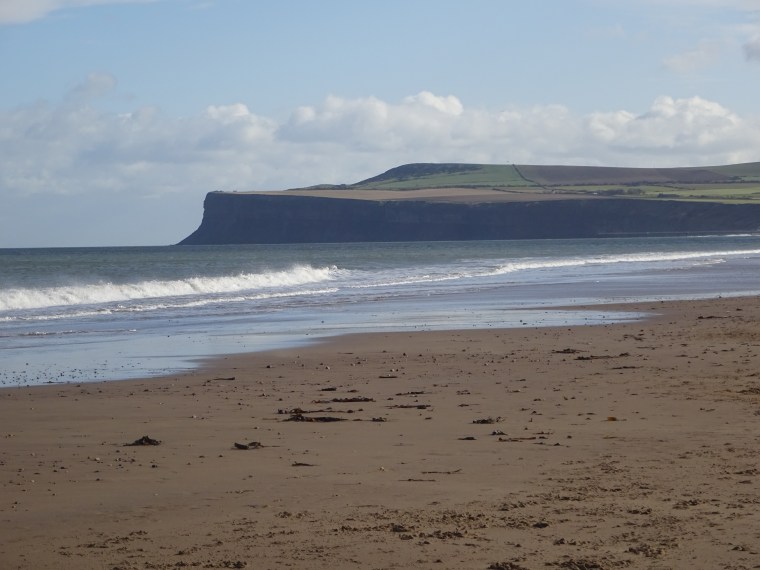
Huntcliff Saltburn

I recently visited the picturesque time capsule of Georgian Charlestown, with its period architecture, stone-walled harbour, and traditional tall ships. It was like taking a step back into Poldark’s world.

The port was developed by, and renamed after, Charles Rashleigh, a lawyer, developer, and entrepreneur who saw the potential for the previously named Porthmeur (Great cove) to be developed into a harbour to serve the growing nearby town of St Austell.

Trade in tin, copper, China clay, and timber grew withing the late eighteenth and early nineteenth centuries. It also supported the local pilchard fishing industry.

It seems a shame that Charles died bankrupt after two employees embezzled his funds.
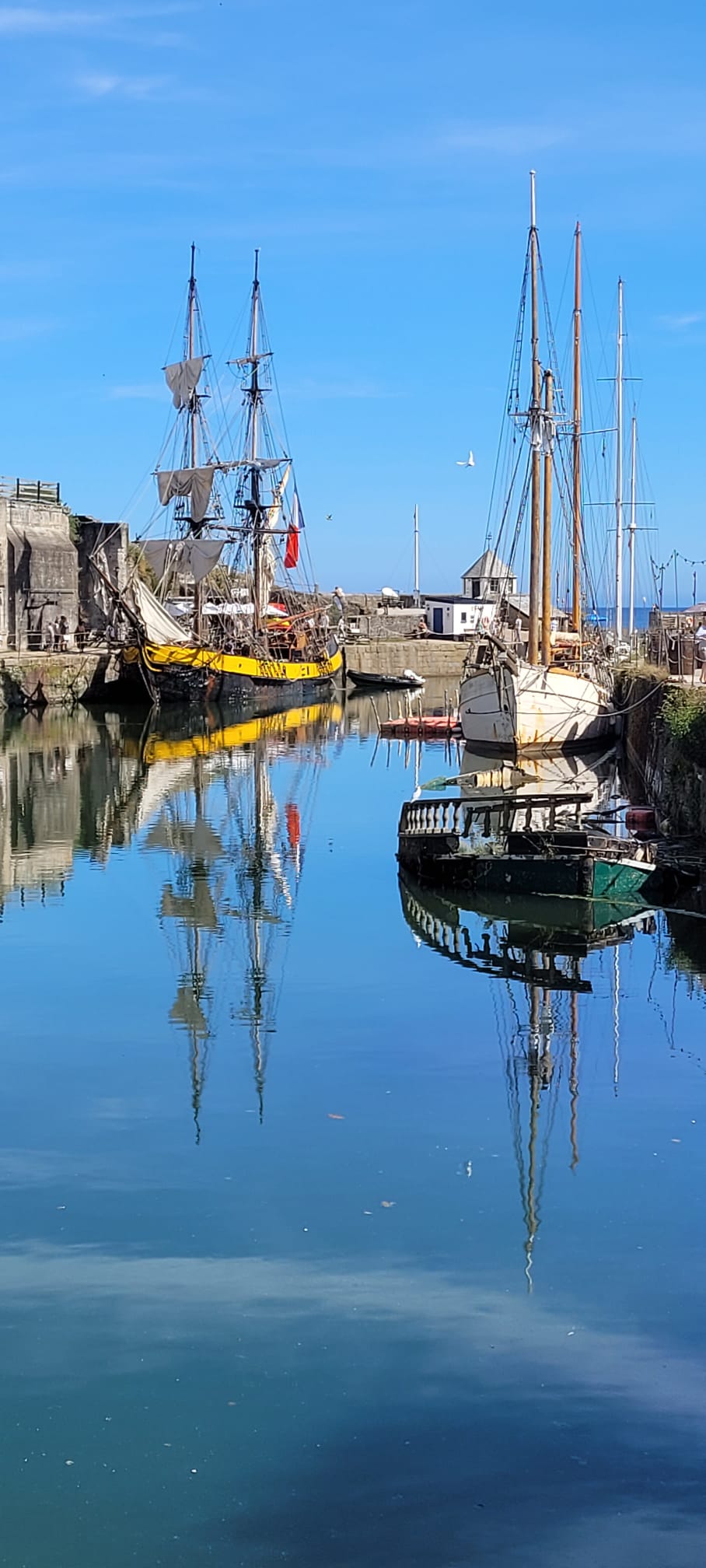
Charlestown, Cornwall

Like the ancient port of Whitby and the bay-towns of the North Yorkshire coast the region was infamous for smuggling as the flat sandy beaches and coves made landing illicit cargoes possible along rugged coastlines.

The quote “Where Heathchliff meets Poldark” captures the essence of two distinctive literary heroic characters.

Where do I think the similarities between those images in my work in The Yorkshire Saga Series published by @SapereBooks start and end?

Poldark is the heroic, gallant, and action-oriented figure, who falls in love with Demelza who is not of his social standing.

In To Love Honour and Obey, Willoughby is an honourable man who embarks upon a swashbuckling adventure, showing courageous heroism, set against sweeping historical settings. Through mutual need to defeat a common enemy he befriends Beth, a young woman who has not had a society upbringing. Two lost souls unite. Willoughby is no brooding gothic character like Heathcliff.

In my novels, which are deliberately set away from the restrictions of London Regency Society, social divides are often crossed through need or mutual attraction. The Regency period was one of much change, industrialisation, war, hardship and social unrest here and abroad. Excellent for dramatic fast paced clow burn romances wrapped around mystery and adventure.
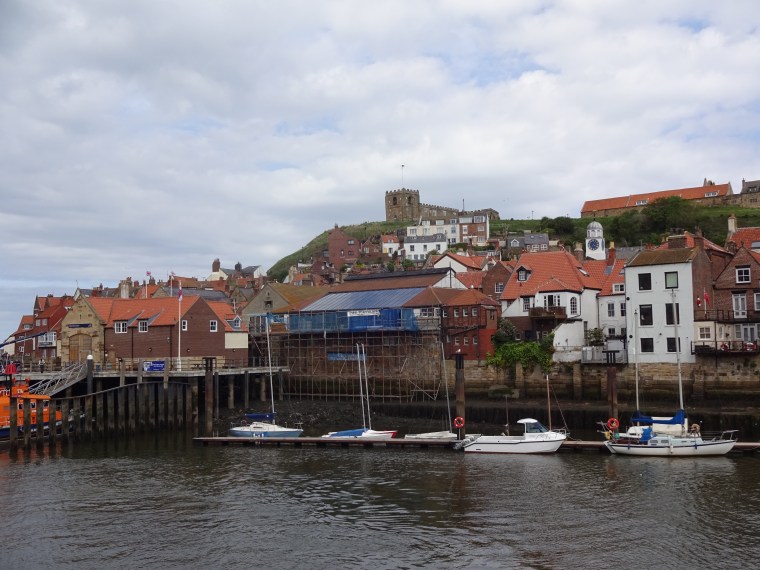
Whitby

Both settings evoke history, social struggle, and vivid landscapes at a time when the country was at war with France and many changes affected the local rural populations who thrived on farming and cottage industries.
Industry, war, government taxes and social revolution abroad and the fear of them at home all add to the drama of the period my Yorkshire Saga Series and the darker betrayal in Book 1 of that name in my Friends and Foes series.

If you are a fan of compelling romantic suspense, prepare to be captivated by To Love, Honour and Obey, a thrilling read that blends unforgettable characters, high-stakes tension, and stories that will keep you turning the pages well into the night.

Available free on KindleUnlimited, Kindle, or in traditional paperback here!

Who is your favourite standout hero or heroine within Regency romance or adventures? Please leave comments below.

Meet Christina Courtenay – winner of the RNA’s 2021 Fantasy Romantic Novel Award

Courtenay (1)

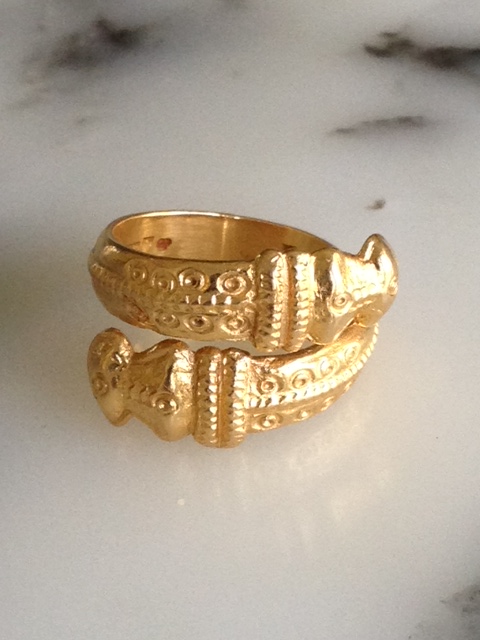
The story was inspired by a Viking style ring I own, an exact replica of one displayed at the Historical Museum in Stockholm. When I went to the museum to compare the two, I was struck by the germ of an idea for this book. My agent just happens to be Swedish as well and she encouraged me to explore our mutual heritage, so it seemed like it was meant to be – serendipity!

I am intrigued by the connection between your replica ring and the original – how long did you need to research this fascinating tale?

I can’t say precisely – the ring was the catalyst, and after I’d been to see the original in the Stockholm Historical Museum, I had the story in the back of my mind for many years but never did anything about it. Then all these weird coincidences started to happen – there was a huge Viking exhibition at the British Museum in London, several TV series about Vikings (both fiction and non-fiction), a couple of new books about them and some exciting new archaeological finds. I also managed to go to the Jorvik Viking festival at last, which I’d wanted to do for ages, and then I found my Swedish agent. It was as if the universe was telling me to just go for it – so I did and ECHOES OF THE RUNES was the result. I did some basic background research at first, then continued more in-depth as I went along, continuously reading, visiting museums and travelling to Viking sites.

Vring

What appeals to you about the romantic fantasy genre in particular?

I’ve loved timeslip and time travel stories ever since I first read The House on the Strand by Daphne du Maurier and Lady of Hay by Barbara Erskine. I think most history buffs (and I’m definitely one of those) imagine they’d love to travel back in time or somehow be able to experience the past. Within the romantic fantasy genre readers can do that – whether it’s by way of dreams, ghostly apparitions or proper time travel, the past comes to life. And we get to meet the people from the past, especially the heroes. It’s exciting and a great way to learn about history.

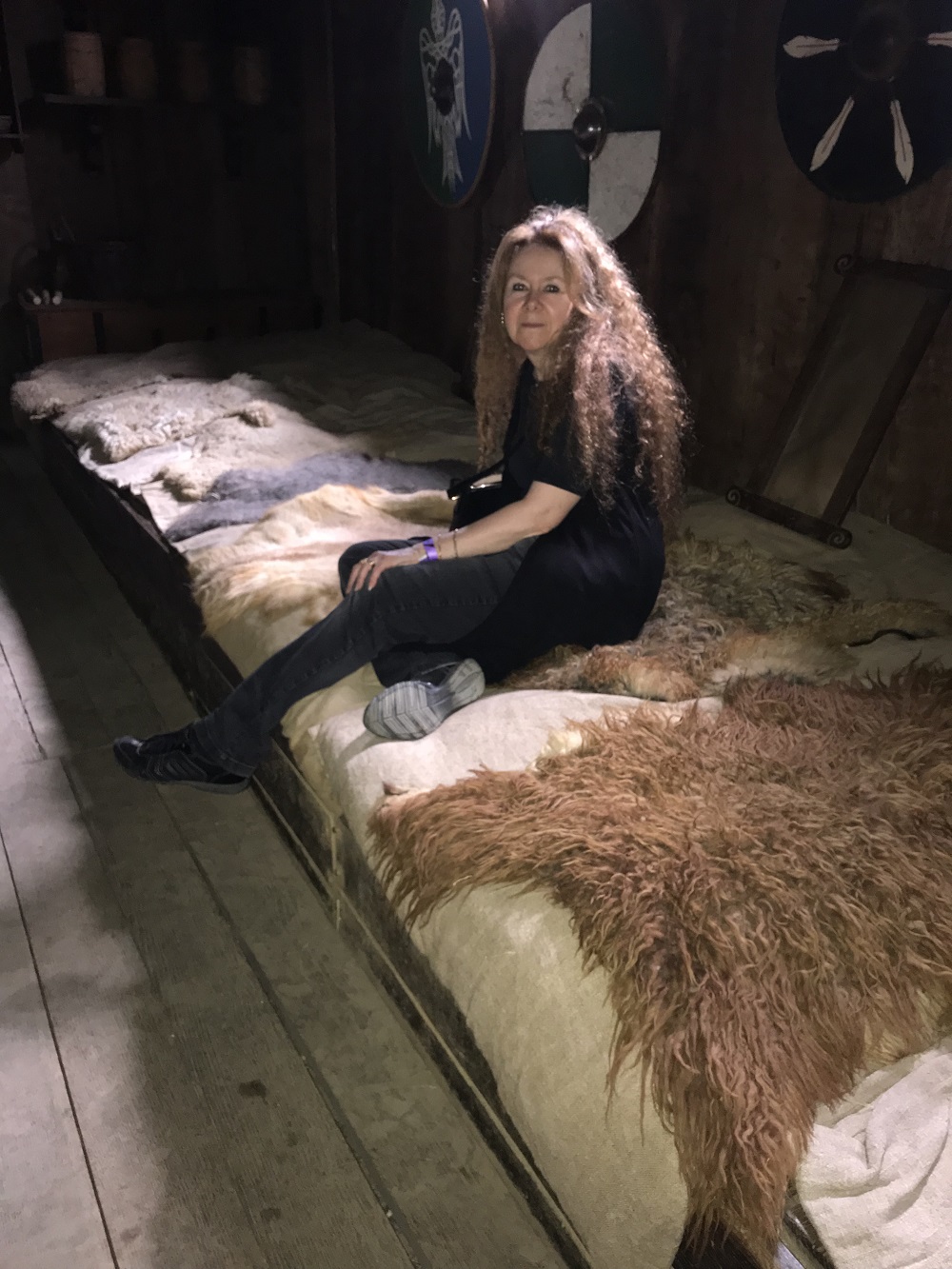
Christina in a Viking Longhouse

Will you stay within this or have you other projects in different sub-genres ongoing?

For the moment I’m staying with timeslip and time travel stories. I was writing YA a while back, but that’s on the backburner now. I think I’ve realised that I’m now writing exactly the sort of stories that appeal to me and that I enjoy most, so there is no reason to change that.

How have you coped/worked during lockdown life?

It’s been very up and down. To begin with, I was very enthusiastic and determined to get loads done. There are always so many things we put off doing, isn’t there? I did lots of writing at first and also tackled something I’d been meaning to do for ages – create a website for my genealogy project (on my maiden name). Once that was done, I sort of ran out of steam a bit, and the anxiety of the whole pandemic situation got to me. Now we seem to be heading for more normal times though, so I’m back to writing with a vengeance and actually working on two stories at once!

What advice would you give your younger unpublished self?

Join an organisation like the RNA straight away, go to as many workshops and events as possible and really listen to the advice, network, and find a writing buddy/critique partner. Before I found the RNA, I was floundering because I hadn’t come across any likeminded authors, but once I did, it felt like coming home.

The RNA obviously means a tremendous amount to you as a previous chairman but how much does winning this award mean to you?

It means so much, I can’t even begin to tell you! ECHOES OF THE RUNES was my first book with a new publisher, as well as being close to my heart because of the connection with my heritage. And after the horrible year we’ve all had, it really did feel wonderful to finally have something positive happening!

What is next for Christina?

I have two more books coming out this year with Headline Review in the Viking time travel series:  WHISPERS OF THE RUNES will be published at the end of June, and it follows a hero and heroine who get mixed up with the so-called Great Heathen Army that rampaged through Britain in the 870s AD. Then there is TEMPTED BY THE RUNES which will be out in December, and the couple in that story take the huge step of being among the first settlers in Iceland. Both these are time travel tales, where the heroines are from the present and have to adapt to living in the Viking age. Not an easy thing to do!

I wish you every continued success and look forward to reading your worthy winner.

You can follow Christina at:-

http://www.christinacourtenay.com

https://www.facebook.com/christinacourtenayauthor

Comments, likes and questions can be left below.

An Interview with Nicola Cornick

Nicola Cornick - profileWelcome to my blog, Nicola. I must confess that your childhood interests me. I have visited many stately homes and heritage sites over the years and the idea of going to school in the dower house of C18 Harewood House fascinates me. Was this where your love of history and academic research began?

Thank you very much for inviting me to visit today! It’s a pleasure to be here.

I think I was very lucky to go to school in an 18th century house! It was definitely inspirational. There was a very grand staircase, a beautiful “winter garden” where we took our art lessons and lots of old nooks and crannies to explore. The house was surrounded by parkland too so we could run wild in the grounds and we could tell each other scary ghost stories on the dark winter evenings! I think that being in such a historic atmosphere intrigued me and sparked my curiosity; I wanted to learn about the house and its past occupants and from there my love of history developed.

Could you tell us about the work you do at the National Trust’s Ashdown House?

I’d love to! I work as a guide and historian at Ashdown House, a stunning 17th century hunting lodge in Oxfordshire. I show people around the house and give them a guided tour telling them about the history of the house and the Craven family who owned it. It’s a fabulous, romantic-looking place and the history is rich and romantic too! I also do lots of research into the history of the house. I’m learning about it all the time and the more I discover the more fascinating it becomes. We’ve just found some secret tunnels leading off from the wine cellar!

Your first Regency novel was published in 1998. What is it about this era that appeals to you so much?

I’ve always loved the Regency era as a writer and a reader. Like so may readers I started with the books of Georgette Heyer and their wit and the beautiful way that Heyer evokes the era really enthralled me. I love the elegance and the manners and the fascinating contrast between the outward show and the intense emotions that may be hidden beneath the surface. One of the challenges for a writer is to find a way for those emotions to be expressed within the constraints of the behaviour of the time.

How did your breakthrough into publication happen?

I had a long journey to publication. My first book, True Colours, was twelve years in the writing because I was also working full time and could only snatch short periods of time to write. Mills & Boon rejected my first attempt as having too much adventure and not enough romance. I re-wrote it twice more before they finally accepted it.

Who or what was your biggest inspiration in becoming a fiction author?

There have been so many people who have inspired me. The writing of authors such as Mary Stewart and Daphne Du Maurier fired me with the desire to be a writer when I was in my teens. My teacher, Mrs Chary, inspired in me a huge love of history and for that I will always be grateful to her. I always knew that it was historical fiction that I wanted to write. The other big influence was my wonderful grandmother, whose collection of historical novels I devoured and with whom I watched costume dramas on a Sunday night!

One Night with the Laird - US copyYou are an enthusiastic traveller on a world-wide scale, but for your latest series you have headed north of the border and changed period for The Lady and the LairdOne Night with the Laird out this month and the final book Claimed by the Laird, which will be published next year. What triggered this change in location and direction?

I do love travelling and have been lucky enough to visit some amazing places all around the globe. One of my favourite places, though, is Scotland and I have wanted to set a book there for years. It was fascinating to research Scotland in the early 19th century and see the similarities and differences in politics and culture compared with south of the border. It was huge fun to write the Scottish Brides trilogy!

What is next for Nicola?

I have lots of exciting plans for next year.  There are several new Regency ideas I’m going to be working on, plus a book inspired by Ashdown House!

Thank you for taking the time to answer my questions and for sharing some of your unique experiences with us.

Thank you!
More by Nicola: