It has been exciting to catch up with Sue Moorcroft to see all that has happened in her career since I interviewed her back in September 2014.
Hi Sue and welcome back! I know that 2016 has proved to be an exciting year for you, so tell us how much has changed.
This is an interesting idea – to be asked to update an old interview! I’m genuinely surprised by how much has happened in a little over two years and really thrilled that so much of what I was just beginning to work towards in 2014 has come to pass.
I had to look at my life and make some decisions. I wasn’t getting where I wanted to be writing-wise and I felt under tremendous time-pressures. I examined everything I did under three headings:
– What makes me happy/unhappy
– What’s good for me/bad for me
– What earns me money
My first move was to drop a column I was writing for free. It was about one of my passions, Formula 1, but it was spoiling the races for me as instead of just enjoying them I was making notes and thinking about angles.
A far less easy decision was to step away from the chair of the Romantic Novelists’ Association. The RNA is another passion of mine but being vice-chair was not only gobbling up hundreds of hours a year but putting me under stress at a time when I had other stresses. The RNA is a big part of my life and I felt that I’d let everyone down but I can’t regret that decision.
Encouraged by the success of the above I realised that instead of waiting for a contract with a big publisher, which would enable me to drop a lot of teaching work and the less lucrative writing, I had to drop it first. With more time and free of rigid and frequent deadlines I could concentrate on that elusive contract.
Did it work?
I think so. The Christmas Promise was sold to Avon Books UK (HarperCollins) as their lead title and has climbed the Kindle UK charts. The paperback goes on sale in the UK on 1 December. Fischer in Germany made it their lead title, too, it will come out with Bazar in Denmark and there’s an Italian offer in the wind.
What teaching I do undertake is pretty much to my own schedule and in 2017 will involve Dubai and Italy.
Getting to this stage involved a big leap of faith along with good fortune and a good agent but, looking back, I wouldn’t change those decisions. As well as achieving more commercial success I’m happier and more relaxed and can enjoy my writing more.
Award-winning author Sue Moorcroft writes contemporary women’s fiction with occasionally unexpected themes. A past vice chair of the Romantic Novelists’ Association and editor of its two anthologies, Sue also writes short stories, serials, articles, writing ‘how to’ and is a creative writing tutor. She’s won a Readers’ Best Romantic Read Award and the Katie Fforde Bursary.
Sue’s latest book is The Christmas Promise. It’s about Christmas, hats, revenge porn, being skint, a WAG called Booby Ruby and a marketing plan that goes viral. Also Ava and Sam.
Website: www.suemoorcroft.com
Blog: https://suemoorcroft.wordpress.com/
Facebook: sue.moorcroft.3
Facebook author page: https://www.facebook.com/SueMoorcroftAuthor
Twitter: @suemoorcroft
Instagram: suemoorcroftauthor
Google+: google.com/+Suemoorcroftauthor
LinkedIn: https://www.linkedin.com/in/suemoorcroft
Amazon author page: Author.to/SueMoorcroft
Sarah Quirke, Publishing Manager of F A Thorpe Publishing
I am delighted to welcome Sarah Quirke, Publishing Manager of FA Thorpe Publishing to my blog to talk about her work and interests.
Firstly, Sarah, welcome! Could you tell us about FA Thorpe Publishing?
F.A. Thorpe Publishing is the publishing division of Ulverscroft Large Print Books Ltd, which distributes large print and audio books worldwide. It was established by Frederick Thorpe in 1964, with the intention of reproducing popular books in larger type for those who struggled to read standard print. Initially, there was scepticism on the part of publishers about this unknown format. However, a chance encounter with Agatha Christie allowed Dr. Thorpe to discuss this project with her, which resulted in her wholehearted support – she expressed a desire to see all of her titles produced in large print. This was a key factor in gaining the support of other publishers and authors. A Pocket Full of Rye was one of the first titles to be published in large print format, and we have, over the years, published all of Agatha Christie’s title in large print – along with a fair few others…
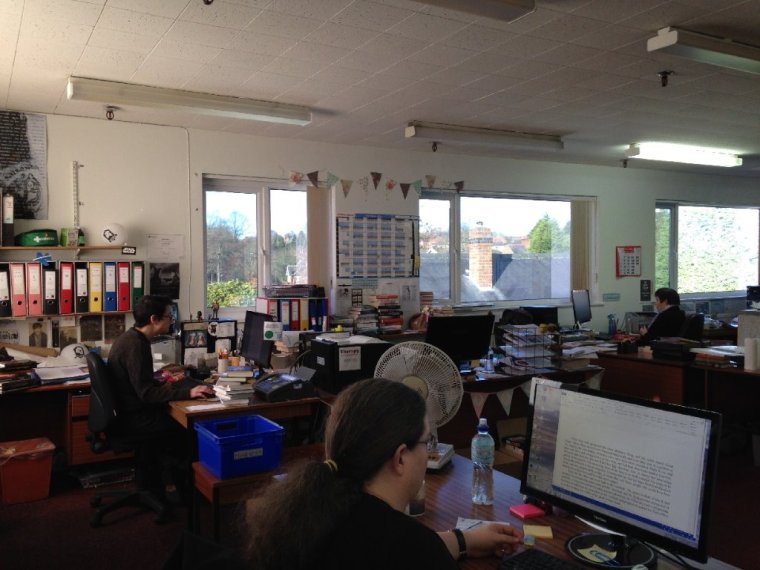
The team working hard at F A Thorpe
Did you always want to have a career in publishing?
Although I had no doubts about what I wanted to study at university – English literature – I hadn’t a clue what I wanted to do once I finished my studies. I feel extremely fortunate to have landed my job. I’ve been with the company for nearly 14 years, so I feel rather fortunate about that, too!
Have you always been an avid reader?
Always! I vividly remember reading aloud to my dad when I was about six, and him telling me to read the words ‘as though you’re speaking’, and it suddenly clicked. And then there was no stopping me…
Which authors have, or do, inspire you?
I found A Land More Kind Than Home by Wiley Cash thoroughly inspirational in terms of the writing, which was exceptional; it just poured off the page and felt beautifully effortless. In terms of story-telling, and the moral dilemma presented, The Light Between Oceans by M.L. Stedman was utterly compelling.
What is your favourite genre for your own leisure reading?
I do enjoy a well-written, ‘unreliable narrator’/twisty-turn-y tale. I think Paula Daly is fantastic, and I also like Tamar Cohen. I’m afraid I’ve yet to read The Girl on the Train, but I definitely want to do so before seeing the film.
Could you describe the imprints you represent and the word limitations on each?
Our Charnwood and Isis imprints contain mass market popular fiction and non-fiction titles, and our big name authors. The upper limit here is very much dependant on how well we can expect a particular author to sell. Our Ulverscroft imprint tends to house much shorter titles, and the upper limit here is currently around 60-65,000 words. For our Linford Romance imprint, we’d ideally want titles to be somewhere between 30-50,000 words, although we have taken shorter and longer titles than this; the same is true of our Linford Mystery and Linford Western imprints, give or take a few thousand either way.
What do you look for in a new submission?
For most titles, the first consideration is always a practical one – if it’s too long or too short, I won’t be able to consider it. The next consideration is whether or not it will be a good fit for our lists.
What should writers avoid sending you?
If you’re aiming for one of the Linford imprints, then try to make sure it’s a clear fit within the genre – so, a romance rather than a general fiction title, for example. We tend not to do sci-fi or fantasy titles, or self-published non-fiction.
You must see a vast number of submissions, so is there any advice you could give to a writer who is considering submitting a manuscript to you?
Please read and re-read what you’re submitting with as clear an eye as possible. The fewer mistakes, the easier it is for us to see the story you’re trying to tell.
What is the most satisfying aspect of your work?
It’s great when I win an auction for a title I desperately want in our lists, and it’s also very satisfying putting a list together and seeing what I know are some absolutely cracking reads in there. Being surrounded by books all day is also a definite bonus!
Would you consider writing a novella/novel yourself?
I would love to. I note down ideas a lot, although that’s about as far as I’ve ever got.
When not involved in the world of books what do you love doing to relax?
Yoga and singing – I do both with great enthusiasm and questionable results.
My thanks for your continued support for my work (39 titles to date) and for the insight into your world and that of F A Thorpe Publishing.
It is with great sadness and total shock that I have learnt that Carole died last night. She was an amazing lady and inspiration to many, myself included. My sincere condolences to her family, her many friends, colleagues and authors that she represented and respected so much. She will be greatly missed.
Val
My guest this month is Carole Blake, a lady whose amazing career has taken her from working as a secretary in a packaging company to forming the incredibly successful London literary agency, Blake Friedmann. This journey involved becoming the first Rights Manager for Michael Joseph, then Marketing Director at Sphere, before starting up her own agency in 1977. Five years later she merged with Julian Friedmann’s Agency.
Throughout this time Carole has worked tirelessly to develop the careers of her authors and yet still found time to serve on many boards and institutions to contribute to the industry she loves so much. In 2013 Carole was the recipient of the Pandora Award for her ‘significant and sustained contribution to the publishing industry’.
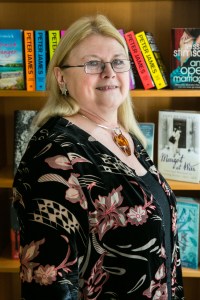
Carole Blake, co-founder of Blake Friedmann. Photo by Jack Ladenburg.
Welcome, Carole! Did your childhood inspire and nurture your love of books?
My childhood home didn’t have many books, but I was always focussed on them & asked for them as presents. I can remember my first ever rag-books (made of a linen-like material) that I used to ‘read’ in the bath before I could actually read. I loved turning the pages and pretending. Once I could read, my early favourites were the Rupert books, which I still have, with my parents’ messages & dates written inside. When I was 8 I asked for a bookcase for my Christmas present. I got it (& only relinquished it when I moved house 8 years ago). I then set out to catalogue and categorise all the books I owned. I worked out a complicated system of letters and numbers and wrote them inside each book, then listed them all against their titles and authors. Very proud of it. Some years later when I discovered the Dewey System I was crushed. I had thought I was being entirely original!
Was it challenging for a woman in your early career to progress in the industry as you did?
I don’t remember it as difficult. I answered an advert in the Evening Standard, went for an interview & got the job. I commuted from Mitcham in Surrey to Marble Arch, & found myself – a working class girl, in a cotton dress and a white cardigan – working as a secretary to a team of university-educated art experts working on a multi-volume art encyclopedia. I kept a low profile, soaked up information like a sponge (including which pieces of cutlery to use when we went out to restaurants) and made friends there (50+ years ago) that I am still in touch with. It was literally a life-changing experience.
Who inspired you the most to keep moving forward? Are you naturally self-motivated to achieve?
The lovely people I worked with at Rainbirds, in my first job, were extremely encouraging. Working there for 8 years kick-started my life-long love of art. It introduced me to the classics (I compiled a company-wide order of Penguin paperbacks every few months. We could get a discount if we ordered 30 or more. Soon I stopped asking anyone else to mark up the Penguin stocklists, because I was ordering 30 at a time myself. I read my way through all the Russian and French novelists, and I remember crying on the no 16 bus as it went round Marble Arch because I finished Dostoyevsky’s The Idiot and found it unbearably sad. How nerdish is that for a teenager in the swinging 60s?
But later when I was marketing director of Sphere, Edmund Fisher fired me, quite rightly. I was running the marketing, publicity, rights and contracts departments and wasn’t juggling them very well. We were having a row – we had a very volatile relationship over the three companies and 12 years that I worked with him – and I was in the middle of resigning. When I realised he was firing me I withdrew my resignation and sued for wrongful dismissal. I knew he hadn’t followed all the right procedures (indeed he hadn’t followed any procedures at all!) and as I was a director, I was employed by Sphere’s then owners, Thomson Newspapers, so he didn’t actually have the right to fire me at all. I won, they settled out of court, and I discovered I had a list of authors who wanted to be represented by me if I started an agency. So I did. The fact that Edmund fired me was the best thing ever to happen to me. I would never have had the courage to ask someone to stop paying me if he hadn’t. No one in my family had ever started a company. If I hadn’t been out of work for 6 months, dealing with lawyers it would never have occurred to me to do so.
You are also encouraging new blood into the publishing industry through your associations with UCLA postgraduate publishing course. Is this something you feel passionate about as much as discovering new writing talent?
Given my start in the industry, remembering how kind people were, and aware that it’s a much more difficult area to get work in now I think the least I can do is to encourage and help others into a business that has given me such a wonderfully satisfying lifestyle. I’ve been associated with other postgraduate publishing courses as well, and am always happy to talk to people wanting to get into the book world.
I am the only person in my company who doesn’t have a degree; many of my staff have several. I didn’t have to go through the purgatory of unpaid internships, which I think are morally indefensible: we pay our interns properly.
Whenever I can I try to introduce people to others in the industry who can be of use to them. We have actually employed more than a dozen of our interns over the years – it’s so much more successful than a 40 minute interview. We also have an annual get-together of all our past staff, past interns. It’s officially known as networking but we all know it’s a great gossip-fest. So great to see where people have moved on to. You might have heard of the singer Dido? She was my assistant for 4 years and was an ace at selling serial rights!
Her parents were both publishers. I work with her mother at Rainbirds in the 60s, sold books to her father when he was running Sidgwick decades later. He and I used to lunch together and regarded ourselves as in-laws while she was working for me. When she resigned ‘to spend more time on her music’ I gave her a very motherly speech. ‘Can’t guarantee to keep your job open Dido.’ I don’t think she’s ever wanted to come back to publishing again …
I do quite a lot of public speaking – at literary festivals, conferences (I’m an honorary vice-president of the RNA, a member of the HNS) and I teach a course on how to sell rights. I’ve been a board member of The Book Trade Charity, and its Chairman, and President over many years and am now a Patron.
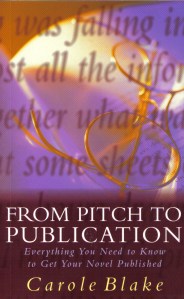
Your guide ‘From Pitch to Publication’ is widely used throughout the publishing industry. How much of a challenge has it been to update it?
An extreme challenge, as you can tell from the fact that I’ve not managed to deliver it yet. It took Boxtree (later to become an imprint of Macmillan) several years to persuade me to agree to write it in the first place. And then I renegotiated the delivery date several times, in order not to be in breach of contract (how embarrassing would that have been for a literary agent?). Same has happened with the contracted update/new edition. My agency is SO much bigger & busier than it was when I delivered the original manuscript – 20 years ago! – and so much has changed. I now know what I want to write, what I need to update, what I need to add … but time is the enemy. My editor at Macmillan (a friend) is understanding … up to a point. I now so want to have this new manuscript behind me. There are so very many more ways to promote a book now (social media?!) and I am now writing it but in such small spaces of time.
You represent many of my favourite authors, but two especially. Could you share with us what it was that you loved so much about ‘Lady of Hay’ and the amazing Barbara Erskine? Likewise, when Elizabeth Chadwick’s first manuscript arrived on your desk did you instantly realise that you had found gold?
Two authors very close to my heart: both are good friends.
Barbara Erskine: I was already representing her short stories. She wrote many, and magazine editors around the world would line up for them. We had talked about an unusual novel she was thinking about writing. Two time periods, linked. We talked about it for a long time: years. I remember saying at the outset that it would be vital that every time, at the end of each chapter, the reader was required to move from present to past, from past to present, it must be a wrench. Each time period must be equally compelling, and hard to leave or the novel would be broken backed. Oh my … did she deliver. But although publishers and editors always ask for something new, a fresh voice – they always actually want something that is recognisable. I submitted the partial manuscript for 4 years. ‘I don’t know if it’s a contemporary novel, or a historical?’ Me: it’s both. ‘I don’t know if it’s a love story or a mystery?’ Me: it’s both. Every editor who arrived in a new job found the manuscript on their desk. When Maggie Pringle arrived at Michael Joseph in 1983, she read it, loved it, & recognised it as something fresh and new and exciting, and she was allowed to buy it even though it had been rejected twice by other Michael Joseph editors over the years. They auctioned paperback rights back then and it set a record for the highest paperback advance for a British first novel. This summer it celebrated 30 years continuously in print – quite something for a commercial novel. And it’s in print in many other languages too. In 2017 it will be celebrated for its 30th anniversary in German.
Barbara and I are friends. We’ve worked together for so long: we have even been on holiday together. That Nile cruise will never be forgotten. The only holiday that I’ve ever got a holiday-tie-in best-seller novel from – ‘Whispers in the Sand’! Barbara always stays with me at home when she’s in London overnight.
Elizabeth Chadwick: the early chapters of ‘The Wild Hunt’ arrived in the late 80s in a brown envelope – back in the days when submissions were made on paper, via snailmail. And back in the days when I opened my own mail every morning at my desk. I read it as soon as I opened the envelope and knew there was something very special in my hand. A few weeks later I had sold it, via auction, to hardback and paperback publishers (back in the days before publishers always published in both formats themselves.)
‘The Wild Hunt’ won a Betty Trask award, and Prince Charles was the person giving out the prizes for The Society of Authors that year. That was quite a memorable evening!
As with Barbara, this led to publishing success and a long and on-going friendship. Elizabeth stays with me when she’s in London too, and we often talk into the small hours.
I think it is unfair to ask you which are your favourite books or authors, but of all the novels you have read are there a few characters that really stayed with you? If so, why?
There’s no way I could choose between novels by my clients – I represent them all because they are so original, and so special. It would be like asking a mother to choose between her children! Not that I think of my best-selling authors are children for one moment. But the novels – apart from those written by my clients – that always stay with me are Dostoyevsky’s The Idiot (I finished it on a no 16 bus going round Marble Arch roundabout in the late 60s, crying my eyes out), and Alain Fournier’s Le Grand Meaulnes. A haunting work.
You have travelled extensively in your work, but where do you enjoy going to relax and explore?
Italy, always Italy. I go for art, music, food (and Negronis!), shopping. Venice, in particular if I had to pin it down more narrowly. I was lucky enough to take a sabbatical earlier this year and I spent 5 weeks in Italy: Florence, Siena, Padua, Mantua, Venice. Absolutely heaven.
This slideshow requires JavaScript.
Is it your love of detail that first led you to becoming a collector of dolls’ houses and miniatures (OOAK)? Where did this begin? How is the collection growing?
I’ve always loved houses, furniture, interior decoration. My home is full now so miniatures are the way I buy furniture. I dare not add up the number of miniatures I own … they are stored in many boxes, and I’ve had to forbid myself to buy more until I’ve finished building the 5 floor Regency house which will be taller than me. And I’m forbidden to do any more work on that until I’ve delivered my next book. In addition to that house, I have a Georgian hand made one that I bought already finished. That is fully furnished. I also own an antiquarian bookshop which I made from a kit. Every book is real; they can be opened and read (with a magnifying glass). Most of them are miniature copies of real antique illustrated books that I buy from a particular maker whose work I really admire. I have more than 1000. And I have two more kits to build – they are going to become a row of shops. And then there is the greenhouse, and a conservatory, both full of flowers. My favourite collection though is mouth-blown cranberry glass. Five (miniature) cabinets full so far. The most satisfying thing I achieved myself, was laying a floor of terracotta tiles. Real tiles, 1:12 scale. Laying the tiles was easy: the grouting was murder, the air blue!
This slideshow requires JavaScript.
What other interests do you enjoy away from the world of publishing?
Early music – I still buy cds because I enjoy the booklets. I’ve got about 5000, all stored on a hard drive and easy to find. But I also like Meat Loaf (that’s Elizabeth Chadwick’s fault!). Art – I always make time to go to exhibitions. I find cooking very therapeutic, and always have freezers-full of home cooked food. I enjoy a variety of crafts – I make greetings cards, keep scrapbooks, make jewellery (I have 1000s of beads, and like to buy them on my travels), and I love taking photographs (check out my 56 Pinterest boards, and my Instagram posts!). I took 8000 photographs during the 5 weeks in Italy. And of course reading. I read a lot of non-fiction for relaxation as a change from the fiction that I work with. I love history, memoir, African wildlife (I’ve been to Africa on safari many times). And I collect books about the publishing industry. I’ve recently taken up knitting and crochet again. But there’s not a lot of time to fit these in around work!
You have achieved a great deal in your career, but what is next for Carole Blake?
I’ve got to make time to finish the new book. Then I can get back to (miniature) house building …
Thank you for the fascinating insight into your career and for sharing some personal photographs of your lovely miniature worlds!
It is my pleasure to introduce Roger Sanderson as my guest author this month. Roger is a prolific romance author and assistant organiser of the fantastic RNA Conferences along with Jan Jones.
Welcome, Roger, and thank you for giving up your time to do this interview.
When and why did you break into the world of romantic fiction?
For many years I lectured in English at a Further Education College, and as everyone knows, all English teachers really want to write novels – so when I retired, I decided to give it a go. I was already writing Commando comic scripts. While waiting at the publishers one day, I picked up their matching romance line STAR, so started with that. I went on to write for Hale, then M&B and am now with Accent (as Gill Sanderson) and Desert Breeze (as Roger Sanderson).
The RNA is a very supportive organisation. When did you first discover and join it?
I was a member of a local writing circle run by the late Sheila Walsh. She was on the committee of the RNA at the time and suggested I join. I am very glad she did!
Did your previous experience of writing scripts for Commando Comics influence the way you plot and write your novels?
They both demand a tight plot and extra care dealing with characterisation because there isn’t the room to over-develop the storyline. You have to focus. Possibly the experience of writing Commando scrpits has left me with a liking for a ‘big finish’. Of course, in a Commando, the hero shoots the enemy. In a romance novel the hero kisses the heroine. An important difference.
You are a prolific writer. How many titles have you had printed by Mills & Boon?
I think I wrote 44 or 45, all of which have now been re-edited and republished by Accent Press. It’s great to know these new digital editions are reaching a second audience.
You must have researched so many medical books and procedures over the years for your medical romances that I wondered if part of you had a leaning towards actually being a doctor or physician. Or do you prefer to stay away from the actual blood?
The latter, definitely! However three of my children are in the medical profession (Mark is a consultant oncologist, Adam is a dispensing nurse and Helen was a midwife for many years) so I have a wealth of research at the end of the phone.
I know many people ask you about writing as ‘Gill Sanderson’, but as many women writers create male protagonists I find this natural and refreshing. Did you choose to adopt a female pseudonym or was it advised?
It was very strongly suggested to me that I write under a female name. At the time the perceived wisdom was that when reading romance, women preferred a female name on the cover.
You have a love of the outdoors and hiking. Do you use this time to switch off from writing or to ponder and plot?
Originally I mountineered at the weekends to counteract the pressures of the staff room. The habit of outdoor exercise never leaves you, even if these days it’s more of a long daily walk by the sea. I rarely switch off from writing. I use walking time to think about the current book and also mull over ideas for future ones.
What is the best piece of advice you could offer to an as yet unpublished writer?
One: read as much as you can. Two: aim to write at least 500 words a week. Some weeks, this might be all you manage, some weeks it might be 5000 words. The important thing is to write something.
What do you like to read to relax?
Anything! I have very wide reading tastes.
What are you working on now?
I’m currently writing a sequel to my light-hearted romance LIVERPOOL TO LAS VEGAS (Desert Breeze Publishing), which features an ex-PE teacher and a documentary film maker and is one of my US-published novels under my own name.
What is next for Roger?
I had a major heart operation last year which is taking me a lot longer than I hoped to recover from. My goal at the moment is to get back to full health and keep on writing!
I am delighted to welcome Jan Jones as my guest this month. Jan is not only an amazing writer of romantic fiction but the organiser of many successful Romantic Novelists’ Association Conferences.
Hi Jan – thank you for taking the time out of your hectic schedule to complete the interview. This year’s conference at Lancaster University was, amazing, as usual. The speakers were from all sections of the industry. How have you seen the event change and grow since you became the organiser?
Hi Val,
Since 2005 when I took over as organiser, the conference has grown from just over a hundred residential delegates to over two hundred. We’ve also increased the number of choices, added extra Sunday afternoon sessions and offer a Thursday pre-conference arrival.
The Romantic Novelists’ Association is a very supportive organisation. When did you join it and make your first break into print?
I first joined during the 1980s when I was writing magazine stories, took a break, rejoined in 1994, then made the breakthrough from NWS to full in 2005.
Your career began in mathematics and computing, so when did you realise that you were a writer at heart?
Oh, I’ve always known that, but I also knew I wouldn’t be able to live on it. Computer programming was a much more bankable skill.
Do you prefer to write long or short fiction, YA or adult, historical or contemporary?
All of them. I have a dreadfully low boredom threshold. I like the variety and challenge of writing different forms and genres. As to length, I think when you first get the germ of an idea, you know what sort of size the story will be. When writing serials I have to squash the story into a few compact episodes, so it is an immense relief to then expand it to the length it always should have been and self-publish it.
Do you have a strict writing regime and work ethic?
Erm, no. I’d like to, but life keeps getting in the way. I just write whenever I can. Late at night is good, because everything is quiet and I don’t have the sense of having left chores undone. I try to only have one project on the go at one time, but I generally have two or three in various stages. There are very few points during the day when I’m not thinking about whatever the current piece of work is. The worst time for me is during RNA Conference preparations. I can’t keep a book in my head as well as all the conference arrangements, so I have to completely stop writing at the end of April and not pick the book up again until July. The upside is that by then, I’ve forgotten how much I hated it!
That is a long time for preparation. No wonder the conferences are such a success. What was the best piece of advice you were given as a new writer?
That everyone has something useful to teach you and that you never stop learning. What I worked out for myself was to believe in my own voice, to dare to be different, and to never give up.
What inspired The Penny Plain Mysteries?
I came across a strange jigsaw when I was clearing my mother’s bungalow that gave rise to the first Penny Plain story, but as for where the characters came from, I have no idea. I think all writers have people lying dormant in their subconscious, just waiting for the right setting.
What are you working on now?
I have recently got the rights back for the three Regency novels published by Hale, so I am revising them ready to self-publish. I am enjoying it tremendously – it’s just like meeting old friends and falling in love with them all over again.
I love that description. So what is next for Jan?
Keep on keeping on! At the last count I had something like nineteen projects waiting for my attention, ranging from finished novels to be done-something-with to tantalising germs of ideas with half-a-dozen lines of notes to anchor the thoughts in place.
Good luck and I wish you every success with them. Thanks for sharing some of your writing experience and world.
In previous blog posts I have looked at how to keep yourself fit for the task of writing thousands of words and then how to set realistic goals to achieve them. Before moving on to looking at the actual writing of the fiction, two factors play an important part in beginning and completing the process – inspiration and motivation.
Where do you get your inspiration from?
What motivates you to write fiction?
These two questions are asked to many authors and the answers may be as varied as the individuals who the question is posed to.
I am constantly inspired by anything from a name, a newly learned an intriguing little known fact, a place that sparks an idea or a simple overheard statement. Inspiration is all around us, we just have to be open to it and use our imaginations to ask that simple question: ‘What if?’
Once inspired to write then motivation kicks in to drive our effort so that the idea turns into a real manuscript. We can be both inspired and motivated at the same time by reading our favourite author’s work.
Here are a just a few common motivators:
To escape from reality into a world of our making that we will hopefully share with others.
To earn money – realistically, this is not an easy industry to break into.
To become a published author.
Whatever your inspiration you need the motivation to keep going, learning and growing as a writer. Go beyond rejection to reach that place of acceptance and becoming a published author. Learn from those who have done it and also from any of their early mistakes, so that you can avoid some yourself.
Once you are keen to begin your project, go for it. Network at conferences and courses, such as The New Writers’ Scheme run by the Romantic Novelists’ Association and seek professional feedback. If you have a manuscript that you would like professional feedback on then please contact me on Vholmesauthor@gmail.com for a quote.
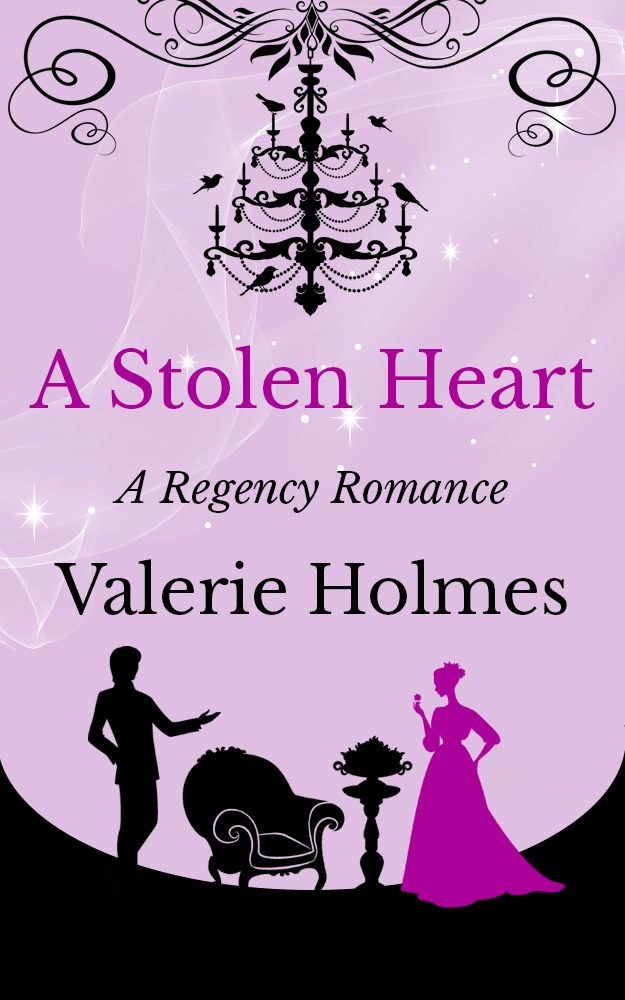
If you love the adventure with mystery combined then download A Stolen Heart from Amazon today.
Miss Ruth Grainger’s coach jolts to an abrupt halt when it is stopped by a highwayman.
Fearing for her life she is surprised when this highwayman seeks only to retrieve papers carried by a fellow traveller, her guardian, Mr Robert Grentham’s business associate, Mr Archibald Upton.
Ruth abhors thievery, but she is even more disgusted by the cowardice of the man, Upton, as he uses her as a shield.
Released unharmed, she is haunted by the dark blue eyes of the stranger.
What is his connection to Upton? And what is in the papers he was so intent on stealing?
Ruth returns to Grentham’s home, and along with his silly, young wife Eliza, prepares for an upcoming ball.
Little does she know that Grentham is orchestrating events so that the despicable Upton will become her husband.
As Ruth starts to suspect the truth, another stranger steps into her life, and once more she is bewitched by a pair of blue eyes …
Headstrong and independent Ruth is determined to marry for love, and on her own terms.
But everyone around her has other ideas …
Will Ruth be forced into a match she doesn’t desire?
Or will she end up with the man who has stolen her heart …?
A Stolen Heart is a charming regency romance about mistaken identities, and following your heart’s true path.
Six years ago, Willoughby Rossington’s father was murdered while searching for the kingpin of a smuggling and spy ring. Taken under the wing of his uncle, who is running a counter-intelligence operation against Napoleon’s spies, Willoughby is assigned to take up his father’s last mission—and, hopefully, in the process find who killed his father and bring them to justice.
He encounters a young woman, Beth, who works at the local inn. Her spark and resilience against her master’s attempts to break her will strike a chord in him and he, albeit reluctantly, takes her with him when he leaves town.
As they begin to talk, he finds out that her master is more involved in the ring that could have been thought. She overheard things and knows things about the seedy side of villages that could be helpful to him and his mission.
Though Beth hasn’t had the opportunity for education, she’s smart and quite cunning while still maintaining a child-like wonder. Even as Willoughby makes plans to set her up with a family in order to protect her from the perils of his mission, he finds himself a bit melancholy at the thought of losing her company.
Beth is having none of it. She knows she can be of help to Willoughby and isn’t going to be left behind now that she’s found someone nice. Part on purpose, partly because of fate, their two lives become intertwined as they race against the villains that plot to destroy them both.
Will they uncover the truth behind the smuggling ring and find who is responsible for Willoughby’s father’s death?
I am delighted to welcome two successful writers and tutors of creative writing to my blog this month, Margaret James and Cathie Hartigan.
Margaret has been a shining light to me and many unpublished authors as she was the New Writers’ Scheme Organiser for the Romantic Novelists’ Association when I first became published. Cathie is a prolific writer, lecturer and founder of CreativeWritingMatters.
Welcome!
Hello, Valerie –thank you for inviting us to chat with you! It’s lovely to be here.
You are both successful writers so my first question must be where did your own writing journeys begin?
Margaret: I started writing short stories while my children were still babies and eventually I began selling them to women’s magazines.
Cathie: I was a hobby writer until about ten years ago, but after a foundation course with the Open College of Arts, I began having success in short story competitions. Since then I have taken my hobby much more seriously.
CreativeWritingMatters is the inspirational name of the business you founded along with Sophie Duffy. I love the logo. Could you tell us about CreativeWritingMatters and how it came into being?
Cathie: CreativeWritingMatters came into being when I left teaching in mainstream education. The flexibility of being freelance meant we could offer workshops and short courses on all aspects of writing. The competitions came later following the success of a flash competition that we ran for our students.
The name came about because of a conversation I had, during which I became rather too vehement about the importance of creative writing. ‘Creative writing matters,’ I heard myself shriek. Our logo features Sophie’s cat, Henry, the star of her story in our Cat Walks ebook. He’s perky and forward-looking, just like the three of us!
You have jointly written an excellent handbook and a workbook on aspects of creative writing so obviously have a great working relationship, but how do you set about working on a non-fiction joint project as opposed to your independent fiction?
Margaret: I first met Cathie when she joined my local writing group, Exeter Writers. I loved her short stories and she was kind enough to say she liked my own writing, too. We collaborated on producing an anthology of members’ work and found we got on very well. We both teach creative writing (Cathie teaches face-to-face while I teach online) and, after we’d finished editing and producing the anthology, we decided to write a guidebook for our students.
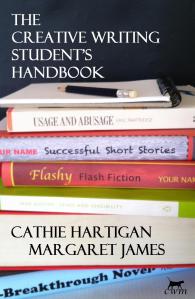
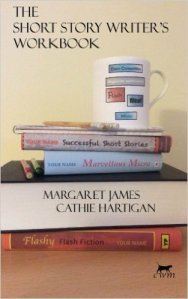
When we wrote The Creative Writing Student’s Handbook, we wrote alternate chapters and then we swapped files and edited these chapters. It all seemed to work well! But when we wrote The Short Story Writer’s Workbook, Cathie wrote the whole of the first draft and then I did a heavy edit, making the second draft twice as long as the first. This approach worked very well, too. We find our non-fiction writing styles are very similar. A few months down the line, we often can’t remember who wrote what.
Will there be more in this series?
We enjoy working together so we intend to produce a handbook for novelists and we have other projects in the pipeline, too. We hope to produce some more anthologies featuring either our own work or that of other people.
You are both very experienced tutors so I would like to ask:-
Margaret, what three tips would you give to an aspiring unpublished novel writer?
Plan your story and know roughly how you want it to end. But don’t be too rigid in your planning. Be prepared for the story to change and grow while you write.
Your reader should want to spend time with your characters. So don’t write about people you don’t actually like or don’t find very interesting yourself. Your characters ought to be your friends.
A novel is a big project. So whenever you get tired or disenchanted – which you almost certainly will – take some time out to reflect and to think about how and where you want this story to go.
Cathie, what three tips would you give to an aspiring unpublished writer of short stories?
Use vivid and specific details that tell a lot, rather than generalisations. If a character puts up an umbrella, we don’t need to be told it’s raining.
How much time you have to set up your story depends on the number of words that have been stipulated by the competition or magazine. Your story needs to develop and reach its resolution without a sudden rush at the end. Once finished, check the balance of set up, development and resolution, then be prepared to cut ruthlessly at the beginning.
Use dialogue and gesture to reveal character rather than word-hungry narrative.
The Exeter Novel Prize is going from strength to strength, what inspired this, and how do you see it evolving?
Margaret: The Exeter Novel Prize came into being because it filled a gap in the world of novel-writing competitions. It’s open to previously published and also self-published novelists. There is more information here: http://www.creativewritingmatters.co.uk/2015-exeter-novel-prize.html
Will there be a CreativeWritingMatters short story competition in 2016? If so, what advice would you give to entrants?
CreativeWritingMatters runs lots of competitions for both short and longer fiction, so here is some general advice.
Read the rules.
Abide by the rules.
Start your story as something interesting happens.
Round off your story with a satisfying ending.
Read Cathie Hartigan’s story, Making the Grade!
What is next for Cathie and Margaret, jointly or independently?
Margaret: I’m about to start the second draft of a novel and to plan a new non-fiction project that has nothing to do with writing.
Cathie: My debut novel, Secret of the Song will be out later this year and there will also be another collection of stories by the three of us at CreativeWritingMatters. Right now, the characters in my next novel are twitching for me to get on with it.
Thank you for taking the time to share your experience and advice with my readers.
Thank you for inviting us! It’s been great to talk to you.
I was intrigued to read that your first published story was achieved when you were six. You obviously have not looked back since. Could you share with us how this early success came about?
I have to confess, Valerie, that this comment on my home page is actually a bit tongue in cheek and an effort to pretend I am younger than I am. I wasn’t really six. Although I think my very first publication credit, which was a poem in Pony Magazine was actually published when I was about eight 🙂
Would you agree that you are a person who has a natural empathy with people, their problems and situations and that this is part of the appeal of your many successful character driven stories?
I do hope so. I do like people very much. And I think that all writers need empathy and sensitivity in order to step into the shoes of a character who may be quite different than themselves.
How would you describe your work ethic?
Workaholic. Definitely.
To achieve all that you do I can only imagine you are a fantastic organiser of your time. Roughly what percentage of time would you spend researching, writing and promoting a novel on social media?
I spend a little less time on social media that I did once – as it’s not easy to justify spending too much time there. I have a tendency to use it as a procrastination activity to avoid writing. But I would still say, writing a novel 60 per cent, researching 20 per cent, promotion 20 per cent.
Ice And A Slice Book 1
I remember driving my son back from college and hearing you on Steve Wright in the Afternoon discussing one of your non-fiction books ‘Eat Loads and Stay Slim’. Then I saw a new title of yours called ‘Ten Weeks to Target’ and I wondered if the research and work on one project creates a ‘spin off’ of ideas for new stories as an ongoing process?
I am thrilled that you heard the Steve Wright Interview – my one claim to fame, that!
Actually, the two books were entirely separate. Ten Weeks to Target came first – it was originally published as a serial in Woman’s Weekly. However, there’s definitely a spin off process that goes on constantly. Both of these titles came from my own experiences of trying to stay slim – and eat loads!
Could you tell us about some of the lovely pets that share your life?
I adore dogs. Currently there is Maggie May, my ten year old white German Shepherd. And Seamus who is a wolfhound, fourteen stone, and five years old.
You are not only a lecturer, public speaker and a creative writing tutor, but you also still attend writing events yourself. How important is this two way interaction?
Writing is my passion as well as my work. So I guess it’s just how things pan out. I think I must be quite boring. So recently I’ve taken up singing lessons and am learning to play the guitar, in an attempt to be more balanced.
Could you give a short piece of advice to as yet unpublished writers who are trying to break into the limited short fiction market, especially in the UK?
Don’t assume that rejections mean you aren’t any good. I still get my fair share of rejections. Not every story is saleable at the time you send it out. That doesn’t mean it won’t be later.
Ice And A Slice Book 2
Of all the things that you have achieved within your career what have been the top three most memorable highlights that you hold fondly?
This is tricky. There have been many. I will try and narrow it down.
I quite liked going on the Steve Wright Show.
Selling my first short story was awesome, as was selling my first novel.
And the third one, was when the editor of My Weekly phoned me and asked me if I fancied going on an all expenses paid trip to Malawi – I’m a journalist as well as a fiction writer. That experience and the going bit – I went twice – was fabulous.
The more I researched this interview the more convinced I was that your love of the world of writing is a driving force which means there are many more delights for us to look forward to. Could you share with us what is next for Della Galton?
At the moment I am writing a series for People’s Friend – I can’t tell you too much about this as they haven’t started publishing it yet. Watch this space. But I’m also keen to write a third novel in my Ice and a Slice series. The first novel is called Ice and a Slice. The second is The Morning After The Life Before. I don’t know what the title of the third one will be yet. If any of your readers have any suggestions I’d love to hear them though.








 I am delighted to welcome Jan Jones as my guest this month. Jan is not only an amazing writer of romantic fiction but the organiser of many successful Romantic Novelists’ Association Conferences.




 CreativeWritingMatters is the inspirational name of the business you founded along with Sophie Duffy. I love the logo. Could you tell us about CreativeWritingMatters and how it came into being?
 Will there be more in this series?


 valerie holmes, author