Crime and Punishment – Dead to Sin

The early nineteenth century in England was a harsh time of poverty for many. When soldiers and sailors were no longer needed to fight the wars that had dogged England from the end of the previous century, many men returned victorious having fought for their King (or Prince Regent) and country only to face unemployment. With little or no social support they often turned to crime to feed themselves and their families. With the increase in crimes, came new laws and harsher sentences.
Ripon Museum
I recently stopped by one of North Yorkshire’s finest museums in the little city of Ripon. Ripon is an unspoilt cathedral city that has maintained its characteristics of a delightful market town with plenty of historical places of interest to visit. It is also an excellent base for venturing into the Yorkshire Dales or the North Yorkshire Moors!

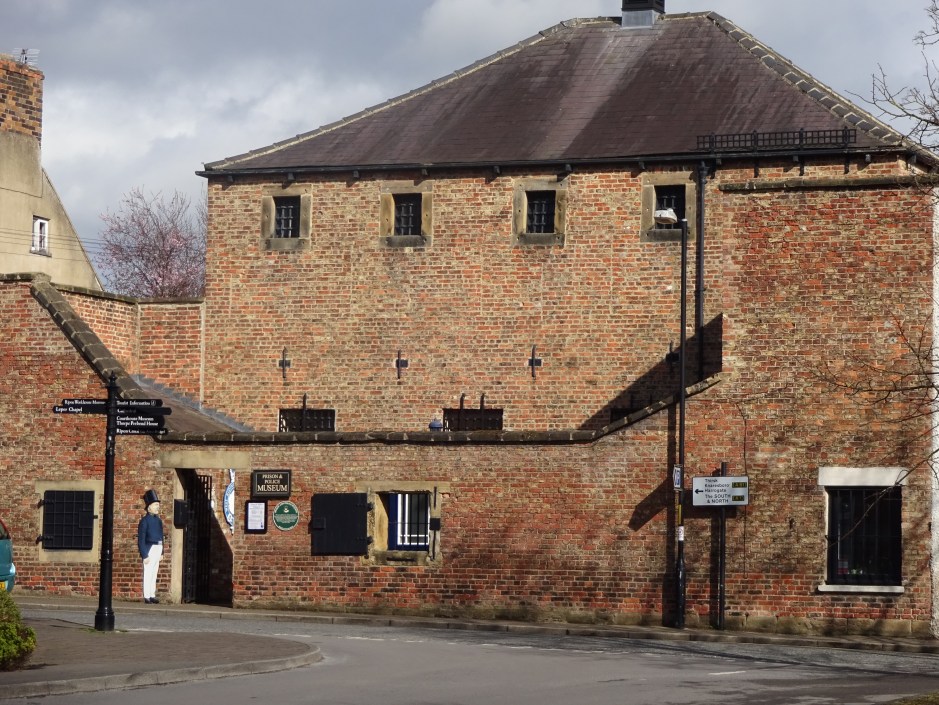
Ripon Museum comprises of three museums, all to do with the city’s historic law and order buildings that have been lovingly maintained. The photos below were taken in the Prison & Police Museum in St Marygate. It was a prison from 1686-1879 and a police station from 1880-1959.

When I first visited the prison I was writing Dead to Sin. Although the existing building was Victorian, the cells hold exhibits which relate to its earlier history and the development of crime and punishment, cruel and harsh as it was. Nowadays, the museum is clean, whitewashed and immaculately presented. Obviously in the time of Nicholas Penn it would be far from this.

The first chapter of Dead to Sin begins with Nicholas Penn bracing himself as he enters this dark, fettered world.


Nicholas Penn took one last deep breath of fresh air outside the high stone walls of the Gorebeck lock up. He glanced back at the cobbled square of the market town; wagons rattled, farmers haggled, women bartered, children’s laughter melted into the animals’ pitiful cries, the noise of which was in turn drowned out by the banter of the bidders. All was chaotic, all stank, yet there was colour and life here amongst the continuous whirl of people trading their wares.

             A heavy lock was turned in the barrier in front of him. Nicholas breathed deeply, his broad chest glad of what fresh air there was as his mind dreaded the prospect of seeing what he would find within the cold walls – and who. The reinforced wooden door creaked and groaned as the warder pulled it open, grating the edge against the stone.

             He pulled the high collar of his coat close, covering the ends of his shoulder length locks. ‘Trapped sunshine’ his mother had poetically described his wayward curls when he was a cosseted child. Now straighter, they had matured and grown like Nicholas himself. No sunshine would filter through behind this door. The rain started to pour down. Nicholas was silently led inside along a narrow stone corridor; he was taken further into the building’s bowels, down a spiral metal staircase to an airless chasm where six bolted black doors lined the dimly lit passage. Disembodied coughs could be heard even through the iron-wood barriers, which incarcerated their prey. Nicholas intuitively pulled out his kerchief and held it over his mouth. Gaol fever was to be avoided by the wise man who had the option to, but the inmates of this place had little chance to do that. The warder turned another key in the door lock at the end of the narrow corridor.

             “Ten minutes!” he growled back at Nicholas. The man had a curvature of the spine and did not look up at Nicholas’s straight frame. Instead, he shuffled back.

             Nicholas grunted what could have been his agreement or a simple acknowledgement. The turnkey gestured for Nicholas to enter.

             With some reluctance, Nicholas stepped into the small dank cell, ducking slightly so that his round hat did not contact the top of the door’s stone frame. What light and fresh air there was from the open grate that served as a window, was lost to the rain water, which now poured in, bringing with it the filth washed down from the market street above. The cell’s air stank of damp and excrement. Nicholas stood equidistant from the slime covered walls, not wanting his new riding coat to touch anything in the place.

             The cell was putrid. Under his highly polished boots was a stone-flagged floor strewn with soiled hay. Nicholas fought back memories, bleak, barefooted memories, as he glared at the figure in front of him. Like the cell, the man locked within it was unwashed, unshaven and unkempt. His appearance was in stark contrast to the man’s usually immaculate presence. The figure was seated on a small stool, wrapped in a flea-infested woollen blanket, leaning against the edge of the moist wall. Even in such discomfiture he seemed to be calm in manner, resigned perhaps to his fate. Nicholas wondered if this was true. To most people in his circumstance it would have been the case, or a near breakdown of spirits, but not Wilson. Nicholas knew the man too well. He was as hard as the stone walls which held him, to the depth of the heart that beat strong within his chest.

             Ebony eyes looked up at him as the door lock was slammed shut behind Nicholas who was trying hard not to show his inner fear, or his loathing of small airless spaces as much as his abhorrence for the pathetic looking creature in front of him.

             “You came, Nick!” the voice announced, louder than Nicholas had expected it to. That tone was almost as if he was annoyed at his late appearance. This was not the whispered breathy word of a dispirited soul. The confidence, the strength and the defiance were still there in his comments even if he looked to be in a physically weakened state.

Abigail Moor – The Cruck Inn

Abigail Moor KEC_1Abigail has to flee her home to escape from a forced marriage. This love story wrapped around an adventure takes the heroine away from the comfortable country manor house which has always been her home, onto the wilds of the North Yorkshire moors, to the beauty of the ancient city of York. From here she must seek refuge in the busy seaport of Whitby to discover who she really is.

She embraces her destiny and, accompanied by her maid, makes for The Cruck Inn, a coaching inn, on the moor road where her quest begins. Here, Abigail has her first experience of what the real world is like beyond her sheltered life Beckton Manor. The Cruck Inn was named after the design of the North Yorkshire cruck-built buildings. Spout House is an excellent example of an early inn which still exists in Bilsdale. I visited it when researching the area and was amazed at how well it was preserved. It is literally like taking a step back in time. Abigail Moor: The Darkest Dawn is available at Amazon and Smashwords.

Here are some photos I took of the amazing time capsule that is Spout House.


For the love of baking!

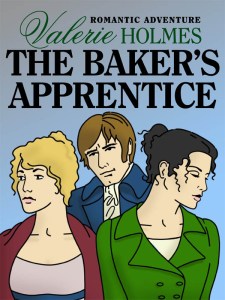
The Baker’s Apprentice is now available to download in eBook format for all eBook readers at a special price of $1.50 from Smashwords!

I love baking because it sparks memories of time spent in a warm kitchen with my mother and aunty, chatting and laughing as we enjoyed eating some of the results of our labour. From a young age I would bake the basics for the house: cakes, scones, puddings and pies. The smell of freshly made bread or scones return me to part of my childhood that will forever bring a burst of nostalgic warmth on a cold winter’s day.

A friend commented that among my titles, which focus on my North Yorkshire villages in the early nineteenth century, I had not based one around a bakery. Not everyone had their own oven, so the village bakery traditionally played an important part of village life. One comment sparked an idea and Molly Mason sprang to mind; an impetuous heroine who does not lack the courage to leave the home she dislikes, but has not the foresight to realise the hard work behind the ‘cosy’ surroundings she imagines sharing when helping her friend who runs the village bakery.

Often in life we see our own problems and look at the greener grass growing elsewhere without considering the effort that is needed to sustain the lawn.

TBA KECThe Baker’s Apprentice is set in a fictitious North Yorkshire market town that pops up in many of my titles called Gorebeck. In this story it is in a state of transition as newer Georgian terrace houses line a road replacing the older timber and cottage buildings. Some people will always welcome change seeing it as an opportunity, or others as a threat – they crave the familiar and as the old saying goes ‘If it ain’t broke don’t fix it’. It is at a crossroads for routes north to Newcastle, south to York, east to Whitby and west to Harrogate.
I will talk more about Gorebeck in future as I look at asylums, churches, market towns, inns, new and old money, mills and coaching routes in future posts.

In this story, Molly Mason carries hatred in her heart, convinced her father was murdered or driven to an early grave and seeks to escape from his wife and discover the truth. Sometimes though the truth is not what we want to hear.

Bolton Castle

When I was touring North Yorkshire and the Yorkshire Dales National Park this summer, researching scenes for the Penn Mysteries, I was lucky enough to discover the medieval gem that is Bolton Castle.

In the heart of Wensleydale Richard II’s Lord Chancellor of England, Sir Richard le Scrope had the castle built between 1379 and 1399. It is in a remarkable state of repair and is still owned by Lord Bolton who is a direct descendant of its founder.

We had a lovely day exploring its battlements, rooms, stores, armoury, dungeon, kitchen and courtyard. Actors provided a medieval play and archers put on a display. Tents surrounded the entrance showing how people lived in medieval England – a joy to the sound, smells and skills of the time.

Before we left the tea rooms provided a truly lovely light meal in ancient surroundings. If you are in the area during the holiday season, I would recommend a visit. The area is absolutely beautiful for hiking or simply touring.

York

I am so lucky that in the course of doing my research for my own titles I have been able to visit some fascinating historic places. York is the one that encapsulates time as now other. If you were a Roman, it was known as Eboracum. If you had lived there through the Saxon era, then it would have been called Eoforwick. Perhaps it is better known historically as Jorvik because of the state of the art Jorvik museum which brings Viking York back to life.

Walking through the city’s narrow lanes is like seeing all eras of time side-by-side. Medieval wooden structures stand next to Georgian houses and over them all are the famous towers of a grand cathedral known as The Minster.

There are far too many aspects of this fantastic place to mention in one post so I am sharing some photos of the city with you that I discovered when researching locations for Abigail Moor.

Cobles and Contraband

DSC03675My stories are often set around the dramatic coast and countryside of North Yorkshire, where I grew up. It is an area of outstanding natural beauty and fascinating social history, especially around the early nineteenth century when England was at war with France and many things were changing at home.
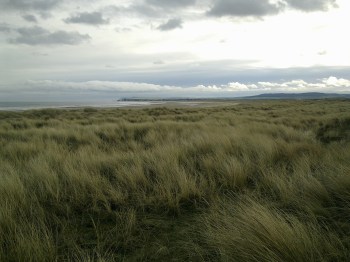
Smuggling was rife along Britain’s shores. The vast expanses of accessible flat, sandy beaches in the area made it an ideal place for smuggled goods to be brought ashore. Despite the busy German Ocean (known today as the North Sea) with it colliers making their way to London with coal and fetching back urine for the alum works along the northeast coast, privateers still operated freely. The custom coble was often outrun by more superior vessels or their men outnumbered on shore.

05022011320The Yorkshire cobles with their flat bottoms were ideal for beaching loads of contraband. Goods such as tea, cards, ankers of brandy, geneva, pepper, ‘sack’ or sherry, sugar loaves, silk and cards, to name a few were taxed heavily, which meant that common folk felt justified by buying them cheaply from the free-traders. The irony was that the coin, which made its way back to France, helped to fund the enemy that British soldiers were fighting.

Work on the land was seasonal and low paid. Fishermen depended upon hauling in a good catch to feed their families. It was no surprise then that many were involved in the lucrative trade. Despite the Riding officers best attempts to stop it the problem was rife.

20082011431The rugged headlands, flat sweeping fine sandy bays, natural woodland and the beautiful expanse of the North Yorkshire Moors inland add both a great variety of scenery and beauty. The settings for my stories are as dramatic as the plots. I have created my own villages and characters and will introduce you to some of them as I look more closely at the actual history of this fascinating region.

In Phoebe’s Challenge, the hunted brother and sister are rescued by a stranger and brought down to a safe cottage, a haven, on the sandy shoreline, sheltered under my fictitious headland of Stangcliffe. Desperate to escape their past life they have no choice but to trust a man they hardly know in an area where nothing is at it seems – but Phoebe likes a challenge!

Sharing Places – Part 3

Whilst researching social history for my stories I visit some fascinating places. Here are some of the places that have triggered plots, created characters or inspired a mood or a desire to return to the keyboard and write.

3. Ormesby Hall, North Yorkshire, England.

DSC04426DSC04400
This interesting Georgian mansion belonged to the Pennyman family for nearly four centuries and is now open to the public. It is nestled in its own grounds hidden away from the busy modern environment surrounding it.

I was delighted to be shown around the servant’s passageways when I visited. They thread through the house so that the daily running of the hall did not get in the way of the family who lived there.

The Victorian launderette is not as grand as the larger hall of Beningborough near York that gave rise to Chloe’s Friend, but the estate is a joy to walk around. You can visit the local church further up the lane and the stables which are used to this day by The Cleveland Mounted Police.

Also, there is a permanent exhibition for the model railway enthusiast and fine cakes in the tea room.

Sharing Places – Part 1

Whilst researching social history for my stories I visit some fascinating places. Here are some of the places that have triggered plots, created characters or inspired a mood or a desire to return to the keyboard and write.

 1. Nunnington Hall, North Yorkshire, England.

Blog1Blog2

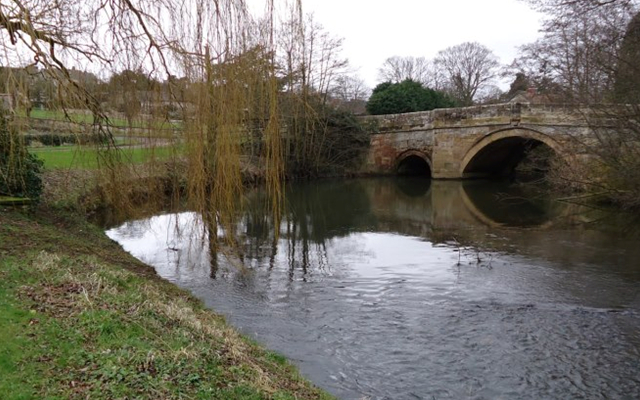
Twenty one miles north of the beautiful city of York is the historic estate of Nunnington Hall. Its history stretches back from Tudor times through the family’s sympathies with the Jacobite’s cause to modern day.

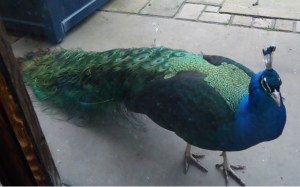
Built on the banks of the river Rye, it is a beautiful location to explore where peacocks roam free. I loved exploring the period rooms and also the old servant’s rooms and attic where the hall houses a fine miniature collection. The views are magnificent. It feels as if the hustle of modern day life has been left behind as you explore this beautifully preserved walk through history.

Character, plot or pace – which one comes first?

One of the most difficult issues a new writer faces is to know where they should begin their story. Creative writing books often advise that a story, whatever its length and genre, should begin at a point where something is happening. Ideally the protagonist, your main character, is facing the essence of drama – a conflict. I agree, but what is essential is that the reader should begin to establish a relationship with that character so that they want to read on to follow them on their journey through the story, to what will hopefully be a satisfying ending.

The initial conflict provides a situation, which brings out aspects of their character that should appeal to the reader as they face their dilemma. The background to these is the place – the setting. This will help set the era, the physical aspects – the stage – against which the characters are performing on the page.

A common mistake is to open with too much explanation about their character’s life before the current situation. This means the reader may become bored before they understand who the protagonist is and become interested in them as a person who they can relate to.

Every writer will be inspired differently by people, places and plot to create that spark, which drives them to convert an initial idea into the first gripping page of a novel.

For example:-

Phoebe’s Challenge: Phoebe is a young woman who works in a mill with her younger brother, Thomas. The idea for the opening was triggered by an illustration in a children’s book written about the hardship of life in cotton mills at the turn of the nineteenth century. I then created the evil overseer Benjamin Bladderwell as the main reason why it became imperative that Phoebe escapes. I liked the idea that the plot would become more complex if a mysterious stranger helped them. Without giving any spoilers away, this then broadened the whole plot out into the world of smuggling around the bay towns of North Yorkshire, England. A time when we were  at war with France. From here Phoebe and Thomas’s adventure involves more conflict amongst the different social classes and a life and death chase with a man who they do not know if they can trust. Over the pace of the adventure another thread is layered, that of the developing romance.

From one initial idea, others spark until what is created is a tightly written romance or mystery to be enjoyed. Wherever my initial idea comes from for a story, I always aim to take my readers on an adventure which will end at an optimistic point, where the main character has overcome problems and survived.

I am always fascinated to hear how other writers work, published or not. What inspires you to write? Where have your best ideas come from?

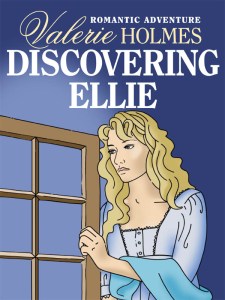
Discovering Ellie

Discovering Ellie KECBuy and read now!

US Readers: Kindle / iTunes / Nook / Kobo

UK Readers: Kindle / iTunes / Nook / Kobo

Early nineteenth century North Yorkshire, England.

Ellie has recurring nightmares, always waking to a life devoid of love, but still she dreams. Living in the old hall with her Aunt Gertrude and cousins Cybil and Jane, the scandal of her mother’s elopement with a Frenchman cast a long shadow over her life. Until Mr William Cookson arrives to shine new light onto her past opening the way to an exciting future…