Sharing Places – Part 4

Whilst researching social history for my stories I visit some fascinating places. Here are some of the places that have triggered plots, created characters or inspired a mood or a desire to return to the keyboard and write.

4. Whitby, North Yorkshire, England.


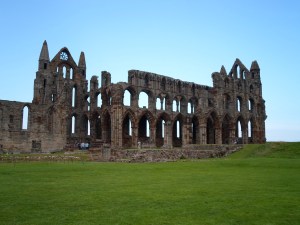
Whitby Abbey
Whitby Abbey, an iconic image on the headland.

One of my favourite places to explore on the North Yorkshire coast is the unique, atmospheric town of Whitby. This ancient port situated on the northeast coast of England is famous for many reasons.

St Hilda founded a double monastery (for monks and nuns) here in 657 AD, making it a valued seat of learning. The famous Synod of Whitby was held here in 664 AD.

Whitby became a famous whaling port with such famous seafaring names associated to it as the Scoresby‘s.

Whitby's 99 steps
The famous 99 steps, better going down than up!

The James Cook Museum is housed in the C17 house where he lived as an apprentice. It is an atmospheric place overlooking the River Esk. There is a large car park nearby so exploring this side of the harbour is not a problem if arriving by car. If you walk into the East side of the harbour from here you can wander through the old cobblestoned streets and explore the many yards and snickets.

Passing the old inns and market square you will reach the bottom of the famous 99 steps which lead up to the unique church of St Mary and then to the abbey beyond. The views across the harbour from here are magnificent.

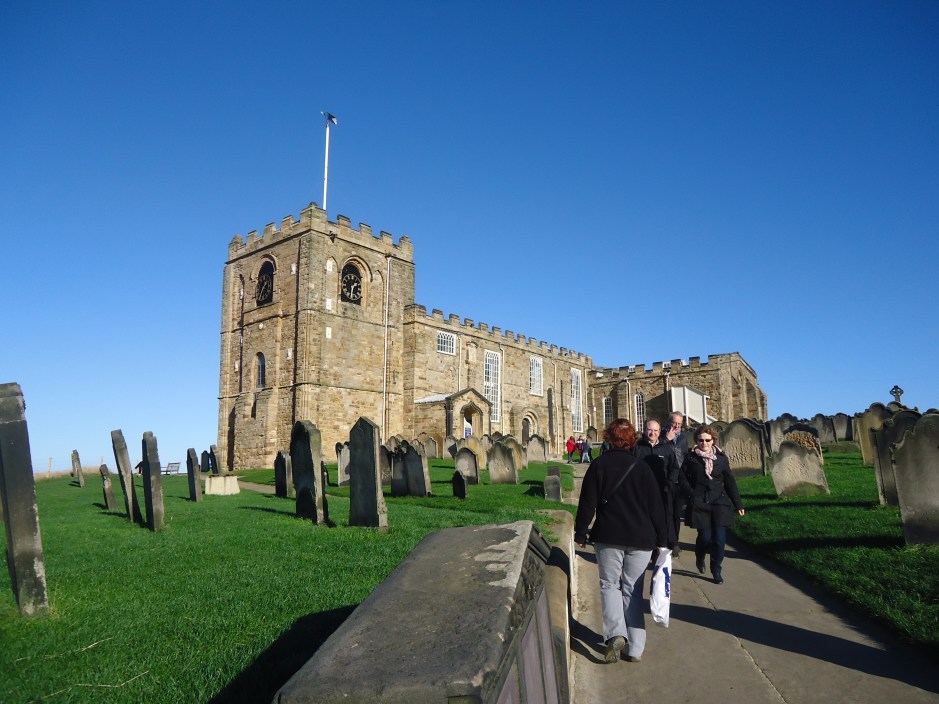
St Mary's Church
The unique St Mary’s church in front of Whitby Abbey has pride of place on the horizon.

To experience staying in one of the original inns, The Whitehorse and Griffin has been lovingly restored and offers excellent food.

Whitby sporadically comes into my stories, either in passing as in Abigail Moor, or as a setting in itself, such as Amelia’s Knight, which is still to be released as an eBook.

Whatever your reason for visiting this fascinating location, being prepared to walk and explore its narrow alleyways, historic places, or the more usual shops and eateries on the west side of the harbour, then there is plenty for everyone to enjoy.

Whitby houses
A glimpse of the red pantile rooves that characterise bay town houses.

For excellent seafood and a great place to eat it, looking back across the harbour to the abbey is The Magpie.

Other places of interest in the area can be found on these helpful websites:


An Interview with Louise Allen

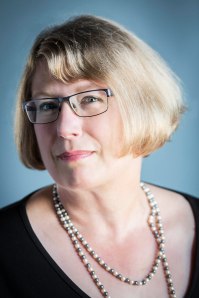
A photo of Louise Allen

When did you first decide to become a writer or discover your love for the written word?

I’ve always had a vivid imagination and loved fiction but I think academic work knocked the urge to actually write it out of me. Then I started for all the wrong reasons – I was a librarian and saw how popular Mills & Boon novels were. I thought it would be easy money – idiotic of me, of course. However, by the time I sorted myself out and took it seriously I was hooked.

What appealed to you about the romance genre?

It is a great genre for exploring relationships, which is always interesting, and when I discovered historical romance, there was no stopping me – two passions in one!

Your research is impeccably thorough. At what point do you take a step back from it and begin to write the book?

Walks Through Regency London Cover LARGE EBOOKThe story and the characters have to come first, always, although some plot lines can be sunk from the start if the historical premise is incorrect – 18thc characters getting an easy divorce, for example or a sub-plot that involves getting from London to York in a day. Generally I know what I don’t know and therefore what to research – politics, for example. I’ve got a huge personal reference library. But once I know I have a plot that will work in a particular historical context then I leave the research until afterwards and go back to it so it doesn’t take over. When I wrote a story set in AD410 during the Sack of Rome (Virgin Slave, Barbarian King) I just left questions in red for bits I needed to check and went back to them to be sure my characters left Rome by the right gate onto the right road and I’d got the layout of a bath house correct and so on.

I also write historical non-fiction – Walking Jane Austen’s London (Shire), Walks Through Regency London (Kindle), Stagecoach Travel (Shire, July) and I’m working on something on the Great North Road at the moment, so I can channel the hard facts somewhere they won’t take over.

You must have visited some fantastic locations and discovered some unusual facts during your research. Could you share some of the most memorable with us?

Finding three of the houses that Jane Austen stayed in when she was in London was a thrill. Only one, in Covent Garden has a Blue Plaque, but I discovered the other two when I found a pamphlet about research that was done after the war which revealed that her brother Henry’s homes in Sloane Street and Hans Place were not demolished by the late Victorians, but simply refaced and had new upper floors added. The originals are still there under the later shell.

Practical research is great too – I took carriage driving lessons, for example and I’m about to go on a practical osteoarchaeology course handling real skeletons. Goodness knows when that will come in useful…

Do you have a strict writing routine?

Yes, or I’d never get anything done! I write every afternoon until I have hit at least the minimum number of words I need to do to make sure I finish a week before the deadline, and hopefully a few more. That way I have some time in the bank for catching flu or unexpected commitments.

How do you balance the need of keeping your work accessible to contemporary readers against your desire for historical accuracy?

I won’t distort history but it is possible to use it to appeal to contemporary readers. For example I tend to write heroines who are older and who have the freedom to act in a more assertive, interesting way. They may be widows, or following one of the career paths open to women at the time. Where there are strong differences in beliefs and norms between the time I am writing about and the present – the fact that many wealthy families in the 18th century owed their fortunes to slavery in the West Indies, for example – I simply avoid putting my characters into those situations. On the other hand, the ‘long Regency’, which is the period I usually write about, saw the beginnings of many of the freedoms we are concerned about now, or at least the fight for them. Education for women, abolition of slavery, prison reform, concern for child welfare can all be woven in to some plots and engage the sympathy of readers.

As the New Writers’ Scheme Organiser for the RNA, what key advice would you give to someone who wanted to break into the romantic fiction market?

Read widely in the genre you are interested in and do so analytically as well as for pleasure. What works, what doesn’t? Why? Then work at developing your own voice – there is no substitute for practice!

Please tell us about your latest release?

UnlacingMy latest book is Unlacing Lady Thea (Harlequin Mills & Boon. April). I got the idea for it when we took a small-ship cruise down the eastern coast of Italy. My heroine is no great beauty, and thoroughly practical with it (and I had some fun with the fact that, unlike many romantic heroines, she doesn’t fool the hero for a moment when she disguises herself as a boy). My hero begins the book seriously the worse for drink and talking to the kitchen cat. He’s so drunk that he agrees it would be a good idea to allow Thea to accompany him on his Grand Tour so she can join her godmother in Venice. By the time he sobers up, it is too late and he is stuck with escorting his childhood friend for whom, of course, he has no amorous feelings… None at all, he tells himself.

What is next for Louise?

Scandal’s Virgin is out in June and Beguiled By Her Betrayer, which is set in Egypt in 1801, is released in August. Stagecoach Travel comes out in July.

Currently I’m working on book three in a trilogy, provisionally called Battlefield Brides. Book one is by Sarah Mallory and book two by Annie Burrows. The three books are set before, during and just after the battle of Waterloo and will be released to coincide with the bicentenary of the battle in 2015.

More from Louise

Website: louiseallenregency.com
Blog: janeaustenslondon.com
Twitter: @LouiseRegency

Sharing Places – Part 3

Whilst researching social history for my stories I visit some fascinating places. Here are some of the places that have triggered plots, created characters or inspired a mood or a desire to return to the keyboard and write.

3. Ormesby Hall, North Yorkshire, England.

DSC04426DSC04400
This interesting Georgian mansion belonged to the Pennyman family for nearly four centuries and is now open to the public. It is nestled in its own grounds hidden away from the busy modern environment surrounding it.

I was delighted to be shown around the servant’s passageways when I visited. They thread through the house so that the daily running of the hall did not get in the way of the family who lived there.

The Victorian launderette is not as grand as the larger hall of Beningborough near York that gave rise to Chloe’s Friend, but the estate is a joy to walk around. You can visit the local church further up the lane and the stables which are used to this day by The Cleveland Mounted Police.

Also, there is a permanent exhibition for the model railway enthusiast and fine cakes in the tea room.

Sharing Places – Part 1

Whilst researching social history for my stories I visit some fascinating places. Here are some of the places that have triggered plots, created characters or inspired a mood or a desire to return to the keyboard and write.

 1. Nunnington Hall, North Yorkshire, England.

Blog1Blog2

Twenty one miles north of the beautiful city of York is the historic estate of Nunnington Hall. Its history stretches back from Tudor times through the family’s sympathies with the Jacobite’s cause to modern day.

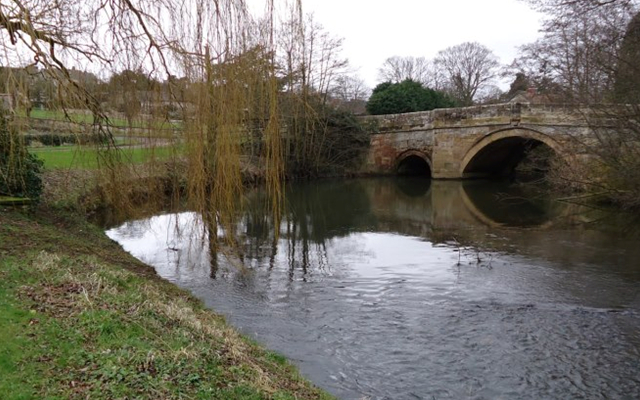
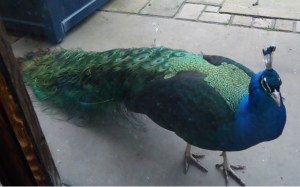
Built on the banks of the river Rye, it is a beautiful location to explore where peacocks roam free. I loved exploring the period rooms and also the old servant’s rooms and attic where the hall houses a fine miniature collection. The views are magnificent. It feels as if the hustle of modern day life has been left behind as you explore this beautifully preserved walk through history.

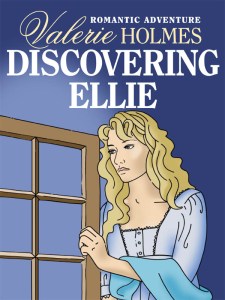
Discovering Ellie

Discovering Ellie KECBuy and read now!

US Readers: Kindle / iTunes / Nook / Kobo

UK Readers: Kindle / iTunes / Nook / Kobo

Early nineteenth century North Yorkshire, England.

Ellie has recurring nightmares, always waking to a life devoid of love, but still she dreams. Living in the old hall with her Aunt Gertrude and cousins Cybil and Jane, the scandal of her mother’s elopement with a Frenchman cast a long shadow over her life. Until Mr William Cookson arrives to shine new light onto her past opening the way to an exciting future…

An Interview with Freda Lightfoot

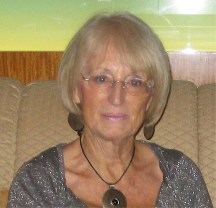
Freda L-close up 6My very special guest for Christmas is prolifically successful historical author, Freda Lightfoot, with an insight into her career and sharing with us how she now enjoys the best of two worlds.

You have served a very interesting writing apprenticeship in order to attain the success you now enjoy. Could you share some of the key moments with us?

My first published piece was called An Elizabethan Toothache, published by Today’s Guide in 1972. I followed this small success with pieces on how to pass various badges, how-to’s, crosswords, quizzes and puzzles, then short stories and a serial, all of which sold to Guide and Brownie magazines and annuals. Fiction was what I really wanted to write but amidst all the child rearing and running a book shop, time to write was hard to come by. It wasn’t until I sold the business and moved out into the country that I started writing articles and short stories for adult magazines. My first success with a novel was a historical romance for Mills & Boon called Madeiran Legacy. I went on to write four more before my plot lines were becoming far too complicated and I wanted to write about real women.

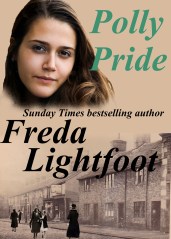
Polly Pride-webYour Lancashire routes have provided a strong background for your Sagas. Have you used some of your own family’s historical experiences within the fiction?

Indeed I have, many times. My grandmother was the spark for Big Flo in Polly Pride. She’d had a hard life but was a real stoic, as Lancashire women were in those days. And the idea for the story came from my Great Aunt Hannah, who did exactly as Polly did and sold or pawned her furniture in order to buy a piece of carpet from a ship in Liverpool. Then she cut it up and sold the squares on the market. But her husband didn’t object as Polly’s did. Family stories may be the inspiration, but the story is fiction.

I often advise new writers that in order to succeed you need to be determined and dedicated. You seem to have these attributes in abundance as you have owned a small holding and a bookshop as well as becoming a successful writer and now live in an olive grove in Spain. Do you have a strong work-ethic, which you apply to your writing routine? 

I dare say that is true, maybe I inherited it from my grandmother, and a long line of Lancashire and Yorkshire weavers. But then I love my work so it is no hardship to spend hours each day at the job. I put my heart and soul into my stories, which is absolutely essential. You must lose your inhibitions and be entirely sincere, but yes, it does take hard work and dedication. I’d say it demands the three p’s, which stand for practise, persistence, and passion for your craft.

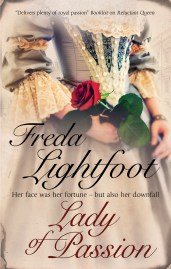
Lady of PassionYour fictionalised biographies must need meticulous research, even more so than historical sagas. How long do you spend researching a new project? Roughly how long do you take to write a completed first draft? 

When I reach a certain stage with my work in progress, I start a little preliminary research on the next book, which gradually builds, taking several months altogether. All my books demand a good deal of research, for which I have a substantial library, plus interviews for my sagas. I’ve met some marvellous old folk who share their working lives and memories with me. The biographical historicals do take longer though, as you can’t make it up, and I like to be as accurate as possible. It’s rather like detective work trying to build the character and life of a real person. Fascinating.

Breaking into the eBook market was another bold move, which has certainly worked. Could you share any tips on how you made this a success? 

I entered the digital market back in 2010, which were pioneering days for ebooks but I taught myself how to do the necessary formatting and put them up by way of experiment to see what would happen. Nothing much did at first but when the UK came on board in December 2011 and Santa Claus delivered a load of Kindles, they really took off. The more books you publish, the more you sell. But they must be good, page-turning stories, well-written and not rushed, error-free and properly edited with good commercial covers.

You now live in Spain. How did this move come about? 

It all began back in 1997 when we bought a holiday home here, a little village house high in the mountains 20 kilometres from the coast. We fell in love with the village and found we were spending more and more time here, so finally bought a piece of land with an olive grove on it and built ourselves a house for our so-called retirement. Of course, writers don’t retire, but we love spending our winters here, and summers in the UK.

Will Spain feature more in your future novels?

I do have one or two ideas, so watch this space. It could happen.

You have the best of both worlds – Would you share a couple of things that you love most about your home country and your new one?

We do have the best of both worlds as here in Spain we can avoid the British winter. Almeria is the last designated desert in mainland Europe so in the daytime we can enjoy some sunshine and gardening, and as the nights grow cold we can light a fire and be cosy. The Spanish people are very friendly and we have a good life here with many friends of all nationalities. In the UK I love taking part in writer’s events, talks and conferences, visiting stately homes, and enjoying all things British.

Could you give a seasonal insight as to how Christmas in Spain varies to our traditional one in England?

l-ayuntamiento_valencia_navidad-reidrac-14_12_08-cc20.jpg

One of the joys of living in Spain is that there isn’t the same commercial fuss made. Feliz Navidad will be up there in twinkling lights, and pontsettias everywhere, the Nativity scene ‘Nacimiento’ can be seen in plazas as well as many Spanish homes and shop windows, but Christmas itself is fairly low key.

Christmas Eve, Nochebuena, is when the main Christmas meal is taken, often roast lamb or suckling pig, a feast that takes place quite late, as do all Spanish fiestas, starting around 10 p.m. and going on until the small hours. Some families will sing carols around the nativity scene which remains without the baby until the stroke of midnight. Others go to midnight Mass ‘La misa del Gallo’, Rooster Mass, named after the bird who announced the birth of Christ. Many people, of course, like the rest of us, just watch the Christmas programme’s on TV while enjoying the traditional Turrón (nougat), or mantecas (a range of butter-based biscuits) with cava.

The big celebration for the Spanish is Fiesta de Los Reyes, Three Kings Day on January 6th. What we would call Epiphany. Traditionally, this is when Spanish children get their presents, not on Christmas Day from Papa Noel, although these days some enjoy gifts on both days. By then we’re packing our Christmas decorations away, but the Spanish are still partying.

What is next for Freda?

I’m currently working on another saga, which I never talk about until it is done. After that I plan to write a sequel for Polly Pride, and also another biographical historical in my royal mistresses series about Sarah Lennox, who had the chance to marry George III, but blew it. I do like to have lots to look forward to.

More by Freda:

An Interview with Nicola Cornick

Nicola Cornick - profileWelcome to my blog, Nicola. I must confess that your childhood interests me. I have visited many stately homes and heritage sites over the years and the idea of going to school in the dower house of C18 Harewood House fascinates me. Was this where your love of history and academic research began?

Thank you very much for inviting me to visit today! It’s a pleasure to be here.

I think I was very lucky to go to school in an 18th century house! It was definitely inspirational. There was a very grand staircase, a beautiful “winter garden” where we took our art lessons and lots of old nooks and crannies to explore. The house was surrounded by parkland too so we could run wild in the grounds and we could tell each other scary ghost stories on the dark winter evenings! I think that being in such a historic atmosphere intrigued me and sparked my curiosity; I wanted to learn about the house and its past occupants and from there my love of history developed.

Could you tell us about the work you do at the National Trust’s Ashdown House?

I’d love to! I work as a guide and historian at Ashdown House, a stunning 17th century hunting lodge in Oxfordshire. I show people around the house and give them a guided tour telling them about the history of the house and the Craven family who owned it. It’s a fabulous, romantic-looking place and the history is rich and romantic too! I also do lots of research into the history of the house. I’m learning about it all the time and the more I discover the more fascinating it becomes. We’ve just found some secret tunnels leading off from the wine cellar!

Your first Regency novel was published in 1998. What is it about this era that appeals to you so much?

I’ve always loved the Regency era as a writer and a reader. Like so may readers I started with the books of Georgette Heyer and their wit and the beautiful way that Heyer evokes the era really enthralled me. I love the elegance and the manners and the fascinating contrast between the outward show and the intense emotions that may be hidden beneath the surface. One of the challenges for a writer is to find a way for those emotions to be expressed within the constraints of the behaviour of the time.

How did your breakthrough into publication happen?

I had a long journey to publication. My first book, True Colours, was twelve years in the writing because I was also working full time and could only snatch short periods of time to write. Mills & Boon rejected my first attempt as having too much adventure and not enough romance. I re-wrote it twice more before they finally accepted it.

Who or what was your biggest inspiration in becoming a fiction author?

There have been so many people who have inspired me. The writing of authors such as Mary Stewart and Daphne Du Maurier fired me with the desire to be a writer when I was in my teens. My teacher, Mrs Chary, inspired in me a huge love of history and for that I will always be grateful to her. I always knew that it was historical fiction that I wanted to write. The other big influence was my wonderful grandmother, whose collection of historical novels I devoured and with whom I watched costume dramas on a Sunday night!

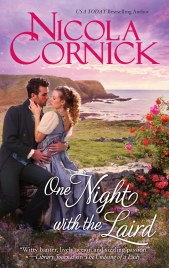
One Night with the Laird - US copyYou are an enthusiastic traveller on a world-wide scale, but for your latest series you have headed north of the border and changed period for The Lady and the LairdOne Night with the Laird out this month and the final book Claimed by the Laird, which will be published next year. What triggered this change in location and direction?

I do love travelling and have been lucky enough to visit some amazing places all around the globe. One of my favourite places, though, is Scotland and I have wanted to set a book there for years. It was fascinating to research Scotland in the early 19th century and see the similarities and differences in politics and culture compared with south of the border. It was huge fun to write the Scottish Brides trilogy!

What is next for Nicola?

I have lots of exciting plans for next year.  There are several new Regency ideas I’m going to be working on, plus a book inspired by Ashdown House!

Thank you for taking the time to answer my questions and for sharing some of your unique experiences with us.

Thank you!
More by Nicola:

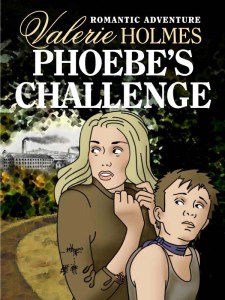
Phoebe’s Challenge

Phoebe's Challenge KEC (1)

Buy and read now!

US Readers: Kindle / iTunes / Nook

UK Readers: Kindle / iTunes / Nook

Early nineteenth century North Yorkshire, England.

Phoebe and her brother, Thomas, have to flee the evil regime of overseer Benjamin Bladderwell because an accident results in them being labelled machine breakers. Hunted with nowhere to run, the mysterious wagon driver, Matthew, his them and saves their lives. They soon discover that he is a man of many guises who Phoebe instinctively trusts, but Thomas does not. Their future depends upon this stranger, on their own they will be captured or starve. Phoebe must trust or challenge Matthew unaware that he is also tied to their past.

An interview with Bill Spence, a.k.a. Jessica Blair

090

This month’s guest is both prolific and successful saga author, Bill Spence a.k.a. Jessica Blair.

You have such a broad spectrum of life experience on which to draw: from teacher training, to Bomb Aimer in the RAF, to journalist. What triggered your initial venture into fiction?

Brought up among books and magazines; encouraged to read from an early age,  I think, unknown to me, stimulated in me a desire to write.  On leaving the RAF in 1946, I wrote a few articles but I always had the desire to write a book. Liking fact and liking fiction I thought I would write a novel based on my experiences as a Bomb Aimer during the war. I really wrote it  for my own satisfaction. I had no idea of the publishing world at that time. After a chance sighting of a short piece in a local evening newspaper, saying a paperback company was looking for war novels, I thought I might as well send mine. They offered a contract to publish (1959) which of course, knocked me sideways and made me think what do I do next. I had always been interested in the West, knew a lot about its history and had read numerous Westerns, so I wrote one! That eventually landed on John Hale’s desk and he offered to publish (1960)  36 followed, the last in 1993. During that time I also wrote two more War novels. A Romance and 3 non-fiction books about aspects of Yorkshire and had become interested in the history of whaling.

Jessica Blair was a pseudonym created in 1993. Why did you switch both genre and gender at this point in your career?

070The study of the history of whaling over a considerable period of time resulted in Harpooned – the Story of Whaling being published in 1980. It was highly illustrated and writing it and gathering the illustrations was a very interesting experience. I decided I would use the knowledge I had gained as background to fiction. The result was the first Jessica Blair novel, The Red Shawl. (1993) It was submitted under my own name but the publisher, Piatkus, who offered me a contract, wanted to publish it under a female name and suggested Jessica Blair.  The reason, I believe, was all to do with marketing.  It has paid off for me — the twenty-third  Jessica Blair novel will appear early next year.

Whitby is a pivotal town in Jessica Blair’s novels. How and when did your interest in this beautiful northern seaside town begin?

Whitby was an important whaling port in the 18th and 19th centuries and this was the background I used for The Red Shawl. Whaling does appear in other Jessica Blair novels but not in everyone.  I knew Whitby from my school days and then after the war. I realized there was a wealth of stories there, throughout its history and into recent times and I am fortunate to be able to absorb the atmosphere of the times I use.

WHITBY GIRL FINALEvery author has their own preferred method of working. For the benefit of aspiring writers would you share yours with us?

I look into a background I would like to use. I place my main female and male characters against that background and ask myself, ‘What if …?’ That question will keep recurring as the book develops. I work from a brief outline and sample three chapters. If my publisher, Piatkus, like those and the idea behind them they will issue a contract – then my computer gets working over-time ! I cannot work to a detailed outline because at that stage there are aspects of the story I know nothing about. Characters react to circumstances, and to each other – so the story develops as those change.

During your extensive research you must have come across some fascinating local characters. Do you ever use real people within your novels or are they all fictitious?

Yes I have met many interesting characters throughout life and whilst they might stimulate ideas I don’t use real people in my novels.

Of all your published work do you have a ‘favourite child’ or is it impossible to choose?

Probably The Red Shawl; it led me much deeper into the worlds of writing and publishing and extended a fascinating life. I must say that my first Western led me to meet my first other writer and that brought a long friendship.

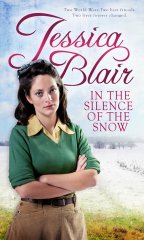
InTheSilenceOfSnow_DemyHB_9780749956295_LRRecent releases have been The Road Beneath Me and In The Silence Of The Snow. Could you tell us something of your upcoming novel, A Tapestry of Dreams, to be released in 2014?

A Tapestry of Dreams is based in the West Riding of Yorkshire (woollen industry) and the Lincolnshire countryside (sheep farming). Set in the 1850s these were the backgrounds against which I placed my two leading characters and asked myself ‘What if?’

What project are you working on next?

That has yet to be decided wit h my publisher, Piatkus.  Ideas are out there but I don’t want to mention them yet as I don’t know what road they will take.

Many thanks for your time in answering my questions and sharing your career with us.

More by Bill:

An interview with Jo Beverley

001I am both delighted and privileged to welcome award winning international romance author Jo Beverley as my guest this month. Jo is a member of the Romance Writers of America Hall of Fame and has been described as:-

Arguably today’s most skilful writer of intelligent historical romance.”
Publisher’s Weekly

“One of the great names of the genre.”
Romantic Times.

When and where did your passion for writing begin?

Too early to remember! I used to make up stories when I was very young — mostly about horses — but when I was about sixteen I wrote a historical romance in a school exercise book. I still have it! Not good at all, but it showed promise.

You have written books set in Medieval, Regency and Georgian times, but what was it that triggered your love of these particular periods?

That teenage effort was medieval, and I’ve always had a love of that period. Though it wasn’t as grim as sometimes portrayed, it was life on the edge that demanded strength and resilience from anyone who was to survive. My other two periods, Georgian and Regency, owe a lot to Georgette Heyer. I loved her books as a teenager and reread them many times. I truly wanted to be her when I grew up, which meant to me, giving the same sort of reading pleasure. Heyer’s influence led me to Regency, which was where I was first published, but I always had a yen for the Georgian age, with the fabulous costumes, especially the men’s. I love manly men in silk and lace. So totally cool.

Your period research is impeccable, however, you keep the hero and heroine attractive and the dialogue accessible, giving a flavour that it is true to the period. How carefully do you have to balance historical accuracy against modern taste to keep the appeal to a contemporary readership?

It can be tricky, especially as my readership covers a broad range from scholars to those who want the story and don’t much care about dates and details. Mostly I try to know as much as possible and use only what I need, letting the story rule. However, many stories are based on realities, so what I know shapes the stories! I certainly try to avoid info-dumps, but I usually include an author’s note at the end for those readers who are interested in the background. For example, the author’s note to Seduction in Silk includes details about a famous stone carver of the time, because marble memorials play a part.

I also try to avoid archaic language because I don’t much like to read it. I use “time neutral” language, which means avoiding both obviously modern language and archaic. If it works, the reader should enjoy the book without noticing.

You have been quoted as saying you do not get along with ‘stupid heroines’. How do you study the social attitudes of the period to avoid applying modern values to a heroine’s outlook on life?

Awareness of the social attitudes comes along with knowing the period, because I try to read primary sources — ones written at the time. That gives a pretty good feel for how people felt and thought. The good thing is there’s quite a range, just as there is now. We can have realistic heroines who don’t create waves. We can also have eccentric ones, rebellious ones, and downright weird ones, but then we  can have everyone around them thinking they are wonderful. That’s unrealistic, then and now.

Stupid is a whole other matter. For me, it’s no fun to spend time with a character who keeps saying and doing bubble-headed things, especially if they’re creating pain and problems for others and don’t care. Another type of character who doesn’t work for me is the selfish one, the one who reckons if they want it they should have it regardless.

Each author has their own favoured way of working – would you share yours with us?

Firstly, I “fly into the mist.” This means that I don’t pre-plot my books. I get an idea for characters and situation and start writing to see where it goes. It might be easier to plot out my books and know where I’m going, but that doesn’t work for me.

I write on the computer and rarely print work out along the way, though I generally do print it out about half way to read through, and then at the end before the final edit. Reading in print does throw up interesting things. I do these printouts in faux galley style. This means landscape, two columns and justified, so it ends up looking like the pages of a book. That helps, too.

I start writing early in the morning and continue until lunch because this is my most creative time. Sometimes I do edits and research in the afternoon and evening, but I rarely do first draft writing then.

However, there’s no rule to this, for me or anyone else. Each writer needs to find her own way, and for new writers that usually means trying many ways, some of them crazy. You never know! I do believe that we know it when we find it.

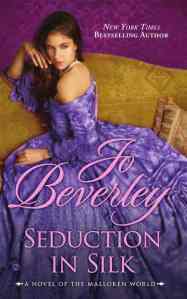
This month sees the release of Seduction in Silk another story from the Malloren world. Could you tell us what triggered the idea and motivation behind this latest novel?

I wanted to write about Perry Perriam. He appeared in An Unlikely Countess as the hero’s friend, and in A Scandalous Countess as the heroine’s brother, and readers asked for his story. I was happy to oblige, because I like him a lot. He’s not titled, but he is aristocratic — he’s the younger son of an earl. He’s very bright and very charming, and earns his living by using his talents in London, at court, in politics, and in society.

London — or rather Town, as fashionable London was called — is his life, so he’s not pleased when a distant relative names him heir to Perriam Manor, with the condition that he marry Claris Mallow, a clergyman’s daughter, within the month. Perry doesn’t give a penny for the manor, but getting it back is an obsession of his father’s, so he has no choice. He doesn’t think it will be difficult, especially when he learns that Claris is impoverished and raising two young brothers. He’ll marry her, install her and her family at the manor with free use of the income from it, and get back to his life.

Claris, however, has survived her parent’s tormented marriage and has no intention of marrying anyone, least of all an elegant stranger who assumes she’ll fall at his feet! She chases him off at pistol point. And thus their dance begins.

Readers can enjoy a free sample here.
002

Romantic Times has made Seduction in Silk a Top Pick for August.

With her talent for writing powerful love stories and masterful plotting, Beverley delivers the latest addition to her Malloren World series… emotional, sensual and highly satisfying historical romance.

What project are you working on next?

I’ve returned to the Regency, to the Company of Rogues, to pick up the story of David Kerslake, the heroine’s brother from The Dragon’s Bride. That book left him both the Earl of Wyvern and the leader of the local smuggling gang, The Dragon’s Horde. To make matters worse, both the earldom and the smuggling band are broke. He has to marry money, and Lucinda Potter, only child of a wealthy City of London merchant seems the ideal choice.

Lucy has other ideas, but then, David is a fascinating handsome man and the more she comes to know him, the more fascinating he becomes. However, it also becomes clear that he has secrets, possible dark and dangerous ones. She’s far too sensible to give herself and her money to such a man. She hopes.

This novel is called A Shocking Delight, and it will be out in April 2014.

Many thanks for your time in answering my questions and sharing some insight into your vast experience.

More by Jo: