FOR THE LOVE OF WRITING: INSPIRATION AND MOTIVATION

picture1In previous blog posts I have looked at how to keep yourself fit for the task of writing thousands of words and then how to set realistic goals to achieve them. Before moving on to looking at the actual writing of the fiction, two factors play an important part in beginning and completing the process: inspiration and motivation.

Where do you get your inspiration from?
What motivates you to write fiction?
These two questions are asked to many authors and the answers may be as varied as the individuals who the questions are posed to.

I am constantly inspired by anything from a name, a newly learned and intriguing little known fact, a place that sparks an idea or a simple overheard statement. Inspiration is all around us, we just have to be open to it and use our imaginations to ask that simple question: “What if?”

Once inspired to write, then motivation kicks in to drive our effort so that the idea turns into a real manuscript. We can be both inspired and motivated at the same time by reading our favourite author’s work.

Here are a just a few common motivators:

  • To escape from reality into a world of our making that we may or may not share with others.
  • To earn money (realistically, this is not an easy industry to break into or make a liveble wage from.)

Whatever your inspiration, you need the motivation to keep going, learning and growing as a writer; going beyond rejection to reach that place of acceptance and becoming a published author.If you choose to write for your own enternment that is fine. Once published there are always those who will look upon your work negatively and leave reviews to say so. This should not stop you writing what you want to, but the choice and opportunity to become published does mean that you have to accept the positive and negative reviews alike. Ultimately we have to believe in what we do.

Learn from those who have done it and also from any of their early mistakes, so that you can avoid some of the common errors yourself. Accept that it is all part of undertsanding the business and put rejection and destructive criticism aside, which is why I share author interviews, whilst taking on board the constructive advice.

Once you are keen to begin your project, then set your realistic goals and be determined!

You can network at conferences, online and in local writing groups. Or invest in a reputable course, join in schemes such as The New Writers’ Scheme run by the Romantic Novelists’ Association and seek professional feedback.

Writing is a lonely business. I am often asked how can you teach a person to write a novel or short fiction. My answer is simple: imagination can be encouraged not taught. It has to spark from within the writer. However, there are common errors new writers make as they learn their craft that can be corrected. Every person, every student that I have had the pleasure of teaching over many years has been unique. Therefore, my feedback is always tailored to the individual. If you have a manuscript that you are working on at the moment, or have finished, and would like constructive, professional feedback on, then please contact me on vholmesauthor@gmail.com for a quote.

What inspires or motivate you to write?

Catching up with Sally!

 In November 2015 I interviewed Sally Bridgewater, Creative Writing Courses & Competitions Coordinator for Writing Magazine, who was about to embark on an extreme writing challenge of hitting the 50,000 word target for the NaNoWriMo Challenge – but in one day!

I thought I’d catch up with Sally and see what has happened since.

20160912_121751
Hi, Sally, welcome back.  Can you share with us what has happened as a result of completing the challenge?
Doing the twenty-four hour wordathon was a fun challenge, but I wouldn’t class it as life-changing. I did really appreciate getting the chance to write a piece about it in the Writing Magazine, which is my first proper published article. It did really help me get the rest of my novel draft done back in November 2015, and getting a full draft down on paper gave me a lot more confidence that I really will finish this novel one day.
Have you submitted the finished draft yet? 
Nowhere near! I took a break after NaNoWriMo in 2015 – one of the downsides of taking on extreme challenges is that afterwards you usually feel in need of an extreme rest. So I only picked my novel back up in April 2016, when I started world-building and generally trying to re-plot the whole thing. I just aimed for twice a week as I’ve been pretty busy with other things, and that gave me a good stretch of steady progress on it over the summer.
Believe it or not, I have not yet gone back and re-read what I wrote in the wordathon or in the rest of that November – as soon as I started working on the novel again I knew I’d be changing so much that there wasn’t too much point in working from the draft outwards. I still don’t see it as a waste of time though – doing that really rough draft gave me a rough sense of the characters, the world, the plot, and most especially got me far enough to imagine what would happen at the end. All of that was crucial, and as I am a first-time novelist I don’t think there was any other way for me to work out a full plot from my first ideas. I’m hoping with my second or third book I won’t have to write completely discarded drafts though!
I hope not. However, I can see how completing this punishing challenge has taught you so much and given you a tangible first draft to build upon.
In November 2016 I wanted to do NaNoWriMo again, of course, and I was aiming for a complete rewrite of the novel with my new plot. Even though I was the most prepared I’ve ever been, with a spreadsheet of all the scenes I was planning, unfortunately life got in the way. I finally reached the top of the waiting list for a much-delayed jaw surgery during November so I had to give that priority. I thought lying on the sofa recovering would give me lots of time to write, but it turns out that healing is a lot more tiring than it looks! I didn’t want to push myself while I was obviously not at full health, so I’ve not given myself a hard time about it.
I hope you are fully recovered now. What are your writing goals for 2017?
Get this second draft finished! I have recommitted to writing 1000 words a day, and it’s really working pretty well at the moment. I use the Jotterpad app on my phone to write on the bus on my way to and from work, and I am genuinely surprised how much easier I find it to do that than to carve out a chunk of time to sit at my computer – somehow that just feels more like Hard Work. I am using all the psychology tricks I can to make it easier, such as congratulating myself just for making the three short taps it takes to open the Jotterpad on my phone. I know that’s all I have to do really, and then once it’s actually in front of me it’s much easier to contemplate doing the actual writing.
I am also using a site called Beeminder.com to keep me on track – it makes a graph of a goal you want to achieve, so in my case I have one tracking the number of ‘days I worked on my main fiction project’ and I’ve set my target as only three days a week. This is because if you fall off the line on the graph of how many things you said you’d do, then Beeminder charges your credit card an ever-increasing amount of money. It is scarily effective at keeping you motivated, I’d seriously recommend it for anything you’re stuck on.
I’ve then got a great writing project I’m looking forward to in April – my friend Tonks and I (who helped with the Wordathon in the first place) have agreed to do ‘Camp NaNoWriMo’ and make it Editing Month. The real twist is that I will edit her first draft and she will edit mine. It’s a little scary but we trust each other and it will be so much easier seeing how to improve someone else’s work rather than your own. So that gives me a deadline to get the second draft done!
If anyone would like to follow developments, they can like my Facebook page at www.facebook.com/SallyBridgewater. I could do with your support!
I wish you a very happy, healthy and successful 2017!

Parthena’s Promise – new Kindle release !

Parthena's Promise (1)
Click the cover to go direct to Amazon!

England, 1815

London barrister and gentleman, Jerome Fender, has just returned to England after five years as a Captain in the killing fields of the Napoleonic Wars.

With the harrowing scenes of battle still haunting his every thought, he sets out to start a new life and to find a wife who will share it with him.

Meanwhile recently orphaned 21-year-old Miss Parthena Munro has also arrived at a North Yorkshire market town.

She has been sent away by her scheming sole relative, cousin Bertram, to be governess to a local family, only to find that the family has already moved away from the area.

Left stranded far from home with no job and no place to stay, Parthena encounters Mr Fender outside an inn, where she takes a chance to steal his money in a witless moment of desperation.

She whispers a promise to return the money one day and makes off across the wild Yorkshire moors.
But it’s not long before Fender catches up with her.

Set during 19th century England, Parthena’s Promise leads the reader on a spirited journey to consider if justice and true love are possible in a society on the turning point of change.

Ellie Promo

For the Love of Writing: Inspiration and Motivation

In previous blog posts I have looked at how to keep yourself fit for the task of writing thousands of words and then how to set realistic goals to achieve them. Before moving on to looking at the actual writing of the fiction, two factors play an important part in beginning and completing the process – inspiration and motivation.

Where do you get your inspiration from?

What motivates you to write fiction?

These two questions are asked to many authors and the answers may be as varied as the individuals who the question is posed to.

I am constantly inspired by anything from a name, a newly learned an intriguing little known fact, a place that sparks an idea or a simple overheard statement. Inspiration is all around us, we just have to be open to it and use our imaginations to ask that simple question: ‘What if?’

Once inspired to write then motivation kicks in to drive our effort so that the idea turns into a real manuscript. We can be both inspired and motivated at the same time by reading our favourite author’s work.

Here are a just a few common motivators:

To escape from reality into a world of our making that we will hopefully share with others.

To earn money – realistically, this is not an easy industry to break into.

To become a published author.

Whatever your inspiration you need the motivation to keep going, learning and growing as a writer. Go beyond rejection to reach that place of acceptance and becoming a published author. Learn from those who have done it and also from any of their early mistakes, so that you can avoid some yourself.

Once you are keen to begin your project, go for it. Network at conferences and courses, such as The New Writers’ Scheme run by the Romantic Novelists’ Association and seek professional feedback. If you have a manuscript that you would like professional feedback on then please contact me on Vholmesauthor@gmail.com for a quote.

An Interview with Ben Adams

I am delighted to have author Ben Adams as my guest this month. Ben’s critically acclaimed novels Six Months to Get a Life and Six Lies chart two men’s journeys as they strive to make sense of their respective midlife crises.
edited Adam medium q
Welcome, Ben,

Please share with us how and when you discovered the joy of writing fiction!

I can’t remember a time when I didn’t enjoy making up a story. My dad is blind. Instead of reading books to me, he used to captivate me at bedtime, making up stories that would transfix me and keep me awake for hours. I caught the bug and used to invent equally inventive stories involving the most hideous of monsters. As I got older, my fiction expanded to include ingenious excuses for not having done my homework. Roald Dahl expanded my imagination still further as did Douglas Adams and Sue Townsend. But ultimately, I blame my dad.

When and how did you make the break from unpublished to published author?

I always wanted to write a novel. In my 20s I dabbled with crime fiction but too many hours spent staring at blank pages and a lack of life experiences meant that I couldn’t make my stories sing.

In my 30s I mostly wrote boring work-related web content and the occasional acerbic complaint letter to the authorities or to the dog over the road – it defecated on my drive.

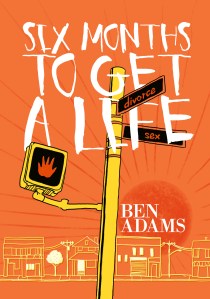
And then my 40s came along. Sometimes it takes a life event to set you off on the right track. Six Months to Get a Life, my first novel, was ultimately triggered by my own family upheaval. It’s a story about a man overcoming a divorce and doing his best to build a new life for himself and his children. Having been through the pain myself, I felt able to give my characters some real depth. It was the first time I had felt truly able to write something believable, something memorable.

cover final

And luckily, I found a publisher who believed in the characters as much as I did.

How would you describe Graham Hope, your protagonist in Six Months to Get a Life?

Graham, like a lot of the characters I invent, is a fairly unremarkable fellow. At heart he is a good guy but like most people going through a divorce, he can occasionally be a bit maudlin. And even bitter. He’s someone who generally knows what the right thing to do is, even if he doesn’t always do it. He’s concerned about his relationship with his children. He’s also concerned about his relationships with women. Or rather his lack of relationships with women.

It isn’t easy to take a difficult subject and inject humour and hope into the story successfully. How did you balance the harsh realities of life against the sense of renewal and wit?

The simple truth is that no one would have enjoyed Six Months to Get a Life if Graham hadn’t been able to laugh at himself. If a story about coping with divorce, learning to live separately from your children or arguing over maintenance payments didn’t contain a few comedic release points, the reader would more than likely be contemplating suicide by the end of chapter 3.

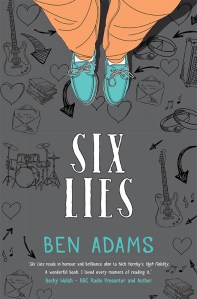
The same goes for my second novel, Six Lies. Dave Fazackerley, the protagonist in Six Lies, discovers after she has died that his mother wasn’t his mother after all. And to make matters worse, he was already reeling from his wife’s decision to run off with a librarian. About the only thing Dave actually managed to cling on to was his sense of humour…

six lies cover for pc w endorse

Writing a novel is a major achievement for anyone, but how hard have you found getting to grips with marketing and using social media to build up your author platform – or are you a natural?

I am probably your typical author. Inventing stories is my passion. I love talking to people about mine and their stories too. But trying to understand the difference between a Facebook page and a Facebook profile, uploading content to a website, getting my head around boring twitter protocols and ridiculous book marketing websites is, quite frankly, the bane of my life.

I do understand the need to establish a good author platform though. Twitter indirectly led to me being invited on to the BBC Breakfast sofa. It also led to you and I connecting. These days, few authors will be successful without a bit of investment in their author platform.

What tips would you give to anyone, of any age, who is determined to become a published writer?

Firstly, you need to write exceptionally well. The best way to do that is to write, write and write some more. The more you write, the better you will become. Oh, and read a lot too. Learn from writers within your chosen genre, but don’t copy them.

Secondly, you need to build your emotional resilience. Believe in your own talent. Don’t let a little self-doubt put you off. Imagine if JK Rowling had thought, ‘Oh, this is crap,’ when she was giving Harry his lightening bolt scar and gone off and got a proper job.

Thirdly, see the previous question and take a deep breath…

What is next for Ben?

I have written my third novel in draft form. Provisionally entitled ‘Trouble in the Staffroom’, it is a school-based drama-come-romp. I am really proud of the draft as it currently stands and am loving the feedback I am receiving from beta readers. Hopefully, Trouble in the Staffroom will be published in September to coincide with the start of a new school year.

I am really enjoying reading Six Months to Get a Life and wish you every continued success.

@benadamsauthor

Ben Adams on Facebook

Ben’s Website

Achieving your goals.


picture1

For the Love of Writing: Making your goals realistic


Now you are sitting comfortably and have an idea where you will be working, you will be eager to start writing. If you are a hobby writer, then fitting it in around other commitments is not a problem. However, if you are trying to make a profession from it, then here are some practical tips. Having your own workspace is a luxury but, if it is not possible, then have one where you can ‘hot desk’ for set times. For a change of scene I sometimes use a large coffee shop or a library.

Once you know where you will write and when, set realistic deadlines to train yourself to work in a professional way for the day when those deadlines have to be contractually met. This can be fun as it is like setting a personal challenge.

You might write only 500 or 1500 words a day. That does not matter. Whatever your output is you can easily work out a schedule as a guide for your project to be completed.

For example, if you are setting out to write a 50,000 word manuscript and produce (on average) 1,000 words per day, then you will need 50 days to complete a first draft.

If you work 5 days a week, then you will have your finished first draft in 10 weeks.

Add a couple of weeks for editing and polishing it. So your realistic target would be a 50,000 word novella in 3 months!

These figures are a simple guide to illustrate how easy it is to set a credible target for whatever your project is. Be committed to your work, revising the schedule as you go along. Keep the goals achievable and be determined to succeed, and you will!

A Stolen Heart – Download it for Free!

A special promotion for my readers!

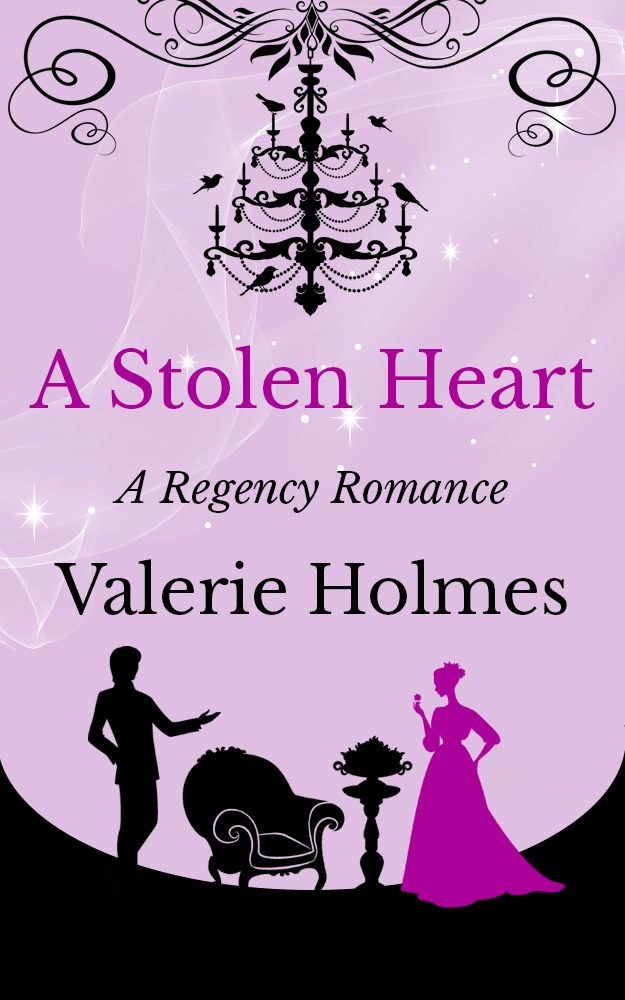
If you love the adventure with mystery combined then download A Stolen Heart from Amazon today.

stolen_heart
Miss Ruth Grainger’s coach jolts to an abrupt halt when it is stopped by a highwayman.

Fearing for her life she is surprised when this highwayman seeks only to retrieve papers carried by a fellow traveller, her guardian, Mr Robert Grentham’s business associate, Mr Archibald Upton.

Ruth abhors thievery, but she is even more disgusted by the cowardice of the man, Upton, as he uses her as a shield.

Released unharmed, she is haunted by the dark blue eyes of the stranger.

What is his connection to Upton? And what is in the papers he was so intent on stealing?

Ruth returns to Grentham’s home, and along with his silly, young wife Eliza, prepares for an upcoming ball.

Little does she know that Grentham is orchestrating events so that the despicable Upton will become her husband.

As Ruth starts to suspect the truth, another stranger steps into her life, and once more she is bewitched by a pair of blue eyes …

Headstrong and independent Ruth is determined to marry for love, and on her own terms.

But everyone around her has other ideas …

Will Ruth be forced into a match she doesn’t desire?

Or will she end up with the man who has stolen her heart …?

A Stolen Heart is a charming regency romance about mistaken identities, and following your heart’s true path.

Promotion ends Sunday!

More titles

This slideshow requires JavaScript.

Writing: In the beginning!

For the Love of Writing

From years of writing experience I have discovered that one aspect that should never be undervalued is how the process of writing will affect your health. So before we actually discuss what is going to be written or how in future blog posts – be it a short story, novella, or novel – you need to think a bit about the practicalities.
Writing even a few thousand words requires sitting down for hours and this does, or can, impact on your health mainly because of bad posture. I am not medically qualified to give specific advice but I find considering the following helps.

  • Investing in a good chair that can be adjusted for height and back support. I have written whilst perched on a chair in a shed, the kitchen, or whilst travelling. This is fine for short bursts.
  • Try not to cross your legs. I am terrible at taking this advice as the more absorbed I am in what I am doing my legs will automatically gravitate under my chair. However, it is better not to do this.
  • Take breaks. When a plot is working well and you are in there with your protagonist, time can slip away. RSI is no joke, your body is not a machine, shoulders get hunched and tense. So change posture. Stand, walk, literally take a break and do a completely different set of activities that are the opposite of the static writing activity.
  • Give your eyes a break from the screen too.
    Feed the brain and body. I have lost track of how many hot drinks I have made only for them to be left half full (or half empty! ) and cold, because I was too involved in what I was doing.
  • You want to enjoy the whole process preferably when you’re sitting comfortably.

What tips work for you?


Potting Sheds and Pondering

308.JPG

In a very picturesque North Yorkshire village called Hutton-le-hole there is an amazing museum of rural life.
http://www.ryedalefolkmuseum.co.uk/

The buildings link the lifestyle of people in the region throughout the centuries. Folklore, husbandry, social history and crafts, such as: rope making, wheel hooping, saddlery, woodturning and hayrake making are demonstrated to name but a few.

The atmospheric buildings span history from Iron Age to the 1950’s showing the way of life of their inhabitants. It is a great place to take children to show them how we arrived at the lifestyle we have today. By going back to basics they, and adults, can see how labour intensive surviving day to day was. Food had to be grown, harvested or killed and prepared. Clothes had to be made from cloth that was woven or leather that was skinned and tanned. Food was prepared in advance of harsher seasons and had to be safely stored.

Before the Internet and our technological ways information was rarer and precious. News travelled slowly and superstition was rife. Ignorance was not bliss when it came to accusing people out of fear. However, people knew far more about the land and what it gave us that we could use for survival than we generally know today.

I find history fascinating. I love seeing a snippet of yesteryear within various different ages. I imagine characters and the adventures they could have had, set within my favourite periods in time. However, I am rarely nostalgic. When asked I have to say that I would never want to live in a time before antibiotics, washing machines, cars and computers. I love learning from history, but one thing I have learnt is that life was harsh but unfortunately wars still happen. Some lessons are never learnt it seems.

On a lighter note, I found the medieval hall, cottages and herb garden fascinating, but it was the simple potting shed that inspired a tranquil setting for a scene from Thomas’ father’s recovery in Stolen Treasure.

Extract from Stolen Treasure:

Thomas put down the bag and stepped into the half-light inside.
His father was sitting, just as he used to, on a stool with a chisel in one hand and a small mallet in the other as he worked at fixing a broken gate latch.
“Well, doctor, put your potions aside, for I’ll take none. Say your business and leave!” He looked up. “I am not in need of a doctor of body nor mind, so you have had a wasted journey. Whoever sent you will have to be disappointed.”
Thomas slowly removed his hat and propped it on top of the discarded bag. He then stepped a pace nearer to his father. “Pa… Pa what happened? Tell me the truth of it for it is I, Tom?”
His father’s tired eyes squinted and focused on his son’s face. He looked shocked, the chisel fell from his hand, but the mallet was still raised. “Tom, is it really you?” his voice cracked with emotion as he uttered the words.
Thomas stepped forward. “Yes, it is! I sent letters…”
The man stood. “You!” he muttered as he rushed forward.
Thomas opened his arms, but the mallet was still raised high.