

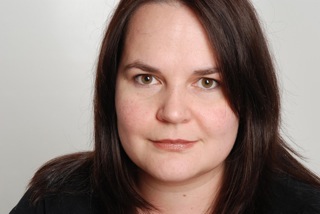
 I am delighted to welcome Liesel Schwarz, Queen of Gothic Steampunk to my blog this month. I first came across Liesel’s work when I read her debut novel ‘A Conspiracy of Alchemists’, which is an action packed adventure described as “Combining the best elements of Gothic fiction with contemporary Steampunk”. It was chosen by Random House to launch their SFF imprint (Science Fiction and Fantasy) Del Rey in the UK.
Welcome, Liesel, and thank you for taking the time out to answer my questions.
To me the combination of history, invention, science, fantasy, romance and thrilling adventure is a magical blend – literally too, as it reveals a deadly game between Alchemists and Warlocks as the creatures of light and dark walk among us.
Hi. Thank you for inviting me!
 How do you describe Gothic Steampunk?
That’s a question that requires a rather long and convoluted answer. I think steampunk, in broad terms, is the fascination with Victorian optimism. It concerns itself with technology and progress. The Victorians had this obsession with making the world a better place, by “civilising” it. We know today that much of what they did was deeply misguided, but I think their hearts were in the right place. Steampunk takes its cue from those intentions. Gothic romanticism is more about Victorian disillusionment. It is the 19th century’s nostalgia for the romantic ideals that originated in the Dark Ages. I’ve always been a fan of the 19th century Gothic literature and I love steampunk and so I thought it would be cool to create a world that was bright and technologically progressive on the one side while dark and organic on the other. Two sides of the same coin, but in direct opposition with the other. This is how Elle’s world came into being and so I suppose in a way this is why they described the books as Gothic Steampunk.
That’s a great description which captures the complex essence of the genre. When I read your first novel what struck me most was the energy and enthusiasm that came through the words on the page. Have you always been a natural story-teller?
I’m not so sure about the story telling part, but I do know that I have however always been a natural story maker-upper. Telling the stories you create in your head is, I think a natural progression in this case.
Where did your writing journey begin?
When I could hold a crayon. It took a few detours, and I decided to start writing more seriously after I left university but I think writers tend to be born that way. It is again a natural consequence of story maker-uppers.
 How long did it take you to become a published author?
A few weeks! No, I’m serious. I was incredibly lucky. I met my agent, he sent my book out to market and I literally had a book deal a few weeks later. Before I met my agent, I did however spend years and years honing my craft. This involved writing stories, polishing them, having them rejected and then starting all over again. I also studied the craft of writing quite intensely. I have an MA in Creative Writing and I am also busy with my PhD on the subject.
Will you ever forget the moment when you were told yours would be the debut novel of Del Rey?
I think I was more excited by the mere fact that my book was going to be published, to be honest. The fact that it would be the debut for a new imprint only really registered with me a bit later. It’s great when you have a good relationship with your editor and publishers and again, I am extremely lucky in this respect.
There are many aspects to your novels. The research of actual inventions must be meticulous – but you have also blended in your own to make the fiction appear real and the impossible plausible. Have you always been drawn to this age of invention?
Yes. I think it started when I was very young. I remember watching films like Mary Poppins and Chitty Chitty Bang Bang and I found the sheer eccentricity of it all irresistible. This fascination grew as I started reading and it’s been with me ever since.
Do you have great fun spending many hours inventing your own machines on the page?
Actually, many of the machines I use in the books were actual patents filed in the British Library. I think the Victorians were far better at inventing fantastical machines than I could ever be. I think the reason for this is because there was an element of naivety about their inventions. Today, with all the marvels we have at our fingertips, we are a little jaded. Although, I suppose that in a hundred years from now, people will look at us and think, “Oh, how quaint!”
Elle Chance and Mr Marsh are strong characters who continue to develop. Do you have plans for the series to continue over many novels?
I think all characters must develop within a narrative. You can’t really have a story without that and so yes, I have further plans for Elle and Marsh. There will be a book 4 and a book 5 in the future.
 Do you constantly jot down ideas for the next book as you work?
I must admit that I am quite bad at jotting things down. Or, I tend to jot things down and then forget about them. Ideas that are live and have potential tend to stick in my mind. They niggle away at me until I write them into a story. I do however carry a notebook with me at all times. I sometimes jot down bits of conversation I’ve overheard when I’m sitting in a coffee shop.
Elle travels widely – how do you research the many locations that your novels cover?
I like to travel and so the settings I use tend to be places I’ve visited. You have to place settings into historical context though and so I do a lot of research as well. I am particularly fond of old city maps. For example – the Cafe d’Enfer in Paris which appears in Sky Pirates really existed in the early 1900s. Today, it is a 1-Euro store (Pound/dollar store) but the doorway still exists. I find that fascinating.
What is next for Liesel?
Well, I have two short stories which will be appearing in anthologies next year and I am currently working on a standalone novel before continuing with the Chronicles of Light and Shadow – so keep watching this space.
More from Liesel
- Website: http://www.lieselschwarz.com/books/
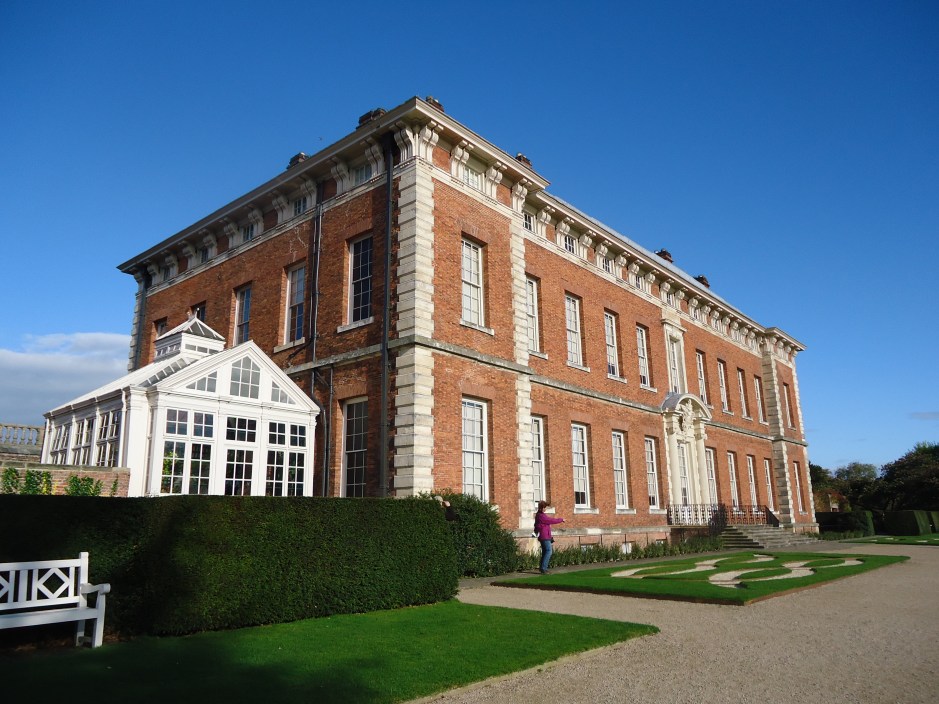


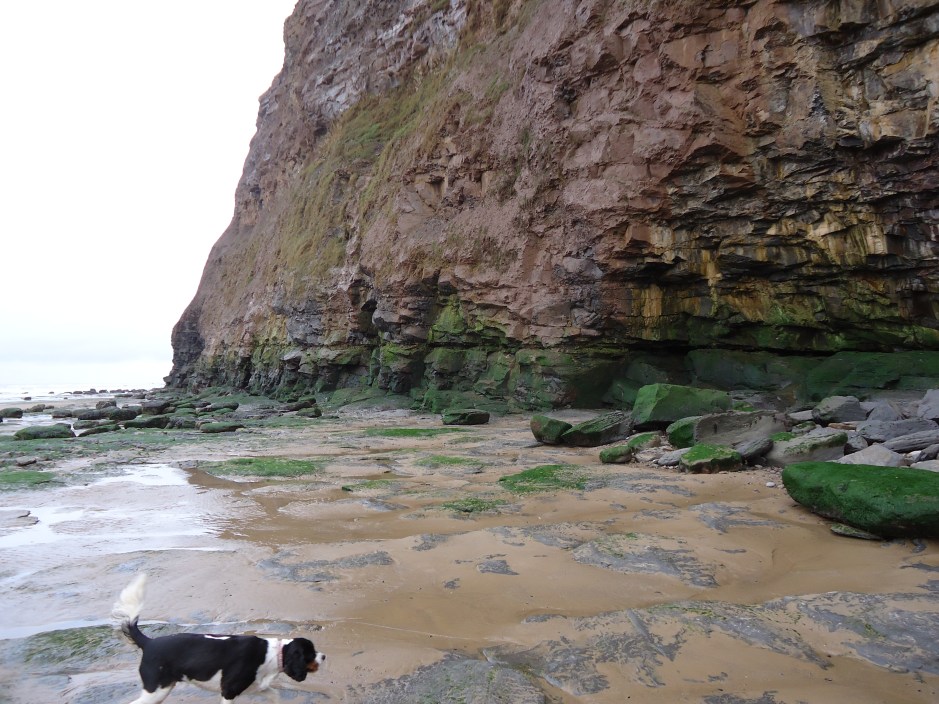




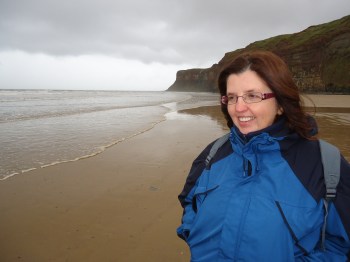 My stories are often set around the dramatic coast and countryside of North Yorkshire, where I grew up. It is an area of outstanding natural beauty and fascinating social history, especially around the early nineteenth century when England was at war with France and many things were changing at home.
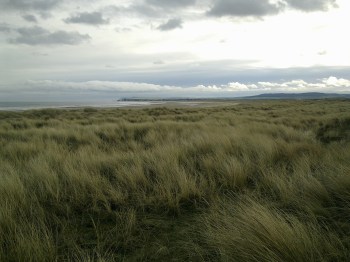 The Yorkshire cobles with their flat bottoms were ideal for beaching loads of contraband. Goods such as tea, cards, ankers of brandy, geneva, pepper, ‘sack’ or sherry, sugar loaves, silk and cards, to name a few were taxed heavily, which meant that common folk felt justified by buying them cheaply from the free-traders. The irony was that the coin, which made its way back to France, helped to fund the enemy that British soldiers were fighting.
 The rugged headlands, flat sweeping fine sandy bays, natural woodland and the beautiful expanse of the North Yorkshire Moors inland add both a great variety of scenery and beauty. The settings for my stories are as dramatic as the plots. I have created my own villages and characters and will introduce you to some of them as I look more closely at the actual history of this fascinating region.
 It was a really bad viral infection that left me with ME for years. Before then, I’d been energetic and healthy, holding down a career, cycling, rushing up mountains, and working for hours in my garden. Being so ill for so long, and not knowing if I would ever get better, forced me to completely reconsider my life. That’s when I decided I would work part time in a far less stressful job, and just go for my lifelong dream of being a writer. I’d never had the courage to do it before, in case I failed. Having ME made me realise I’d nothing to lose, so it gave me the courage to try.
 My crog loft is tiny, but it’s nice and cosy and womb-like (and has steep stairs that stop me from sneaking out into the garden when I hit a tricky bit!). When I’m writing serials, I have to plot everything out, as there is no chance of going back and changing things. When I’m writing my novels, I start with a general idea of the plot, but I know that’s going to change as soon as I start, and find the heroine needs a mother, or a brother or best friend, who turns out to be far too interesting to ignore! I generally know the beginning and the end, but once the first draft is done and the real work begins, anything can happen. That’s the exciting, and the scary bit, because I’m never sure if it’s going to work. I love tightening up the plot, and developing the twists and the turns to (hopefully) keeping the readers on the edge of their seats. ‘Eden’s Garden’ was a real challenge, moving between the modern heroine and Victorian times, and keeping the two stories weaving in and out of each other while not giving the twists (especially the one no one ever spots!) away. ‘We That are Left’ had some of its structure dictated by the historical events of WW1, even though the action is focused mainly on the experience of the women and civilians at home. The next book is also based around historical events, but with some family twists and turns too.
 A big emotional story, set in a rambling old house in Cornwall or Snowdonia in Victorian or Edwardian times, with women firmly at the centre of the action, each making her own way towards self-fulfilment. There is a mystery to be solved, and danger to be overcome, and the path of true love definitely never runs smooth. There will be a garden in the background somewhere, and probably cake. For ‘We That are Left’ I researched authentic dishes from WW1 newspapers for my heroine to use, as she struggles to keep her family and the local village fed on limited resources, mainly anything she can grow in the kitchen garden on the family estate.

 Please tell us about your new book
  More from Sue:
 valerie holmes, author