Laura’s Legacy – New from Endeavour Press!

Laura's Legacy

Laura’s story begins fifteen years after the fire that nearly destroyed Ebton in To Love Honour and Obey.
1820 Ebton, England.

Laura Pennington’s parents think it is time for her to marry, but they are concerned. She likes to take long walks by herself, and doesn’t quite fit in. Laura’s father, Obadiah, thinks local mill owner Daniel Tranton is the perfect husband for Laura, so he suggests marriage to Daniel while working on a business deal.

Daniel is not keen, but does not want to lose Pennington’s business. He is not sure what to do, as he has his hands full with disgruntled mill workers. Daniel has always treated his workers well, but that is the exception, not the rule.

A new problem arises, when Jeb, a young boy who works for Daniel’s cousin Roderick, runs away from the mill where he works. Daniel, not wanting to see him captured and beaten by the local louts who enforce the law, tries to track him down. He finds Laura hiding Jeb, who she stumbled upon while out on one of her walks.

Roderick has his henchman Mr Bullman hunting for Jeb as Laura hides him at her father’s boat house.
Checking on him one morning, Laura sees the boat is gone, but it’s seeing her father stepping out from the hotel he owns that shocks her the most.

For all his efforts to make Laura a lady, it seems Mr. Pennington is not a gentleman.
With the hint of revolution in the air, will Daniel and Laura find a love worth fighting for?
Laura’s Legacy is a historical tale of romance and family strife in a past world.

Laura’s Legacy is availble on Amazon Kindle

An Interview with Amy Durant

Amy Durant
Amy Durant, Publishing Director of Endeavour Press

Where did your love of books originate?

My dad is a children’s book author, and he worked at Walker Books when I was little, so I grew up surrounded by books, and I fell in love with reading from an early age.
Do you have a favourite genre?
My favourite genres are historical fiction and literary fiction, although I read everything from sci-fi to military history.
Have you any desire to write a novel?
Yes, I have a few ideas and I hope to write something myself eventually.
What was your route into the publishing industry?
I was quite lucky – the first internship I undertook landed me a job! After completing my MA in contemporary literature, I applied to a few internships and a was taken on for a month with Endeavour Press. Straight after that I began working with them full-time as a publishing assistant, and now I act as Publishing Director.
How has Endeavour Press evolved in the time since it first took up the challenge of becoming the UK’s leading independent publisher?
Endeavour Press has evolved enormously since I first started work with them in January 2013. Back then we were publishing around 15 books month, and we only had about fifty authors on our books. Now we have five new imprints (Endeavour Press Germany, Venture Press, Pioneering Press, Albion Press and Endeavour Press Creative) and in total we publish 30 books a week, and we have a list of over 500 authors.
Could you tell us about the History Festival and what has been planned?
The virtual history festival we have set up will run from the 18-22 April. We have 50 authors signed up, some from Endeavour Press, and some from other publishing houses, and we will be running various online events, mainly on Twitter and Goodreads. They will include competitions, author interviews, reader Q&As, cover reveals and exclusive extracts from upcoming novels.
What is next for Amy and Endeavour Press?
The great thing about Endeavour Press is you never know what is around the corner! We are in talks about launching more imprints this year, and we are always scouting for new authors to work with. I have also just started a part-time PhD on English women’s writing in the seventeenth century, so hopefully I will be able to find some interesting forgotten texts to add to our classic books imprint.
Endeavour Press logo

For the Love of Writing: Inspiration and Motivation

In previous blog posts I have looked at how to keep yourself fit for the task of writing thousands of words and then how to set realistic goals to achieve them. Before moving on to looking at the actual writing of the fiction, two factors play an important part in beginning and completing the process – inspiration and motivation.

Where do you get your inspiration from?

What motivates you to write fiction?

These two questions are asked to many authors and the answers may be as varied as the individuals who the question is posed to.

I am constantly inspired by anything from a name, a newly learned an intriguing little known fact, a place that sparks an idea or a simple overheard statement. Inspiration is all around us, we just have to be open to it and use our imaginations to ask that simple question: ‘What if?’

Once inspired to write then motivation kicks in to drive our effort so that the idea turns into a real manuscript. We can be both inspired and motivated at the same time by reading our favourite author’s work.

Here are a just a few common motivators:

To escape from reality into a world of our making that we will hopefully share with others.

To earn money – realistically, this is not an easy industry to break into.

To become a published author.

Whatever your inspiration you need the motivation to keep going, learning and growing as a writer. Go beyond rejection to reach that place of acceptance and becoming a published author. Learn from those who have done it and also from any of their early mistakes, so that you can avoid some yourself.

Once you are keen to begin your project, go for it. Network at conferences and courses, such as The New Writers’ Scheme run by the Romantic Novelists’ Association and seek professional feedback. If you have a manuscript that you would like professional feedback on then please contact me on Vholmesauthor@gmail.com for a quote.

An Interview with Ben Adams

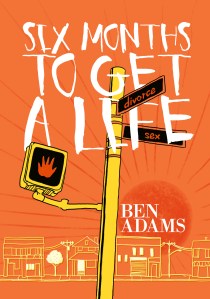
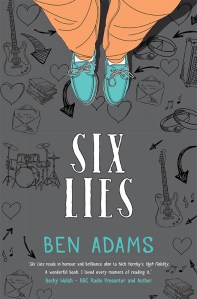
I am delighted to have author Ben Adams as my guest this month. Ben’s critically acclaimed novels Six Months to Get a Life and Six Lies chart two men’s journeys as they strive to make sense of their respective midlife crises.
edited Adam medium q
Welcome, Ben,

Please share with us how and when you discovered the joy of writing fiction!

I can’t remember a time when I didn’t enjoy making up a story. My dad is blind. Instead of reading books to me, he used to captivate me at bedtime, making up stories that would transfix me and keep me awake for hours. I caught the bug and used to invent equally inventive stories involving the most hideous of monsters. As I got older, my fiction expanded to include ingenious excuses for not having done my homework. Roald Dahl expanded my imagination still further as did Douglas Adams and Sue Townsend. But ultimately, I blame my dad.

When and how did you make the break from unpublished to published author?

I always wanted to write a novel. In my 20s I dabbled with crime fiction but too many hours spent staring at blank pages and a lack of life experiences meant that I couldn’t make my stories sing.

In my 30s I mostly wrote boring work-related web content and the occasional acerbic complaint letter to the authorities or to the dog over the road – it defecated on my drive.

And then my 40s came along. Sometimes it takes a life event to set you off on the right track. Six Months to Get a Life, my first novel, was ultimately triggered by my own family upheaval. It’s a story about a man overcoming a divorce and doing his best to build a new life for himself and his children. Having been through the pain myself, I felt able to give my characters some real depth. It was the first time I had felt truly able to write something believable, something memorable.

cover final

And luckily, I found a publisher who believed in the characters as much as I did.

How would you describe Graham Hope, your protagonist in Six Months to Get a Life?

Graham, like a lot of the characters I invent, is a fairly unremarkable fellow. At heart he is a good guy but like most people going through a divorce, he can occasionally be a bit maudlin. And even bitter. He’s someone who generally knows what the right thing to do is, even if he doesn’t always do it. He’s concerned about his relationship with his children. He’s also concerned about his relationships with women. Or rather his lack of relationships with women.

It isn’t easy to take a difficult subject and inject humour and hope into the story successfully. How did you balance the harsh realities of life against the sense of renewal and wit?

The simple truth is that no one would have enjoyed Six Months to Get a Life if Graham hadn’t been able to laugh at himself. If a story about coping with divorce, learning to live separately from your children or arguing over maintenance payments didn’t contain a few comedic release points, the reader would more than likely be contemplating suicide by the end of chapter 3.

The same goes for my second novel, Six Lies. Dave Fazackerley, the protagonist in Six Lies, discovers after she has died that his mother wasn’t his mother after all. And to make matters worse, he was already reeling from his wife’s decision to run off with a librarian. About the only thing Dave actually managed to cling on to was his sense of humour…

six lies cover for pc w endorse

Writing a novel is a major achievement for anyone, but how hard have you found getting to grips with marketing and using social media to build up your author platform – or are you a natural?

I am probably your typical author. Inventing stories is my passion. I love talking to people about mine and their stories too. But trying to understand the difference between a Facebook page and a Facebook profile, uploading content to a website, getting my head around boring twitter protocols and ridiculous book marketing websites is, quite frankly, the bane of my life.

I do understand the need to establish a good author platform though. Twitter indirectly led to me being invited on to the BBC Breakfast sofa. It also led to you and I connecting. These days, few authors will be successful without a bit of investment in their author platform.

What tips would you give to anyone, of any age, who is determined to become a published writer?

Firstly, you need to write exceptionally well. The best way to do that is to write, write and write some more. The more you write, the better you will become. Oh, and read a lot too. Learn from writers within your chosen genre, but don’t copy them.

Secondly, you need to build your emotional resilience. Believe in your own talent. Don’t let a little self-doubt put you off. Imagine if JK Rowling had thought, ‘Oh, this is crap,’ when she was giving Harry his lightening bolt scar and gone off and got a proper job.

Thirdly, see the previous question and take a deep breath…

What is next for Ben?

I have written my third novel in draft form. Provisionally entitled ‘Trouble in the Staffroom’, it is a school-based drama-come-romp. I am really proud of the draft as it currently stands and am loving the feedback I am receiving from beta readers. Hopefully, Trouble in the Staffroom will be published in September to coincide with the start of a new school year.

I am really enjoying reading Six Months to Get a Life and wish you every continued success.

@benadamsauthor

Ben Adams on Facebook

Ben’s Website

Achieving your goals.


picture1

For the Love of Writing: Making your goals realistic


Now you are sitting comfortably and have an idea where you will be working, you will be eager to start writing. If you are a hobby writer, then fitting it in around other commitments is not a problem. However, if you are trying to make a profession from it, then here are some practical tips. Having your own workspace is a luxury but, if it is not possible, then have one where you can ‘hot desk’ for set times. For a change of scene I sometimes use a large coffee shop or a library.

Once you know where you will write and when, set realistic deadlines to train yourself to work in a professional way for the day when those deadlines have to be contractually met. This can be fun as it is like setting a personal challenge.

You might write only 500 or 1500 words a day. That does not matter. Whatever your output is you can easily work out a schedule as a guide for your project to be completed.

For example, if you are setting out to write a 50,000 word manuscript and produce (on average) 1,000 words per day, then you will need 50 days to complete a first draft.

If you work 5 days a week, then you will have your finished first draft in 10 weeks.

Add a couple of weeks for editing and polishing it. So your realistic target would be a 50,000 word novella in 3 months!

These figures are a simple guide to illustrate how easy it is to set a credible target for whatever your project is. Be committed to your work, revising the schedule as you go along. Keep the goals achievable and be determined to succeed, and you will!

A Stolen Heart – Download it for Free!

A special promotion for my readers!

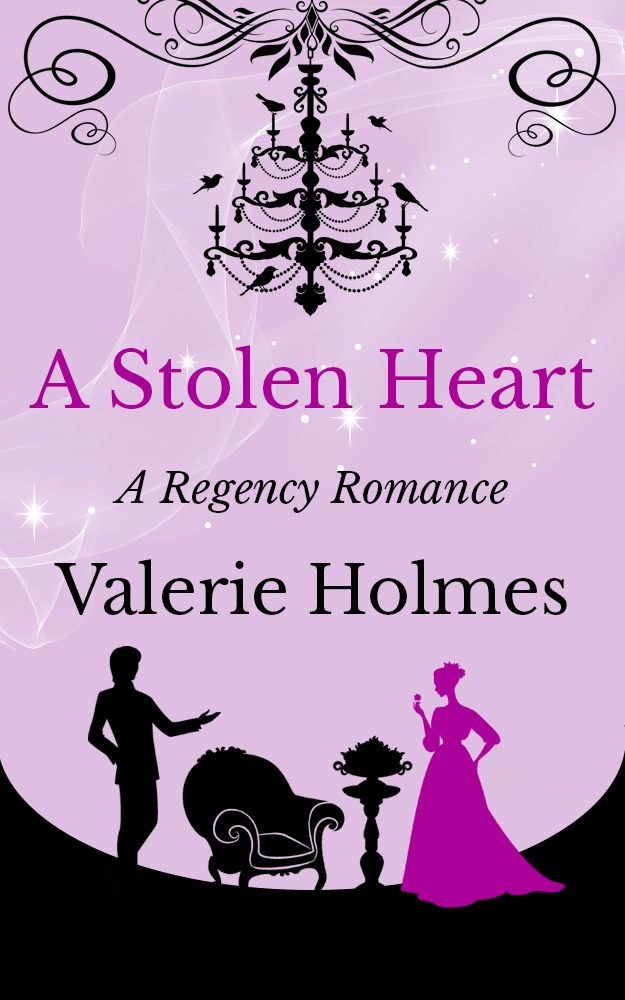
If you love the adventure with mystery combined then download A Stolen Heart from Amazon today.

stolen_heart
Miss Ruth Grainger’s coach jolts to an abrupt halt when it is stopped by a highwayman.

Fearing for her life she is surprised when this highwayman seeks only to retrieve papers carried by a fellow traveller, her guardian, Mr Robert Grentham’s business associate, Mr Archibald Upton.

Ruth abhors thievery, but she is even more disgusted by the cowardice of the man, Upton, as he uses her as a shield.

Released unharmed, she is haunted by the dark blue eyes of the stranger.

What is his connection to Upton? And what is in the papers he was so intent on stealing?

Ruth returns to Grentham’s home, and along with his silly, young wife Eliza, prepares for an upcoming ball.

Little does she know that Grentham is orchestrating events so that the despicable Upton will become her husband.

As Ruth starts to suspect the truth, another stranger steps into her life, and once more she is bewitched by a pair of blue eyes …

Headstrong and independent Ruth is determined to marry for love, and on her own terms.

But everyone around her has other ideas …

Will Ruth be forced into a match she doesn’t desire?

Or will she end up with the man who has stolen her heart …?

A Stolen Heart is a charming regency romance about mistaken identities, and following your heart’s true path.

Promotion ends Sunday!

More titles

This slideshow requires JavaScript.

Writing: In the beginning!

For the Love of Writing

From years of writing experience I have discovered that one aspect that should never be undervalued is how the process of writing will affect your health. So before we actually discuss what is going to be written or how in future blog posts – be it a short story, novella, or novel – you need to think a bit about the practicalities.
Writing even a few thousand words requires sitting down for hours and this does, or can, impact on your health mainly because of bad posture. I am not medically qualified to give specific advice but I find considering the following helps.

  • Investing in a good chair that can be adjusted for height and back support. I have written whilst perched on a chair in a shed, the kitchen, or whilst travelling. This is fine for short bursts.
  • Try not to cross your legs. I am terrible at taking this advice as the more absorbed I am in what I am doing my legs will automatically gravitate under my chair. However, it is better not to do this.
  • Take breaks. When a plot is working well and you are in there with your protagonist, time can slip away. RSI is no joke, your body is not a machine, shoulders get hunched and tense. So change posture. Stand, walk, literally take a break and do a completely different set of activities that are the opposite of the static writing activity.
  • Give your eyes a break from the screen too.
    Feed the brain and body. I have lost track of how many hot drinks I have made only for them to be left half full (or half empty! ) and cold, because I was too involved in what I was doing.
  • You want to enjoy the whole process preferably when you’re sitting comfortably.

What tips work for you?


Sally Bridgewater – From Newbie to Novelist!

I am delighted to be interviewing a ‘Newbie’ writer, Sally Bridgewater, this month. November is the month when many eager writers embark on the challenge of creating 50,000 words in thirty days as they join the NaNoWriMo challenge. Sally has taken this to the extreme and decided to try writing them in one day. 


Welcome, Sally!

Where, when and why did you develop the idea of attempting this personal challenge of moving from ‘Newbie to novelist’ within 24 hours?

Since graduating a couple of years ago I have supposedly been focusing on becoming an author, but distractions (like bills) keep getting in the way. I was getting quite frustrated at not having finished a story yet (apart from one short-ish one here), and never finishing any stage of my goal was really drain my enthusiasm. So actually my primary purpose is to go from Newbie to Novelist in 30 days, and get to ‘The End’ no matter how many words it takes. I added the extra #50Kinaday Wordathon part of the challenge when I stumbled across this podcast from Matt Ahlschlager back in March or April sometime. He makes it sound simple, even quite easy to take on NaNo in a day. I remember I was walking the dog down by our local canal while listening to it, and I could feel the idea of doing it myself getting lodged in my mind. I think I want to do it mainly because it is a neat way to make sure I get a lot of words down on my way to the full first draft. Also, I like turning my life into ‘events’ that I can share with my friends and family, and this one gets particularly fun reactions from people.

This is the equivalent of a writing marathon. How have you prepared for the event physically and for your novel?

Physically speaking, I am just trying to keep myself well and avoid getting too stressed out about it. I could do better though – I often stay up late, I don’t eat enough fruit and I don’t do much exercise, so avoiding the autumn sniffles so far has been mostly luck.
I have been ‘in training’ of a sort over the last few days by trying out a standing desk (I made it myself with two boxes under my laptop and a pile of Writing Magazines under my keyboard). It will definitely help me avoid bad posture if I’m not sitting for the whole day.
Of course, I have also become quite obsessed with my typing speed, and whether I can concentrate for twenty-four hours straight. I don’t know how much direct practice I can do for those things though; I am just going to wait and see. At least I have past experience of working fast when I was writing weekly last-minute essays during my degree.
I have been busy (some might say distracted) preparing the online infrastructure, such as my website and my Facebook page, in time for November. Because of this I have not yet started the plotting for my novel, and at the time of writing there are only 7 days left before it all starts! I have a colleague at work called Tina who has started chanting ‘Plot! Plot! Plot!’ whenever she sees me – I think she’s quite concerned… I work quite well under pressure though so I’m hoping one week is long enough to plan a novel, right?

Have you ever completed the NaNoWriMo challenge before?

Yes, I have ‘won’ (got to the 50,000 word mark) NaNoWriMo for the last two years. I also did Camp NaNoWriMo in July (it is the same concept but less difficult as you can set your own wordcount goal). It really helped me to start writing again. I had heard about it during my degree but didn’t have time to try it, so I promised myself I would do it when I graduated. Both years I worked on a novel about a deaf girl and a Romani boy (they are both prodigies: the boy for music and the girl for mazes). I will finish that novel one day, but I wanted to go with something fresh for this year’s challenge.
The first year I did NaNoWriMo, November 2013, I got as involved as I could with the community, looking around the forums, visiting my local ‘Come Write In’ group each Saturday, and signing up to have a NaNo veteran mentor. I happened to get one of the kindest people on the planet as my mentor, I am sure of it – they even posted me a handmade care package from America, including knitted fingerless gloves and a little jar of coffee. For NaNoWriMo 2016, my fourth, I won’t try and do anything like this Newbie to Novelist challenge again. Instead I will put my experience to some use and take on a couple of mentees myself. My goal is to go above and beyond to encourage them, like my mentor did.

You obviously love writing and reading. Which is your favourite genre to work in?

I’m not sure I know what my favourite genre is to write in, as I have barely started exploring different ones. The story I worked on before for NaNo was a historical adventure set in a slightly-alternative French Revolution; the one I am planning now is science fiction, set in the far future on a different planet. I don’t actually feel qualified to tackle either of those genres, and they are not what I mostly read – they just came out of whatever ideas I had at the time.
I read very widely and in fact I would say that I am addicted to novels. Many a time I read for hours when I should be doing other things, like sleeping. Looking at my bookshelf I can see a lot of fantasy in particular – Game of Thrones, Jonathan Strange and Mr Norrell by Susanna Clarke – and some steampunk sci-fi (the Mortal Engines series by Philip Reeve). There’s a lot of my old favourites from growing up. I don’t think I am particularly original in my tastes, I absolutely adore Harry Potter and I even have all the Twilight books (I know they are very problematic, but I was exactly the right age of teenage girl when they first came out…).

Where did your love of writing begin?

I definitely have my parents to thank for giving me a love of reading and writing. They put in hours of extra work with me outside of school when I was really young to teach me how to understand written language (I remember jumping from word to word on pieces of paper across the floor of the living room). They also read bedtime stories every night for my whole childhood, and when my sister and I got ‘too old’ for such things, we started reading books aloud to our parents instead, or as a family. I still do read aloud with my boyfriend – it is a really good way of sharing a story with someone. I feel that the best characters from those early bedtime stories have stayed with me. For instance, to this day I consider Matilda from Roald Dahl to be a role model (and Tim Minchin’s adaptation as a musical is brilliant too).
Wanting to be an illustrator and an author are the earliest ambitions I can remember. I wrote a lot of story fragments from being very young (some got saved from our ancient PC and I still have them). When I was 12 my sister turned 10 years’ old and I wrote her a toy-sized trilogy about her stuffed Panda going on an adventure with our hamster across the globe. And when I was in high school and not having a great time (some bullying and so on), I would sometimes spend my break times scribbling in a notebook in the toilets. In the only detention I ever had (I was what one calls a ‘swot’) the headmaster set us to writing a story as punishment, and I couldn’t believe I was being told I could sit and just do my favourite thing for an hour. I was very busy practising my musical instruments usually though (I play violin and piano) so I didn’t make time for it properly until NaNoWriMo 2013.

How supportive are people being of your challenge?

I almost feel a bit silly telling people, because everybody does a double-take when I say how many words I am aiming to write in my Wordathon. Then they usually doubt whether such a thing is even possible, and finally express at least some degree of concern about me undertaking such a thing. I am glad I am getting people interested, but I didn’t want to alarm anyone!
I have had some lovely responses when I have asked for help with the project. I still haven’t done that enough though – apparently I just don’t have a knack for delegation. So if anyone can see a way that they could get involved, please don’t hesitate to get in touch. My e-mail address is new2nov@gmail.com.

What is next for Sally both with your writing and in your career?

Well, after getting this first draft under my belt, I want to leave it for a bit and then come back to the manuscript with fresh eyes in 2016 and edit it. I guess in the long run I want to find myself an agent and look at getting published, but I’m not expecting my first novel to be good enough to do that.
In the meantime, I won’t just be waiting around idly for luck and traditional publishing methods to find me. I am hoping to build up support for my writing by using the crowd-funding platform Patreon. I am still figuring out how to run my own blog, so it will take me a while to discover the best way to self-publish, but if I go that route then I want to make a proper go of it.
I also have plans for my parallel career dream: setting up a social enterprise company to build a website of tools and resources to help people use their brains better. I call it ‘Think Sharp.’ It is going to be my attempt at improving the world, but I will only really have time to think about getting started on it in the New Year after I’ve done this!

Thank you for taking the time to share your ambitions with me. I wish you every success in achieving your goal on the day, but more than that in your literary ambitions over a longer and perhaps more sustainable writing career.

Thank you very much for having me on your blog, Val. I really appreciate it.

An Interview with Richard Lee

I am delighted to welcome the chairman of The Historical Novel Society, Richard Lee, as this month’s guest. Richard founded the organisation in 1997 and it is now an international success.

RichardLeeSmallWhen you decided to found an organisation devoted to historical fiction, did you ever envisage it growing into such an amazing international body?
No! I did not know how it would be possible to be international, so I only envisaged a UK membership – though always celebrating international authors. We actually had US members sign up from the very beginning, which caused headaches about currency transactions and postage costs. This made us ‘ready’ for when internet links began to take off – and now we are much more international than British.

What have been the major developments/changes that you have seen in historical fiction since the HNS was founded?

In commercial historical fiction many things have changed. The ‘discovery’ of the significance of women’s lives has transformed the way that, for example, royalty and celebrity is written about. The success of ‘Sharpe’ and ‘Gladiator’ created a genre of military and epic historical fiction. We have also been blessed by literary authors pushing the boundaries in various ways – Michel Faber reconceiving the Victorian authorial viewpoint, many authors revisiting Colonial and World War narratives, Hilary Mantel turning accepted views of Tudor power and honour on their head.

How has historical fiction been influenced by the major changes within publishing in the last decade?

I am no expert here. Traditional publishing still knows how to publish the big books. The Miniaturist and Elizabeth is Missing we both debuts that had multiple agents interested, sold well into many territories, won prizes and became bestsellers. The main change I perceive is that there is much more opportunity for niche historicals to go it alone, often to the author’s benefit.

The HNS conferences have been hugely successful and enjoyable to attend. Could you share a few of your personal favourite highlights?

The things I remember from conferences are usually surprises from authors I admire – Louis de Bernieres, for example, saying that he wrote each chapter of Captain Corelli as a short story, and didn’t decide the running order till the end. Or Conn Iggulden emphasising just how powerful true coincidences are in history. Highlights are more likely downtime with fellow organisers or friends – meeting members off-stage and finding out more about them. It is great when it is all ‘done’!

What period of history do you have a particular interest in and why?

Early 20th C, Late Victorian, High Victorian, Regency, Georgian, Early Medieval, Saxon/Viking, Roman, Ancient Greek… But really anything!

Do you prefer reading or writing historical fiction?

Reading. I haven’t written consistently for a long while, though it remains an ambition.

How would you like to see the HNS develop in the future?

I always see the society as being about what members want – any enthusiasms that members have are for me to try to facilitate and nurture. This for a long time focussed on our magazines and reviews, which actively involve around 100 of us. Conferences are another big active area – this year over 400 will gather in Denver, and we had an inaugural conference in Sydney, Australia. The big ‘new’ areas of involvement are chapters based in different regions (mostly entirely independent) and connections through social media. Our awards are also popular (230 entries for the latest new novel prize), and we are looking into ways that the society can offer help and training to authors. Whether mainstream published or indie, all authors need help with marketing and promotion these days, we can all help each other.

What is next for Richard?

My first child was born a couple of years after I founded the society, two others followed, and the oldest is now 15. They are the real project and joy, but I still have a wish to write. I think I finally have a good idea!

More from the HNS


New book launch!

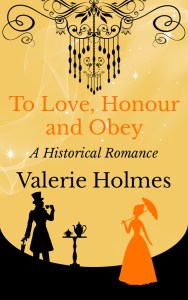
To Love, Honour and Obey

Buy on Amazon!
Australia | Brazil | Canada | France | Germany | India | Italy | Japan | Mexico | Netherlands | Spain | United States of America | United Kingdom

To Love Honour And Obey

1805

Six years ago, Willoughby Rossington’s father was murdered while searching for the kingpin of a smuggling and spy ring. Taken under the wing of his uncle, who is running a counter-intelligence operation against Napoleon’s spies, Willoughby is assigned to take up his father’s last mission—and, hopefully, in the process find who killed his father and bring them to justice.

He encounters a young woman, Beth, who works at the local inn. Her spark and resilience against her master’s attempts to break her will strike a chord in him and he, albeit reluctantly, takes her with him when he leaves town.

As they begin to talk, he finds out that her master is more involved in the ring that could have been thought. She overheard things and knows things about the seedy side of villages that could be helpful to him and his mission.

Though Beth hasn’t had the opportunity for education, she’s smart and quite cunning while still maintaining a child-like wonder. Even as Willoughby makes plans to set her up with a family in order to protect her from the perils of his mission, he finds himself a bit melancholy at the thought of losing her company.

Beth is having none of it. She knows she can be of help to Willoughby and isn’t going to be left behind now that she’s found someone nice. Part on purpose, partly because of fate, their two lives become intertwined as they race against the villains that plot to destroy them both.

Will they uncover the truth behind the smuggling ring and find who is responsible for Willoughby’s father’s death?