Roses are Dead: Burglary and Intent

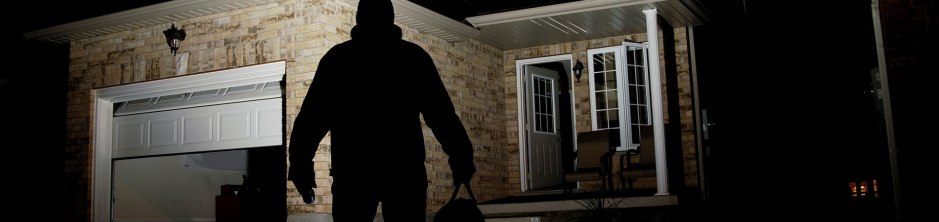
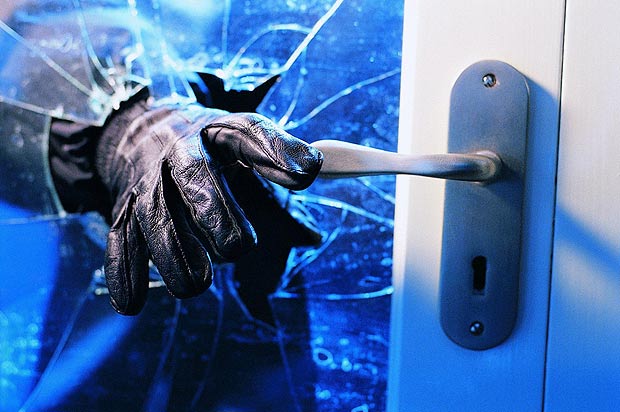
Occasionally I drift away from my love of history for a change of pace and venture into a contemporary world of suspense, love and adventure. This usually happens when something in reality has struck a nerve, such as when a friend’s home was burgled.

Jen’s world is turned upside down when she should be at a happy beginning in her life. She is hounded by a string of unnerving events and then someone breaks into her home; her new sanctuary.

We read about burglaries all the time. However, they are not only a violation of a person’s belongings and space, but also their peace of mind. How quickly a person bounces back from such an experience will depend upon the individual and the extent of the theft and damage.

Doubts can linger regarding the motivation behind the crime – Was it a random event? Was I targeted? Did they know my work pattern so that I would not be there? Do they know me?

In fiction we can play with these questions, keeping the answers and consequences within our control. However, in reality, overcoming such a personal violation can take a lot of time. Authors often focus on the crime and catching the criminals, but I respect that for the victim this is only part of the process of healing and restoring that inner peace.

If you want to read Jen’s story, Roses are Dead is available from Amazon and Smashwords.

Congratulations to Cindy!

I was delighted to read today that Cindy Kirk has just become the President of Romance Writers’ of America, which has a membership of over ten thousand.

The RWA represents romance writers in the same capacity as the Romantic Novelists’ Association does in England and the Romance Writers’ of Australia.

These wonderful organisations are focused on advancing the professional interests of career-focused romance writers. They offer a network which is helpful and informative to their members as well as holding events, conferences and high profile competitions such as The RITA, RoNA and ARRA awards. Two of my own titles: Hannah of Harpham Hall and Moving On were short-listed for the now named RONA Rose award. I have been a member of the RNA for many years and find their willingness to guide new writers inspiring.

You can read more about Cindy in my interview with her earlier this year. I hope she has a really marvellous time promoting the organisation she so obviously loves.

An Interview with Liesel Schwarz

LieselI am delighted to welcome Liesel Schwarz, Queen of Gothic Steampunk to my blog this month. I first came across Liesel’s work when I read her debut novel ‘A Conspiracy of Alchemists’, which is an action packed adventure described as “Combining the best elements of Gothic fiction with contemporary Steampunk”. It was chosen by Random House to launch their SFF imprint (Science Fiction and Fantasy) Del Rey in the UK.

Welcome, Liesel, and thank you for taking the time out to answer my questions.

To me the combination of history, invention, science, fantasy, romance and thrilling adventure is a magical blend – literally too, as it reveals a deadly game between Alchemists and Warlocks as the creatures of light and dark walk among us.

Hi. Thank you for inviting me!

How do you describe Gothic Steampunk?

That’s a question that requires a rather long and convoluted answer. I think steampunk, in broad terms, is the fascination with Victorian optimism. It concerns itself with technology and progress. The Victorians had this obsession with making the world a better place, by “civilising” it. We know today that much of what they did was deeply misguided, but I think their hearts were in the right place. Steampunk takes its cue from those intentions. Gothic romanticism is more about Victorian disillusionment. It is the 19th century’s nostalgia for the romantic ideals that originated in the Dark Ages. I’ve always been a fan of the 19th century Gothic literature and I love steampunk and so I thought it would be cool to create a world that was bright and technologically progressive on the one side while dark and organic on the other. Two sides of the same coin, but in direct opposition with the other. This is how Elle’s world came into being and so I suppose in a way this is why they described the books as Gothic Steampunk.

That’s a great description which captures the complex essence of the genre. When I read your first novel what struck me most was the energy and enthusiasm that came through the words on the page. Have you always been a natural story-teller?

I’m not so sure about the story telling part, but I do know that I have however always been a natural story maker-upper. Telling the stories you create in your head is, I think a natural progression in this case.

Where did your writing journey begin?

When I could hold a crayon. It took a few detours, and I decided to start writing more seriously after I left university but I think writers tend to be born that way. It is again a natural consequence of story maker-uppers.

How long did it take you to become a published author?

A few weeks! No, I’m serious. I was incredibly lucky. I met my agent, he sent my book out to market and I literally had a book deal a few weeks later. Before I met my agent, I did however spend years and years honing my craft. This involved writing stories, polishing them, having them rejected and then starting all over again. I also studied the craft of writing quite intensely. I have an MA in Creative Writing and I am also busy with my PhD on the subject.

Will you ever forget the moment when you were told yours would be the debut novel of Del Rey?

I think I was more excited by the mere fact that my book was going to be published, to be honest. The fact that it would be the debut for a new imprint only really registered with me a bit later. It’s great when you have a good relationship with your editor and publishers and again, I am extremely lucky in this respect.

There are many aspects to your novels. The research of actual inventions must be meticulous – but you have also blended in your own to make the fiction appear real and the impossible plausible. Have you always been drawn to this age of invention?

Yes. I think it started when I was very young. I remember watching films like Mary Poppins and Chitty Chitty Bang Bang and I found the sheer eccentricity of it all irresistible. This fascination grew as I started reading and it’s been with me ever since.

Do you have great fun spending many hours inventing your own machines on the page?

Actually, many of the machines I use in the books were actual patents filed in the British Library. I think the Victorians were far better at inventing fantastical machines than I could ever be. I think the reason for this is because there was an element of naivety about their inventions. Today, with all the marvels we have at our fingertips, we are a little jaded. Although, I suppose that in a hundred years from now, people will look at us and think, “Oh, how quaint!”

Elle Chance and Mr Marsh are strong characters who continue to develop. Do you have plans for the series to continue over many novels?

I think all characters must develop within a narrative. You can’t really have a story without that and so yes, I have further plans for Elle and Marsh. There will be a book 4 and a book 5 in the future.

Do you constantly jot down ideas for the next book as you work?
I must admit that I am quite bad at jotting things down. Or, I tend to jot things down and then forget about them. Ideas that are live and have potential tend to stick in my mind. They niggle away at me until I write them into a story. I do however carry a notebook with me at all times. I sometimes jot down bits of conversation I’ve overheard when I’m sitting in a coffee shop.

Elle travels widely – how do you research the many locations that your novels cover?

I like to travel and so the settings I use tend to be places I’ve visited. You have to place settings into historical context though and so I do a lot of research as well. I am particularly fond of old city maps. For example – the Cafe d’Enfer in Paris which appears in Sky Pirates really existed in the early 1900s. Today, it is a 1-Euro store (Pound/dollar store) but the doorway still exists. I find that fascinating.

What is next for Liesel?

Well, I have two short stories which will be appearing in anthologies next year and I am currently working on a standalone novel before continuing with the Chronicles of Light and Shadow – so keep watching this space.

More from Liesel

The Laundry Maid’s Lye

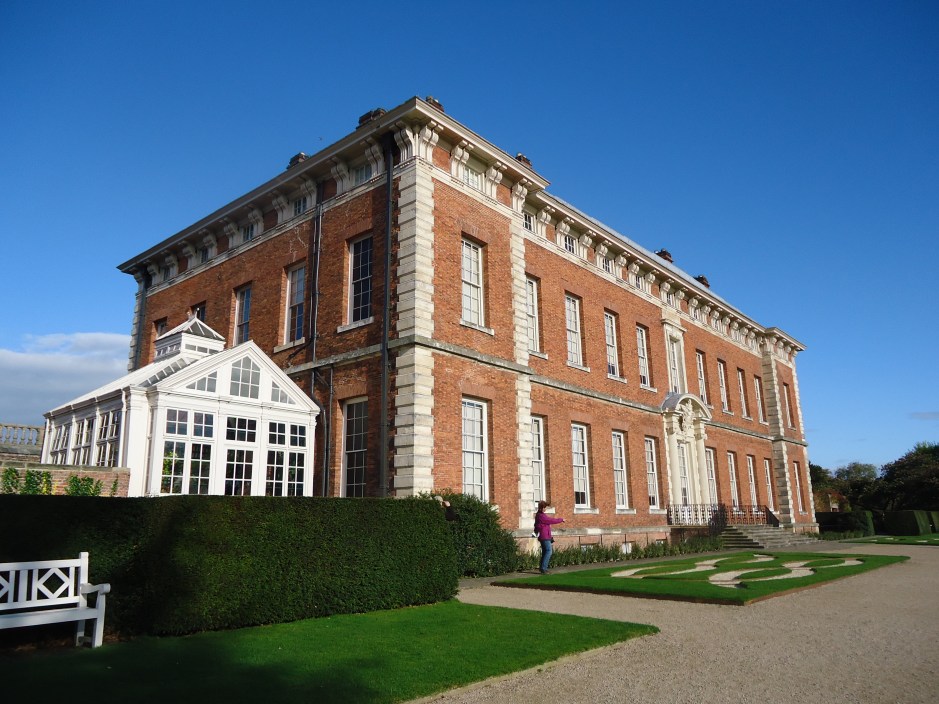
I have just revisited the beautiful Georgian house and grounds of Beningbrough Hall, north of the ancient city of York. It was as I walked around the laundry in the grounds of the house, crossing through the archway of the bell-tower, that I created the heroine Miss Chloe Branton and Mr Tobias Poole.

The life of a laundry maid was hard. In the days before running hot and cold water, it had to be either hauled from a well or stream or pumped up from an underground source. Once they had the water they then had to heat it and use substances such as lye soap to soak, wash or scrub the garments, which was hard on the hands. Even the garments were more difficult to maintain as before modern textiles, dyes and methods of controlled cleaning the garments may have to be unpicked to separate delicate lace, from wool or silk and each section cleaned or washed separately. Materials were not colorfast and were often heavy. A careless laundry maid could cause shrinkage, pilling and ruin a garment and easily lose her already lowly position.

It was a hard life, but it was also an excellent place for someone to be hidden away for a short time. Chloe was unused to hard work, in a building with a cold stone-flagged floor, lifting heavy loads. She needed help and a good friend to survive.

The Captain’s Creek – Pressing Times

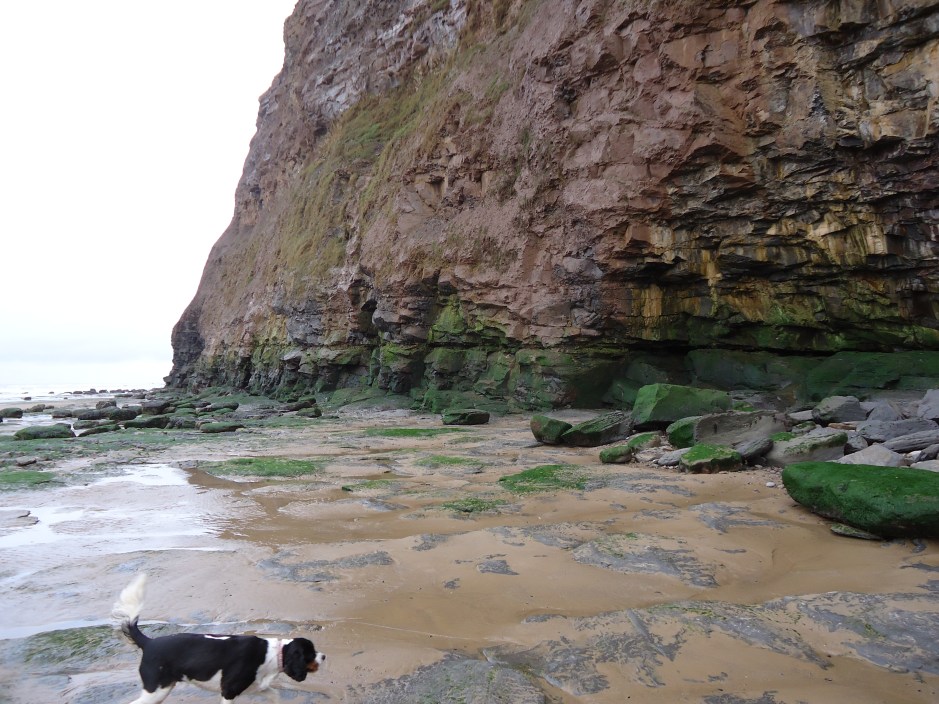
Maggie Chase discovers an injured stranger hiding between two rocks as he flees for his life on the beach. Rapidly, she is forced to make a choice: reveal his whereabouts to the fast approaching press gang, or hide him from their sight.

The Impress Service was set up to make sure that the Royal Navy had the needed number of sailors to man its ships. It was harsh and unfair as the press gangs were notorious for their raids, often ignoring the set age-limits of between 18-55, in an era when it was difficult to prove your age when plucked off the street.

The coastal towns were rife with smuggling. Robin Hood’s Bay, for example, had a network of tunnels and passages linking the houses built on its steep banks. Although these were designed to move and hide contraband, they also proved useful when the press gang arrived. The womenfolk fought off the gang with anything they had to hand whilst their menfolk hid. They were a tough and hardy people, which is why the service wanted good seafaring men at a time when paid volunteers were not enough in number to fight Napoleon’s threat. Criminals who had chosen to serve a different type of sentence in the Royal Navy were often weakened by illness because of their previous incarceration. Therefore, the press gang swooped on the unsuspecting and gained a ruthless reputation as a result.

The eBook of The Captain’s Creek is available from Smashwords and Amazon directly or from most eBook sellers.

Abigail Moor – Biddy’s Bakery

Abigail was rescued as a baby by Lord Edmund Hammond – or so she believed.

Raised as a lady, calling him father, she enjoyed a sheltered life as she grew up and loved her step-brother, Frederick. Life dramatically changes because she has to flee from a forced marriage when Lord Hammond falls ill. With her lifelong maid she travels to the port of Whitby via the beautiful ancient city of York.

To Abigail’s naive eyes Whitby would have been a noisy, bustling place with a myriad of smells from the various industries surrounding the whaling, fishing and boat making industries. Even Abigail’s name, like her situation, has a double irony. Abigail literally means ‘my father’s joy’, yet she does not know who he is. The name is also used commonly to refer to a lady’s maid.

When I explored Whitby I came across a narrow snicket in which was a love old ram-shackled set of buildings I borrowed this setting for ‘Biddy’s Bakery’, placing it next to an old inn like the amazingly well restored White Horse and Griffin and took the extra liberty of placing a laundry opposite. Whitby was so wealthy through the whaling industry that in 1790 there were two street lamps in Church Street outside this original coaching inn.

I had the pleasure of staying in the same room that it is said Charles Dickens once used. It was a lovely friendly place in a fascinating location, and serves excellent food.

The eBook of Abigail Moor: The Darkest Dawn is available from Smashwords and Amazon directly for $2.99/£1.88 from most eBook sellers.

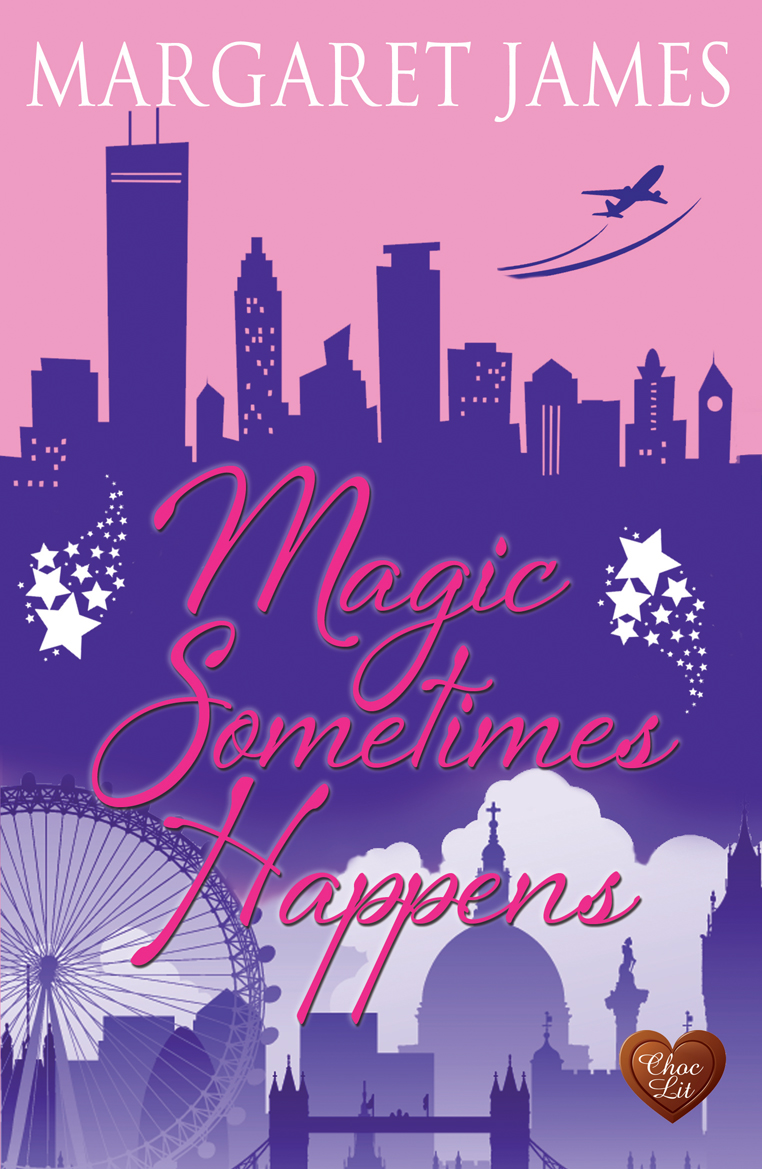
The inspirations for Magic Sometimes Happens

I am delighted to welcome Margaret James back to my blog as she tells us about her enchanting new book Magic Sometimes Happens!

Thank you for inviting me to be a guest on your blog, Valerie. It’s great to be here! Today, I’m going to tell you about the inspirations – music, poetry and places – for my latest novel, Magic Sometimes Happens.

The story is about second chances for both my hero and my heroine. My hero Patrick Riley is married, is the father of two small children and doesn’t expect his wife to leave him for a man she says makes her fly. My heroine Rosie Denham is running away from a bad mistake and needs to learn to forgive herself.

The story starts when Rosie visits Minnesota in the fall, a season which is probably the most beautiful time of year in one of America’s most beautiful states. The whole place seems to turn red and gold almost overnight as the trees change colour. But fall is a very short season. Minnesota’s long, harsh winter will soon be on its way, and the whole place will be frozen solid for almost six months until spring makes a brief appearance before the next sweltering summer comes around.

So yes, Minnesota has an extreme climate. But it’s place that is full of extremes. The Twin Cities of Minneapolis and Saint Paul are divided by the Mississippi River, which winds between limestone bluffs and through various locks and channels to join the Missouri before flowing on to the Gulf of Mexico. There are quiet, very beautiful stretches of river very close to the urban hearts of Minneapolis and Saint Paul. But some parts of the Twin Cities are very built up. Minneapolis is home to the Mall of America, the biggest shopping centre in the western world. But there are also hundreds of parks, lakes and playgrounds dotted between the buildings, and – in spite of the dozens of high-rise buildings and skyscrapers in downtown Minneapolis – the whole place has a countrified feel to it.

Most American schoolchildren are probably familiar with Henry Longfellow’s narrative poem, The Song of Hiawatha. It’s the story of a Native American warrior and his bride Minnehaha and it’s set in Minnesota. When you visit the Twin Cities, you can’t help but be aware of the influence of Longfellow on place names. You’ll come across Minnehaha Park, Hiawatha Avenue, the Hiawatha Clinic and many more. My fashion PR consultant heroine Rosie is a British girl who has never heard of Longfellow, but American-born Patrick knows long stretches of the poem by heart.

As for music – although Patrick is a professor of IT and very science-oriented, he is in love with music, especially American classical music by the likes of George Gershwin, Aaron Copland, Leonard Bernstein, Samuel Barber – Pat listens to them all. But his absolute favourite is Gershwin who wrote, among many other compositions, Rhapsody in Blue and An American in Paris. So, when Rosie takes him to Paris, Patrick can’t help but be enchanted and magic is surely bound to happen!

Maybe have a listen and see if you’re enchanted, too?

More from Margaret

Why not have a peek at her blog, or chat with her on Facebook and Twitter?

An Interview with Juliet Greenwood

I first met Juliet when we were at Writing Magazine’s awards ceremony back in 2002. We were both winners embarking on our writing careers. A fellow member of the Romantic Novelists’ Association, Juliet had several works of fiction published under the pseudonym Heather Pardoe and is now a novelist under her own name.

Welcome Juliet!

In what way did ME lead you into a writing career?

It was a really bad viral infection that left me with ME for years. Before then, I’d been energetic and healthy, holding down a career, cycling, rushing up mountains, and working for hours in my garden. Being so ill for so long, and not knowing if I would ever get better, forced me to completely reconsider my life. That’s when I decided I would work part time in a far less stressful job, and just go for my lifelong dream of being a writer. I’d never had the courage to do it before, in case I failed. Having ME made me realise I’d nothing to lose, so it gave me the courage to try.

Have you always been a story-teller with a love of the written word?

Definitely! As a child I used to devour books and write my own wild adventures and the only subject I ever wanted to study was English. In my twenties, I lived in a garret (well an attic room) in London, bashing away on a typewriter, sending stories out and finding them flying right back again. Then I did the sensible thing and found a ‘proper’ job and did a bit of living (the best kind of research). But I never quite lost sight of the dream.

You had established your work under the lovely name of Heather Pardoe, why did you decide to revert to your true name for novels?

I’m very fond of ‘Heather Pardoe’, but I’d always known I was going to write under two names. Writing stories and serials for magazines was a really valuable learning curve. I loved doing them, and had great fun with the novellas I wrote for the ‘My Weekly Story Collection’. But my novels are very different. The kind of story you write is a pact with your readers, which is why many authors write under several names. My Juliet Greenwood books aren’t dark, but they deal with much darker themes (like my heroine racing through the battlefields of WW1 in a beaten up ambulance, on a desperate rescue mission), so I’m very happy writing under two names. I definitely see them as two aspects of me, so when I sit down as Heather, it feels different than when I sit down as Juliet. Although Heather is my middle name, so my two writing personas are not that far apart…

Which author’s work have inspired you the most and why?

There are so many! As a child, the novels of Rosemary Sutcliffe gave me a passion for historical fiction. I love Elisabeth Gaskell, George Elliot and the Bronte’s for their portrayal of strong, passionate women trying to make sense of the world around them on their own terms, and I can never get enough of the twists and turns of Dickens’ plots.

I love the description you gave in one interview of your ‘crog loft’. I have just converted my garden shed – it does not quite have the same ring to it. How structured is your writing day/process? Are you a plotter or do you let the ideas grow organically through the story?

WW1 Seed Cake smallMy crog loft is tiny, but it’s nice and cosy and womb-like (and has steep stairs that stop me from sneaking out into the garden when I hit a tricky bit!). When I’m writing serials, I have to plot everything out, as there is no chance of going back and changing things. When I’m writing my novels, I start with a general idea of the plot, but I know that’s going to change as soon as I start, and find the heroine needs a mother, or a brother or best friend, who turns out to be far too interesting to ignore! I generally know the beginning and the end, but once the first draft is done and the real work begins, anything can happen. That’s the exciting, and the scary bit, because I’m never sure if it’s going to work. I love tightening up the plot, and developing the twists and the turns to (hopefully) keeping the readers on the edge of their seats. ‘Eden’s Garden’ was a real challenge, moving between the modern heroine and Victorian times, and keeping the two stories weaving in and out of each other while not giving the twists (especially the one no one ever spots!) away. ‘We That are Left’ had some of its structure dictated by the historical events of WW1, even though the action is focused mainly on the experience of the women and civilians at home. The next book is also based around historical events, but with some family twists and turns too.

You are a member of the Novelistas whose members include amongst others Trisha Ashley and Valerie-Anne Baglietto. How did you become involved with the group?

I’ve been meeting with the Novelistas for years. We all live in very rural parts of Wales and the North West, and writing is a lonely life, so it’s great to be able to meet up and support each other.

How important do you think it is for an author to be a part of a supportive group/organisation?

I feel it’s very important to be part of a supportive group of fellow writers. It’s like any specialism you feel passionate about – you need fellow geeks, and those going through the same experience, otherwise you can bore the socks off family and friends (after all, I’d glaze over if a stockbroker discussed the minutiae with me every day, even if I had some interest in getting rich quick!).

What would you say a reader can expect from a Juliet Greenwood novel?

A big emotional story, set in a rambling old house in Cornwall or Snowdonia in Victorian or Edwardian times, with women firmly at the centre of the action, each making her own way towards self-fulfilment. There is a mystery to be solved, and danger to be overcome, and the path of true love definitely never runs smooth. There will be a garden in the background somewhere, and probably cake. For ‘We That are Left’ I researched authentic dishes from WW1 newspapers for my heroine to use, as she struggles to keep her family and the local village fed on limited resources, mainly anything she can grow in the kitchen garden on the family estate.

What are you currently working on?

I’ve just finished another serial, this time set among the paddle steamers of Conwy in Victorian times. I’m also deep into my next novel, which is a still a secret, but I can reveal that both cake and bricks are involved. And possibly a suffragette or two?

What is next for Juliet?

I’m looking forward to finishing my next book – especially as I’ve already got ideas I’m passionate about for the next one, or even two. The kindle editions of ‘We That are Left’ and ‘Eden’s Garden’ both reached the top five in the kindle store. I never expected it to happen, but it was such an exciting experience, I’m just itching for the chance for it to happen again. Writing is always a rollercoaster ride. Just watch this space…

More from Juliet

Website: http://www.julietgreenwood.co.uk/
Blog: http://julietgreenwoodauthor.wordpress.com/
Facebook: https://www.facebook.com/juliet.greenwood
Twitter: https://twitter.com/julietgreenwood

‘We That Are Left’, Honno Press, 2014

‘Eden’s Garden’, Honno Press, 2012

An Interview with Sue Moorcroft

Sue M Portrait 300px

Sue Moorcroft is an amazingly versatile writer and tutor who has taken time out of her busy schedule to share her world with us. 

Welcome to my blog, Sue!

Thanks for inviting me.

Do you have a very set and organised working week or, with your busy and diverse writing commitments, do you work to ever evolving priority lists?

Both, I suppose. I have deadlines to meet for novels, serials and my monthly columns for Writers’ Forum, and also sometimes for other work including promo. To fulfill those deadlines I have a fairly long working day, often devoted to working with students in the morning and writing in the afternoon. In that way, I keep fresh for both. I punctuate most days with a class such as yoga, Zumba, FitStep or piano. These seem to see to my physical and mental health as I do most of those classes with friends.

Sometimes I have a teaching commitment that takes precedence or I go somewhere for research purposes. I enjoy spots on local radio, too. Variety is the spice of my life.

When did you first make your first breakthrough as a published author?

I sold my first short story, to The People’s Friend, in 1996. It was April 1st and I just hoped it wasn’t someone’s idea of an April’s Fool joke… I stopped counting at 130 short stories so that first one was quite important. The short stories led to serials but it wasn’t until 2004 that I sold a novel.

How important a role has the RNA played in your writing journey to date?

Very. It helped me to make the transition from short fiction to long. I was actually at a party thrown by a short story agency that placed some of my work when somebody told me about the RNA’s New Writers’ Scheme. Then I saw that Marina Oliver was appearing at a library about 20 miles from my home so I went along to that and asked her about the RNA, as she was then (and for many years) a committee member. I applied the next day.

Margaret James was the NWS co-ordinator then and she took a personal interest, including introducing me to someone who became my agent for the next seven years. I left that agent for personal reasons that affected my career in 2009 but have just signed with another, Juliet Pickering at Blake Friedmann.

The RNA members also gave me a ‘can do’ attitude. I’d be at a conference chatting to someone in the lunch queue and realise that they were the author of dozens of novels. But they just seemed ordinary aside from that … It made me realise that it’s hard work, education and talent that makes a writer, rather than some mystical power endowed to people other than myself. And, of course, the RNA gave me a massive number of writing friends.

What can a reader expect from a Sue Moorcroft novel?

A dauntless heroine and an irresistible hero to create sizzle, a contemporary setting, an entertaining read but meaningful subjects explored. Readers say that I make them fall in love with the hero, which is only fair because I fall in love with them all, too!

What have been the 3 stand out highlights of your writing career to date?

When I got ‘the call’ from my agent that began, ‘I have an offer for you.’

When I won Best Romantic Read Award for Is this Love? at the Festival of Romance.

And when a customer at a bookshop signing saw my display, picked up All That Mullarkey and asked, ‘Her! Do you write anything like her? This is what I’m reading at the moment and I love it.’ I squeaked, ‘I am her!’ It turned out that the lady was very ill and had been in hospital a lot. She was reading in the afternoons while she rested and any book that ‘grabbed’ her had become a lifesaver. She bought all of my books apart from Want to Know a Secret? because it had a hospital in it. I felt privileged to have made her illness a little easier to live through.

Sue M Wedding ProposalPlease tell us about your new book The Wedding Proposal and the inspiration behind it?

It’s set in Malta, which is a place I love as I lived there as a child. Because I like to read them I wanted to write a reunion book and that turned out to mean a lot of extra plotting. It was getting the balance right. The reason Lucas and Elle parted four years earlier had to be plausible yet they had to get over it in order to come together when they met again. Lots of backstory plotting required! One of the flats I lived in as a child overlooked a marina so I set the book there, ie I put Lucas and Elle together on a small boat for the summer. I thought it would make it hard for them to avoid one another. (I was right.)

Elle and Lucas have both mellowed while they’ve been apart. Lucas has made his hobby, scuba, into his job, by qualifying as a divemaster. Elle has been made redundant from her whizzy corporate life in IT and in a complete change of direction has begun to volunteer in a drop-in centre for young people. Lucas’s little brother Charlie is loveable but crazy so I brought him on stage to have an accident with far-reaching consequences. Elle still has secrets and Lucas still doesn’t like secrets, so that ignites the plot nicely.

What is next for Sue a) as an author and b) with your upcoming writing events/courses?

I’m writing two things. One is a three-part serial for My Weekly, scheduled to be published over Christmas and New Year. The other is a novel called The Twelve Dates of Christmas which is about dates and Christmas but also revenge porn, hats and ovarian cancer. I know the plot and I’m about one-third of the way through the writing. I’m not sure how I’ve ended up writing about Christmas twice as I actually love summer!

I’ll be at the Festival of Romantic Fiction in Leighton Buzzard on the 13th of September, at the book fair 10am-3pm and the Traditional Afternoon Tea at The Green House 4-5.30pm. I will be at the Romance Readers Awards at Leighton Buzzard Theatre in the evening because I’ve just heard that The Wedding Proposal has been shortlisted for the Best Romantic Read Award!

Next year I’ll be running a week-long writers’ holiday for fabulous Arte Umbria 22-29 July (already filling up) and hopefully one for equally fabby Chez Castillon but I don’t have the dates yet.

Thank you so much for taking the time out of your busy schedule to share some of your writing experiences with my readers.

And thank you for having me.

Sue Moorcroft writes romantic novels of dauntless heroines and irresistible heroes. Is this Love? was nominated for the Readers’ Best Romantic Read Award. Love & Freedom won the Best Romantic Read Award 2011 and Dream a Little Dream was nominated for a RoNA in 2013. Sue received three nominations at the Festival of Romance 2012, and is a Katie Fforde Bursary Award winner. She’s a past vice chair of the RNA and editor of its two anthologies.

Sue also writes short stories, serials, articles, writing ‘how to’ and is a competition judge and creative writing tutor.

Sue’s latest book The Wedding Proposal is available as an ebook from 4 August 2014 and as a paperback from 8 September.

 TWP_RGBpackshotMore from Sue:

Website: www.suemoorcroft.com

Blog: http://suemoorcroft.wordpress.com/

Facebook: sue.moorcroft.3 and https://www.facebook.com/SueMoorcroftAuthor

Twitter: @suemoorcroft

An Interview with Eileen Ramsay

Eileen RamsayThank you, Eileen, for taking the time out of your busy schedule to be my guest this month.

You have had a fantastic breadth of life experiences from teaching the children of international politicians and celebrities in the USA to working in Migrant Education. What lasting impressions did this contrast leave you with?
One fact that has remained with me through all my years of teaching is that, no matter the social position of the parents, the wealth or lack of it, education or lack of it, ALL good parents want the best for their children. Another is that poor parents – and I’m not talking finance here – come from every strata of society. I have had extremely wealthy parents leave seriously ill children in hospital while they jetted off to join some celebrity at a ski resort and I have had really poor Mexican parents turn up at my door begging for “Trabajo ahora?” whenever there was a school outing that cost a little money. They didn’t want a hand-out, they wanted to work to earn the money.

What is it about Mexico that appealed to you so much?

I visited Mexico often and studied Spanish language and Mexican music there. I love its fascinating and sometimes sad history. It is incredibly beautiful. The people are proud and they are generous and full of humour and you have just given me ideas for articles!

Would you agree with the observation that despite having lived with the lifestyle of the very privileged, you always seem to have kept your focus on what is important in life – family and reality?

You’re right, I did enjoy some incredible experiences and my upbringing was certainly not among the privileged but one wonderful woman in Washington DC reinforced all my early lessons. I had just met the man who was to become my husband and I wanted to impress him – shallow person that I am – with my ‘new’ family. I was taking him to lunch – to be introduced – and we walked into the house to see the lady of the house on her hands and knees washing a floor.  It turned out that the resident ‘cleaning lady’ wasn’t feeling well and had been sent to bed.

‘But why are you washing the floor?’ I asked.

She looked up at me and laughed. ‘Dirt,’ she said, ‘is no respecter of persons.’

My husband, of course, fell in love with her on the spot.

Churchills AngelsWhen did you break away from teaching to develop a career in writing?

Teaching and writing marched together for years. I wrote stories for Sunday School magazines and I wrote reading materials for primary schools. I was able to use knowledge of Native Americans I had gained while living in the US to write something a little different – Bud and the Hunkpapas was a favourite. For a few years I wrote from 4am to 6am but resigned when our younger son went to university.

Are you a very disciplined writer in the way you organise your day?
Organise?  I can already hear the laughter of those who know me.
I am disciplined. If possible I write every day; some days I write all day and well into the evening – that’s research time too. I use a laptop that has no internet because I can’t resist an email pinging in. My husband is learning to cook – our sons and lovely daughters-in-law sent him on a course – and he does one meal a day and he helps with housework – does all the heavy things and brings me a cup of coffee in bed first thing – and so I have 30 mins of ‘fun’ reading.

How and when did your first breakthrough as a published writer occur?
I went to a writing conference at USC where the great Michael Shaara, Clive Cussler, and the editor Charles Block were speakers. A friend typed up part of a Scottish Regency novel I’d been writing – I had even fewer technical skills then – and Charles Block read it. He was waiting outside a lecture room for me on the last day, handed me the script and said, “I think this will go but have chapters one and two change places.”

I had introduced the heroine in chapter two and he advised that the heroine should always be right there in chapter one. We returned to live in Britain that summer; I managed to get an agent – long story and sent her the finished, rewritten manuscript. A few days later she called and said she’d attended a party the evening before and an American editor had asked her about the availability of Scottish Regencies.  She showed her the typescript and it was bought! I looked at it a few years ago and it was rather dire – wouldn’t be published today. I rewrote it, correcting errors, and published it on Amazon!

You were established as a saga writer and then made the bold and successful move to writing romances based around the world of opera and music. What inspired this departure?

I had written children’s books, Regencies, Sagas and serials and I wanted to write contemporaries. I went to an artist chum’s exhibition and found myself thinking – What if all these paintings were of one person? The idea stayed and grew like Topsy and I wrote a book about an artist who loved a tenor – my favourite voice!  It was read by several reputable editors and agents but no one wanted it but almost everyone made sensible points. (I occasionally bump into one or two at an RNA party and we chat perfectly happily!)

            At a book launch I found myself standing beside a lovely woman who asked me if I wrote books like those of the superb writer onstage. I said “no” and told her my friend’s publisher had just, that very day, rejected me.

            “I didn’t reject you,’ said the woman and gave me her card. “Send it to me and I’ll have a look.’

            I dithered for days and eventually rang my friend, telling her I felt badly about, even inadvertently, using her launch to contact a very senior editor. She looked at me and said. “Don’t be stupid; if anyone holds out a hand to you in this business, grab it.”

            I grabbed, sent it and received the manuscript back with a “NO” for which she gave her reason. She also told me I really needed a good agent and suggested three. Two had already rejected me but I had not heard of the third and so I had one more go.

            The agent accepted me as a client, and, with her guidance, I rewrote a few scenes. The agent, the brilliant Theresa Chris, sent the manuscript to auction. It went for an amazing amount of money and was then bought by several foreign publishers.

Wave Me GoodbyeLast year, ‘Wave me Goodbye’ was published under the name of Ruby Jackson, which I understand is the first of a series of novels ‘Churchill’s Angels’.  Please tell us something about this new project?
I suppose, like many writers, after five best-selling books, I fell out of favour. Theresa stayed with me, encouraging me, advising me.  A few years ago, she asked if I would like to revisit WW11 and after much thought, I said yes. I did not know, of course, that  an editor at Harper Collins had conceived the idea of publishing a series of books about the courageous women who did everything from catching rats to ferrying Spitfires; the women she calls Churchill’s Angels.  Using the pseudonym, Ruby Jackson, I have now written four books; two have been published so far.  It’s been an enormous privilege. I’ve met land girls, pilots, nurses, etcetera and been awed by every one of them. Their stories need no exaggeration – they were quite simply – superb.

You obviously love historical fiction and research your chosen topic thoroughly. What advice would you give to anyone who was considering writing a historical novel?
Advice would depend on which era and which country but obviously I’d say, find out as much as you possibly can about the person the time and the place. Read everything, especially newspapers of the time, and don’t be afraid to ask questions. Archivists and librarians are great sources and remember there are archivists in famous department stores, in grand hotels and in universities.  They know what you don’t know you don’t know!

What is next for Eileen?

I have no idea; my head is spinning – that way, or that way but I did visit a conductor friend at the Royal Opera House earlier this year. He has been keeping me accurate about conducting and conductors for several years as I have an idea. He asked me about progress.

‘I’m afraid, for the past four years, the poor man has been standing on a rock looking out to sea.’

He shrugged. ‘Well, there are worse places for a conductor to stand.’

Now, wouldn’t you want to discover the worse places?!

More from Eileen

Website: eileenramsay.co.uk
Blog: Eileen’s Blog