Secrets of Dibbledale: A Story of Love and Adventure

May’s welcome sunshine seems to be reflected in the vibrant yellow gorse, brightening the moorland, whilst the aroma of the wild garlic’s delicate white flowers lightens shady woodland banks.

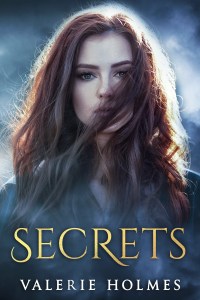
Whether walking through the ancient pathway of Saltburn Gill from the coast or strolling through the grandeur of the grounds of Fountains Abbey and Studley Royal, Mother Nature certainly lifts the spirits and inspires, as it did in Secrets for Lord Farrington’s friend and life-saver Micah Arrow.

The trees were finally showing their new leaves as yellow broom made for a colourful bank in the lane’s hedgerow that dipped towards Dibbledale. Saint Cuthbert’s parish church and the vicarage were on a small hill just outside the village. Micah stopped to admire the newly bloomed clumps of primrose nestling amongst the grass. He breathed deeply – he was home and at peace. Picking his way through the grass, he admired the budding bluebells pushing their way upward. Spring was a time of revival and that is what he planned for Dibbledale.

Dibbledale is a fictitious village, which has elements of real locations, such as, tranquil Hutton-le-Hole and Great Ayton. The latter being where the explorer James Cook went to school. They are villages that have largely remained unspoilt by modernisation and industry, which is what returning soldier Micah Arrow wants to preserve for his family. After witnessing the horrors of war first-hand, peace is what he craves.

Appealing as any setting is, North Yorkshire has dramatic wild beauty throughout the seasons, it acts as a historic backdrop to the characters and their adventures. In writing as in life, you need moments of light and shade to give depth and pace. Here a moment of quiet reflection turns when Micah senses danger…

Micah swung a leg over a fallen tree trunk, but then, as the metal’s edge caught his eye, he mantraps, never had he seen such things around Dibbledale. The woodland had always been open to all. The food it provided was free, the fallen trees taken as needed by the villagers for repairs – so what had changed?…’

Secrets will be on a Kindle Countdown from the 15th to 22nd June on Amazon.co.uk and is freely available on KindleUnlimited now. Micah is an important character to Lord Farrington and reappears in Silent Revenge.

As a thank you to my readers the newly re-edited to extended version of Phoebe’s Challenge is available at 77p till the end of May.

England, North Yorkshire, 1813
Miss Phoebe Elgie and her younger brother, Thomas, flee when an accident results in them being labelled ‘machine breakers’ in the cotton mill where fate had them trapped.
Hunted, with nowhere to run, they are aided by a mysterious stranger called Matthew. They soon discover that he is a man who appears to assume a variety of roles.
Phoebe instinctively trusts Matthew, unlike Thomas who doubts. She is drawn to this stranger; lives and destiny intertwine as their journey crosses the path of smugglers and traitors. This hinders their quest to uncover the truth behind the demise of their family, which left them so vulnerable.
Phoebe’s challenge is three-fold.
She must secure their escape beyond the reach of the overseers of the mill and the crime they have been accused of...

Uncover what happened to their mother.

Cope with the confusion of her developing friendship with the mysterious, Matthew, and determine if there could be a future for them.

Swept along by the swiftness of the serious events that dog their progress to uncover the truth, Phoebe struggles to overcome and resolve these challenges.
Determined, Phoebe has no time to doubt, but how will she succeed…?

If you enjoy any of my books, please leave a review on Amazon or Goodreads – they are much appreciated!

Meet novelist, poet, philosopher and former barrister, Diana Janney.

image003

I am delighted to welcome novelist, poet, philosopher, former barrister and fashion model Diana Janney as my May guest.

Thank you, Diana, for giving up some of your precious time to answer my questions.

Have you always been a deep thinker, even as a child, searching for answers and looking beyond the obvious to try and understand life?

Reflection and deep thinking have been important to me for as far back as I can remember. As a child, ‘why’ was my favourite word! My late father was a clergyman and he and my mother spent a lot of time discussing big questions as a family and with others, which I enjoyed. I became interested in Philosophy through Latin A level, fascinated by Cicero and Ovid in particular, as well as the poems of Catullus. In my latest novel A Man of Understanding, I have translated part of a Horace ode, which reminded me of those school days! Before going to university to read Philosophy, I had already become fascinated by Eastern Philosophy, and it was a wonderful experience to expand that love of Philosophy at UCL. I’m not sure that I would say that I try to understand life, as this would be an impossible task, but I do search for answers to big questions, especially those related to ethics, aesthetics, personal identity, faith and religion, and the concept of choice, freewill and moral responsibility.  I enjoy the exploration of the questions even if there are no answers.

A Man of Understanding NEW cover

Your careers to date have been varied and impressive, but would you say that your love of creative writing and poetry developed first and has weaved through your professional life until it became your central focus?

My love of creative writing and poetry developed during my schooldays when it became clear that I had a talent for both. Philosophy became very much a part of my life during my years at UCL, first as an undergraduate and then as a postgraduate in Philosophy. That fascination continues to the present day. In all my novels so far (and in the next) I weave philosophy as well as poetry into the plot as I believe they both offer so much on which to reflect.  Having been a barrister gave me the opportunity to be a mouthpiece for those I represented, and it helped me to be persuasive in argument, both of which are good training for being a writer, and Philosophy encouraged me to reflect on important issues, which I weave into my novels.

A Man of Understanding, your third novel, is described as a story of bereavement and healing. This sounds so positive, as anyone who has grieved the loss of a close loved one  – particularly early in life, will know, that healing is a difficult and very personal journey. How was your own life affected by your father’s death and is this healing part of your shared experience?

The death of my father came as a tragic shock to me and my mother. I was an only child, as were both my parents, so the family was already small before we lost him. It was impossible not to admire his positive approach to dying and the strength of his faith. In my writing about loss and grieving, I seek to do justice to the positivity he showed at that time and during his life. In my novels, I want to share that experience in a way that may help others to see that the loss of   loved ones does not mean that the lessons we learnt from them disappear when they do. We reflect on what they showed us during their existence, and in some ways those lessons become stronger through losing those we love. It is at times of loss and tragedy that we reflect most strongly on what really matters in life. We often turn to creative ways of expressing what we are feeling inside, as recently bereaved Blue discovers through the relationship that grows, after the sudden death of his parents, between him and the philosopher-poet grandfather Horatio Hennessy whom he has never met.

The Infinite Wisdom of Harriet Rose cover image, Diana Janney

Being shortlisted for The People’s Book Prize 2023 was obviously a huge achievement as it reflects the readers’ choice. Your novels are written with a unique and enthusiastic insight into their subject matter. Do you write the book that is in your heart and how do you balance this with the commercial side of the publishing industry, of writing for a target market?

Thank you, Valerie. In fact, I was the Runner-Up in The People’s Book Prize, which was an even greater achievement, especially as the Patron Emeritus of the Prize is Frederick Forsyth, and the late Dame Beryl Bainbridge was the Founder. It was a great honour for me. I always write from the heart and from my knowledge and reflections, and it moves me when I read how much my writing has moved others. That is what matters most to me. My target market is always those who enjoy moving and thought-provoking literary fiction with interesting characters and an unpredictable plot. There are a lot of novels published that are quite predictable and are not thought-provoking but nevertheless they sell well, and people enjoy them. The publishing industry needs variety as there are so many readers in the world. But I would not write anything that did not reflect my own questions, knowledge and creativity. Fortunately, my writing seems to appeal to readers, and it is wonderful also to be published in translation in lots of different countries and to have international appeal. I believe that to be a successful writer, it is important to write about what you know (which can include research if necessary) and, as Horatio says to Blue in A Man of Understanding, about what moves you, what stirs your soul.

Do you aim to make your books accessible to people who have had little opportunity to study, or exposure to, the classics or philosophy?

Accessibility is important when weaving philosophy and the classics into novels. It requires interesting characters who really bring these subjects alive, which is what I always aim to do. These subjects do not have to be dry and difficult to understand. Blue is a twelve-year-old boy, and he is fascinated by them. My books appeal to both those who already have a knowledge of philosophy and the classics, and those who do not and are surprised by how much they enjoy these subjects in my writing.

Do you have any plans to publish an anthology of your themed poems?

I haven’t considered an anthology of my themed poems. Maybe I should! They have certainly proved very popular. Some of my poems in my novels are specifically related to the plots, which might not fit easily with an anthology. In my next novel, there is also poetry, but of a very different style.

When not studying, writing, and working what do you do to relax?

Most of my time is spent in writing, especially at the moment as I am finishing my next novel. But I love to play chess, table tennis, swim, play my violin, spend lots of time with my husband discovering new places, new concerts, new plays, new restaurants, new recipes, new people and new music to play together (my husband plays the piano). Of course, returning to old places, concerts, restaurants, recipes, friends, music is also enjoyable! I also find meditation a good way to relax.

Mallorca features in your novels, is it a place that you have strong links to?

My husband and I have spent a lot of time in Mallorca over the years. It is a place we will always return to. Our first ever holiday together was there. My first novel and my latest novel are both set in Mallorca, which says a lot about my love of the island! The north of Mallorca, in the mountains, was the ideal setting for A Man of Understanding as the arts and aesthetics are fundamental to the plot and this area is not only celebrated for its contribution to the arts and culture generally but the island is also a work of art in itself.

The Choice, Diana Janney cover image

The title of your novel is similar to a quote from the Bible. How much has your own faith driven you to succeed and overcome life’s challenges?

Yes, the title is derived from Proverbs 10:23 ‘…a man of understanding hath wisdom.’ Success is such a big word that means something different to each of us, I think. What I hope for most is that I succeed in helping readers reflect on different topics, such as: ways of overcoming loss and grief, exploring their creative side and embracing the importance of the arts and aesthetics in spiritual development, reflecting on the importance of love (as Aristotle teaches, through learning the importance of understanding and respecting the self as well as others), reflecting on religious and philosophical questions from different perspectives, remembering who and what really matters. I believe that my own faith has guided me towards an understanding of where my true talents lie (in the biblical sense of that word), which is what urges me on to write as I do. My faith has also helped and tested me in times of life’s challenges.

Do you create your characters from elements of people you have known or met professionally, or do they walk onto your mind as you write and develop the plot?

There are aspects of myself in my novels, and in The Infinite Wisdom of Harriet Rose, there are aspects of my family in Harriet’s. In A Man of Understanding, I drew the characters from my imagination, they are all unique, with a few touches of myself and my grandfathers (one I knew, the other died before I was born) in poet-philosopher Horatio Hennessy. The characters certainly help to develop the plot – who would dare not to listen to what Horatio had to say?!

Latin is used in the classics, medicine, and law; do you think that basic Latin should still be taught in schools?

The idea of Latin not being taught in schools horrifies me. I found Latin very useful when learning other languages, as it is in the English language. There is something very special about being able to translate the words of some of the world’s greatest thinkers.   

 What do you hope that your readers take away from reading your books?

A strong sense of the importance of valuing love and reflection and creativity. Also, the title, so that if they enjoyed it, they will recommend it to others! 

Have you ever had to deal with work being rejected?

I don’t think that writers should think in terms of rejection. I would call rejection of work a publisher not making an offer to publish, for which there can be a number of reasons (some linked to the work itself, some to the publisher, some to the market at the time of submission). As with most published authors, not every publisher who has received my work has made me an offer to publish, whilst there have been many discerning publishers who have!

What advice would you give new writers starting out?

Reflect long and hard on whether writing is where your true talent lies. It isn’t enough just to like the idea of being a writer. You need to enjoy it, you need to feel you have something to say, you need to be observant (of people and the world around you). Write about what you know. Write about what matters to you. Don’t try to write like someone else. Be yourself. Be unique. Be patient. Listen to your characters.  Write your story, however long it takes, until you feel sad that you have reached the end and that you are leaving your characters and their life behind.

What is next for Diana?

Right now – supper! Writing-wise, I have almost completed the first draft of my next novel, which is being published next year. I am fulfilling my own criteria in that I am enjoying writing it immensely, I love the characters, the plot, the research, the knowledge I’m gaining through creating it, including about myself. It matters to me. It moves my soul. And I don’t want to say goodbye to the characters!

Thank you for taking the time to answer my interview questions. I wish you every ongoing success.

It was my pleasure. Thank you for your interesting questions.

Welcoming in 2024 with Margaret James!

Margaret James 1A
Thank you, Margaret, for taking time out of your busy schedule as a novelist, journalist and teacher of creative writing to chat to me and share some of your New Year news!
It must have been exciting to end 2023 as a ‘hot new pick’ with your Charton Minster Trilogy, published by Joffe Books. What was the inspiration behind this wartime trilogy?

Thank you for inviting me to be your guest, Valerie. I’m very happy to be here!

The inspiration for the first novel in the Charton Minster Trilogy was the famous Red Cross recruiting poster for nursing volunteers to serve alongside the professional nurses working in the various theatres of operation during World War One. This image has reproduced thousands of times, so I’m sure it must have inspired plenty of other novelists, too.

First World War VAD Recruitment poster | British Red Cross

Are there plans to release more of the series in 2024?

Joffe has acquired the rights to all my novels originally published by Choc Lit, so there are four more books in the pipeline, to be released either individually or as sets.

Creative Writing Matters seems to go from strength to strength. What events and competitions do you have lined up for this year?

At the moment, the Creative Writing Matters team is reading its way through nearly 400 entries for the latest Exeter Novel Prize, which will be awarded in April this year.

Gang of Three

The CWM team:  Sophie Duffy, Cathy Hartigan  and Margaret

Can you give some tips on what makes a competition entry stand out?

Try to open the entry at a point which will get readers asking questions – for example, whose story is this, what does the central character want, how might the central character go about getting what he/she wants?

Let this central character face some kind of challenge.

Be wary of starting a story with a description of the scenery or an account of the central character’s life to date.

If the competition asks for a synopsis of a novel, novelette or even a short story, make sure the synopsis covers the entire story and explains how it ends. Anything else won’t tell the organisers/readers if the entrant can construct a satisfying story. It’s (comparatively) easy to start a story. It’s much harder to develop it and to offer readers a great ending that will live on in these readers’ memories – and also encourage to read the authors’ next stories or books.

What would you say is your perfect writing/teaching balance in life now along with other pursuits?

I shall never achieve a perfect balance in life! Right now, as I explained above, my energies are focused on reading competition entries, some of which are going to need reports. I’ll catch up with my magazine work later this year. As for other pursuits – if you mean hobbies, I’m determined to get my garden into shape this spring. But I say this every year, and it hasn’t happened yet.

CM Trilogy

The publishing industry has changed vastly over the span of your career to date. Are you optimistic about the  dramatic and dynamic current trends?

I suspect AI is going to become a really mixed blessing for writers of fiction. But digital publishing has made it easier for new writers to get in on the action, and commercial publishers are no longer the only gatekeepers, which is good for those who prefer to self-publish.

Thank you for chatting to me, and all best wishes for your continued writing success in 2024!

The New Year often provides opportunities and challenges – if you are an author what are your writing goals  this year?

If you have always wanted to write a novel/novella/short story, but feel daunted or lost as to where to start, then  check out CWM or my manuscript appraisal page where you can submit a query.

All best wishes for a happy and healthy 2024 to all!

Meet, Aneeta, winner of The Trisha Ashley Award 2022!

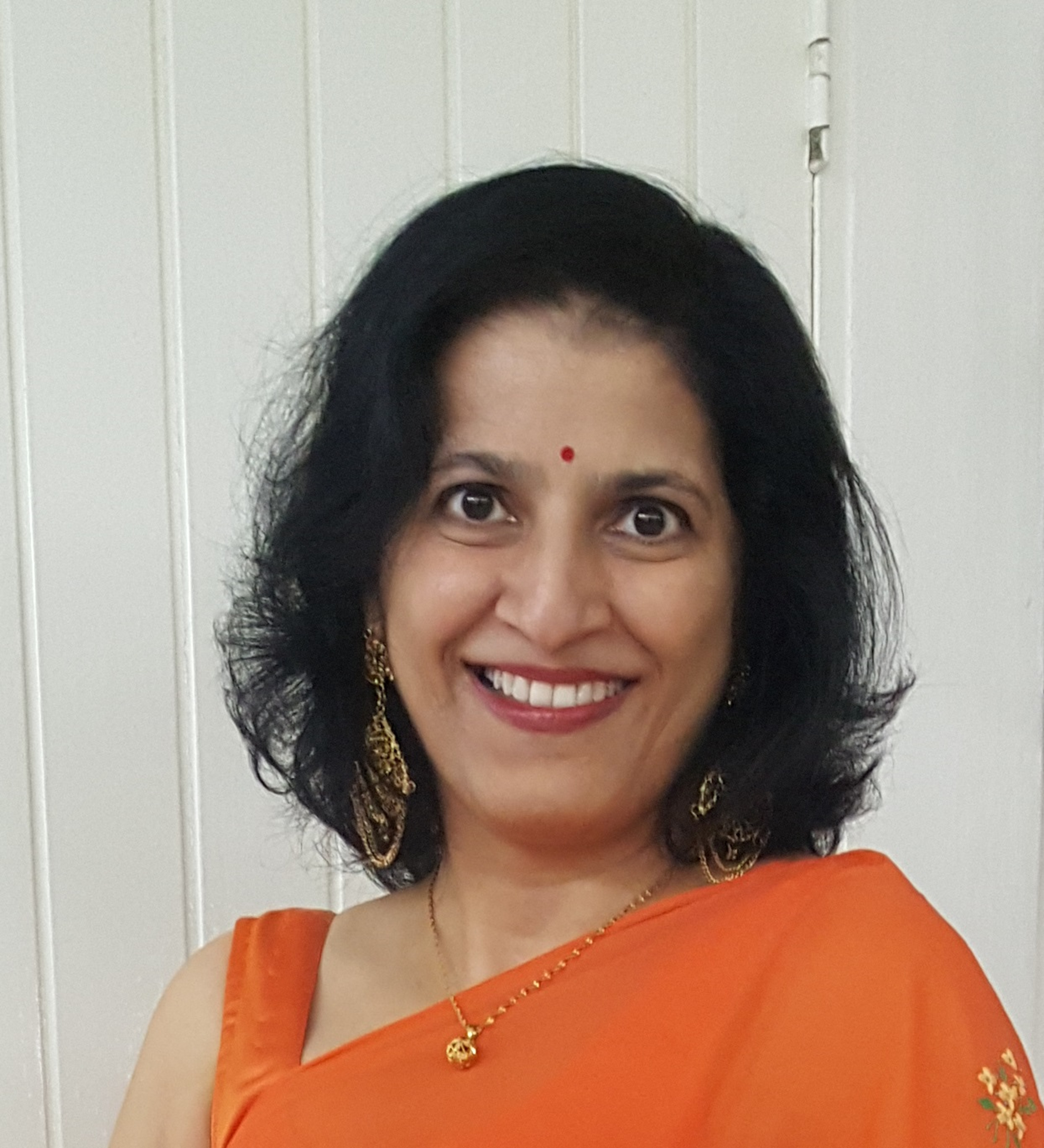
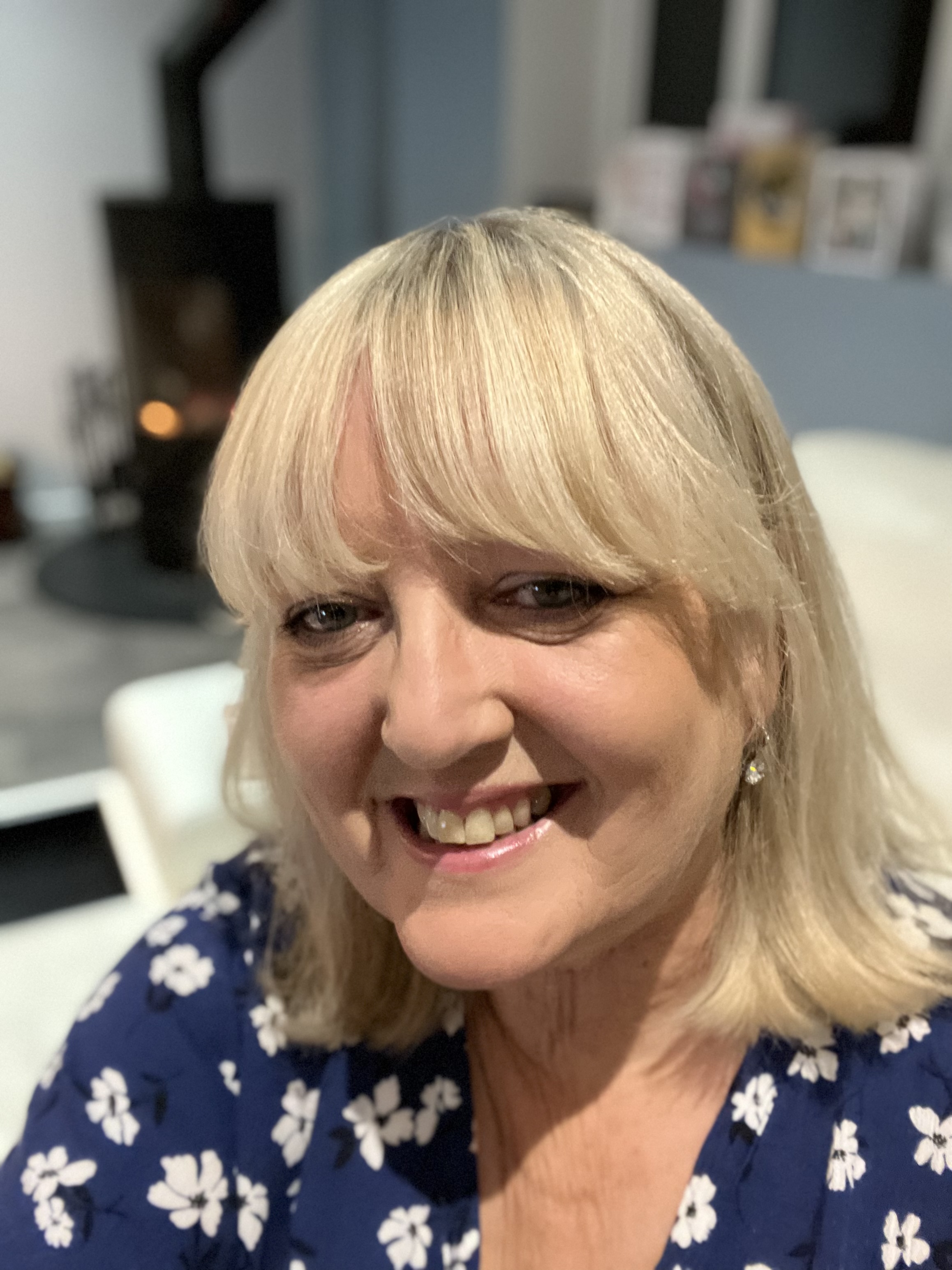
AneetaSundararaj

I wanted to start my New Year interviews off with a celebration!  So, when I learned that Aneeta Sundararaj, one of my London School of Journalism students, had won The Trisha Ashley Award, I asked her to share the inspiration behind her winning story.

 Welcome, Aneeta,

First, thank you for inviting me to your website, Valerie. It’s much appreciated. I must also thank the organisers for running this competition, choosing my story to be forwarded to Trisha, and to Trisha for choosing it as the winning one.  

You are welcome, Aneeta, and I passed on your thanks to both.

Margaret James of Creative Writing Matters who runs the competition was delighted and explained,

When we first set up the Exeter Story Prize, Trisha asked if we would like her to sponsor an award for a quirky or humorous story, and we said lovely, please do. So, when Cathie, Sophie and I have read all the entries, we choose a few that we hope Trisha might like, and she picks the winner, who gets £200.  Also, anyone can enter the ESP, so Aneeta was up against some very well-published authors, and she did very well to win.

The Weathermen – A Love Letter was based on a conversation I had with my friend, Swagata. I was sharing some of the challenges that I (and many girls I’ve spoken to over the years) faced. When the phone call ended, I decided to write it all out. More than inspiration, writing this story was a form of therapy.

Trisha had this to say,

I loved the quirky and original voice of the narrator in this unusual story.  It was, for me, the knock-out winner and I hope will lead to much more writing success in future.

 So, huge congratulations, Aneeta!

When did you discover a need to branch into creative writing after a successful career as a lawyer?

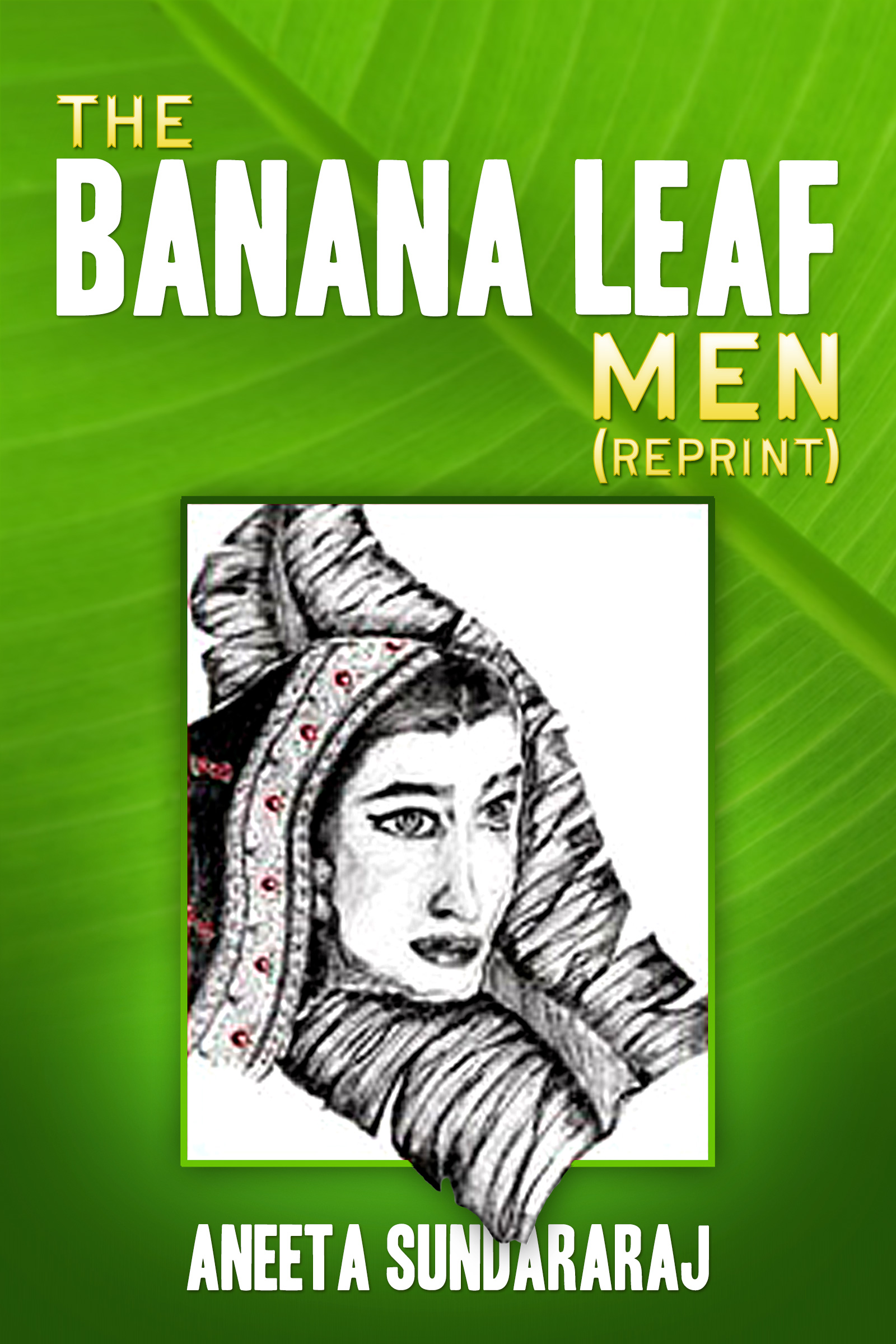
I left legal practice a long time ago.  I didn’t plan on a full-time career as a writer. I knew it would take me at least three months to find another job. So, I wrote the first draft for The Banana Leaf Men  I found that I liked ‘this writing thing’ and decided to try it for a while longer. I’ve never stopped.

The Banana Leaf Men (Reprint)

You are an experienced writer/journalist – what appealed to you about the challenge of writing for the RomCom genre?

This is a very good question, Valerie. I think that it wasn’t so much a challenge, but more applying all I’d learnt thus far. It starts with my need for variety. For instance, for years, I was a contributing writer for the Lifestyle section of the Sunday papers. This meant learning the art of writing feature pieces. When this sojourn ended, I focused on writing/fine-tuning the novel, which came with its own set of elements to follow. Then, I did something completely different and that was to pursue a PhD which meant returning to writing for academia. Once that was complete, I went back to fiction. This time, I focused on the short story form and creative non-fiction, like a piece called ‘Lord of the Ocean’. This story was about an invasion near my hometown that happened close to 1000 years ago. So, The Weathermen – A Love Letter was part reportage, part academic writing with a huge dose of all the elements of writing fiction.

 What challenges did you find or did the story flow naturally as the idea occurred.

The main challenge was to strike that balance between  having the courage to tell the story, still respect the practices of the East and make it all plausible for a Western reader. Nothing is worse than reading stories about a Malaysian or Malaysians that I don’t recognise. It’s painful! The best example from The Weathermen – A Love Letter is when a spiritual master asked Anjali if she was ‘clean’ to make sure that she wasn’t on her period. I understand the religious strictures at play. However, ask any Indian girl how she feels when she’s asked this question in the presence of men and I guarantee her honest (operative word, here) answer will be a negative one. If she’s ‘dirty’, she cannot step into a spiritual centre or temple and is only good for sweeping up rubbish. We girls are taught to hide our shame, but I often wonder how a man would like it if I asked him, “Are you clean?” My challenge was to write this without causing maximum offence.

Whenever I’ve faced such challenges, I think of two things. One is that there must be readers like me elsewhere who are open-minded enough to appreciate the practices of others. I mean, if I can accept reading stories about stigmata and what people put themselves through during Easter, why can’t others understand what my people will put themselves through in the names of faith and religion. Second, I go back to the British television series, Yes Minister and Yes, Prime Minister. The topics discussed were always so serious, but the writing was entertaining and everlasting.

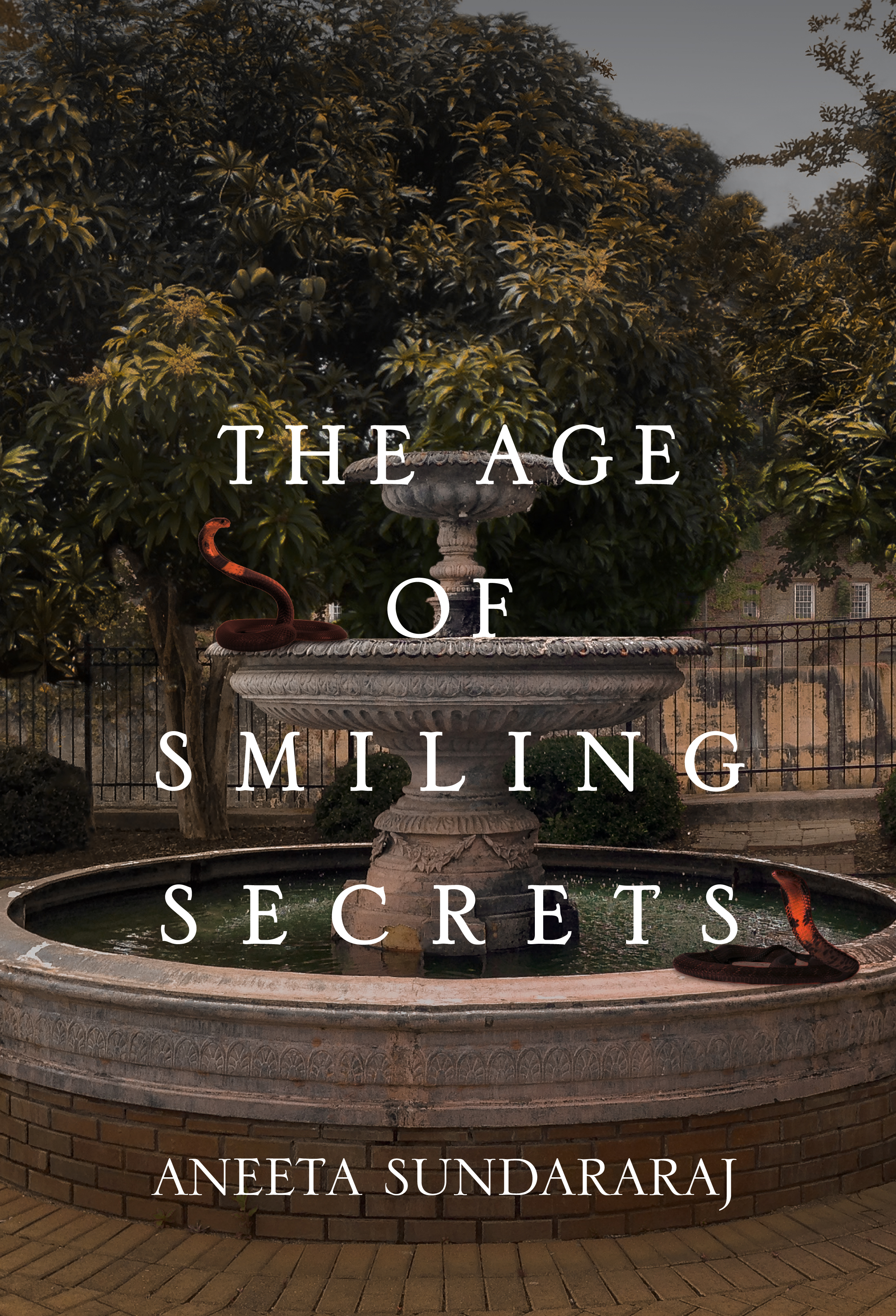
The Age of Smiling Secrets is an intriguing title – but the topic covered is very serious and highlights the problem of having religious law running alongside that of the country’s High Court, where the two can give conflicting outcomes. This is obviously a subject that is close to your heart. Why did you decide to write a fictional tale to illustrate the issue?

Thank you for saying that the title of The Age of Smiling Secrets  is intriguing.The Age of Smiling Secrets

I started to think about this story as early as 2005. As you’ve said, Malaysia is in the unique position where both the laws of Syariah and the Civil Law are practised concurrently. It was only a matter of time before conflicts about which jurisdiction should apply would arise. For ease of reference, my fictional story is based on the legal position when such conflicts arise. It’s about a family torn apart when a man converts to Islam and, without the consent or knowledge of his wife, converts their child as well.

As a lawyer, I understood the position of every person involved in this drama from the lawyers pursuing and defending the case, and the judges who had to hear the arguments from both sides, to the plaintiff, defendant and the children.

No one I know has ever looked at the all the emotions at play such as love, loss, betrayal, sacrifice and so much more. What happens when everyone returns home after a day in court? What does a parent say to the child at bedtime? “You’re my baby, but the court said you’re not.” How does the wife reconcile with the fact that the man she married is no longer her husband, or vice versa? And that’s simply because a court that has no jurisdiction over her says so? Why is the second wife accepted as a legal wife in one court and the husband is committing bigamy in another? Why is the child of the second wife considered legitimate in one court and the child of the first wife is considered illegitimate in another? Worse, how on earth does a parent explain all this to a child?

I cannot imagine what it must be like for a mother when the laws of the land allow her child to be taken away from her. So, these are the emotions I wanted to explore.

I must add that I remain surprised at how successful the publication of The Age of Smiling Secrets has been. I didn’t make much effort submitting the manuscript to agents/publishers after one of them asked me to fundamentally change the story so that a British reader would ‘get it’. It implied that the average British reader was too dumb to understand the conflicts that would arise and use of local lingo. I knew that this wasn’t the case. And after ten years of the story ‘percolating and marinating’ in my psyche, I wanted it published. So, I didn’t bother with the British publishing industry, stuck to the story I wanted to tell and worked with the wonderful team at MPH Publishers in Malaysia. I am not at all active on social media and I didn’t take part in the kind of publicity that I’ve seen so many authors do. I was, therefore, pleasantly surprised and delighted when the novel was short listed for the 2020 Book Award organised by the National Library of Malaysia. Furthermore, since it’s publication, edited versions of various chapters of this novel have been periodically included in various anthologies published internationally. Many readers have written to say that they cried at the end of reading the novel. Like all my books, once the first print run was over, I didn’t bother with another one. I’ve just placed them all on Amazon.com.

What is next for Aneeta?

I spent 2022 learning about submitting my short stories for many online competitions and literary journals. I figured out what it was like from the inside and, now, I’d like the chance to give back to others. So, together with a few friends, I’m using my website to host a short story competition. It’s called ‘Great Story Competition’ and we will open for submissions shortly.

Thank you, Valerie, for this chance to share my stories with you.

You are very welcome. I wish you every continued success with your projects and a happy and healthy 2023!

My thanks to Trisha Ashley Ashley gardn forgotten wishes author Margaret James 1A and to Margaret Jamesfor their kind comments and the team at Creative Writing Matters

Please like if you found this interview interesting or inspiring and leave any comments or questions below.

Check out my manuscript appraisal page, or please contact me, if you have a project you would like professional help with.

Happy writing!


Catching up with Heather, Digger and Biscuit!

image1

So much has happened since 2020! How have you coped through the pandemic?

I returned home to the UAE after a brief visit to London in February 2020 just as the first reports of coronavirus were emerging. I don’t think any of us realised what lay ahead for the world. By the end of March, we were in lockdown and home working became the norm. As a writer, that wasn’t a big change for me but like many people, it was not having the choice to go out or meet people that was really difficult. A vaccine programme was rolled out very quickly and I managed to avoid catching covid until a visit to London in November 2022!

image0

I loved the Digger and Biscuit story that you were developing when I first met you as your online tutor. How has the series developed since then?

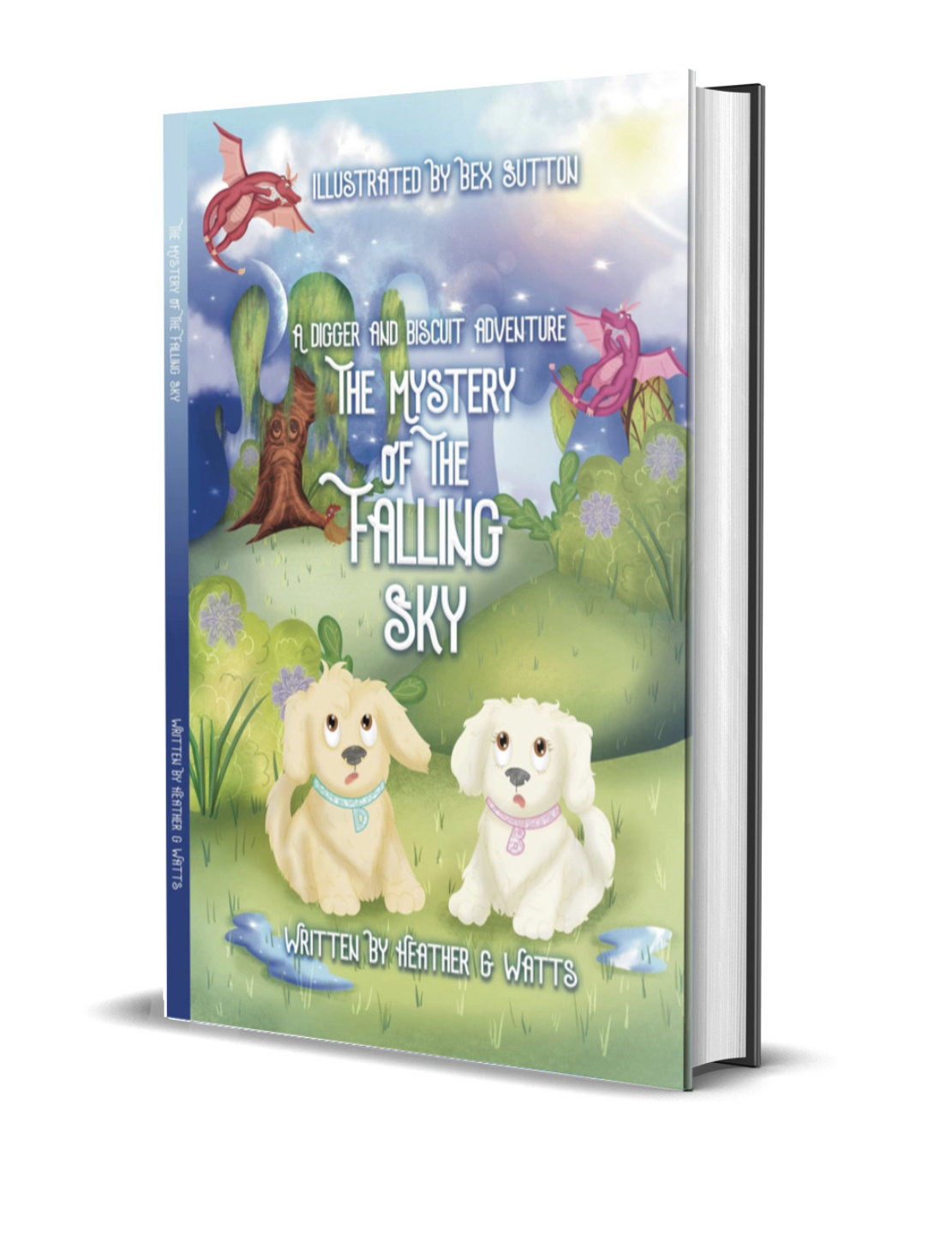
During the pandemic, writing provided a wonderful escape into magical worlds. I wrote, edited, rewrote and refined Digger and Biscuit’s third adventure which was published in September 2021. Our intrepid adventurers find themselves in a race to save Fairy Tale Land before the sky completely tumbles down.

Do you have plans for further adventures?

Our adventurous duo are helped by some friends from their previous adventures as well as new characters, including The Three Little Pigs, marauding dragons and Rapunzel. Of course, things never go smoothly for Digger and Biscuit, and they are pursued throughout by a shuffling – scuffling – creeping – peeping – scribbling – scratching sound…

For those that are familiar with the first two books, the third book delves more closely into the mysterious background of Fizz the Camel – and just why a camel is living in a castle with two pups and the magical Missy.

It was great to work with the very talented Bex Sutton again and all three books are now available featuring her beautiful illustrations in either colour or black and white.

During the pandemic my husband and I decided that after nearly eight wonderful years, it was time to return to the UK from Dubai. Since we returned in March this year it has been a whirlwind of house hunting, moving and unpacking!

As I was sorting through boxes, I found a notebook with the first draft  Digger and Biscuit’s fourth adventure. I thought the series would be a trilogy, but once I’d finished The Mystery of the Falling Sky, I missed Digger and Biscuit. Their fourth adventure sees them on a quest to solve a series of riddles and try to find out why everyone in Fairy Tale Land is disappearing and taking their stories with them. I’m really looking forward the seeing where this adventure takes them in 2023.

You are obviously a dog-lover, were these two lovable characters based upon your own pets?

As a dog lover, Digger and Biscuit’s antics are very much influenced by my own Golden Retrievers. Their games, interactions, personalities and love of all things edible, can definitely be seen in Digger and Biscuit. Our new home has a large garden which is already covered in holes from someone digging and there are toys scattered across the grass from games of tuggy! We have quite a few trees so chasing squirrels has become their new fitness craze. They’re so happy and excited, I haven’t the heart to tell them that the squirrels really don’t want to play with them.

As a teacher, I had a dog puppet called Digger who was part of our class. Digger would help by modelling learning and often the children would teach Digger. They loved seeing him grow in confidence and learn new skills. Digger was very mischievous, which of course, the children found very funny and they were so proud when he mastered a new skill.

Digger doesn’t always get things right, but he tries hard and he’s very loving and loyal to his friends and sister – despite some sibling rivalry. So yes, the characters of Digger and Biscuit very much grew from my own dogs and the characters created when I was teaching. I think Digger and Biscuit’s characters continue to evolve with each adventure.

This slideshow requires JavaScript.

Who are the intended audience for your books?

I wrote Digger and Biscuit’s adventures as a bridge between picture books and longer chapter books. There is a stage when children enjoy longer stories with more complex plots but they don’t yet have the fluency and resilience to read them themselves. They are written to be read aloud by an adult and children can then reread them independently. Each chapter takes around fifteen minutes to read aloud so they are ideal for bedtime or Storytime. Although aimed at ages five to nine, they are very popular with adults too as they are fun to read aloud and have twists and references to keep them entertained.

Recently I have been attending Christmas Fayres and it has been a real pleasure meeting different people and chatting about Digger and Biscuit’s adventures.

I wish you and Digger and Biscuit every continued success!

You can follow Heather on both Facebook and LinkedIn as Heather G. Watts, Instagram: Diggerandbiscuitadventures, Twitter: @diggerandb or via email at diggerandbiscuit@yahoo.com

If your New Year resolution is to finally write that story or book, then visit my manuscript appraisal page.

Heather’ ‘s testimonial.

Wishing you all a happy, healthy and successful 2023, wherever in the world you are!

Catching up with M.A. Nichols!

Welcome back, Melanie!

Headshot (Official) - Cropped

Since your Sept 2020 interview, when the UK thought Covid was on its way out – we have had two further lockdowns – how did you fare in the States?

I live in a sparsely populated state, so my experience is certainly different from a lot of others. My city had a couple of lockdowns, but at this point, it feels like a lifetime ago.

Did you make it back to the UK for your research trip?

I did! I recently made the transition to full-time author and said goodbye to my day job. A few weeks after that, I flew out to the UK and spent two months traipsing around the country. I’ve visited a couple of times before, but I really wanted to spend a lot of time there, immersing myself in the history. There are so many amazing estates to tour and museums to see, all of which have information and experiences I can’t get from studying books.

Congratulations on making this the full-time day job.  What lovely historic sites did you visit?

I spent one month based in London, but then hopped the train out for day trips to Bath, Bristol, York, Plymouth, and a handful of other places. Then, I spent the second month moving all over the place, spending time in the West Country, the Midlands, Wales, Scotland, and Ireland.

What in particular inspired you?

If I were to share all the things that inspired me, I’d end up writing an essay. This was my second major research trip to the UK, and every time I find so many details and historical titbits that spark ideas. If I had to list some of the most inspiring things I did, I would say the Plymouth Historic Dockyards, the Royal Opera House Tour (and going to see a couple of performances there), the Theatre Royal at Drury Lane Tour, the London Canal Museum (and tunnel boat tour), the National Railway Museum, and…if I don’t stop now, I’ll end up listing every museum I visited.

And all the amazing ruins… *sigh*

Of course, the historic estates, houses, townhouses, and the like are super important for my research. I took over 11,000 photos and hundreds of pages of notes, most of which are all the little details I find when I’m wandering those historic properties. The sights, sounds, smells, and all the other possible descriptions that can later be used. I’m not a very visual person when I’m imagining my stories and don’t generally see clear, vivid pictures in my head, so I use those photos to help me design and describe my books’ locations.

Oh, and in a very real way, that trip inspired a scene in my latest book, “To Have and to Hold.” I needed a picnic scene, and I had visited quite a few ruins on this trip. I ended up creating a fake one (since the area in which my book is set didn’t have any readily available ruins that suited my needs), which was an amalgamation of two ruins I’d visited.

I love the new cover designs – what was their inspiration?

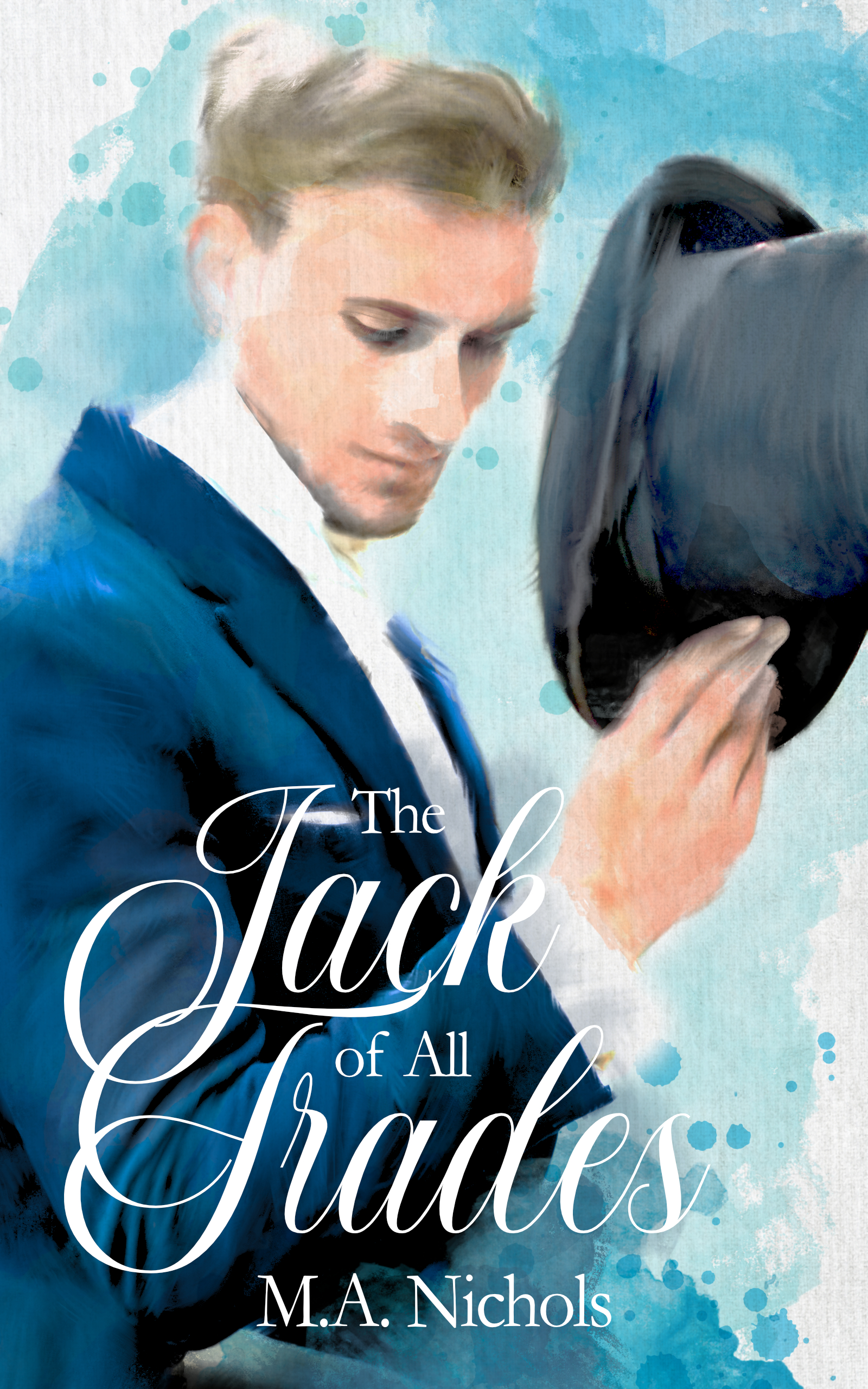
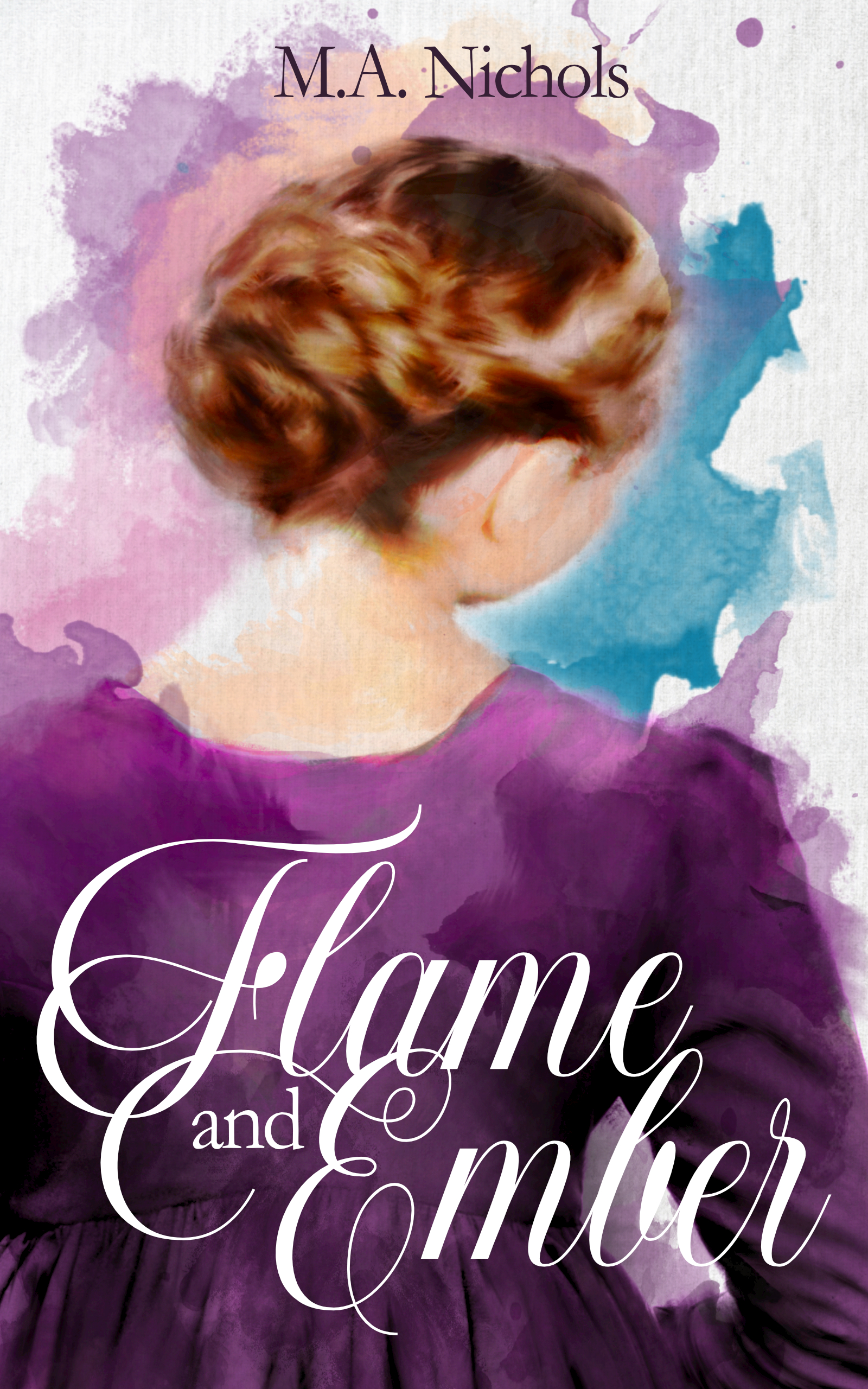
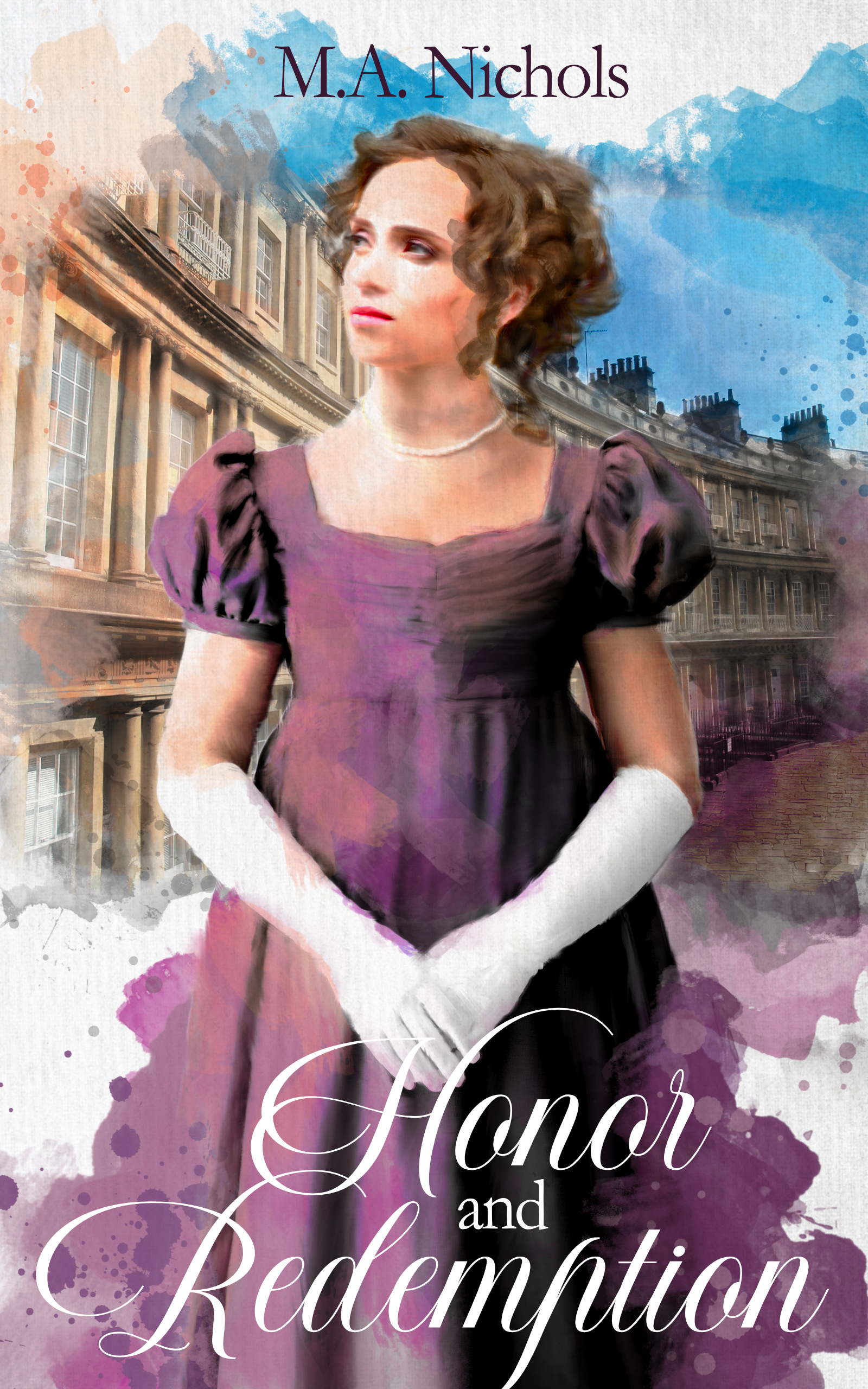
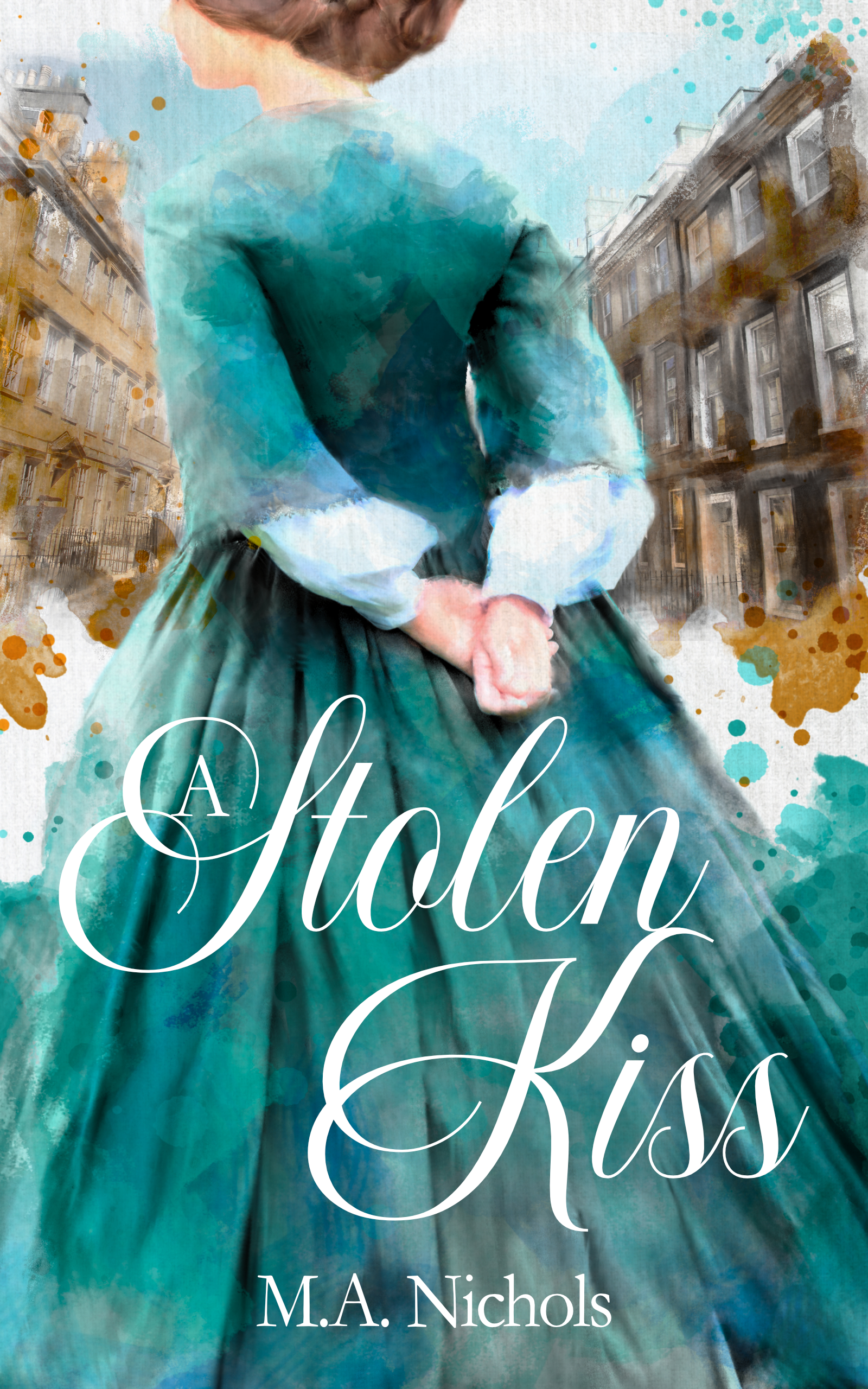
Honestly, part of the inspiration was that I wanted a style that would be easy to manipulate. Swapping out the model’s head or hands or some other feature can look weird if not done right, so adding the watercolour style over the top makes it easier to Frankenstein an image together from different bits and make it look uniform. Not to mention, finding male historical stock photos can be difficult, and even when you do, I think they often look slovenly or not period accurate. With this style I can use historic paintings for their bodies. For example, on “The Shameless Flirt,” the male torso is actually from a painting and the head is from a stock photo.

8 JAT

But also, I just really love it. I spent months playing with different ideas and styles, and one day, I stumbled upon some stock photos that someone had manipulated into looking like a painting. I watched a bunch of YouTube videos on how to do it, experimented a ton, and came up with the style.

Have they proved successful?

Depends on what you define as successful. Financially, they haven’t helped my sales, and in some ways, I worry that they may have hurt them a little. While being unique seems like a good thing, a common bit of advice to cover designers is that you don’t want to do that. If a book looks too different from the rest of the genre, it may turn off readers. So, yeah. I worry about it.

Artistically, I love them, and I’m so proud of the work I did on them. It was a massive effort to get them to where they are, and I have no interest in changing them again. And while some fans say they like the old ones better, most love them, too.

And they definitely fulfil the original purpose that inspired me to make the change in the first place. They’re more work, but I have a lot more artistic freedom when it comes to the base photos I use.

I think they look fresh and attractive!

I was recently at the Historical Novel Association conference in the ancient city of Durham and the question of how much time authors spend on social media came up. Do you think of social media as a friend or foe?

A bit of both. Personally, I’m not a fan of social media. I don’t use them in my personal life at all anymore because I prefer personal contact. But as an author, I use it all the time. I don’t view it as a marketing platform in which I can find new readers but as a place in which I can connect with my readers and fans. One of my favourite things to do is sharing behind the scenes info or research titbits. All those little things that are interesting to me an author but never made it onto the pages of my books.

It is a bit of a chore for me at times to come up with content, but I’ve developed a system that works for me.

http://www.dreamstime.com/stock-images-romantic-bun-rear-view-he

How do you split your time between research/writing/ marketing?

I write every work day. Or I try to. I need an outline before I can write, and that isn’t always ready when I’m sitting down to start for the day. Generally, that takes up 3-4 hours a day. Then I spend the afternoon editing, outlining, researching, and any other prep work so that the next day I can sit down and write.

Generally, I do my marketing in the evening. A lot of it is stuff I can do while watching TV, so I’ll take my laptop down to the couch and relax while I input stats, work on my ads, or create social media content. This isn’t something I do every day. I’ve always heard that the best marketing is putting out a new book, and I ascribe to that mentality. I do a few traditional marketing things, but I try to keep it to a minimum and focus on creating new stories.

Researching is something I try to fit in wherever I can. Sometimes it happens as I’m writing or creating an outline, when I realize I need to know something. But often, I’m just always trying to watch documentaries, read books, listen to podcasts, and learn stuff I don’t know that I don’t know. You can’t learn it all, but I try to keep learning new things because I never know what’s going to spark an idea.

4 H&R

What are you currently working on?

I’m writing my first Christmas novel, “The Christmas Wish.” It’s part of my Victorian Love series, and I’m outlining my next project, which will be my first novella. I’ve wanted to try my hand at shorter stories because I have some ideas that just won’t work in a longer format, and I think now is the time to do it. I’m not entirely sure what it’s going to be because I have a lot of ideas right now, but we’ll see. I don’t always know what I’m going to write next until right before I need to start writing the 1st draft.

What is next?

Now that I’m writing full-time, I’ve put together a pretty amazing publishing schedule. I’m alternating between novels and novellas, and the plan is to publish 4 novels and 4-5 novellas in 2023. While I am focused on Regency & Victorian right now, I would like to branch into historical western romance sometime in the near future. And maybe a bit of historical paranormal romance maybe…

What can I say? I’m an eclectic reader, and I like writing in different genres. I started off in fantasy and would love to do more with it.

You are certainly inspiring. I wish you every continued success with all your projects.

Thank you for taking time out of your busy schedule to do the interview.

5 ASK

Meet award winning author, USA Today bestseller, Evie Dunmore!

Evie Dunmore,  USA Today bestseller.

Welcome, Evie!

When did your love of novels, especially of the romance genre, begin?

My love for novels began when I could read, so, age five. I fell into the romance genre in my mid-twenties when I was working and commuting very long hours and was very receptive to the escapism romance novels offered. I noticed that no matter how dramatic the novel, as long as I could rely on there being a happy ever after, I could just switch off for a few hours. I never looked back.

What is the attraction of the Victorian era that so appeals to you?

It was a time of great economic, social, and technological changes, which gave rise to social movements such as the women’s rights movement and the labour movement that we still benefit from today. It means I could write heroines who are authentic and plausible for the era all while I can still find myself relating to them 140 years later. In a way, it allows me to explore how far we have come, and which issues remain that some people have already tried to change for more than a century.

UK_Cover

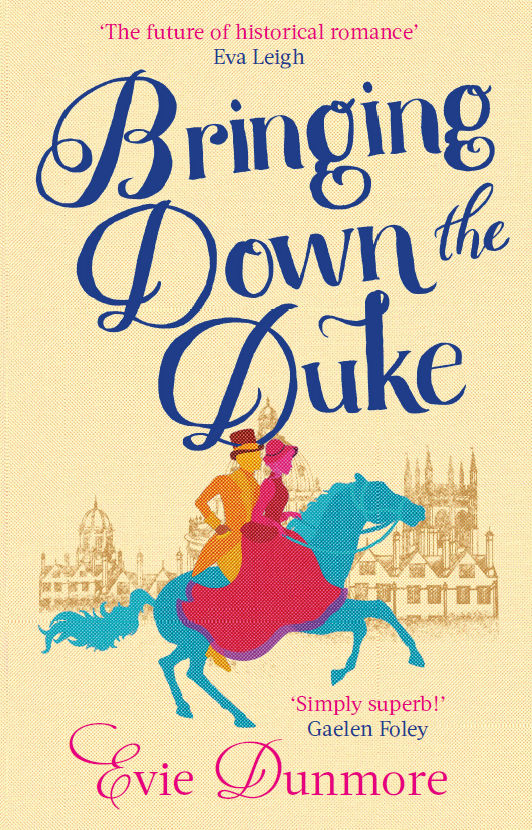
Bringing Down the Duke is the first engrossing novel in The League of Extraordinary Women series. The attraction between the two main characters is undeniable and absorbing. The protagonist attends Oxford against her family’s wishes, by being offered a scholarship from the Suffragettes. Is the series based upon the unsung heroines who paved the way for women today?

It is not based on any woman in particular but is certainly inspired by the first group of women students at Oxford and by the early suffragists, and their many allies whose names we will never know. The fight to access higher education took women decades; even after women had enrolled at Oxford for the first time in 1879, it should still take another 40 years before they could sit the same exams as the male students. The fight for women’s rights, especially the right to vote, was even longer, going back to the 18th century to Mary Wollstonecraft if you will. We hear quite a lot about the suffragettes, the militants of the Edwardian era, but countless women before them laid the groundwork for the charge and I loved learning more about them and their tactics while I wrote the novels.

Which three of the many ‘extraordinary women’ from the past do you admire the most and why?

Looking at the late Victorian era/early Edwardian era, it would be Annie Kenny, Christabel Pankhurst, and Cornelia Sorabji.

Annie Kenney was the only working-class suffragette to ever hold a leadership position in the suffragette movement after working her way from a Northern factory up to travelling the world and talking to heads of state for the cause. She was responsible for the incident that turned some suffragists militant and caused them to form the suffragette branch. She was also very likely bisexual. Her autobiography was fabulously insightful and stayed with me for a long time. She came across as incredibly loyal, brave, and funny.

Christabel was the strategic head and in some ways the heart of the suffragette movement. She held a law degree from Manchester University though as a woman she was not allowed to practice law at the time. What impresses me about her is the mix of both fanatic grit as well as level-headedness which she displayed for the entire duration of the movement.

Cornelia Sorabji was the first woman of colour and first female law student at Oxford University in 1889. When she arrived at Oxford, she already held a first-class degree from Bombay University, and she successfully fought tooth and nail to be treated like her fellow male students at Oxford. Back in India, she was not allowed to practice law for over a decade, but she found her own niche to assist women and girls in legal matters and had over 600 female legal wards and several successful pro-women social policies under her belt by the time she returned to Britain in her later years.

You have a personal connection to Oxford University having studied for a master’s degree there and an advanced creative writing course. From your experience, would you say that women academics have achieved equality there alongside their male counterparts?

A lot of brilliant women are hard at work at Oxford and fill important positions; since 2016, we even have a female Vice chancellor (Louise Richardson). My heroines would love to see it. However, personally I think female academics won’t achieve real equality in the workplace as long as they are compelled to choose between family and an academic career, or have to somehow juggle both, as this is something their male counterparts still don’t really have to worry about unless they are committed to fully sharing the care-work out of principle. The statistics still show a sharp drop in female academics from third year PhD to actual tenure, and we can already see that the pandemic disproportionally affected the output of female academics. Successful academic work requires you to think original thoughts and to write cutting-edge papers. It’s harder to do that amid years of sleep-deprivation and a mind loaded with other people’s needs and schedules. Without fathers stepping up or affordable external assistance, we’ll always have shining examples of some women having it all, but the overall statistics will probably continue to tell a different story.

Rogue

How challenging was and how did you go about writing the perspective of Queen Victoria in Bringing Down the Duke?

I had read her letters to her acquaintances where she raged about women’s rights activists and called for them to be whipped. Her official stance was also anti-suffrage and minced no words. Her close friendship with Disraeli and her behind-the-scenes meddling in politics when she was younger, is also no secret. It therefore wasn’t challenging as I put words into her mouth she herself had either written down verbatim or were very much in the spirit of her position. I guess it helped that I always had her actual photographs before my mind’s eye rather than the TV version played by the lovely Jenna Coleman.

Did it surprise you that such a prominent female monarch did not support women’s rights?

Not really. The queen saw herself as set apart from regular humans, and the dividing line between progressive people and those who want to keep things as they are does not neatly run along gender lines, it never has. A lot of women back then felt more comfortable with upholding the structures that suppressed them and harnessed the narrowly defined power allocated to the role of mother and wife instead. And sometimes, women’s reasons to be anti-suffrage were simply due to clashes with their other interests. For example, the Royal Society for the Protection of Birds was founded and run by women in the late 19th century, and they were anti-suffrage. Why? Because the suffragists and later suffragettes continued to use plumes as accessories.

How have you kept mentally and physically fit during the recent pandemic?

Unfortunately, I didn’t do a good job on either front, so I’m afraid I have no valuable tips to share here…

When life returns to the new ‘normal’ what do you look forward to doing when not writing or researching?

I look forward to the brain fog lifting. An end to this limbo of being unable to plan anything with certainty, all while we can’t really be spontaneous, either. I look forward to not having to worry about schools shutting down again and how the kids are affected by the situation; or about loved ones falling ill. I’d love to ditch the mask, and to hop on a train or plane to see family and friends I haven’t seen in nearly two years. I would like to offer my readers an in-person book signing. And I want to go to the movies and eat popcorn and not flinch when someone in the row behind me coughs.

Scotland_1

When and where did your affinity with Scotland begin?

I think it began when watching nature documentaries about the Highlands when I was a child. It was sealed when I moved to Britain and dated a mountaineer from St Andrews. The first time we entered Glen Coe around 15 years ago, it literally took my breath away. I felt moved to tears, it felt like coming home, when I had no prior connection to the place. Odd how that happens sometimes. Before the pandemic, I would regularly go up to Scotland a few times a year to stay with friends and to go hiking. Edinburgh is my favourite city in the world. I have been invited to RARE, a big romance author event, in Edinburgh in 2022, and I can’t wait to go and meet readers and colleagues.

Scotland_2

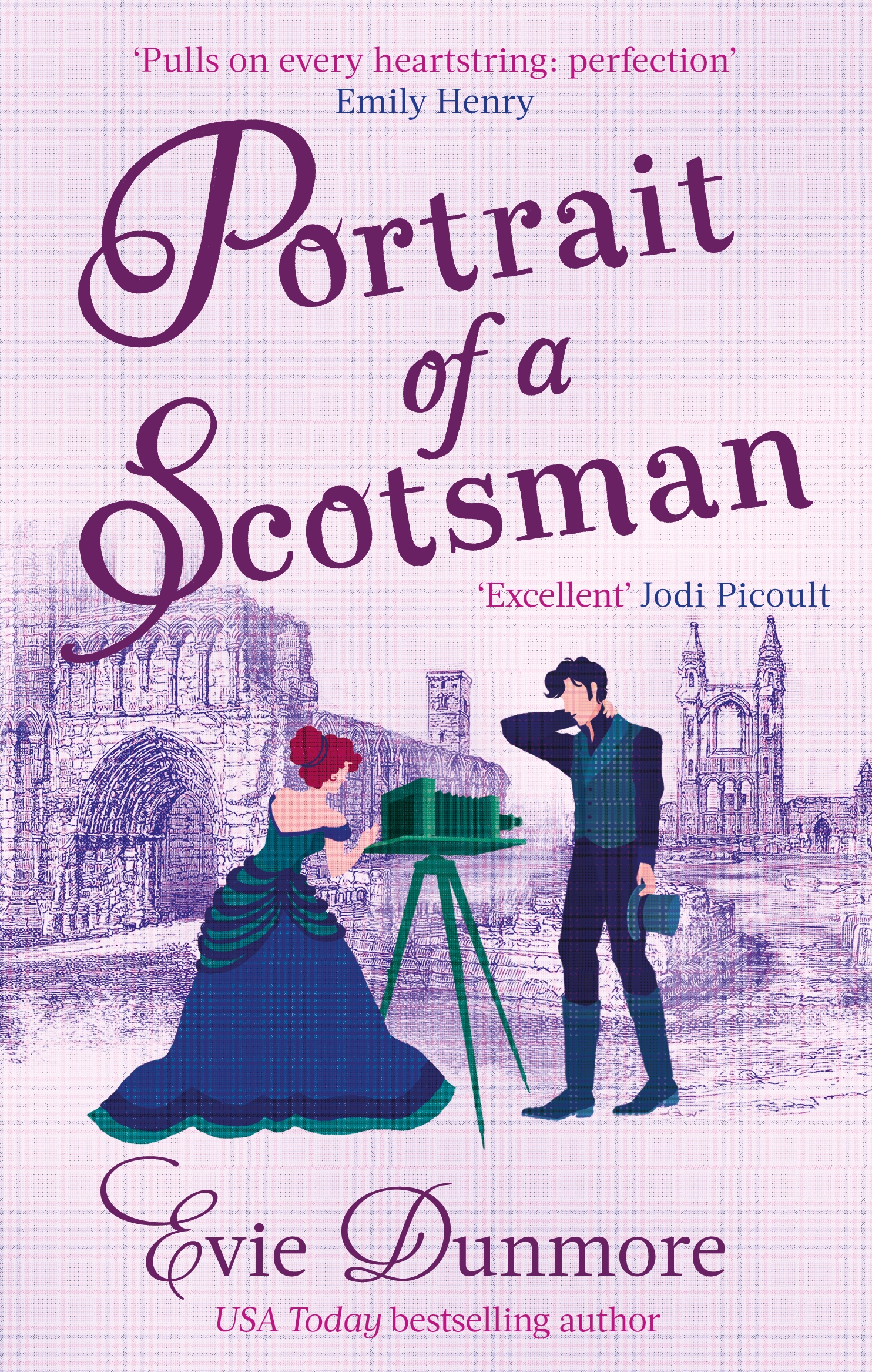
The Portrait of a Scotsman (Published 7th September) has a Scottish hero, when and where did the inspiration for this novel begin?

Inspiration for the story sparked during my research for my debut Bringing Down the Duke, where I came across photographs of Victorian women in trousers. The women in question were pit-brow lassies—they worked on the coalfields and frequently underground. Their existence was entirely at odds with the ideal Victorian image of women as the dainty Angels in the House, and I knew I wanted to highlight these remarkable women in one of the books in the series.

This, and my love for the Hades and Persephone myth, come together in the hero, Lucian Blackstone, a successful self-made Scotsman who he began his journey underground in a Scottish colliery.

Scotsman

What is next for Evie?

I’m currently trying to finish the fourth and final book in the series, and I for the last year I have been playing around with an idea for a fifth book. We’ll see what comes from that.

Thank you for taking time out of your busy schedule. I’m looking forward to reading Portrait of a Scotsman!

Meet Regency author, Natalie Kleinman

Author image - Natalie Kleinman

I am delighted to welcome fellow Sapere Books author, Natalie, to chat about her new release.

With publication of The Girl With Flaming Hair only a few days from now, what plans do you have for launching it on its way?

I’m so delighted with the cover image – she may not be Helen of Troy but she’s beautiful nonetheless and I will be sharing her on social media, primarily Facebook and Twitter. I’m also lucky in that Rachel Gilbey (Rachel’s Random Resources) has organised a blog tour for me which will begin on 18th June. Bloggers and reviewers are so generous with their time and I’m especially grateful to them, and to you. There will be ongoing news as well with giveaways and competitions for those who subscribe to my newsletter.

The Girl With Flaming Hair Full Tour Banner

Everyone’s route to publication is different – what was yours?

An unexpected one! I’d finished studying with the Open University and was looking for something to occupy my little grey cells so I joined a ten week creative writing course run by my local council. What a magnet that turned out to be! Fast forward through various interest groups until in 2011 I discovered The Write Place (TWP), a creative writing school not too far from where I live. Up to this point I’d been writing short stories but I was made to wonder if I couldn’t write a book as well. Since then I’ve written fourteen though three will never see the light of day but I’m grateful to them – they were my learning curve. I found out about the Romantic Novelists Association from TWP and joined their New Writers Scheme. You may imagine my joy when my first submitted book, a contemporary romance, was taken up by a publisher and I graduated the scheme in the first year. That was in 2014.

We both share a love of Regency with our publisher Sapere books, but when did your love of the period begin and sustains your interest with it?

I must have been about eleven at the time and I have my mother to thank, as do so many others theirs, for it was she who handed me my first Georgette Heyer. It’s never palled and I’ve had books fall to pieces in my hands, not from abuse but because they just weren’t up to the number of times I’ve re-read them. When that happened they were replaced. Some outstanding productions have illustrated how well stories in this genre translate to the screen. And recently Bridgerton did a great job of raising the profile of Regency romance.

You have written many short stories. Do you enjoy switching between the two disciplines of writing short and long fiction?

I love them both and they are entirely different disciplines. It’s wonderful to create a world in just two or three thousand words and very satisfying. I’m very grateful that my stories have been enjoyed by so many. Long fiction gives the opportunity to develop one’s characters and, as my stories tend to be character-driven, that’s of huge benefit to me and the way I write. I just have to be careful they don’t start writing themselves as they have a tendency to run away with the plot.

What has been a member of the RNA meant to you?

The RNA is a place for making friends as well as acquiring knowledge. Writers tend to be pretty genuine people and very ready to help each other. Consequently, having attended numerous conferences, workshops and chapter meetings, I’ve had the chance to meet, to learn and to move forward. Everyone is so kind. Maybe it’s the romanticism in us.

How have you kept mentally and physically fit during lockdown?

Does one out of two count? I loved sports when I was younger but I’ve never been a fan of what I think of as gym-based exercise. I have disciplined myself to do online exercises but I know they are the barest minimum. Mentally though I’m so very grateful for my occupation. What better than losing oneself either in one’s own creation or in that of another author? Other time periods, science fiction, cosy crime, they’ve all taken me to places I wouldn’t otherwise have visited. And Zoom and other video links have been invaluable.

What is next for Natalie?

Exciting times for me. You will know that Sapere recently published The Reluctant Bride. Well, after The Girl With Flaming Hair there are three more in the pipeline so I guess I’ll be pretty busy for the foreseeable future.

The Reluctant Bride Cover

Thank you so much for having me on the blog today, Val.

Natalie

You are very welcome!

About The Girl With Flaming Hair:

While driving his curricle, Rufus Solgrave, Earl of Luxton comes across Sophie Clifford lying unconscious in the road, having fallen from her horse. Not too far from home, he takes her back to Ashby, his country seat, leaving her in the care of his mother, Elizabeth, Countess of Luxton, and his sister, Lydia. Under their kindly supervision, Sophie soon begins to recover.

Upon discovering that Sophie has never mixed with London society, Elizabeth invites her to accompany the family to town for Lydia’s come-out. Unhappy with her home life and eager to sample the delights of the season, Sophie accepts. However, her enjoyment is marred when talk of an old scandal surrounding her birth resurfaces. What’s more, her devious stepbrother, Francis Follet, has followed her to London, intent on making her his bride.

Sensing Sophie’s distress, Rufus steps in to protect her from Francis’s unwelcome advances. And although neither Rufus nor Sophie are yet thinking of marriage, both soon begin to wonder whether their comfortable friendship could blossom into something warmer…

About Natalie:

Natalie’s passion for reading became a compulsion to write when she attended a ten-week course in creative writing some sixteen or so years ago. She takes delight in creating short stories of which more than forty have been published, but it was her lifelong love of Regency romance that led her to turn from contemporary romantic fiction to try her hand at her favourite genre. Raised on a diet of Jane Austen and Georgette Heyer, she is never happier than when immersed in an age of etiquette and manners, fashion and intrigue, all combined into a romping good tale. She lives on the London/Kent border, close to the capital’s plethora of museums and galleries which she uses for research as well as pleasure. A perfect day though is when she heads out of town to enjoy lunch by a pub on the river, any river, in company with her husband and friends.

Natalie is a member of the Romantic Novelists Association, the Society of Authors and the Society of Women Writers and Journalists.

Meet Clare Pooley – winner of the RNA’s 2021 Katie Fforde Debut Romantic Novel Award!

Congratulations and welcome to Clare, a worthy winner of the RNA’s 2021 Katie Fforde Debut Romantic Novel Award!

What was the inspiration behind The Authenticity Project?

The Authenticity Project was inspired by my own experience. 

Six years ago, my life from the outside, or on social media, looked fairly perfect – happy, healthy, organised and photogenic. The truth was very different. 

I was struggling with a terrible addiction to alcohol that was badly affecting my mental and physical health. I decided to tell the grubby truth in a blog which I called Mummy was a Secret Drinker. 

That blog saved my life, and transformed the lives of thousands of other people who read it. So then I started thinking: what would happen if other people were really honest about their lives with the strangers around them? That thought was my starting point.

What do you hope that people will take away from reading it?

There’s a Leonard Cohen lyric at the beginning of the book: 

Ring the bells that still can ring, 

Forget your perfect offering, 

There is a crack in everything,

That’s how the light gets in.

That quote seemed like a perfect summary to me, as when I finished writing the book I realised that each of the characters have a central flaw, but it’s those flaws that make them human, loveable and unique. 

I hope that people reading the book will decide to embrace their own imperfections and, maybe, to be more open and honest about them. When we pretend to be perfect, all it does is help make the people around us feel worse about themselves. When you make yourself vulnerable by sharing the truth, magical things can happen.

The Sober Diaries has been a very well received book that deals with a serious subject in an accessible way. How has having a keen sense of humour helped in dealing with life’s challenges?

The Sober Diaries covers the year I got sober, and was diagnosed with breast cancer. I honestly don’t think I’d have made it through that year if I hadn’t had a black sense of humour about the whole thing. Luckily my husband and my kids never let me take myself too seriously!


What has winning this award meant to you?

For so long, the characters I created in The Authenticity Project just lived in my own head and on the pages of my manuscript. 

I am constantly blown away by the fact that they are now out in the world and that other people have embraced them and loved them like I do. This award is really the epitome of that. 

And I’m particularly happy to have won the award this year – the year of the pandemic, as I believe that we all need fiction more than ever right now. At a time when we can’t travel, when we’re isolated and missing ‘real’ life, stories provide such a valuable escape.

I was also thrilled that the award was sponsored by Katie Fforde, who I’ve admired for so long.

Are you a meticulous planner or do you like to write in a more organic way?

I’m somewhere in between! 

I have a rough plan – a beginning, middle and an end, and some sketchy characters, but I like to allow the characters to develop as I write, and then to help direct the action. I believe that the best writing happens when your characters surprise you! 

There’s a big twist towards the end of The Authenticity Project, and I think the reason no-one ever sees it coming is because I didn’t know it was coming as I was writing. I was as surprised as anyone else!

The house that inspired Julian’s

What key tips would you give an as yet unpublished writer?

My best tip is the same for unpublished writers and for people wanting to get sober: take it one day at a time. If you think about the whole task in front of you – writing 90,000 words – it can feel overwhelming. But the truth is, if you can write just one paragraph  you can write a page. If you write a page you can write a chapter. And if you can write a chapter, you can write a book…

Secondly, you need to show up. Writing is a muscle. You need to exercise it. Try to write every day, even if you end up deleting the whole thing once you’ve finished. It helps to have a regular routine. I’m a member of the 5am writer’s club. I find very early mornings, when the world is asleep and nothing has yet intruded on your day, the most creative and interesting time to write.

Thirdly, remember that all first drafts are AWFUL. Just get the story down on the page, then once you know what you’ve got, you can go back and edit it. It’s a bit like painting a landscape: you do a rough pencil sketch first, then you go back over and over again adding light, shade, depth and colour. If you worry about making it perfect as you’re writing, you’ll end up paralysed my fear and doubt – I’ve been there!


How have you coped/worked throughout lockdown?

I have a husband and three kids who’ve all been working or schooling from home, plus two terriers, so it’s been chaos! 

Trying to find the physical space and the headspace to work has been really hard. Sometimes I end up working from the bathroom! 


In early lockdown, I completely lost the ability to read or write, for the first time in my life. I spent my whole time doom-scrolling. Luckily, as the news improved, my reading and writing mojo returned. 

What have been the highlights of your career to date – other than winning this award? 🙂

The Authenticity Project was on the New York Times bestseller list for several weeks, which was a real dream come true. I’m also thrilled that the book has sold to thirty-one different territories. I love seeing all the wonderful covers popping up, with titles in various languages, all over the world. 

What are you working on now?

I’m up to my eyeballs in the structural edit of my second novel. It’s not a direct sequel, but there are a couple of cameo appearances from characters you might recognise!

What is next for Clare?

You know, I would write every day even if I weren’t being paid to do so, so the fact that I am able to earn a living making up stories is a dream come true. That’s why I’m so hugely grateful to the RNA, and everyone who has bought, read and recommended my books. Thank you!


Thank you for such honest and uplifting answers.

Meet Carole Matthews – winner of the RNA’s 2021 Romantic Comedy Novel Award.

Welcome, Carole!Matthews summer days sea breezes author

How long has your road to success been from that first publication breakthrough?

I had my first book published in 1997, Let’s Meet on Platform 8, and since then I’ve written another thirty-three novels. I didn’t realise when I started that I’d still be around twenty-five years later.

SDSB cover

What has being a member of the RNA meant to you over the years?

Friendship and support. It’s lovely being able to mix with a group of like-minded people who are willing to share your successes and struggles. It’s a great asset for authors.

What was your reaction to firstly receiving the RNA Outstanding Achievement Award and now this one?

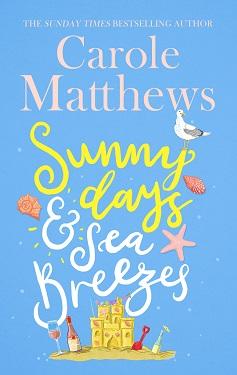
The Outstanding Achievement Award was wonderful. I shared the honour with Jill Mansell and we were both presented with our awards by Barbara Taylor Bradford which was amazing – what a woman! It’s very nice to be recognised by your peers. I received three nominations – two for Sunny Days & Sea Breezes, plus one for Christmas for Beginners which was a lovely surprise. To receive the award for Romantic Comedy Novel of the Year was such a thrill. Sunny Days & Sea Breezes has already proved to be one of my most popular books with readers and this feels like the ultimate stamp of approval.

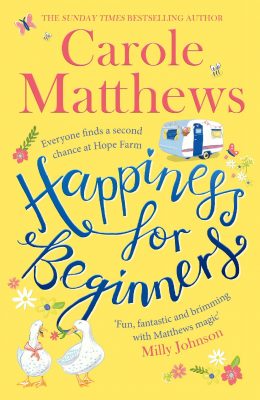
Happiness for Beginners was inspired by a real animal farm helping people – how do you balance the harsher realities and issues of life with a lighter touch to convey a heartfelt and serious theme?

That’s something that I’ve tried to do with all of my books and I think they reflect life in general. It’s not all ha-ha-hee-hee, but sometimes we’re able to see the funny side in difficulties. While my books are romantic comedies, I hope they reflect real life too. With Happiness for Beginners, the real farm helps people with behavioural and mental health issues, so that created the darker side of the book. They also rescued troubled and damaged animals and they definitely provided the comedy element!

Happiness (1)

Are you a detailed plotter or do you develop your work on the screen as you go and through revisions and edits?

A detailed plotter! As I’ve written two books a year for the last ten years, I don’t have the luxury of wondering what happens next – I need to know! I do, however, change and adapt as I go, but I start off with a definite beginning, middle and end. I spend about two weeks writing out character profiles and that helps me to get into their heads. Each morning, I start by editing what I’ve done the day before and then I have one final pass at the end. I do as little editing as humanly possible.

Your locations vary, keeping your work fresh and inspiring. Are there any that have been particularly memorable?

I have been fortunate to be able to base my books in some wonderful locations over the years. Part of With or Without You was set in Nepal and that was a very memorable trip. I loved every minute – the people and the culture are fantastic. I went to Swedish Lapland and stayed in the Ice Hotel as research for Calling Mrs Christmas and that was wonderful too. We had the most fabulous display of the Northern Lights – one of the highlights of my life. My latest, Sunny Days & Sea Breezes, is set on the Isle of Wight and I’ve fallen in love with the place and plan to visit time and time again. I must have described it nicely as many of my readers – and my editors – booked holidays there as a result!

You are a prolific author, but roughly how long does it take to do the research, writing, editing to final manuscript?

I’ve been doing a book every six months, so research, writing and editing all tends to roll into one. I’m usually researching the next book while writing the current one and editing the last one. I really wouldn’t like to see inside my brain!

All 4 confetti instagram grid

What is next for Carole?

Lots to look forwards to! The paperback of Sunny Days & Sea Breezes is out in May, so I’m looking forward to that. My publisher is re-jacketing and reissuing a lot of my backlist which is quite a job with thirty-odd books to do. The new-look Chocolate Lovers’ Club is out in eBook at the moment for 99p and the whole series will be reissued in paperback in August. This series of four books is among my most popular worldwide, so it’s nice to see them given a new lease of life. Later in the year – October – will see the paperback of Christmas for Beginners which was also nominated for an RNA award and sees another visit to Hope Farm.