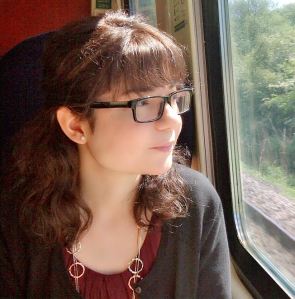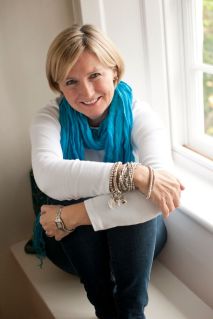
Meet bestselling author Liz Fenwick

Liz F3
Liz Fenwick


You grew up in Massachusetts, moved to the UK and now commute between London and Cornwall. Did you ever think that you would travel so broadly?

I grew up with an inbuilt wanderlust. My father had travelled a fair bit and I would spend hours looking at his slides and dreaming of a time when I too could venture forth. I hadn’t quite imagined that I would lead the travelling life I did for so long. I moved to the UK when I was 26 and that was when it truly began. I met the man who is now my husband of almost 28 years two weeks after I arrived in the UK. We married two years later and that was when moving about began in earnest. We’ve lived in Canada, Moscow, Houston, Indonesia and Dubai. While in those locations we explored as much as was feasible with three small children in tow. But of course there is still more travelling I want to do!

The variety of cross-cultural experience that this life-style has given you is amazing, but the love of Cornwall shines through each of the books you have set there. When did this love affair begin?

It began with my first trip there one hot weekend in June 1989. My boyfriend of just a few months took me to meet his parents…or so I thought. It was in fact the ‘Cornwall Test’. If I hadn’t fallen in love with Cornwall then we wouldn’t have married. I’m certain of it. But how could I not fall in love with bright blue skies punctuated with foxgloves, cliffs falling into the sea and hidden creeks caressed by low tree branches. Cornwall stole my heart and has never let go…even when the sky feels low and the mizzle is so dense I can’t see the bottom of my garden.

Could you explain how and when your first breakthrough as a published writer happened?

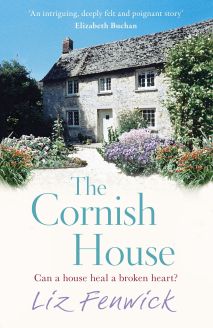
My first breakthrough was finding an agent. I had met Carole Blake on line first via Twitter then in person through a TweetUp. We hit it off on a social level and became friends over our love of wine, shoes and books. I was still in the process of finding my writer’s voice. Finally two years after we became friends I knew what my voice was and what I was aiming for. This coincided with me attending the first York Festival of Writing. There I was to pitch to someone else in her agency. I knew this person wasn’t the right agent for me but I also knew the book wasn’t ready…so it was more for the feedback. During our session he asked me why I hadn’t pitched to Carole…fear was the first thing in my mind. She was Carole Blake but in my heart I knew The Cornish House wasn’t what it could be. So I emailed her…knowing her colleague would feed info back to her, saying the book wasn’t ready but I was aiming for Daphne du Maurier meets Jodi Picoult or Cornwall with issues. She told me to send it to her when it was ready. That was April and in February I sent The Cornish House off to four agents, all who I had met through the Romantic Novelists’ Association. By lunch time I had my first request for a full…but I hadn’t heard from Carole. So I emailed her asking as a friend what should I do because her book From Pitch to Publication didn’t say. She emailed saying as a friend you inform the other agents. Three requested the full and by Saturday Carole had offered me representation. By St Patrick’s Day I had my first publishing deal with The Netherlands and in April I signed with Orion. That was the beginning.
Liz F 4

Of all the impeccable research you have completed, is there one project that has intrigued or surprised you more than you expected?

I loved researching The Returning Tide. I was terrified as growing up in the States the knowledge that people in the UK have is different and I was terrified of getting it wrong…I lost sleep over it. But I love research and my favourite part of the research for this book was interviewing four people who served during WWII. One of them lent me her diary from 1945 and I was able to see first hand how little everyone knew. This was my biggest struggle in the end. Today if a bomb falls we know minutes later. Then they knew only their part and nothing more….

Liz F1

You are a member of the Romantic Novelists’ Association – what does the organisation mean to you?

The RNA is my tribe. I learned so much there during my pre-published days, my apprenticeship. The published novelists were and are so generous with their knowledge. I know that this cut my time waiting for publication. I also know they have my back as I have theirs.

What was the most important piece of advice that you were given that you would like to pass on to as yet unpublished writers?

Don’t rush to publication. I wish I knew who gave me the advice but I am grateful. I would add to it take that time to learn about the industry…because once you are published it all becomes harder!

Each author has their own favoured way of working – would you share yours with us?

Ideally the idea for the story will have been in my head for a year or more. It will slowly build and then I will brain storm with my editor…I love this part. If research is required I will then do the minimum – just enough to write a fast and dirty first draft. This I learned the hard way. I love research and for A Cornish Stranger I thought the historical thread of the story would be about the SOE so I read extensively. I then wrote the story…it’s not about the SOE. So I wasted key time. Now I leave XXXX directly in the text to indicate that more is needed and fly on with the story. What I have discovered is in this more targeted research I have found things that enrich and twist the story…especially since by then I know my characters. Once I have the dirty first draft the real work begins. I write many drafts…not as many as I used to but by the time I send it to my editor this first time it will normally have been through four to six drafts. The final one of these edits will be having my computer read the story to me. Believe me you can’t hide from a clunky sentence, missed word or lack of transition when there is no emotion in the reading voice.

I used to dread the editing process but now I embrace it. With my editor’s input and my own (obtained from stepping back from the book for even as short as two weeks) I can see how to make the story better, stronger and more emotionally charged. So I will normally have two to three rounds of edits with editor then there is the copy edit (hate this bit…when I’m forced to look at the small stuff) and the final proof reading edit is always a bit lost on me…I can’t see a spelling mistake for love nor money. I’m dyslexic.

You are an inspiration to many as you have dyslexia. How much of a challenge has it been to write your lovely novels and overcome the difficulties that this may have presented?

Dyslexia has presented many challenges along the road to writing my novels. Not being able to spell has created two problems one of which has become a blessing. I cannot see a spelling mistake so I need to have someone proof read and a very understanding editor. This is a nightmare. My dyslexia can be so bad sometimes that I can’t look it up in a dictionary or spell it enough for spell check to even offer a possible spelling. This is so frustrating. It has made me many times select a different word, a simpler word. And this has been the bonus. My writing is simple which has brought me many readers who struggle with reading. Unless it is a necessary technical word or the character absolutely would say the simple word the vocabulary used in the books is basic. This means the story can be read by a larger audience. I never thought that my struggles with dyslexia would help others to access stories, but it has.

I was fortunate enough to interview the amazing Carole Blake shortly before her tragically early death. How much of an influence did Carole have on your career?

She was the ideal guide through my first years as a published author. Despite my time pre-published learning as much as I could there is so much to take on board and understand. She answered every question, went to battle for me, reprimanded me if I took a wrong step and laughed with me. She taught me to enjoy every step of the journey, toast every success no matter how small and not to sell myself or my work short. With each and every book she had to sell it back to me because I hated it by the time all the editing was done! She excelled at selling.

Hsjme3ug

Do you embrace technology and social media with enthusiasm?

Yes! As I mentioned earlier it was through Twitter that Carole and I became friends. I also love interacting with readers through the various platforms. It is also where I interact with other writers…making the work process less lonely.

What has been the highlight of your writing career to date?

There are two…the first was when a reader stayed behind at a talk and told me how a story I’d written had helped her. I stood there in shock. I had never imagined reaching someone so deeply. And the second was when The Returning Tide made the short list for the Winston Graham Historical Novel Prize.

What project are you working on now?

I’m doing the preliminary research on a novel that is located on both sides of the Tamar (yes leaving Cornwall briefly) and is set in WWI and the current day. More sleepless nights hoping I don’t mess up the historical details!!

What is next for Liz Fenwick?

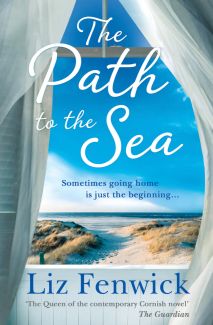
The Path to the Sea is out on 6 June 2019. It is a story of three generations of the Trewin women all with secrets. At Boskenna a large rambling house perched on a cliff above a Cornish beach on a hot August weekend in 2018 the past comes closer to the present. The youngest Trewin, Lottie, tries to keep her own secrets hidden as she searches for answers. But once she uncovers what happened in 1962 what is she going to do?


I wish you every continued success and am looking forward to reading The Path to the Sea!
www.lizfenwick.com
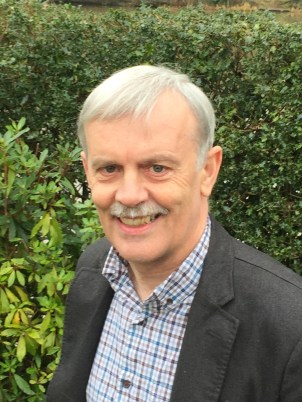
Liz F

Martin Edwards, chairman of The Crime Writers’ Association (CWA), explains what the organisation offers its members.

Martin 2017 1

‘The CWA is constantly expanding. So are the benefits we offer our members. Writing is a solitary occupation but we offer the chance to join regional chapters, attend our national conference, and receive an excellent monthly newsletter, Red Herrings – plus much more besides. Members value our various social media platforms, and the chance to promote their work to the large subscriber bases of the very popular Case Files and Crime Readers’ Association newsletter. But it’s the collegiate ethos of the CWA that remains its most valuable asset and benefit. In my 30 years of membership I’ve met many wonderful people, and made some very good friends. And their support, through good times and bad, is beyond price.

The CWA has changed a lot in the 64 years since it was founded by John Creasey. Although it is UK based the membership is international and is open to published crime writers, with provisional membership to writers who have a contract but whose book is not yet out: Full or Provisional Membership cost from £55 annually. There is also an option for associate membership for those in the publishing industry.

This does not mean that the aspiring crime writer has been forgotten.

We are keen to encourage new talent within the genre. The CWA is a professional organisation for professional writers, and others in the crime writing business, but – to take just two examples – the CWA Debut Dagger for unpublished novelists and CWA Margery Allingham Prize for new short stories both play an important part in encouraging and developing talent. We also have the CWA Criminal Critique service where, for fees beginning at £87 writers can receive professional feedback on, as yet, unpublished work.

The Crime Readers’ Association, which is free to join, was set up to make the authors, their works and events accessible to their readers. However, the new writer can pick up advice and tips, such as the Do’s and Dont’s when approaching a literary agent.’

Martin is very optimistic about the way the crime genre continues to evolve.

‘Digital publishing is changing the industry fast and nobody knows exactly what the future holds. But crime writing (fact as well as fiction) is as popular as ever. I’m a contemporary crime novelist, but I’ve been delighted by the revival of interest in classic crime fiction, and the truth is that the genre is a very broad church. So is the CWA.’

In light of all the changes that have happened in recent years within the publishing industry Martin views the future of the crime genre and the organisation in a very positive light.

‘I’m confident about the future of both crime writing and the CWA. Despite the fact that we have been around so long, today we have more members than ever before – and the number is rising all the time. That’s genuinely exciting. Writers face many challenges, not just when they are starting out, but throughout their careers, and the CWA is doing more and more to support them. I’ve also just appointed our first Libraries’ Champion and our first Booksellers’ Champion as we seek to collaborate with others for the benefit of all.’

Although the organisation is genre-specific Martin is keen to establish mutual links with other writing organisations within the industry.

‘Whilst the CWA is by definition genre-specific, I’m a firm believer in collaboration, and since becoming Chair I’ve initiated dialogue with a range of groups both here and overseas. A good example is our developing links with the Romantic Novelists’ Association, at both local and national level. Again, these relationships are mutually beneficial, and have great potential for all our members.’

Martin is a relatively new chair but he has already set many new goals to achieve during his tenure.

‘My aim is to oversee the modernisation and professionalization of the CWA, whilst remaining absolutely committed to its core traditional values of collegiality. Achieving this requires action on many levels – local, national, and international. We are modernising our infrastructure, strengthening our finances, recruiting more members here and overseas, and developing relationships with sponsors and other like-minded organisations. What we are seeing really is a quiet revolution, a radical one in some respects, but a process of making sure that the CWA and its members thrive in a challenging environment, and will continue to do so for the foreseeable future. We don’t neglect our past – for instance, we’ve just launched the British Crime Writing Archives at the wonderful Gladstone’s Library, near Chester, with a weekend festival, Alibis in the Archives, that was such a success that we plan to repeat it next year. But we also look to the future – for instance, we’re starting to work with the ALCS, and looking at how we might contribute to the work of the All Party Parliamentary Writers’ Group. A huge amount remains to be done, but our continuing growth illustrates vividly that writers see a real need for the CWA, and are keen to be part of a forward-looking association that always strives to support and promote crime writing in general, and its members in particular, as well as encouraging new writers into the genre.’

When asked what advice Martin would give to new writers of crime he explains that he is a planner.
‘The great thing about writing is this – you can always improve what you have written. A plan works well for me – not everyone is the same, of course. But even the best laid plans are sometimes capable of being changed for the better. So far, I’ve never changed the original solution to any of my novels, but I’ve tinkered with many other elements of my stories.’

Martin Edwards’ eighteen novels include the Lake District Mysteries and the Harry Devlin series, and The Golden Age of Murder won the Edgar, Agatha, H.R.F. Keating and Macavity awards. He has edited thirty five crime anthologies, and won the CWA Short Story Dagger, CWA Margery Allingham Prize, and the Poirot Award. He is series consultant for the British Library’s Crime Classics, President of the Detection Club, and Chair of the Crime Writers’ Association. His The Story of Classic Crime in 100 Books was published in August.

FOR THE LOVE OF WRITING: INSPIRATION AND MOTIVATION

picture1In previous blog posts I have looked at how to keep yourself fit for the task of writing thousands of words and then how to set realistic goals to achieve them. Before moving on to looking at the actual writing of the fiction, two factors play an important part in beginning and completing the process: inspiration and motivation.

Where do you get your inspiration from?
What motivates you to write fiction?
These two questions are asked to many authors and the answers may be as varied as the individuals who the questions are posed to.

I am constantly inspired by anything from a name, a newly learned and intriguing little known fact, a place that sparks an idea or a simple overheard statement. Inspiration is all around us, we just have to be open to it and use our imaginations to ask that simple question: “What if?”

Once inspired to write, then motivation kicks in to drive our effort so that the idea turns into a real manuscript. We can be both inspired and motivated at the same time by reading our favourite author’s work.

Here are a just a few common motivators:

  • To escape from reality into a world of our making that we may or may not share with others.
  • To earn money (realistically, this is not an easy industry to break into or make a liveble wage from.)

Whatever your inspiration, you need the motivation to keep going, learning and growing as a writer; going beyond rejection to reach that place of acceptance and becoming a published author.If you choose to write for your own enternment that is fine. Once published there are always those who will look upon your work negatively and leave reviews to say so. This should not stop you writing what you want to, but the choice and opportunity to become published does mean that you have to accept the positive and negative reviews alike. Ultimately we have to believe in what we do.

Learn from those who have done it and also from any of their early mistakes, so that you can avoid some of the common errors yourself. Accept that it is all part of undertsanding the business and put rejection and destructive criticism aside, which is why I share author interviews, whilst taking on board the constructive advice.

Once you are keen to begin your project, then set your realistic goals and be determined!

You can network at conferences, online and in local writing groups. Or invest in a reputable course, join in schemes such as The New Writers’ Scheme run by the Romantic Novelists’ Association and seek professional feedback.

Writing is a lonely business. I am often asked how can you teach a person to write a novel or short fiction. My answer is simple: imagination can be encouraged not taught. It has to spark from within the writer. However, there are common errors new writers make as they learn their craft that can be corrected. Every person, every student that I have had the pleasure of teaching over many years has been unique. Therefore, my feedback is always tailored to the individual. If you have a manuscript that you are working on at the moment, or have finished, and would like constructive, professional feedback on, then please contact me on vholmesauthor@gmail.com for a quote.

What inspires or motivate you to write?

Catching up with Valerie-Anne Baglietto!

Headshot_ValerieAnneBaglietto

Hi Val, welcome back!

Your first interview was back in 2013. So what exciting things have happened since then?

When you asked me, just before Christmas, if I’d like to do this update, I seem to remember silently screaming, No, go away, can’t cope with this, or something along those lines. Basically I was in festive meltdown – organising kids, grandparents, husband etc. – and didn’t want to have to think about work. After I calmed myself down and messaged you back, you kindly reassured me I could leave it until after January.

So here I am, revisiting my old self from a few years back, remembering what goals she set and what she was planning writing-wise. I’m satisfied that she appears to have achieved her aims, and of course, she’s set some new ones since then, too.

 (I’ll slide firmly into first person POV now, so I don’t sound any more pretentious than I have to.)

Firstly, ONCE UPON A WINTER, which had just come out before I was last here on Val’s blog, went on to top the Amazon UK Fairy Tale Chart in 2013 and at the last count had over sixty 5-star reviews. Understandably, I was thrilled about that, considering it was my first attempt at modern magical realism. The feedback from readers, both old and new, was encouraging.

Last time round, I also mentioned a short story I was contributing to the ‘Sunlounger’ anthology organised in 2013 by Belinda Jones. There was another one the following year, and I took part in that, too. My second tale, PANDORA  AND THE MUSIC BOX, has also been a featured read on Wattpad. I hadn’t attempted a short story in years, but I valued the discipline of keeping to a strict, low word count.

As for the novella I spoke about last time, I actually ended up writing two that year. A GIRL I KNEW (formerly known as The Trouble With Knights in Shining Armour) and my Christmas themed THE LITTLE BOOK OF LOST HEARTS. The latter set the scene for the next full length work, FOUR SIDES TO EVERY STORY, which I have to admit is the favourite of my contemporary fairy tales so far. It was shortlisted in the 2015 Love Stories Awards and was a 5-star read of 2015 on Chat About Books.

Last year was a bit of a departure, though, as I started working on something different from anything I’d attempted before. I even invented a pen-name – a whole other person to hide behind, which was liberating. But as the year drew to a close, I realised I wasn’t happy. I missed my fairy tales. For reasons rooted in insecurity, I’d begun to think they weren’t ‘proper’ books, not worthy somehow, and could never stand alongside the amazing, emotive fiction being published today.

Then it all changed. FOUR SIDES TO EVERY STORY was listed as a top read for 2016 on Portobello Book Blog, along with a dozen other titles, many of which I’m in awe of. Out of the 140 or so novels Joanne (@portybelle) had read that year, mine had been memorable enough to hover in her top 10(ish). I felt touched, and very grateful. Something clicked in my fragile writer’s brain. A realisation. Just because I choose to weave reality – or our concept of it – with traces of magic, doesn’t mean my work isn’t of value, or unable to hold its own in a crowded market. If this were true, then why is it  some of the most famous and enduring stories in our culture happen to be fairy tales, myths and parables? All through history, fiction has worked to make sense of the world around us, and often metaphors are the best way to do it.

So, when the kids went back to school at the start of this year, I dug out a notebook bursting with the plot for a sequel to FOUR SIDES TO EVERY STORY, and sat down as Valerie-Anne to begin this new project. And that’s what I’m working on right now. Oddly, it’s as liberating as having a pseudonym. I feel as if I’ve come home, having forgotten what a wonderful place it can be. I’m  energised by my writing again, rather than drained, and excited to find out what 2017 holds for me.

Thank you, Val, for inviting me to return to your blog, to share an update. I’ve enjoyed looking back as well as forward, and come to the conclusion that it’s quite a healthy thing to do at this time of year. Maybe everyone should give it a go!

 Exciting times for you, Val. I wish you every continued success in the future!

Catching up with Sally!

 In November 2015 I interviewed Sally Bridgewater, Creative Writing Courses & Competitions Coordinator for Writing Magazine, who was about to embark on an extreme writing challenge of hitting the 50,000 word target for the NaNoWriMo Challenge – but in one day!

I thought I’d catch up with Sally and see what has happened since.

20160912_121751
Hi, Sally, welcome back.  Can you share with us what has happened as a result of completing the challenge?
Doing the twenty-four hour wordathon was a fun challenge, but I wouldn’t class it as life-changing. I did really appreciate getting the chance to write a piece about it in the Writing Magazine, which is my first proper published article. It did really help me get the rest of my novel draft done back in November 2015, and getting a full draft down on paper gave me a lot more confidence that I really will finish this novel one day.
Have you submitted the finished draft yet? 
Nowhere near! I took a break after NaNoWriMo in 2015 – one of the downsides of taking on extreme challenges is that afterwards you usually feel in need of an extreme rest. So I only picked my novel back up in April 2016, when I started world-building and generally trying to re-plot the whole thing. I just aimed for twice a week as I’ve been pretty busy with other things, and that gave me a good stretch of steady progress on it over the summer.
Believe it or not, I have not yet gone back and re-read what I wrote in the wordathon or in the rest of that November – as soon as I started working on the novel again I knew I’d be changing so much that there wasn’t too much point in working from the draft outwards. I still don’t see it as a waste of time though – doing that really rough draft gave me a rough sense of the characters, the world, the plot, and most especially got me far enough to imagine what would happen at the end. All of that was crucial, and as I am a first-time novelist I don’t think there was any other way for me to work out a full plot from my first ideas. I’m hoping with my second or third book I won’t have to write completely discarded drafts though!
I hope not. However, I can see how completing this punishing challenge has taught you so much and given you a tangible first draft to build upon.
In November 2016 I wanted to do NaNoWriMo again, of course, and I was aiming for a complete rewrite of the novel with my new plot. Even though I was the most prepared I’ve ever been, with a spreadsheet of all the scenes I was planning, unfortunately life got in the way. I finally reached the top of the waiting list for a much-delayed jaw surgery during November so I had to give that priority. I thought lying on the sofa recovering would give me lots of time to write, but it turns out that healing is a lot more tiring than it looks! I didn’t want to push myself while I was obviously not at full health, so I’ve not given myself a hard time about it.
I hope you are fully recovered now. What are your writing goals for 2017?
Get this second draft finished! I have recommitted to writing 1000 words a day, and it’s really working pretty well at the moment. I use the Jotterpad app on my phone to write on the bus on my way to and from work, and I am genuinely surprised how much easier I find it to do that than to carve out a chunk of time to sit at my computer – somehow that just feels more like Hard Work. I am using all the psychology tricks I can to make it easier, such as congratulating myself just for making the three short taps it takes to open the Jotterpad on my phone. I know that’s all I have to do really, and then once it’s actually in front of me it’s much easier to contemplate doing the actual writing.
I am also using a site called Beeminder.com to keep me on track – it makes a graph of a goal you want to achieve, so in my case I have one tracking the number of ‘days I worked on my main fiction project’ and I’ve set my target as only three days a week. This is because if you fall off the line on the graph of how many things you said you’d do, then Beeminder charges your credit card an ever-increasing amount of money. It is scarily effective at keeping you motivated, I’d seriously recommend it for anything you’re stuck on.
I’ve then got a great writing project I’m looking forward to in April – my friend Tonks and I (who helped with the Wordathon in the first place) have agreed to do ‘Camp NaNoWriMo’ and make it Editing Month. The real twist is that I will edit her first draft and she will edit mine. It’s a little scary but we trust each other and it will be so much easier seeing how to improve someone else’s work rather than your own. So that gives me a deadline to get the second draft done!
If anyone would like to follow developments, they can like my Facebook page at www.facebook.com/SallyBridgewater. I could do with your support!
I wish you a very happy, healthy and successful 2017!

An Interview with Carole Blake

[Update: 27/10/2016]

It is with great sadness and total shock that I have learnt that Carole died last night. She was an amazing lady and inspiration to many, myself included. My sincere condolences to her family, her many friends, colleagues and authors that she represented and respected so much. She will be greatly missed.

Val


My guest this month is Carole Blake, a lady whose amazing career has taken her from working as a secretary in a packaging company to forming the incredibly successful London literary agency, Blake Friedmann. This journey involved becoming the first Rights Manager for Michael Joseph, then Marketing Director at Sphere, before starting up her own agency in 1977. Five years later she merged with Julian Friedmann’s Agency.

Throughout this time Carole has worked tirelessly to develop the careers of her authors and yet still found time to serve on many boards and institutions to contribute to the industry she loves so much. In 2013 Carole was the recipient of the Pandora Award for her ‘significant and sustained contribution to the publishing industry’.

Photo by Jack Ladenburg
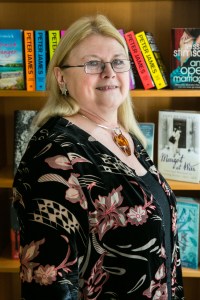
Carole Blake, co-founder of Blake Friedmann. Photo by Jack Ladenburg.

Welcome, Carole!
Did your childhood inspire and nurture your love of books?

My childhood home didn’t have many books, but I was always focussed on them & asked for them as presents. I can remember my first ever rag-books (made of a linen-like material) that I used to ‘read’ in the bath before I could actually read. I loved turning the pages and pretending. Once I could read, my early favourites were the Rupert books, which I still have, with my parents’ messages & dates written inside. When I was 8 I asked for a bookcase for my Christmas present. I got it (& only relinquished it when I moved house 8 years ago). I then set out to catalogue and categorise all the books I owned. I worked out a complicated system of letters and numbers and wrote them inside each book, then listed them all against their titles and authors. Very proud of it. Some years later when I discovered the Dewey System I was crushed. I had thought I was being entirely original!

Was it challenging for a woman in your early career to progress in the industry as you did?

I don’t remember it as difficult. I answered an advert in the Evening Standard, went for an interview & got the job. I commuted from Mitcham in Surrey to Marble Arch, & found myself – a working class girl, in a cotton dress and a white cardigan – working as a secretary to a team of university-educated art experts working on a multi-volume art encyclopedia. I kept a low profile, soaked up information like a sponge (including which pieces of cutlery to use when we went out to restaurants) and made friends there (50+ years ago) that I am still in touch with. It was literally a life-changing experience.

Who inspired you the most to keep moving forward? Are you naturally self-motivated to achieve?

The lovely people I worked with at Rainbirds, in my first job, were extremely encouraging. Working there for 8 years kick-started my life-long love of art. It introduced me to the classics (I compiled a company-wide order of Penguin paperbacks every few months. We could get a discount if we ordered 30 or more. Soon I stopped asking anyone else to mark up the Penguin stocklists, because I was ordering 30 at a time myself. I read my way through all the Russian and French novelists, and I remember crying on the no 16 bus as it went round Marble Arch because I finished Dostoyevsky’s The Idiot and found it unbearably sad. How nerdish is that for a teenager in the swinging 60s?

But later when I was marketing director of Sphere, Edmund Fisher fired me, quite rightly. I was running the marketing, publicity, rights and contracts departments and wasn’t juggling them very well. We were having a row – we had a very volatile relationship over the three companies and 12 years that I worked with him – and I was in the middle of resigning. When I realised he was firing me I withdrew my resignation and sued for wrongful dismissal. I knew he hadn’t followed all the right procedures (indeed he hadn’t followed any procedures at all!) and as I was a director, I was employed by Sphere’s then owners, Thomson Newspapers, so he didn’t actually have the right to fire me at all. I won, they settled out of court, and I discovered I had a list of authors who wanted to be represented by me if I started an agency. So I did. The fact that Edmund fired me was the best thing ever to happen to me. I would never have had the courage to ask someone to stop paying me if he hadn’t. No one in my family had ever started a company. If I hadn’t been out of work for 6 months, dealing with lawyers it would never have occurred to me to do so.

You are also encouraging new blood into the publishing industry through your associations with UCLA postgraduate publishing course. Is this something you feel passionate about as much as discovering new writing talent?

Given my start in the industry, remembering how kind people were, and aware that it’s a much more difficult area to get work in now I think the least I can do is to encourage and help others into a business that has given me such a wonderfully satisfying lifestyle. I’ve been associated with other postgraduate publishing courses as well, and am always happy to talk to people wanting to get into the book world.

I am the only person in my company who doesn’t have a degree; many of my staff have several. I didn’t have to go through the purgatory of unpaid internships, which I think are morally indefensible: we pay our interns properly.

Whenever I can I try to introduce people to others in the industry who can be of use to them. We have actually employed more than a dozen of our interns over the years – it’s so much more successful than a 40 minute interview. We also have an annual get-together of all our past staff, past interns. It’s officially known as networking but we all know it’s a great gossip-fest. So great to see where people have moved on to. You might have heard of the singer Dido? She was my assistant for 4 years and was an ace at selling serial rights!

Her parents were both publishers. I work with her mother at Rainbirds in the 60s, sold books to her father when he was running Sidgwick decades later. He and I used to lunch together and regarded ourselves as in-laws while she was working for me. When she resigned ‘to spend more time on her music’ I gave her a very motherly speech. ‘Can’t guarantee to keep your job open Dido.’ I don’t think she’s ever wanted to come back to publishing again …

I do quite a lot of public speaking – at literary festivals, conferences (I’m an honorary vice-president of the RNA, a member of the HNS) and I teach a course on how to sell rights. I’ve been a board member of The Book Trade Charity, and its Chairman, and President over many years and am now a Patron.

from-pitch-to-publication-cover
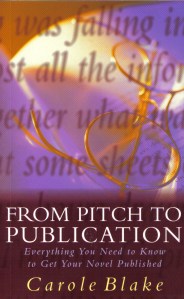
Your guide ‘From Pitch to Publication’ is widely used throughout the publishing industry. How much of a challenge has it been to update it?

An extreme challenge, as you can tell from the fact that I’ve not managed to deliver it yet. It took Boxtree (later to become an imprint of Macmillan) several years to persuade me to agree to write it in the first place. And then I renegotiated the delivery date several times, in order not to be in breach of contract (how embarrassing would that have been for a literary agent?). Same has happened with the contracted update/new edition. My agency is SO much bigger & busier than it was when I delivered the original manuscript – 20 years ago! – and so much has changed. I now know what I want to write, what I need to update, what I need to add … but time is the enemy. My editor at Macmillan (a friend) is understanding … up to a point. I now so want to have this new manuscript behind me. There are so very many more ways to promote a book now (social media?!) and I am now writing it but in such small spaces of time.

You represent many of my favourite authors, but two especially. Could you share with us what it was that you loved so much about ‘Lady of Hay’ and the amazing Barbara Erskine?
Likewise, when Elizabeth Chadwick’s first manuscript arrived on your desk did you instantly realise that you had found gold?

Two authors very close to my heart: both are good friends.

Barbara Erskine: I was already representing her short stories. She wrote many, and magazine editors around the world would line up for them. We had talked about an unusual novel she was thinking about writing. Two time periods, linked. We talked about it for a long time: years. I remember saying at the outset that it would be vital that every time, at the end of each chapter, the reader was required to move from present to past, from past to present, it must be a wrench. Each time period must be equally compelling, and hard to leave or the novel would be broken backed. Oh my … did she deliver. But although publishers and editors always ask for something new, a fresh voice – they always actually want something that is recognisable. I submitted the partial manuscript for 4 years. ‘I don’t know if it’s a contemporary novel, or a historical?’ Me: it’s both. ‘I don’t know if it’s a love story or a mystery?’ Me: it’s both. Every editor who arrived in a new job found the manuscript on their desk. When Maggie Pringle arrived at Michael Joseph in 1983, she read it, loved it, & recognised it as something fresh and new and exciting, and she was allowed to buy it even though it had been rejected twice by other Michael Joseph editors over the years. They auctioned paperback rights back then and it set a record for the highest paperback advance for a British first novel. This summer it celebrated 30 years continuously in print – quite something for a commercial novel. And it’s in print in many other languages too. In 2017 it will be celebrated for its 30th anniversary in German.
Barbara and I are friends. We’ve worked together for so long: we have even been on holiday together. That Nile cruise will never be forgotten. The only holiday that I’ve ever got a holiday-tie-in best-seller novel from – ‘Whispers in the Sand’! Barbara always stays with me at home when she’s in London overnight.

Elizabeth Chadwick: the early chapters of ‘The Wild Hunt’ arrived in the late 80s in a brown envelope – back in the days when submissions were made on paper, via snailmail. And back in the days when I opened my own mail every morning at my desk. I read it as soon as I opened the envelope and knew there was something very special in my hand. A few weeks later I had sold it, via auction, to hardback and paperback publishers (back in the days before publishers always published in both formats themselves.)

‘The Wild Hunt’ won a Betty Trask award, and Prince Charles was the person giving out the prizes for The Society of Authors that year. That was quite a memorable evening!
As with Barbara, this led to publishing success and a long and on-going friendship. Elizabeth stays with me when she’s in London too, and we often talk into the small hours.

I think it is unfair to ask you which are your favourite books or authors, but of all the novels you have read are there a few characters that really stayed with you? If so, why?

There’s no way I could choose between novels by my clients – I represent them all because they are so original, and so special. It would be like asking a mother to choose between her children! Not that I think of my best-selling authors are children for one moment. But the novels – apart from those written by my clients – that always stay with me are Dostoyevsky’s The Idiot (I finished it on a no 16 bus going round Marble Arch roundabout in the late 60s, crying my eyes out), and Alain Fournier’s Le Grand Meaulnes. A haunting work.

You have travelled extensively in your work, but where do you enjoy going to relax and explore?

Italy, always Italy. I go for art, music, food (and Negronis!), shopping. Venice, in particular if I had to pin it down more narrowly. I was lucky enough to take a sabbatical earlier this year and I spent 5 weeks in Italy: Florence, Siena, Padua, Mantua, Venice. Absolutely heaven.

This slideshow requires JavaScript.

Is it your love of detail that first led you to becoming a collector of dolls’ houses and miniatures (OOAK)? Where did this begin? How is the collection growing?

I’ve always loved houses, furniture, interior decoration. My home is full now so miniatures are the way I buy furniture. I dare not add up the number of miniatures I own … they are stored in many boxes, and I’ve had to forbid myself to buy more until I’ve finished building the 5 floor Regency house which will be taller than me. And I’m forbidden to do any more work on that until I’ve delivered my next book. In addition to that house, I have a Georgian hand made one that I bought already finished. That is fully furnished. I also own an antiquarian bookshop which I made from a kit. Every book is real; they can be opened and read (with a magnifying glass). Most of them are miniature copies of real antique illustrated books that I buy from a particular maker whose work I really admire. I have more than 1000. And I have two more kits to build – they are going to become a row of shops. And then there is the greenhouse, and a conservatory, both full of flowers. My favourite collection though is mouth-blown cranberry glass. Five (miniature) cabinets full so far. The most satisfying thing I achieved myself, was laying a floor of terracotta tiles. Real tiles, 1:12 scale. Laying the tiles was easy: the grouting was murder, the air blue!

This slideshow requires JavaScript.

What other interests do you enjoy away from the world of publishing?

Early music – I still buy cds because I enjoy the booklets. I’ve got about 5000, all stored on a hard drive and easy to find. But I also like Meat Loaf (that’s Elizabeth Chadwick’s fault!). Art – I always make time to go to exhibitions. I find cooking very therapeutic, and always have freezers-full of home cooked food. I enjoy a variety of crafts – I make greetings cards, keep scrapbooks, make jewellery (I have 1000s of beads, and like to buy them on my travels), and I love taking photographs (check out my 56 Pinterest boards, and my Instagram posts!). I took 8000 photographs during the 5 weeks in Italy. And of course reading. I read a lot of non-fiction for relaxation as a change from the fiction that I work with. I love history, memoir, African wildlife (I’ve been to Africa on safari many times). And I collect books about the publishing industry. I’ve recently taken up knitting and crochet again. But there’s not a lot of time to fit these in around work!

You have achieved a great deal in your career, but what is next for Carole Blake?

I’ve got to make time to finish the new book. Then I can get back to (miniature) house building …

Thank you for the fascinating insight into your career and for sharing some personal photographs of your lovely miniature worlds!

Welcome Roger Sanderson

Roger gate
It is my pleasure to introduce Roger Sanderson as my guest author this month. Roger is a prolific romance author and assistant organiser of the fantastic RNA Conferences along with Jan Jones.

Welcome, Roger, and thank you for giving up your time to do this interview.

When and why did you break into the world of romantic fiction?

For many years I lectured in English at a Further Education College, and as everyone knows, all English teachers really want to write novels – so when I retired, I decided to give it a go. I was already writing Commando comic scripts. While waiting at the publishers one day, I picked up their matching romance line STAR, so started with that. I went on to write for Hale, then M&B and am now with Accent (as Gill Sanderson) and Desert Breeze (as Roger Sanderson).

The RNA is a very supportive organisation. When did you first discover and join it?

I was a member of a local writing circle run by the late Sheila Walsh. She was on the committee of the RNA at the time and suggested I join. I am very glad she did!

Did your previous experience of writing scripts for Commando Comics influence the way you plot and write your novels?

They both demand a tight plot and extra care dealing with characterisation because there isn’t the room to over-develop the storyline. You have to focus. Possibly the experience of writing Commando scrpits has left me with a liking for a ‘big finish’. Of course, in a Commando, the hero shoots the enemy. In a romance novel the hero kisses the heroine. An important difference.

You are a prolific writer. How many titles have you had printed by Mills & Boon?

I think I wrote 44 or 45, all of which have now been re-edited and republished by Accent Press. It’s great to know these new digital editions are reaching a second audience.

You must have researched so many medical books and procedures over the years for your medical romances that I wondered if part of you had a leaning towards actually being a doctor or physician. Or do you prefer to stay away from the actual blood?

The latter, definitely! However three of my children are in the medical profession (Mark is a consultant oncologist, Adam is a dispensing nurse and Helen was a midwife for many years) so I have a wealth of research at the end of the phone.

I know many people ask you about writing as ‘Gill Sanderson’, but as many women writers create male protagonists I find this natural and refreshing. Did you choose to adopt a female pseudonym or was it advised?

It was very strongly suggested to me that I write under a female name. At the time the perceived wisdom was that when reading romance, women preferred a female name on the cover.

You have a love of the outdoors and hiking. Do you use this time to switch off from writing or to ponder and plot?

Originally I mountineered at the weekends to counteract the pressures of the staff room. The habit of outdoor exercise never leaves you, even if these days it’s more of a long daily walk by the sea. I rarely switch off from writing. I use walking time to think about the current book and also mull over ideas for future ones.

What is the best piece of advice you could offer to an as yet unpublished writer?

One: read as much as you can. Two: aim to write at least 500 words a week. Some weeks, this might be all you manage, some weeks it might be 5000 words. The important thing is to write something.

What do you like to read to relax?

Anything! I have very wide reading tastes.

What are you working on now?

I’m currently writing a sequel to my light-hearted romance LIVERPOOL TO LAS VEGAS (Desert Breeze Publishing), which features an ex-PE teacher and a documentary film maker and is one of my US-published novels under my own name.

What is next for Roger?

I had a major heart operation last year which is taking me a lot longer than I hoped to recover from. My goal at the moment is to get back to full health and keep on writing!

Free Promotion! Parthena’s Promise

Available on Amazon
Parthena's Promise (1)

England, 1815

London barrister and gentleman, Jerome Fender, has just returned to England after five years as a Captain in the killing fields of the Napoleonic Wars.

With the harrowing scenes of battle still haunting his every thought, he sets out to start a new life and to find a wife who will share it with him.

Meanwhile recently orphaned 21-year-old Miss Parthena Munro has also arrived at a North Yorkshire market town.

She has been sent away by her scheming sole relative, cousin Bertram, to be governess to a local family, only to find that the family has already moved away from the area.

Left stranded far from home with no job and no place to stay, Parthena encounters Mr Fender outside an inn, where she takes a chance to steal his money in a witless moment of desperation.

She whispers a promise to return the money one day and makes off across the wild Yorkshire moors.
But it’s not long before Fender catches up with her.

However, on learning of her plight they set out on a plan to seek justice against the wrongs plotted by Bertram.

With Jerome’s help, Parthena returns to her home to the great surprise of Bertram, who, thinking that Parthena, the rightful heir to the estate, was now out of the way, was about to clear his debts by selling the family estate.

Jerome endeavours to hatch a new plan to thwart Bertram, but Parthena’s rightful inheritance can only fall to her if she marries within the month.

Parthena and Jerome discover the flame of love has been kindled between them, but is it already too late?

Meet Jan Jones!

JanJonesI am delighted to welcome Jan Jones as my guest this month. Jan is not only an amazing writer of romantic fiction but the organiser of many successful Romantic Novelists’ Association Conferences.

Hi Jan – thank you for taking the time out of your hectic schedule to complete the interview. This year’s conference at Lancaster University was, amazing, as usual. The speakers were from all sections of the industry. How have you seen the event change and grow since you became the organiser?

Hi Val,

Since 2005 when I took over as organiser, the conference has grown from just over a hundred residential delegates to over two hundred. We’ve also increased the number of choices, added extra Sunday afternoon sessions and offer a Thursday pre-conference arrival.

The Romantic Novelists’ Association is a very supportive organisation. When did you join it and make your first break into print?

I first joined during the 1980s when I was writing magazine stories, took a break, rejoined in 1994, then made the breakthrough from NWS to full in 2005.

Your career began in mathematics and computing, so when did you realise that you were a writer at heart?

Oh, I’ve always known that, but I also knew I wouldn’t be able to live on it. Computer programming was a much more bankable skill.

Do you prefer to write long or short fiction, YA or adult, historical or contemporary?

All of them. I have a dreadfully low boredom threshold. I like the variety and challenge of writing different forms and genres. As to length, I think when you first get the germ of an idea, you know what sort of size the story will be. When writing serials I have to squash the story into a few compact episodes, so it is an immense relief to then expand it to the length it always should have been and self-publish it.

Do you have a strict writing regime and work ethic?

Erm, no. I’d like to, but life keeps getting in the way. I just write whenever I can. Late at night is good, because everything is quiet and I don’t have the sense of having left chores undone. I try to only have one project on the go at one time, but I generally have two or three in various stages. There are very few points during the day when I’m not thinking about whatever the current piece of work is. The worst time for me is during RNA Conference preparations. I can’t keep a book in my head as well as all the conference arrangements, so I have to completely stop writing at the end of April and not pick the book up again until July. The upside is that by then, I’ve forgotten how much I hated it!

That is a long time for preparation. No wonder the conferences are such a success. What was the best piece of advice you were given as a new writer?

That everyone has something useful to teach you and that you never stop learning. What I worked out for myself was to believe in my own voice, to dare to be different, and to never give up.

What inspired The Penny Plain Mysteries?

I came across a strange jigsaw when I was clearing my mother’s bungalow that gave rise to the first Penny Plain story, but as for where the characters came from, I have no idea. I think all writers have people lying dormant in their subconscious, just waiting for the right setting.

What are you working on now?

I have recently got the rights back for the three Regency novels published by Hale, so I am revising them ready to self-publish. I am enjoying it tremendously – it’s just like meeting old friends and falling in love with them all over again.

I love that description. So what is next for Jan?

Keep on keeping on! At the last count I had something like nineteen projects waiting for my attention, ranging from finished novels to be done-something-with to tantalising germs of ideas with half-a-dozen lines of notes to anchor the thoughts in place.

Good luck and I wish you every success with them. Thanks for sharing some of your writing experience and world.

More from Jan

FacebookTwitter Blog RNA


Parthena’s Promise – new Kindle release !

Parthena's Promise (1)
Click the cover to go direct to Amazon!

England, 1815

London barrister and gentleman, Jerome Fender, has just returned to England after five years as a Captain in the killing fields of the Napoleonic Wars.

With the harrowing scenes of battle still haunting his every thought, he sets out to start a new life and to find a wife who will share it with him.

Meanwhile recently orphaned 21-year-old Miss Parthena Munro has also arrived at a North Yorkshire market town.

She has been sent away by her scheming sole relative, cousin Bertram, to be governess to a local family, only to find that the family has already moved away from the area.

Left stranded far from home with no job and no place to stay, Parthena encounters Mr Fender outside an inn, where she takes a chance to steal his money in a witless moment of desperation.

She whispers a promise to return the money one day and makes off across the wild Yorkshire moors.
But it’s not long before Fender catches up with her.

Set during 19th century England, Parthena’s Promise leads the reader on a spirited journey to consider if justice and true love are possible in a society on the turning point of change.

Ellie Promo