For the love of baking!

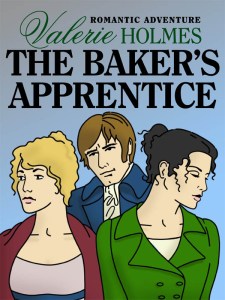
The Baker’s Apprentice is now available to download in eBook format for all eBook readers at a special price of $1.50 from Smashwords!

I love baking because it sparks memories of time spent in a warm kitchen with my mother and aunty, chatting and laughing as we enjoyed eating some of the results of our labour. From a young age I would bake the basics for the house: cakes, scones, puddings and pies. The smell of freshly made bread or scones return me to part of my childhood that will forever bring a burst of nostalgic warmth on a cold winter’s day.

A friend commented that among my titles, which focus on my North Yorkshire villages in the early nineteenth century, I had not based one around a bakery. Not everyone had their own oven, so the village bakery traditionally played an important part of village life. One comment sparked an idea and Molly Mason sprang to mind; an impetuous heroine who does not lack the courage to leave the home she dislikes, but has not the foresight to realise the hard work behind the ‘cosy’ surroundings she imagines sharing when helping her friend who runs the village bakery.

Often in life we see our own problems and look at the greener grass growing elsewhere without considering the effort that is needed to sustain the lawn.

TBA KECThe Baker’s Apprentice is set in a fictitious North Yorkshire market town that pops up in many of my titles called Gorebeck. In this story it is in a state of transition as newer Georgian terrace houses line a road replacing the older timber and cottage buildings. Some people will always welcome change seeing it as an opportunity, or others as a threat – they crave the familiar and as the old saying goes ‘If it ain’t broke don’t fix it’. It is at a crossroads for routes north to Newcastle, south to York, east to Whitby and west to Harrogate.

I will talk more about Gorebeck in future as I look at asylums, churches, market towns, inns, new and old money, mills and coaching routes in future posts.

In this story, Molly Mason carries hatred in her heart, convinced her father was murdered or driven to an early grave and seeks to escape from his wife and discover the truth. Sometimes though the truth is not what we want to hear.

The Captain’s Creek – Pressing Times

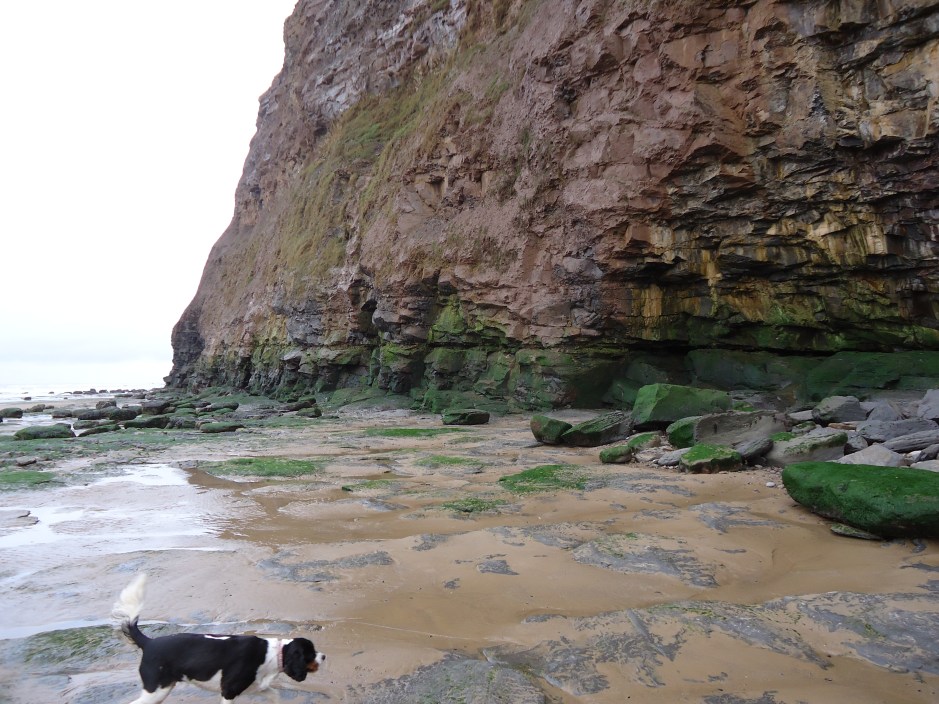
Maggie Chase discovers an injured stranger hiding between two rocks as he flees for his life on the beach. Rapidly, she is forced to make a choice: reveal his whereabouts to the fast approaching press gang, or hide him from their sight.

The Impress Service was set up to make sure that the Royal Navy had the needed number of sailors to man its ships. It was harsh and unfair as the press gangs were notorious for their raids, often ignoring the set age-limits of between 18-55, in an era when it was difficult to prove your age when plucked off the street.

The coastal towns were rife with smuggling. Robin Hood’s Bay, for example, had a network of tunnels and passages linking the houses built on its steep banks. Although these were designed to move and hide contraband, they also proved useful when the press gang arrived. The womenfolk fought off the gang with anything they had to hand whilst their menfolk hid. They were a tough and hardy people, which is why the service wanted good seafaring men at a time when paid volunteers were not enough in number to fight Napoleon’s threat. Criminals who had chosen to serve a different type of sentence in the Royal Navy were often weakened by illness because of their previous incarceration. Therefore, the press gang swooped on the unsuspecting and gained a ruthless reputation as a result.

The eBook of The Captain’s Creek is available from Smashwords and Amazon directly or from most eBook sellers.

Abigail Moor – Biddy’s Bakery

Abigail was rescued as a baby by Lord Edmund Hammond – or so she believed.

Raised as a lady, calling him father, she enjoyed a sheltered life as she grew up and loved her step-brother, Frederick. Life dramatically changes because she has to flee from a forced marriage when Lord Hammond falls ill. With her lifelong maid she travels to the port of Whitby via the beautiful ancient city of York.

To Abigail’s naive eyes Whitby would have been a noisy, bustling place with a myriad of smells from the various industries surrounding the whaling, fishing and boat making industries. Even Abigail’s name, like her situation, has a double irony. Abigail literally means ‘my father’s joy’, yet she does not know who he is. The name is also used commonly to refer to a lady’s maid.

When I explored Whitby I came across a narrow snicket in which was a love old ram-shackled set of buildings I borrowed this setting for ‘Biddy’s Bakery’, placing it next to an old inn like the amazingly well restored White Horse and Griffin and took the extra liberty of placing a laundry opposite. Whitby was so wealthy through the whaling industry that in 1790 there were two street lamps in Church Street outside this original coaching inn.

I had the pleasure of staying in the same room that it is said Charles Dickens once used. It was a lovely friendly place in a fascinating location, and serves excellent food.

The eBook of Abigail Moor: The Darkest Dawn is available from Smashwords and Amazon directly for $2.99/£1.88 from most eBook sellers.

An Interview with Janet Gover

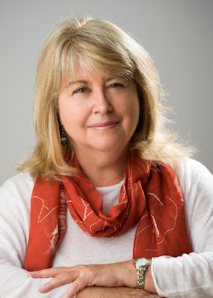
Janet Gover

My guest author this month is an experienced novelist, TV journalist, and short story writer, as well as an award-winning Australian author, Janet Gover. She has graciously taken time out of her busy, globe-trotting schedule to answer some of my questions and share her vast experience with us.
 
Welcome, Janet!

How did your childhood fuel your love of books, travel and adventure?

Hi Val – thanks for having me here on your blog.

I grew up in a tiny bush town in Queensland. There were only 18 buildings in Bowenville back then – I know this because I counted them. There was no-one else my age in the town, and my school was many miles away. I took a bus there each day – which meant I didn’t get to hang out with the other kids after school. Our nearest ‘big’ town was Toowoomba. It had movies and shops and things – but it was quite a drive to get there and we didn’t go often. I guess would have been lonely without my ponies and my books.

My Dad was a great reader and he taught me to love books as he did. It was such a great escape. I rode to the stars with Ray Bradbury, solved mysteries with Sherlock Holmes and fell in love with many a knight in shining armour.

Books were full of people and places that were such a long way from my tiny bush town. They fired my imagination. And the really great thing is – I have managed to visit some of those places I read about – although I have yet to go into space…

On January 10 2011 floods hit Brisbane and Toowoomba. Has Toowoomba changed greatly from the place you grew up in as a result of the devastation caused?

I was in Miami, Florida, working, when those floods hit. I woke up in the morning and turned on the TV news – and was shocked by the pictures I saw. It was so hard to understand how Toowoomba, a town on the top of a mountain could have a flood. I lived and worked in Brisbane as a young journalist, and that day in Miami I saw pictures of one of my favourite restaurants being washed away.

Floods are not uncommon in Australia – and people fight back. If you went there now, you wouldn’t know what had happened.

One of the things I am very proud of is my involvement with a book called 100 Stories For Queensland. I donated a short story to this project – as did many other writers. All the proceeds from sale of the book went to help flood victims. I was pleased to be able to help, even in such a small way.

You have written stories from an early age, but when did you make that initial breakthrough into print as a fiction writer?

I was a journalist for many years – working mostly in TV. I thought it would be easy to switch from writing fact to writing fiction – but I was very wrong. It was really hard.

I tried my hand at a novel when I was still working as a journalist – and it was really bad. Seriously bad! Some years later, I moved from being a journalist to a more managerial role – where I wasn’t writing daily news stories any more. Something inside me needs to write – and that’s when I seriously started to write fiction.  It took a while to change my style. My first efforts were rejected.

A holiday in Wales changed everything for me. I was very inspired by the places we visited – the fabulous scenery, the people and their history… the dragons.  I wrote a short story called The Last Dragon. It was my first published fiction (and I still love it).

I wrote short stories for a year or two – and each taught me something else about the art of writing. And every one that was published gave me a bit more confidence. My first novel, The Farmer Needs A Wife was published in 2009, and owes a lot to those short stories.

Janet, you travel widely with your work. Do you develop plots/characters for your novels as you journey, being inspired by new experiences?

I love people watching. Everywhere I go, I look and listen and learn. People are endlessly fascinating.

One thing I have learned in my travels is that whatever the cultural differences, deep down people all over the world want the same thing – they want to find someone to share their lives with. They want a home and a family. They want to give their children a good start in life. That’s why I write the sort of books I do.

I feel most comfortable writing about places I have been – I do like to properly capture the essence of a place. As I travel more, some of that is sneaking into my work. A boat cruise around the tip of Norway in mid-winter helped me to write Bring Me Sunshine. A trip to Iraq was the key to writing a troubled ex-serviceman as a hero. Living in New York has given me a heroine – we won’t meet her for two more books, but she is waiting there for me.

What places, of the many you have visited really stand out as memorable and why?

Wow – that’s a hard one. Very place has its own magic. Even though I write contemporary novels, I am a big history buff. I have visited the ruins of Carthage, of old Constantinople and Pompeii. I walked the Great Wall of China – I had a terrible cold at the time and pretty much collapsed at the end of the day, but loved it all the same. I love the ancient feel of places like this – and wonder a lot about the people who lived there.

The other thing I love is wild places – the central Australian desert, the Everglades. A frozen lake in Norway. The Rocky Mountains. Nature is beautiful and powerful…

And, I have to say – my favourite city in the world is London. I just love walking across Waterloo Bridge as the sun sets over the Thames. Beautiful!

What top tip would you give to new writers?

Be passionate about what you write. If you don’t love your story and your characters … no-one else is going to.

And respect your reader – never give them anything but the very best book you can write.

Flight to Coorah Creek, the first in a series based in the Australian outback is out in paperback this month. Could you tell us about this exiting new series?

Flight To Coorah Creek

I am loving writing about Coorah Creek. It’s a fictional town – in the far west of Queensland. Very close to the desert. In this series, I am trying to capture the feel of the small outback towns I have known all my life. These towns are a long way from the sort of amenities we are all used to. There are no shopping centres, or cinemas. Not much in the way of hospitals or schools either. Often, they hover on the brink of collapse. Coorah Creek is a mining town – if the mine was to close, the town would die.

People who live in these towns become very close to each other. They form very tight knit communities. The books are all romances – with new hero and heroine in each one. But the town and the people of the town appear in each book. It’s a chance to see the life the characters live when they move off the centre stage.

I hope to the readers, each new book will feel a little like coming home to a place you know well and to people you love.

By contrast Bring Me Sunshine was set in a much cooler environment. This was quite a change. Where did the inspiration for this story come from?
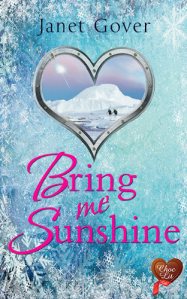
Bring Me Sunshine - small

Bring Me Sunshine is set in as wild a place as I could image – Antarctica. Well, on a cruise to Antarctica. The book was inspired by my sister-in-law – who went there with her mother… who at the time was well into her sixties. What a journey for a woman of her age!

I couldn’t afford to go there myself, but my sister-in-law helped with the research. I did take a cruise to the Arctic by way of research – which was a lot of fun.

I didn’t realise until after I had finished it – but this is the first (and so far only) book I have written that doesn’t have horses in it. There are, however, several million penguins – and who doesn’t like penguins?

It’s also the first (and so far only) book I have written with a wedding in it – which is a bit strange for a romance writer.

What is next for Janet?

I am almost finished writing the second Coorah Creek book – it has a lot of horses in it. And a fabulous hero who was inspired by a trip to Iraq.

There is a third Coorah Creek novel in the back of my head – a New York girl is just desperate to go and visit the town. But she’ll have to wait until I finish book two.

I am also planning another lighter novel – set on an archaeological dig…

And then there is this tropical island – where three sisters organise dream weddings…

And the story about the circus… (which will probably have horses in it too).

I’m not sure what order I’ll be writing these books in – one this is certain though – I am not about to run out of ideas…

More from Janet

Discovering Ellie

Discovering Ellie KECBuy and read now!

US Readers: Kindle / iTunes / Nook / Kobo

UK Readers: Kindle / iTunes / Nook / Kobo

Early nineteenth century North Yorkshire, England.

Ellie has recurring nightmares, always waking to a life devoid of love, but still she dreams. Living in the old hall with her Aunt Gertrude and cousins Cybil and Jane, the scandal of her mother’s elopement with a Frenchman cast a long shadow over her life. Until Mr William Cookson arrives to shine new light onto her past opening the way to an exciting future…

An Interview with Nicola Cornick

Nicola Cornick - profileWelcome to my blog, Nicola. I must confess that your childhood interests me. I have visited many stately homes and heritage sites over the years and the idea of going to school in the dower house of C18 Harewood House fascinates me. Was this where your love of history and academic research began?
Thank you very much for inviting me to visit today! It’s a pleasure to be here.

I think I was very lucky to go to school in an 18th century house! It was definitely inspirational. There was a very grand staircase, a beautiful “winter garden” where we took our art lessons and lots of old nooks and crannies to explore. The house was surrounded by parkland too so we could run wild in the grounds and we could tell each other scary ghost stories on the dark winter evenings! I think that being in such a historic atmosphere intrigued me and sparked my curiosity; I wanted to learn about the house and its past occupants and from there my love of history developed.

Could you tell us about the work you do at the National Trust’s Ashdown House?

I’d love to! I work as a guide and historian at Ashdown House, a stunning 17th century hunting lodge in Oxfordshire. I show people around the house and give them a guided tour telling them about the history of the house and the Craven family who owned it. It’s a fabulous, romantic-looking place and the history is rich and romantic too! I also do lots of research into the history of the house. I’m learning about it all the time and the more I discover the more fascinating it becomes. We’ve just found some secret tunnels leading off from the wine cellar!

Your first Regency novel was published in 1998. What is it about this era that appeals to you so much?

I’ve always loved the Regency era as a writer and a reader. Like so may readers I started with the books of Georgette Heyer and their wit and the beautiful way that Heyer evokes the era really enthralled me. I love the elegance and the manners and the fascinating contrast between the outward show and the intense emotions that may be hidden beneath the surface. One of the challenges for a writer is to find a way for those emotions to be expressed within the constraints of the behaviour of the time.

How did your breakthrough into publication happen?

I had a long journey to publication. My first book, True Colours, was twelve years in the writing because I was also working full time and could only snatch short periods of time to write. Mills & Boon rejected my first attempt as having too much adventure and not enough romance. I re-wrote it twice more before they finally accepted it.

Who or what was your biggest inspiration in becoming a fiction author?

There have been so many people who have inspired me. The writing of authors such as Mary Stewart and Daphne Du Maurier fired me with the desire to be a writer when I was in my teens. My teacher, Mrs Chary, inspired in me a huge love of history and for that I will always be grateful to her. I always knew that it was historical fiction that I wanted to write. The other big influence was my wonderful grandmother, whose collection of historical novels I devoured and with whom I watched costume dramas on a Sunday night!

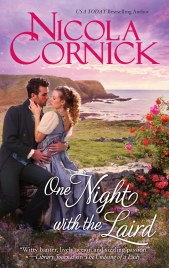
One Night with the Laird - US copyYou are an enthusiastic traveller on a world-wide scale, but for your latest series you have headed north of the border and changed period for The Lady and the LairdOne Night with the Laird out this month and the final book Claimed by the Laird, which will be published next year. What triggered this change in location and direction?
I do love travelling and have been lucky enough to visit some amazing places all around the globe. One of my favourite places, though, is Scotland and I have wanted to set a book there for years. It was fascinating to research Scotland in the early 19th century and see the similarities and differences in politics and culture compared with south of the border. It was huge fun to write the Scottish Brides trilogy!

What is next for Nicola?

I have lots of exciting plans for next year.  There are several new Regency ideas I’m going to be working on, plus a book inspired by Ashdown House!

Thank you for taking the time to answer my questions and for sharing some of your unique experiences with us.

Thank you!
More by Nicola:

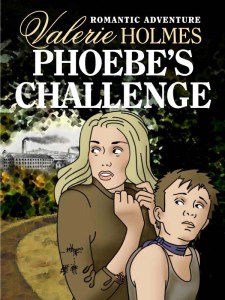
Phoebe’s Challenge

Phoebe's Challenge KEC (1)

Buy and read now!

US Readers: Kindle / iTunes / Nook

UK Readers: Kindle / iTunes / Nook

Early nineteenth century North Yorkshire, England.

Phoebe and her brother, Thomas, have to flee the evil regime of overseer Benjamin Bladderwell because an accident results in them being labelled machine breakers. Hunted with nowhere to run, the mysterious wagon driver, Matthew, his them and saves their lives. They soon discover that he is a man of many guises who Phoebe instinctively trusts, but Thomas does not. Their future depends upon this stranger, on their own they will be captured or starve. Phoebe must trust or challenge Matthew unaware that he is also tied to their past.

Betrayal of Innocence

Buy and read now!

US Readers: Kindle / iTunes / Nook

UK Readers: Kindle / iTunes / Nook

Early nineteenth century North Yorkshire, England.

Lydia works hard as a servant at Bagby Hall to keep her father, an ailing tenant, from the poorhouse. She is horrified and wracked with guilt as she discovers her friend, the gentle fallen Georgette, being used by Lord and Lady Bagby. Lydia longs to aid Georgette as she fears her life may be in danger – but how? The arrival of the mysterious, Dr Samuel Speer, adds to her dilemma, as Lydia’s concern grows. Does she risk her father’s wellbeing and reveal the truth or remain forever silent and therefore, guilty…

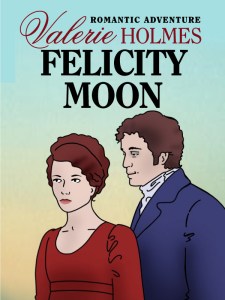
Felicity Moon

Felicity Moon KEC

Buy and read now!

US Readers: Kindle / iTunes / Nook

UK Readers: Kindle / iTunes / Nook

Early nineteenth century North Yorkshire, England.

Felicity Moon strikes the Lord of the manor in self defence and is forced to leave his household. Squire Moon, her father, is in gaol charged with bank-rolling smugglers and storing contraband. Felicity has one last chance to save herself from ruin in the form of a reference to Mr Lucas Packman, a man her father dislikes intensely. She has an impossibly stark choice to make: trust Packman or her obey her father. 


The World of Valerie Holmes

“…dread of wandering mariner, where often, alas, the proud vessel hath floundered against thy iron ribs, or perished on they cruel rocks!” –W Braithwaite in his “Rural Reminiscences”.

Love is a timeless essential of life. Throughout history, love in all its forms is a constant: be it passionate, caring, needy, manipulative, possessive or one that is strong enough to cross barriers of culture or faith. When two souls meet in a situation which takes them out of their normal social strata or into a shared danger, a relationship forms as the adventure unfolds.

The historical romances are based in the early nineteenth century, set against dramatic social change at a time of war with France. Smuggling, espionage, press-gangs all add to the drama that the hero and heroine can face.

Created to be entertaining reads that pass away a few hours lost to the thrill of an adventure, the core of my work is based around the same area of North Yorkshire. My world features the rugged headland of Stangcliff, the old inn sheltered in the bay of Ebton below and Gorebeck, the fictitious market town on the edge of the moors, marking a major crossroads for travellers to Newcastle, Harrogate, Whitby, and York.