
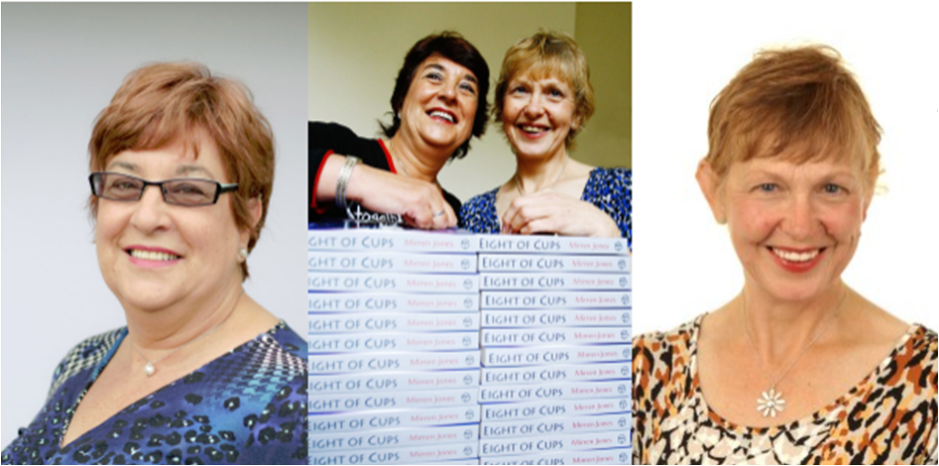
Did your partnership form and grow through the collaboration as writers or did your published work evolve as a result of your friendship?
A bit of both! In 1999, we had co-authored two books of non-fiction, published by Radcliffe Medical Press (‘Facilitating Groups in Primary Care’, and ‘Facilitating Organisational Change in Primary Care’), while employed by The University of Dundee. That activity, along with several years of co-tutoring and joint research and consultancy, developed our working relationship and eventually led to our being friends as well as boss and junior!
Our fiction writing partnership – and ongoing friendship – is something newer and different, as we are no longer in a formal work situation. We’ve been writing and working together for 16 years in total and are still great friends, despite now living 500 miles apart.
Please tell us something about ‘Eight of Cups’?
 The novel is certainly not chic-lit, and is not intended to be literary; rather it fits the genre of well-written contemporary women’s fiction, although many male readers have told us they’ve enjoyed reading it and learnt a lot about women’s minds in the process! It’s a saga spanning over thirty years, beginning in 1972, as the six main characters arrive at Edinburgh as new undergraduates. After leaving university, their roads lead to England, Wales, Ireland, America and the Middle East; lives intertwine and paths cross.
The story is told from two perspectives. One, from the first-person narrative of the primary character, the rather too selfless (as becomes evident) Scottish lass Diane. The other, third person narrative interlocks all six characters in a brindled strand of narrative priorities. The women are all very different personalities: Nancy, the risk-taking country-loving girl from Yorkshire, Alix, the hedonist from Aberdeen, Carys, the studious one from the depths of West Wales, the quietly anxious Lesley, from Cardiff, and bossy, religious Patricia from Dundee.
The book explores the effects of the various attachments each character possesses on their lives: dreams, ambitions, pleasures, plans, obsessions and fears, and asks the question, “What will it take to set them free?”
Where or who did the inspiration and desire to write the novel come from initially?
Marion (Mirren) describes the impetus as being a combination of challenge and opportunity, with a significant event in her social life providing the seed for the story. She was moving to live part-time on the Isle of Lewis in Scotland when her husband took up a post there in the island dental services. He was concerned that she would be bored (does he really know her??) and challenged her to ‘write that novel you’ve been banging on about for years’. Co-incidentally, she attended a reunion of old university friends where one of her old pals divulged a shocking secret to the group. That set her thinking of how life affects plans and attitudes. On hearing of Mirren’s novel-writing plans, Jones was very keen to join in, making a strong case that if we were able to write non-fiction successfully then we ought to be able to do the same with fiction! So after discussion and negotiation, Mirren Jones was born and ‘Eight of Cups’ quickly began to take shape.
Do you split tasks when you approach producing a novel or do you write alternate chapters, swap them and then smooth out the writing style in redrafting?
We work in a highly iterative way – creating, structuring, planning, revising, over and over again until we are happy with the product. Interestingly, we always sit down together and read through all the dialogue before signing off the final draft – this does give unique insights. In the end, the finished work is an amalgam of our ideas, plot lines, character development and physical writing (Mirren’s straight on to computer, and Jones on paper first), critiqued and then polished according to our own standards and preferences, as well as feedback from selected trusted reviewers.
You both have had careers dealing with people within the health sector. Do you think this experience has helped you to feel deeper empathy for the characters you create?
 Our work in the NHS, in academia and as organisational development consultants has required us to be attentive listeners, adept at interpreting information from others via all our senses, able to feedback sensitively and imagine ourselves in others’ shoes. We have gained experience over many years of the effects of ill-health on people, and how life impacts on well-being. Hopefully our innate vein of empathy has been enhanced by our real-life experiences which then give us insight that we can apply to our characterisation. Perhaps being co-writers has an advantage over writing solo, in that with our combined life and work experiences we are able to bring a very wide range of knowledges and contexts to our writing, thus giving credibility to our characters and their settings.
How do you keep up the much needed energy and momentum for the projects you start when living so far apart and having such varied commitments and interests?
We put no pressure on each other in terms of deadlines and accept that life will get in the way, as it has done since we became Mirren Jones. We try to fulfil our promises to each other, and to ourselves as best we can, and both would love to have more time to write. Neither of us are the kind of writers who can squeeze in an hour before bedtime, or get up early and write before going to work. But what does help is if one progresses the story and reignites the flame for the next chapter to be written.
Please tell us something about your next novel, ‘Never Do Harm’.
It is a psychological drama about two doctors, friends since childhood, living in the same part of Scotland, but operating in very different settings. Alan is a GP in a busy medical practice, Hugh is a senior hospital consultant in a big teaching hospital. Professional in their working lives, they are rivals as well as friends in their personal life. Alan’s French wife Simone, a sculptress, is the third player in their relationship. Her presence will generate the potential for harm, something the two men promise never to do in their role as doctors, but which doesn’t of course apply outside of work. Our old NHS colleagues will be more than a little worried that we’ve used some real-life experiences to fuel our writing of this novel – and they may well be right!
What is next for Mirren Jones?
Finishing ‘Never Do Harm’ is our immediate aim – we are committed to reaching this goal before the end of the year. Then we have to navigate the world of Indie publishing which has changed considerably since we produced ‘Eight of Cups’, with the advent of digital books on multiple platforms, and embrace marketing with renewed enthusiasm!
As for the future – we have no problem generating ideas for stories, so when we decide to work on a third novel, it will probably progress much as this one has – in a stop-start fashion, with many twists and turns in both the writing and the lives of the writers. Given our personal experiences to date, we can anticipate unexpected changes which might throw up a range of other possibilities. In the meantime, Mirren continues in her role as Practice Manager in her local health centre, and Jones with her work as an Energy Psychology practitioner (humans and horses) / MD of CareandCompare.com – a charitable insurance price comparison website.
More from Mirren Jones
Website: www.mirrenjones.co.uk
Blog: www.mirrenjonesblog.com
Twitter: @MirrenJones
Facebook: Mirren Jones
Google+: +Mirren Jones
Pinterest: http://www.pinterest.com/mirrenjones/
Kindle worldwide: http://authl.it/1qs
 I was moving from one viewpoint character to two – Hannah and Daniel Kind, the historian who gets to know her in
  I admit to being driven, in that I feel very conscious that life is short and that there are a lot of things I want to achieve. To my mind, being ambitious is a good thing, as long as one tests oneself against one’s own self-imposed standards, rather than against other people, or the standards set by others. However, although to some extent I’m self-disciplined, I sometimes wish I were better organised. I do tend to set myself very demanding targets that I fail to meet with monotonous regularity. Perhaps – in a not very coherent way –that’s the method that works best for me, and even if sometimes I feel I could have achieved more, perhaps this helps to drive me on to do better in future.
 Intriguing question, and I’m not quite sure about the answer. When I was fighting legal cases in the employment tribunal, I always wanted to win, but on the whole I felt that the right result was usually achieved in most cases. With fiction, I like to see some form of justice done at the end, but this doesn’t always mean the conviction of those who are technically guilty. I think it’s good if a novel reaches a conclusion that affords “satisfaction”, but the forms that satisfaction, and indeed justice, can take are many and various. Christie understood that – consider the finale to Murder on the Orient Express.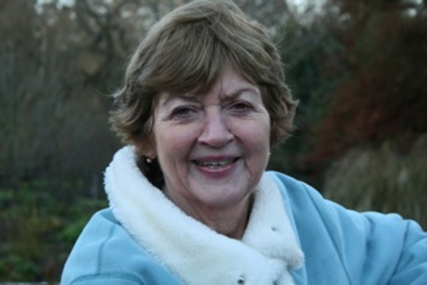


 My guest this month is prolific American author Cindy Kirk. Cindy is a writer who loves romance and has written many special editions for Harlequin.

 Thank you for taking the time to discuss your fascinating career and share some of your experiences with us.
 From your initial breakthrough, how did you then go on to develop the successful series of Sergeant Cribb and Peter Diamond?
 The Tooth Tattoo also shows that you have a love and understanding of classical music. The humour within the book works on many levels, which balances the much darker twists of the plot. What inspired this book?
 I am delighted to share an interview with Jan Marshall, the talented book-designer who has created the Valerie Holmes eBook covers.
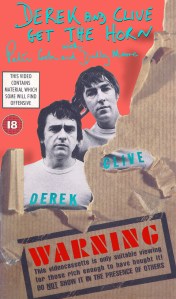 The most rewarding time in my career has to be the ten years I spent immersed in the world of movies, creating designed materials for mainly Universal and Paramount films, ranging from huge outdoor posters to video covers and film-based interactive teaching aids for schools. I was privileged (and extremely proud) to work on movies as diverse as: Babe, The Rugrats Movie, Apollo 13, the three Pierce Brosnan Bond movies, The Addams Family Values; Dragonheart, Twister, Twelve Monkeys, and The Mummy. On a more personal note, another highlight came in the shape of a short thank you message. It was from the late, truly adorable Peter Cook, who, having briefed the job to the team in a safari suit and pith helmet, later described my design for the ‘Derek & Clive Get The Horn’ video sleeve as: “…the best I have ever seen on a video pack. I cannot tell you how thrilled I am”. I was thrilled too.
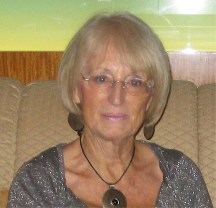 My very special guest for Christmas is prolifically successful historical author, Freda Lightfoot, with an insight into her career and sharing with us how she now enjoys the best of two worlds.
 Your Lancashire routes have provided a strong background for your Sagas. Have you used some of your own family’s historical experiences within the fiction?
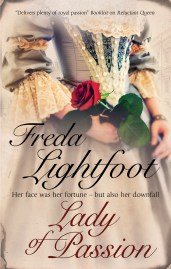 Your fictionalised biographies must need meticulous research, even more so than historical sagas. How long do you spend researching a new project? Roughly how long do you take to write a completed first draft?
 valerie holmes, author