


The Baker’s Apprentice is now available to download in eBook format for all eBook readers at a special price of $1.50 from Smashwords!
I love baking because it sparks memories of time spent in a warm kitchen with my mother and aunty, chatting and laughing as we enjoyed eating some of the results of our labour. From a young age I would bake the basics for the house: cakes, scones, puddings and pies. The smell of freshly made bread or scones return me to part of my childhood that will forever bring a burst of nostalgic warmth on a cold winter’s day.
A friend commented that among my titles, which focus on my North Yorkshire villages in the early nineteenth century, I had not based one around a bakery. Not everyone had their own oven, so the village bakery traditionally played an important part of village life. One comment sparked an idea and Molly Mason sprang to mind; an impetuous heroine who does not lack the courage to leave the home she dislikes, but has not the foresight to realise the hard work behind the ‘cosy’ surroundings she imagines sharing when helping her friend who runs the village bakery.
Often in life we see our own problems and look at the greener grass growing elsewhere without considering the effort that is needed to sustain the lawn.
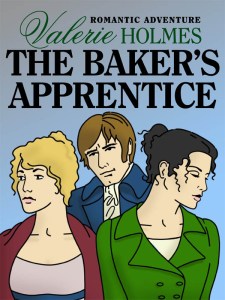 The Baker’s Apprentice is set in a fictitious North Yorkshire market town that pops up in many of my titles called Gorebeck. In this story it is in a state of transition as newer Georgian terrace houses line a road replacing the older timber and cottage buildings. Some people will always welcome change seeing it as an opportunity, or others as a threat – they crave the familiar and as the old saying goes ‘If it ain’t broke don’t fix it’. It is at a crossroads for routes north to Newcastle, south to York, east to Whitby and west to Harrogate.
I will talk more about Gorebeck in future as I look at asylums, churches, market towns, inns, new and old money, mills and coaching routes in future posts.
In this story, Molly Mason carries hatred in her heart, convinced her father was murdered or driven to an early grave and seeks to escape from his wife and discover the truth. Sometimes though the truth is not what we want to hear.
 A couple of years ago I had the unenviable task of sorting out the personal effects of a loved one. Among these was an old tin. Inside the tin were six letters dated from the 1950’s. Intrigued that they had been preserved in such a way, I put them in date order by their postmark and read them. The words touched me deeply.
 Stolen Treasure


 valerie holmes, author