Free Promotion! Parthena’s Promise

Available on Amazon
Parthena's Promise (1)

England, 1815

London barrister and gentleman, Jerome Fender, has just returned to England after five years as a Captain in the killing fields of the Napoleonic Wars.

With the harrowing scenes of battle still haunting his every thought, he sets out to start a new life and to find a wife who will share it with him.

Meanwhile recently orphaned 21-year-old Miss Parthena Munro has also arrived at a North Yorkshire market town.

She has been sent away by her scheming sole relative, cousin Bertram, to be governess to a local family, only to find that the family has already moved away from the area.

Left stranded far from home with no job and no place to stay, Parthena encounters Mr Fender outside an inn, where she takes a chance to steal his money in a witless moment of desperation.

She whispers a promise to return the money one day and makes off across the wild Yorkshire moors.
But it’s not long before Fender catches up with her.

However, on learning of her plight they set out on a plan to seek justice against the wrongs plotted by Bertram.

With Jerome’s help, Parthena returns to her home to the great surprise of Bertram, who, thinking that Parthena, the rightful heir to the estate, was now out of the way, was about to clear his debts by selling the family estate.

Jerome endeavours to hatch a new plan to thwart Bertram, but Parthena’s rightful inheritance can only fall to her if she marries within the month.

Parthena and Jerome discover the flame of love has been kindled between them, but is it already too late?

Meet Jan Jones!

JanJonesI am delighted to welcome Jan Jones as my guest this month. Jan is not only an amazing writer of romantic fiction but the organiser of many successful Romantic Novelists’ Association Conferences.

Hi Jan – thank you for taking the time out of your hectic schedule to complete the interview. This year’s conference at Lancaster University was, amazing, as usual. The speakers were from all sections of the industry. How have you seen the event change and grow since you became the organiser?

Hi Val,

Since 2005 when I took over as organiser, the conference has grown from just over a hundred residential delegates to over two hundred. We’ve also increased the number of choices, added extra Sunday afternoon sessions and offer a Thursday pre-conference arrival.

The Romantic Novelists’ Association is a very supportive organisation. When did you join it and make your first break into print?

I first joined during the 1980s when I was writing magazine stories, took a break, rejoined in 1994, then made the breakthrough from NWS to full in 2005.

Your career began in mathematics and computing, so when did you realise that you were a writer at heart?

Oh, I’ve always known that, but I also knew I wouldn’t be able to live on it. Computer programming was a much more bankable skill.

Do you prefer to write long or short fiction, YA or adult, historical or contemporary?

All of them. I have a dreadfully low boredom threshold. I like the variety and challenge of writing different forms and genres. As to length, I think when you first get the germ of an idea, you know what sort of size the story will be. When writing serials I have to squash the story into a few compact episodes, so it is an immense relief to then expand it to the length it always should have been and self-publish it.

Do you have a strict writing regime and work ethic?

Erm, no. I’d like to, but life keeps getting in the way. I just write whenever I can. Late at night is good, because everything is quiet and I don’t have the sense of having left chores undone. I try to only have one project on the go at one time, but I generally have two or three in various stages. There are very few points during the day when I’m not thinking about whatever the current piece of work is. The worst time for me is during RNA Conference preparations. I can’t keep a book in my head as well as all the conference arrangements, so I have to completely stop writing at the end of April and not pick the book up again until July. The upside is that by then, I’ve forgotten how much I hated it!

That is a long time for preparation. No wonder the conferences are such a success. What was the best piece of advice you were given as a new writer?

That everyone has something useful to teach you and that you never stop learning. What I worked out for myself was to believe in my own voice, to dare to be different, and to never give up.

What inspired The Penny Plain Mysteries?

I came across a strange jigsaw when I was clearing my mother’s bungalow that gave rise to the first Penny Plain story, but as for where the characters came from, I have no idea. I think all writers have people lying dormant in their subconscious, just waiting for the right setting.

What are you working on now?

I have recently got the rights back for the three Regency novels published by Hale, so I am revising them ready to self-publish. I am enjoying it tremendously – it’s just like meeting old friends and falling in love with them all over again.

I love that description. So what is next for Jan?

Keep on keeping on! At the last count I had something like nineteen projects waiting for my attention, ranging from finished novels to be done-something-with to tantalising germs of ideas with half-a-dozen lines of notes to anchor the thoughts in place.

Good luck and I wish you every success with them. Thanks for sharing some of your writing experience and world.

More from Jan

FacebookTwitter Blog RNA


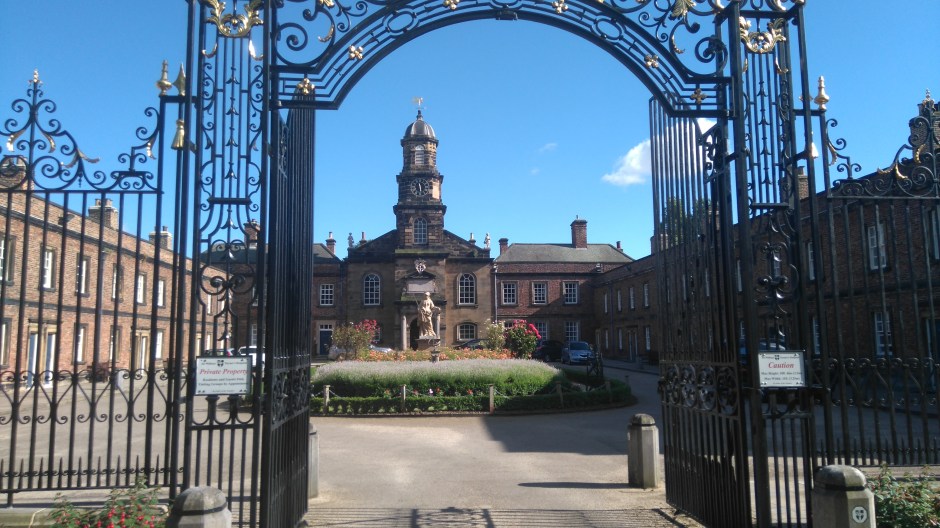
Kirkleatham Village, North Yorkshire: A little gem worth exploring

Kirkleatham Village, North Yorkshire, England is definitely a little gem worth exploring.

Three miles from the coastal resort of Redcar, North Yorkshire, lies the beautiful small village of Kirkleatham. Originally known by its Norse name ‘Westlide’. Through time and links to the original ‘Kirk’ (church) lands it evolved from a small village to a prosperous estate with famous links to London.

I often explore such locations when researching the background to my stories, which are set within the region. This beautiful area was once owned by Guisborough Priory, before King William I granted it to The Count of Mortain and Robert de Brus in 1086, down through the centuries, it came into the hands of the Turner family.

Today the main buildings’ features of the almshouses, the church, mausoleum, and the museum in the Queen Anne building where the old school was housed, they all stand as testament to the legacy left by the Turner family. Sir William Turner (1615-1692) became Lord Mayor of London in 1669. His loyalty to King Charles II and his active involvement in rebuilding the city after the Great Fire were greatly rewarded. However, he was a man who seemingly also showed compassion for the less fortunate. He was President for the Bridewell and Bethlehem Hospitals as well as founding the Sir William Turner Hospital in Kirkleatham (now the almshouse building).

The Hospital was built around a quadrangle, with a chapel opposite the ornate gates separating the quarters of the 10 women and 10 men. There was also accommodation for 10 girls and 10 boys. These children were either orphans or from one-parent families. They were taken in, given a basic education and then would leave to serve an apprenticeship or enter service.

The ancient church was added to in 1740 to commemorate Marwood William Turner who died on his Grand Tour in Lyons in 1739. Charles Turner, who was the first Baronet in 1782, improved the roads in the area. He also built the Turner’s Arms in nearby Yearby to replace the alehouses, ‘wretched hovels’, which had harboured smugglers. Charles encouraged tenants to experiment with new crops and techniques. His son, also a Charles (1773-1810), was the last Turner to own the estates. The estates then passed through marriage to the Newcomen family. Schools and buildings in the local towns have carried the names of these families for years.

Eventually the estate was sold in 1948. The contents of Kirkleatham Hall, the Hospital Library and Museum were sold at auction. The once magnificent Hall was then left to decay and in 1956 was demolished.

Kirkleatham today houses the local history museum which, amongst other exhibits, houses the Saxon Princess Exhibition. The local maritime and industrial historical exhibits cover three floors. Access is good as the site is level; ramps and a lift means that it is accessible to all.

The 15 acre grounds cover a woodland, play area and willow walk. It extends past the old stables to open fields. A café serves hot and cold foods and facilities are good throughout.

Admission to the museum is free but touring exhibitions and events held at the site may be charged for.

More information is available from: http://www.redcar-cleveland.gov.uk/kirkleathammuseum

Parthena’s Promise – new Kindle release !

Parthena's Promise (1)
Click the cover to go direct to Amazon!

England, 1815

London barrister and gentleman, Jerome Fender, has just returned to England after five years as a Captain in the killing fields of the Napoleonic Wars.

With the harrowing scenes of battle still haunting his every thought, he sets out to start a new life and to find a wife who will share it with him.

Meanwhile recently orphaned 21-year-old Miss Parthena Munro has also arrived at a North Yorkshire market town.

She has been sent away by her scheming sole relative, cousin Bertram, to be governess to a local family, only to find that the family has already moved away from the area.

Left stranded far from home with no job and no place to stay, Parthena encounters Mr Fender outside an inn, where she takes a chance to steal his money in a witless moment of desperation.

She whispers a promise to return the money one day and makes off across the wild Yorkshire moors.
But it’s not long before Fender catches up with her.

Set during 19th century England, Parthena’s Promise leads the reader on a spirited journey to consider if justice and true love are possible in a society on the turning point of change.

Ellie Promo

Laura’s Legacy – New from Endeavour Press!

Laura's Legacy

Laura’s story begins fifteen years after the fire that nearly destroyed Ebton in To Love Honour and Obey.
1820 Ebton, England.

Laura Pennington’s parents think it is time for her to marry, but they are concerned. She likes to take long walks by herself, and doesn’t quite fit in. Laura’s father, Obadiah, thinks local mill owner Daniel Tranton is the perfect husband for Laura, so he suggests marriage to Daniel while working on a business deal.

Daniel is not keen, but does not want to lose Pennington’s business. He is not sure what to do, as he has his hands full with disgruntled mill workers. Daniel has always treated his workers well, but that is the exception, not the rule.

A new problem arises, when Jeb, a young boy who works for Daniel’s cousin Roderick, runs away from the mill where he works. Daniel, not wanting to see him captured and beaten by the local louts who enforce the law, tries to track him down. He finds Laura hiding Jeb, who she stumbled upon while out on one of her walks.

Roderick has his henchman Mr Bullman hunting for Jeb as Laura hides him at her father’s boat house.
Checking on him one morning, Laura sees the boat is gone, but it’s seeing her father stepping out from the hotel he owns that shocks her the most.

For all his efforts to make Laura a lady, it seems Mr. Pennington is not a gentleman.
With the hint of revolution in the air, will Daniel and Laura find a love worth fighting for?
Laura’s Legacy is a historical tale of romance and family strife in a past world.

Laura’s Legacy is availble on Amazon Kindle

An Interview with Amy Durant

Amy Durant
Amy Durant, Publishing Director of Endeavour Press

Where did your love of books originate?

My dad is a children’s book author, and he worked at Walker Books when I was little, so I grew up surrounded by books, and I fell in love with reading from an early age.
Do you have a favourite genre?
My favourite genres are historical fiction and literary fiction, although I read everything from sci-fi to military history.
Have you any desire to write a novel?
Yes, I have a few ideas and I hope to write something myself eventually.
What was your route into the publishing industry?
I was quite lucky – the first internship I undertook landed me a job! After completing my MA in contemporary literature, I applied to a few internships and a was taken on for a month with Endeavour Press. Straight after that I began working with them full-time as a publishing assistant, and now I act as Publishing Director.
How has Endeavour Press evolved in the time since it first took up the challenge of becoming the UK’s leading independent publisher?
Endeavour Press has evolved enormously since I first started work with them in January 2013. Back then we were publishing around 15 books month, and we only had about fifty authors on our books. Now we have five new imprints (Endeavour Press Germany, Venture Press, Pioneering Press, Albion Press and Endeavour Press Creative) and in total we publish 30 books a week, and we have a list of over 500 authors.
Could you tell us about the History Festival and what has been planned?
The virtual history festival we have set up will run from the 18-22 April. We have 50 authors signed up, some from Endeavour Press, and some from other publishing houses, and we will be running various online events, mainly on Twitter and Goodreads. They will include competitions, author interviews, reader Q&As, cover reveals and exclusive extracts from upcoming novels.
What is next for Amy and Endeavour Press?
The great thing about Endeavour Press is you never know what is around the corner! We are in talks about launching more imprints this year, and we are always scouting for new authors to work with. I have also just started a part-time PhD on English women’s writing in the seventeenth century, so hopefully I will be able to find some interesting forgotten texts to add to our classic books imprint.
Endeavour Press logo

For the Love of Writing: Inspiration and Motivation

In previous blog posts I have looked at how to keep yourself fit for the task of writing thousands of words and then how to set realistic goals to achieve them. Before moving on to looking at the actual writing of the fiction, two factors play an important part in beginning and completing the process – inspiration and motivation.

Where do you get your inspiration from?

What motivates you to write fiction?

These two questions are asked to many authors and the answers may be as varied as the individuals who the question is posed to.

I am constantly inspired by anything from a name, a newly learned an intriguing little known fact, a place that sparks an idea or a simple overheard statement. Inspiration is all around us, we just have to be open to it and use our imaginations to ask that simple question: ‘What if?’

Once inspired to write then motivation kicks in to drive our effort so that the idea turns into a real manuscript. We can be both inspired and motivated at the same time by reading our favourite author’s work.

Here are a just a few common motivators:

To escape from reality into a world of our making that we will hopefully share with others.

To earn money – realistically, this is not an easy industry to break into.

To become a published author.

Whatever your inspiration you need the motivation to keep going, learning and growing as a writer. Go beyond rejection to reach that place of acceptance and becoming a published author. Learn from those who have done it and also from any of their early mistakes, so that you can avoid some yourself.

Once you are keen to begin your project, go for it. Network at conferences and courses, such as The New Writers’ Scheme run by the Romantic Novelists’ Association and seek professional feedback. If you have a manuscript that you would like professional feedback on then please contact me on Vholmesauthor@gmail.com for a quote.

An Interview with Ben Adams

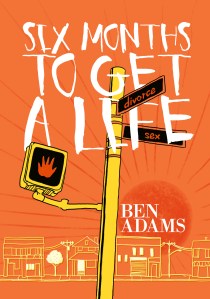
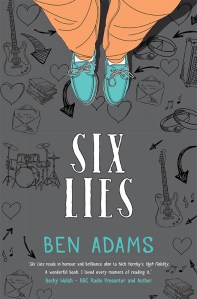
I am delighted to have author Ben Adams as my guest this month. Ben’s critically acclaimed novels Six Months to Get a Life and Six Lies chart two men’s journeys as they strive to make sense of their respective midlife crises.
edited Adam medium q
Welcome, Ben,

Please share with us how and when you discovered the joy of writing fiction!

I can’t remember a time when I didn’t enjoy making up a story. My dad is blind. Instead of reading books to me, he used to captivate me at bedtime, making up stories that would transfix me and keep me awake for hours. I caught the bug and used to invent equally inventive stories involving the most hideous of monsters. As I got older, my fiction expanded to include ingenious excuses for not having done my homework. Roald Dahl expanded my imagination still further as did Douglas Adams and Sue Townsend. But ultimately, I blame my dad.

When and how did you make the break from unpublished to published author?

I always wanted to write a novel. In my 20s I dabbled with crime fiction but too many hours spent staring at blank pages and a lack of life experiences meant that I couldn’t make my stories sing.

In my 30s I mostly wrote boring work-related web content and the occasional acerbic complaint letter to the authorities or to the dog over the road – it defecated on my drive.

And then my 40s came along. Sometimes it takes a life event to set you off on the right track. Six Months to Get a Life, my first novel, was ultimately triggered by my own family upheaval. It’s a story about a man overcoming a divorce and doing his best to build a new life for himself and his children. Having been through the pain myself, I felt able to give my characters some real depth. It was the first time I had felt truly able to write something believable, something memorable.

cover final

And luckily, I found a publisher who believed in the characters as much as I did.

How would you describe Graham Hope, your protagonist in Six Months to Get a Life?

Graham, like a lot of the characters I invent, is a fairly unremarkable fellow. At heart he is a good guy but like most people going through a divorce, he can occasionally be a bit maudlin. And even bitter. He’s someone who generally knows what the right thing to do is, even if he doesn’t always do it. He’s concerned about his relationship with his children. He’s also concerned about his relationships with women. Or rather his lack of relationships with women.

It isn’t easy to take a difficult subject and inject humour and hope into the story successfully. How did you balance the harsh realities of life against the sense of renewal and wit?

The simple truth is that no one would have enjoyed Six Months to Get a Life if Graham hadn’t been able to laugh at himself. If a story about coping with divorce, learning to live separately from your children or arguing over maintenance payments didn’t contain a few comedic release points, the reader would more than likely be contemplating suicide by the end of chapter 3.

The same goes for my second novel, Six Lies. Dave Fazackerley, the protagonist in Six Lies, discovers after she has died that his mother wasn’t his mother after all. And to make matters worse, he was already reeling from his wife’s decision to run off with a librarian. About the only thing Dave actually managed to cling on to was his sense of humour…

six lies cover for pc w endorse

Writing a novel is a major achievement for anyone, but how hard have you found getting to grips with marketing and using social media to build up your author platform – or are you a natural?

I am probably your typical author. Inventing stories is my passion. I love talking to people about mine and their stories too. But trying to understand the difference between a Facebook page and a Facebook profile, uploading content to a website, getting my head around boring twitter protocols and ridiculous book marketing websites is, quite frankly, the bane of my life.

I do understand the need to establish a good author platform though. Twitter indirectly led to me being invited on to the BBC Breakfast sofa. It also led to you and I connecting. These days, few authors will be successful without a bit of investment in their author platform.

What tips would you give to anyone, of any age, who is determined to become a published writer?

Firstly, you need to write exceptionally well. The best way to do that is to write, write and write some more. The more you write, the better you will become. Oh, and read a lot too. Learn from writers within your chosen genre, but don’t copy them.

Secondly, you need to build your emotional resilience. Believe in your own talent. Don’t let a little self-doubt put you off. Imagine if JK Rowling had thought, ‘Oh, this is crap,’ when she was giving Harry his lightening bolt scar and gone off and got a proper job.

Thirdly, see the previous question and take a deep breath…

What is next for Ben?

I have written my third novel in draft form. Provisionally entitled ‘Trouble in the Staffroom’, it is a school-based drama-come-romp. I am really proud of the draft as it currently stands and am loving the feedback I am receiving from beta readers. Hopefully, Trouble in the Staffroom will be published in September to coincide with the start of a new school year.

I am really enjoying reading Six Months to Get a Life and wish you every continued success.

@benadamsauthor

Ben Adams on Facebook

Ben’s Website

Achieving your goals.


picture1

For the Love of Writing: Making your goals realistic


Now you are sitting comfortably and have an idea where you will be working, you will be eager to start writing. If you are a hobby writer, then fitting it in around other commitments is not a problem. However, if you are trying to make a profession from it, then here are some practical tips. Having your own workspace is a luxury but, if it is not possible, then have one where you can ‘hot desk’ for set times. For a change of scene I sometimes use a large coffee shop or a library.

Once you know where you will write and when, set realistic deadlines to train yourself to work in a professional way for the day when those deadlines have to be contractually met. This can be fun as it is like setting a personal challenge.

You might write only 500 or 1500 words a day. That does not matter. Whatever your output is you can easily work out a schedule as a guide for your project to be completed.

For example, if you are setting out to write a 50,000 word manuscript and produce (on average) 1,000 words per day, then you will need 50 days to complete a first draft.

If you work 5 days a week, then you will have your finished first draft in 10 weeks.

Add a couple of weeks for editing and polishing it. So your realistic target would be a 50,000 word novella in 3 months!

These figures are a simple guide to illustrate how easy it is to set a credible target for whatever your project is. Be committed to your work, revising the schedule as you go along. Keep the goals achievable and be determined to succeed, and you will!

A Stolen Heart – Download it for Free!

A special promotion for my readers!

If you love the adventure with mystery combined then download A Stolen Heart from Amazon today.

stolen_heart
Miss Ruth Grainger’s coach jolts to an abrupt halt when it is stopped by a highwayman.

Fearing for her life she is surprised when this highwayman seeks only to retrieve papers carried by a fellow traveller, her guardian, Mr Robert Grentham’s business associate, Mr Archibald Upton.

Ruth abhors thievery, but she is even more disgusted by the cowardice of the man, Upton, as he uses her as a shield.

Released unharmed, she is haunted by the dark blue eyes of the stranger.

What is his connection to Upton? And what is in the papers he was so intent on stealing?

Ruth returns to Grentham’s home, and along with his silly, young wife Eliza, prepares for an upcoming ball.

Little does she know that Grentham is orchestrating events so that the despicable Upton will become her husband.

As Ruth starts to suspect the truth, another stranger steps into her life, and once more she is bewitched by a pair of blue eyes …

Headstrong and independent Ruth is determined to marry for love, and on her own terms.

But everyone around her has other ideas …

Will Ruth be forced into a match she doesn’t desire?

Or will she end up with the man who has stolen her heart …?

A Stolen Heart is a charming regency romance about mistaken identities, and following your heart’s true path.

Promotion ends Sunday!

More titles

This slideshow requires JavaScript.