Meet Carole Matthews – winner of the RNA’s 2021 Romantic Comedy Novel Award.

Welcome, Carole!Matthews summer days sea breezes author

How long has your road to success been from that first publication breakthrough?

I had my first book published in 1997, Let’s Meet on Platform 8, and since then I’ve written another thirty-three novels. I didn’t realise when I started that I’d still be around twenty-five years later.
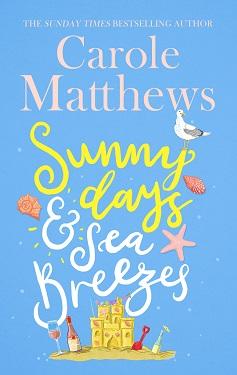
SDSB cover

What has being a member of the RNA meant to you over the years?

Friendship and support. It’s lovely being able to mix with a group of like-minded people who are willing to share your successes and struggles. It’s a great asset for authors.

What was your reaction to firstly receiving the RNA Outstanding Achievement Award and now this one?

The Outstanding Achievement Award was wonderful. I shared the honour with Jill Mansell and we were both presented with our awards by Barbara Taylor Bradford which was amazing – what a woman! It’s very nice to be recognised by your peers. I received three nominations – two for Sunny Days & Sea Breezes, plus one for Christmas for Beginners which was a lovely surprise. To receive the award for Romantic Comedy Novel of the Year was such a thrill. Sunny Days & Sea Breezes has already proved to be one of my most popular books with readers and this feels like the ultimate stamp of approval.

Happiness for Beginners was inspired by a real animal farm helping people – how do you balance the harsher realities and issues of life with a lighter touch to convey a heartfelt and serious theme?

That’s something that I’ve tried to do with all of my books and I think they reflect life in general. It’s not all ha-ha-hee-hee, but sometimes we’re able to see the funny side in difficulties. While my books are romantic comedies, I hope they reflect real life too. With Happiness for Beginners, the real farm helps people with behavioural and mental health issues, so that created the darker side of the book. They also rescued troubled and damaged animals and they definitely provided the comedy element!
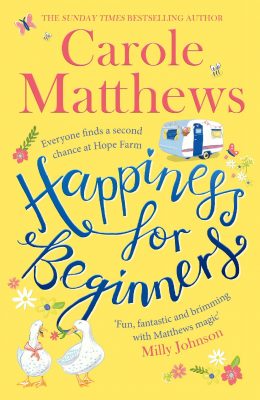
Happiness (1)

Are you a detailed plotter or do you develop your work on the screen as you go and through revisions and edits?

A detailed plotter! As I’ve written two books a year for the last ten years, I don’t have the luxury of wondering what happens next – I need to know! I do, however, change and adapt as I go, but I start off with a definite beginning, middle and end. I spend about two weeks writing out character profiles and that helps me to get into their heads. Each morning, I start by editing what I’ve done the day before and then I have one final pass at the end. I do as little editing as humanly possible.

Your locations vary, keeping your work fresh and inspiring. Are there any that have been particularly memorable?

I have been fortunate to be able to base my books in some wonderful locations over the years. Part of With or Without You was set in Nepal and that was a very memorable trip. I loved every minute – the people and the culture are fantastic. I went to Swedish Lapland and stayed in the Ice Hotel as research for Calling Mrs Christmas and that was wonderful too. We had the most fabulous display of the Northern Lights – one of the highlights of my life. My latest, Sunny Days & Sea Breezes, is set on the Isle of Wight and I’ve fallen in love with the place and plan to visit time and time again. I must have described it nicely as many of my readers – and my editors – booked holidays there as a result!

You are a prolific author, but roughly how long does it take to do the research, writing, editing to final manuscript?

I’ve been doing a book every six months, so research, writing and editing all tends to roll into one. I’m usually researching the next book while writing the current one and editing the last one. I really wouldn’t like to see inside my brain!

All 4 confetti instagram grid

What is next for Carole?

Lots to look forwards to! The paperback of Sunny Days & Sea Breezes is out in May, so I’m looking forward to that. My publisher is re-jacketing and reissuing a lot of my backlist which is quite a job with thirty-odd books to do. The new-look Chocolate Lovers’ Club is out in eBook at the moment for 99p and the whole series will be reissued in paperback in August. This series of four books is among my most popular worldwide, so it’s nice to see them given a new lease of life. Later in the year – October – will see the paperback of Christmas for Beginners which was also nominated for an RNA award and sees another visit to Hope Farm.

Meet Shirley Mann – winner of the RNA’s 2021 Romantic Saga Award


Welcome Shirley!

Mann bobby war author (1)

Huge congratulations on winning the RNA Romantic Saga Novel of the Year 2021!

Hello Valerie, thank you so much for asking me. In the last three years of my mum’s life, I suddenly thought I might like to see, after years of writing factual content, whether I could write a novel and my parents’ wartime romance was so fascinating, I couldn’t wait to get it down on paper. I never thought I could make a career out of it, but it probably came at the right time for me – I was making films for environmental organisations and was running out of enthusiasm for scrambling over stiles carrying heavy camera equipment but the transition has been gradual and completely unexpected. OK, the truth is, there was no conscious decision and there’s nobody more surprised than me about where this journey is taking me.

Romantic saga

Bobby's War cover (2)


Research is obviously something you are very used to doing and experienced in, but roughly how long do you spend researching and planning each novel?

Oh, the joy of writing your first novel when you have years to fiddle around with the words, visit endless museums and wander all over the country finding incredible women in order to get their personal stories to make sure the books are authentic. Now, novel #2 and so on, that’s a different story. I am basically doing one a year and that means I really have to get a move on. I start with a basic plot idea and then just get stuck in. Research can be overwhelming so I do the basics and then the rest takes place as I go through the book but I do get a tad obsessed. My background as a journalist means that I love the safety blanket of facts and I panic until I know that a scene I’m writing actually could have happened so I have to be careful that I don’t get completely side-tracked by research. I once spent two days finding out whether they had ginger spice in 1942 to make biscuits before it occurred to me that my character could make garibaldi ones instead. However, I am astounded how the story starts to unfold as soon as I begin to write. I once wrote the words: ‘She had to think fast’ without realising that ‘she’- my character- meant me. I had no idea where I was going next. So, a cup of tea and a strong talking to and eh voilà, it came to me- no idea where from.

DSC_0829

Bobby’s War was inspired by strong women such as Mary Ellis, ATA pilot. Can you share with us some of the inspiration behind this and your other novels?

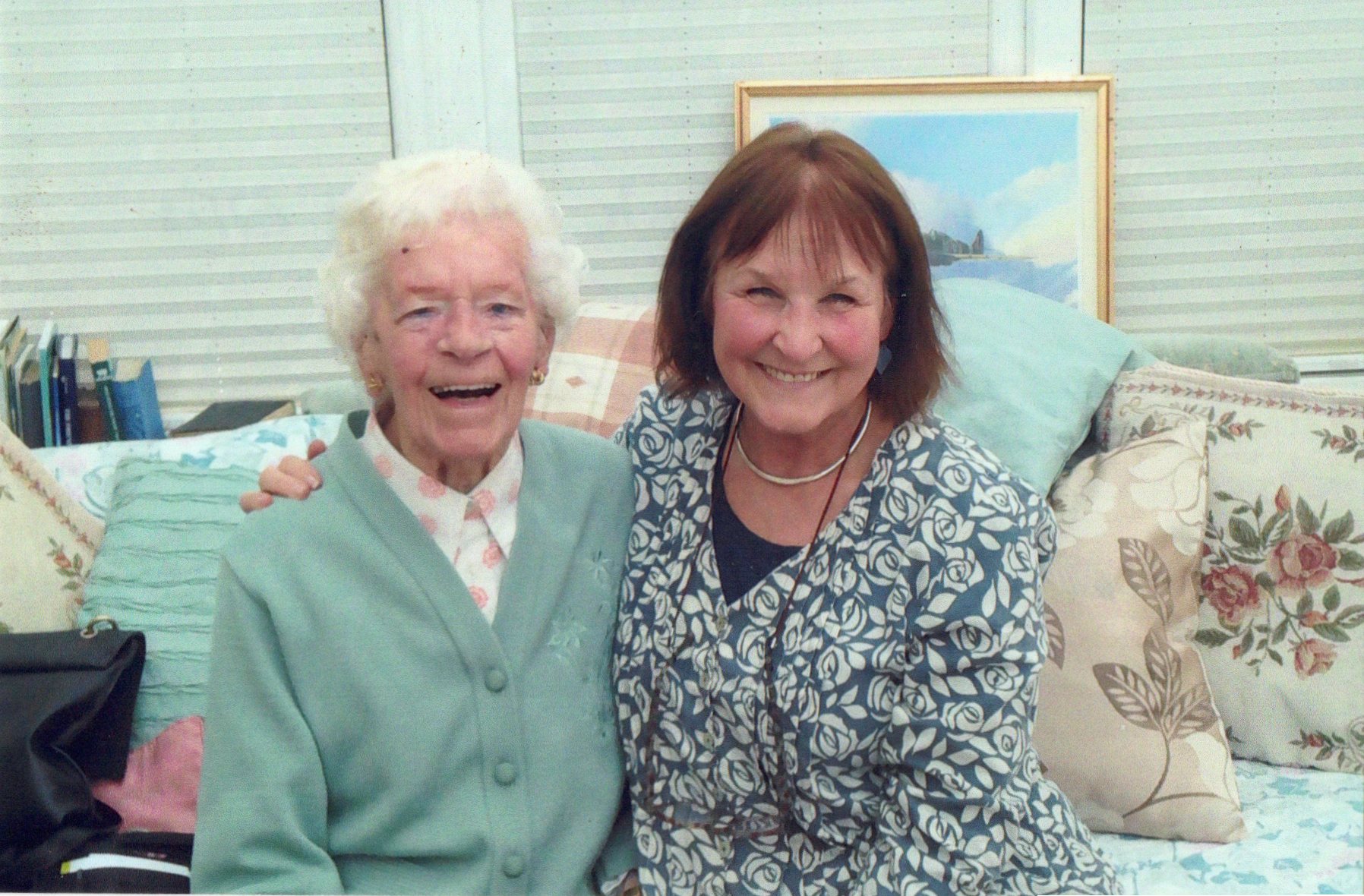
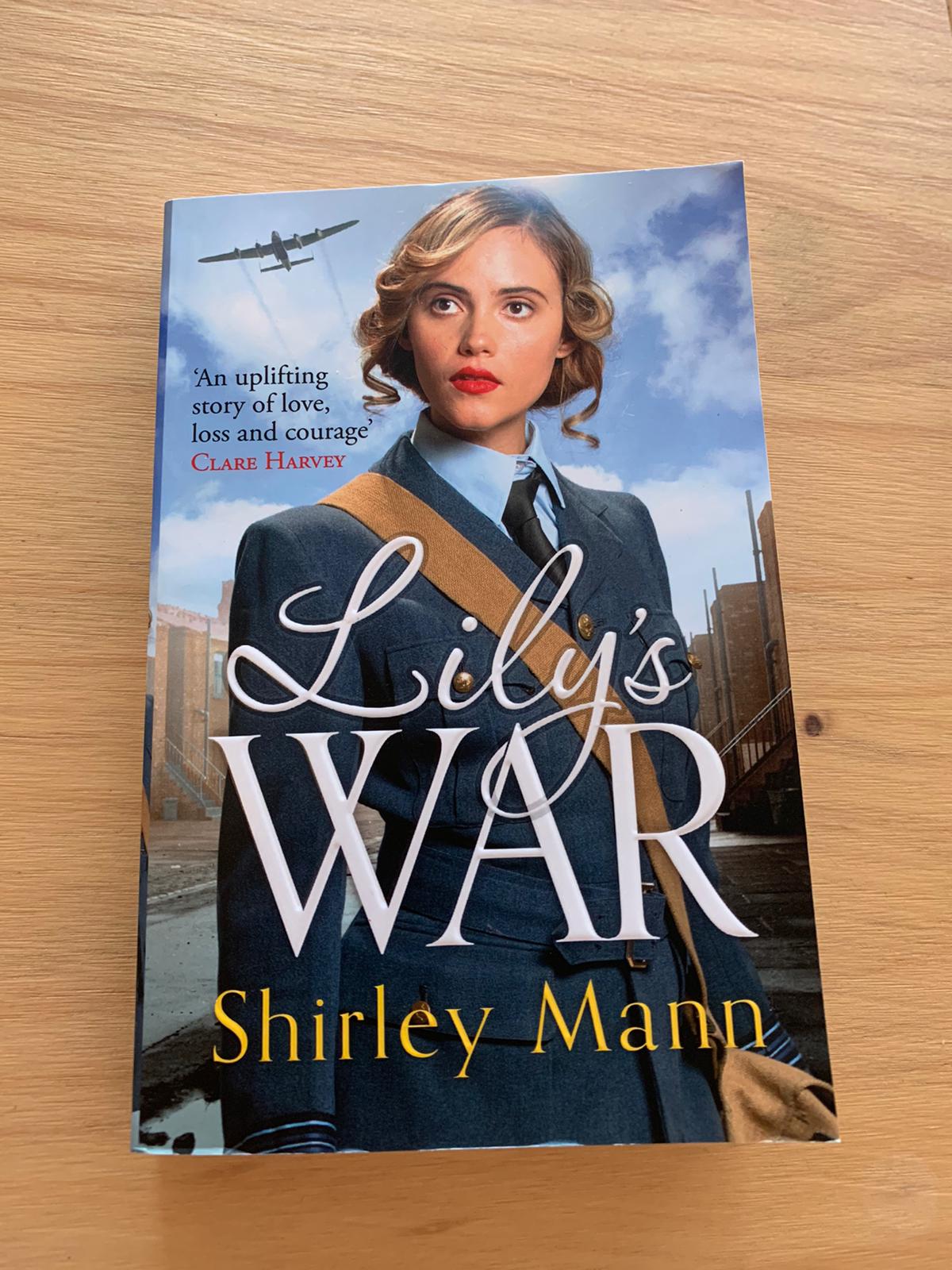
I was so lucky to get to meet Mary Ellis about two months before she died at the age of 101. I couldn’t help but come away inspired, awe-stricken and to be honest, with a little bit of a girl crush! She was just fabulous. My mum was my inspiration for ‘Lily’s War’ and I now realise how lucky I was that she was a WAAF in Bomber Command doing a glamorous job. The fact that my dad was in the 8th Army meant I was able to use his war time experiences as inspiration as well to tell his side of the story. I like to learn something in books I read so I want to emulate that and love giving something in the books that is unexpected so I like to look at the war from the viewpoint of a Tommy in Africa and Europe for example, or explore the shadowy world of an enigmatic civil servant or maybe even ( plot spoiler) a German POW. However, when my parents died, in a panic, because I hadn’t asked them enough questions, I raced around the country to find other servicewomen including Land Army girls, explosive workers and plotters etc and every time, I just found myself completely overwhelmed by what they had achieved- and put up with- at an age when I was having fun in the Uni bar. I loved imagining walking down the street with them in the 1940s and finding out those little details that aren’t in the history books. It made me determined to help readers walk down those streets too and make sure the women’s legacy was recorded so it would inspire future generations.

Shirley Mann with ATA pilot, Mary Ellis

What tips would you give your younger self about becoming a novelist?

Don’t give up your day job! It’s such a slow burn to establish yourself, get people to know and hopefully, like your work at the same time as writing enough books to establish credibility. I’m in my 60s and I honestly don’t think I could have done this earlier when, of course, I needed to make a living and there are certainly no  financial guarantees with novel-writing. Working for the BBC and running my own media company on top of having a family didn’t leave me much head-room to be able to think a story through, write it and deal with the social media and publicity to make my books stand out amongst all those other millions of books out there. I naively thought you just wrote a book!  I think the one advantage I had at this age was that I wasn’t afraid to fail, I just wanted to see whether I could do it, so maybe the answer to this question is, certainly take the writing seriously but don’t take yourself too seriously and enjoy the ride.

What have been the highlights of your professional life: as a journalist and as a novelist?

I’ve been so lucky in my careers- I just didn’t mean to have this many of them. As a journalist, I’ve met a huge array of famous people and can out-bore any dinner party guest (when we’re allowed to have them again) with insider gossip but it was the real people who left me humbled, the ones who strove against adversity and triumphed quietly- like the woman who worked to help the mothers whose children had been snatched by estranged husbands or the family who moved to a remote hillside in India to try to save threatened tigers. I suppose the same applies with the novels. I still talk to my lovely servicewomen- now in their late 90s- who talk in matter-of-fact tones about how they were young women living every moment despite bombing raids, being constantly hungry and  being asked to do things that would terrify a super hero. On days when I’ve been feeling sorry for myself because I haven’t been able to see friends or go on holiday, that common sense pulls me up sharply- these are the highlight moments of all of this for me.

IMG-20200430-WA0007 (3)

What has the RNA meant to you over the years?

I’m such a newbie at this, ‘Lily’s War’ was only published last year so I’m only just finding out what an amazing organisation the RNA is and how incredibly supportive it is of romantic fiction writers. I’m about to start a course with them to find out how to use social media to promote my books and my daughters, who are on a hotline Whatsapp group, are incredibly relieved that someone else is taking me in hand and teaching me what NOT to press. Added to that is the fact that the RNA has just amazingly given me an award for only my second novel, so hell, yeah, I think they’re incredible! 


What is next for Shirley?

I’m just finishing Book 3 which ‘Hannah’s War’ about a Land Army girl and I did struggle with this to begin with because both Lily and Bobby were such strong characters doing exciting jobs and I wanted to make Hannah a different sort of girl, one who was shyer and less confident of her potential. I soon realised that these LA girls were every bit as heroic as the ones like Lily and Bobby. They toiled in all weathers, in all circumstances and often, deprived accommodation to feed the country. Hannah’s journey is perhaps even more admirable because, without the war, she was one of those girls who would have remained tied to their mother’s apron strings and would, I suspect, never have discovered how strong they really were. Then it’s straight onto Book 4, which is set in the Isle of Man where they had internment camps, housing everyone they didn’t know what to do with- so Germans lived alongside Jews, Conscientious Objectors, gypsies and Italians. What a fantastic melting pot for a novel!  My parents lived their last years in the Isle of Man and are buried there. I love the island and as a next step, it seems a perfect way to complete the circle from ‘Lily’s War.’ I just need to be able to get over there to start the research.

Oh, and what else is next? ….I want to get my hair cut!


Meet Julie Houston – winner of the RNA’s 2021 Sapere Books Popular Romantic Fiction Award

Hi Julie

In your shortlist interview you wrote:

I was inspired to write SING ME A SECRET after taking part in a musical production of Lloyd Webber’s Jesus Christ Superstar in Leeds Town Hall several years ago. In the actual book, a family secret held between four sisters is played out, and eventually revealed, while rehearsing and performing in their village’s own production of this fabulous musical. I’d loved every minute of taking part in the show, especially as we all fell in love with Jesus. And what a Jesus…

You revealed the source of this novel was a musical – how did this come about?

I’ve sung in a choir for the past twenty-five years or so and, on one occasion, we were lucky enough to be given permission to perform JESUS CHRIST SUPERSTAR by Andrew Lloyd-Webber’s Really Useful Group. This was performed in Leeds Town Hall and it was one of the best things I’ve ever been involved in. We all fell in love with Jesus, who was an extremely talented – as well as rather good looking – young man, and taking part in the production was really fantastic. Our choirmaster, Gary, who I’ve acknowledged in the book, Sing Me A Secret, surprised us all by donning a yellow suit and purple wig and taking on the part of Herod. This was my inspiration for Juno’s love object – Dr Scott Butler – when he took on the part of Herod in his own yellow suit and purple wig.

51DshNvyepL

Can you share some of your journey from unpublished to published author with us?

I’ve always read, as surely all authors must have done in order to write a novel themselves, and really wish – again as all authors probably wish – I’d started writing much earlier. However, I started writing Goodness Grace and Me when my children were small and I suppose it took me many years to not only write it but have the confidence to submit to agents. Then came the usual rejections. I joined the RNA and submitted this first book into their New Writers’ Scheme which was extremely helpful in pointing out where I was going wrong. (As well as going right, thank goodness). Eventually my lovely agent, Anne Williams at KHLA, took me on and we did the round of submissions. This was back in 2014 when publishing was still all about paperbacks and the Romantic Comedy genre seemed to be losing popularity As such, the main publishing houses rejected it. I decided to go independent and worked with Ebook Publishing to get Goodness Grace and Me up as an e-book with Amazon Kindle. The book did well, reaching 64 in the UK charts. I then wrote The One Saving Grace and Looking for Lucy and was taken on by White Glove which was an arm of Amazon publishing for agented writers. I don’t think it exists any more. They were brilliant at promoting and Looking for Lucy reached Number 1 in Australia. Anne submitted A Village Affair to a round of publishers and I was taken on by Sarah Ritherdon who was then with Aria. Aria took all my back numbers as well as offering a new three-book deal and then, with Hannah Smith as editorial director, was given another three-book deal. The team at HeadOfZeus/Aria have been fabulous to work with. Sing Me A Secret won the Sapere Books Popular Fiction prize in March this year. A Family Affair will be published in June and I’m just about to complete my tenth novel, A Better Life.

What advice would you give to your younger unpublished self?

Write that book now!! Don’t leave it until you think you have time. Read everything, even books outside the genre in which you want to write. Also, go with your gut instinct: if you really think people will enjoy reading what you’ve written, don’t listen to anyone who might try and put you off. Persevere, don’t give up. Plod on. You’ll get there if you really want to.

Are you a very organised plotter or do you write from a specific starting point and then let the characters evolve and take you on a journey?

By the time I was writing my fifth book and had been taken on by Aria, I knew this was a serious business and I had to see this as a job, rather than a hobby! I’ve never been asked to write a certain plot – sometimes I think it might be interesting to be given an idea – so it’s now a matter of sitting down with a brand-new exercise book and creating characters, time lines and family trees. I hate that first page of writing a new novel. In fact, I probably hate the first few chapters as I am homesick for my old characters and not yet in love with the new ones. Once I’m in love with them, I let them write themselves. I know this sound utterly daft, and I’ve certainly ridiculed the idea that characters can write the stories themselves, but give them their head and they will. I love writing dialogue – I’d love to do some script writing – so I suppose my books are very much character, as opposed to plot, driven.

How have you coped to keep yourself mentally and physically fit during lockdown?

I’ve just got on and written two books: A Family Affair which comes out in June and A Better Life (title might change.) I started the first last March as Lockdown started and am on the point of finishing the second. If anyone had suggested, when I first started this writing lark, I’d be writing two books a year, I’d have laughed out loud. Lockdown has given me the opportunity to do that. My children are in their early twenties and have basically left home, giving me all the time I need to write. Physically, I run most days as well as walking the dog. (Sometimes I combine the two, much to the dog’s dismay who doesn’t like being on a lead). I was swimming most days until the gym closed for Lockdown and we’ve now just been informed this one isn’t going to be reopening at all. Who needs yet another retail park which, I believe, is going to be there instead? I’m livid!!

What has the RNA and winning this award meant to you?

The RNA has been fabulous. I’ve met so many friendly and talented writers happy to share their time, advice and expertise. Winning the RNA Sapere Popular Fiction award this year can only be described as a dream come true.

What next for Julie?

As we speak, I’m just about finishing book 10: A Better Life. Brand new characters apart from Cassie, Fiona and Clare from A Village Affair who, although featuring only briefly, I enjoyed bringing to life once again. I certainly can’t imagine stopping writing very soon yet. Who knows – in another five years, I may have written another ten books?

I certainly hope that you do and wish you every success in the future.

Please leave a comment or a question in the comments below!

Meet Louise Douglas -the RNA’s 2021 Jackie Collins Romantic Thriller Award winner

Douglas house sea author (1)

I love the description of ‘contemporary gothic mysteries’ – where and when did you first discover your desire to write novels?

Thank you, Valerie and thank you for inviting me to your website, it’s a treat to be here 🙂

You are very welcome!

I’m one of those people who never wanted to do anything but write. When I was a child and people asked me what I was going to be when I grew up, I always answered: ‘Bookmaker!’ I still love that word now!

I was a dreamy child, often in trouble as I never listened to instructions, struggled to concentrate in school and was always getting lost. This was because I was imagining alternative lives in my head and not paying enough attention to the real world. I loved fiction books; loved the pictures, the feel of the pages, the way the stories unfolded. I was often told that writing was all very well but I needed a ‘proper’ job too. Which was fine, as long as it was a job that I could do while I was day-dreaming.

What is it about this genre that attracts you?

I’ve always been drawn to the dark, but that’s because it’s necessary to accentuate the light. I like pre-Raphaelite paintings, epic Gallic poetry and music with a mysterious edge to the lyrics (Nick Cave, Massive Attack). From a young age, I liked exploring old graveyards, because of the way nature takes over, and because of the inscriptions on the gravestones, the stories they tell and the stories they hide. I love that these sad places inevitably evolve into magical and joyous havens for wildlife. It was inevitable I’d be drawn to the kind of books that meld death and love and wild countryside places and big old abandoned houses with secret doors and love letters hidden between the pages of novels.

The night is darkest before dawn; that’s what makes the sunrise so glorious.

Your winning novel was inspired by a real place – is it place, character, theme or another inspiration that triggers most of your plots?

It is usually places that are the inspiration, I can’t say exactly why. But that’s another habit that has carried through from childhood – finding a certain place and knowing that I have to write about it. I remember being about nine years old and riding in the back of my dad’s car, going past a massive old building that was completely derelict and (I know this will sound weird) although I’d never seen it before, I recognised it. It was somewhere in the East Midlands – that’s all I could tell you about it now, but it’s always stayed clear in my mind. That building has become the asylum-turned-reform school that’s at the centre of the novel I’m writing now.

Are you a meticulous plotter or a more organic writer?

Oh, I wish I could plot! I’ve tried everything to turn myself into a plotter, I’ve got a bookshelf full of ‘How to plot…’ instruction manuals, I’ve asked other writers for advice, scoured the internet for tips, I’ve tried and tried and tried and I just can’t do it! Even if I start with a plot within about 500 words it’s all gone to pot and the characters are doing their own thing or turning into different characters altogether and everything that started off clear in my mind has become a mess.

‘Organic writer’ is a lovely phrase but it doesn’t really describe the chaos that I go through every single time. And the not-plotting is so wasteful. I end up deleting tens of thousands of words because I’ve written myself into a dead end. It’s annoying and frustrating and I wish I could be different but it’s the way it is.

You have a love of nature, creativity and the outdoors, does this shine through your work?

Thank you for this question. I do love nature, plants, animals, the moon and stars, the countryside, urban foxes, the oceans, birds, all of it. I hope it shines through in my work because nature is so important to me. One day I really want to write a book about how the outdoors grounds, inspires, heals and calms. Climate change and the threat to the environment terrifies me.

What has winning this amazing award meant to you?

It means the world to me. Being shortlisted gave me a huge boost; it’s done wonders for my confidence. I’m incredibly grateful and proud to have won. And also… to have my name mentioned in the same sentence as the wonderful Jackie Collins is just.. well it’s amazing! Thank you so much to Simon and Schuster UK for sponsoring the award in her name. #BeMoreJackie.

Has your road to success been long or short?

It’s been a long road, with plenty of steep hills, bumps and potholes and I’ve got lost many, many times and had many a flat tyre but I’m still on that road and still enjoying the ride.

What tip would you give your unpublished self-looking back, or would you not change a thing?

I’d tell myself to learn to plot.

How important has being a member of the RNA been to you as a writer?

It’s been important to me both as a writer and as a human being. Through the RNA I met my first ever writer friends; we used to meet once a month in a pub and we laughed and encouraged one another and I realised what a warm and wonderful community it is. It’s a superb organisation run by incredible people.  I admire and respect the way it promotes romantic fiction in its myriad guises, challenges the sometimes patronising assumptions that appear in the press, supports both new and established writers and helps those of us in what is effectively a solitary profession feel part of a collective.  I’m incredibly proud to be part of it.

What is next for Louise?

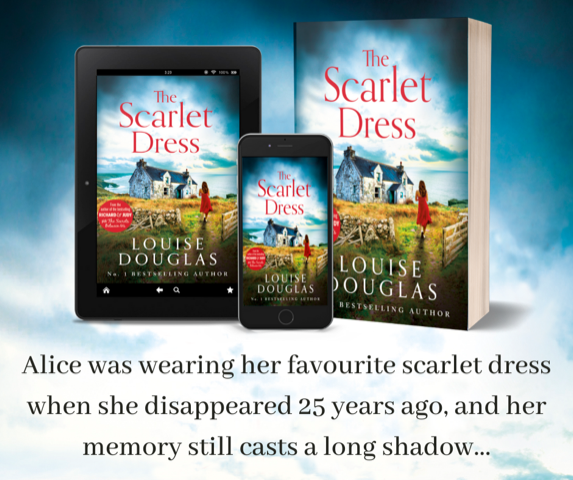
Book number eight, The Scarlet Dress, has just been published and I’m currently working on the asylum-turned-reform-school book which is my first ever full-on ghost story.  

unnamed

Congratulations and I wish you every ongoing success!

Comments, likes and questions can be left below.