An Interview with Richard Lee

I am delighted to welcome the chairman of The Historical Novel Society, Richard Lee, as this month’s guest. Richard founded the organisation in 1997 and it is now an international success.

RichardLeeSmallWhen you decided to found an organisation devoted to historical fiction, did you ever envisage it growing into such an amazing international body?

No! I did not know how it would be possible to be international, so I only envisaged a UK membership – though always celebrating international authors. We actually had US members sign up from the very beginning, which caused headaches about currency transactions and postage costs. This made us ‘ready’ for when internet links began to take off – and now we are much more international than British.

What have been the major developments/changes that you have seen in historical fiction since the HNS was founded?

In commercial historical fiction many things have changed. The ‘discovery’ of the significance of women’s lives has transformed the way that, for example, royalty and celebrity is written about. The success of ‘Sharpe’ and ‘Gladiator’ created a genre of military and epic historical fiction. We have also been blessed by literary authors pushing the boundaries in various ways – Michel Faber reconceiving the Victorian authorial viewpoint, many authors revisiting Colonial and World War narratives, Hilary Mantel turning accepted views of Tudor power and honour on their head.

How has historical fiction been influenced by the major changes within publishing in the last decade?

I am no expert here. Traditional publishing still knows how to publish the big books. The Miniaturist and Elizabeth is Missing we both debuts that had multiple agents interested, sold well into many territories, won prizes and became bestsellers. The main change I perceive is that there is much more opportunity for niche historicals to go it alone, often to the author’s benefit.

The HNS conferences have been hugely successful and enjoyable to attend. Could you share a few of your personal favourite highlights?

The things I remember from conferences are usually surprises from authors I admire – Louis de Bernieres, for example, saying that he wrote each chapter of Captain Corelli as a short story, and didn’t decide the running order till the end. Or Conn Iggulden emphasising just how powerful true coincidences are in history. Highlights are more likely downtime with fellow organisers or friends – meeting members off-stage and finding out more about them. It is great when it is all ‘done’!

What period of history do you have a particular interest in and why?

Early 20th C, Late Victorian, High Victorian, Regency, Georgian, Early Medieval, Saxon/Viking, Roman, Ancient Greek… But really anything!

Do you prefer reading or writing historical fiction?

Reading. I haven’t written consistently for a long while, though it remains an ambition.

How would you like to see the HNS develop in the future?

I always see the society as being about what members want – any enthusiasms that members have are for me to try to facilitate and nurture. This for a long time focussed on our magazines and reviews, which actively involve around 100 of us. Conferences are another big active area – this year over 400 will gather in Denver, and we had an inaugural conference in Sydney, Australia. The big ‘new’ areas of involvement are chapters based in different regions (mostly entirely independent) and connections through social media. Our awards are also popular (230 entries for the latest new novel prize), and we are looking into ways that the society can offer help and training to authors. Whether mainstream published or indie, all authors need help with marketing and promotion these days, we can all help each other.

What is next for Richard?

My first child was born a couple of years after I founded the society, two others followed, and the oldest is now 15. They are the real project and joy, but I still have a wish to write. I think I finally have a good idea!

More from the HNS


New book launch!

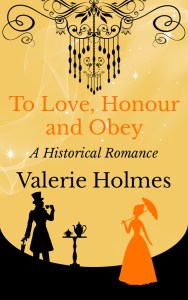
To Love, Honour and Obey

Buy on Amazon!
Australia | Brazil | Canada | France | Germany | India | Italy | Japan | Mexico | Netherlands | Spain | United States of America | United Kingdom

To Love Honour And Obey

1805

Six years ago, Willoughby Rossington’s father was murdered while searching for the kingpin of a smuggling and spy ring. Taken under the wing of his uncle, who is running a counter-intelligence operation against Napoleon’s spies, Willoughby is assigned to take up his father’s last mission—and, hopefully, in the process find who killed his father and bring them to justice.

He encounters a young woman, Beth, who works at the local inn. Her spark and resilience against her master’s attempts to break her will strike a chord in him and he, albeit reluctantly, takes her with him when he leaves town.

As they begin to talk, he finds out that her master is more involved in the ring that could have been thought. She overheard things and knows things about the seedy side of villages that could be helpful to him and his mission.

Though Beth hasn’t had the opportunity for education, she’s smart and quite cunning while still maintaining a child-like wonder. Even as Willoughby makes plans to set her up with a family in order to protect her from the perils of his mission, he finds himself a bit melancholy at the thought of losing her company.

Beth is having none of it. She knows she can be of help to Willoughby and isn’t going to be left behind now that she’s found someone nice. Part on purpose, partly because of fate, their two lives become intertwined as they race against the villains that plot to destroy them both.

Will they uncover the truth behind the smuggling ring and find who is responsible for Willoughby’s father’s death?


An Interview with Margaret James and Cathie Hartigan

I am delighted to welcome two successful writers and tutors of creative writing to my blog this month, Margaret James and Cathie Hartigan.

Margaret has been a shining light to me and many unpublished authors as she was the New Writers’ Scheme Organiser for the Romantic Novelists’ Association when I first became published. Cathie is a prolific writer, lecturer and founder of CreativeWritingMatters.

Welcome!

Hello, Valerie –thank you for inviting us to chat with you! It’s lovely to be here.

You are both successful writers so my first question must be where did your own writing journeys begin?

Margaret: I started writing short stories while my children were still babies and eventually I began selling them to women’s magazines.

Cathie: I was a hobby writer until about ten years ago, but after a foundation course with the Open College of Arts, I began having success in short story competitions. Since then I have taken my hobby much more seriously.

CreativeWritingMatters is the inspirational name of the business you founded along with Sophie Duffy. I love the logo. Could you tell us about CreativeWritingMatters and how it came into being?

Cathie: CreativeWritingMatters came into being when I left teaching in mainstream education. The flexibility of being freelance meant we could offer workshops and short courses on all aspects of writing. The competitions came later following the success of a flash competition that we ran for our students.

The name came about because of a conversation I had, during which I became rather too vehement about the importance of creative writing. ‘Creative writing matters,’ I heard myself shriek. Our logo features Sophie’s cat, Henry, the star of her story in our Cat Walks ebook. He’s perky and forward-looking, just like the three of us!

You have jointly written an excellent handbook and a workbook on aspects of creative writing so obviously have a great working relationship, but how do you set about working on a non-fiction joint project as opposed to your independent fiction?

Margaret: I first met Cathie when she joined my local writing group, Exeter Writers. I loved her short stories and she was kind enough to say she liked my own writing, too. We collaborated on producing an anthology of members’ work and found we got on very well. We both teach creative writing (Cathie teaches face-to-face while I teach online) and, after we’d finished editing and producing the anthology, we decided to write a guidebook for our students.

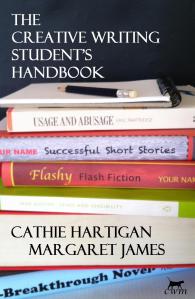
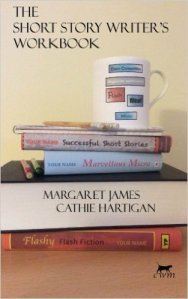
When we wrote The Creative Writing Student’s Handbook, we wrote alternate chapters and then we swapped files and edited these chapters. It all seemed to work well! But when we wrote The Short Story Writer’s Workbook, Cathie wrote the whole of the first draft and then I did a heavy edit, making the second draft twice as long as the first. This approach worked very well, too. We find our non-fiction writing styles are very similar. A few months down the line, we often can’t remember who wrote what.

Will there be more in this series?

We enjoy working together so we intend to produce a handbook for novelists and we have other projects in the pipeline, too. We hope to produce some more anthologies featuring either our own work or that of other people.

You are both very experienced tutors so I would like to ask:-

Margaret, what three tips would you give to an aspiring unpublished novel writer?

  1. Plan your story and know roughly how you want it to end. But don’t be too rigid in your planning. Be prepared for the story to change and grow while you write.
  2. Your reader should want to spend time with your characters. So don’t write about people you don’t actually like or don’t find very interesting yourself. Your characters ought to be your friends.
  3. A novel is a big project. So whenever you get tired or disenchanted – which you almost certainly will – take some time out to reflect and to think about how and where you want this story to go.

Cathie, what three tips would you give to an aspiring unpublished writer of short stories?

  1. Use vivid and specific details that tell a lot, rather than generalisations. If a character puts up an umbrella, we don’t need to be told it’s raining.
  2. How much time you have to set up your story depends on the number of words that have been stipulated by the competition or magazine. Your story needs to develop and reach its resolution without a sudden rush at the end. Once finished, check the balance of set up, development and resolution, then be prepared to cut ruthlessly at the beginning.
  3. Use dialogue and gesture to reveal character rather than word-hungry narrative.

The Exeter Novel Prize is going from strength to strength, what inspired this, and how do you see it evolving?

Margaret: The Exeter Novel Prize came into being because it filled a gap in the world of novel-writing competitions. It’s open to previously published and also self-published novelists. There is more information here: http://www.creativewritingmatters.co.uk/2015-exeter-novel-prize.html

Will there be a CreativeWritingMatters short story competition in 2016? If so, what advice would you give to entrants?

CreativeWritingMatters runs lots of competitions for both short and longer fiction, so here is some general advice.

  • Read the rules.
  • Abide by the rules.
  • Start your story as something interesting happens.
  • Round off your story with a satisfying ending.
Read Making the Grade by Cathie Hartigan
Read Cathie Hartigan’s story, Making the Grade!

What is next for Cathie and Margaret, jointly or independently?

Margaret: I’m about to start the second draft of a novel and to plan a new non-fiction project that has nothing to do with writing.

Cathie: My debut novel, Secret of the Song will be out later this year and there will also be another collection of stories by the three of us at CreativeWritingMatters. Right now, the characters in my next novel are twitching for me to get on with it.

Thank you for taking the time to share your experience and advice with my readers.

Thank you for inviting us! It’s been great to talk to you.

An Interview with Michael Fowler

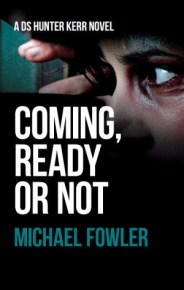
This month’s guest is a man who has spent his life dealing with crime and now enjoys creating his own – crime writer and artist, Michael Fowler.

Welcome to my blog, Michael.

Your police career involved a lot of undercover work. Did you sometimes feel that you were in an acting job, however one that had a realistic edge?

Acting is a very good phrase, because it was just that, especially when I was in the Drug Squad. I underwent undercover training by experienced undercover officers. The script they gave me involved learning the ‘language of the street’ together with acting ability on how to buy drugs and set up ‘deals’. My props were a changed appearance – I grew my hair long, wore an earring and changed my dress style. My stage was wherever the drug fraternity hung out. The more time I spent with them the more polished my acting ability improved.

That period of policing was up there as my best, despite being nerve-jangling at times.

When did you discover the desire to become an author?

I never had a desire to be an author. I always wanted to be an artist. My policing and writing career have come by default. I’ll expand on my writing career in a later question.

Were you always drawn to crime?

I’ve been an avid reader since the age of eight. In my early teens I started reading adult books of the Science Fiction and Horror genre. An uncle, who was also well read, introduced me to crime. I initially read cosy crime written by Agatha Christie, Dorothy L. Sayers and Dashiel Hammet, and then I discovered the 87th Precinct series by Ed McBain and I was hooked on police procedurals.

Your first published works were about Mexborough. Have you always had an interest in social history?

The publication of my childhood and teenage nostalgic accounts of growing up in Mexborough came by good fortune. In the late 1980’s I discovered writing groups and began composing stories. My childhood adventures in the 1960’s, within a mining community, were the first things I wrote about. The writing groups were run by the WEA and one of my tutors suggested I approach a local publisher who published this type of work. In 1994 I met the editor at Wharnecliffe Press (Pen & Sword books), pitched my accounts and walked out with my first writing contract. They published three of my books, but I never thought it would progress beyond that because policing and two growing sons took up my life at that time.

Could you tell us about your artwork and what is your favourite medium to use as an artist?

As I have already alluded to painting was my first love. My earliest artistic recollection was sitting at the table drawing with my mum, and all through schooling I pursued art as my passion. My last art teacher introduced me to oil paints and I never looked back. At the age of 16 I passed an interview to attend art college only to return home to be told by my father that he couldn’t afford to support me and so I joined the police cadets. I did paint regularly, all through my policing career – it was a great stress reliever, and I also sold my work. When I retired in 2006, I did so to paint. I rented a studio and painted daily. My work was accepted at major exhibitions at The Mall Galleries, London, and I exhibited with a number of prestigious art galleries. In 2009 I was awarded Professional Artist of the Year. Then came the fall-out from the bank crash. Three of the galleries I painted for closed down and people stopped buying artwork. I knew I had to do something other than paint every day and so I returned to writing and going back to writing groups. I focussed on writing police procedurals and in 2011 I got a publishing contract for my first crime novel. Now I’m hooked on writing. I still paint occasionally, and I tutor an art group once a work, to keep my hand in.

What has been the most important lesson you have learnt as a writer?

That like a good wine you improve over time. I am now on book number seven and I can see a vast improvement from my first book, especially the grammar. A lot of that is thanks to the publishing editor’s skills. I have learned such a lot from the edited proofs that have come back to me prior to publication.

Where did inspiration for DS Hunter Kerr and DS Scarlett Macey come from: reality or fiction?

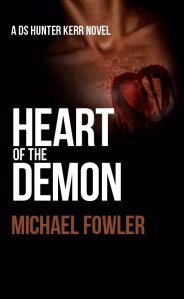
Hunter Kerr is 95% me and 5% my alter ego, even some of the events he is involved in are based on jobs I have worked on.

Scarlett Macey is a creation. I wanted to test myself developing her and it’s been a very interesting and enjoyable experience. She gets her first outing this September in ‘Scream, You Die‘ and I’m hoping she’s well received.

What next for Michael Fowler?

My first crime novel was released three years ago. Since then I’ve added another four Hunter Kerr books and I’m amazed at how my readership has grown. It’s been a wonderful experience that I want to build on. My policing career developed my discipline and drive and it would be fair to say that I am striving to be a widely recognised crime author.

More from Michael

An Interview with Rosemary Kind

I am delighted to welcome author Rosemary Kind, who is the founder of Alfie Dog, a publisher of short fiction based in the beautiful county of North Yorkshire.

Welcome, Rosemary.

What was the deciding factor that motivated you to switch from a successful business career to becoming a full time author?

My husband had the opportunity to move to work in Belgium and I said ‘Why not?’ Because we were going back and forth every fortnight to see my stepchildren an ordinary career wasn’t going to work, so as I’d proved everything to myself that I needed to in a traditional working environment it was the perfect time to follow my heart. I’ve always written, but in my spare time. I knew I’d regret it if I never found out if I could do more.

Please tell us about your published work and what inspires you?

I write in a number of genres. Inspiration can come from the strangest places. My first published book (leaving aside ‘Negotiation Skills for Lawyers’ which was commissioned), was a humorous guide to travelling on the London Underground ‘Lovers Take Up Less Space’. I wrote most of the ideas as therapy when I was working in London. ‘Alfie’s Diary’ started as a daily blog in January 2006 when our first dog moved in. I’d been in Belgium for a couple of months and was writing mainly non-fiction, business articles, company newsletters etc. I wanted to write fiction, but it felt like a big step. Writing Alfie’s view of the world was a way to make myself write something every day. I originally intended to write it for a year of two, but nine years on it’s still growing and has spun off into several other projects, not least because he set up his own political party The Pet Dogs Democratic Party.

Inspiration for my novels is more interesting. ‘The Appearance of Truth’ came out of a writing group project to write 300 words on ‘verisimilitude’. Once I’d looked it up in the dictionary I started mulling it over. I was researching my own family tree and had ordered a birth certificate. It occurred to me that it would be quite possible to pass a birth certificate off as belonging to someone that it really didn’t relate to and it all went from there. Lisa was given the birth certificate of a baby who died at 4 months old and the story is her search for who she really is and why it happened. ‘Alfie’s Woods’ came from our woodland walks. We’d just rescued a hedgehog, who was stuck in a fence, when a helicopter passed overhead. The rest of the walk was spent thinking ‘What if they were looking for the hedgehog? What if he had escaped from the woodland prison?’ ‘The Lifetracer’ was inspired by seeing an electronic countdown clock in a catalogue and finding myself thinking ‘What if it could be programmed with Time to Death and used to send a death threat?’ I have more ideas than I have time to write them.

What appeals to you most about Entelbucher Mountain Dogs and Alfie in particular?

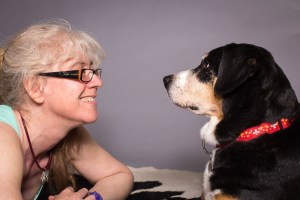
I fell in love with the breed long before there were any in the UK. They are incredibly loyal affectionate dogs who are great with children and like nothing more than to be close to you. I also adored the way they look, not only their colouring but the fact they are such happy smiley dogs. Alfie is my pride and joy. He is a gentle giant who is everything I had ever dreamed of in a dog. We are incredibly close.

When did the inspiration for an online digital site for short fiction first occur to you?

Not only do I write short fiction as well as books, but I have many friends who are widely published in that field. The more I talked to other writers the more frustrated I felt that there were so few outlets for short stories and for earning an income from secondary rights. It was January 2012 when I wrote the business plan. I launched to authors in February and to readers in May. I was overwhelmed by the response and we had more than 100 stories by the launch and have rapidly built a library of 1700 stories. I also wanted to set up a site that gave as much back to authors as possible. The culture is very much to give support to the writing community where we can. I was amazed by how word of mouth spread the message across the globe and we very soon had writers from more than 25 countries, all writing in English.

stp version smallWhat can a reader expect to find on www.alfiedog.com?

We carry good quality stories in a wide range of genres. All submissions are reviewed and where necessary edited and only the best are accepted for publication. We want our readers to come away having had a really good read and be looking forward to coming back for more. We carry work by over 400 authors, so there really is something to suit everyone’s taste. Many of our authors are widely published, but we enjoy introducing high quality work from new writers too. Unlike most sites, we carry the stories in a range of formats to suit all types of ereader or to print. We also publish a range of books in both electronic and paper formats. They are mainly short story collections, but we do carry some novels as well.

Of course for writers, our International Short Story Competition may also be of interest. The closing date is the end of September so there is plenty of time to take part. First prize is £200 and book publication.


How do you see www.alfiedog.com developing in future?
PDDP cover final small

The site is already one of the biggest short story publishers in the world, but hopefully it will be the site on everyone’s list when they talk about short stories. I want it to be ‘THE’ place that people go to when they are looking for quality short fiction.

What is next for Rosemary?

I’m writing another novel at the moment. This one was inspired by a chance comment in a meeting. Someone made reference to the ‘Orphan Train’ movement in America in the late 1800s and I had to go and find out more. As soon as I did, I was hooked on a story idea and the lives of three Irish immigrant orphans, fighting for survival, was born. It is my first full historical fiction writing and the research has been fascinating. It even made me get on a plane for the first time in over seven years, but that’s another story!

More from Rosemary

An Interview with Della Galton

Della Galton


I was intrigued to read that your first published story was achieved when you were six. You obviously have not looked back since. Could you share with us how this early success came about?

I have to confess, Valerie, that this comment on my home page is actually a bit tongue in cheek and an effort to pretend I am younger than I am. I wasn’t really six. Although I think my very first publication credit, which was a poem in Pony Magazine was actually published when I was about eight 🙂

Would you agree that you are a person who has a natural empathy with people, their problems and situations and that this is part of the appeal of your many successful character driven stories?

I do hope so. I do like people very much. And I think that all writers need empathy and sensitivity in order to step into the shoes of a character who may be quite different than themselves.

How would you describe your work ethic?

Workaholic. Definitely.

To achieve all that you do I can only imagine you are a fantastic organiser of your time. Roughly what percentage of time would you spend researching, writing and promoting a novel on social media?

I spend a little less time on social media that I did once – as it’s not easy to justify spending too much time there. I have a tendency to use it as a procrastination activity to avoid writing. But I would still say, writing a novel 60 per cent, researching 20 per cent, promotion 20 per cent.

Ice And A Slice Book 1

I remember driving my son back from college and hearing you on Steve Wright in the Afternoon discussing one of your non-fiction books ‘Eat Loads and Stay Slim’. Then I saw a new title of yours called ‘Ten Weeks to Target’ and I wondered if the research and work on one project creates a ‘spin off’ of ideas for new stories as an ongoing process?

I am thrilled that you heard the Steve Wright Interview – my one claim to fame, that!
Actually, the two books were entirely separate. Ten Weeks to Target came first – it was originally published as a serial in Woman’s Weekly. However, there’s definitely a spin off process that goes on constantly. Both of these titles came from my own experiences of trying to stay slim – and eat loads!

Could you tell us about some of the lovely pets that share your life?

I adore dogs. Currently there is Maggie May, my ten year old white German Shepherd. And Seamus who is a wolfhound, fourteen stone, and five years old.

You are not only a lecturer, public speaker and a creative writing tutor, but you also still attend writing events yourself. How important is this two way interaction?

Writing is my passion as well as my work. So I guess it’s just how things pan out. I think I must be quite boring. So recently I’ve taken up singing lessons and am learning to play the guitar, in an attempt to be more balanced.

Could you give a short piece of advice to as yet unpublished writers who are trying to break into the limited short fiction market, especially in the UK?

Don’t assume that rejections mean you aren’t any good. I still get my fair share of rejections. Not every story is saleable at the time you send it out. That doesn’t mean it won’t be later.

Ice And A Slice Book 2

Of all the things that you have achieved within your career what have been the top three most memorable highlights that you hold fondly?

This is tricky. There have been many. I will try and narrow it down.

I quite liked going on the Steve Wright Show.
Selling my first short story was awesome, as was selling my first novel.
And the third one, was when the editor of My Weekly phoned me and asked me if I fancied going on an all expenses paid trip to Malawi – I’m a journalist as well as a fiction writer. That experience and the going bit – I went twice – was fabulous.

The more I researched this interview the more convinced I was that your love of the world of writing is a driving force which means there are many more delights for us to look forward to. Could you share with us what is next for Della Galton?

At the moment I am writing a series for People’s Friend – I can’t tell you too much about this as they haven’t started publishing it yet. Watch this space. But I’m also keen to write a third novel in my Ice and a Slice series. The first novel is called Ice and a Slice. The second is The Morning After The Life Before. I don’t know what the title of the third one will be yet. If any of your readers have any suggestions I’d love to hear them though.

Many thanks for having me as a guest.

More from Della

Love a mystery?

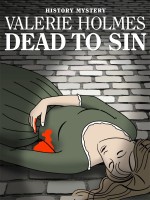
If you want to take a few hours out to relax and lose yourself in a mystery, then why not meet Nicholas Penn in Dead to Sin – A Penn Mystery Book 1?


Amazon UKAmazon USSmashwords

Dead to Sin

Nicholas Penn is summoned to Gorebeck Gaol to visit a man accused of murder. Having been found holding the body of the last victim in his arms, his plight seems sealed. Nicholas is torn between a sense of duty and his feelings of hurt and disgust when being in the presence of the accused. The tables turn abruptly, and Nicholas becomes the incarcerated. Duped and incensed, he swears to find the man, Wilson, before another victim dies.

An interview with Cindy Nord!

Cindy Nord - Professional ImageI am delighted to welcome my special guest this month, bestselling Historical Romance author, Cindy Nord.

Thank you so much for taking the time to do this interview and share your experiences with us.

What inspired your love of books, or the desire to be a story-teller/writer yourself?

Coming from a family of educators, I’ve always been encouraged to read.  I devoured books by the dozens.  From classics to childhood favorites, books expanded my world. As I grew older, I also grew to love history, with a specific focus on the Victorian era.  I read my first romance, and fell in love with the genre. I enjoyed the details of history sprinkled throughout the storyline, coupled with an unrestrained romantic entanglement. Because of this combination, I felt moved to put pen to paper and craft my own love story.

NO GREATER GLORY cover

What characteristics do you think are essential in a hero or heroine?

I want my hero to be strong, involved and engaged. A man who transforms compassion into heroic action with a unique leadership ability that separates him from the rest of the pack. Of course, he’s not perfect, he does have his weaknesses, AND, ultimately, it will be the heroine who helps him overcome those internal conflicts and imperfections. Likewise, I want my heroine to have a resourceful and internal focus that becomes challenged when she meets her hero. She must have a resilient sense of purpose with an unfulfilled need that even she doesn’t know she has. And, in turn, the hero, at first overwhelming and unwanted, eventually fills this void inside her heart. Of course, the romance wrapped around these two individuals is the catalyst that spurs them onward to completing their tumultuous journey to happily-ever-after.

Reliable research is essential to historical authors, but when did you first become involved in Civil War re-enactments?

As a Victorian lecturer and historian, I appreciate the details that breathe a character to life upon the pages. Wonderful tidbits that immerse the reader fully into the time period.  And my experience in re-enacting only helped solidify this knowledge. Many years ago, when I began writing my first novel, I read in the newspaper that they were having a Civil War living history weekend at our local university. Holy Toledo! I couldn’t believe that they actually did this sort of thing.  Here was American history brought to life. The acrid aroma of campfires. The thundering gallop of cavalry horses. Women clad in Victorian gowns sashaying across a lawn. All the things that I was writing about at the time. Indeed, I was swept straight back into the nineteenth century, and fell head-over-heels in love with this whole new experience. Immediately, I threw myself into the hobby.  I even ended up meeting my future husband on the battlefield.  Although we no longer re-enact now, I’ll forevermore cherish those years spent living in the time period I love so well.

What can your readers expect from a Cindy Nord novel?

Passion. Emotion. Conflict. Indeed, an accurate, historical immersion. All those things plus an ardent romance filled with sensations that tug at a readers’ heartstrings. Getting my characters to ‘The End’ is a hard won journey, for sure. And the greatest test of success for any writer is when their readers make the trip through their novels and never want the love story to end.

In your fascinating career to date, what memorable moments stand out?

Oh my, such a great question. Let’s see… I’ll begin with being a Romance Writers of America National Golden heart finalist with No Greater Glory which started this whole incredible journey, signing with my fabulous literary agent, Louise Fury of the Jenny Bent Agency in New York City, the day my first box of books arrived from my publisher, being a USA Today Lifeblog ‘Recommended Read’ author, having my Civil War romance novel used as a supplemental read in a well-known university history class, receiving a stellar review by the Library Journal (buying bible for all libraries in the U.S., Canada & the U.K.), my first invitation to be a keynote speaker at an RWA affiliated chapter, and having my very first book signing at Barnes & Noble…these, and so many more, have truly brought me untold joy.

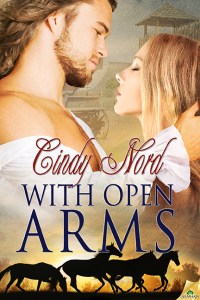
With Open Arms (USE)

Do you have a very organized day, or do you write around ‘life’, but to set targets?

Balancing my time and attention between writing, social media, my family and my friends is always a difficult task. I try to set up a schedule with mornings spent on the internet and my social media sites, with my afternoons devoted to writing. In the evening, my husband listens as I read what I’ve written for the day.  This is a routine that works well for me. I’m what they call a ‘pantser’ (writing without an outline), and must completely finish each chapter before moving on to the next. I wouldn’t advise anyone else to follow this writing style, so say the ‘plot-first’ experts, but it does seem to work for me.

Writing books involves long hours working at a computer. What do you do to keep healthy and active?

I thoroughly love to ‘water walk’ at the gym, plus I walk my two shelties daily around our neighbourhood. I also enjoy working in the garden, as well as bicycling with my husband. We are both passionate followers of an ‘organic’ lifestyle, along with nutraceutical supplementation.

Along with other writers, I understand that you contributed to an anthology for ‘Women in Need’. Could you tell us something about this work and the charity?

I was invited by writer-extraordinaire, Hope Tarr, to be part of her project entitled, “Scribbling Women and the Real-Life Romance Heroes Who Love Them” non-fiction anthology where I joined several New York Times & other romance fiction writers.  Each real-life story in this body of work details how we writers met, wed and love—and are loved and supported by—our spouses and life partners. All proceeds from this literary compilation go directly to Women In Need, a New York City women’s shelter for abused females & their children. I am so honoured to have been asked to participate. Happily Ever After isn’t only the stuff of romance novels and fairy tales.

What single piece of advice would you give to any, as yet, unpublished author?

Never, ever, ever give up on your dream. And since we’re going to dream anyway…DREAM BIG!

What is next for Cindy?

I am putting the finishing touches on AN UNLIKELY HERO, the third book in my four-book The Cutteridge Series. I anticipate this love story debuting Spring, 2016.  I’ve also been invited to host one of the ten coveted ‘opening night’ tables at the 2015 Romantic Times Booklovers Convention in Dallas in May.  I’m also doing several book signings, as well as guest interviews for television stations. Plus, lecturing on Victorian fashions at several locations across the Midwest.

More from Cindy:

The future of romance with Pia Fenton

I would like to welcome back Pia Fenton to my blog (Christina Courtenay) who has been the RNA Chair for nearly two years.

Hi Pia!

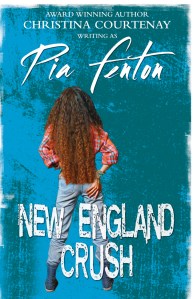
NEC front LatestAs Valentine’s Day approaches can you share with us some of the major changes you have seen in the last couple of years within the world of romance?

I don’t think the world of romance has changed very much, but rather the publishing industry as a whole.  With the advent of ebooks and ereaders (and especially the Kindle which had a massive impact the year it was first launched in the UK), the way people read books has changed enormously in a very short space of time.  Things seem to have settled down a bit now though and paperbacks are holding their own, which is great (I love proper books myself!), but I think ebooks have given both readers and authors more freedom to read/write what they like.

As for the books themselves, the popularity of certain sub-genres come and go, but editors and agents are always saying they’re just looking for really good stories.  I think that if a story is gripping enough, it doesn’t matter what it’s about – good story-telling is key.

Are you excited about the future of romance as a genre?

Yes, I think it’s going from strength to strength.  The RNA commissioned some research into sales and trends recently, and it showed that figures for romantic fiction are going up year by year, which is fantastic.  People will always want love in their lives and I’m sure they will continue to want to read about it too.

You have branched into the Young Adult market. Could you share with us the inspiration for this exciting new venture?

I discovered a while back that I love reading YA fiction – it’s an amazing sub-genre where imagination seems to have no bounds.  Then I went to a high school reunion and it really made me think about my own teenage years, both all the fun I had and the angst that comes with being that age.  I attended an American high school for three years, which was a bit of a culture clash to begin with and it occurred to me that it would be fun to write a series of books with UK heroines and US heroes and so the Northbrooke High series was born.  I have now self-published the second book in the series, New England Crush.

What is next for Pia/Christina?

I have just finished edits for the third book in my Japanese trilogy – sequel to The Scarlet Kimono and The Gilded Fan – which is due out in paperback in August this year.  I’ve also started work on a new time slip novel, which is based on the final few months of the English civil war.  I love that period in history and was inspired to write about it as there are several ruined castles, destroyed during that time, near where I live. (Both these books are for adults, not YA).

More from Pia:

An Interview with Ian Skillicorn

Ian SkillicornWhat better way to usher in the New Year than to share an inspiring interview with Ian Skillicorn who is a very talented and successful writer, publisher, speaker, director, voiceover artist, translator and producer.

Welcome to my blog, Ian! I hope I have not omitted any of the many hats that you wear within your fascinating career.

Thanks for having me! Well, those are all of the various hats I’ve worn over a twenty-five year career to date, but fortunately I haven’t had to wear all of them at the same time!

You obviously have a natural love of language: written and audio, both in English and translation. When and where did this love of words and story-telling begin?

From a very early age. My parents are (and grandparents were) great readers, and so there were always lots of books around the place. The weekly visit to the library was really important in introducing me to a variety of authors, and firing my imagination. At weekends my parents took us to museums, art galleries and historic sites around the country, which gave me a lasting appreciation of art and history, and all sorts of stories about people through the ages. I also had a couple of very supportive English teachers at secondary school who encouraged my own writing efforts. I recently discovered that one of them is a friend of one of my authors, and we have since been in touch, which was lovely.

Did your early career, working for a national magazine in Milan, give you the exposure to the industry that you needed to realise your own literary ambitions and projects?

Not directly, to be honest. I came back from Italy with six years’ solid work experience but at that time, in the 1990s, I think people were expected to follow a much more rigid career path than they are nowadays. I had never worked in the UK, and although I wanted to get into publishing, I found I was over-qualified for some jobs, but didn’t have the relevant experience in this country for others. I ended up taking what was for me the obvious easy route – becoming a freelance translator. It was something I had enjoyed doing in Italy, but literary translation work in the UK was hard to come by, so I went into translating for businesses. It wasn’t really what I wanted to do, but I suppose I was lucky I had it to fall back on. The upside was that being freelance meant I had the flexibility to work on developing my own projects as well. It took many years of working seven days a week, doing lots of projects for free, financing some myself, and numerous false starts before I was finally able to give up the day job. Now I do work in publishing again, with my own imprint, and in the end I was the one who gave me a job!

That has to be one of the main benefits of being self-employed.
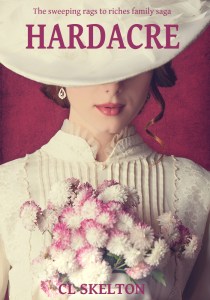
Hardacre by CL SkeltonIn 2006 you founded www.shortstoryradio.com. How passionate are you about broadening the market for short story writers?

Very. Short Story Radio was one of those projects I developed in my own time, and initially at my own expense. I often read comments online and in print from creative people who say they refuse ever to work for free, but I don’t completely subscribe to that view. Even if you are passionate about your craft and believe in yourself, in the early days of your career sometimes the only way to get noticed is by creating your own opportunities. Through working on Short Story Radio I learned that there was an appetite for short stories in English not only in this country, but around the world. I met many talented writers and actors, some of whom are now good friends, and realised how difficult it was for short story writers to find paying outlets for their work. After a while I applied for a grant from Arts Council England. My application was successful and that support from ACE financed work for a lot of writers, actors and technicians, and raised the profile of Short Story Radio and its content. It was also a very important morale boost for me, and the start of building up an audio production business which led to many interesting commissions over a number of years. For most of the Short Story Radio writers it was their first experience of being broadcast, and a number have gone on to have successful writing careers.

Do you see a growing trend for shorter fiction evolving both through audio (The Story Player) and eBooks?

I do. However, I think enthusiasm for the short story among readers hasn’t yet caught up with the form’s popularity among writers. It’s often said that the short story is perfect for today’s busy, time-poor lives, but hearing that always makes me cringe. Good writing should be savoured no matter what the length, not because it is “convenient”. I don’t like the idea of a short story being considered the literary equivalent of “wash and go”. That said, I’m sure that new technologies will present all sorts of opportunities for creating, selling and experiencing short stories. We’re only just at the beginning.
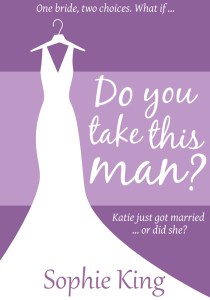
Do You Take This Man by Sophie King coverYour connection with short fiction was further strengthened when you founded National Short Story Week in 2010, which has best-selling author Katie Fforde as its patron. What would you say is the essence of a good short story?

That’s a tough question! I suppose it depends on the opinion of the individual reader and their tastes. Personally, I enjoy stories which manage to say something about the human condition, and which I can relate to even if my life is nothing like those of the protagonists. I think that’s why the stories of authors such as Saki and Katherine Mansfield, mostly written more than 100 years ago, are still fresh and relevant today. Their themes are timeless and universal.

If I could just say something about National Short Story Week. One of the best outcomes, which wasn’t actually an original aim, has been the enthusiasm and involvement of schools and their pupils, librarians and teachers. The National Short Story Week Young Writer competition, for year 7 and 8 pupils, is now in its fourth year and going from strength to strength. I can highly recommend the anthology of last year’s winning stories – The Mistake. It reached Number 51 on Amazon’s book charts last November, and has raised funds for Teenage Cancer Trust. The children’s creativity, imagination and use of language are very impressive. If we are serious about championing the short story form, surely the best way to do this is to get people interested in writing and reading short stories from an early age.

The Property of a Gentleman cover artworkThat is excellent and inspiring for the future.

In 2012 you created your own publishing imprint Corazon Books (I love the tag line: Great stories with heart!). It was launched with a novel by bestselling author Sophie King. However, you have just published an out of print title The Property of a Gentleman by Catherine Gaskin who died in 2009. What inspired you about Catherine’s work and do you intend to publish more of her titles?

I was very lucky to launch my business with a title by Sophie King, who is a great writer (and whose work inspired the Corazon tag line!) and a lovely person. I have been familiar with Catherine Gaskin’s work since I was young, when my mother and grandmothers were reading her novels. Although I knew and loved the books, I didn’t know much about the author before I published The Property of a Gentleman. I have since done some research on her life, and was fascinated to discover she wrote her first book, which became a bestseller, while still at school! I have received many nice comments from readers since Corazon Books started reissuing her novels, and it has been very gratifying to see The Property of a Gentleman back in the bestsellers charts both in the UK and Australia. Corazon Books has also recently published Sara Dane, which is probably Catherine Gaskin’s best known work. The Lynmara Legacy is out in February 2015, and will be followed by Promises in the spring.

I heard you speak at three events last year: Society of Author’s day event in Bristol, R.N.A. conference and at the H.N.S workshop. You inspire, entertain and inform people especially about eBooks. How do you view the major changes happening within this very new industry today impacting upon what for decades has been a very set publishing industry in the future?

Thank you, that’s very nice of you to say so. I really enjoy talking at conferences and giving workshops. When so much of the average working day can be spent in front of a pc screen, it’s a good opportunity to get out there and meet like-minded people, and to share ideas and experiences. Obviously we are living through a period of huge technological change, in many aspects of our lives. The publishing industry is clearly going through a major transformation and as such there will be winners and losers. I think it’s too early to say who will be the winners and who the losers. You have to be able and willing to reappraise and adapt quickly.

What is next for Ian?

I’m very excited about the books lined up for publication by Corazon Books this year, which include a number of novels by new talents and other projects I can’t talk about just yet. Plans for National Short Story Week 2015 and the Young Writer competition are already under way. I’m looking forward to doing more ebook workshops for the Society of Authors in March, and at Sheffield Hallam University in April. I also have a long list of ideas I want to pursue, which are currently at different stages of development!

Thank you for taking the time to share your work and experience with us and every best wish for your continued success with all your projects in 2015.

Thank you very much for having me on your blog Valerie, I’ve enjoyed it. Best wishes to you, and for your writing, and to all of your readers too.

More From Ian: