An Interview with Peter Lovesey

DSC_2534Thank you for taking the time to discuss your fascinating career and share some of your experiences with us.

Your love of the English language shines through the quality of your work and the complexity of the plots you weave through your books. When did your love of storytelling begin?

I was a dreadful fibber as a child, so it must have been there from the start. I led a Walter Mitty existence, top of the class, popular, brilliant at games and with a girlfriend called Dahlia, the prettiest in school. None of it was true and Dahlia didn’t even exist. From there it was a smooth progression to making up stories for what was then called composition.

You also had a keen interest in sport which led to your first breakthrough as an author. Can you describe how this came about and if it is still one of your proudest moments?

At twelve I was taken to the post-war Olympic Games in London. There’s a lot of talk about legacy from the recent Olympics and for me the 1948 Games were a rich legacy indeed. I was hopeless at sport but desperately wanted to be a part of it, so I wrote about it, doing unpaid articles for small magazines. Out of it eventually came a book on distance running and then two years later, using distance running as a background, I entered a competition for a first crime novel. Wobble to Death won me £1000 and publication in England and America. A dream start to my career.

Stone Wife (2)From your initial breakthrough, how did you then go on to develop the successful series of Sergeant Cribb and Peter Diamond?

Cribb was the Victorian detective I created to clear up the mystery in that first novel and he went on to seven more, using Victorian entertainments such as boxing, the music hall, boating, spiritualism and Madame Tussaud’s as the backgrounds to whodunits. The eighth, called Waxwork, won the CWA Silver Dagger and was turned into a pilot for a TV series, made by Granada, starring Alan Dobie as Cribb.  Two series followed, based on the books and original scripts written together with my wife Jax.

The more recent series features a contemporary police detective called Peter Diamond, who is with Bath CID. The first book was going to be a one-off, called The Last Detective, and he resigned from the police. But it won the Anthony for best novel at the Toronto Bouchercon and I was asked to follow it up. So I contrived a story called The Summons in which the police needed him back and were forced to ask him to return and reinvestigate an old case. He’s been going ever since. The fourteenth, called The Stone Wife, is published this spring.

In which era do you prefer setting your novels – historical or contemporary, and why?

I wouldn’t say I have a preference. I enjoy the challenges of each. The Victorian period had a rich, rather daunting tradition to work in, thinking of Dickens, Wilkie Collins and Conan Doyle, and the task was to avoid a pale pastiche of those great writers. The research was enjoyable, mainly using the British Library newspaper library. Today, with the internet, it would be quicker and easier. Turning to the contemporary police novel was scary, too. I wasn’t sure how I would cope with modern policing and the huge advances in forensic science, so I made Diamond a bit of a dinosaur. I get a lot of pleasure from using little known historical anecdotes in these modern books. Examples are Jane Austen’s shoplifting Aunt Jane and Mary Shelley’s writing of Frankenstein in lodgings right next to Bath Abbey.

You have had work both televised and filmed. When this happens, do you become involved in the process and maintain control of what the producers can change?

I doubt if any producer allows the author control. They do take liberties and will tell you it’s necessary in visual terms. But I was lucky enough to attend read-throughs of the Cribb series and of Rosemary & Thyme, as the consultant. I was fortunate, too, that the adaptations of my books kept pretty faithfully to the plots – and that includes the movie Goldengirl and the TV drama Dead Gorgeous.

Do you write stand alone novels to have a break from the series, as a kind of refresher?

Yes, it’s fun to break out from time to time. I’ve written several from the point of view of the killer – and that’s very liberating. The False Inspector Dew won the Gold Dagger  and has been translated into more than twenty-five languages, but the one I’m proudest of is The Reaper, a black comedy about a rector called Otis Joy, who murders the bishop in chapter one.

Every writer has their own way of working. Do you plot in detail first and then set wordage targets, or do you let the story grow as it builds on the page?

When I started I would plan meticulously and write the synopsis before beginning Chapter One. I don’t write in drafts. The pages I write each day aren’t altered, except in minor ways, so it’s a slow process. If I tell you how few words I manage in a day you won’t believe me. It has to be right before I can move on. These days I carry much more of the plot in my head, but it’s basically all there. It’s not a method I would recommend to anyone.

I first met you when you did a local library talk, which was both interesting and inspiring. Do you intend to tour again in 2014?

If I’m asked, yes. I’ve done several recent US tours, visiting cities I wouldn’t ever have known otherwise. And it’s lovely to meet readers who enjoy the books. Plus, of course, the occasional writer such as you – and that’s a bonus.

Thanks, Peter! Of all the accolades and achievements you have received in your career to date, which one(s) stand out as something very special to you?

Difficult. The CWA Cartier Diamond Dagger in 2000 was a great honour, but couldn’t quite match the thrill of that first competition win with Wobble to Death. Another unforgettable moment came when I was Chair of the CWA and presented the Diamond Dagger to one of my early inspirations, Leslie Charteris, the creator of The Saint.

The Tooth TattooThe Tooth Tattoo also shows that you have a love and understanding of classical music. The humour within the book works on many levels, which balances the much darker twists of the plot. What inspired this book?

I can answer this with more certainty than any of your questions. A 2004 article in the arts section of the Guardian by David Waterman had this intriguing headline: HOW DO THE MEMBERS OF A STRING QUARTET PLAY TOGETHER AND TOUR TOGETHER YEAR IN, YEAR OUT, WITHOUT KILLING EACH OTHER? The piece stayed in my mind for eight years until I was ready for Peter Diamond to investigate. I’m glad to say The Tooth Tattoo was well received, not least by the writer of the article, who still plays with the Endellion quartet. And it’s just out as a February paperback.

What is next for Peter?

The fourteenth Diamond novel, The Stone Wife, will be in the shops in April and I’m halfway through the one I’m currently calling Diamond Fifteen. Thanks, Valerie, for this stimulating interview.

My sincerest thanks for taking the time to answer my questions. 

Meet the talent behind Valerie Holmes eBook covers, Jan Marshall!

jan_in_hat_picI am delighted to share an interview with Jan Marshall, the talented book-designer who has created the Valerie Holmes eBook covers.
What inspired you to become a graphic designer?

First of all, Val, thank you for inviting me to take part in this interview; I’m so flattered you asked me.

I suppose the simple answer to your question is I didn’t really do much choosing; graphic design rather chose me. Creative pursuits – mainly drawing with a pencil – had always been in my blood. So, all I had to do was pin down a way of converting my creative obsession into a way of making a living, and graphics was my answer.

You have a vast experience within the industry. How did you learn the job?

Art college was a great starting point, and I’d recommend it to anyone embarking on a career in the business – it taught me how to ‘think’ like a designer – but, like learning to drive, as soon as your training’s over, although you’re qualified, you’re not necessarily good at it yet. My first job, in an ad agency, made me aware of gaps in my art college education – mainly technical skills. So I spent some years in the typesetting and pre-press industry, where I absorbed essential hands-on skills, some of which I still use today: typography, artwork, hand-lettering, proofreading. Learning doesn’t ever end of course; especially since the advent of computers and rapidly changing software, designers’ skills must constantly be reinforced and updated.

What have been your personal highlights so far?

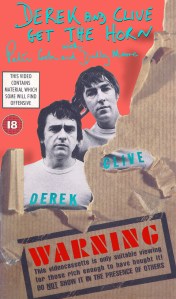
Derek & Clive cover pinkThe most rewarding time in my career has to be the ten years I spent immersed in the world of movies, creating designed materials for mainly Universal and Paramount films, ranging from huge outdoor posters to video covers and film-based interactive teaching aids for schools. I was privileged (and extremely proud) to work on movies as diverse as: Babe, The Rugrats Movie, Apollo 13, the three Pierce Brosnan Bond movies, The Addams Family Values; Dragonheart, Twister, Twelve Monkeys, and The Mummy. On a more personal note, another highlight came in the shape of a short thank you message. It was from the late, truly adorable Peter Cook, who, having briefed the job to the team in a safari suit and pith helmet, later described my design for the ‘Derek & Clive Get The Horn’ video sleeve as: “…the best I have ever seen on a video pack. I cannot tell you how thrilled I am”. I was thrilled too.
If I may, I’d like to give credit here to the rest of the talented design team from those days, especially the lovely Lizy Thompson, my hard-working right-hand woman and loyal friend.

 Of the various styles and techniques you use, which is your favourite?

The movie work taught me how to use photoshop to comp images and type in intricate detail – large media can be unforgiving of less than perfect retouching; a tiny error on screen can be seen at ten feet tall on a supersite poster! And that attention to detail has stayed with me; I get a great deal of enjoyment out of combining images and type to make tight, detailed book covers.

What is the technique used for the beautiful Valerie Holmes ebook covers?

Thank you for your lovely compliment, Val. When we embarked on this big project – to repackage more than 30 titles plus some new stories – we decided between us that, for speed, economy and ease, it would be best to ‘keep it simple’.

Your covers are incredibly enjoyable to illustrate, not least because, in the same way that characters in a novel seem to take on their own personalities, the people I draw for your delightful Valerie Homes stories emerge, almost accidentally, from their scribbly beginnings into fully formed ‘human beings’ with their own individual characteristics.

What other interests/hobbies do you enjoy?

In my work life, I’m embarking on an exciting (to me, anyway!) new venture to run alongside the cover design, that of proofreading and copy-editing, a discipline I used to love so much while working in typesetting all those years ago; I’m presently working through a certification course.

And I have lots of hobbies and pastimes: I sew, make jewellery, up-cycle junk, grow bonsai trees, cook, paint, draw… And I walk miles every day. But the most important thing I’m doing in my free time right now is writing: I’m attempting my first novel. And it’s an amazing experience – it’s like nothing else I’ve ever done. Pure escapism. I can see why you love writing so much, Val!

Thanks so much for all your dedicated work and I look forward to seeing yet more original covers in 2014. Happy New Year!

Jan Marshall

I’ve been a graphic designer for many years more than the requisite ten thousand hours. Specialising in book cover design at present, I’ve worked on all sorts of graphic design projects in my time – some simple, and some utterly extraordinary, from key rings for the CBI Conference to supersite outdoor posters for Universal and Paramount movies. “It’s been an amazing journey, and I’m not even there yet!”

Services

Cover design: I’m not the cheapest designer you’ll find, but I do go the extra mile to provide a premium service: I’ll send you a questionnaire/brief sheet about your book, read your manuscript, produce concept after concept until we find the one we both like the most, then hone it (in high resolution) until it’s perfect. And I guarantee we’ll end up with a cover you’ll love.

Cover critique: Creating your own cover design? Why not get some expert advice to help you along the road. Send me a jpeg of your cover design at any stage in its completion and I’ll give you an idea of how you’re doing. Critiques start at £20/$35 for a 10-point ebook cover checklist. Contact me for a quote if you’d like an in-depth report or if you want help with a particular aspect of your project.

Proofreading and copy-editing: Please contact me at thecopyeditor@btinternet.com. Although this service is available now, my formal training and certification will be completed late Spring 2014.

You can follow me on Twitter here: @Jan_Marshall and visit my website here: jan-marshall.wix.com/thebookdesigner. There’s a contact page on the website or you can email me at bookcoverdesign@btinternet.com – I’d love to hear from you.

Happy, Healthy and Successful 2014!

2014 is already over a week old. New Year resolutions have been made. If starting a creative writing project is one you are considering. Enjoy your writing, whilst experimenting until you find your own voice within your chosen genre.

To get you started here are some top-tips given by a selection of my author guests of 2013.

Margaret James: Stick at it and believe you have something interesting to say. There will be times when the going gets hard and you’ll need to be able to convince yourself that it’s worth going on. Make friends with other writers face to face and online, via Twitter, Facebook and their blogs. Read other people’s novels because then you will absorb good practice and realise there are many different ways in which you can tell a story.

Freda Lightfoot: I put my heart and soul into my stories, which is absolutely essential. You must lose your inhibitions and be entirely sincere, but yes, it does take hard work and dedication. I’d say it demands the three p’s, which stand for practise, persistence, and passion for your craft.

Trisha Ashley: There’s too much temptation now to rush out your first novel yourself as an e-book, so if you take that route I’d advise you to have your novel independently edited, and consider the constructive criticism you receive very carefully.  You want your novel to be perfect and whole, not some poor, half-formed creature, and with a first novel you aren’t going to spot what’s wrong with it yourself.

Jean Fullerton: If it took me three years to become a nurse, another two to qualify as a district nurse and a further three to become a lecturer, why on earth would I think I could learn the craft of writing overnight?  Very few first books are of a publishable standard. Mine wasn’t. Learn your craft and persevere!

Gwen Kirkwood also stresses the need to persevere: Try to write a little every day, even if it is only a couple of sentences. Keep a notepad handy. Consider the strengths and weaknesses of your characters, or improve your plot, while you are travelling, ironing, peeling the vegetables. Thinking time is important too. Listen to the advice of agents and editors, not friends. If you do self-publish pay a reputable copy-editor to check your work first.

Whilst Gwen advocates writing a little every day, Christina Jones, points out it is not essential: Don’t feel you have to write every day. Write the way that suits you. Some people write 10,000 words a day, others write 500. Some (like me) know that if the words aren’t there then it’s best to forget writing until they are and go and scrub the kitchen floor or go for a walk or chat with friends or read or watch telly, whatever – be yourself and do what’s right for you. Just don’t feel pressurised to be like everyone else.

Linda Mitchelmore, the author of many short-stories and now novelist advises: The same premise of ‘person, problem and plot’, with a ‘beginning, middle and an end’, is the same for short stories and novels. The only difference is the time it takes to tell the story. Whilst Valerie-Anne Baglietto reminds us: You can never please everyone, so above all please yourself and write something you feel passionately about. It will show if you don’t.

More advice is offered within the interviews.

If you love creating fictional worlds, have a strong desire to commit them to paper and share them with others, then enjoy the whole process and good luck!

Discovering Ellie

Discovering Ellie KECBuy and read now!

US Readers: Kindle / iTunes / Nook / Kobo

UK Readers: Kindle / iTunes / Nook / Kobo

Early nineteenth century North Yorkshire, England.

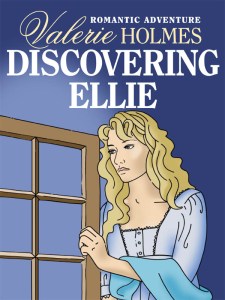
Ellie has recurring nightmares, always waking to a life devoid of love, but still she dreams. Living in the old hall with her Aunt Gertrude and cousins Cybil and Jane, the scandal of her mother’s elopement with a Frenchman cast a long shadow over her life. Until Mr William Cookson arrives to shine new light onto her past opening the way to an exciting future…

◆ July’s News

July has been a lovely, sunny and busy month. The RNA’s conference in Sheffield was interesting, well organised and friendly, as always. So much to learn and so many people to meet.

Pia Fenton, aka Christina Courtenay was welcomed as our new chairman and I am delighted to have her as my guest interviewee for July along with the talented Henriette Gyland.

 Pheobe’s Challenge is now FREE as a summer promotion on www.smashwords.com – an exciting romantic adventure as Phoebe escapes from a cotton mill and the grip of the evil Benjamin Bladderwell…

I hope everyone is having a lovely summer and look forward to sharing some more news and another interesting interview in August.

Val

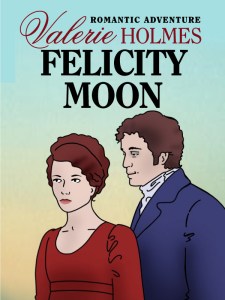
Felicity Moon

Felicity Moon KEC

Buy and read now!

US Readers: Kindle / iTunes / Nook

UK Readers: Kindle / iTunes / Nook

Early nineteenth century North Yorkshire, England.

Felicity Moon strikes the Lord of the manor in self defence and is forced to leave his household. Squire Moon, her father, is in gaol charged with bank-rolling smugglers and storing contraband. Felicity has one last chance to save herself from ruin in the form of a reference to Mr Lucas Packman, a man her father dislikes intensely. She has an impossibly stark choice to make: trust Packman or her obey her father. 


The World of Valerie Holmes

“…dread of wandering mariner, where often, alas, the proud vessel hath floundered against thy iron ribs, or perished on they cruel rocks!” –W Braithwaite in his “Rural Reminiscences”.

Love is a timeless essential of life. Throughout history, love in all its forms is a constant: be it passionate, caring, needy, manipulative, possessive or one that is strong enough to cross barriers of culture or faith. When two souls meet in a situation which takes them out of their normal social strata or into a shared danger, a relationship forms as the adventure unfolds.

The historical romances are based in the early nineteenth century, set against dramatic social change at a time of war with France. Smuggling, espionage, press-gangs all add to the drama that the hero and heroine can face.

Created to be entertaining reads that pass away a few hours lost to the thrill of an adventure, the core of my work is based around the same area of North Yorkshire. My world features the rugged headland of Stangcliff, the old inn sheltered in the bay of Ebton below and Gorebeck, the fictitious market town on the edge of the moors, marking a major crossroads for travellers to Newcastle, Harrogate, Whitby, and York.

Dead to Sin (A Penn Mystery Book 1)

Dead to Sin KEC_1Buy and read now!

US Readers: Kindle / iTunes / Nook / Kobo

UK Readers: Kindle / iTunes / Nook / Kobo

The first Penn Mystery: When duty alone is not enough…

1812 North Yorkshire, England.

Nicholas Penn is summoned to Gorebeck Gaol to visit a man accused of the rape and murder of five wenches. Having been found holding the body of the last victim in his arms his plight seems sealed.
Nicholas is torn between a sense of duty and his feelings of hurt and disgust when being in the presence of the accused. The tables turn abruptly, and Nicholas becomes the incarcerated, duped and incensed he is sworn to find the man, Wilson, before another victim dies and honour can be restored.

Bethany’s Justice

Bethany's Justice KECBuy and read now!

US Readers: Kindle / iTunes / Nook

UK Readers: Kindle / iTunes / Nook

Early nineteenth century North Yorkshire, England.

If you cannot trust your closest friend, then who can you? One young woman is about to find out. When Bethany and Kezzie excitedly walk to a neighbouring village fair, Bethany discovers how fickle her friend is once they meet up with womaniser, local shepherd, Bill Judd. Deserted on the open moor road, Bethany’s feelings are hurt, but she is determined to continue her journey. In her anger she makes a life threatening decision, cutting through a wooded estate, she is shot at, wounded but her rescuer changes her life forever.


Truth, Love and Lies

Truth, Love & Lies KEC

Buy and read now!

US Readers: Kindle / iTunes / Nook

UK Readers: Kindle / iTunes / Nook

Florence Swan escapes before she is forced to work in a cotton mill. Naïve and ambitious, she ventures out into the world alone believing she can work her way up the hierarchy of servants within a manor house or hall.

Major Luke Stainbridge returns to his beloved estate in England after being a prisoner of Napoleon only to discover he has been replaced by an imposter.  Two lives are in chaos. Two destinies combine. Will the love of truth be enough to destroy a sinister network of lies?