The Captain’s Creek – Pressing Times

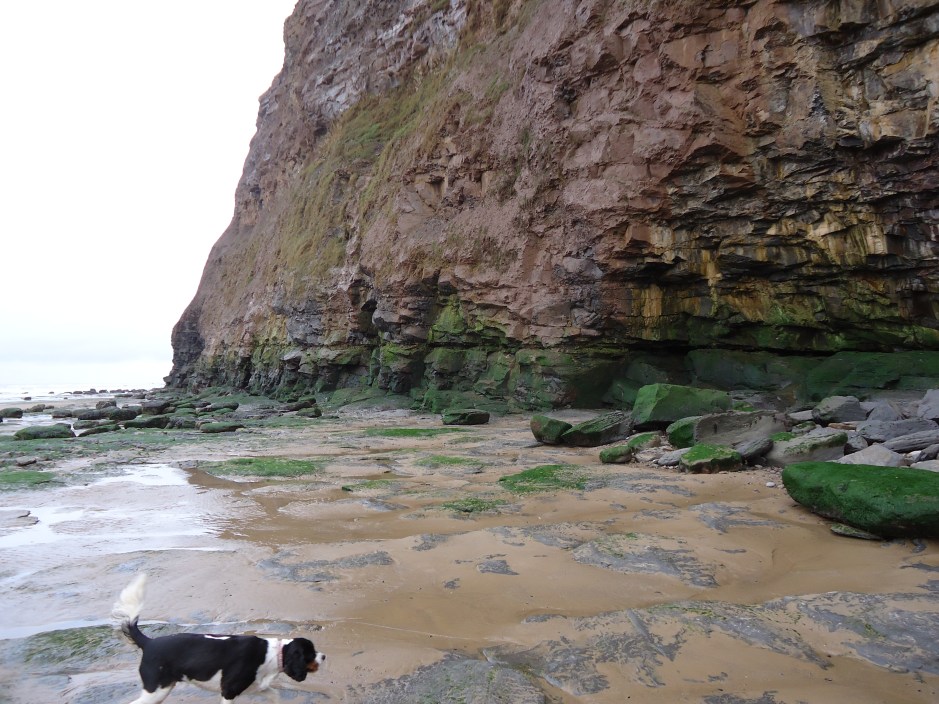
Maggie Chase discovers an injured stranger hiding between two rocks as he flees for his life on the beach. Rapidly, she is forced to make a choice: reveal his whereabouts to the fast approaching press gang, or hide him from their sight.

The Impress Service was set up to make sure that the Royal Navy had the needed number of sailors to man its ships. It was harsh and unfair as the press gangs were notorious for their raids, often ignoring the set age-limits of between 18-55, in an era when it was difficult to prove your age when plucked off the street.

The coastal towns were rife with smuggling. Robin Hood’s Bay, for example, had a network of tunnels and passages linking the houses built on its steep banks. Although these were designed to move and hide contraband, they also proved useful when the press gang arrived. The womenfolk fought off the gang with anything they had to hand whilst their menfolk hid. They were a tough and hardy people, which is why the service wanted good seafaring men at a time when paid volunteers were not enough in number to fight Napoleon’s threat. Criminals who had chosen to serve a different type of sentence in the Royal Navy were often weakened by illness because of their previous incarceration. Therefore, the press gang swooped on the unsuspecting and gained a ruthless reputation as a result.

The eBook of The Captain’s Creek is available from Smashwords and Amazon directly or from most eBook sellers.

Abigail Moor – Biddy’s Bakery

Abigail was rescued as a baby by Lord Edmund Hammond – or so she believed.

Raised as a lady, calling him father, she enjoyed a sheltered life as she grew up and loved her step-brother, Frederick. Life dramatically changes because she has to flee from a forced marriage when Lord Hammond falls ill. With her lifelong maid she travels to the port of Whitby via the beautiful ancient city of York.

To Abigail’s naive eyes Whitby would have been a noisy, bustling place with a myriad of smells from the various industries surrounding the whaling, fishing and boat making industries. Even Abigail’s name, like her situation, has a double irony. Abigail literally means ‘my father’s joy’, yet she does not know who he is. The name is also used commonly to refer to a lady’s maid.

When I explored Whitby I came across a narrow snicket in which was a love old ram-shackled set of buildings I borrowed this setting for ‘Biddy’s Bakery’, placing it next to an old inn like the amazingly well restored White Horse and Griffin and took the extra liberty of placing a laundry opposite. Whitby was so wealthy through the whaling industry that in 1790 there were two street lamps in Church Street outside this original coaching inn.

I had the pleasure of staying in the same room that it is said Charles Dickens once used. It was a lovely friendly place in a fascinating location, and serves excellent food.

The eBook of Abigail Moor: The Darkest Dawn is available from Smashwords and Amazon directly for $2.99/£1.88 from most eBook sellers.

The Wonders of Whitby


Whitby is a place I love to explore. It has a fascinating history, some of which I would like to share with you, from the ruined abbey that dominates the headland, with the unique church of St Mary’s that leads you to the famous 199 steps and the town and harbour below.

The abbey was first settled by St Hilda when she opened the first monastery in 657 AD. Famed for her energy, commitment to learning, and her faith, life could not have been easy in such an exposed place. The original buildings have long since gone but the ruined stone remains of the abbey as it stands has been a symbol of the haven of the port for many a fisherman returning home.

The whaling industry made Whitby an important and lucrative port throughout the eighteenth century until 1830 when it collapsed because of the discovery of the cheaper, cleaner and more accessible paraffin oil. Throughout this successful period other industries flourished: ship building, sailing, fishing, tanning and one which came into popularity during the period of Queen Victoria’s mourning of Prince Albert, Whitby Jet.

James Cook was apprenticed to Captain John Walker in 1746 and served nine years. He went on to be the first European to successfully chart the East Coast of Australia and New Zealand. Walker’s house is now a museum to Cook.

I hope that has given you a flavour of this beautiful and atmospheric port on the northeast coast of England.

Further information

Cobles and Contraband

DSC03675My stories are often set around the dramatic coast and countryside of North Yorkshire, where I grew up. It is an area of outstanding natural beauty and fascinating social history, especially around the early nineteenth century when England was at war with France and many things were changing at home.
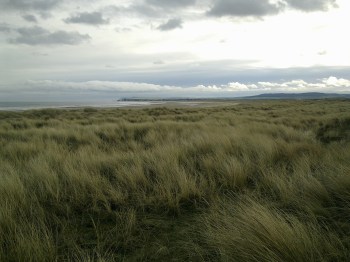
Smuggling was rife along Britain’s shores. The vast expanses of accessible flat, sandy beaches in the area made it an ideal place for smuggled goods to be brought ashore. Despite the busy German Ocean (known today as the North Sea) with it colliers making their way to London with coal and fetching back urine for the alum works along the northeast coast, privateers still operated freely. The custom coble was often outrun by more superior vessels or their men outnumbered on shore.

05022011320The Yorkshire cobles with their flat bottoms were ideal for beaching loads of contraband. Goods such as tea, cards, ankers of brandy, geneva, pepper, ‘sack’ or sherry, sugar loaves, silk and cards, to name a few were taxed heavily, which meant that common folk felt justified by buying them cheaply from the free-traders. The irony was that the coin, which made its way back to France, helped to fund the enemy that British soldiers were fighting.

Work on the land was seasonal and low paid. Fishermen depended upon hauling in a good catch to feed their families. It was no surprise then that many were involved in the lucrative trade. Despite the Riding officers best attempts to stop it the problem was rife.

20082011431The rugged headlands, flat sweeping fine sandy bays, natural woodland and the beautiful expanse of the North Yorkshire Moors inland add both a great variety of scenery and beauty. The settings for my stories are as dramatic as the plots. I have created my own villages and characters and will introduce you to some of them as I look more closely at the actual history of this fascinating region.


In Phoebe’s Challenge, the hunted brother and sister are rescued by a stranger and brought down to a safe cottage, a haven, on the sandy shoreline, sheltered under my fictitious headland of Stangcliffe. Desperate to escape their past life they have no choice but to trust a man they hardly know in an area where nothing is at it seems – but Phoebe likes a challenge!

Sharing Places – Part 4

Whilst researching social history for my stories I visit some fascinating places. Here are some of the places that have triggered plots, created characters or inspired a mood or a desire to return to the keyboard and write.

4. Whitby, North Yorkshire, England.


Whitby Abbey
Whitby Abbey, an iconic image on the headland.

One of my favourite places to explore on the North Yorkshire coast is the unique, atmospheric town of Whitby. This ancient port situated on the northeast coast of England is famous for many reasons.

St Hilda founded a double monastery (for monks and nuns) here in 657 AD, making it a valued seat of learning. The famous Synod of Whitby was held here in 664 AD.

Whitby became a famous whaling port with such famous seafaring names associated to it as the Scoresby‘s.

Whitby's 99 steps
The famous 99 steps, better going down than up!

The James Cook Museum is housed in the C17 house where he lived as an apprentice. It is an atmospheric place overlooking the River Esk. There is a large car park nearby so exploring this side of the harbour is not a problem if arriving by car. If you walk into the East side of the harbour from here you can wander through the old cobblestoned streets and explore the many yards and snickets.

Passing the old inns and market square you will reach the bottom of the famous 99 steps which lead up to the unique church of St Mary and then to the abbey beyond. The views across the harbour from here are magnificent.

St Mary's Church
The unique St Mary’s church in front of Whitby Abbey has pride of place on the horizon.

To experience staying in one of the original inns, The Whitehorse and Griffin has been lovingly restored and offers excellent food.

Whitby sporadically comes into my stories, either in passing as in Abigail Moor, or as a setting in itself, such as Amelia’s Knight, which is still to be released as an eBook.

Whatever your reason for visiting this fascinating location, being prepared to walk and explore its narrow alleyways, historic places, or the more usual shops and eateries on the west side of the harbour, then there is plenty for everyone to enjoy.

Whitby houses
A glimpse of the red pantile rooves that characterise bay town houses.

For excellent seafood and a great place to eat it, looking back across the harbour to the abbey is The Magpie.

Other places of interest in the area can be found on these helpful websites:


Sharing Places – Part 2

Whilst researching social history for my stories I visit some fascinating places. Here are some of the places that have triggered plots, created characters or inspired a mood or a desire to return to the keyboard and write.

2. Saltburn Gill, North Yorkshire, England.

67113_135084629972080_1860012131_n534704_137209683092908_823309552_n

A ten mile, fine sandy bay sweeps between Huntcliffe and the mouth of the River Tees on the once remote northeast coast of England. The town of Saltburn nestles in the shadow of the headland and has a fascinating historical connection with smuggling in the region.

I borrowed the location for some of my nineteenth century titles. Saltburn became ’Ebton’ and the headland ‘Stangcliffe’. The location of the actual Ship Inn was used as the heart of the old fishing village. The Saltburn Gill, which runs through an ancient natural oak and ash woodland behind Cat Nab, has a rich undergrowth of Holly and Hazel and a myriad of flowers and wild birds that vary throughout the seasons making it a vibrant and beautiful place to visit at any time of the year.

It was a route used in times past by smugglers and my version of it appears in such stories as Phoebe’s Challenge and many other titles of my back list, many are yet to be converted to their eBook format.


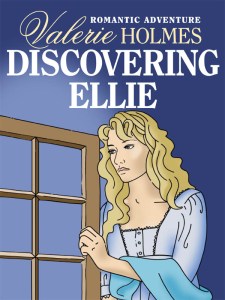
Discovering Ellie

Discovering Ellie KECBuy and read now!

US Readers: Kindle / iTunes / Nook / Kobo

UK Readers: Kindle / iTunes / Nook / Kobo

Early nineteenth century North Yorkshire, England.

Ellie has recurring nightmares, always waking to a life devoid of love, but still she dreams. Living in the old hall with her Aunt Gertrude and cousins Cybil and Jane, the scandal of her mother’s elopement with a Frenchman cast a long shadow over her life. Until Mr William Cookson arrives to shine new light onto her past opening the way to an exciting future…

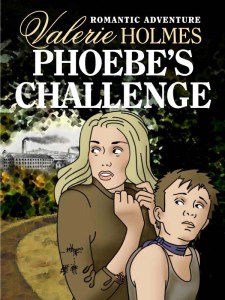
Phoebe’s Challenge

Phoebe's Challenge KEC (1)

Buy and read now!

US Readers: Kindle / iTunes / Nook

UK Readers: Kindle / iTunes / Nook

Early nineteenth century North Yorkshire, England.

Phoebe and her brother, Thomas, have to flee the evil regime of overseer Benjamin Bladderwell because an accident results in them being labelled machine breakers. Hunted with nowhere to run, the mysterious wagon driver, Matthew, his them and saves their lives. They soon discover that he is a man of many guises who Phoebe instinctively trusts, but Thomas does not. Their future depends upon this stranger, on their own they will be captured or starve. Phoebe must trust or challenge Matthew unaware that he is also tied to their past.

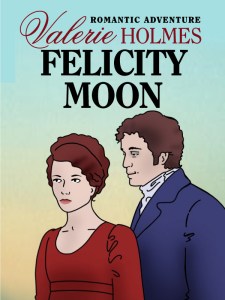
Felicity Moon

Felicity Moon KEC

Buy and read now!

US Readers: Kindle / iTunes / Nook

UK Readers: Kindle / iTunes / Nook

Early nineteenth century North Yorkshire, England.

Felicity Moon strikes the Lord of the manor in self defence and is forced to leave his household. Squire Moon, her father, is in gaol charged with bank-rolling smugglers and storing contraband. Felicity has one last chance to save herself from ruin in the form of a reference to Mr Lucas Packman, a man her father dislikes intensely. She has an impossibly stark choice to make: trust Packman or her obey her father. 


The World of Valerie Holmes

“…dread of wandering mariner, where often, alas, the proud vessel hath floundered against thy iron ribs, or perished on they cruel rocks!” –W Braithwaite in his “Rural Reminiscences”.

Love is a timeless essential of life. Throughout history, love in all its forms is a constant: be it passionate, caring, needy, manipulative, possessive or one that is strong enough to cross barriers of culture or faith. When two souls meet in a situation which takes them out of their normal social strata or into a shared danger, a relationship forms as the adventure unfolds.

The historical romances are based in the early nineteenth century, set against dramatic social change at a time of war with France. Smuggling, espionage, press-gangs all add to the drama that the hero and heroine can face.

Created to be entertaining reads that pass away a few hours lost to the thrill of an adventure, the core of my work is based around the same area of North Yorkshire. My world features the rugged headland of Stangcliff, the old inn sheltered in the bay of Ebton below and Gorebeck, the fictitious market town on the edge of the moors, marking a major crossroads for travellers to Newcastle, Harrogate, Whitby, and York.