An Interview with Sue Moorcroft

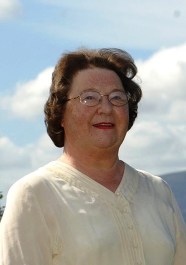
Sue M Portrait 300px

Sue Moorcroft is an amazingly versatile writer and tutor who has taken time out of her busy schedule to share her world with us. 

Welcome to my blog, Sue!

Thanks for inviting me.

Do you have a very set and organised working week or, with your busy and diverse writing commitments, do you work to ever evolving priority lists?

Both, I suppose. I have deadlines to meet for novels, serials and my monthly columns for Writers’ Forum, and also sometimes for other work including promo. To fulfill those deadlines I have a fairly long working day, often devoted to working with students in the morning and writing in the afternoon. In that way, I keep fresh for both. I punctuate most days with a class such as yoga, Zumba, FitStep or piano. These seem to see to my physical and mental health as I do most of those classes with friends.

Sometimes I have a teaching commitment that takes precedence or I go somewhere for research purposes. I enjoy spots on local radio, too. Variety is the spice of my life.

When did you first make your first breakthrough as a published author?

I sold my first short story, to The People’s Friend, in 1996. It was April 1st and I just hoped it wasn’t someone’s idea of an April’s Fool joke… I stopped counting at 130 short stories so that first one was quite important. The short stories led to serials but it wasn’t until 2004 that I sold a novel.

How important a role has the RNA played in your writing journey to date?

Very. It helped me to make the transition from short fiction to long. I was actually at a party thrown by a short story agency that placed some of my work when somebody told me about the RNA’s New Writers’ Scheme. Then I saw that Marina Oliver was appearing at a library about 20 miles from my home so I went along to that and asked her about the RNA, as she was then (and for many years) a committee member. I applied the next day.

Margaret James was the NWS co-ordinator then and she took a personal interest, including introducing me to someone who became my agent for the next seven years. I left that agent for personal reasons that affected my career in 2009 but have just signed with another, Juliet Pickering at Blake Friedmann.

The RNA members also gave me a ‘can do’ attitude. I’d be at a conference chatting to someone in the lunch queue and realise that they were the author of dozens of novels. But they just seemed ordinary aside from that … It made me realise that it’s hard work, education and talent that makes a writer, rather than some mystical power endowed to people other than myself. And, of course, the RNA gave me a massive number of writing friends.

What can a reader expect from a Sue Moorcroft novel?

A dauntless heroine and an irresistible hero to create sizzle, a contemporary setting, an entertaining read but meaningful subjects explored. Readers say that I make them fall in love with the hero, which is only fair because I fall in love with them all, too!

What have been the 3 stand out highlights of your writing career to date?

When I got ‘the call’ from my agent that began, ‘I have an offer for you.’

When I won Best Romantic Read Award for Is this Love? at the Festival of Romance.

And when a customer at a bookshop signing saw my display, picked up All That Mullarkey and asked, ‘Her! Do you write anything like her? This is what I’m reading at the moment and I love it.’ I squeaked, ‘I am her!’ It turned out that the lady was very ill and had been in hospital a lot. She was reading in the afternoons while she rested and any book that ‘grabbed’ her had become a lifesaver. She bought all of my books apart from Want to Know a Secret? because it had a hospital in it. I felt privileged to have made her illness a little easier to live through.

Sue M Wedding ProposalPlease tell us about your new book The Wedding Proposal and the inspiration behind it?

It’s set in Malta, which is a place I love as I lived there as a child. Because I like to read them I wanted to write a reunion book and that turned out to mean a lot of extra plotting. It was getting the balance right. The reason Lucas and Elle parted four years earlier had to be plausible yet they had to get over it in order to come together when they met again. Lots of backstory plotting required! One of the flats I lived in as a child overlooked a marina so I set the book there, ie I put Lucas and Elle together on a small boat for the summer. I thought it would make it hard for them to avoid one another. (I was right.)

Elle and Lucas have both mellowed while they’ve been apart. Lucas has made his hobby, scuba, into his job, by qualifying as a divemaster. Elle has been made redundant from her whizzy corporate life in IT and in a complete change of direction has begun to volunteer in a drop-in centre for young people. Lucas’s little brother Charlie is loveable but crazy so I brought him on stage to have an accident with far-reaching consequences. Elle still has secrets and Lucas still doesn’t like secrets, so that ignites the plot nicely.

What is next for Sue a) as an author and b) with your upcoming writing events/courses?

I’m writing two things. One is a three-part serial for My Weekly, scheduled to be published over Christmas and New Year. The other is a novel called The Twelve Dates of Christmas which is about dates and Christmas but also revenge porn, hats and ovarian cancer. I know the plot and I’m about one-third of the way through the writing. I’m not sure how I’ve ended up writing about Christmas twice as I actually love summer!

I’ll be at the Festival of Romantic Fiction in Leighton Buzzard on the 13th of September, at the book fair 10am-3pm and the Traditional Afternoon Tea at The Green House 4-5.30pm. I will be at the Romance Readers Awards at Leighton Buzzard Theatre in the evening because I’ve just heard that The Wedding Proposal has been shortlisted for the Best Romantic Read Award!

Next year I’ll be running a week-long writers’ holiday for fabulous Arte Umbria 22-29 July (already filling up) and hopefully one for equally fabby Chez Castillon but I don’t have the dates yet.

Thank you so much for taking the time out of your busy schedule to share some of your writing experiences with my readers.

And thank you for having me.

Sue Moorcroft writes romantic novels of dauntless heroines and irresistible heroes. Is this Love? was nominated for the Readers’ Best Romantic Read Award. Love & Freedom won the Best Romantic Read Award 2011 and Dream a Little Dream was nominated for a RoNA in 2013. Sue received three nominations at the Festival of Romance 2012, and is a Katie Fforde Bursary Award winner. She’s a past vice chair of the RNA and editor of its two anthologies.

Sue also writes short stories, serials, articles, writing ‘how to’ and is a competition judge and creative writing tutor.

Sue’s latest book The Wedding Proposal is available as an ebook from 4 August 2014 and as a paperback from 8 September.

 TWP_RGBpackshotMore from Sue:

Website: www.suemoorcroft.com

Blog: http://suemoorcroft.wordpress.com/

Facebook: sue.moorcroft.3 and https://www.facebook.com/SueMoorcroftAuthor

Twitter: @suemoorcroft
An Interview with Mirren Jones

Mirren Jones
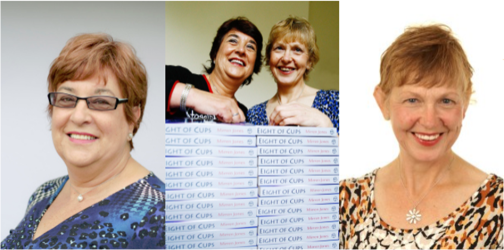
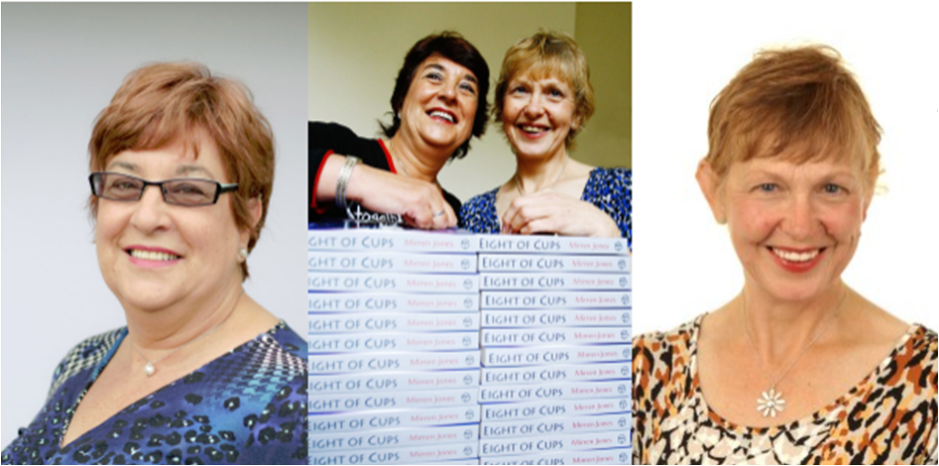
‘Mirren Jones’ is a unique partnership of writers Marion Duffy (left) and Elaine Atkins (right).

Did your partnership form and grow through the collaboration as writers or did your published work evolve as a result of your friendship?

A bit of both! In 1999, we had co-authored two books of non-fiction, published by Radcliffe Medical Press (‘Facilitating Groups in Primary Care’, and ‘Facilitating Organisational Change in Primary Care’), while employed by The University of Dundee. That activity, along with several years of co-tutoring and joint research and consultancy, developed our working relationship and eventually led to our being friends as well as boss and junior!

Our fiction writing partnership – and ongoing friendship – is something newer and different, as we are no longer in a formal work situation. We’ve been writing and working together for 16 years in total and are still great friends, despite now living 500 miles apart.

Please tell us something about ‘Eight of Cups’?

front cover high resolutionThe novel is certainly not chic-lit, and is not intended to be literary; rather it fits the genre of well-written contemporary women’s fiction, although many male readers have told us they’ve enjoyed reading it and learnt a lot about women’s minds in the process! It’s a saga spanning over thirty years, beginning in 1972, as the six main characters arrive at Edinburgh as new undergraduates. After leaving university, their roads lead to England, Wales, Ireland, America and the Middle East; lives intertwine and paths cross.

The story is told from two perspectives. One, from the first-person narrative of the primary character, the rather too selfless (as becomes evident) Scottish lass Diane. The other, third person narrative interlocks all six characters in a brindled strand of narrative priorities. The women are all very different personalities: Nancy, the risk-taking country-loving girl from Yorkshire, Alix, the hedonist from Aberdeen, Carys, the studious one from the depths of West Wales, the quietly anxious Lesley, from Cardiff, and bossy, religious Patricia from Dundee.

The book explores the effects of the various attachments each character possesses on their lives: dreams, ambitions, pleasures, plans, obsessions and fears, and asks the question, “What will it take to set them free?”

Where or who did the inspiration and desire to write the novel come from initially?

Marion (Mirren) describes the impetus as being a combination of challenge and opportunity, with a significant event in her social life providing the seed for the story. She was moving to live part-time on the Isle of Lewis in Scotland when her husband took up a post there in the island dental services. He was concerned that she would be bored (does he really know her??) and challenged her to ‘write that novel you’ve been banging on about for years’. Co-incidentally, she attended a reunion of old university friends where one of her old pals divulged a shocking secret to the group. That set her thinking of how life affects plans and attitudes. On hearing of Mirren’s novel-writing plans, Jones was very keen to join in, making a strong case that if we were able to write non-fiction successfully then we ought to be able to do the same with fiction! So after discussion and negotiation, Mirren Jones was born and ‘Eight of Cups’ quickly began to take shape.

Do you split tasks when you approach producing a novel or do you write alternate chapters, swap them and then smooth out the writing style in redrafting?

 We work in a highly iterative way – creating, structuring, planning, revising, over and over again until we are happy with the product. Interestingly, we always sit down together and read through all the dialogue before signing off the final draft – this does give unique insights. In the end, the finished work is an amalgam of our ideas, plot lines, character development and physical writing (Mirren’s straight on to computer, and Jones on paper first), critiqued and then polished according to our own standards and preferences, as well as feedback from selected trusted reviewers.

You both have had careers dealing with people within the health sector. Do you think this experience has helped you to feel deeper empathy for the characters you create?

alyth town hall - CopyOur work in the NHS, in academia and as organisational development consultants has required us to be attentive listeners, adept at interpreting information from others via all our senses, able to feedback sensitively and imagine ourselves in others’ shoes. We have gained experience over many years of the effects of ill-health on people, and how life impacts on well-being. Hopefully our innate vein of empathy has been enhanced by our real-life experiences which then give us insight that we can apply to our characterisation. Perhaps being co-writers has an advantage over writing solo, in that with our combined life and work experiences we are able to bring a very wide range of knowledges and contexts to our writing, thus giving credibility to our characters and their settings.

How do you keep up the much needed energy and momentum for the projects you start when living so far apart and having such varied commitments and interests?

We put no pressure on each other in terms of deadlines and accept that life will get in the way, as it has done since we became Mirren Jones. We try to fulfil our promises to each other, and to ourselves as best we can, and both would love to have more time to write. Neither of us are the kind of writers who can squeeze in an hour before bedtime, or get up early and write before going to work. But what does help is if one progresses the story and reignites the flame for the next chapter to be written.

Please tell us something about your next novel, ‘Never Do Harm’.

It is a psychological drama about two doctors, friends since childhood, living in the same part of Scotland, but operating in very different settings. Alan is a GP in a busy medical practice, Hugh is a senior hospital consultant in a big teaching hospital. Professional in their working lives, they are rivals as well as friends in their personal life. Alan’s French wife Simone, a sculptress, is the third player in their relationship. Her presence will generate the potential for harm, something the two men promise never to do in their role as doctors, but which doesn’t of course apply outside of work. Our old NHS colleagues will be more than a little worried that we’ve used some real-life experiences to fuel our writing of this novel – and they may well be right!

What is next for Mirren Jones?

Finishing ‘Never Do Harm’ is our immediate aim – we are committed to reaching this goal before the end of the year. Then we have to navigate the world of Indie publishing which has changed considerably since we produced ‘Eight of Cups’, with the advent of digital books on multiple platforms, and embrace marketing with renewed enthusiasm!

As for the future – we have no problem generating ideas for stories, so when we decide to work on a third novel, it will probably progress much as this one has – in a stop-start fashion, with many twists and turns in both the writing and the lives of the writers. Given our personal experiences to date, we can anticipate unexpected changes which might throw up a range of other possibilities. In the meantime, Mirren continues in her role as Practice Manager in her local health centre, and Jones with her work as an Energy Psychology practitioner (humans and horses) / MD of CareandCompare.com – a charitable insurance price comparison website.

More from Mirren Jones

Website: www.mirrenjones.co.uk

Blog: www.mirrenjonesblog.com

Twitter: @MirrenJones

Facebook: Mirren Jones

Google+: +Mirren Jones

Pinterest: http://www.pinterest.com/mirrenjones/

Kindle worldwide: http://authl.it/1qs

Roses Are Dead

Roses Are Dead KECBuy and read now!

US Readers: Kindle / iTunes / Nook / Kobo

UK Readers: Kindle / iTunes / Nook / Kobo

Jen, a teacher, has broken away from a stifling relationship with Harris, who runs a gym. Naively, she tried to help him sort out his life, but did not realise that the man was a liar and a control freak until it was too late. Jen walked out on him determined to enjoy her independence once more when strange gifts begin to arrive. With Valentine’s Day approaching, the mystery of who is sending them disturbs her deeply. She fears it could be Harris. When they turn sinister Jen is frightened and does not know who should she trust: her ex, his friend, her neighbour, Sergeant Aidan Lee or just herself? When Jen needs help who will come?

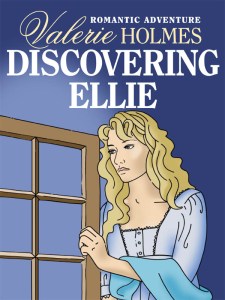
Discovering Ellie

Discovering Ellie KECBuy and read now!

US Readers: Kindle / iTunes / Nook / Kobo

UK Readers: Kindle / iTunes / Nook / Kobo

Early nineteenth century North Yorkshire, England.

Ellie has recurring nightmares, always waking to a life devoid of love, but still she dreams. Living in the old hall with her Aunt Gertrude and cousins Cybil and Jane, the scandal of her mother’s elopement with a Frenchman cast a long shadow over her life. Until Mr William Cookson arrives to shine new light onto her past opening the way to an exciting future…

An interview with Trisha Ashley

267398_163150827092202_2914025_nI am excited to welcome the lovely Trisha Ashley, an award-winning and best-selling author of humorous romantic fiction. 
How much have your entertaining novels been influenced by your own studies, hobbies and work experience?

There are elements of my interests and experiences woven in all of them, of course, but like most novelists I tend to use turning points and situations in my own life as jumping off points to explore new directions my characters can take – because after all, they’re not me and they would do things very differently.  They constantly surprise me.

      There is, of course, rather a lot about food in my books and all the research has taken its toll on my figure – but then, you have to suffer for your art.   I also love animals and gardens – especially roses – and often, too, my novels reveal the enduring power of good friendships and the supporting love of families, however dysfunctional they may at first appear.

      I’ve had a series of part time jobs over the years to support my writing and I think probably the seasonal work for the National Trust was the most useful.  For a few years I spent six days a week either in the draughty front hall of a large gloomy mansion, or in a little wooden hut at the entrance to the lovely Bodnant Garden in North Wales.  Now, those gardens were really inspiring and I was lucky enough to be there when a new young (and handsome) head gardener, Troy Scott Smith, had just taken over and was slowly revitalising it.  I think you can date my passions for roses, mazes and knot gardens to this time…

      But all of life’s experiences, good or bad, can be composted down and used to grow something fresh and new: nothing need be wasted.

When did the Muse enter your life? I hope he gets on with Dog.

I don’t think I can do better than to quote the update I put at the top of my quarterly newsletters for new subscribers:

      The plot so far: Except when she is occasionally let out to enjoy a couple of days of frenetic partying in London, or to give a talk, Trisha lives in beautiful North Wales, together with the neurotic Border Collie foisted onto her by her student son and an equally neurotic but also vain, bad-tempered and chancy Muse.  Muse, whose first name is Lucifer, slipped into her head and took up residence while she was reading Paradise Lost at school and refuses to leave.  He is male, steely-blue, wears a lot of leather, is winged, has talons (so that’s where her blue nail varnish went, then) and is devilishly handsome, if you like that kind of thing.  He only eats words, but gets through a lot of Leather Food and Trisha is starting to suspect that he does more with it than just rub it into his wings…

     Lately, Muse has been writing a hiss-and-tell account of his life with Trisha, called The Muse Report, though due to the fact that he eats his words almost as fast as he writes them, it could be quite some time before this appears in print.

      Muse takes little notice of Dog, except to eye the name tag on his collar when hungry…

Meeting your agent, Judith Murdoch, was a major turning point in your career.  What key advice would you offer to, as yet, unpublished authors?

There’s too much temptation now to rush out your first novel yourself as an e-book, so if you take that route I’d advise you to have your novel independently edited, and consider the constructive criticism you receive very carefully.  You want your novel to be perfect and whole, not some poor, half-formed creature, and with a first novel you aren’t going to spot what’s wrong with it yourself.

      If you’re lucky enough to be taken on by an agent or publisher, of course, they will tell you what’s wrong with it and being able to accept and work with constructive criticism is something you need to embrace if you’re taking writing seriously.

Are you a very planned and disciplined writer, plotting an outline in advance or do you start with a scene, character or situation and go from there?

I am character driven and, since I write in first person, must get to understand my heroine and her background first. Then I put her into a situation and see where she goes, and the book unrolls before me as I write like a magic carpet.  I don’t know where we’re going until we get there.

You have achieved success as a writer despite having macular degeneration. For those unfamiliar with the condition, would you  please share with us how you have worked around this?

 I have had myopic macular degeneration and very poor eyesight (minus 20) for many years, but the MD has been getting increasingly worse recently.  Macular degeneration means that blind patches increasingly appear on your retina and although I automatically focus around them, when tired that gets harder to do and my vision generally blurs.

      I have little night sight either, so tend to fall off kerbs etc and have been known to try and flag down any dark and vaguely taxi-shaped vehicle in London at night…

      There’s currently no treatment for my kind of MD and I’m supposed to take regular breaks from the computer screen…

      I am exploring new ways of writing at the moment in case I ever get to the point where I can’t see the screen at all, but this isn’t easy since I’ve been touch typing my books since I was fifteen and made the transition to word processors and then computers as soon as they appeared.

      At the moment, I write on screen in large print, but still have lots of room to increase the font size if necessary, so it’s okay.  I print everything out to work on.  But then, I’ve always needed to see my words on paper before they become real.

Please tell us about your new novel?

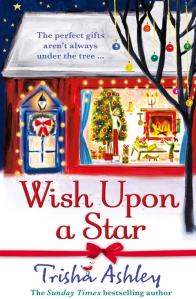
Wish Upon a Star jacketWish Upon a Star will be released on November 7th and has a Sticklepond setting, the village in West Lancashire where some of my other books are set.  It’s very much about following your star, wherever it may lead you and however hard the going gets.

    Single mum Cally’s life revolves around her little girl, Stella, who has serious health problems and when her condition suddenly worsens, they move in with her mother in the remote village of Sticklepond, while she tries to raise enough money to take Stella to America for a potentially life-saving operation.

      Cally only realises quite how tough it’s been shouldering everything alone when all the villagers – and especially laid-back and charming baker Jago – rally round to help.  All Cally wants for Christmas is a miracle to save Stella and with Jago’s help she may yet discover that all the best presents aren’t always found under the Christmas tree…

What is next for Trisha Ashley?

      I’m very happy to say that next year Avon will be doing a new edition of one of my long out of print novels, Every Woman for Herself.  I know you shouldn’t have favourites among your children, but I have to admit that this book is the closest to my heart.  It’s set in Yorkshire, where the Rhymer family, Emily, Charlotte, Anne and Branwell (the result of a failed attempt by their father to recreate the Bronte family situation) slowly return home, one by one to the haven of Upvale – only to find that things are about to change, forever.

      Every Woman for Herself was voted one of the three best romantic novels of the last fifty years in a reader poll, which was a truly wonderful moment, and I’m constantly being asked by readers where they can buy a copy, so I’m delighted it will soon be out again in paperback and e-book formats.  I’m adding a couple of new recipes to the end, too and it will also, of course, have a lovely new cover.

Thank you so much for having me on the blog, Valerie, and I wish everyone lots of very happy reading!

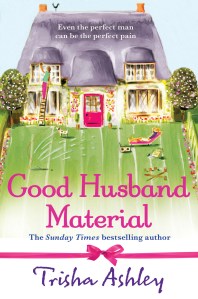
Good husband material high resMore by Trisha:

Another warm, wise and witty offering from Sunday Times bestseller Trisha Ashley.

James is everything Tish has ever wanted in a husband – she’s married a man who even her mother approves of. He’s handsome, dependable, and will make an excellent father – unlike Tish’s first love, the disreputable Fergal. Her teenage sweetheart abandoned her for a music career and now lives a typical celebrity lifestyle. Fergal broke her heart – James helped mend it.

Now, they’ve bought a cottage in the country. The next step – kids and a lifetime of domestic bliss. Well, that’s the plan. And even if James has a slight tendency to view the village pub as a second home, their relationship is still in pretty good shape after seven years of marriage. So why is marriage to Mr Right making her long for Mr Wrong?

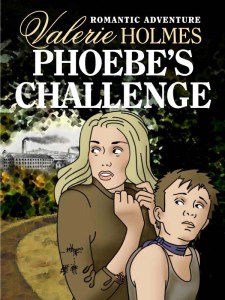
Phoebe’s Challenge

Phoebe's Challenge KEC (1)

Buy and read now!

US Readers: Kindle / iTunes / Nook

UK Readers: Kindle / iTunes / Nook

Early nineteenth century North Yorkshire, England.

Phoebe and her brother, Thomas, have to flee the evil regime of overseer Benjamin Bladderwell because an accident results in them being labelled machine breakers. Hunted with nowhere to run, the mysterious wagon driver, Matthew, his them and saves their lives. They soon discover that he is a man of many guises who Phoebe instinctively trusts, but Thomas does not. Their future depends upon this stranger, on their own they will be captured or starve. Phoebe must trust or challenge Matthew unaware that he is also tied to their past.

An interview with Gwen Kirkwood

Welcome, Gwen!

Your warm-hearted family sagas are based in rural Scotland. When and where did your love affair with Scotland’s beautiful country and history begin?

I have three Scottish grandparents so I had a yearning to see Scotland for myself. I came to Dumfriesshire to work as a milk officer, inspecting dairy farms. The work was not as I had expected but the people were very friendly and I loved the warmth of the red sandstone buildings and the beautiful landscapes with fresh green hills and glens and lots of trees. I have never wanted to leave, especially not after I met and married my husband, a Scottish dairy farmer.

Are any of your wonderful characters based on real people or are they all purely of your own creation?

My characters are all fictional but I think writers must be influenced by people they have met, even if it is only subconsciously. I had a wonderful mother-in-law so a few of my older characters may have some of her kindness and wisdom. We can read of bad characters every day in the newspapers. I have three adult children who keep me up to date with the opinions of their generation. My grandchildren are of varying ages and I often include children. Writers keep on learning and developing and so do the characters but I have never written about a real person.

You took a six year career break. When you returned to your writing did you feel as if your work had changed at all?

I don’t think my writing changed. I still wrote another series of four in a family saga following the generations. My books are shorter, 100,000 words or less now, but that is due to the policy of different publishers.

To date, what has been the most memorable or significant event within your writing career?

I had written four short romances but it was a tremendous boost to my confidence when an agent sold my first long saga to Headline in a very short time. A good editor can have a big influence and Jane Morpeth helped me a lot.

Secondly, I rarely enter competitions but after a long gap from writing it was a lovely surprise to win the Elizabeth Goudge trophy in 2000 when it was resurrected by the RNA for the millennium. It was judged by Richard Lee of the Historical Novel Society.

What top tip would you give new writers wanting to become published writers in today’s market place?

Persevere. Try to write a little every day, even if it is only a couple of sentences. Keep a notepad handy. Consider the strengths and weaknesses of your characters, or improve your plot, while you are travelling, ironing, peeling the vegetables. Thinking time is important too. Listen to the advice of agents and editors, not friends. If you do self-publish pay a reputable copy-editor to check your work first.

You have seen many changes within the publishing industry. What do you think of the new emphasis on social networking and Internet presence?

Honestly? I hate it – well some of the time! I want to be left in peace to write, BUT writing used to be an isolated occupation so I am pleased we now have opportunities for keeping in touch with other writers, getting and giving help, as well as marketing. Networking has become essential so I do my best, but it can take up a lot of time.

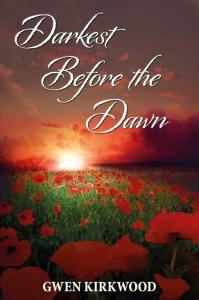
Your new book Darkest Before the Dawn has a very strong cover. Can you tell us something about this novel and what inspired you to write it?

This is the fifth in a series of 5 novels beginning with Dreams of Home at the end of World War II. Darkest Before the Dawn brings the series up to present day with the third generation of the Caraford family. Two of the characters are quite young with problems belonging to their generation so it could almost be a young adult novel, although I did not set out to make it that way. However, it also brings farming up to date with robots for milking cows, arguments between the generations about changes, as well as an unexpected and rather satisfying love affair for two of the older characters.

Darkest Before the Dawn

Joe Lennox becomes bitter and deranged and blames Billy Caraford when his son is killed in a car accident, but Billy has lost his best friend and is badly injured himself. Despite the misgivings of his parents he is still determined to be a farmer. He summons his courage to go to university but privately he regards himself as a cripple now. He is convinced no woman could love him or want to be his wife.

Kimberley is orphaned when her father dies. She moves to Scotland with her aunt but she is nervous about changing schools until Billy helps her find new friends. Both Kim and her aunt become involved in the affairs of the Caraford family and as Kim grows into a lovely young woman she finds the strength of character to confront problems and fight for the life and the love she craves.

What is next for Gwen Kirkwood?

I am going back to the 1800’s and this will be a single novel rather than a series. It has less emphasis on farming but is still set in Scotland. No title yet.

My thanks for taking the time to answer the questions in such an honest and open way. I shall look forward to reading Darkest Before the Dawn when it is available later this month!

More by Gwen:

An interview with Christina Jones

A very warm welcome to this month’s award-winning author, Christina Jones.

Katie Fforde described An Enormously English Monsoon Wedding as “warm, witty and wonderful”. I love the title of this book.  What inspired this novel?

My editor suggested that I should write a summery/weddingy/villagey book as the first in a new series of village-based stories. It threw me a bit to start with, as most of the weddingy themes have been covered a zillion times – but as my daughter recently had a fusion wedding (hers went wonderfully smoothly, I must add – nothing like poor Erin’s!) so I’d learnt a lot about marrying together two totally different religions and styles of wedding ceremony. I knew I had to use the experience – so An Enormously English Monsoon Wedding is the happy result!

What do you consider is at the heart of your novels that makes them so appealing?

Probably their ordinariness (is that a word??). I write about normal people doing normal jobs, nothing and no-one high-powered or high-flying. I also include all ages, genders, and all other diversities. Something for everyone – like real life. They live in small rural communities, everyone knows everyone else, and I suppose it’s all a bit cosy. My whole aim with my books is to create warmth, security, happiness, a few laughs, escapism, and hopefully a massive dollop of feel-good factor. Like everyone else, my real life has had enough sadness – I was determined there’d never be any sadness in my books!

I love the way you create your own villages and the communities that interlink. What was the inspiration for your characters, their world and the stories which they have inspired?

The village where I grew up. No question. It was a very close, rural, working class community, and gave me a fabulously grounded and secure start in life. My friends from back then are still my friends now and we all share the happy memories and the luxury of a perfect childhood. Now I live somewhere very similar, and I watch people and listen to them talking in the corner shop and the pub and just pinch bits here and there! Again, it’s all very safe and cosy – not too twee, I hope – but sort of real and the kind of world that everyone can recognise.

I read in an interview that your cats share your workspace as they do your home. How did you first come to rescue them?

I grew up with animal-loving parents who took in waifs and strays. We had dogs that were going to be shot or drowned before my dad stepped in; cats that had eyes/legs/tails etc missing; ferrets, rabbits and hens that wandered in and out of the kitchen; and ducks that were destined for the dinner table before my mum did a midnight raid on their pen! Nothing was ever turned away. I sort of gravitated towards cats when I first had my own home – via our local vet who had a litter of dumped motherless kittens – and it grew from there. My cats have come from vets, from Cats Protection (the ones no-one wants – too old/scared/injured – oh, and feral in some cases!), word of mouth, and just strays who have turned up and moved in (cats seem to know when there’s a cushy billet!). When I met my husband, he also had rescue cats, so by the time we married and merged our broods we had 11. We’ve never looked back!

What fictional hero/heroine has inspired or impressed you as a reader?

Probably an unpopular choice – but Scarlet O’Hara and Rhett Butler. Manly because Gone With The Wind is one of my all-time favourite books and also because they were both real people, with flaws and not very nice sides to their characters but I understood their dreams, desires and motivations. They simply walked off the page for me and despite them not really having a Happy Ever After; no other fictional romantic couple can hold a candle to them in my opinion.

You are an award winning author, but what do you consider the highlight of your career to date since you became published in 1997?

There have been a lot of highlights (and some lowlights as well!) and over the years I’ve won awards, been to some amazing places, met some very famous people, done telly and radio programmes, and had more fun than I surely deserved, but I suppose it was that first publishing deal for Going The Distance. Seeing my first book in print, on bookshelves, being chosen for WH Smith’s Fresh Talent… honestly, a dream come true – and a feeling that will never, ever be forgotten or recreated.

You are a writer that many new writers aspire to and respect. What would be your three top tips for anyone wanting to succeed in the industry today?

  1. There honestly are no rules to creating a fictional world – so don’t over-do the “I must study all the manuals/latest info etc” because it’ll only confuse and worry you. Write what’s in your heart – write the story you alone want to write, not what you think you should be writing because it’s trendy or current – write for yourself. If you love your story and your characters it’ll show on the page and everyone else will fall in love with it/them too.
  2. Don’t feel you have to write every day. Write the way that suits you. Some people write 10,000 words a day, others write 500. Some (like me) know that if the words aren’t there then it’s best to forget writing until they are and go and scrub the kitchen floor or go for a walk or chat with friends or read or watch telly, whatever – be yourself and do what’s right for you. Just don’t feel pressurised to be like everyone else.
  3. Don’t overwrite – don’t keep going back and rewriting. You can write the life out of your story by constant tweaking. Usually those first bubbling, brilliant ideas that just pour out on to the page are the best ones!

What is next for Christina Jones?

I’m just writing the next novel in the new series – That Red-Hot, Rock’n’Roll Summer – which is about a summer fete that, thanks to Tiggy, who works in the local American Diner, and Marilyn Monoroe look-alike, Cordelia, somehow morphs into a mini-Glasto in the village of Daisybank, much to the horror of the very stuffy and traditional fete committee. And of course nothing goes exactly to plan (understatement!), and Tiggy and Cordelia find lots of love and laughter along the way…. I have ideas and notes for the next two after that as well!

Thank you for taking the time out of your busy schedule to take part in the interview.

Thank you so much for asking me. It’s been an absolute pleasure to be included here. I’ve loved it! Thank you!!!

More by Christina: