An Interview with Ben Adams

I am delighted to have author Ben Adams as my guest this month. Ben’s critically acclaimed novels Six Months to Get a Life and Six Lies chart two men’s journeys as they strive to make sense of their respective midlife crises.
edited Adam medium q
Welcome, Ben,

Please share with us how and when you discovered the joy of writing fiction!

I can’t remember a time when I didn’t enjoy making up a story. My dad is blind. Instead of reading books to me, he used to captivate me at bedtime, making up stories that would transfix me and keep me awake for hours. I caught the bug and used to invent equally inventive stories involving the most hideous of monsters. As I got older, my fiction expanded to include ingenious excuses for not having done my homework. Roald Dahl expanded my imagination still further as did Douglas Adams and Sue Townsend. But ultimately, I blame my dad.

When and how did you make the break from unpublished to published author?

I always wanted to write a novel. In my 20s I dabbled with crime fiction but too many hours spent staring at blank pages and a lack of life experiences meant that I couldn’t make my stories sing.

In my 30s I mostly wrote boring work-related web content and the occasional acerbic complaint letter to the authorities or to the dog over the road – it defecated on my drive.

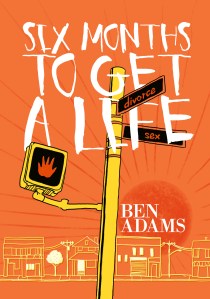
And then my 40s came along. Sometimes it takes a life event to set you off on the right track. Six Months to Get a Life, my first novel, was ultimately triggered by my own family upheaval. It’s a story about a man overcoming a divorce and doing his best to build a new life for himself and his children. Having been through the pain myself, I felt able to give my characters some real depth. It was the first time I had felt truly able to write something believable, something memorable.

cover final

And luckily, I found a publisher who believed in the characters as much as I did.

How would you describe Graham Hope, your protagonist in Six Months to Get a Life?

Graham, like a lot of the characters I invent, is a fairly unremarkable fellow. At heart he is a good guy but like most people going through a divorce, he can occasionally be a bit maudlin. And even bitter. He’s someone who generally knows what the right thing to do is, even if he doesn’t always do it. He’s concerned about his relationship with his children. He’s also concerned about his relationships with women. Or rather his lack of relationships with women.

It isn’t easy to take a difficult subject and inject humour and hope into the story successfully. How did you balance the harsh realities of life against the sense of renewal and wit?

The simple truth is that no one would have enjoyed Six Months to Get a Life if Graham hadn’t been able to laugh at himself. If a story about coping with divorce, learning to live separately from your children or arguing over maintenance payments didn’t contain a few comedic release points, the reader would more than likely be contemplating suicide by the end of chapter 3.

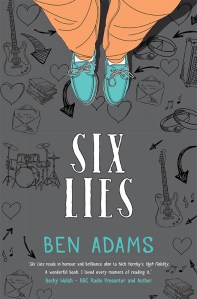
The same goes for my second novel, Six Lies. Dave Fazackerley, the protagonist in Six Lies, discovers after she has died that his mother wasn’t his mother after all. And to make matters worse, he was already reeling from his wife’s decision to run off with a librarian. About the only thing Dave actually managed to cling on to was his sense of humour…

six lies cover for pc w endorse

Writing a novel is a major achievement for anyone, but how hard have you found getting to grips with marketing and using social media to build up your author platform – or are you a natural?

I am probably your typical author. Inventing stories is my passion. I love talking to people about mine and their stories too. But trying to understand the difference between a Facebook page and a Facebook profile, uploading content to a website, getting my head around boring twitter protocols and ridiculous book marketing websites is, quite frankly, the bane of my life.

I do understand the need to establish a good author platform though. Twitter indirectly led to me being invited on to the BBC Breakfast sofa. It also led to you and I connecting. These days, few authors will be successful without a bit of investment in their author platform.

What tips would you give to anyone, of any age, who is determined to become a published writer?

Firstly, you need to write exceptionally well. The best way to do that is to write, write and write some more. The more you write, the better you will become. Oh, and read a lot too. Learn from writers within your chosen genre, but don’t copy them.

Secondly, you need to build your emotional resilience. Believe in your own talent. Don’t let a little self-doubt put you off. Imagine if JK Rowling had thought, ‘Oh, this is crap,’ when she was giving Harry his lightening bolt scar and gone off and got a proper job.

Thirdly, see the previous question and take a deep breath…

What is next for Ben?

I have written my third novel in draft form. Provisionally entitled ‘Trouble in the Staffroom’, it is a school-based drama-come-romp. I am really proud of the draft as it currently stands and am loving the feedback I am receiving from beta readers. Hopefully, Trouble in the Staffroom will be published in September to coincide with the start of a new school year.

I am really enjoying reading Six Months to Get a Life and wish you every continued success.

@benadamsauthor

Ben Adams on Facebook

Ben’s Website

Achieving your goals.


picture1

For the Love of Writing: Making your goals realistic


Now you are sitting comfortably and have an idea where you will be working, you will be eager to start writing. If you are a hobby writer, then fitting it in around other commitments is not a problem. However, if you are trying to make a profession from it, then here are some practical tips. Having your own workspace is a luxury but, if it is not possible, then have one where you can ‘hot desk’ for set times. For a change of scene I sometimes use a large coffee shop or a library.

Once you know where you will write and when, set realistic deadlines to train yourself to work in a professional way for the day when those deadlines have to be contractually met. This can be fun as it is like setting a personal challenge.

You might write only 500 or 1500 words a day. That does not matter. Whatever your output is you can easily work out a schedule as a guide for your project to be completed.

For example, if you are setting out to write a 50,000 word manuscript and produce (on average) 1,000 words per day, then you will need 50 days to complete a first draft.

If you work 5 days a week, then you will have your finished first draft in 10 weeks.

Add a couple of weeks for editing and polishing it. So your realistic target would be a 50,000 word novella in 3 months!

These figures are a simple guide to illustrate how easy it is to set a credible target for whatever your project is. Be committed to your work, revising the schedule as you go along. Keep the goals achievable and be determined to succeed, and you will!

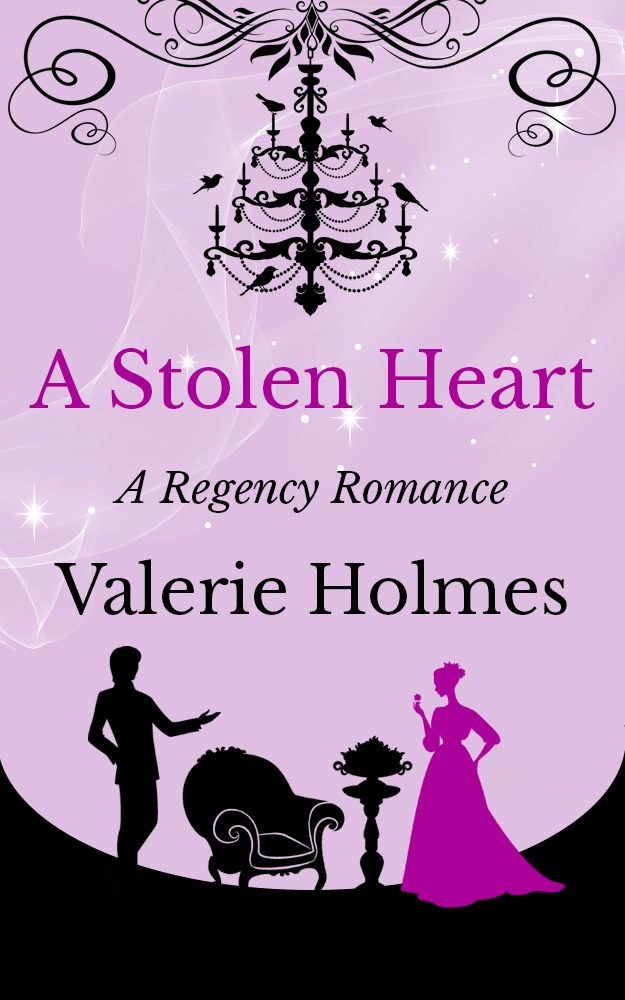
A Stolen Heart – Download it for Free!

A special promotion for my readers!

If you love the adventure with mystery combined then download A Stolen Heart from Amazon today.

stolen_heart
Miss Ruth Grainger’s coach jolts to an abrupt halt when it is stopped by a highwayman.

Fearing for her life she is surprised when this highwayman seeks only to retrieve papers carried by a fellow traveller, her guardian, Mr Robert Grentham’s business associate, Mr Archibald Upton.

Ruth abhors thievery, but she is even more disgusted by the cowardice of the man, Upton, as he uses her as a shield.

Released unharmed, she is haunted by the dark blue eyes of the stranger.

What is his connection to Upton? And what is in the papers he was so intent on stealing?

Ruth returns to Grentham’s home, and along with his silly, young wife Eliza, prepares for an upcoming ball.

Little does she know that Grentham is orchestrating events so that the despicable Upton will become her husband.

As Ruth starts to suspect the truth, another stranger steps into her life, and once more she is bewitched by a pair of blue eyes …

Headstrong and independent Ruth is determined to marry for love, and on her own terms.

But everyone around her has other ideas …

Will Ruth be forced into a match she doesn’t desire?

Or will she end up with the man who has stolen her heart …?

A Stolen Heart is a charming regency romance about mistaken identities, and following your heart’s true path.

Promotion ends Sunday!

More titles

This slideshow requires JavaScript.

Writing: In the beginning!

For the Love of Writing

From years of writing experience I have discovered that one aspect that should never be undervalued is how the process of writing will affect your health. So before we actually discuss what is going to be written or how in future blog posts – be it a short story, novella, or novel – you need to think a bit about the practicalities.
Writing even a few thousand words requires sitting down for hours and this does, or can, impact on your health mainly because of bad posture. I am not medically qualified to give specific advice but I find considering the following helps.

  • Investing in a good chair that can be adjusted for height and back support. I have written whilst perched on a chair in a shed, the kitchen, or whilst travelling. This is fine for short bursts.
  • Try not to cross your legs. I am terrible at taking this advice as the more absorbed I am in what I am doing my legs will automatically gravitate under my chair. However, it is better not to do this.
  • Take breaks. When a plot is working well and you are in there with your protagonist, time can slip away. RSI is no joke, your body is not a machine, shoulders get hunched and tense. So change posture. Stand, walk, literally take a break and do a completely different set of activities that are the opposite of the static writing activity.
  • Give your eyes a break from the screen too.
    Feed the brain and body. I have lost track of how many hot drinks I have made only for them to be left half full (or half empty! ) and cold, because I was too involved in what I was doing.
  • You want to enjoy the whole process preferably when you’re sitting comfortably.

What tips work for you?


An Interview with Richard Lee

I am delighted to welcome the chairman of The Historical Novel Society, Richard Lee, as this month’s guest. Richard founded the organisation in 1997 and it is now an international success.

RichardLeeSmallWhen you decided to found an organisation devoted to historical fiction, did you ever envisage it growing into such an amazing international body?

No! I did not know how it would be possible to be international, so I only envisaged a UK membership – though always celebrating international authors. We actually had US members sign up from the very beginning, which caused headaches about currency transactions and postage costs. This made us ‘ready’ for when internet links began to take off – and now we are much more international than British.

What have been the major developments/changes that you have seen in historical fiction since the HNS was founded?

In commercial historical fiction many things have changed. The ‘discovery’ of the significance of women’s lives has transformed the way that, for example, royalty and celebrity is written about. The success of ‘Sharpe’ and ‘Gladiator’ created a genre of military and epic historical fiction. We have also been blessed by literary authors pushing the boundaries in various ways – Michel Faber reconceiving the Victorian authorial viewpoint, many authors revisiting Colonial and World War narratives, Hilary Mantel turning accepted views of Tudor power and honour on their head.

How has historical fiction been influenced by the major changes within publishing in the last decade?

I am no expert here. Traditional publishing still knows how to publish the big books. The Miniaturist and Elizabeth is Missing we both debuts that had multiple agents interested, sold well into many territories, won prizes and became bestsellers. The main change I perceive is that there is much more opportunity for niche historicals to go it alone, often to the author’s benefit.

The HNS conferences have been hugely successful and enjoyable to attend. Could you share a few of your personal favourite highlights?

The things I remember from conferences are usually surprises from authors I admire – Louis de Bernieres, for example, saying that he wrote each chapter of Captain Corelli as a short story, and didn’t decide the running order till the end. Or Conn Iggulden emphasising just how powerful true coincidences are in history. Highlights are more likely downtime with fellow organisers or friends – meeting members off-stage and finding out more about them. It is great when it is all ‘done’!

What period of history do you have a particular interest in and why?

Early 20th C, Late Victorian, High Victorian, Regency, Georgian, Early Medieval, Saxon/Viking, Roman, Ancient Greek… But really anything!

Do you prefer reading or writing historical fiction?

Reading. I haven’t written consistently for a long while, though it remains an ambition.

How would you like to see the HNS develop in the future?

I always see the society as being about what members want – any enthusiasms that members have are for me to try to facilitate and nurture. This for a long time focussed on our magazines and reviews, which actively involve around 100 of us. Conferences are another big active area – this year over 400 will gather in Denver, and we had an inaugural conference in Sydney, Australia. The big ‘new’ areas of involvement are chapters based in different regions (mostly entirely independent) and connections through social media. Our awards are also popular (230 entries for the latest new novel prize), and we are looking into ways that the society can offer help and training to authors. Whether mainstream published or indie, all authors need help with marketing and promotion these days, we can all help each other.

What is next for Richard?

My first child was born a couple of years after I founded the society, two others followed, and the oldest is now 15. They are the real project and joy, but I still have a wish to write. I think I finally have a good idea!

More from the HNS


New book launch!

To Love, Honour and Obey

Buy on Amazon!
Australia | Brazil | Canada | France | Germany | India | Italy | Japan | Mexico | Netherlands | Spain | United States of America | United Kingdom

To Love Honour And Obey

1805

Six years ago, Willoughby Rossington’s father was murdered while searching for the kingpin of a smuggling and spy ring. Taken under the wing of his uncle, who is running a counter-intelligence operation against Napoleon’s spies, Willoughby is assigned to take up his father’s last mission—and, hopefully, in the process find who killed his father and bring them to justice.

He encounters a young woman, Beth, who works at the local inn. Her spark and resilience against her master’s attempts to break her will strike a chord in him and he, albeit reluctantly, takes her with him when he leaves town.

As they begin to talk, he finds out that her master is more involved in the ring that could have been thought. She overheard things and knows things about the seedy side of villages that could be helpful to him and his mission.

Though Beth hasn’t had the opportunity for education, she’s smart and quite cunning while still maintaining a child-like wonder. Even as Willoughby makes plans to set her up with a family in order to protect her from the perils of his mission, he finds himself a bit melancholy at the thought of losing her company.

Beth is having none of it. She knows she can be of help to Willoughby and isn’t going to be left behind now that she’s found someone nice. Part on purpose, partly because of fate, their two lives become intertwined as they race against the villains that plot to destroy them both.

Will they uncover the truth behind the smuggling ring and find who is responsible for Willoughby’s father’s death?


An Interview with Margaret James and Cathie Hartigan

I am delighted to welcome two successful writers and tutors of creative writing to my blog this month, Margaret James and Cathie Hartigan.

Margaret has been a shining light to me and many unpublished authors as she was the New Writers’ Scheme Organiser for the Romantic Novelists’ Association when I first became published. Cathie is a prolific writer, lecturer and founder of CreativeWritingMatters.

Welcome!

Hello, Valerie –thank you for inviting us to chat with you! It’s lovely to be here.

You are both successful writers so my first question must be where did your own writing journeys begin?

Margaret: I started writing short stories while my children were still babies and eventually I began selling them to women’s magazines.

Cathie: I was a hobby writer until about ten years ago, but after a foundation course with the Open College of Arts, I began having success in short story competitions. Since then I have taken my hobby much more seriously.

CreativeWritingMatters is the inspirational name of the business you founded along with Sophie Duffy. I love the logo. Could you tell us about CreativeWritingMatters and how it came into being?
Cathie: CreativeWritingMatters came into being when I left teaching in mainstream education. The flexibility of being freelance meant we could offer workshops and short courses on all aspects of writing. The competitions came later following the success of a flash competition that we ran for our students.

The name came about because of a conversation I had, during which I became rather too vehement about the importance of creative writing. ‘Creative writing matters,’ I heard myself shriek. Our logo features Sophie’s cat, Henry, the star of her story in our Cat Walks ebook. He’s perky and forward-looking, just like the three of us!

You have jointly written an excellent handbook and a workbook on aspects of creative writing so obviously have a great working relationship, but how do you set about working on a non-fiction joint project as opposed to your independent fiction?

Margaret: I first met Cathie when she joined my local writing group, Exeter Writers. I loved her short stories and she was kind enough to say she liked my own writing, too. We collaborated on producing an anthology of members’ work and found we got on very well. We both teach creative writing (Cathie teaches face-to-face while I teach online) and, after we’d finished editing and producing the anthology, we decided to write a guidebook for our students.

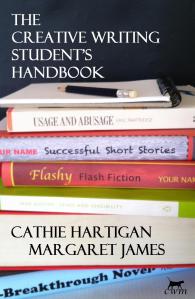
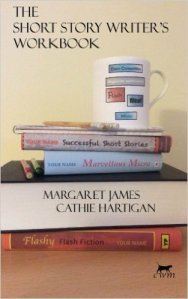
When we wrote The Creative Writing Student’s Handbook, we wrote alternate chapters and then we swapped files and edited these chapters. It all seemed to work well! But when we wrote The Short Story Writer’s Workbook, Cathie wrote the whole of the first draft and then I did a heavy edit, making the second draft twice as long as the first. This approach worked very well, too. We find our non-fiction writing styles are very similar. A few months down the line, we often can’t remember who wrote what.

Will there be more in this series?

We enjoy working together so we intend to produce a handbook for novelists and we have other projects in the pipeline, too. We hope to produce some more anthologies featuring either our own work or that of other people.

You are both very experienced tutors so I would like to ask:-

Margaret, what three tips would you give to an aspiring unpublished novel writer?

  1. Plan your story and know roughly how you want it to end. But don’t be too rigid in your planning. Be prepared for the story to change and grow while you write.
  2. Your reader should want to spend time with your characters. So don’t write about people you don’t actually like or don’t find very interesting yourself. Your characters ought to be your friends.
  3. A novel is a big project. So whenever you get tired or disenchanted – which you almost certainly will – take some time out to reflect and to think about how and where you want this story to go.

Cathie, what three tips would you give to an aspiring unpublished writer of short stories?

  1. Use vivid and specific details that tell a lot, rather than generalisations. If a character puts up an umbrella, we don’t need to be told it’s raining.
  2. How much time you have to set up your story depends on the number of words that have been stipulated by the competition or magazine. Your story needs to develop and reach its resolution without a sudden rush at the end. Once finished, check the balance of set up, development and resolution, then be prepared to cut ruthlessly at the beginning.
  3. Use dialogue and gesture to reveal character rather than word-hungry narrative.

The Exeter Novel Prize is going from strength to strength, what inspired this, and how do you see it evolving?

Margaret: The Exeter Novel Prize came into being because it filled a gap in the world of novel-writing competitions. It’s open to previously published and also self-published novelists. There is more information here: http://www.creativewritingmatters.co.uk/2015-exeter-novel-prize.html

Will there be a CreativeWritingMatters short story competition in 2016? If so, what advice would you give to entrants?

CreativeWritingMatters runs lots of competitions for both short and longer fiction, so here is some general advice.

  • Read the rules.
  • Abide by the rules.
  • Start your story as something interesting happens.
  • Round off your story with a satisfying ending.
Read Making the Grade by Cathie Hartigan
Read Cathie Hartigan’s story, Making the Grade!

What is next for Cathie and Margaret, jointly or independently?

Margaret: I’m about to start the second draft of a novel and to plan a new non-fiction project that has nothing to do with writing.

Cathie: My debut novel, Secret of the Song will be out later this year and there will also be another collection of stories by the three of us at CreativeWritingMatters. Right now, the characters in my next novel are twitching for me to get on with it.

Thank you for taking the time to share your experience and advice with my readers.

Thank you for inviting us! It’s been great to talk to you.

The Baker’s Apprentice

Buy and read now!

US Readers: iTunes / Nook / Kobo

UK Readers: iTunes / Nook / Kobo

Molly Mason dreams of escaping from the control of Mrs Cresswell, her step-mother, by becoming an apprentice to her friend who owns the local bakery. This ill thought-out plan is stopped when Juniper Cresswell’s fiancé, war hero Lt. Cherry, returns accompanied with a soldier who had been presumed dead. The soldier brings with him suspicions of murder, mystery and the key to Molly’s heart.

An Interview with Michael Fowler

This month’s guest is a man who has spent his life dealing with crime and now enjoys creating his own – crime writer and artist, Michael Fowler.

Welcome to my blog, Michael.

Your police career involved a lot of undercover work. Did you sometimes feel that you were in an acting job, however one that had a realistic edge?

Acting is a very good phrase, because it was just that, especially when I was in the Drug Squad. I underwent undercover training by experienced undercover officers. The script they gave me involved learning the ‘language of the street’ together with acting ability on how to buy drugs and set up ‘deals’. My props were a changed appearance – I grew my hair long, wore an earring and changed my dress style. My stage was wherever the drug fraternity hung out. The more time I spent with them the more polished my acting ability improved.

That period of policing was up there as my best, despite being nerve-jangling at times.

When did you discover the desire to become an author?

I never had a desire to be an author. I always wanted to be an artist. My policing and writing career have come by default. I’ll expand on my writing career in a later question.

Were you always drawn to crime?

I’ve been an avid reader since the age of eight. In my early teens I started reading adult books of the Science Fiction and Horror genre. An uncle, who was also well read, introduced me to crime. I initially read cosy crime written by Agatha Christie, Dorothy L. Sayers and Dashiel Hammet, and then I discovered the 87th Precinct series by Ed McBain and I was hooked on police procedurals.

Your first published works were about Mexborough. Have you always had an interest in social history?

The publication of my childhood and teenage nostalgic accounts of growing up in Mexborough came by good fortune. In the late 1980’s I discovered writing groups and began composing stories. My childhood adventures in the 1960’s, within a mining community, were the first things I wrote about. The writing groups were run by the WEA and one of my tutors suggested I approach a local publisher who published this type of work. In 1994 I met the editor at Wharnecliffe Press (Pen & Sword books), pitched my accounts and walked out with my first writing contract. They published three of my books, but I never thought it would progress beyond that because policing and two growing sons took up my life at that time.

Could you tell us about your artwork and what is your favourite medium to use as an artist?

As I have already alluded to painting was my first love. My earliest artistic recollection was sitting at the table drawing with my mum, and all through schooling I pursued art as my passion. My last art teacher introduced me to oil paints and I never looked back. At the age of 16 I passed an interview to attend art college only to return home to be told by my father that he couldn’t afford to support me and so I joined the police cadets. I did paint regularly, all through my policing career – it was a great stress reliever, and I also sold my work. When I retired in 2006, I did so to paint. I rented a studio and painted daily. My work was accepted at major exhibitions at The Mall Galleries, London, and I exhibited with a number of prestigious art galleries. In 2009 I was awarded Professional Artist of the Year. Then came the fall-out from the bank crash. Three of the galleries I painted for closed down and people stopped buying artwork. I knew I had to do something other than paint every day and so I returned to writing and going back to writing groups. I focussed on writing police procedurals and in 2011 I got a publishing contract for my first crime novel. Now I’m hooked on writing. I still paint occasionally, and I tutor an art group once a work, to keep my hand in.

What has been the most important lesson you have learnt as a writer?

That like a good wine you improve over time. I am now on book number seven and I can see a vast improvement from my first book, especially the grammar. A lot of that is thanks to the publishing editor’s skills. I have learned such a lot from the edited proofs that have come back to me prior to publication.

Where did inspiration for DS Hunter Kerr and DS Scarlett Macey come from: reality or fiction?

Hunter Kerr is 95% me and 5% my alter ego, even some of the events he is involved in are based on jobs I have worked on.

Scarlett Macey is a creation. I wanted to test myself developing her and it’s been a very interesting and enjoyable experience. She gets her first outing this September in ‘Scream, You Die‘ and I’m hoping she’s well received.

What next for Michael Fowler?

My first crime novel was released three years ago. Since then I’ve added another four Hunter Kerr books and I’m amazed at how my readership has grown. It’s been a wonderful experience that I want to build on. My policing career developed my discipline and drive and it would be fair to say that I am striving to be a widely recognised crime author.

More from Michael

“The Last Train” joins Alfie Dog Fiction!

Rosemary’s publishing company Alfie Dog Fiction has uploaded my fourth story to be accepted on the site.

Click here to find my stories!

More of my work will join them shortly.