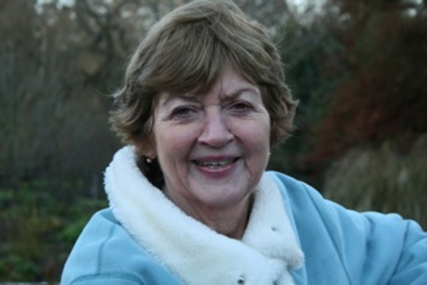
An Interview with Eileen Ramsay

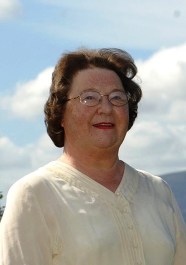
Eileen RamsayThank you, Eileen, for taking the time out of your busy schedule to be my guest this month.

You have had a fantastic breadth of life experiences from teaching the children of international politicians and celebrities in the USA to working in Migrant Education. What lasting impressions did this contrast leave you with?
One fact that has remained with me through all my years of teaching is that, no matter the social position of the parents, the wealth or lack of it, education or lack of it, ALL good parents want the best for their children. Another is that poor parents – and I’m not talking finance here – come from every strata of society. I have had extremely wealthy parents leave seriously ill children in hospital while they jetted off to join some celebrity at a ski resort and I have had really poor Mexican parents turn up at my door begging for “Trabajo ahora?” whenever there was a school outing that cost a little money. They didn’t want a hand-out, they wanted to work to earn the money.

What is it about Mexico that appealed to you so much?

I visited Mexico often and studied Spanish language and Mexican music there. I love its fascinating and sometimes sad history. It is incredibly beautiful. The people are proud and they are generous and full of humour and you have just given me ideas for articles!

Would you agree with the observation that despite having lived with the lifestyle of the very privileged, you always seem to have kept your focus on what is important in life – family and reality?

You’re right, I did enjoy some incredible experiences and my upbringing was certainly not among the privileged but one wonderful woman in Washington DC reinforced all my early lessons. I had just met the man who was to become my husband and I wanted to impress him – shallow person that I am – with my ‘new’ family. I was taking him to lunch – to be introduced – and we walked into the house to see the lady of the house on her hands and knees washing a floor.  It turned out that the resident ‘cleaning lady’ wasn’t feeling well and had been sent to bed.

‘But why are you washing the floor?’ I asked.

She looked up at me and laughed. ‘Dirt,’ she said, ‘is no respecter of persons.’

My husband, of course, fell in love with her on the spot.
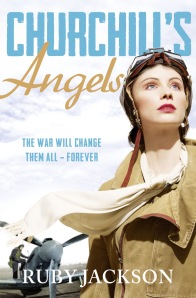
Churchills AngelsWhen did you break away from teaching to develop a career in writing?

Teaching and writing marched together for years. I wrote stories for Sunday School magazines and I wrote reading materials for primary schools. I was able to use knowledge of Native Americans I had gained while living in the US to write something a little different – Bud and the Hunkpapas was a favourite. For a few years I wrote from 4am to 6am but resigned when our younger son went to university.

Are you a very disciplined writer in the way you organise your day?
Organise?  I can already hear the laughter of those who know me.
I am disciplined. If possible I write every day; some days I write all day and well into the evening – that’s research time too. I use a laptop that has no internet because I can’t resist an email pinging in. My husband is learning to cook – our sons and lovely daughters-in-law sent him on a course – and he does one meal a day and he helps with housework – does all the heavy things and brings me a cup of coffee in bed first thing – and so I have 30 mins of ‘fun’ reading.

How and when did your first breakthrough as a published writer occur?
I went to a writing conference at USC where the great Michael Shaara, Clive Cussler, and the editor Charles Block were speakers. A friend typed up part of a Scottish Regency novel I’d been writing – I had even fewer technical skills then – and Charles Block read it. He was waiting outside a lecture room for me on the last day, handed me the script and said, “I think this will go but have chapters one and two change places.”

I had introduced the heroine in chapter two and he advised that the heroine should always be right there in chapter one. We returned to live in Britain that summer; I managed to get an agent – long story and sent her the finished, rewritten manuscript. A few days later she called and said she’d attended a party the evening before and an American editor had asked her about the availability of Scottish Regencies.  She showed her the typescript and it was bought! I looked at it a few years ago and it was rather dire – wouldn’t be published today. I rewrote it, correcting errors, and published it on Amazon!

You were established as a saga writer and then made the bold and successful move to writing romances based around the world of opera and music. What inspired this departure?

I had written children’s books, Regencies, Sagas and serials and I wanted to write contemporaries. I went to an artist chum’s exhibition and found myself thinking – What if all these paintings were of one person? The idea stayed and grew like Topsy and I wrote a book about an artist who loved a tenor – my favourite voice!  It was read by several reputable editors and agents but no one wanted it but almost everyone made sensible points. (I occasionally bump into one or two at an RNA party and we chat perfectly happily!)

            At a book launch I found myself standing beside a lovely woman who asked me if I wrote books like those of the superb writer onstage. I said “no” and told her my friend’s publisher had just, that very day, rejected me.

            “I didn’t reject you,’ said the woman and gave me her card. “Send it to me and I’ll have a look.’

            I dithered for days and eventually rang my friend, telling her I felt badly about, even inadvertently, using her launch to contact a very senior editor. She looked at me and said. “Don’t be stupid; if anyone holds out a hand to you in this business, grab it.”

            I grabbed, sent it and received the manuscript back with a “NO” for which she gave her reason. She also told me I really needed a good agent and suggested three. Two had already rejected me but I had not heard of the third and so I had one more go.

            The agent accepted me as a client, and, with her guidance, I rewrote a few scenes. The agent, the brilliant Theresa Chris, sent the manuscript to auction. It went for an amazing amount of money and was then bought by several foreign publishers.
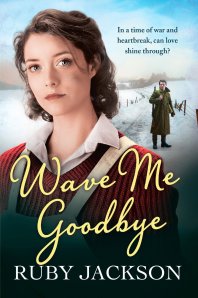
Wave Me GoodbyeLast year, ‘Wave me Goodbye’ was published under the name of Ruby Jackson, which I understand is the first of a series of novels ‘Churchill’s Angels’.  Please tell us something about this new project?
I suppose, like many writers, after five best-selling books, I fell out of favour. Theresa stayed with me, encouraging me, advising me.  A few years ago, she asked if I would like to revisit WW11 and after much thought, I said yes. I did not know, of course, that  an editor at Harper Collins had conceived the idea of publishing a series of books about the courageous women who did everything from catching rats to ferrying Spitfires; the women she calls Churchill’s Angels.  Using the pseudonym, Ruby Jackson, I have now written four books; two have been published so far.  It’s been an enormous privilege. I’ve met land girls, pilots, nurses, etcetera and been awed by every one of them. Their stories need no exaggeration – they were quite simply – superb.

You obviously love historical fiction and research your chosen topic thoroughly. What advice would you give to anyone who was considering writing a historical novel?
Advice would depend on which era and which country but obviously I’d say, find out as much as you possibly can about the person the time and the place. Read everything, especially newspapers of the time, and don’t be afraid to ask questions. Archivists and librarians are great sources and remember there are archivists in famous department stores, in grand hotels and in universities.  They know what you don’t know you don’t know!

What is next for Eileen?

I have no idea; my head is spinning – that way, or that way but I did visit a conductor friend at the Royal Opera House earlier this year. He has been keeping me accurate about conducting and conductors for several years as I have an idea. He asked me about progress.

‘I’m afraid, for the past four years, the poor man has been standing on a rock looking out to sea.’

He shrugged. ‘Well, there are worse places for a conductor to stand.’

Now, wouldn’t you want to discover the worse places?!

More from Eileen

Website: eileenramsay.co.uk
Blog: Eileen’s Blog
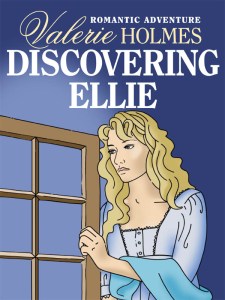
Discovering Ellie

Discovering Ellie KECBuy and read now!

US Readers: Kindle / iTunes / Nook / Kobo

UK Readers: Kindle / iTunes / Nook / Kobo

Early nineteenth century North Yorkshire, England.

Ellie has recurring nightmares, always waking to a life devoid of love, but still she dreams. Living in the old hall with her Aunt Gertrude and cousins Cybil and Jane, the scandal of her mother’s elopement with a Frenchman cast a long shadow over her life. Until Mr William Cookson arrives to shine new light onto her past opening the way to an exciting future…

An interview with Trisha Ashley

267398_163150827092202_2914025_nI am excited to welcome the lovely Trisha Ashley, an award-winning and best-selling author of humorous romantic fiction. 
How much have your entertaining novels been influenced by your own studies, hobbies and work experience?

There are elements of my interests and experiences woven in all of them, of course, but like most novelists I tend to use turning points and situations in my own life as jumping off points to explore new directions my characters can take – because after all, they’re not me and they would do things very differently.  They constantly surprise me.

      There is, of course, rather a lot about food in my books and all the research has taken its toll on my figure – but then, you have to suffer for your art.   I also love animals and gardens – especially roses – and often, too, my novels reveal the enduring power of good friendships and the supporting love of families, however dysfunctional they may at first appear.

      I’ve had a series of part time jobs over the years to support my writing and I think probably the seasonal work for the National Trust was the most useful.  For a few years I spent six days a week either in the draughty front hall of a large gloomy mansion, or in a little wooden hut at the entrance to the lovely Bodnant Garden in North Wales.  Now, those gardens were really inspiring and I was lucky enough to be there when a new young (and handsome) head gardener, Troy Scott Smith, had just taken over and was slowly revitalising it.  I think you can date my passions for roses, mazes and knot gardens to this time…

      But all of life’s experiences, good or bad, can be composted down and used to grow something fresh and new: nothing need be wasted.

When did the Muse enter your life? I hope he gets on with Dog.

I don’t think I can do better than to quote the update I put at the top of my quarterly newsletters for new subscribers:

      The plot so far: Except when she is occasionally let out to enjoy a couple of days of frenetic partying in London, or to give a talk, Trisha lives in beautiful North Wales, together with the neurotic Border Collie foisted onto her by her student son and an equally neurotic but also vain, bad-tempered and chancy Muse.  Muse, whose first name is Lucifer, slipped into her head and took up residence while she was reading Paradise Lost at school and refuses to leave.  He is male, steely-blue, wears a lot of leather, is winged, has talons (so that’s where her blue nail varnish went, then) and is devilishly handsome, if you like that kind of thing.  He only eats words, but gets through a lot of Leather Food and Trisha is starting to suspect that he does more with it than just rub it into his wings…

     Lately, Muse has been writing a hiss-and-tell account of his life with Trisha, called The Muse Report, though due to the fact that he eats his words almost as fast as he writes them, it could be quite some time before this appears in print.

      Muse takes little notice of Dog, except to eye the name tag on his collar when hungry…

Meeting your agent, Judith Murdoch, was a major turning point in your career.  What key advice would you offer to, as yet, unpublished authors?

There’s too much temptation now to rush out your first novel yourself as an e-book, so if you take that route I’d advise you to have your novel independently edited, and consider the constructive criticism you receive very carefully.  You want your novel to be perfect and whole, not some poor, half-formed creature, and with a first novel you aren’t going to spot what’s wrong with it yourself.

      If you’re lucky enough to be taken on by an agent or publisher, of course, they will tell you what’s wrong with it and being able to accept and work with constructive criticism is something you need to embrace if you’re taking writing seriously.

Are you a very planned and disciplined writer, plotting an outline in advance or do you start with a scene, character or situation and go from there?

I am character driven and, since I write in first person, must get to understand my heroine and her background first. Then I put her into a situation and see where she goes, and the book unrolls before me as I write like a magic carpet.  I don’t know where we’re going until we get there.

You have achieved success as a writer despite having macular degeneration. For those unfamiliar with the condition, would you  please share with us how you have worked around this?

 I have had myopic macular degeneration and very poor eyesight (minus 20) for many years, but the MD has been getting increasingly worse recently.  Macular degeneration means that blind patches increasingly appear on your retina and although I automatically focus around them, when tired that gets harder to do and my vision generally blurs.

      I have little night sight either, so tend to fall off kerbs etc and have been known to try and flag down any dark and vaguely taxi-shaped vehicle in London at night…

      There’s currently no treatment for my kind of MD and I’m supposed to take regular breaks from the computer screen…

      I am exploring new ways of writing at the moment in case I ever get to the point where I can’t see the screen at all, but this isn’t easy since I’ve been touch typing my books since I was fifteen and made the transition to word processors and then computers as soon as they appeared.

      At the moment, I write on screen in large print, but still have lots of room to increase the font size if necessary, so it’s okay.  I print everything out to work on.  But then, I’ve always needed to see my words on paper before they become real.

Please tell us about your new novel?

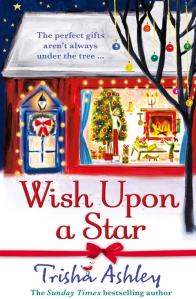
Wish Upon a Star jacketWish Upon a Star will be released on November 7th and has a Sticklepond setting, the village in West Lancashire where some of my other books are set.  It’s very much about following your star, wherever it may lead you and however hard the going gets.

    Single mum Cally’s life revolves around her little girl, Stella, who has serious health problems and when her condition suddenly worsens, they move in with her mother in the remote village of Sticklepond, while she tries to raise enough money to take Stella to America for a potentially life-saving operation.

      Cally only realises quite how tough it’s been shouldering everything alone when all the villagers – and especially laid-back and charming baker Jago – rally round to help.  All Cally wants for Christmas is a miracle to save Stella and with Jago’s help she may yet discover that all the best presents aren’t always found under the Christmas tree…

What is next for Trisha Ashley?

      I’m very happy to say that next year Avon will be doing a new edition of one of my long out of print novels, Every Woman for Herself.  I know you shouldn’t have favourites among your children, but I have to admit that this book is the closest to my heart.  It’s set in Yorkshire, where the Rhymer family, Emily, Charlotte, Anne and Branwell (the result of a failed attempt by their father to recreate the Bronte family situation) slowly return home, one by one to the haven of Upvale – only to find that things are about to change, forever.

      Every Woman for Herself was voted one of the three best romantic novels of the last fifty years in a reader poll, which was a truly wonderful moment, and I’m constantly being asked by readers where they can buy a copy, so I’m delighted it will soon be out again in paperback and e-book formats.  I’m adding a couple of new recipes to the end, too and it will also, of course, have a lovely new cover.

Thank you so much for having me on the blog, Valerie, and I wish everyone lots of very happy reading!

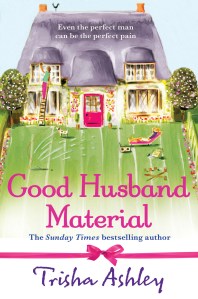
Good husband material high resMore by Trisha:

Another warm, wise and witty offering from Sunday Times bestseller Trisha Ashley.

James is everything Tish has ever wanted in a husband – she’s married a man who even her mother approves of. He’s handsome, dependable, and will make an excellent father – unlike Tish’s first love, the disreputable Fergal. Her teenage sweetheart abandoned her for a music career and now lives a typical celebrity lifestyle. Fergal broke her heart – James helped mend it.

Now, they’ve bought a cottage in the country. The next step – kids and a lifetime of domestic bliss. Well, that’s the plan. And even if James has a slight tendency to view the village pub as a second home, their relationship is still in pretty good shape after seven years of marriage. So why is marriage to Mr Right making her long for Mr Wrong?

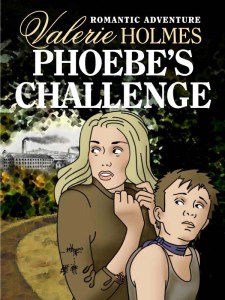
Phoebe’s Challenge

Phoebe's Challenge KEC (1)

Buy and read now!

US Readers: Kindle / iTunes / Nook

UK Readers: Kindle / iTunes / Nook

Early nineteenth century North Yorkshire, England.

Phoebe and her brother, Thomas, have to flee the evil regime of overseer Benjamin Bladderwell because an accident results in them being labelled machine breakers. Hunted with nowhere to run, the mysterious wagon driver, Matthew, his them and saves their lives. They soon discover that he is a man of many guises who Phoebe instinctively trusts, but Thomas does not. Their future depends upon this stranger, on their own they will be captured or starve. Phoebe must trust or challenge Matthew unaware that he is also tied to their past.

An interview with Gwen Kirkwood

Welcome, Gwen!

Your warm-hearted family sagas are based in rural Scotland. When and where did your love affair with Scotland’s beautiful country and history begin?

I have three Scottish grandparents so I had a yearning to see Scotland for myself. I came to Dumfriesshire to work as a milk officer, inspecting dairy farms. The work was not as I had expected but the people were very friendly and I loved the warmth of the red sandstone buildings and the beautiful landscapes with fresh green hills and glens and lots of trees. I have never wanted to leave, especially not after I met and married my husband, a Scottish dairy farmer.

Are any of your wonderful characters based on real people or are they all purely of your own creation?

My characters are all fictional but I think writers must be influenced by people they have met, even if it is only subconsciously. I had a wonderful mother-in-law so a few of my older characters may have some of her kindness and wisdom. We can read of bad characters every day in the newspapers. I have three adult children who keep me up to date with the opinions of their generation. My grandchildren are of varying ages and I often include children. Writers keep on learning and developing and so do the characters but I have never written about a real person.

You took a six year career break. When you returned to your writing did you feel as if your work had changed at all?

I don’t think my writing changed. I still wrote another series of four in a family saga following the generations. My books are shorter, 100,000 words or less now, but that is due to the policy of different publishers.

To date, what has been the most memorable or significant event within your writing career?

I had written four short romances but it was a tremendous boost to my confidence when an agent sold my first long saga to Headline in a very short time. A good editor can have a big influence and Jane Morpeth helped me a lot.

Secondly, I rarely enter competitions but after a long gap from writing it was a lovely surprise to win the Elizabeth Goudge trophy in 2000 when it was resurrected by the RNA for the millennium. It was judged by Richard Lee of the Historical Novel Society.

What top tip would you give new writers wanting to become published writers in today’s market place?

Persevere. Try to write a little every day, even if it is only a couple of sentences. Keep a notepad handy. Consider the strengths and weaknesses of your characters, or improve your plot, while you are travelling, ironing, peeling the vegetables. Thinking time is important too. Listen to the advice of agents and editors, not friends. If you do self-publish pay a reputable copy-editor to check your work first.

You have seen many changes within the publishing industry. What do you think of the new emphasis on social networking and Internet presence?

Honestly? I hate it – well some of the time! I want to be left in peace to write, BUT writing used to be an isolated occupation so I am pleased we now have opportunities for keeping in touch with other writers, getting and giving help, as well as marketing. Networking has become essential so I do my best, but it can take up a lot of time.

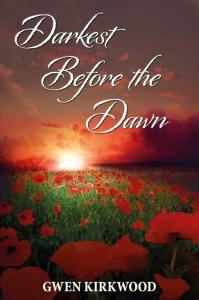
Your new book Darkest Before the Dawn has a very strong cover. Can you tell us something about this novel and what inspired you to write it?

This is the fifth in a series of 5 novels beginning with Dreams of Home at the end of World War II. Darkest Before the Dawn brings the series up to present day with the third generation of the Caraford family. Two of the characters are quite young with problems belonging to their generation so it could almost be a young adult novel, although I did not set out to make it that way. However, it also brings farming up to date with robots for milking cows, arguments between the generations about changes, as well as an unexpected and rather satisfying love affair for two of the older characters.

Darkest Before the Dawn

Joe Lennox becomes bitter and deranged and blames Billy Caraford when his son is killed in a car accident, but Billy has lost his best friend and is badly injured himself. Despite the misgivings of his parents he is still determined to be a farmer. He summons his courage to go to university but privately he regards himself as a cripple now. He is convinced no woman could love him or want to be his wife.

Kimberley is orphaned when her father dies. She moves to Scotland with her aunt but she is nervous about changing schools until Billy helps her find new friends. Both Kim and her aunt become involved in the affairs of the Caraford family and as Kim grows into a lovely young woman she finds the strength of character to confront problems and fight for the life and the love she craves.

What is next for Gwen Kirkwood?

I am going back to the 1800’s and this will be a single novel rather than a series. It has less emphasis on farming but is still set in Scotland. No title yet.

My thanks for taking the time to answer the questions in such an honest and open way. I shall look forward to reading Darkest Before the Dawn when it is available later this month!

More by Gwen:

An interview with Linda Mitchelmore

LINDA WRITING ROOMI am delighted to welcome prolific short story writer and successful Choc Lit author, Linda Mitchelmore.

When did you first realise that you wanted to be an author?  
I did things rather back to front. I didn’t consciously start out to be a writer. One Christmas – back in the day – there was a short story writing competition in Woman’s Own. On Christmas Day evening, my family were all glued to the TV – something I don’t get a huge lot of pleasure from as I am deaf. So I thought I’d have a go at the short story competition for something to do. To my utter amazement my short story was short-listed  and published. And I was paid for it. The old cash registers behind my eyes started to ring and I thought, hey, I could make money from all the ‘stuff’ that goes around in my mind…

Your stories have sold internationally. How many have you had published to date? 
I’ve lost count of the exact number of short stories I’ve had published but it is definitely 300+ now. I’ve also had a story broadcast on radio – the irony of that not lost on me.

Writing short stories and longer fiction involve two very different disciplines. What attracted you to short fiction initially, and how much of a challenge was it making the switch to longer fiction? 
Short fiction is just that – short. 750 word stories are quite popular with some magazine editors. I tend to write 1000 word or 2000 word stories as they’re the lengths that tend to fit into most magazine slots. When working on a short story I don’t have to think too much about viewpoints – I only ever write one character’s viewpoint into a short story. I don’t have to have sub-plots, and foreshadowing is something that – depending on the story – doesn’t raise its head much. So they are much quicker to write. When I first started writing I had two teenage children at home, a husband (still got him!) and a part-time job as well as ageing parents and parents-in-law to be doing things for. Short story writing was easier to fit in around all that. Writing longer fiction – 80,000 words or so – seemed a natural progression for me once I had more time to write it. The same premise of ‘person, problem and plot’, with a ‘beginning, middle and an end’, is the same for short stories and novels. The only difference is the time it takes to tell the story.

Your novel, the first of a trilogy, ‘To Turn Full Circle’ is set in your beautiful home county of Devon. Please tell us something about the inspiration behind it? 
The seeds of To Turn Full Circle were sown when I was helping my husband research some family history. We discovered that his great uncle, George, had fished out of Brixham. George had had two trawlers. One of them was lost to the sea in a storm (although with no loss of life) and George had a bad accident on board the other one which meant he had to come off the sea and lost his livelihood. He had to move his wife and daughter back in with his mother. I had a ‘What If’ moment! What if it wasn’t a man who had lost his home because of circumstances, but a young girl? And ‘What If’ the sea still controlled her struggle to survive? And so, To Turn Full Circle was born.
When you begin a new project does your initial idea start with a character, situation, place or theme or does it vary? 
For me a story always starts with an emotion or a feeling – something deep inside my main character. In To Turn Full Circle’s story it was Emma’s determination to survive which drives the story.

You have two more novels to write to complete this trilogy. What do you see as the next challenge for Linda Mitchelmore? 
Writing the next two books is keeping me busy at the moment. I do, however, have a contemporary novel under consideration – the heroine is older than Emma. The feeling driving this story – tentatively called Red is for Rubies – is regret. Most of us have them and in Red is for Rubies, my hero and heroine have lived – apart – with their own regrets for a long time. Will they get a chance to redeem themselves?

Also, I have now signed a contract with Choc Lit for a novella – Hope For Hannah. It will be an e-book initially and out in the close future.

My thanks for a very insightful interview, Linda.

More by Linda:

CHOC LIT LOVE MATCH Layout 1