Welcome to 2015!

It is the last day of what has been an exciting and challenging year for me. I would like to thank all the lovely people who have followed my blog and watched it grow.

I would especially like to thank all the authors who have been my guests and shared their careers, experiences and writing tips with me month on month. They have been truly inspirational and I will be welcoming more professionals from the industry as 2015 opens up.

Wherever you are, whatever your interests, I wish you all a happy, healthy and successful 2015!

An Interview with Elizabeth Chadwick

Welcome to my blog, Elizabeth. From the moment you began writing manuscripts you never gave up on your goal of becoming a published writer. How long did this take?

I decided I wanted to write for a career when I was 16. This was after I had spent a year hand writing my first novel. Prior to that I’d always told myself stories verbally as imaginative fun. It wasn’t until I was 15 I wrote anything down, but having done so, I decided that writing novels was what I wanted to do for a living. It took another 16 years for me to realise that dream. Part of that time was taken up by growing up, entering the world of employment, getting married and having a family. During that period I learned to touch type and as technology advanced, transferred from manual typewriter to computer – in those days the Amstrad green screen. I always hoped to get published, but I figured it didn’t matter if I didn’t because this was my hobby and storytelling had been a part of me since I first had language, so I wasn’t just doing it for the fame and fortune (!), I was doing it for me.

Your big break came when Carole Blake became your agent after reading The Wild Hunt. How quickly did your world change as a result of this?

Not immediately because it takes time for contracts to be arranged and for money to begin flowing through so I didn’t give up the part-time day job immediately. When I was first offered a publishing contract, my children were aged six and three, and I was staying at home looking after them during the day and going out to work the twilight shift in a local supermarket at night while my husband took over the childcare. So although I was offered a publishing contract in the summer of 1989, I didn’t give up the job until late autumn of the same year. While my first contract wasn’t exactly enough to move to Millionaire’s Row, it allowed me to be a stay at home mum and write in the spaces between the children. In those early days it was still very much a part time income, but enough to get by when added to my husband’s full-time wage.

Do you look back at your early work affectionately or critically?

Both. I think any writer worth their salt is always learning and seeking to improve. I know I have moved on since my early days, but my early novels were still strong enough to be published and short-listed for awards in a very competitive market. I have since had the great opportunity to overhaul those early novels in the light of experience gained and it was interesting to go back and look at the learning curve. But I am very fond of my early works because they are the foundation stones on which my career has been built.

I totally agree with you. What advice would you give to an author who is about to make the step into the world of an agent and publishing deals?

Be professional. If you don’t know something and it’s genuinely out of your range, then ask. But do some homework first and make sure that it’s not something you can’t answer for yourself. Talk to other writers and professionals who have knowledge of the publishing industry and get a range of opinions. Go to events and network. The more you know the better you will be able to make decisions. You might even decide to go the route of self publishing, but you need to know all the ins and outs of what this entails and be realistic about expectations.

Your love of the medieval period began when you watched your TV hero on screen in the 70’s adventure series Desert Crusader. Which of your heroes/heroines would you love to see televised to inspire a new generation?

Without a doubt it would have to be the great William Marshal and his family. They win hands down! He was a man who took the helm of the country in a time of great upheaval during the early 13th century. Without his political, military and people skills, the pages of England’s history would probably have looked very different.

I would love to see William on TV.

You are renowned for your detailed research and historical accuracy. How has this deepened or broadened over the years since you started writing?

When I began writing it was at the more romantic end of historical fiction and the research books I was using were often fairly general in their outlook although I did even at that time possess a core number of books from university presses. By the very nature of time I gained experience, adding layer upon layer as each successive novel came out. I bought more books; as my knowledge levels increased so did the complexity of my reading. These days I mostly buy my research books from specialist publishers and university presses and my research has become more academic. I am now sometimes asked to give talks at universities and heritage sites – something I couldn’t have envisaged 20 years ago. My research has also become multi-layered. The Internet is obviously a fabulous resource and primary source documents are now available online that couldn’t be obtained when I first began writing. Even so one has to be careful because there is an awful lot of mediocre rubbish out there and all writers need an inbuilt drivel alarm! As well as research reading, I also re-enact with a living history society called Regia Anglorum. This helps me to get a feel for the period by working with replica artefacts and not just reading about how things were done, but having a go – see the next question. I also visit sites mentioned in my novels where possible, and this helps to give a feel for the lie of the land, although Google Earth is also your friend.

Regia Anglorum has obviously been an important part of understanding life within medieval England. What is your favourite artefact/garment that you have had recreated, through knowing the experts associated with the group?

I have a dress. It’s made from woollen fabric especially commissioned and woven to an 11th century pattern using the same loom width that a person of that period would have used. I’m rubbish at needlework and a bit awkward when it comes to cutting out patterns, so I had someone I know make the dress for me. This particular person has degree level knowledge of textile archaeology and mediaeval costumes and was able to design the dress to an 11th/12th century spec. It was then all handsewn using mediaeval stitch techniques. It’s the nearest I’m ever going to get to fully authentic!

In all the places you have been and the artefacts you have studied during your research, do you have a particular favourite(s) that has inspired you or left a lasting memory?

I absolutely love trawling museums, and the London ones are fabulous if one is in the capital. I would say that one of my favourite places to go is the Museum of London which has some terrific exhibits in the mediaeval gallery many of which are ordinary everyday objects and not just the stuff of high aristocracy. There are things like 14th century spades, fish traps, a wonderful little tinned mirror case, a terrific money box that looks like something out of the 1970s! They have a codpiece too!

For a single one I’d have to say the effigy of William Marshal at the Temple Church in London. I always go and see him and honour him when I visit London. He gave me my first New York Times bestseller and he has touched so many people, myself included. He has a life beyond his mortal life, and it always makes my throat tighten with pride when I go to the Temple Church.


What appealed to you most about the character of Eleanor of Aquitaine, inspiring your critically acclaimed trilogy?

I think it’s not so much a case of appealing. It’s more a case of downright curiosity. I had written about her and several novels and at first had followed the usual path of the biographers when I needed to put her in a story. But that came to be not enough. I began to ask questions; I began to see anomalies in her story that didn’t agree with the biographies or what was being accepted as historical veracity. I began to think about Eleanor in a bit more detail. What was she really like? What could she tell me that she hadn’t told anyone else? And the more I researched the more I found out and the more biographical discrepancies came to light. For example you will find her biographers describing her variously as an olive skinned black eyed beauty with a curvaceous figure that never ran to fat in old age, as a saucy blue-eyed blonde, as a humorous redhead with green eyes. And the thing is there is not one single physical description of Eleanor recorded anywhere. Even the supposed mural of her in the chapel of St Radegone in Chinon, is now thought by a leading art historian who has examined the mural in detail, to be a man. A recent academic work on Eleanor titled “inventing Eleanor” by Professor Michael R. Evans, investigates these odd ideas about her appearance, and actually quotes my research into the biographers’ notions about Eleanor’s appearance.

Non-historians also have some strange ideas about Eleanor – that she was a feminist and way ahead of her time, both of which are false assumptions. So I felt I wanted to explore my own version of Eleanor and see if I could discover the 12th century personality behind the detritus of the centuries.

What is next for Elizabeth Chadwick?

First I have to finish and hand in THE AUTUMN THRONE, but when that’s done I strongly suspect that William Marshal is going to be riding again as there are aspects of his story still to be told.

Thank you for taking the time out of your busy schedule to give us an insight into your fascinating career and love of history. Have a lovely Christmas and every good wish for further success in 2015!

Roses are Dead: Burglary and Intent

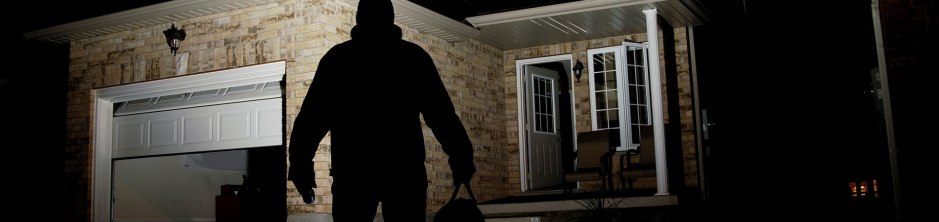
Occasionally I drift away from my love of history for a change of pace and venture into a contemporary world of suspense, love and adventure. This usually happens when something in reality has struck a nerve, such as when a friend’s home was burgled.

Jen’s world is turned upside down when she should be at a happy beginning in her life. She is hounded by a string of unnerving events and then someone breaks into her home; her new sanctuary.

We read about burglaries all the time. However, they are not only a violation of a person’s belongings and space, but also their peace of mind. How quickly a person bounces back from such an experience will depend upon the individual and the extent of the theft and damage.

Doubts can linger regarding the motivation behind the crime – Was it a random event? Was I targeted? Did they know my work pattern so that I would not be there? Do they know me?

In fiction we can play with these questions, keeping the answers and consequences within our control. However, in reality, overcoming such a personal violation can take a lot of time. Authors often focus on the crime and catching the criminals, but I respect that for the victim this is only part of the process of healing and restoring that inner peace.

If you want to read Jen’s story, Roses are Dead is available from Amazon and Smashwords.

York

I am so lucky that in the course of doing my research for my own titles I have been able to visit some fascinating historic places. York is the one that encapsulates time as now other. If you were a Roman, it was known as Eboracum. If you had lived there through the Saxon era, then it would have been called Eoforwick. Perhaps it is better known historically as Jorvik because of the state of the art Jorvik museum which brings Viking York back to life.

Walking through the city’s narrow lanes is like seeing all eras of time side-by-side. Medieval wooden structures stand next to Georgian houses and over them all are the famous towers of a grand cathedral known as The Minster.

There are far too many aspects of this fantastic place to mention in one post so I am sharing some photos of the city with you that I discovered when researching locations for Abigail Moor.

Congratulations to Cindy!

I was delighted to read today that Cindy Kirk has just become the President of Romance Writers’ of America, which has a membership of over ten thousand.

The RWA represents romance writers in the same capacity as the Romantic Novelists’ Association does in England and the Romance Writers’ of Australia.

These wonderful organisations are focused on advancing the professional interests of career-focused romance writers. They offer a network which is helpful and informative to their members as well as holding events, conferences and high profile competitions such as The RITA, RoNA and ARRA awards. Two of my own titles: Hannah of Harpham Hall and Moving On were short-listed for the now named RONA Rose award. I have been a member of the RNA for many years and find their willingness to guide new writers inspiring.

You can read more about Cindy in my interview with her earlier this year. I hope she has a really marvellous time promoting the organisation she so obviously loves.

An Interview with Liesel Schwarz

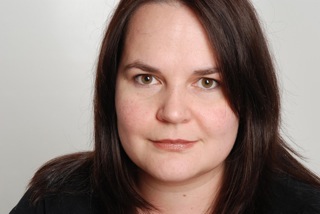
LieselI am delighted to welcome Liesel Schwarz, Queen of Gothic Steampunk to my blog this month. I first came across Liesel’s work when I read her debut novel ‘A Conspiracy of Alchemists’, which is an action packed adventure described as “Combining the best elements of Gothic fiction with contemporary Steampunk”. It was chosen by Random House to launch their SFF imprint (Science Fiction and Fantasy) Del Rey in the UK.

Welcome, Liesel, and thank you for taking the time out to answer my questions.

To me the combination of history, invention, science, fantasy, romance and thrilling adventure is a magical blend – literally too, as it reveals a deadly game between Alchemists and Warlocks as the creatures of light and dark walk among us.

Hi. Thank you for inviting me!

How do you describe Gothic Steampunk?

That’s a question that requires a rather long and convoluted answer. I think steampunk, in broad terms, is the fascination with Victorian optimism. It concerns itself with technology and progress. The Victorians had this obsession with making the world a better place, by “civilising” it. We know today that much of what they did was deeply misguided, but I think their hearts were in the right place. Steampunk takes its cue from those intentions. Gothic romanticism is more about Victorian disillusionment. It is the 19th century’s nostalgia for the romantic ideals that originated in the Dark Ages. I’ve always been a fan of the 19th century Gothic literature and I love steampunk and so I thought it would be cool to create a world that was bright and technologically progressive on the one side while dark and organic on the other. Two sides of the same coin, but in direct opposition with the other. This is how Elle’s world came into being and so I suppose in a way this is why they described the books as Gothic Steampunk.

That’s a great description which captures the complex essence of the genre. When I read your first novel what struck me most was the energy and enthusiasm that came through the words on the page. Have you always been a natural story-teller?

I’m not so sure about the story telling part, but I do know that I have however always been a natural story maker-upper. Telling the stories you create in your head is, I think a natural progression in this case.

Where did your writing journey begin?

When I could hold a crayon. It took a few detours, and I decided to start writing more seriously after I left university but I think writers tend to be born that way. It is again a natural consequence of story maker-uppers.

How long did it take you to become a published author?

A few weeks! No, I’m serious. I was incredibly lucky. I met my agent, he sent my book out to market and I literally had a book deal a few weeks later. Before I met my agent, I did however spend years and years honing my craft. This involved writing stories, polishing them, having them rejected and then starting all over again. I also studied the craft of writing quite intensely. I have an MA in Creative Writing and I am also busy with my PhD on the subject.

Will you ever forget the moment when you were told yours would be the debut novel of Del Rey?

I think I was more excited by the mere fact that my book was going to be published, to be honest. The fact that it would be the debut for a new imprint only really registered with me a bit later. It’s great when you have a good relationship with your editor and publishers and again, I am extremely lucky in this respect.

There are many aspects to your novels. The research of actual inventions must be meticulous – but you have also blended in your own to make the fiction appear real and the impossible plausible. Have you always been drawn to this age of invention?

Yes. I think it started when I was very young. I remember watching films like Mary Poppins and Chitty Chitty Bang Bang and I found the sheer eccentricity of it all irresistible. This fascination grew as I started reading and it’s been with me ever since.

Do you have great fun spending many hours inventing your own machines on the page?

Actually, many of the machines I use in the books were actual patents filed in the British Library. I think the Victorians were far better at inventing fantastical machines than I could ever be. I think the reason for this is because there was an element of naivety about their inventions. Today, with all the marvels we have at our fingertips, we are a little jaded. Although, I suppose that in a hundred years from now, people will look at us and think, “Oh, how quaint!”

Elle Chance and Mr Marsh are strong characters who continue to develop. Do you have plans for the series to continue over many novels?

I think all characters must develop within a narrative. You can’t really have a story without that and so yes, I have further plans for Elle and Marsh. There will be a book 4 and a book 5 in the future.

Do you constantly jot down ideas for the next book as you work?
I must admit that I am quite bad at jotting things down. Or, I tend to jot things down and then forget about them. Ideas that are live and have potential tend to stick in my mind. They niggle away at me until I write them into a story. I do however carry a notebook with me at all times. I sometimes jot down bits of conversation I’ve overheard when I’m sitting in a coffee shop.

Elle travels widely – how do you research the many locations that your novels cover?

I like to travel and so the settings I use tend to be places I’ve visited. You have to place settings into historical context though and so I do a lot of research as well. I am particularly fond of old city maps. For example – the Cafe d’Enfer in Paris which appears in Sky Pirates really existed in the early 1900s. Today, it is a 1-Euro store (Pound/dollar store) but the doorway still exists. I find that fascinating.

What is next for Liesel?

Well, I have two short stories which will be appearing in anthologies next year and I am currently working on a standalone novel before continuing with the Chronicles of Light and Shadow – so keep watching this space.

More from Liesel

The Laundry Maid’s Lye

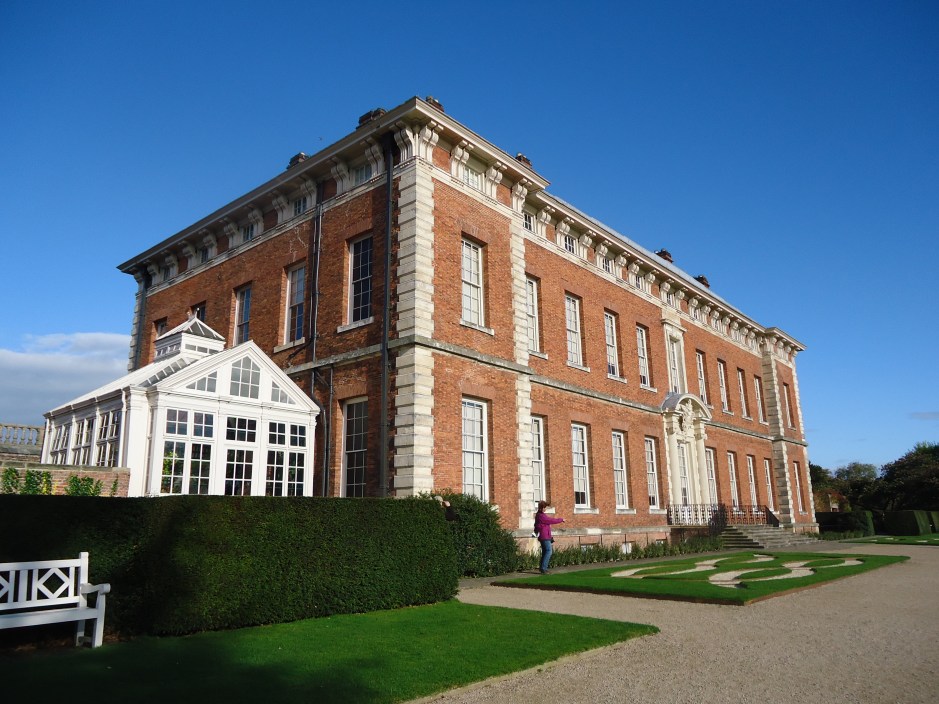
I have just revisited the beautiful Georgian house and grounds of Beningbrough Hall, north of the ancient city of York. It was as I walked around the laundry in the grounds of the house, crossing through the archway of the bell-tower, that I created the heroine Miss Chloe Branton and Mr Tobias Poole.

The life of a laundry maid was hard. In the days before running hot and cold water, it had to be either hauled from a well or stream or pumped up from an underground source. Once they had the water they then had to heat it and use substances such as lye soap to soak, wash or scrub the garments, which was hard on the hands. Even the garments were more difficult to maintain as before modern textiles, dyes and methods of controlled cleaning the garments may have to be unpicked to separate delicate lace, from wool or silk and each section cleaned or washed separately. Materials were not colorfast and were often heavy. A careless laundry maid could cause shrinkage, pilling and ruin a garment and easily lose her already lowly position.

It was a hard life, but it was also an excellent place for someone to be hidden away for a short time. Chloe was unused to hard work, in a building with a cold stone-flagged floor, lifting heavy loads. She needed help and a good friend to survive.

Abigail Moor – Biddy’s Bakery

Abigail was rescued as a baby by Lord Edmund Hammond – or so she believed.

Raised as a lady, calling him father, she enjoyed a sheltered life as she grew up and loved her step-brother, Frederick. Life dramatically changes because she has to flee from a forced marriage when Lord Hammond falls ill. With her lifelong maid she travels to the port of Whitby via the beautiful ancient city of York.

To Abigail’s naive eyes Whitby would have been a noisy, bustling place with a myriad of smells from the various industries surrounding the whaling, fishing and boat making industries. Even Abigail’s name, like her situation, has a double irony. Abigail literally means ‘my father’s joy’, yet she does not know who he is. The name is also used commonly to refer to a lady’s maid.

When I explored Whitby I came across a narrow snicket in which was a love old ram-shackled set of buildings I borrowed this setting for ‘Biddy’s Bakery’, placing it next to an old inn like the amazingly well restored White Horse and Griffin and took the extra liberty of placing a laundry opposite. Whitby was so wealthy through the whaling industry that in 1790 there were two street lamps in Church Street outside this original coaching inn.

I had the pleasure of staying in the same room that it is said Charles Dickens once used. It was a lovely friendly place in a fascinating location, and serves excellent food.

The eBook of Abigail Moor: The Darkest Dawn is available from Smashwords and Amazon directly for $2.99/£1.88 from most eBook sellers.

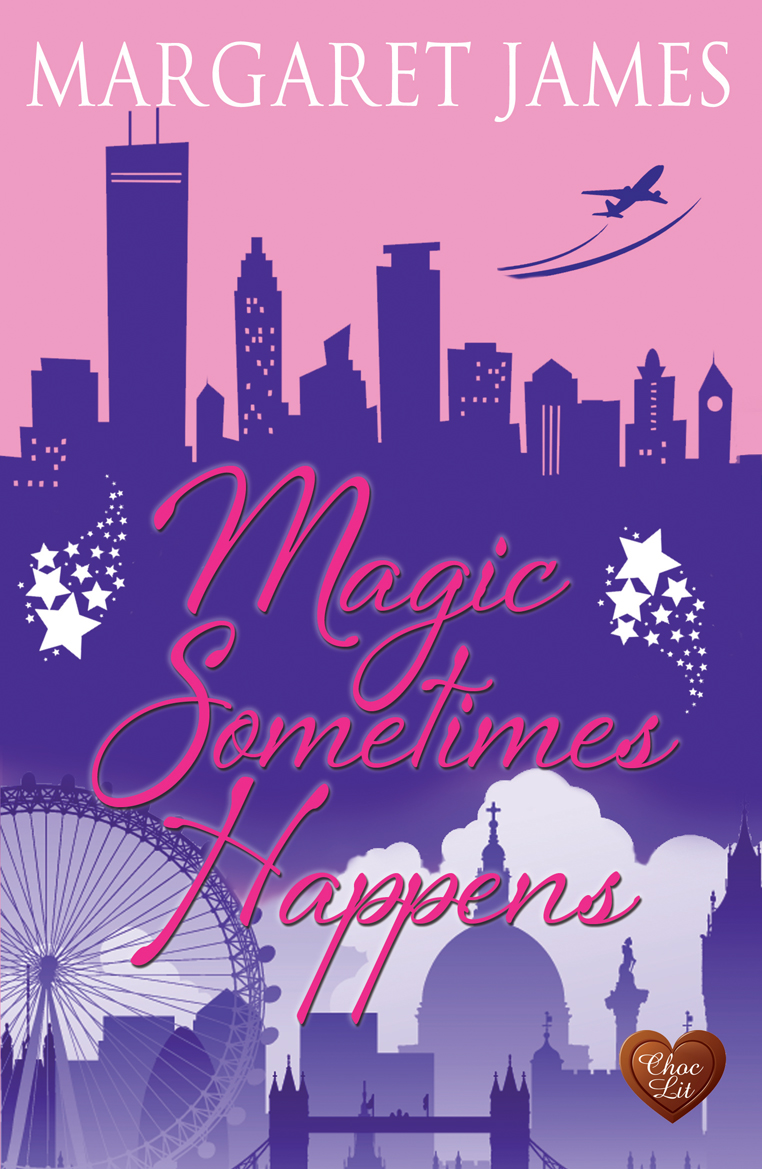
The inspirations for Magic Sometimes Happens

I am delighted to welcome Margaret James back to my blog as she tells us about her enchanting new book Magic Sometimes Happens!

Thank you for inviting me to be a guest on your blog, Valerie. It’s great to be here! Today, I’m going to tell you about the inspirations – music, poetry and places – for my latest novel, Magic Sometimes Happens.

The story is about second chances for both my hero and my heroine. My hero Patrick Riley is married, is the father of two small children and doesn’t expect his wife to leave him for a man she says makes her fly. My heroine Rosie Denham is running away from a bad mistake and needs to learn to forgive herself.

The story starts when Rosie visits Minnesota in the fall, a season which is probably the most beautiful time of year in one of America’s most beautiful states. The whole place seems to turn red and gold almost overnight as the trees change colour. But fall is a very short season. Minnesota’s long, harsh winter will soon be on its way, and the whole place will be frozen solid for almost six months until spring makes a brief appearance before the next sweltering summer comes around.

So yes, Minnesota has an extreme climate. But it’s place that is full of extremes. The Twin Cities of Minneapolis and Saint Paul are divided by the Mississippi River, which winds between limestone bluffs and through various locks and channels to join the Missouri before flowing on to the Gulf of Mexico. There are quiet, very beautiful stretches of river very close to the urban hearts of Minneapolis and Saint Paul. But some parts of the Twin Cities are very built up. Minneapolis is home to the Mall of America, the biggest shopping centre in the western world. But there are also hundreds of parks, lakes and playgrounds dotted between the buildings, and – in spite of the dozens of high-rise buildings and skyscrapers in downtown Minneapolis – the whole place has a countrified feel to it.

Most American schoolchildren are probably familiar with Henry Longfellow’s narrative poem, The Song of Hiawatha. It’s the story of a Native American warrior and his bride Minnehaha and it’s set in Minnesota. When you visit the Twin Cities, you can’t help but be aware of the influence of Longfellow on place names. You’ll come across Minnehaha Park, Hiawatha Avenue, the Hiawatha Clinic and many more. My fashion PR consultant heroine Rosie is a British girl who has never heard of Longfellow, but American-born Patrick knows long stretches of the poem by heart.

As for music – although Patrick is a professor of IT and very science-oriented, he is in love with music, especially American classical music by the likes of George Gershwin, Aaron Copland, Leonard Bernstein, Samuel Barber – Pat listens to them all. But his absolute favourite is Gershwin who wrote, among many other compositions, Rhapsody in Blue and An American in Paris. So, when Rosie takes him to Paris, Patrick can’t help but be enchanted and magic is surely bound to happen!

Maybe have a listen and see if you’re enchanted, too?

More from Margaret

Why not have a peek at her blog, or chat with her on Facebook and Twitter?

Cobles and Contraband

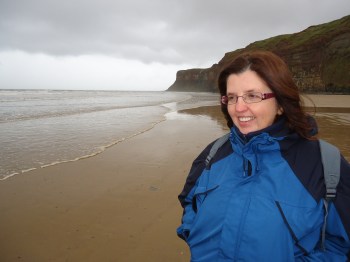
DSC03675My stories are often set around the dramatic coast and countryside of North Yorkshire, where I grew up. It is an area of outstanding natural beauty and fascinating social history, especially around the early nineteenth century when England was at war with France and many things were changing at home.
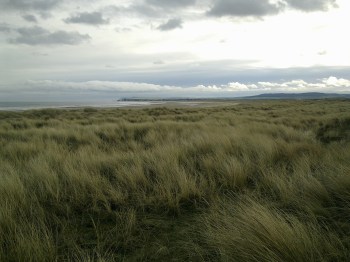
Smuggling was rife along Britain’s shores. The vast expanses of accessible flat, sandy beaches in the area made it an ideal place for smuggled goods to be brought ashore. Despite the busy German Ocean (known today as the North Sea) with it colliers making their way to London with coal and fetching back urine for the alum works along the northeast coast, privateers still operated freely. The custom coble was often outrun by more superior vessels or their men outnumbered on shore.

05022011320The Yorkshire cobles with their flat bottoms were ideal for beaching loads of contraband. Goods such as tea, cards, ankers of brandy, geneva, pepper, ‘sack’ or sherry, sugar loaves, silk and cards, to name a few were taxed heavily, which meant that common folk felt justified by buying them cheaply from the free-traders. The irony was that the coin, which made its way back to France, helped to fund the enemy that British soldiers were fighting.

Work on the land was seasonal and low paid. Fishermen depended upon hauling in a good catch to feed their families. It was no surprise then that many were involved in the lucrative trade. Despite the Riding officers best attempts to stop it the problem was rife.

20082011431The rugged headlands, flat sweeping fine sandy bays, natural woodland and the beautiful expanse of the North Yorkshire Moors inland add both a great variety of scenery and beauty. The settings for my stories are as dramatic as the plots. I have created my own villages and characters and will introduce you to some of them as I look more closely at the actual history of this fascinating region.

In Phoebe’s Challenge, the hunted brother and sister are rescued by a stranger and brought down to a safe cottage, a haven, on the sandy shoreline, sheltered under my fictitious headland of Stangcliffe. Desperate to escape their past life they have no choice but to trust a man they hardly know in an area where nothing is at it seems – but Phoebe likes a challenge!