An interview with Bill Spence, a.k.a. Jessica Blair

090

This month’s guest is both prolific and successful saga author, Bill Spence a.k.a. Jessica Blair.

You have such a broad spectrum of life experience on which to draw: from teacher training, to Bomb Aimer in the RAF, to journalist. What triggered your initial venture into fiction?

Brought up among books and magazines; encouraged to read from an early age,  I think, unknown to me, stimulated in me a desire to write.  On leaving the RAF in 1946, I wrote a few articles but I always had the desire to write a book. Liking fact and liking fiction I thought I would write a novel based on my experiences as a Bomb Aimer during the war. I really wrote it  for my own satisfaction. I had no idea of the publishing world at that time. After a chance sighting of a short piece in a local evening newspaper, saying a paperback company was looking for war novels, I thought I might as well send mine. They offered a contract to publish (1959) which of course, knocked me sideways and made me think what do I do next. I had always been interested in the West, knew a lot about its history and had read numerous Westerns, so I wrote one! That eventually landed on John Hale’s desk and he offered to publish (1960)  36 followed, the last in 1993. During that time I also wrote two more War novels. A Romance and 3 non-fiction books about aspects of Yorkshire and had become interested in the history of whaling.

Jessica Blair was a pseudonym created in 1993. Why did you switch both genre and gender at this point in your career?

070The study of the history of whaling over a considerable period of time resulted in Harpooned – the Story of Whaling being published in 1980. It was highly illustrated and writing it and gathering the illustrations was a very interesting experience. I decided I would use the knowledge I had gained as background to fiction. The result was the first Jessica Blair novel, The Red Shawl. (1993) It was submitted under my own name but the publisher, Piatkus, who offered me a contract, wanted to publish it under a female name and suggested Jessica Blair.  The reason, I believe, was all to do with marketing.  It has paid off for me — the twenty-third  Jessica Blair novel will appear early next year.

Whitby is a pivotal town in Jessica Blair’s novels. How and when did your interest in this beautiful northern seaside town begin?

Whitby was an important whaling port in the 18th and 19th centuries and this was the background I used for The Red Shawl. Whaling does appear in other Jessica Blair novels but not in everyone.  I knew Whitby from my school days and then after the war. I realized there was a wealth of stories there, throughout its history and into recent times and I am fortunate to be able to absorb the atmosphere of the times I use.

WHITBY GIRL FINALEvery author has their own preferred method of working. For the benefit of aspiring writers would you share yours with us?
I look into a background I would like to use. I place my main female and male characters against that background and ask myself, ‘What if …?’ That question will keep recurring as the book develops. I work from a brief outline and sample three chapters. If my publisher, Piatkus, like those and the idea behind them they will issue a contract – then my computer gets working over-time ! I cannot work to a detailed outline because at that stage there are aspects of the story I know nothing about. Characters react to circumstances, and to each other – so the story develops as those change.

During your extensive research you must have come across some fascinating local characters. Do you ever use real people within your novels or are they all fictitious?

Yes I have met many interesting characters throughout life and whilst they might stimulate ideas I don’t use real people in my novels.

Of all your published work do you have a ‘favourite child’ or is it impossible to choose?

Probably The Red Shawl; it led me much deeper into the worlds of writing and publishing and extended a fascinating life. I must say that my first Western led me to meet my first other writer and that brought a long friendship.

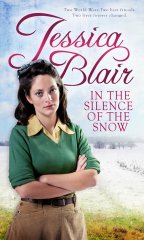
InTheSilenceOfSnow_DemyHB_9780749956295_LRRecent releases have been The Road Beneath Me and In The Silence Of The Snow. Could you tell us something of your upcoming novel, A Tapestry of Dreams, to be released in 2014?

A Tapestry of Dreams is based in the West Riding of Yorkshire (woollen industry) and the Lincolnshire countryside (sheep farming). Set in the 1850s these were the backgrounds against which I placed my two leading characters and asked myself ‘What if?’

What project are you working on next?

That has yet to be decided wit h my publisher, Piatkus.  Ideas are out there but I don’t want to mention them yet as I don’t know what road they will take.

Many thanks for your time in answering my questions and sharing your career with us.

More by Bill:

An interview with Jo Beverley

001I am both delighted and privileged to welcome award winning international romance author Jo Beverley as my guest this month. Jo is a member of the Romance Writers of America Hall of Fame and has been described as:-
Arguably today’s most skilful writer of intelligent historical romance.”
Publisher’s Weekly

“One of the great names of the genre.”
Romantic Times.

When and where did your passion for writing begin?

Too early to remember! I used to make up stories when I was very young — mostly about horses — but when I was about sixteen I wrote a historical romance in a school exercise book. I still have it! Not good at all, but it showed promise.

You have written books set in Medieval, Regency and Georgian times, but what was it that triggered your love of these particular periods?

That teenage effort was medieval, and I’ve always had a love of that period. Though it wasn’t as grim as sometimes portrayed, it was life on the edge that demanded strength and resilience from anyone who was to survive. My other two periods, Georgian and Regency, owe a lot to Georgette Heyer. I loved her books as a teenager and reread them many times. I truly wanted to be her when I grew up, which meant to me, giving the same sort of reading pleasure. Heyer’s influence led me to Regency, which was where I was first published, but I always had a yen for the Georgian age, with the fabulous costumes, especially the men’s. I love manly men in silk and lace. So totally cool.

Your period research is impeccable, however, you keep the hero and heroine attractive and the dialogue accessible, giving a flavour that it is true to the period. How carefully do you have to balance historical accuracy against modern taste to keep the appeal to a contemporary readership?

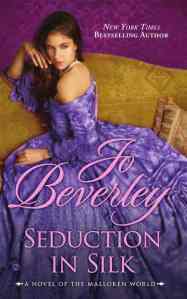
It can be tricky, especially as my readership covers a broad range from scholars to those who want the story and don’t much care about dates and details. Mostly I try to know as much as possible and use only what I need, letting the story rule. However, many stories are based on realities, so what I know shapes the stories! I certainly try to avoid info-dumps, but I usually include an author’s note at the end for those readers who are interested in the background. For example, the author’s note to Seduction in Silk includes details about a famous stone carver of the time, because marble memorials play a part.

I also try to avoid archaic language because I don’t much like to read it. I use “time neutral” language, which means avoiding both obviously modern language and archaic. If it works, the reader should enjoy the book without noticing.

You have been quoted as saying you do not get along with ‘stupid heroines’. How do you study the social attitudes of the period to avoid applying modern values to a heroine’s outlook on life?

Awareness of the social attitudes comes along with knowing the period, because I try to read primary sources — ones written at the time. That gives a pretty good feel for how people felt and thought. The good thing is there’s quite a range, just as there is now. We can have realistic heroines who don’t create waves. We can also have eccentric ones, rebellious ones, and downright weird ones, but then we  can have everyone around them thinking they are wonderful. That’s unrealistic, then and now.

Stupid is a whole other matter. For me, it’s no fun to spend time with a character who keeps saying and doing bubble-headed things, especially if they’re creating pain and problems for others and don’t care. Another type of character who doesn’t work for me is the selfish one, the one who reckons if they want it they should have it regardless.

Each author has their own favoured way of working – would you share yours with us?

Firstly, I “fly into the mist.” This means that I don’t pre-plot my books. I get an idea for characters and situation and start writing to see where it goes. It might be easier to plot out my books and know where I’m going, but that doesn’t work for me.

I write on the computer and rarely print work out along the way, though I generally do print it out about half way to read through, and then at the end before the final edit. Reading in print does throw up interesting things. I do these printouts in faux galley style. This means landscape, two columns and justified, so it ends up looking like the pages of a book. That helps, too.

I start writing early in the morning and continue until lunch because this is my most creative time. Sometimes I do edits and research in the afternoon and evening, but I rarely do first draft writing then.

However, there’s no rule to this, for me or anyone else. Each writer needs to find her own way, and for new writers that usually means trying many ways, some of them crazy. You never know! I do believe that we know it when we find it.

This month sees the release of Seduction in Silk another story from the Malloren world. Could you tell us what triggered the idea and motivation behind this latest novel?

I wanted to write about Perry Perriam. He appeared in An Unlikely Countess as the hero’s friend, and in A Scandalous Countess as the heroine’s brother, and readers asked for his story. I was happy to oblige, because I like him a lot. He’s not titled, but he is aristocratic — he’s the younger son of an earl. He’s very bright and very charming, and earns his living by using his talents in London, at court, in politics, and in society.

London — or rather Town, as fashionable London was called — is his life, so he’s not pleased when a distant relative names him heir to Perriam Manor, with the condition that he marry Claris Mallow, a clergyman’s daughter, within the month. Perry doesn’t give a penny for the manor, but getting it back is an obsession of his father’s, so he has no choice. He doesn’t think it will be difficult, especially when he learns that Claris is impoverished and raising two young brothers. He’ll marry her, install her and her family at the manor with free use of the income from it, and get back to his life.

Claris, however, has survived her parent’s tormented marriage and has no intention of marrying anyone, least of all an elegant stranger who assumes she’ll fall at his feet! She chases him off at pistol point. And thus their dance begins.

Readers can enjoy a free sample here.

002

Romantic Times has made Seduction in Silk a Top Pick for August.

With her talent for writing powerful love stories and masterful plotting, Beverley delivers the latest addition to her Malloren World series… emotional, sensual and highly satisfying historical romance.

What project are you working on next?

I’ve returned to the Regency, to the Company of Rogues, to pick up the story of David Kerslake, the heroine’s brother from The Dragon’s Bride. That book left him both the Earl of Wyvern and the leader of the local smuggling gang, The Dragon’s Horde. To make matters worse, both the earldom and the smuggling band are broke. He has to marry money, and Lucinda Potter, only child of a wealthy City of London merchant seems the ideal choice.

Lucy has other ideas, but then, David is a fascinating handsome man and the more she comes to know him, the more fascinating he becomes. However, it also becomes clear that he has secrets, possible dark and dangerous ones. She’s far too sensible to give herself and her money to such a man. She hopes.

This novel is called A Shocking Delight, and it will be out in April 2014.

Many thanks for your time in answering my questions and sharing some insight into your vast experience.

More by Jo:

An interview with Pia Fenton, a.k.a. Christina Courtenay

ChristinaCourtenayMarch2013I am delighted to welcome award-winning author and new chair of the Romantic Novelists’ Association, Pia Fenton, who writes as Christina Courtenay.
Congratulations on becoming the chair of the RNA. How much of an influence has the RNA had on your own career?
I think it’s safe to say that without the RNA I wouldn’t be published at all!  I found my way to the association at a time when I was about to give up on writing and it changed everything for me.  When I sent in my first m/s to the New Writers’ Scheme and got a critique back from someone who took my writing seriously and liked what I’d done, it was an amazing feeling.  And although there was a lot wrong with that first novel, I was basically on the right track and needed to be told what my mistakes were, so that was really helpful.  The other thing the RNA has done for me is give me wonderful writing friends and critique partners – I can never thank them enough!

Childhood is a time when imaginations really develop. Do you think that yours influenced your writing style and interests?

 Yes, absolutely.  I was hooked on fairy tales with handsome princes and happy ever afters and that’s what I want now too, albeit a grown up version.  I was also always interested in history, so for me writing historicals was inevitable.

Would you agree that your work reflects your unique cross-cultural experience?

I think so, yes, as most of my books feature heroes and heroines from different cultures who have to overcome their differences and realise that we are all the same underneath.  Also that no one culture is necessarily right about everything, we have to compromise.  Being half Swedish and half English I can see things from two sides, and having lived abroad has given me a different perspective on things as well.

Could you give us an insight into your own preferred way of working when you set out on a new novel adventure?

It’s a bit messy I’m afraid!  It usually starts with a scene that appears in my head, often triggered by something or someone (a handsome actor?) and then the rest of the story develops from there.  That scene can be anywhere in the book, so sometimes I work backwards, sometimes forwards.  As I said, it’s a bit chaotic but somehow it always works out in the end!  And incidentally, I always know how I want it to end, even if I don’t know anything else.

In August your first YA novel is published by Choc Lit. Could you tell us about it and if this is a permanent change of direction for you?

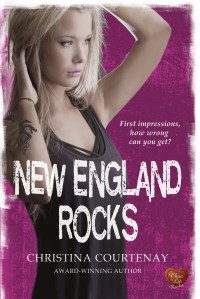
As I’d been writing historicals for many years, with all the research that entails, I decided to give myself permission to write something else just for fun last year.  The result was a contemporary YA book that needed no research and reflected the sort of high school experience I would have liked to have had myself.  Here is the blurb for New England Rocks:-

NER FrontFirst impressions, how wrong can you get?

When Rain Mackenzie is expelled from her British boarding school, she can’t believe her bad luck. Not only is she forced to move to New England, USA, she’s also sent to the local high school, as a punishment.
Rain makes it her mission to dislike everything about Northbrooke High, but what she doesn’t bank on is meeting Jesse Devlin…
Jesse is the hottest guy Rain’s ever seen and he plays guitar in an awesome rock band!
There’s just one small problem …  Jesse already has a girlfriend, little miss perfect Amber Lawrence, who looks set to cause trouble as Rain and Jesse grow closer.
But, what does it matter? New England sucks anyway, and Rain doesn’t plan on sticking around…
Does she?

I hadn’t intended to send it to my publisher, but eventually I did and Choc Lit decided they wanted to start a YA line, which was great!  I’ve since allowed myself some more time off from the historicals, so this is the first in a series.  The second one will hopefully be out next year.  But I’ll still be writing historicals and time slips as well.

What is next for Christina Courtenay?

I’ve just finished writing the third book in the Kinross trilogy, Monsoon Mists.  It’s gone off to Choc Lit to see if it passes muster, so now I can concentrate on something else for a while.  In February next year I have another time slip novel coming out, The Secret Kiss of Darkness – I love time slips, so am very excited about that – and as I said, after that hopefully number two in the YA series.

Sincerest thanks for taking the time to complete this interview.

Thank you very much for inviting me!

More by Christina:

  • New England Rocks, paperback out on 7th August:-

An interview with Henriette Gyland

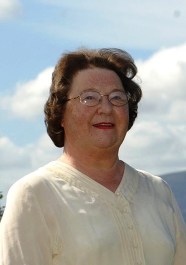
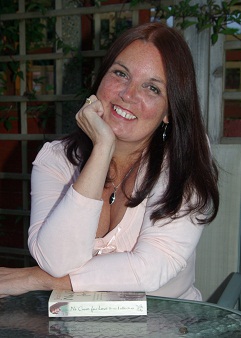
Author photo - HNS Conference 2012, v2 - cropped (1)I have the pleasure of welcoming novelist Henriette Gyland as my guest of the month. Her second novel, The Elephant Girl is due to be published on the 7th July 2013. 

I read in a recent interview that you have an ‘ideas box’. How and when did this begin?

I’ve had this box for years. I used to toss anything in there – newspaper clippings, notes from talks, overheard conversations etc. Even conversations I’d “heard” in my own head. I then discovered that I had real problems deciphering my own reasons for keeping a particular item and ended up throwing stuff away. Now I carefully date the note or clipping, and scribble my reasons in the margin, whether it’s a short story idea or an idea for a longer piece. I also bundle notes together if they relate to the same idea or theme. So there’s a certain method now to what used to be just madness!

How would you describe your work?

Some genres are easier to pin down than others, but mine is tricky because it straddles two of them – crime and romance. Romantic suspense or romance mystery explains it quite well, but I also add a hefty dose of difficult family or personal issues, social topics, political comment. The Elephant Girl is a very loose reworking of Cinderella, which is a fairy tale with a LOT of family stuff going on in it!

What has been your proudest or most memorable moment of your career to date?

There have been a few – being awarded the Katie Fforde Bursary, winning the New Talent Award at the Festival of Romance – but I think the absolute proudest moment to date was when my first novel Up Close was heralded as “Nora Roberts territory” by Sarah Broadhurst in The Bookseller. I’m a huge fan of Nora Roberts, so this was really the best kind of compliment.

I love the cover design of The Elephant Girl. What inspired the idea for this intriguing novel? Did it start by rummaging through your ideas box?

9781781890202

The idea is based on a real-life horrific murder, witnessed by the victim’s young child, and also the old maxim that elephants never forget anything, hence the title. The pendant on the cover is one the main character, Helen, inherits from her dead mother. This story didn’t come from the Ideas Box because I wrote it very shortly after the real crime had happened, and although in some ways I feel a bit strange about creating a story out of another person’s tragedy, I think as writers we just can’t help ourselves sometimes.

Is there one piece of advice that you were given as a new writer which you consider helped you to make the breakthrough as a writer?

When I met the lovely Katie Fforde, about ten years ago, she told me to “keep the faith”. And I she was right. Perseverance and the belief that one day you will get published is the only way to survive the numerous rejections leading up to it.

What do you choose to read to relax?

I’ve just finished Scarlet, the second in a series by Marissa Meyer and now have to wait until 2014 for the next one (sigh). I’m also hoping that C J Sansom will write another Tudor mystery novel in his Shardlake series, but in the meantime I’ve started reading Blackout by my favourite writer, the American sci-fi author Connie Willis. As always, I find every sentence of hers a genuine delight.

What is next for Henriette?

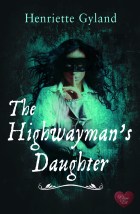
THD_front4 - shaded eyesMy next novel is a complete departure from anything I’ve written so far. It’s a swash-buckling historical tale set in the Georgian period, with highwaymen, a spirited heroine, and a mystery at its core. Well, mystery is my trademark, isn’t it?
My thanks for being my guest. I wish you every further success with your fascinating novels.

More by Henriette:

An interview with Jean Fullerton

June 2013 Web 1Welcome, Jean!

In 2006 you won the Harry Bowling Prize. How much of an impact upon your writing career did this have?

I can’t even begin to tell you how much winning the Harry Bowling changed my life and writing career. It was my big break. It got me my lovely agent Laura and my first two book contract with Orion. It literally changed everything.

Your love and passion for the history of the East End of London is obvious through your work. Growing up in the shadow of The Tower of London must have been amazing, when did the inspiration come to you to create stories within this setting?

I absolutely adore my birth place of East London and use real places and have my characters walking past actual shops and houses if I can. My family have lived in and around the Hawksmoor church of St George’s in the East since the 1820s. I have drawn on my family heritage for my stories, such as the local charity school, public houses and market. I even had my first heroine Ellen O’Casey living in the old house I lived in as a child.

Do you always create the characters and place them in the accurate historical setting, or do you also use real life personal histories as a basis for them?

I am passionate about historical accuracy and do put my characters in the right time and place. I don’t push the edges of history and so if there weren’t steam boats on the Thames until 1842 then I won’t put one in a story set in 1840.

What is your favourite period of history to read or write about?

My life-long love of all things historical started when I was about 5 or 6 and a very young Roger Moore rode on to our 10 inch black and white TV screen as Ivanhoe. This love grew to fruition when I read Katherine by Anna Seton as a teenager. I love all areas of European history and before settling on East London as my place to weave stories I wrote books set in 10th century Wales, 13th century Scotland, during Hereward the Wake’s rebellion in the Fenlands, in Boston just before the American War of Independence and in the Caribbean during the ages of piracy.

I’m still an avid historical reader and as long as the story is historically accurate and pulls me in I’m happy to read any period. I’m also very fond of alternative histories i.e. what would have happened if Harold had won the Battle of Hastings?

You work very hard as a full-time lecturer as well as a writer. Does this affect the way in which you work? Do you plot ahead and schedule, or still let the story evolve on the page/computer screen?

The only way my full-time job really impacts on my writing is that I have to write in the evenings and at weekends. I do plot out my work on a grid as you can see from the first chapter of Call Nurse Millie below. With so many subplots in my books I find it easy to keep track of characters by plotting out the story. I even colour code the scenes on a grid with a particular colour for some characters to ensure I keep an eye on how often they appear.

Scene Events date
1 VE day Millie delivers a baby as street prepares for a Victory party. blancmange pilchards 8/5/45
2 Gets back & has to take over as the superintendent is drunk.
3 Argues with one of the nurses. Phone rings to say her father’s ill
4 At her father’s bedside with her mother as peace is announced. Churchill spoke at 3pm
5 Calls her Aunt Ruby. King at 9pm?
6 Ch2 Goes back to work and meets her friend Connie

Of course, it’s not written in stone and it changes as I go along but it helps keep me on track. It’s very easy to get lost in a 140,000 word novel. Even your own!

I also have a work schedule on which I mark dates when I should have reached a certain point of the story. I usually start writing for a February deadline after Easter with an aim to finish before Christmas. Of course it doesn’t always work out that way but so far the system has helped me hit my deadline with a week or two to spare.

You are an inspiration to many, overcoming dyslexia to become an author. Have you any advice you could give as to how you determinedly set about achieving this goal?

I’m quite happy having dyslexia as I feel it is one of the components of my creativity. If you’re dyslexic at college or work there has to be provision made for you. There’s no such arrangements are in place in publishing. You just have to work very hard and get professional to edit your work.

The aim for any unpublished writer is to get off the slush pile and to do this your submission to an agent or editor must be word perfect. I would advise anyone who has dyslexia to have their manuscript professionally copy edited. And note that doesn’t mean your friend who’s better than you at English. I know it costs money but it is an investment. I actually did a night duty in a care home each month to fund my copy edits.

As a fellow graduate of the RNA’s New Writers’ Scheme I still remember some of the advice that I was given whilst being an unpublished author. What advice do you consider helped you to make the breakthrough into print?

Firstly, if it took me three years to become a nurse, another two to qualify as a district nurse and a further three to become a lecturer, why on earth would I think I could learn the craft of writing overnight?  Very few first books are of a publishable standard. Mine wasn’t. Learn your craft!

Write what you love. If you’re chasing a bandwagon by the time you’ve jumped on its left town.

And persevere. Getting published is a long, hard road but you’ll never achieve it unless you stick with it.

Click to view this book on Amazon.co.uk

Susan Lamb, the Head of Fiction at Orion books asked me to write this book. Orion publishes Call the Midwife along with Jennifer Worth’s other three books. Susan thought as I’m a District and Queen’s Nurse and an East Ender I would be the perfect person to write a fictitious account of a District Nurse and Midwife’s life and work in post-war East London.

I was apprehensive at first but my wonderful editorial team were so sure I could bring the duel strands of my background and profession together in Millie’s story I decided to give it a go. I’m so glad I did because I had a wonderful time researching my own profession and creating Millie’s family, friends and patients.

I started Millie’s story on VE day May 1945. As the troops begin to return home we see the inhabitants of London attempt to put their lives back together.

For 25-year-old Millie, a qualified nurse and midwife, the jubilation at the end of the war is short-lived as she tends to the needs of the East End community around her. But while Millie witnesses tragedy and brutality in her job, she also finds strength and kindness. And when misfortune befalls her own family, it is the enduring spirit of the community that shows Millie that even the toughest of circumstances can be overcome.

Through Millie’s eyes, we see the harsh realities and unexpected joys in the lives of the patients she treats, as well as the camaraderie that is forged with the fellow nurses that she lives with. Filled with unforgettable characters and moving personal stories, this vividly brings to life the colourful world of post-war East London.

What is next for Jean Fullerton?

Well hopefully a new contract very soon for Millie’s friend and fellow nurse, Connie Byrne’s story set this time in and around Spitalfields and Shoreditch again in the immediate post-war period. Then who knows? I have dozens of stories in my head that I’d like to write so that should keep me out of trouble for a good while yet.

Thanks for such very good questions, Val, and giving me the chance to tell people about my writing life.

More by Jean:

An interview with Gwen Kirkwood

Welcome, Gwen!

Your warm-hearted family sagas are based in rural Scotland. When and where did your love affair with Scotland’s beautiful country and history begin?

I have three Scottish grandparents so I had a yearning to see Scotland for myself. I came to Dumfriesshire to work as a milk officer, inspecting dairy farms. The work was not as I had expected but the people were very friendly and I loved the warmth of the red sandstone buildings and the beautiful landscapes with fresh green hills and glens and lots of trees. I have never wanted to leave, especially not after I met and married my husband, a Scottish dairy farmer.

Are any of your wonderful characters based on real people or are they all purely of your own creation?

My characters are all fictional but I think writers must be influenced by people they have met, even if it is only subconsciously. I had a wonderful mother-in-law so a few of my older characters may have some of her kindness and wisdom. We can read of bad characters every day in the newspapers. I have three adult children who keep me up to date with the opinions of their generation. My grandchildren are of varying ages and I often include children. Writers keep on learning and developing and so do the characters but I have never written about a real person.

You took a six year career break. When you returned to your writing did you feel as if your work had changed at all?

I don’t think my writing changed. I still wrote another series of four in a family saga following the generations. My books are shorter, 100,000 words or less now, but that is due to the policy of different publishers.

To date, what has been the most memorable or significant event within your writing career?

I had written four short romances but it was a tremendous boost to my confidence when an agent sold my first long saga to Headline in a very short time. A good editor can have a big influence and Jane Morpeth helped me a lot.

Secondly, I rarely enter competitions but after a long gap from writing it was a lovely surprise to win the Elizabeth Goudge trophy in 2000 when it was resurrected by the RNA for the millennium. It was judged by Richard Lee of the Historical Novel Society.

What top tip would you give new writers wanting to become published writers in today’s market place?

Persevere. Try to write a little every day, even if it is only a couple of sentences. Keep a notepad handy. Consider the strengths and weaknesses of your characters, or improve your plot, while you are travelling, ironing, peeling the vegetables. Thinking time is important too. Listen to the advice of agents and editors, not friends. If you do self-publish pay a reputable copy-editor to check your work first.

You have seen many changes within the publishing industry. What do you think of the new emphasis on social networking and Internet presence?

Honestly? I hate it – well some of the time! I want to be left in peace to write, BUT writing used to be an isolated occupation so I am pleased we now have opportunities for keeping in touch with other writers, getting and giving help, as well as marketing. Networking has become essential so I do my best, but it can take up a lot of time.

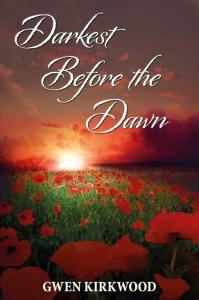
Your new book Darkest Before the Dawn has a very strong cover. Can you tell us something about this novel and what inspired you to write it?

This is the fifth in a series of 5 novels beginning with Dreams of Home at the end of World War II. Darkest Before the Dawn brings the series up to present day with the third generation of the Caraford family. Two of the characters are quite young with problems belonging to their generation so it could almost be a young adult novel, although I did not set out to make it that way. However, it also brings farming up to date with robots for milking cows, arguments between the generations about changes, as well as an unexpected and rather satisfying love affair for two of the older characters.

Darkest Before the Dawn

Joe Lennox becomes bitter and deranged and blames Billy Caraford when his son is killed in a car accident, but Billy has lost his best friend and is badly injured himself. Despite the misgivings of his parents he is still determined to be a farmer. He summons his courage to go to university but privately he regards himself as a cripple now. He is convinced no woman could love him or want to be his wife.

Kimberley is orphaned when her father dies. She moves to Scotland with her aunt but she is nervous about changing schools until Billy helps her find new friends. Both Kim and her aunt become involved in the affairs of the Caraford family and as Kim grows into a lovely young woman she finds the strength of character to confront problems and fight for the life and the love she craves.

What is next for Gwen Kirkwood?

I am going back to the 1800’s and this will be a single novel rather than a series. It has less emphasis on farming but is still set in Scotland. No title yet.

My thanks for taking the time to answer the questions in such an honest and open way. I shall look forward to reading Darkest Before the Dawn when it is available later this month!

More by Gwen:

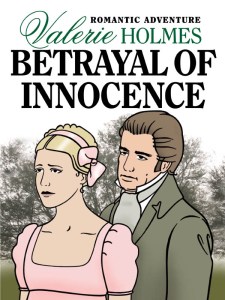
Betrayal of Innocence

Buy and read now!

US Readers: Kindle / iTunes / Nook

UK Readers: Kindle / iTunes / Nook

Early nineteenth century North Yorkshire, England.

Lydia works hard as a servant at Bagby Hall to keep her father, an ailing tenant, from the poorhouse. She is horrified and wracked with guilt as she discovers her friend, the gentle fallen Georgette, being used by Lord and Lady Bagby. Lydia longs to aid Georgette as she fears her life may be in danger – but how? The arrival of the mysterious, Dr Samuel Speer, adds to her dilemma, as Lydia’s concern grows. Does she risk her father’s wellbeing and reveal the truth or remain forever silent and therefore, guilty…

An interview with Christina Jones

A very warm welcome to this month’s award-winning author, Christina Jones.

Katie Fforde described An Enormously English Monsoon Wedding as “warm, witty and wonderful”. I love the title of this book.  What inspired this novel?

My editor suggested that I should write a summery/weddingy/villagey book as the first in a new series of village-based stories. It threw me a bit to start with, as most of the weddingy themes have been covered a zillion times – but as my daughter recently had a fusion wedding (hers went wonderfully smoothly, I must add – nothing like poor Erin’s!) so I’d learnt a lot about marrying together two totally different religions and styles of wedding ceremony. I knew I had to use the experience – so An Enormously English Monsoon Wedding is the happy result!

What do you consider is at the heart of your novels that makes them so appealing?

Probably their ordinariness (is that a word??). I write about normal people doing normal jobs, nothing and no-one high-powered or high-flying. I also include all ages, genders, and all other diversities. Something for everyone – like real life. They live in small rural communities, everyone knows everyone else, and I suppose it’s all a bit cosy. My whole aim with my books is to create warmth, security, happiness, a few laughs, escapism, and hopefully a massive dollop of feel-good factor. Like everyone else, my real life has had enough sadness – I was determined there’d never be any sadness in my books!

I love the way you create your own villages and the communities that interlink. What was the inspiration for your characters, their world and the stories which they have inspired?

The village where I grew up. No question. It was a very close, rural, working class community, and gave me a fabulously grounded and secure start in life. My friends from back then are still my friends now and we all share the happy memories and the luxury of a perfect childhood. Now I live somewhere very similar, and I watch people and listen to them talking in the corner shop and the pub and just pinch bits here and there! Again, it’s all very safe and cosy – not too twee, I hope – but sort of real and the kind of world that everyone can recognise.

I read in an interview that your cats share your workspace as they do your home. How did you first come to rescue them?

I grew up with animal-loving parents who took in waifs and strays. We had dogs that were going to be shot or drowned before my dad stepped in; cats that had eyes/legs/tails etc missing; ferrets, rabbits and hens that wandered in and out of the kitchen; and ducks that were destined for the dinner table before my mum did a midnight raid on their pen! Nothing was ever turned away. I sort of gravitated towards cats when I first had my own home – via our local vet who had a litter of dumped motherless kittens – and it grew from there. My cats have come from vets, from Cats Protection (the ones no-one wants – too old/scared/injured – oh, and feral in some cases!), word of mouth, and just strays who have turned up and moved in (cats seem to know when there’s a cushy billet!). When I met my husband, he also had rescue cats, so by the time we married and merged our broods we had 11. We’ve never looked back!

What fictional hero/heroine has inspired or impressed you as a reader?

Probably an unpopular choice – but Scarlet O’Hara and Rhett Butler. Manly because Gone With The Wind is one of my all-time favourite books and also because they were both real people, with flaws and not very nice sides to their characters but I understood their dreams, desires and motivations. They simply walked off the page for me and despite them not really having a Happy Ever After; no other fictional romantic couple can hold a candle to them in my opinion.

You are an award winning author, but what do you consider the highlight of your career to date since you became published in 1997?

There have been a lot of highlights (and some lowlights as well!) and over the years I’ve won awards, been to some amazing places, met some very famous people, done telly and radio programmes, and had more fun than I surely deserved, but I suppose it was that first publishing deal for Going The Distance. Seeing my first book in print, on bookshelves, being chosen for WH Smith’s Fresh Talent… honestly, a dream come true – and a feeling that will never, ever be forgotten or recreated.

You are a writer that many new writers aspire to and respect. What would be your three top tips for anyone wanting to succeed in the industry today?

  1. There honestly are no rules to creating a fictional world – so don’t over-do the “I must study all the manuals/latest info etc” because it’ll only confuse and worry you. Write what’s in your heart – write the story you alone want to write, not what you think you should be writing because it’s trendy or current – write for yourself. If you love your story and your characters it’ll show on the page and everyone else will fall in love with it/them too.
  2. Don’t feel you have to write every day. Write the way that suits you. Some people write 10,000 words a day, others write 500. Some (like me) know that if the words aren’t there then it’s best to forget writing until they are and go and scrub the kitchen floor or go for a walk or chat with friends or read or watch telly, whatever – be yourself and do what’s right for you. Just don’t feel pressurised to be like everyone else.
  3. Don’t overwrite – don’t keep going back and rewriting. You can write the life out of your story by constant tweaking. Usually those first bubbling, brilliant ideas that just pour out on to the page are the best ones!

What is next for Christina Jones?

I’m just writing the next novel in the new series – That Red-Hot, Rock’n’Roll Summer – which is about a summer fete that, thanks to Tiggy, who works in the local American Diner, and Marilyn Monoroe look-alike, Cordelia, somehow morphs into a mini-Glasto in the village of Daisybank, much to the horror of the very stuffy and traditional fete committee. And of course nothing goes exactly to plan (understatement!), and Tiggy and Cordelia find lots of love and laughter along the way…. I have ideas and notes for the next two after that as well!

Thank you for taking the time out of your busy schedule to take part in the interview.

Thank you so much for asking me. It’s been an absolute pleasure to be included here. I’ve loved it! Thank you!!!

More by Christina:

An interview with Linda Mitchelmore

LINDA WRITING ROOMI am delighted to welcome prolific short story writer and successful Choc Lit author, Linda Mitchelmore.

When did you first realise that you wanted to be an author?  
I did things rather back to front. I didn’t consciously start out to be a writer. One Christmas – back in the day – there was a short story writing competition in Woman’s Own. On Christmas Day evening, my family were all glued to the TV – something I don’t get a huge lot of pleasure from as I am deaf. So I thought I’d have a go at the short story competition for something to do. To my utter amazement my short story was short-listed  and published. And I was paid for it. The old cash registers behind my eyes started to ring and I thought, hey, I could make money from all the ‘stuff’ that goes around in my mind…

Your stories have sold internationally. How many have you had published to date? 
I’ve lost count of the exact number of short stories I’ve had published but it is definitely 300+ now. I’ve also had a story broadcast on radio – the irony of that not lost on me.

Writing short stories and longer fiction involve two very different disciplines. What attracted you to short fiction initially, and how much of a challenge was it making the switch to longer fiction? 
Short fiction is just that – short. 750 word stories are quite popular with some magazine editors. I tend to write 1000 word or 2000 word stories as they’re the lengths that tend to fit into most magazine slots. When working on a short story I don’t have to think too much about viewpoints – I only ever write one character’s viewpoint into a short story. I don’t have to have sub-plots, and foreshadowing is something that – depending on the story – doesn’t raise its head much. So they are much quicker to write. When I first started writing I had two teenage children at home, a husband (still got him!) and a part-time job as well as ageing parents and parents-in-law to be doing things for. Short story writing was easier to fit in around all that. Writing longer fiction – 80,000 words or so – seemed a natural progression for me once I had more time to write it. The same premise of ‘person, problem and plot’, with a ‘beginning, middle and an end’, is the same for short stories and novels. The only difference is the time it takes to tell the story.

Your novel, the first of a trilogy, ‘To Turn Full Circle’ is set in your beautiful home county of Devon. Please tell us something about the inspiration behind it? 
The seeds of To Turn Full Circle were sown when I was helping my husband research some family history. We discovered that his great uncle, George, had fished out of Brixham. George had had two trawlers. One of them was lost to the sea in a storm (although with no loss of life) and George had a bad accident on board the other one which meant he had to come off the sea and lost his livelihood. He had to move his wife and daughter back in with his mother. I had a ‘What If’ moment! What if it wasn’t a man who had lost his home because of circumstances, but a young girl? And ‘What If’ the sea still controlled her struggle to survive? And so, To Turn Full Circle was born.
When you begin a new project does your initial idea start with a character, situation, place or theme or does it vary? 
For me a story always starts with an emotion or a feeling – something deep inside my main character. In To Turn Full Circle’s story it was Emma’s determination to survive which drives the story.

You have two more novels to write to complete this trilogy. What do you see as the next challenge for Linda Mitchelmore? 
Writing the next two books is keeping me busy at the moment. I do, however, have a contemporary novel under consideration – the heroine is older than Emma. The feeling driving this story – tentatively called Red is for Rubies – is regret. Most of us have them and in Red is for Rubies, my hero and heroine have lived – apart – with their own regrets for a long time. Will they get a chance to redeem themselves?

Also, I have now signed a contract with Choc Lit for a novella – Hope For Hannah. It will be an e-book initially and out in the close future.

My thanks for a very insightful interview, Linda.

More by Linda:

CHOC LIT LOVE MATCH Layout 1

An interview with Valerie-Anne Baglietto

AuthorCentral

Thank you for being my guest this month.

When/how did you realise that you wanted to be a writer?

I was four when I ‘wrote’ and illustrated my first book, and my granddad stapled it together for me. I think I knew back then it was something I wanted to do. I quickly got bored of the books school tried to foist on me, with barely any plots, and my parents introduced me to Enid Blyton and the Famous Five. When I realised the worlds that books could introduce me to, I was hooked! I instantly wanted to reproduce some of that magic for myself.

You were born in Gibraltar. Do you think this has influenced your work?

I am currently working on a short story for Belinda Jones’s ‘Sunlounger’ anthology, coming out this summer. My contribution is set in Gibraltar, but this is the first time I have used it in a story this way. My great-grandfather and grandfather were writers, though, so I suppose the writing gene is in my blood.

Your stories mix reality, romance and fantasy, such as ‘Once Upon A Winter’. ‘The Moon on a Stick’ is another eye-catching title. Where does your inspiration for the titles come from? Do you begin with the plot, character or title first?

This really varies from book to book. Each one has been different. My first four novels, published by Hodder, were rom-coms, including ‘The Moon on a Stick’. Now that I’ve added a magical, fairytale element to my work, I suppose my titles will need to reflect that. ‘Once Upon A Winter’ had an altogether different title while I was actually writing it, but when I finally tested it out everyone hated it! So I started playing around with ‘Once Upon…’ until I hit the right note. When it comes to ideas for the books themselves, sometimes it stems from a fragment of a plot, or a character. I have no set rules I work by. I usually let ideas ‘slow-cook’ before I start putting them down on paper, but with ‘Once Upon A Winter’ it was more of a quick blast in the microwave before I sat down to write the first chapter.

Could you tell me something about the Novelistas?

I could go on all day about the Novelistas! The group has evolved over time, but it was started by Trisha Ashley over ten years ago. I was one of the early members, along with best-selling saga author Anne Bennett. I hadn’t long moved to North Wales from Essex, so it was wonderful to find a group like this so quickly. We became the ‘Novelistas’ about two years ago. I was inspired by the term ‘fashionista’. And the Spanish for ‘novelist’ is ‘novelista’… you can see where I’m going with this. There are a dozen of us at the moment and we meet once a month near St Asaph, coming from as far as Anglesey in one direction and Manchester in the other. We’re also very varied in what we write, and all at different stages in our careers. We’re good friends as well as writing buddies and we inspire and support one another, and we always seem to have something to celebrate, so lots of champagne corks get popped at our lunches – and launches!

What key advice/tips would you give aspiring writers?

OK, my favourite pieces of advice are: firstly, you can never please everyone, so above all please yourself and write something you feel passionately about. It will show if you don’t. Criticism is hard to hear, but it is inevitable because any sort of creative work is subjective. If you can truly connect with just one person through your writing, though, everyone else who may also come to love it is a bonus.

Secondly, don’t rush it. Write with your heart, finish it, put it away for as long as you can. A month or more, if possible. Come back to it and use your head this time. This is the only way you can really discover your inner editor and see your work through fresh eyes. Sending it out too prematurely can be the difference between rejection and acceptance, so why risk it? Similarly, publishing it yourself before it’s ready can be the difference between the best-seller charts and obscurity. Don’t hit that ‘publish now’ button too soon!

What is next for Valerie-Anne?

As well as the short story for the ‘Sunlounger’ anthology, I am working on a novella which will be out spring/summer this year. Just like ‘Once Upon A Winter’ it has a contemporary fairytale theme and is set in North Wales. I’m constantly inspired by my surroundings, and feel very lucky to live in such a beautiful part of the world. There is also another full-length novel simmering away, but this won’t be out until 2014.

Thank you for taking the time to write such interesting and inspiring answers.

More by Valerie-Anne Baglietto:

Once Upon A Winter is currently at a Valentine’s special promotional price!

Once Upon A Winter