
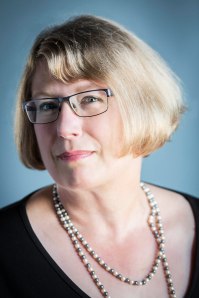
When did you first decide to become a writer or discover your love for the written word?
I’ve always had a vivid imagination and loved fiction but I think academic work knocked the urge to actually write it out of me. Then I started for all the wrong reasons – I was a librarian and saw how popular Mills & Boon novels were. I thought it would be easy money – idiotic of me, of course. However, by the time I sorted myself out and took it seriously I was hooked.
What appealed to you about the romance genre?
It is a great genre for exploring relationships, which is always interesting, and when I discovered historical romance, there was no stopping me – two passions in one!
Your research is impeccably thorough. At what point do you take a step back from it and begin to write the book?
 The story and the characters have to come first, always, although some plot lines can be sunk from the start if the historical premise is incorrect – 18thc characters getting an easy divorce, for example or a sub-plot that involves getting from London to York in a day. Generally I know what I don’t know and therefore what to research – politics, for example. I’ve got a huge personal reference library. But once I know I have a plot that will work in a particular historical context then I leave the research until afterwards and go back to it so it doesn’t take over. When I wrote a story set in AD410 during the Sack of Rome (Virgin Slave, Barbarian King) I just left questions in red for bits I needed to check and went back to them to be sure my characters left Rome by the right gate onto the right road and I’d got the layout of a bath house correct and so on.
I also write historical non-fiction – Walking Jane Austen’s London (Shire), Walks Through Regency London (Kindle), Stagecoach Travel (Shire, July) and I’m working on something on the Great North Road at the moment, so I can channel the hard facts somewhere they won’t take over.
You must have visited some fantastic locations and discovered some unusual facts during your research. Could you share some of the most memorable with us?
Finding three of the houses that Jane Austen stayed in when she was in London was a thrill. Only one, in Covent Garden has a Blue Plaque, but I discovered the other two when I found a pamphlet about research that was done after the war which revealed that her brother Henry’s homes in Sloane Street and Hans Place were not demolished by the late Victorians, but simply refaced and had new upper floors added. The originals are still there under the later shell.
Practical research is great too – I took carriage driving lessons, for example and I’m about to go on a practical osteoarchaeology course handling real skeletons. Goodness knows when that will come in useful…
Do you have a strict writing routine?
Yes, or I’d never get anything done! I write every afternoon until I have hit at least the minimum number of words I need to do to make sure I finish a week before the deadline, and hopefully a few more. That way I have some time in the bank for catching flu or unexpected commitments.
How do you balance the need of keeping your work accessible to contemporary readers against your desire for historical accuracy?
I won’t distort history but it is possible to use it to appeal to contemporary readers. For example I tend to write heroines who are older and who have the freedom to act in a more assertive, interesting way. They may be widows, or following one of the career paths open to women at the time. Where there are strong differences in beliefs and norms between the time I am writing about and the present – the fact that many wealthy families in the 18th century owed their fortunes to slavery in the West Indies, for example – I simply avoid putting my characters into those situations. On the other hand, the ‘long Regency’, which is the period I usually write about, saw the beginnings of many of the freedoms we are concerned about now, or at least the fight for them. Education for women, abolition of slavery, prison reform, concern for child welfare can all be woven in to some plots and engage the sympathy of readers.
As the New Writers’ Scheme Organiser for the RNA, what key advice would you give to someone who wanted to break into the romantic fiction market?
Read widely in the genre you are interested in and do so analytically as well as for pleasure. What works, what doesn’t? Why? Then work at developing your own voice – there is no substitute for practice!
Please tell us about your latest release?
 My latest book is Unlacing Lady Thea (Harlequin Mills & Boon. April). I got the idea for it when we took a small-ship cruise down the eastern coast of Italy. My heroine is no great beauty, and thoroughly practical with it (and I had some fun with the fact that, unlike many romantic heroines, she doesn’t fool the hero for a moment when she disguises herself as a boy). My hero begins the book seriously the worse for drink and talking to the kitchen cat. He’s so drunk that he agrees it would be a good idea to allow Thea to accompany him on his Grand Tour so she can join her godmother in Venice. By the time he sobers up, it is too late and he is stuck with escorting his childhood friend for whom, of course, he has no amorous feelings… None at all, he tells himself.
What is next for Louise?
Scandal’s Virgin is out in June and Beguiled By Her Betrayer, which is set in Egypt in 1801, is released in August. Stagecoach Travel comes out in July.
Currently I’m working on book three in a trilogy, provisionally called Battlefield Brides. Book one is by Sarah Mallory and book two by Annie Burrows. The three books are set before, during and just after the battle of Waterloo and will be released to coincide with the bicentenary of the battle in 2015.
More from Louise
Website: louiseallenregency.com
Blog: janeaustenslondon.com
Twitter: @LouiseRegency


 Buy and read now!
 Welcome to my blog, Nicola. I must confess that your childhood interests me. I have visited many stately homes and heritage sites over the years and the idea of going to school in the dower house of C18
 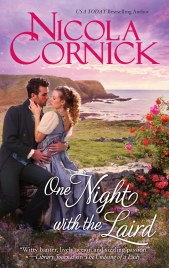 You are an enthusiastic traveller on a world-wide scale, but for your latest series you have headed north of the border and changed period for


 valerie holmes, author