
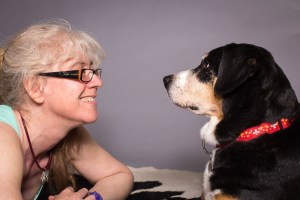
 I am delighted to welcome author Rosemary Kind, who is the founder of Alfie Dog, a publisher of short fiction based in the beautiful county of North Yorkshire.
Welcome, Rosemary.
What was the deciding factor that motivated you to switch from a successful business career to becoming a full time author?
My husband had the opportunity to move to work in Belgium and I said ‘Why not?’ Because we were going back and forth every fortnight to see my stepchildren an ordinary career wasn’t going to work, so as I’d proved everything to myself that I needed to in a traditional working environment it was the perfect time to follow my heart. I’ve always written, but in my spare time. I knew I’d regret it if I never found out if I could do more.
Please tell us about your published work and what inspires you?
I write in a number of genres. Inspiration can come from the strangest places. My first published book (leaving aside ‘Negotiation Skills for Lawyers’ which was commissioned), was a humorous guide to travelling on the London Underground ‘Lovers Take Up Less Space’. I wrote most of the ideas as therapy when I was working in London. ‘Alfie’s Diary’ started as a daily blog in January 2006 when our first dog moved in. I’d been in Belgium for a couple of months and was writing mainly non-fiction, business articles, company newsletters etc. I wanted to write fiction, but it felt like a big step. Writing Alfie’s view of the world was a way to make myself write something every day. I originally intended to write it for a year of two, but nine years on it’s still growing and has spun off into several other projects, not least because he set up his own political party The Pet Dogs Democratic Party.
Inspiration for my novels is more interesting. ‘The Appearance of Truth’ came out of a writing group project to write 300 words on ‘verisimilitude’. Once I’d looked it up in the dictionary I started mulling it over. I was researching my own family tree and had ordered a birth certificate. It occurred to me that it would be quite possible to pass a birth certificate off as belonging to someone that it really didn’t relate to and it all went from there. Lisa was given the birth certificate of a baby who died at 4 months old and the story is her search for who she really is and why it happened. ‘Alfie’s Woods’ came from our woodland walks. We’d just rescued a hedgehog, who was stuck in a fence, when a helicopter passed overhead. The rest of the walk was spent thinking ‘What if they were looking for the hedgehog? What if he had escaped from the woodland prison?’ ‘The Lifetracer’ was inspired by seeing an electronic countdown clock in a catalogue and finding myself thinking ‘What if it could be programmed with Time to Death and used to send a death threat?’ I have more ideas than I have time to write them.
 What appeals to you most about Entelbucher Mountain Dogs and Alfie in particular?
I fell in love with the breed long before there were any in the UK. They are incredibly loyal affectionate dogs who are great with children and like nothing more than to be close to you. I also adored the way they look, not only their colouring but the fact they are such happy smiley dogs. Alfie is my pride and joy. He is a gentle giant who is everything I had ever dreamed of in a dog. We are incredibly close.
When did the inspiration for an online digital site for short fiction first occur to you?
Not only do I write short fiction as well as books, but I have many friends who are widely published in that field. The more I talked to other writers the more frustrated I felt that there were so few outlets for short stories and for earning an income from secondary rights. It was January 2012 when I wrote the business plan. I launched to authors in February and to readers in May. I was overwhelmed by the response and we had more than 100 stories by the launch and have rapidly built a library of 1700 stories. I also wanted to set up a site that gave as much back to authors as possible. The culture is very much to give support to the writing community where we can. I was amazed by how word of mouth spread the message across the globe and we very soon had writers from more than 25 countries, all writing in English.
 What can a reader expect to find on www.alfiedog.com?
We carry good quality stories in a wide range of genres. All submissions are reviewed and where necessary edited and only the best are accepted for publication. We want our readers to come away having had a really good read and be looking forward to coming back for more. We carry work by over 400 authors, so there really is something to suit everyone’s taste. Many of our authors are widely published, but we enjoy introducing high quality work from new writers too. Unlike most sites, we carry the stories in a range of formats to suit all types of ereader or to print. We also publish a range of books in both electronic and paper formats. They are mainly short story collections, but we do carry some novels as well.
Of course for writers, our International Short Story Competition may also be of interest. The closing date is the end of September so there is plenty of time to take part. First prize is £200 and book publication.
How do you see www.alfiedog.com developing in future? 
The site is already one of the biggest short story publishers in the world, but hopefully it will be the site on everyone’s list when they talk about short stories. I want it to be ‘THE’ place that people go to when they are looking for quality short fiction.
What is next for Rosemary?
I’m writing another novel at the moment. This one was inspired by a chance comment in a meeting. Someone made reference to the ‘Orphan Train’ movement in America in the late 1800s and I had to go and find out more. As soon as I did, I was hooked on a story idea and the lives of three Irish immigrant orphans, fighting for survival, was born. It is my first full historical fiction writing and the research has been fascinating. It even made me get on a plane for the first time in over seven years, but that’s another story!


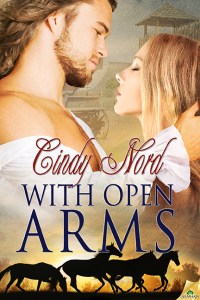
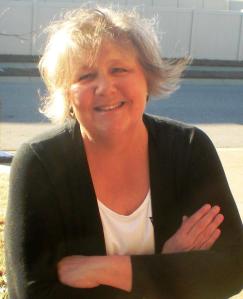 I am delighted to welcome my special guest this month, bestselling Historical Romance author, Cindy Nord.
 What better way to usher in the New Year than to share an inspiring interview with Ian Skillicorn who is a very talented and successful writer, publisher, speaker, director, voiceover artist, translator and producer.
 In 2006 you founded
  Your connection with short fiction was further strengthened when you founded National Short Story Week in 2010, which has best-selling author Katie Fforde as its patron. What would you say is the essence of a good short story?
 That is excellent and inspiring for the future.
 I was delighted to read today that Cindy Kirk has just become the


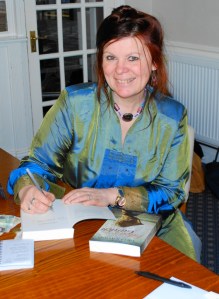 It was a really bad viral infection that left me with ME for years. Before then, I’d been energetic and healthy, holding down a career, cycling, rushing up mountains, and working for hours in my garden. Being so ill for so long, and not knowing if I would ever get better, forced me to completely reconsider my life. That’s when I decided I would work part time in a far less stressful job, and just go for my lifelong dream of being a writer. I’d never had the courage to do it before, in case I failed. Having ME made me realise I’d nothing to lose, so it gave me the courage to try.
 My crog loft is tiny, but it’s nice and cosy and womb-like (and has steep stairs that stop me from sneaking out into the garden when I hit a tricky bit!). When I’m writing serials, I have to plot everything out, as there is no chance of going back and changing things. When I’m writing my novels, I start with a general idea of the plot, but I know that’s going to change as soon as I start, and find the heroine needs a mother, or a brother or best friend, who turns out to be far too interesting to ignore! I generally know the beginning and the end, but once the first draft is done and the real work begins, anything can happen. That’s the exciting, and the scary bit, because I’m never sure if it’s going to work. I love tightening up the plot, and developing the twists and the turns to (hopefully) keeping the readers on the edge of their seats. ‘Eden’s Garden’ was a real challenge, moving between the modern heroine and Victorian times, and keeping the two stories weaving in and out of each other while not giving the twists (especially the one no one ever spots!) away. ‘We That are Left’ had some of its structure dictated by the historical events of WW1, even though the action is focused mainly on the experience of the women and civilians at home. The next book is also based around historical events, but with some family twists and turns too.
 A big emotional story, set in a rambling old house in Cornwall or Snowdonia in Victorian or Edwardian times, with women firmly at the centre of the action, each making her own way towards self-fulfilment. There is a mystery to be solved, and danger to be overcome, and the path of true love definitely never runs smooth. There will be a garden in the background somewhere, and probably cake. For ‘We That are Left’ I researched authentic dishes from WW1 newspapers for my heroine to use, as she struggles to keep her family and the local village fed on limited resources, mainly anything she can grow in the kitchen garden on the family estate.

 Please tell us about your new book
  More from Sue: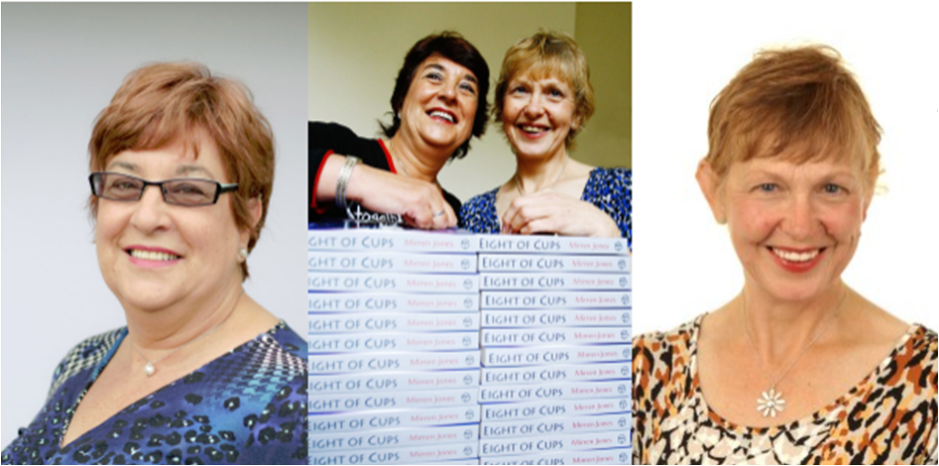
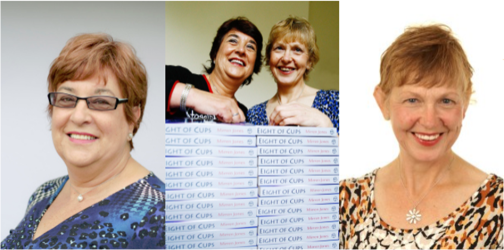
 The novel is certainly not chic-lit, and is not intended to be literary; rather it fits the genre of well-written contemporary women’s fiction, although many male readers have told us they’ve enjoyed reading it and learnt a lot about women’s minds in the process! It’s a saga spanning over thirty years, beginning in 1972, as the six main characters arrive at Edinburgh as new undergraduates. After leaving university, their roads lead to England, Wales, Ireland, America and the Middle East; lives intertwine and paths cross.
 Our work in the NHS, in academia and as organisational development consultants has required us to be attentive listeners, adept at interpreting information from others via all our senses, able to feedback sensitively and imagine ourselves in others’ shoes. We have gained experience over many years of the effects of ill-health on people, and how life impacts on well-being. Hopefully our innate vein of empathy has been enhanced by our real-life experiences which then give us insight that we can apply to our characterisation. Perhaps being co-writers has an advantage over writing solo, in that with our combined life and work experiences we are able to bring a very wide range of knowledges and contexts to our writing, thus giving credibility to our characters and their settings.
 valerie holmes, author