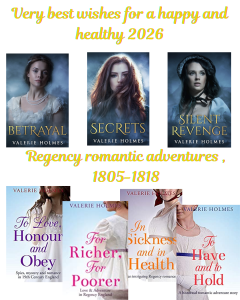
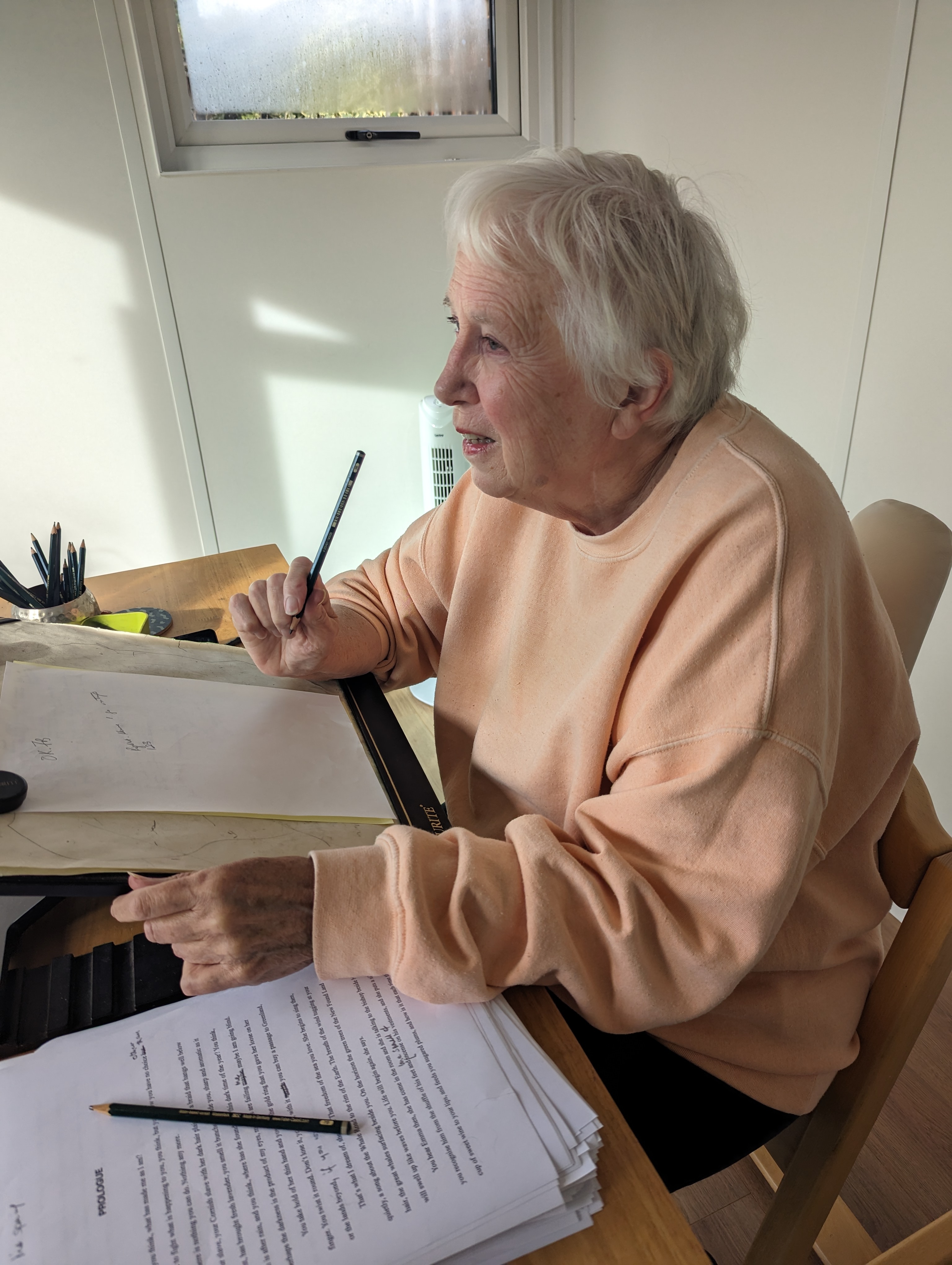
Happy New Year!


Summer may be drawing to a close in the UK, but what a warm one it has been! Whether you enjoyed staying at home or ventured abroad I hope you had a fun time. Personally, I love to balance travel and home. Are you a home bunny or long to see the world?
Holidays are a way to escape from the normal routine of daily life commitments, to experience new challenges and recharge… Like escaping in a good book. If you enjoy a slow burn romance wrapped around a Regency romantic adventure, then read on…
My exciting news for Amazon.com readers is that from today three of my Regency novellas are now available to listen to free from Audible.com – Hannah from Harpham Hall, which was shortlisted for The Love Story of the Year Award by the Romantic Novelists’ Association when it was first published by DC Thompson has now joined The Baronet’s Prize and Phoebe’s Challenge.
In the UK and other countries they can be purchased on Kindle or enjoyed free from KindleUnlimited. I hope that in the future they will also be come available in Audible in the UK too. These are my first three novellas to be re-edited and re-launched in digital format, their length is perfect for listening to on a journey or loosing yourself for a few hours in a complete slow burn mantic wrapped around an exciting adventure.
All writers grow and learn as their careers progress. Since 2003, when my first novella was accepted for publication, a further 52 have been published in traditional large print and distributed through the Commonwealth library system.
Libraries have had to compete with the change in readers’ online habits and the availability today of books in various formats through various distribution channels. A library provides a physical presence within a community, but as well as offering its invaluable traditional book-loaning service they now offer so much more to their local community. Which is why they should be used and valued.
More good news is that For Richer For Poorer, published by Sapere Books, will be released in large print by Ulverscroft in early 2026.
For reader’s who want a longer read with all the elements of romance, mystery and adventure then get ready to fall in love!
My books offer Regency romances that will warm and captivate your heart. Discover the untold stories, hidden away from societies prying eyes.
Read now and escape into the adventure!
“Silent Revenge has the potential to capture not only devoted Regency romance fans, but also readers drawn to intrigue, history, and enduring love.”
I hope you agree. Please feel free to leave comments and questions below.

I hope you have enjoyed the sunshine and warmth of June, when the UK sampled temperatures nearing those in the tropics! In North Yorkshire the heather is ready to bloom, bringing swathes of lush purple to the vast expanses of moorland. It is a truly beautiful and everchanging landscape.
Another beautiful county that I visited recently in the South West of England was Somerset. When I stopped at a garden centre I came across a working blacksmiths’ forge and felt as though I’d taken a step back in time. Instantly thoughts of Wilfred Underwood, Imogen’s father in Secrets, came to mind. Although we tend to think of smithing as a traditional craft of yesteryear, the charming owner soon corrected that impression.

There is still a demand for the old skills, used now for restoration work, preserving items from the past. This requires the mastery of the trade and knowledge of old methods, material, tools and skillset of the original worker to recreate or mend the item in question. Past imperfections are what makes an old item interesting today.
We live in a time where we have more technical accuracy and, perhaps as a consequence, less individuality. Science has moved on, providing precision tools and improved understanding of the process, yet a modern day blacksmith has to embrace and learn the old ways as well as the new.
Old skills are called upon to mend traditional machines and objects, some still used in other local trades like the local butcher’s grinder, along with reproducing such basic items as the imperfect nails made at a smithy’s before mass production. Each repair has to be done in the style and materials of that bygone age, but today’s Blacksmith also has to build on this historic knowledge by keeping up to date with modern, contemporary designs changes in style, tools, markets and techniques.

There is a long apprenticeship still required, for this labour of love, as science and art combine.
Historically, a chestnut tree was planted near the large forecourt providing shade and was symbolically associated with the trade. Yorkshire wrought iron was and is highly prized for its quality.
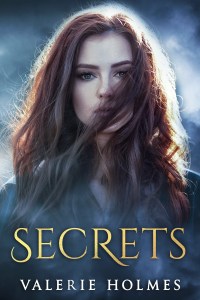
In Secrets Imogen’s father, Wilfred Underwood, is the blacksmith for my fictitious village of Dibbledale – a tranquil unspoilt place inspired by such villages as Hutton-le-Hole in the North Yorkshire Moors Park. His trade was central to the local community for the upkeep of agricultural equipment, as a farrier, and the many other jobs concerning the mending of household and trade goods. Wilfred, a gentle giant of a man, also encouraged Imogen’s creative nature providing her with fine tools and wire to make delicate jewellery, deepening the bond between father and daughter.
“Secrets and their consequences worm their way between Micah and Imogen. Will they be able to save Dibbledale’s peace and tranquillity? Only when secrets are revealed can devoted friends be distinguished from destructive foes and allow love to find its true home.“
From a writing perspective there is a fine balance between keeping historical fiction accurate to the period it is written about, and accessible to a modern reader, who may be unfamiliar with that period of history.
Trades, like everyday language, evolve and adapt through time. The visual importance and need of a central blacksmith may have changed, but in Regency they were essential and central to a thriving village community. They were also excellently placed to see and hear all the comings and goings of the villagers and pick up information from travellers who crossed their paths. Wilfred as a character is able to keep his finger on the pulse of local events.
I would like to greet and thank my new readers in the United States as well as the UK and Australia who have read and enjoyed Betrayal – Book 1 of Friends and Foes Regency romantic adventure series. The
I hope you go on to read the completed trilogy and discover what happens to Lord Farrington, an enigmatic character who features in Book 3 Silent Revenge , which will be published in paperback on 5th July. More about him next time!
July’s bargain book is The Baronet’s Prize, which is now 77p/$1, which also available on KindleUnlimited.
“A delicious Regency! Eleanor is horrified to be made homeless by her brother’s gambling debts and still more disturbed to find herself falling in love with the man who won the estate. Valerie Holmes resolves this dilemma in a spirited tale that keeps you turning the pages until the final “Ah!” of satisfaction.”
GL Robinson, New York USA, Regency romance author.
Reviews left on Amazon (and sites such as Goodreads) are always welcomed and appreciated by authors, especially if the book has been read and enjoyed. They are what keeps the algorithms working in the competitive world of publishing.
I would love to hear from my readers, wherever in the world you are based, and also from visitors to the region.
Have a lovely and safe weekend.

May’s welcome sunshine seems to be reflected in the vibrant yellow gorse, brightening the moorland, whilst the aroma of the wild garlic’s delicate white flowers lightens shady woodland banks.
Whether walking through the ancient pathway of Saltburn Gill from the coast or strolling through the grandeur of the grounds of Fountains Abbey and Studley Royal, Mother Nature certainly lifts the spirits and inspires, as it did in Secrets for Lord Farrington’s friend and life-saver Micah Arrow.
‘The trees were finally showing their new leaves as yellow broom made for a colourful bank in the lane’s hedgerow that dipped towards Dibbledale. Saint Cuthbert’s parish church and the vicarage were on a small hill just outside the village. Micah stopped to admire the newly bloomed clumps of primrose nestling amongst the grass. He breathed deeply – he was home and at peace. Picking his way through the grass, he admired the budding bluebells pushing their way upward. Spring was a time of revival and that is what he planned for Dibbledale.‘
Dibbledale is a fictitious village, which has elements of real locations, such as, tranquil Hutton-le-Hole and Great Ayton. The latter being where the explorer James Cook went to school. They are villages that have largely remained unspoilt by modernisation and industry, which is what returning soldier Micah Arrow wants to preserve for his family. After witnessing the horrors of war first-hand, peace is what he craves.
Appealing as any setting is, North Yorkshire has dramatic wild beauty throughout the seasons, it acts as a historic backdrop to the characters and their adventures. In writing as in life, you need moments of light and shade to give depth and pace. Here a moment of quiet reflection turns when Micah senses danger…
‘Micah swung a leg over a fallen tree trunk, but then, as the metal’s edge caught his eye, he mantraps, never had he seen such things around Dibbledale. The woodland had always been open to all. The food it provided was free, the fallen trees taken as needed by the villagers for repairs – so what had changed?…’
Secrets will be on a Kindle Countdown from the 15th to 22nd June on Amazon.co.uk and is freely available on KindleUnlimited now. Micah is an important character to Lord Farrington and reappears in Silent Revenge.
As a thank you to my readers the newly re-edited to extended version of Phoebe’s Challenge is available at 77p till the end of May.
England, North Yorkshire, 1813
Miss Phoebe Elgie and her younger brother, Thomas, flee when an accident results in them being labelled ‘machine breakers’ in the cotton mill where fate had them trapped.
Hunted, with nowhere to run, they are aided by a mysterious stranger called Matthew. They soon discover that he is a man who appears to assume a variety of roles.
Phoebe instinctively trusts Matthew, unlike Thomas who doubts. She is drawn to this stranger; lives and destiny intertwine as their journey crosses the path of smugglers and traitors. This hinders their quest to uncover the truth behind the demise of their family, which left them so vulnerable.
Phoebe’s challenge is three-fold. She must secure their escape beyond the reach of the overseers of the mill and the crime they have been accused of...
Uncover what happened to their mother.
Cope with the confusion of her developing friendship with the mysterious, Matthew, and determine if there could be a future for them.
Swept along by the swiftness of the serious events that dog their progress to uncover the truth, Phoebe struggles to overcome and resolve these challenges.
Determined, Phoebe has no time to doubt, but how will she succeed…?
If you enjoy any of my books, please leave a review on Amazon or Goodreads – they are much appreciated!
I am delighted to welcome novelist, poet, philosopher, former barrister and fashion model Diana Janney as my May guest.
Thank you, Diana, for giving up some of your precious time to answer my questions.
Have you always been a deep thinker, even as a child, searching for answers and looking beyond the obvious to try and understand life?
Reflection and deep thinking have been important to me for as far back as I can remember. As a child, ‘why’ was my favourite word! My late father was a clergyman and he and my mother spent a lot of time discussing big questions as a family and with others, which I enjoyed. I became interested in Philosophy through Latin A level, fascinated by Cicero and Ovid in particular, as well as the poems of Catullus. In my latest novel A Man of Understanding, I have translated part of a Horace ode, which reminded me of those school days! Before going to university to read Philosophy, I had already become fascinated by Eastern Philosophy, and it was a wonderful experience to expand that love of Philosophy at UCL. I’m not sure that I would say that I try to understand life, as this would be an impossible task, but I do search for answers to big questions, especially those related to ethics, aesthetics, personal identity, faith and religion, and the concept of choice, freewill and moral responsibility. I enjoy the exploration of the questions even if there are no answers.

Your careers to date have been varied and impressive, but would you say that your love of creative writing and poetry developed first and has weaved through your professional life until it became your central focus?
My love of creative writing and poetry developed during my schooldays when it became clear that I had a talent for both. Philosophy became very much a part of my life during my years at UCL, first as an undergraduate and then as a postgraduate in Philosophy. That fascination continues to the present day. In all my novels so far (and in the next) I weave philosophy as well as poetry into the plot as I believe they both offer so much on which to reflect. Having been a barrister gave me the opportunity to be a mouthpiece for those I represented, and it helped me to be persuasive in argument, both of which are good training for being a writer, and Philosophy encouraged me to reflect on important issues, which I weave into my novels.
A Man of Understanding, your third novel, is described as a story of bereavement and healing. This sounds so positive, as anyone who has grieved the loss of a close loved one – particularly early in life, will know, that healing is a difficult and very personal journey. How was your own life affected by your father’s death and is this healing part of your shared experience?
The death of my father came as a tragic shock to me and my mother. I was an only child, as were both my parents, so the family was already small before we lost him. It was impossible not to admire his positive approach to dying and the strength of his faith. In my writing about loss and grieving, I seek to do justice to the positivity he showed at that time and during his life. In my novels, I want to share that experience in a way that may help others to see that the loss of loved ones does not mean that the lessons we learnt from them disappear when they do. We reflect on what they showed us during their existence, and in some ways those lessons become stronger through losing those we love. It is at times of loss and tragedy that we reflect most strongly on what really matters in life. We often turn to creative ways of expressing what we are feeling inside, as recently bereaved Blue discovers through the relationship that grows, after the sudden death of his parents, between him and the philosopher-poet grandfather Horatio Hennessy whom he has never met.

Being shortlisted for The People’s Book Prize 2023 was obviously a huge achievement as it reflects the readers’ choice. Your novels are written with a unique and enthusiastic insight into their subject matter. Do you write the book that is in your heart and how do you balance this with the commercial side of the publishing industry, of writing for a target market?
Thank you, Valerie. In fact, I was the Runner-Up in The People’s Book Prize, which was an even greater achievement, especially as the Patron Emeritus of the Prize is Frederick Forsyth, and the late Dame Beryl Bainbridge was the Founder. It was a great honour for me. I always write from the heart and from my knowledge and reflections, and it moves me when I read how much my writing has moved others. That is what matters most to me. My target market is always those who enjoy moving and thought-provoking literary fiction with interesting characters and an unpredictable plot. There are a lot of novels published that are quite predictable and are not thought-provoking but nevertheless they sell well, and people enjoy them. The publishing industry needs variety as there are so many readers in the world. But I would not write anything that did not reflect my own questions, knowledge and creativity. Fortunately, my writing seems to appeal to readers, and it is wonderful also to be published in translation in lots of different countries and to have international appeal. I believe that to be a successful writer, it is important to write about what you know (which can include research if necessary) and, as Horatio says to Blue in A Man of Understanding, about what moves you, what stirs your soul.
Do you aim to make your books accessible to people who have had little opportunity to study, or exposure to, the classics or philosophy?
Accessibility is important when weaving philosophy and the classics into novels. It requires interesting characters who really bring these subjects alive, which is what I always aim to do. These subjects do not have to be dry and difficult to understand. Blue is a twelve-year-old boy, and he is fascinated by them. My books appeal to both those who already have a knowledge of philosophy and the classics, and those who do not and are surprised by how much they enjoy these subjects in my writing.
Do you have any plans to publish an anthology of your themed poems?
I haven’t considered an anthology of my themed poems. Maybe I should! They have certainly proved very popular. Some of my poems in my novels are specifically related to the plots, which might not fit easily with an anthology. In my next novel, there is also poetry, but of a very different style.
When not studying, writing, and working what do you do to relax?
Most of my time is spent in writing, especially at the moment as I am finishing my next novel. But I love to play chess, table tennis, swim, play my violin, spend lots of time with my husband discovering new places, new concerts, new plays, new restaurants, new recipes, new people and new music to play together (my husband plays the piano). Of course, returning to old places, concerts, restaurants, recipes, friends, music is also enjoyable! I also find meditation a good way to relax.
Mallorca features in your novels, is it a place that you have strong links to?
My husband and I have spent a lot of time in Mallorca over the years. It is a place we will always return to. Our first ever holiday together was there. My first novel and my latest novel are both set in Mallorca, which says a lot about my love of the island! The north of Mallorca, in the mountains, was the ideal setting for A Man of Understanding as the arts and aesthetics are fundamental to the plot and this area is not only celebrated for its contribution to the arts and culture generally but the island is also a work of art in itself.

The title of your novel is similar to a quote from the Bible. How much has your own faith driven you to succeed and overcome life’s challenges?
Yes, the title is derived from Proverbs 10:23 ‘…a man of understanding hath wisdom.’ Success is such a big word that means something different to each of us, I think. What I hope for most is that I succeed in helping readers reflect on different topics, such as: ways of overcoming loss and grief, exploring their creative side and embracing the importance of the arts and aesthetics in spiritual development, reflecting on the importance of love (as Aristotle teaches, through learning the importance of understanding and respecting the self as well as others), reflecting on religious and philosophical questions from different perspectives, remembering who and what really matters. I believe that my own faith has guided me towards an understanding of where my true talents lie (in the biblical sense of that word), which is what urges me on to write as I do. My faith has also helped and tested me in times of life’s challenges.
Do you create your characters from elements of people you have known or met professionally, or do they walk onto your mind as you write and develop the plot?
There are aspects of myself in my novels, and in The Infinite Wisdom of Harriet Rose, there are aspects of my family in Harriet’s. In A Man of Understanding, I drew the characters from my imagination, they are all unique, with a few touches of myself and my grandfathers (one I knew, the other died before I was born) in poet-philosopher Horatio Hennessy. The characters certainly help to develop the plot – who would dare not to listen to what Horatio had to say?!
Latin is used in the classics, medicine, and law; do you think that basic Latin should still be taught in schools?
The idea of Latin not being taught in schools horrifies me. I found Latin very useful when learning other languages, as it is in the English language. There is something very special about being able to translate the words of some of the world’s greatest thinkers.
What do you hope that your readers take away from reading your books?
A strong sense of the importance of valuing love and reflection and creativity. Also, the title, so that if they enjoyed it, they will recommend it to others!
Have you ever had to deal with work being rejected?
I don’t think that writers should think in terms of rejection. I would call rejection of work a publisher not making an offer to publish, for which there can be a number of reasons (some linked to the work itself, some to the publisher, some to the market at the time of submission). As with most published authors, not every publisher who has received my work has made me an offer to publish, whilst there have been many discerning publishers who have!
What advice would you give new writers starting out?
Reflect long and hard on whether writing is where your true talent lies. It isn’t enough just to like the idea of being a writer. You need to enjoy it, you need to feel you have something to say, you need to be observant (of people and the world around you). Write about what you know. Write about what matters to you. Don’t try to write like someone else. Be yourself. Be unique. Be patient. Listen to your characters. Write your story, however long it takes, until you feel sad that you have reached the end and that you are leaving your characters and their life behind.
What is next for Diana?
Right now – supper! Writing-wise, I have almost completed the first draft of my next novel, which is being published next year. I am fulfilling my own criteria in that I am enjoying writing it immensely, I love the characters, the plot, the research, the knowledge I’m gaining through creating it, including about myself. It matters to me. It moves my soul. And I don’t want to say goodbye to the characters!
Thank you for taking the time to answer my interview questions. I wish you every ongoing success.
It was my pleasure. Thank you for your interesting questions.

Welcome, Maggie,
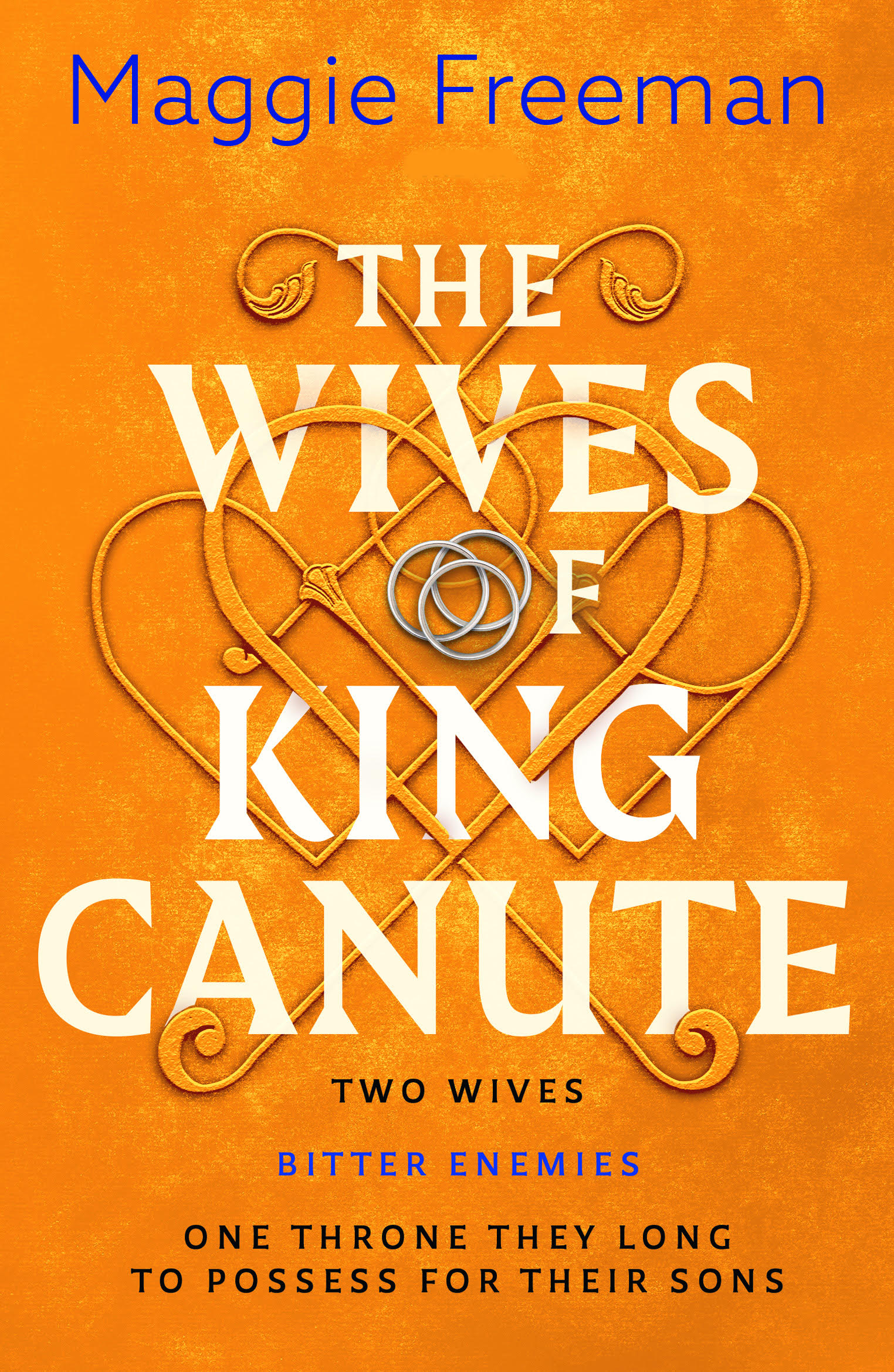
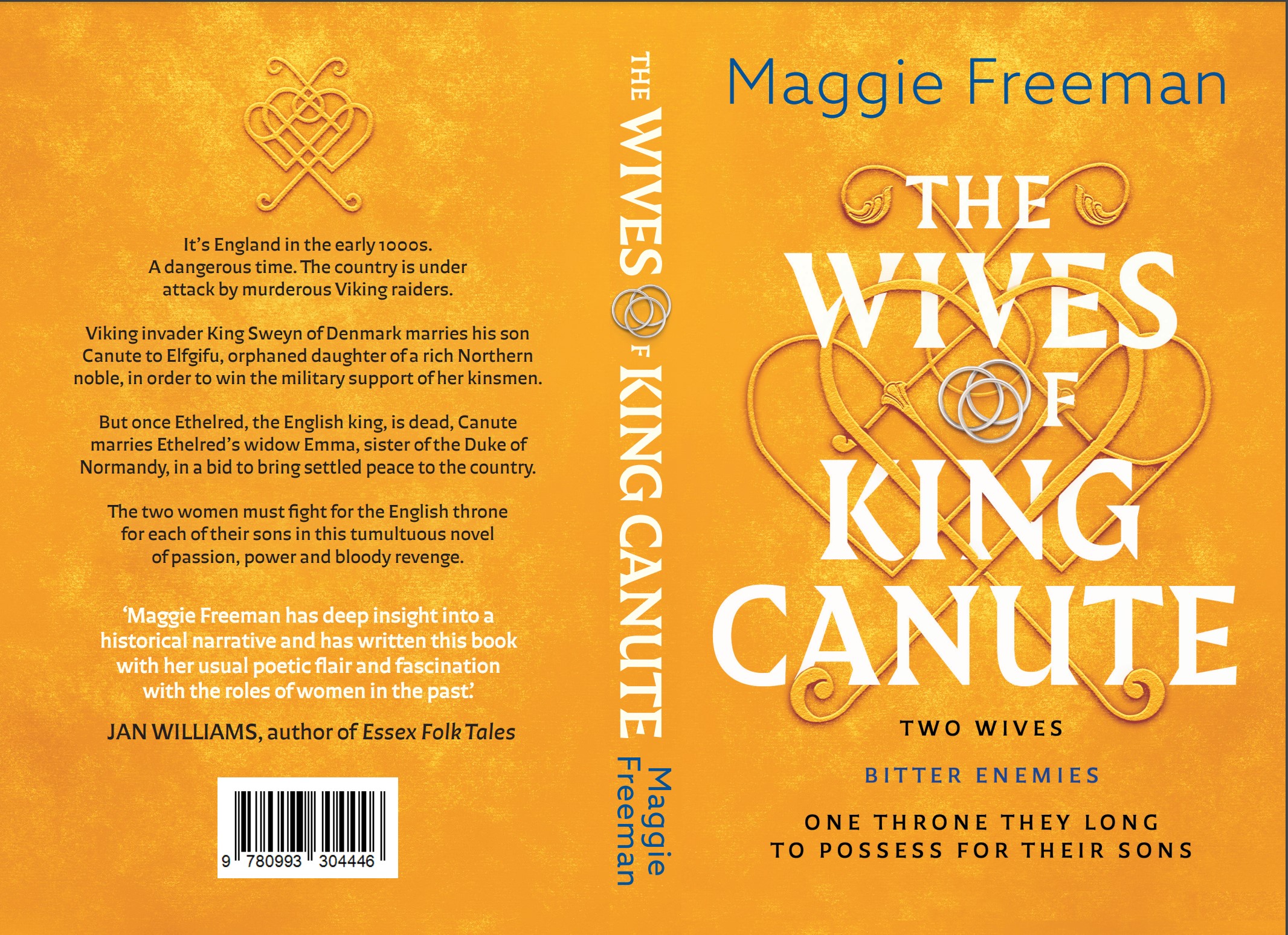
Let’s begin with your beautiful new novel, ‘The Wives of King Canute’. When did the inspiration for this amazing project strike?
‘The Wives of King Canute’ is a project that’s been a long time growing. My fascination with Vikings began when I was eleven, when in winter my mother would drive my sister and me to the Isle of Sheppey, and I’d walk along the sea-wall, looking out at the grey sea, and imagine, appearing over the horizon, the bright-sailed boats of the Vikings we were learning about at school. When I was married we’d stay every summer with my mother-in-law in the Isle of Man, with its many relics of its long-ago Viking rulers, from overgrown ship burials surrounded by wild flowers to castles poised on the rim of the sea.
In 2014 I went to the amazing exhibition about Vikings at the British Museum, which rekindled my enthusiasm for them – very romantic figures in my imagination – and I began to read more about them. When I came across the story of King Canute’s two wives I thought that would be a good basis for a novel, with plenty of conflict.
Would you describe it as a labour of love?
Absolutely. First because of the subject matter, and secondly because I love writing.
How much of a personal challenge has it been from first completed draft to publication?
I’d nearly completed the first draft when we moved house, and then I had problems with my own and family illness – in other words, life took over from writing! Also I wasn’t sure what to do with it – I’d had five agents, none of whom had ever sold any of my work, so I didn’t want to go that route again. I hadn’t earned much from the digital publishers who’d published my three previous novels. So I spent a very long time dithering and doing nothing, tinkering with it now and again to make it as strong as I could. In the end I’ve decided to try self-publishing and see how that works.
It’s quite likely I’d never have got round to publishing it if it hadn’t been for the enormous support, and pushing, I had from friends. I’m very grateful for that.
Your previous novels have been set in different periods of history. If it was possible to travel back in time, is there a specific period you would like to visit?
If so, why?
Yes – the late Tudor period – provided I was fairly well off, of course! I’ve lived in Kent and Essex and have always loved visiting old houses, imagining what it was like to live there.
And that period seems so alive, full of excitement and new ideas, from explorers discovering unknown lands to amazing writers, such as Shakespeare and Donne.

I love the idea of hibernating like the hazel dormouse as described on your website. Have you always had a love of nature and a poetic soul?
Yes, I’ve always had a love of nature. Till I was ten I lived in Trinidad and Tobago where my father managed a small coconut estate and my mother raised ducks and turkeys, so just about all I knew was the natural world. That’s where I feel most at home, and happiest, now.
I’m not quite sure what a poetic soul is – I certainly used to daydream a lot, and I do love writing poetry, most especially that set in the natural world.
Would it be an accurate statement to say that your protagonists are strong women who face and overcome many and varied harsh life challenges?
Yes. I find they’re very interesting to write about. And as a writer and a reader I’d never have much sympathy with a person whose life was very comfortable.

How long do you spend researching a novel?
It depends on the demands of the novel. ‘The Wives of King Canute’ needed a lot of research because I didn’t know much about the period at all – only my romantic visions of Vikings! In it I used the historical timeline as the main structure of the plot. My novel ‘The Clock-mender’ didn’t need much research, because I knew its Swedish setting very well, and I had the seven-page account of what happened written by the man on whom the novel is based – the rest is mainly imagination. I don’t do all the research at the beginning. I like, for example, to go to relevant places to top up my experience – for example, one cold Christmas I went to Hampton Court Palace and watched Tudor dancers, which helped me write a scene in ‘‘The Girl in the Great House’. I hadn’t known when I started the novel that it was going to have that scene in it.
Is it the character, era, conflict or a random fact that triggers your imagination?
All four of them trigger my imagination. In ‘The Wives of King Canute’ it was the conflict between two women from very different backgrounds, but married to the same man, that intrigued me and got me thinking. At the same time I wanted to try writing a novel set in the Viking period.

Your own childhood in Trinidad and then Tobago must have been in stark contrast to life in the UK. Do you think that this experience influenced your work?
I was ten when I came to live in the UK. My childhood was for the most part very happy, but quite isolated, and life in the UK did feel very strange at first – just coping with socialisation in a large school, for example. This has influenced my work in that most of my protagonists are outsiders in some way.
How did you branch into writing for children?
I actually began by writing for children, writing stories for my two sons. When the younger one came home from primary school, I knew I was on the right lines if he wanted to read what I’d written that day before he attacked the biscuit tin. I went on to write primary literacy books, and was always concerned to make them as interesting as possible to children.
Do you think the market has changed drastically in your lifetime, or do you think that technology aside, children still just love a good story?
Children still love a good story. Just think of the success of the Harry Potter novels.

What advice would you give your younger self regarding becoming an author?
Always finish what you start writing. I never did at first – just had dozens of beginnings. That’s how come I’ve finally published “The Wives of King Canute” nine years after first starting it! I hope you’ll read it and enjoy it.
I am really looking forward to reading The Wives of Canute which will be free on Kindle 23rd February to 25th.
Thank you for taking time out to discuss your fascinating career and latest work.
If you have enjoyed reading this interview or have any questions, please feel free to like and comment below.

Thank you for inviting me to be your guest, Valerie. I’m very happy to be here!
The inspiration for the first novel in the Charton Minster Trilogy was the famous Red Cross recruiting poster for nursing volunteers to serve alongside the professional nurses working in the various theatres of operation during World War One. This image has reproduced thousands of times, so I’m sure it must have inspired plenty of other novelists, too.

Are there plans to release more of the series in 2024?
Joffe has acquired the rights to all my novels originally published by Choc Lit, so there are four more books in the pipeline, to be released either individually or as sets.
Creative Writing Matters seems to go from strength to strength. What events and competitions do you have lined up for this year?
At the moment, the Creative Writing Matters team is reading its way through nearly 400 entries for the latest Exeter Novel Prize, which will be awarded in April this year.

The CWM team: Sophie Duffy, Cathy Hartigan and Margaret
Can you give some tips on what makes a competition entry stand out?
Try to open the entry at a point which will get readers asking questions – for example, whose story is this, what does the central character want, how might the central character go about getting what he/she wants?
Let this central character face some kind of challenge.
Be wary of starting a story with a description of the scenery or an account of the central character’s life to date.
If the competition asks for a synopsis of a novel, novelette or even a short story, make sure the synopsis covers the entire story and explains how it ends. Anything else won’t tell the organisers/readers if the entrant can construct a satisfying story. It’s (comparatively) easy to start a story. It’s much harder to develop it and to offer readers a great ending that will live on in these readers’ memories – and also encourage to read the authors’ next stories or books.
What would you say is your perfect writing/teaching balance in life now along with other pursuits?
I shall never achieve a perfect balance in life! Right now, as I explained above, my energies are focused on reading competition entries, some of which are going to need reports. I’ll catch up with my magazine work later this year. As for other pursuits – if you mean hobbies, I’m determined to get my garden into shape this spring. But I say this every year, and it hasn’t happened yet.
The publishing industry has changed vastly over the span of your career to date. Are you optimistic about the dramatic and dynamic current trends?
I suspect AI is going to become a really mixed blessing for writers of fiction. But digital publishing has made it easier for new writers to get in on the action, and commercial publishers are no longer the only gatekeepers, which is good for those who prefer to self-publish.
Thank you for chatting to me, and all best wishes for your continued writing success in 2024!
The New Year often provides opportunities and challenges – if you are an author what are your writing goals this year?
If you have always wanted to write a novel/novella/short story, but feel daunted or lost as to where to start, then check out CWM or my manuscript appraisal page where you can submit a query.
All best wishes for a happy and healthy 2024 to all!

I wanted to start my New Year interviews off with a celebration! So, when I learned that Aneeta Sundararaj, one of my London School of Journalism students, had won The Trisha Ashley Award, I asked her to share the inspiration behind her winning story.
Welcome, Aneeta,
First, thank you for inviting me to your website, Valerie. It’s much appreciated. I must also thank the organisers for running this competition, choosing my story to be forwarded to Trisha, and to Trisha for choosing it as the winning one.
You are welcome, Aneeta, and I passed on your thanks to both.
Margaret James of Creative Writing Matters who runs the competition was delighted and explained,
When we first set up the Exeter Story Prize, Trisha asked if we would like her to sponsor an award for a quirky or humorous story, and we said lovely, please do. So, when Cathie, Sophie and I have read all the entries, we choose a few that we hope Trisha might like, and she picks the winner, who gets £200. Also, anyone can enter the ESP, so Aneeta was up against some very well-published authors, and she did very well to win.
The Weathermen – A Love Letter was based on a conversation I had with my friend, Swagata. I was sharing some of the challenges that I (and many girls I’ve spoken to over the years) faced. When the phone call ended, I decided to write it all out. More than inspiration, writing this story was a form of therapy.
Trisha had this to say,
I loved the quirky and original voice of the narrator in this unusual story. It was, for me, the knock-out winner and I hope will lead to much more writing success in future.
So, huge congratulations, Aneeta!
When did you discover a need to branch into creative writing after a successful career as a lawyer?
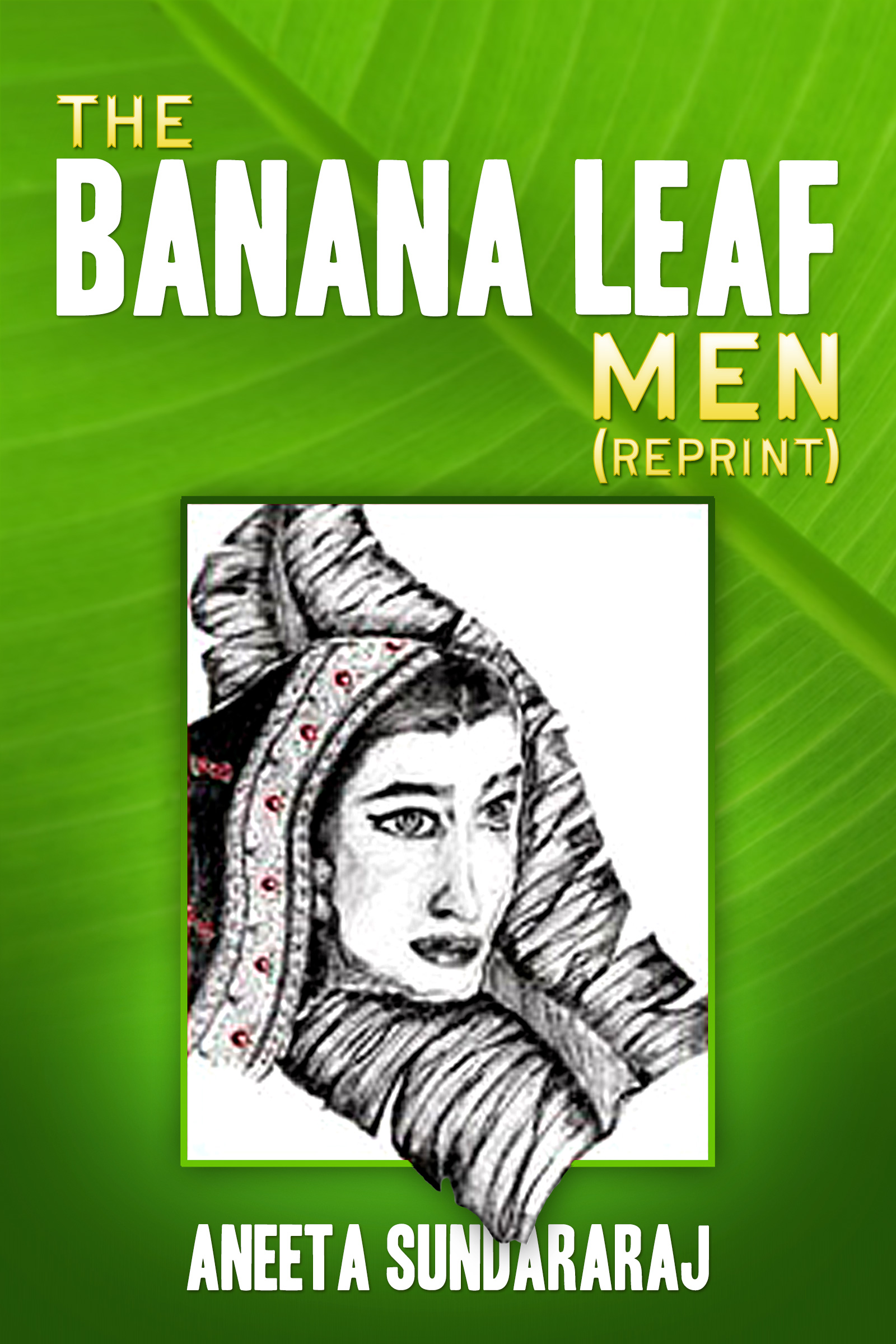
I left legal practice a long time ago. I didn’t plan on a full-time career as a writer. I knew it would take me at least three months to find another job. So, I wrote the first draft for The Banana Leaf Men I found that I liked ‘this writing thing’ and decided to try it for a while longer. I’ve never stopped.

You are an experienced writer/journalist – what appealed to you about the challenge of writing for the RomCom genre?
This is a very good question, Valerie. I think that it wasn’t so much a challenge, but more applying all I’d learnt thus far. It starts with my need for variety. For instance, for years, I was a contributing writer for the Lifestyle section of the Sunday papers. This meant learning the art of writing feature pieces. When this sojourn ended, I focused on writing/fine-tuning the novel, which came with its own set of elements to follow. Then, I did something completely different and that was to pursue a PhD which meant returning to writing for academia. Once that was complete, I went back to fiction. This time, I focused on the short story form and creative non-fiction, like a piece called ‘Lord of the Ocean’. This story was about an invasion near my hometown that happened close to 1000 years ago. So, The Weathermen – A Love Letter was part reportage, part academic writing with a huge dose of all the elements of writing fiction.
What challenges did you find or did the story flow naturally as the idea occurred.
The main challenge was to strike that balance between having the courage to tell the story, still respect the practices of the East and make it all plausible for a Western reader. Nothing is worse than reading stories about a Malaysian or Malaysians that I don’t recognise. It’s painful! The best example from The Weathermen – A Love Letter is when a spiritual master asked Anjali if she was ‘clean’ to make sure that she wasn’t on her period. I understand the religious strictures at play. However, ask any Indian girl how she feels when she’s asked this question in the presence of men and I guarantee her honest (operative word, here) answer will be a negative one. If she’s ‘dirty’, she cannot step into a spiritual centre or temple and is only good for sweeping up rubbish. We girls are taught to hide our shame, but I often wonder how a man would like it if I asked him, “Are you clean?” My challenge was to write this without causing maximum offence.
Whenever I’ve faced such challenges, I think of two things. One is that there must be readers like me elsewhere who are open-minded enough to appreciate the practices of others. I mean, if I can accept reading stories about stigmata and what people put themselves through during Easter, why can’t others understand what my people will put themselves through in the names of faith and religion. Second, I go back to the British television series, Yes Minister and Yes, Prime Minister. The topics discussed were always so serious, but the writing was entertaining and everlasting.
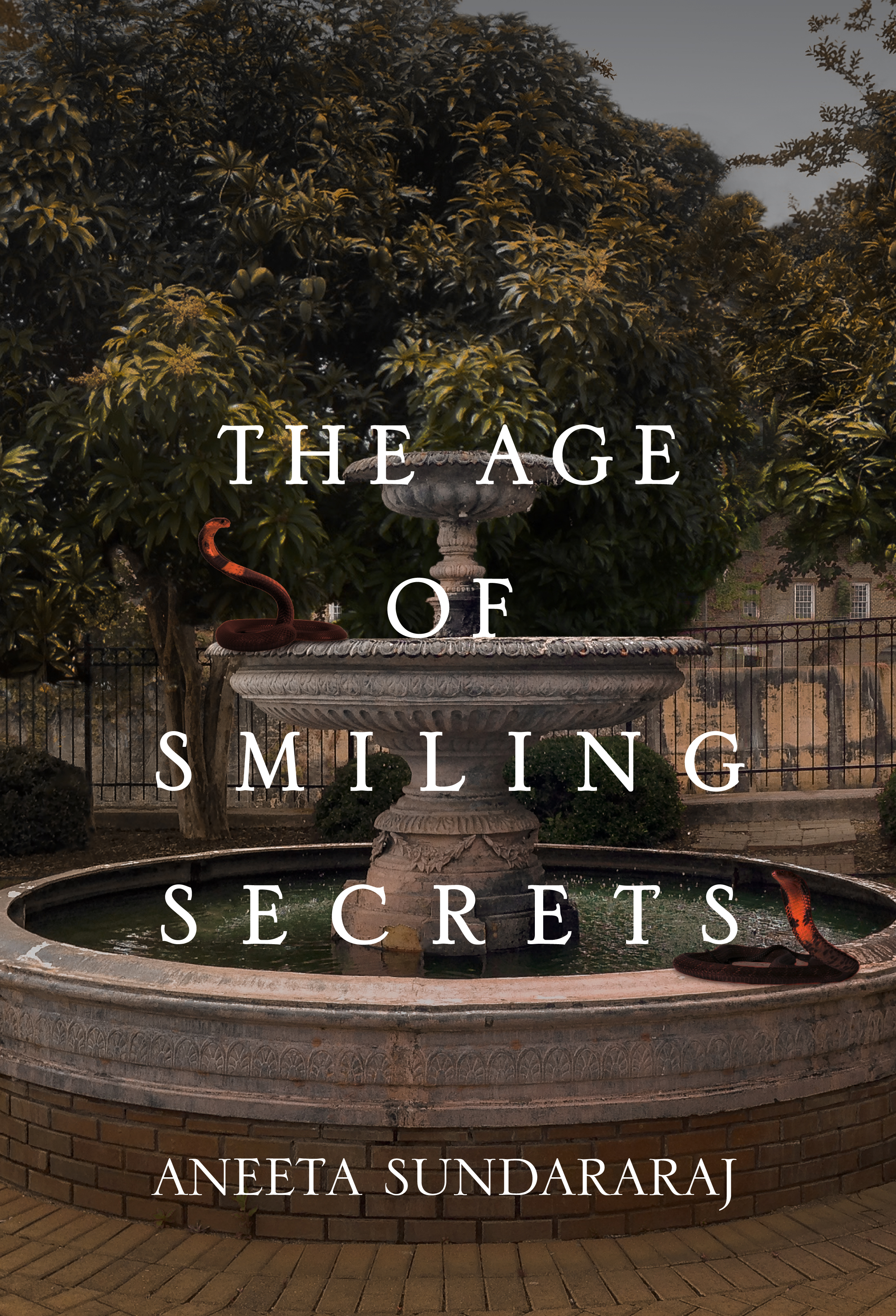
The Age of Smiling Secrets is an intriguing title – but the topic covered is very serious and highlights the problem of having religious law running alongside that of the country’s High Court, where the two can give conflicting outcomes. This is obviously a subject that is close to your heart. Why did you decide to write a fictional tale to illustrate the issue?
Thank you for saying that the title of The Age of Smiling Secrets is intriguing.
I started to think about this story as early as 2005. As you’ve said, Malaysia is in the unique position where both the laws of Syariah and the Civil Law are practised concurrently. It was only a matter of time before conflicts about which jurisdiction should apply would arise. For ease of reference, my fictional story is based on the legal position when such conflicts arise. It’s about a family torn apart when a man converts to Islam and, without the consent or knowledge of his wife, converts their child as well.
As a lawyer, I understood the position of every person involved in this drama from the lawyers pursuing and defending the case, and the judges who had to hear the arguments from both sides, to the plaintiff, defendant and the children.
No one I know has ever looked at the all the emotions at play such as love, loss, betrayal, sacrifice and so much more. What happens when everyone returns home after a day in court? What does a parent say to the child at bedtime? “You’re my baby, but the court said you’re not.” How does the wife reconcile with the fact that the man she married is no longer her husband, or vice versa? And that’s simply because a court that has no jurisdiction over her says so? Why is the second wife accepted as a legal wife in one court and the husband is committing bigamy in another? Why is the child of the second wife considered legitimate in one court and the child of the first wife is considered illegitimate in another? Worse, how on earth does a parent explain all this to a child?
I cannot imagine what it must be like for a mother when the laws of the land allow her child to be taken away from her. So, these are the emotions I wanted to explore.
I must add that I remain surprised at how successful the publication of The Age of Smiling Secrets has been. I didn’t make much effort submitting the manuscript to agents/publishers after one of them asked me to fundamentally change the story so that a British reader would ‘get it’. It implied that the average British reader was too dumb to understand the conflicts that would arise and use of local lingo. I knew that this wasn’t the case. And after ten years of the story ‘percolating and marinating’ in my psyche, I wanted it published. So, I didn’t bother with the British publishing industry, stuck to the story I wanted to tell and worked with the wonderful team at MPH Publishers in Malaysia. I am not at all active on social media and I didn’t take part in the kind of publicity that I’ve seen so many authors do. I was, therefore, pleasantly surprised and delighted when the novel was short listed for the 2020 Book Award organised by the National Library of Malaysia. Furthermore, since it’s publication, edited versions of various chapters of this novel have been periodically included in various anthologies published internationally. Many readers have written to say that they cried at the end of reading the novel. Like all my books, once the first print run was over, I didn’t bother with another one. I’ve just placed them all on Amazon.com.
What is next for Aneeta?
I spent 2022 learning about submitting my short stories for many online competitions and literary journals. I figured out what it was like from the inside and, now, I’d like the chance to give back to others. So, together with a few friends, I’m using my website to host a short story competition. It’s called ‘Great Story Competition’ and we will open for submissions shortly.
Thank you, Valerie, for this chance to share my stories with you.
You are very welcome. I wish you every continued success with your projects and a happy and healthy 2023!
My thanks to Trisha Ashley
and to Margaret Jamesfor their kind comments and the team at Creative Writing Matters.
Please like if you found this interview interesting or inspiring and leave any comments or questions below.
Check out my manuscript appraisal page, or please contact me, if you have a project you would like professional help with.
Happy writing!

So much has happened since 2020! How have you coped through the pandemic?
I returned home to the UAE after a brief visit to London in February 2020 just as the first reports of coronavirus were emerging. I don’t think any of us realised what lay ahead for the world. By the end of March, we were in lockdown and home working became the norm. As a writer, that wasn’t a big change for me but like many people, it was not having the choice to go out or meet people that was really difficult. A vaccine programme was rolled out very quickly and I managed to avoid catching covid until a visit to London in November 2022!

I loved the Digger and Biscuit story that you were developing when I first met you as your online tutor. How has the series developed since then?
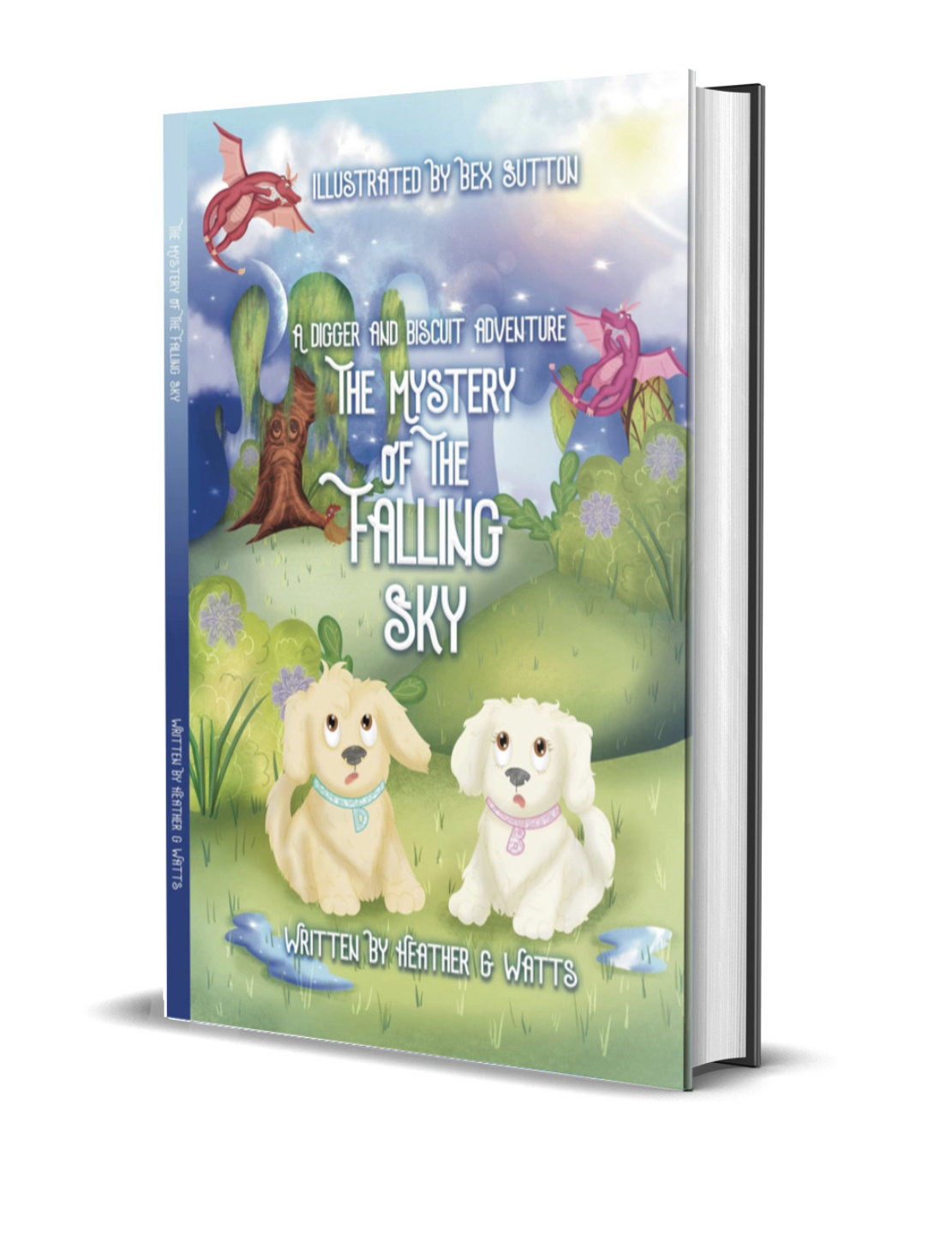
During the pandemic, writing provided a wonderful escape into magical worlds. I wrote, edited, rewrote and refined Digger and Biscuit’s third adventure which was published in September 2021. Our intrepid adventurers find themselves in a race to save Fairy Tale Land before the sky completely tumbles down.
Do you have plans for further adventures?
Our adventurous duo are helped by some friends from their previous adventures as well as new characters, including The Three Little Pigs, marauding dragons and Rapunzel. Of course, things never go smoothly for Digger and Biscuit, and they are pursued throughout by a shuffling – scuffling – creeping – peeping – scribbling – scratching sound…
For those that are familiar with the first two books, the third book delves more closely into the mysterious background of Fizz the Camel – and just why a camel is living in a castle with two pups and the magical Missy.
It was great to work with the very talented Bex Sutton again and all three books are now available featuring her beautiful illustrations in either colour or black and white.
During the pandemic my husband and I decided that after nearly eight wonderful years, it was time to return to the UK from Dubai. Since we returned in March this year it has been a whirlwind of house hunting, moving and unpacking!
As I was sorting through boxes, I found a notebook with the first draft Digger and Biscuit’s fourth adventure. I thought the series would be a trilogy, but once I’d finished The Mystery of the Falling Sky, I missed Digger and Biscuit. Their fourth adventure sees them on a quest to solve a series of riddles and try to find out why everyone in Fairy Tale Land is disappearing and taking their stories with them. I’m really looking forward the seeing where this adventure takes them in 2023.
You are obviously a dog-lover, were these two lovable characters based upon your own pets?
As a dog lover, Digger and Biscuit’s antics are very much influenced by my own Golden Retrievers. Their games, interactions, personalities and love of all things edible, can definitely be seen in Digger and Biscuit. Our new home has a large garden which is already covered in holes from someone digging and there are toys scattered across the grass from games of tuggy! We have quite a few trees so chasing squirrels has become their new fitness craze. They’re so happy and excited, I haven’t the heart to tell them that the squirrels really don’t want to play with them.
As a teacher, I had a dog puppet called Digger who was part of our class. Digger would help by modelling learning and often the children would teach Digger. They loved seeing him grow in confidence and learn new skills. Digger was very mischievous, which of course, the children found very funny and they were so proud when he mastered a new skill.
Digger doesn’t always get things right, but he tries hard and he’s very loving and loyal to his friends and sister – despite some sibling rivalry. So yes, the characters of Digger and Biscuit very much grew from my own dogs and the characters created when I was teaching. I think Digger and Biscuit’s characters continue to evolve with each adventure.
Who are the intended audience for your books?
I wrote Digger and Biscuit’s adventures as a bridge between picture books and longer chapter books. There is a stage when children enjoy longer stories with more complex plots but they don’t yet have the fluency and resilience to read them themselves. They are written to be read aloud by an adult and children can then reread them independently. Each chapter takes around fifteen minutes to read aloud so they are ideal for bedtime or Storytime. Although aimed at ages five to nine, they are very popular with adults too as they are fun to read aloud and have twists and references to keep them entertained.
Recently I have been attending Christmas Fayres and it has been a real pleasure meeting different people and chatting about Digger and Biscuit’s adventures.
I wish you and Digger and Biscuit every continued success!
You can follow Heather on both Facebook and LinkedIn as Heather G. Watts, Instagram: Diggerandbiscuitadventures, Twitter: @diggerandb or via email at diggerandbiscuit@yahoo.com
If your New Year resolution is to finally write that story or book, then visit my manuscript appraisal page.
Heather’ ‘s testimonial.
Wishing you all a happy, healthy and successful 2023, wherever in the world you are!
Welcome back, Melanie!

Since your Sept 2020 interview, when the UK thought Covid was on its way out – we have had two further lockdowns – how did you fare in the States?
I live in a sparsely populated state, so my experience is certainly different from a lot of others. My city had a couple of lockdowns, but at this point, it feels like a lifetime ago.
Did you make it back to the UK for your research trip?
I did! I recently made the transition to full-time author and said goodbye to my day job. A few weeks after that, I flew out to the UK and spent two months traipsing around the country. I’ve visited a couple of times before, but I really wanted to spend a lot of time there, immersing myself in the history. There are so many amazing estates to tour and museums to see, all of which have information and experiences I can’t get from studying books.
Congratulations on making this the full-time day job. What lovely historic sites did you visit?
I spent one month based in London, but then hopped the train out for day trips to Bath, Bristol, York, Plymouth, and a handful of other places. Then, I spent the second month moving all over the place, spending time in the West Country, the Midlands, Wales, Scotland, and Ireland.
What in particular inspired you?
If I were to share all the things that inspired me, I’d end up writing an essay. This was my second major research trip to the UK, and every time I find so many details and historical titbits that spark ideas. If I had to list some of the most inspiring things I did, I would say the Plymouth Historic Dockyards, the Royal Opera House Tour (and going to see a couple of performances there), the Theatre Royal at Drury Lane Tour, the London Canal Museum (and tunnel boat tour), the National Railway Museum, and…if I don’t stop now, I’ll end up listing every museum I visited.
And all the amazing ruins… *sigh*
Of course, the historic estates, houses, townhouses, and the like are super important for my research. I took over 11,000 photos and hundreds of pages of notes, most of which are all the little details I find when I’m wandering those historic properties. The sights, sounds, smells, and all the other possible descriptions that can later be used. I’m not a very visual person when I’m imagining my stories and don’t generally see clear, vivid pictures in my head, so I use those photos to help me design and describe my books’ locations.
Oh, and in a very real way, that trip inspired a scene in my latest book, “To Have and to Hold.” I needed a picnic scene, and I had visited quite a few ruins on this trip. I ended up creating a fake one (since the area in which my book is set didn’t have any readily available ruins that suited my needs), which was an amalgamation of two ruins I’d visited.
I love the new cover designs – what was their inspiration?
Honestly, part of the inspiration was that I wanted a style that would be easy to manipulate. Swapping out the model’s head or hands or some other feature can look weird if not done right, so adding the watercolour style over the top makes it easier to Frankenstein an image together from different bits and make it look uniform. Not to mention, finding male historical stock photos can be difficult, and even when you do, I think they often look slovenly or not period accurate. With this style I can use historic paintings for their bodies. For example, on “The Shameless Flirt,” the male torso is actually from a painting and the head is from a stock photo.

But also, I just really love it. I spent months playing with different ideas and styles, and one day, I stumbled upon some stock photos that someone had manipulated into looking like a painting. I watched a bunch of YouTube videos on how to do it, experimented a ton, and came up with the style.
Have they proved successful?
Depends on what you define as successful. Financially, they haven’t helped my sales, and in some ways, I worry that they may have hurt them a little. While being unique seems like a good thing, a common bit of advice to cover designers is that you don’t want to do that. If a book looks too different from the rest of the genre, it may turn off readers. So, yeah. I worry about it.
Artistically, I love them, and I’m so proud of the work I did on them. It was a massive effort to get them to where they are, and I have no interest in changing them again. And while some fans say they like the old ones better, most love them, too.
And they definitely fulfil the original purpose that inspired me to make the change in the first place. They’re more work, but I have a lot more artistic freedom when it comes to the base photos I use.
I think they look fresh and attractive!
I was recently at the Historical Novel Association conference in the ancient city of Durham and the question of how much time authors spend on social media came up. Do you think of social media as a friend or foe?
A bit of both. Personally, I’m not a fan of social media. I don’t use them in my personal life at all anymore because I prefer personal contact. But as an author, I use it all the time. I don’t view it as a marketing platform in which I can find new readers but as a place in which I can connect with my readers and fans. One of my favourite things to do is sharing behind the scenes info or research titbits. All those little things that are interesting to me an author but never made it onto the pages of my books.
It is a bit of a chore for me at times to come up with content, but I’ve developed a system that works for me.

How do you split your time between research/writing/ marketing?
I write every work day. Or I try to. I need an outline before I can write, and that isn’t always ready when I’m sitting down to start for the day. Generally, that takes up 3-4 hours a day. Then I spend the afternoon editing, outlining, researching, and any other prep work so that the next day I can sit down and write.
Generally, I do my marketing in the evening. A lot of it is stuff I can do while watching TV, so I’ll take my laptop down to the couch and relax while I input stats, work on my ads, or create social media content. This isn’t something I do every day. I’ve always heard that the best marketing is putting out a new book, and I ascribe to that mentality. I do a few traditional marketing things, but I try to keep it to a minimum and focus on creating new stories.
Researching is something I try to fit in wherever I can. Sometimes it happens as I’m writing or creating an outline, when I realize I need to know something. But often, I’m just always trying to watch documentaries, read books, listen to podcasts, and learn stuff I don’t know that I don’t know. You can’t learn it all, but I try to keep learning new things because I never know what’s going to spark an idea.

What are you currently working on?
I’m writing my first Christmas novel, “The Christmas Wish.” It’s part of my Victorian Love series, and I’m outlining my next project, which will be my first novella. I’ve wanted to try my hand at shorter stories because I have some ideas that just won’t work in a longer format, and I think now is the time to do it. I’m not entirely sure what it’s going to be because I have a lot of ideas right now, but we’ll see. I don’t always know what I’m going to write next until right before I need to start writing the 1st draft.
What is next?
Now that I’m writing full-time, I’ve put together a pretty amazing publishing schedule. I’m alternating between novels and novellas, and the plan is to publish 4 novels and 4-5 novellas in 2023. While I am focused on Regency & Victorian right now, I would like to branch into historical western romance sometime in the near future. And maybe a bit of historical paranormal romance maybe…
What can I say? I’m an eclectic reader, and I like writing in different genres. I started off in fantasy and would love to do more with it.
You are certainly inspiring. I wish you every continued success with all your projects.
Thank you for taking time out of your busy schedule to do the interview.