Valerie has had over 50 novellas and 7 novels published, both historical and contemporary. Two of which have been shortlisted for awards by the Romantic Novelists’ Association. She is a previous winner of Writing Magazine’s, ‘Annual Ghost Story Competition’. This illustrates her love of writing under the genres of ‘Romantic Adventure’ or darker ‘History Mystery’.
Valerie is an experienced creative writing tutor working for The London School of Journalism, Writing Magazine and independently.
As well as being an author herself, she enjoys being a reviewer of books for the Historical Novel Society and is also member of the ALLI and the Society of Authors.
The North Yorkshire Moors are beautiful at this time of year. The heather is just coming into flower as a carpet of purple spread across the land. Bird lovers can see or hear red grouse, curlew and golden plover.
Meanwhile hikers and dog walkers can enjoy the open expanses as they follow the old paths trodden by the monks of old. However, as sheep roam freely over these vast areas of rare moorland, they must be kept on their leads so that both can live in harmony and mutual respect of farmer and walker.
I refer to Monks’ Trods in many of my stories such as To Love, Honour and Obey & Betrayal of Innocence. After the Norman Conquest the growth of monasteries meant that pathways across country were created to transport goods freely and to keep the monasteries and abbeys in touch. The region has many well preserved ruins: Rievaulx, Fountains, Whitby Abbeys as well as Guisborough and Mount Grace Priory to name a few. These pathways could also be used to take fish directly inland across moor to the dales, which made them excellent routes to be used by locals for the distribution of contraband in the heyday of smuggling in the late eighteenth and early nineteenth century.
Many have since become overgrown. But these flagstone paths still exist in some places. The Quaker’s Causeway, where my photos were taken, runs from Guisborough (the setting of my fictitious market town of Gorebeck) to Commondale. Part of these medieval trods can still be used in this wild and beautiful landscape.
Rhubarb is a very versatile vegetable, which is often used in desserts. It has a very strong acidic taste and cannot be eaten raw, but when steamed or boiled with sugar to taste it can provide the basis for a lovely crumble, pie or mousse.
This versatile plant was always a feature in my father’s garden when I was a child. Like blackberries and gooseberries, rhubarb grows easily in Yorkshire soil. The leaf is poisonous because of oxalic acid and should never be eaten. However, the root was highly prized and of higher value to the Chinese as a medicine for curing intestinal and liver problems than other well known spices and opiates. In 1777, an apothecary in Banbury, Oxfordshire produced roots at home to develop as a drug for many other ailments. This led to the discovery of how to force an early crop.
We now have what is known as ‘The Rhubarb Triangle’ around Leeds that supplied London’s Spitalfields and Covent Garden markets in the nineteenth century. Forced rhubarb is paler than the later crop, which is sweeter as it is grown outdoors.
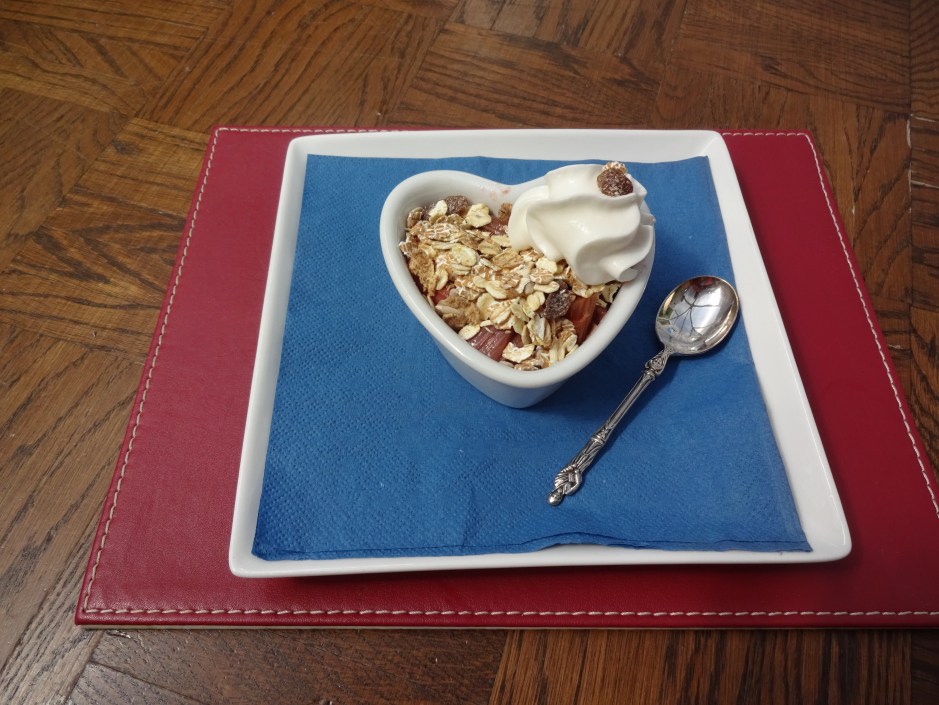
First, add the stewed rhubarb
Then add a layer of muesli
Finally, top with a little cream!
When I want some I select the mature stalks that are ready to break off at the base of the plant. I then cut off the leaves and the base of the stalks, wash and cut into inch long chunks ready for the pan. I crush root ginger into the mix with sugar to taste. This is all that is needed to cook the rhubarb through. Always cover and simmer gently on a low heat for about 10 minutes until the lumps still hold their shape, but are soft to the fork.
Rhubarb crumble or pie is delicious, but if you want a lighter alternative, then a sprinkling of organic muesli on top, served with custard, Greek yoghurt or light cream goes down a treat.
I am delighted to welcome two successful writers and tutors of creative writing to my blog this month, Margaret James and Cathie Hartigan.
Margaret has been a shining light to me and many unpublished authors as she was the New Writers’ Scheme Organiser for the Romantic Novelists’ Association when I first became published. Cathie is a prolific writer, lecturer and founder of CreativeWritingMatters.
Welcome!
Hello, Valerie –thank you for inviting us to chat with you! It’s lovely to be here.
You are both successful writers so my first question must be where did your own writing journeys begin?
Margaret: I started writing short stories while my children were still babies and eventually I began selling them to women’s magazines.
Cathie: I was a hobby writer until about ten years ago, but after a foundation course with the Open College of Arts, I began having success in short story competitions. Since then I have taken my hobby much more seriously.
CreativeWritingMatters is the inspirational name of the business you founded along with Sophie Duffy. I love the logo. Could you tell us about CreativeWritingMatters and how it came into being?
Cathie: CreativeWritingMatters came into being when I left teaching in mainstream education. The flexibility of being freelance meant we could offer workshops and short courses on all aspects of writing. The competitions came later following the success of a flash competition that we ran for our students.
The name came about because of a conversation I had, during which I became rather too vehement about the importance of creative writing. ‘Creative writing matters,’ I heard myself shriek. Our logo features Sophie’s cat, Henry, the star of her story in our Cat Walks ebook. He’s perky and forward-looking, just like the three of us!
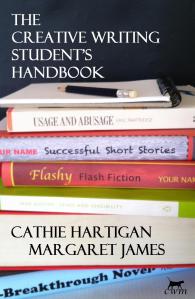
You have jointly written an excellent handbook and a workbook on aspects of creative writing so obviously have a great working relationship, but how do you set about working on a non-fiction joint project as opposed to your independent fiction?
Margaret: I first met Cathie when she joined my local writing group, Exeter Writers. I loved her short stories and she was kind enough to say she liked my own writing, too. We collaborated on producing an anthology of members’ work and found we got on very well. We both teach creative writing (Cathie teaches face-to-face while I teach online) and, after we’d finished editing and producing the anthology, we decided to write a guidebook for our students.
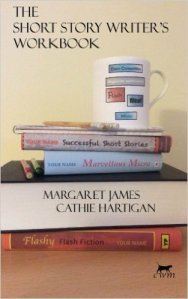
When we wrote The Creative Writing Student’s Handbook, we wrote alternate chapters and then we swapped files and edited these chapters. It all seemed to work well! But when we wrote The Short Story Writer’s Workbook, Cathie wrote the whole of the first draft and then I did a heavy edit, making the second draft twice as long as the first. This approach worked very well, too. We find our non-fiction writing styles are very similar. A few months down the line, we often can’t remember who wrote what.
Will there be more in this series?
We enjoy working together so we intend to produce a handbook for novelists and we have other projects in the pipeline, too. We hope to produce some more anthologies featuring either our own work or that of other people.
You are both very experienced tutors so I would like to ask:-
Margaret, what three tips would you give to an aspiring unpublished novel writer?
Plan your story and know roughly how you want it to end. But don’t be too rigid in your planning. Be prepared for the story to change and grow while you write.
Your reader should want to spend time with your characters. So don’t write about people you don’t actually like or don’t find very interesting yourself. Your characters ought to be your friends.
A novel is a big project. So whenever you get tired or disenchanted – which you almost certainly will – take some time out to reflect and to think about how and where you want this story to go.
Cathie, what three tips would you give to an aspiring unpublished writer of short stories?
Use vivid and specific details that tell a lot, rather than generalisations. If a character puts up an umbrella, we don’t need to be told it’s raining.
How much time you have to set up your story depends on the number of words that have been stipulated by the competition or magazine. Your story needs to develop and reach its resolution without a sudden rush at the end. Once finished, check the balance of set up, development and resolution, then be prepared to cut ruthlessly at the beginning.
Use dialogue and gesture to reveal character rather than word-hungry narrative.
The Exeter Novel Prize is going from strength to strength, what inspired this, and how do you see it evolving?
Margaret: The Exeter Novel Prize came into being because it filled a gap in the world of novel-writing competitions. It’s open to previously published and also self-published novelists. There is more information here: http://www.creativewritingmatters.co.uk/2015-exeter-novel-prize.html
Will there be a CreativeWritingMatters short story competition in 2016? If so, what advice would you give to entrants?
CreativeWritingMatters runs lots of competitions for both short and longer fiction, so here is some general advice.
Read the rules.
Abide by the rules.
Start your story as something interesting happens.
Round off your story with a satisfying ending.
Read Cathie Hartigan’s story, Making the Grade!
What is next for Cathie and Margaret, jointly or independently?
Margaret: I’m about to start the second draft of a novel and to plan a new non-fiction project that has nothing to do with writing.
Cathie: My debut novel, Secret of the Song will be out later this year and there will also be another collection of stories by the three of us at CreativeWritingMatters. Right now, the characters in my next novel are twitching for me to get on with it.
Thank you for taking the time to share your experience and advice with my readers.
Thank you for inviting us! It’s been great to talk to you.
Molly Mason dreams of escaping from the control of Mrs Cresswell, her step-mother, by becoming an apprentice to her friend who owns the local bakery. This ill thought-out plan is stopped when Juniper Cresswell’s fiancé, war hero Lt. Cherry, returns accompanied with a soldier who had been presumed dead. The soldier brings with him suspicions of murder, mystery and the key to Molly’s heart.
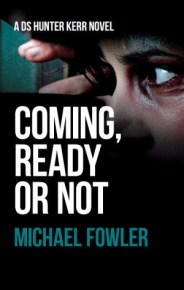
This month’s guest is a man who has spent his life dealing with crime and now enjoys creating his own – crime writer and artist, Michael Fowler.
Welcome to my blog, Michael.
Your police career involved a lot of undercover work. Did you sometimes feel that you were in an acting job, however one that had a realistic edge?
Acting is a very good phrase, because it was just that, especially when I was in the Drug Squad. I underwent undercover training by experienced undercover officers. The script they gave me involved learning the ‘language of the street’ together with acting ability on how to buy drugs and set up ‘deals’. My props were a changed appearance – I grew my hair long, wore an earring and changed my dress style. My stage was wherever the drug fraternity hung out. The more time I spent with them the more polished my acting ability improved.
That period of policing was up there as my best, despite being nerve-jangling at times.
When did you discover the desire to become an author?
I never had a desire to be an author. I always wanted to be an artist. My policing and writing career have come by default. I’ll expand on my writing career in a later question.
Were you always drawn to crime?
I’ve been an avid reader since the age of eight. In my early teens I started reading adult books of the Science Fiction and Horror genre. An uncle, who was also well read, introduced me to crime. I initially read cosy crime written by Agatha Christie, Dorothy L. Sayers and Dashiel Hammet, and then I discovered the 87th Precinct series by Ed McBain and I was hooked on police procedurals.
Your first published works were about Mexborough. Have you always had an interest in social history?
The publication of my childhood and teenage nostalgic accounts of growing up in Mexborough came by good fortune. In the late 1980’s I discovered writing groups and began composing stories. My childhood adventures in the 1960’s, within a mining community, were the first things I wrote about. The writing groups were run by the WEA and one of my tutors suggested I approach a local publisher who published this type of work. In 1994 I met the editor at Wharnecliffe Press (Pen & Sword books), pitched my accounts and walked out with my first writing contract. They published three of my books, but I never thought it would progress beyond that because policing and two growing sons took up my life at that time.
Could you tell us about your artwork and what is your favourite medium to use as an artist?
As I have already alluded to painting was my first love. My earliest artistic recollection was sitting at the table drawing with my mum, and all through schooling I pursued art as my passion. My last art teacher introduced me to oil paints and I never looked back. At the age of 16 I passed an interview to attend art college only to return home to be told by my father that he couldn’t afford to support me and so I joined the police cadets. I did paint regularly, all through my policing career – it was a great stress reliever, and I also sold my work. When I retired in 2006, I did so to paint. I rented a studio and painted daily. My work was accepted at major exhibitions at The Mall Galleries, London, and I exhibited with a number of prestigious art galleries. In 2009 I was awarded Professional Artist of the Year. Then came the fall-out from the bank crash. Three of the galleries I painted for closed down and people stopped buying artwork. I knew I had to do something other than paint every day and so I returned to writing and going back to writing groups. I focussed on writing police procedurals and in 2011 I got a publishing contract for my first crime novel. Now I’m hooked on writing. I still paint occasionally, and I tutor an art group once a work, to keep my hand in.
What has been the most important lesson you have learnt as a writer?
That like a good wine you improve over time. I am now on book number seven and I can see a vast improvement from my first book, especially the grammar. A lot of that is thanks to the publishing editor’s skills. I have learned such a lot from the edited proofs that have come back to me prior to publication.
Where did inspiration for DS Hunter Kerr and DS Scarlett Macey come from: reality or fiction?
Hunter Kerr is 95% me and 5% my alter ego, even some of the events he is involved in are based on jobs I have worked on.
Scarlett Macey is a creation. I wanted to test myself developing her and it’s been a very interesting and enjoyable experience. She gets her first outing this September in ‘Scream, You Die‘ and I’m hoping she’s well received.
What next for Michael Fowler?
My first crime novel was released three years ago. Since then I’ve added another four Hunter Kerr books and I’m amazed at how my readership has grown. It’s been a wonderful experience that I want to build on. My policing career developed my discipline and drive and it would be fair to say that I am striving to be a widely recognised crime author.
I am delighted to welcome author Rosemary Kind, who is the founder of Alfie Dog, a publisher of short fiction based in the beautiful county of North Yorkshire.
Welcome, Rosemary.
What was the deciding factor that motivated you to switch from a successful business career to becoming a full time author?
My husband had the opportunity to move to work in Belgium and I said ‘Why not?’ Because we were going back and forth every fortnight to see my stepchildren an ordinary career wasn’t going to work, so as I’d proved everything to myself that I needed to in a traditional working environment it was the perfect time to follow my heart. I’ve always written, but in my spare time. I knew I’d regret it if I never found out if I could do more.
Please tell us about your published work and what inspires you?
I write in a number of genres. Inspiration can come from the strangest places. My first published book (leaving aside ‘Negotiation Skills for Lawyers’ which was commissioned), was a humorous guide to travelling on the London Underground ‘Lovers Take Up Less Space’. I wrote most of the ideas as therapy when I was working in London. ‘Alfie’s Diary’ started as a daily blog in January 2006 when our first dog moved in. I’d been in Belgium for a couple of months and was writing mainly non-fiction, business articles, company newsletters etc. I wanted to write fiction, but it felt like a big step. Writing Alfie’s view of the world was a way to make myself write something every day. I originally intended to write it for a year of two, but nine years on it’s still growing and has spun off into several other projects, not least because he set up his own political party The Pet Dogs Democratic Party.
Inspiration for my novels is more interesting. ‘The Appearance of Truth’ came out of a writing group project to write 300 words on ‘verisimilitude’. Once I’d looked it up in the dictionary I started mulling it over. I was researching my own family tree and had ordered a birth certificate. It occurred to me that it would be quite possible to pass a birth certificate off as belonging to someone that it really didn’t relate to and it all went from there. Lisa was given the birth certificate of a baby who died at 4 months old and the story is her search for who she really is and why it happened. ‘Alfie’s Woods’ came from our woodland walks. We’d just rescued a hedgehog, who was stuck in a fence, when a helicopter passed overhead. The rest of the walk was spent thinking ‘What if they were looking for the hedgehog? What if he had escaped from the woodland prison?’ ‘The Lifetracer’ was inspired by seeing an electronic countdown clock in a catalogue and finding myself thinking ‘What if it could be programmed with Time to Death and used to send a death threat?’ I have more ideas than I have time to write them.
What appeals to you most about Entelbucher Mountain Dogs and Alfie in particular?
I fell in love with the breed long before there were any in the UK. They are incredibly loyal affectionate dogs who are great with children and like nothing more than to be close to you. I also adored the way they look, not only their colouring but the fact they are such happy smiley dogs. Alfie is my pride and joy. He is a gentle giant who is everything I had ever dreamed of in a dog. We are incredibly close.
When did the inspiration for an online digital site for short fiction first occur to you?
Not only do I write short fiction as well as books, but I have many friends who are widely published in that field. The more I talked to other writers the more frustrated I felt that there were so few outlets for short stories and for earning an income from secondary rights. It was January 2012 when I wrote the business plan. I launched to authors in February and to readers in May. I was overwhelmed by the response and we had more than 100 stories by the launch and have rapidly built a library of 1700 stories. I also wanted to set up a site that gave as much back to authors as possible. The culture is very much to give support to the writing community where we can. I was amazed by how word of mouth spread the message across the globe and we very soon had writers from more than 25 countries, all writing in English.
We carry good quality stories in a wide range of genres. All submissions are reviewed and where necessary edited and only the best are accepted for publication. We want our readers to come away having had a really good read and be looking forward to coming back for more. We carry work by over 400 authors, so there really is something to suit everyone’s taste. Many of our authors are widely published, but we enjoy introducing high quality work from new writers too. Unlike most sites, we carry the stories in a range of formats to suit all types of ereader or to print. We also publish a range of books in both electronic and paper formats. They are mainly short story collections, but we do carry some novels as well.
Of course for writers, our International Short Story Competition may also be of interest. The closing date is the end of September so there is plenty of time to take part. First prize is £200 and book publication.
The site is already one of the biggest short story publishers in the world, but hopefully it will be the site on everyone’s list when they talk about short stories. I want it to be ‘THE’ place that people go to when they are looking for quality short fiction.
What is next for Rosemary?
I’m writing another novel at the moment. This one was inspired by a chance comment in a meeting. Someone made reference to the ‘Orphan Train’ movement in America in the late 1800s and I had to go and find out more. As soon as I did, I was hooked on a story idea and the lives of three Irish immigrant orphans, fighting for survival, was born. It is my first full historical fiction writing and the research has been fascinating. It even made me get on a plane for the first time in over seven years, but that’s another story!
I was intrigued to read that your first published story was achieved when you were six. You obviously have not looked back since. Could you share with us how this early success came about?
I have to confess, Valerie, that this comment on my home page is actually a bit tongue in cheek and an effort to pretend I am younger than I am. I wasn’t really six. Although I think my very first publication credit, which was a poem in Pony Magazine was actually published when I was about eight 🙂
Would you agree that you are a person who has a natural empathy with people, their problems and situations and that this is part of the appeal of your many successful character driven stories?
I do hope so. I do like people very much. And I think that all writers need empathy and sensitivity in order to step into the shoes of a character who may be quite different than themselves.
How would you describe your work ethic?
Workaholic. Definitely.
To achieve all that you do I can only imagine you are a fantastic organiser of your time. Roughly what percentage of time would you spend researching, writing and promoting a novel on social media?
I spend a little less time on social media that I did once – as it’s not easy to justify spending too much time there. I have a tendency to use it as a procrastination activity to avoid writing. But I would still say, writing a novel 60 per cent, researching 20 per cent, promotion 20 per cent.
Ice And A Slice Book 1
I remember driving my son back from college and hearing you on Steve Wright in the Afternoon discussing one of your non-fiction books ‘Eat Loads and Stay Slim’. Then I saw a new title of yours called ‘Ten Weeks to Target’ and I wondered if the research and work on one project creates a ‘spin off’ of ideas for new stories as an ongoing process?
I am thrilled that you heard the Steve Wright Interview – my one claim to fame, that!
Actually, the two books were entirely separate. Ten Weeks to Target came first – it was originally published as a serial in Woman’s Weekly. However, there’s definitely a spin off process that goes on constantly. Both of these titles came from my own experiences of trying to stay slim – and eat loads!
Could you tell us about some of the lovely pets that share your life?
I adore dogs. Currently there is Maggie May, my ten year old white German Shepherd. And Seamus who is a wolfhound, fourteen stone, and five years old.
You are not only a lecturer, public speaker and a creative writing tutor, but you also still attend writing events yourself. How important is this two way interaction?
Writing is my passion as well as my work. So I guess it’s just how things pan out. I think I must be quite boring. So recently I’ve taken up singing lessons and am learning to play the guitar, in an attempt to be more balanced.
Could you give a short piece of advice to as yet unpublished writers who are trying to break into the limited short fiction market, especially in the UK?
Don’t assume that rejections mean you aren’t any good. I still get my fair share of rejections. Not every story is saleable at the time you send it out. That doesn’t mean it won’t be later.
Ice And A Slice Book 2
Of all the things that you have achieved within your career what have been the top three most memorable highlights that you hold fondly?
This is tricky. There have been many. I will try and narrow it down.
I quite liked going on the Steve Wright Show.
Selling my first short story was awesome, as was selling my first novel.
And the third one, was when the editor of My Weekly phoned me and asked me if I fancied going on an all expenses paid trip to Malawi – I’m a journalist as well as a fiction writer. That experience and the going bit – I went twice – was fabulous.
The more I researched this interview the more convinced I was that your love of the world of writing is a driving force which means there are many more delights for us to look forward to. Could you share with us what is next for Della Galton?
At the moment I am writing a series for People’s Friend – I can’t tell you too much about this as they haven’t started publishing it yet. Watch this space. But I’m also keen to write a third novel in my Ice and a Slice series. The first novel is called Ice and a Slice. The second is The Morning After The Life Before. I don’t know what the title of the third one will be yet. If any of your readers have any suggestions I’d love to hear them though.
Before moving on from Ripon I would like to mention one exhibit in the Prison & Police Museum that brought home to me the cruelty of the era that my historical stories are set. I found a man-trap displayed on the wall. I have mentioned them in my work, but it is only when you see the ugly things close up that you realise how being caught in such a sprung trap could maim and kill, in what was a slow and excruciatingly painful way.
They were hidden in undergrowth to catch or deter poachers or trespassers. They had a spring mechanism that meant the metal jaws (many had teeth – serrated edges to really lame the culprit). However, the sentences for poachers were also severe and included hanging or transportation. Although they were a fact of life in the early nineteenth century, and had been for some time, fortunately they were banned from England C.1830. Nonetheless some must have stumbled upon them by chance and others by necessity of crossing private land…
Thomas closed his eyes fleetingly. “Yes, we will,” he spoke the words after a few moments of silence.
“We’ll what, Didy?”
“Find Levi; he didn’t disclose us – we should help him too.”
His hand, still holding the bottle, dropped down, but his senses awoke as the clang of an iron mantrap snapped viciously shut next to him. His face paled as he looked down horrified at the sight of meshed metal teeth that greeted him. Phoebe had screamed as the great jagged jaws of the mantrap had snapped shut as Thomas lowered his arm, triggering the edge of mechanism, but fortunately his limb had not fallen within its evil grip; instead the bottle was smashed.
She was gamely running along a path ignoring Betsy’s pleas for her to come back to her, when an arm reached out and grabbed her by the shoulder, pulling her backwards. She landed in a pool of mud and foliage.
“How dare you…you great bully!” Hannah shouted out in indignation at the figure who stood openly laughing at her dishevelled state, whilst boldly standing in front of her. Her ribbon had come loose and her hair started to fall down onto her shoulders. Her anger rose and she was about to vent her opinion at the lad, who must have only been a few years her senior, but he spoke to her first.
“You stupid little spoilt brat! Look what you nearly ran into!” He threw a stick at the ground in front of where she had been heading and, instantly, the metal jaws of a man-trap snapped shut, tearing it in two.
Hannah’s mouth dropped open. She wanted to cry out, but was too scared and confused. Betsy ran up behind her, panting heavily. She slapped the girl hard on her shoulder. Hannah fought hard to hold back her tears. This was not the kind of adventure she had envisaged. The lad looked nervously around him as her father’s voice bellowed to them through the woods, “What is the meaning of this?”
I could not leave Ripon without visiting its ancient cathedral. The ancient building has a fascinating history, the oldest part of which still exists. The ancient Saxon crypt of the original church founded by St Wilfred (AD 634-709) not only still exists, but is open to the public for exploration. Accessed via a narrow staircase and a short narrow tunnel, the small rooms are amazingly peaceful.
(By the way, I’m an author, not a professional photographer!)
St Wilfred influenced the decision of the christian church to move away from the Celtic Church and follow the Roman church. The decisive move been made in 664AD at The Synod of Whitby when the calculation of Easter was decided by following the Roman method. He had a fascinating life and survived many life threatening events.
The main building is a delightful mix of Norman and Gothic styles, reflecting the many periods of history it has survived through. Far from feeling like a museum, which provides cold facts for the casual visitor this is a living house of God. When I visited there were Bible readings in progress, yet we were made welcome giving the palace a warm, homely feel. Other activities were in progress at the same time. There is no set fee to pay, but donations are requested and voluntary.
My visit was quite short as I was en-route to a conference but Ripon is certainly a place I would happily revisit as I am sure that I did not explore all its treasures.




 CreativeWritingMatters is the inspirational name of the business you founded along with Sophie Duffy. I love the logo. Could you tell us about CreativeWritingMatters and how it came into being?
 Will there be more in this series?


 his month’s guest is a man who has spent his life dealing with crime and now enjoys creating his own – crime writer and artist, Michael Fowler.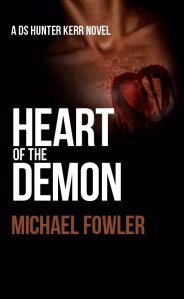


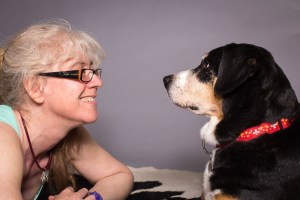 I am delighted to welcome author Rosemary Kind, who is the founder of
  What appeals to you most about Entelbucher Mountain Dogs and Alfie in particular?
 What can a reader expect to find on


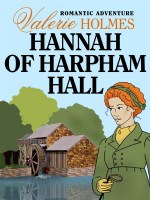


 valerie holmes, author