Abigail Moor – The Cruck Inn

Abigail Moor KEC_1Abigail has to flee her home to escape from a forced marriage. This love story wrapped around an adventure takes the heroine away from the comfortable country manor house which has always been her home, onto the wilds of the North Yorkshire moors, to the beauty of the ancient city of York. From here she must seek refuge in the busy seaport of Whitby to discover who she really is.

She embraces her destiny and, accompanied by her maid, makes for The Cruck Inn, a coaching inn, on the moor road where her quest begins. Here, Abigail has her first experience of what the real world is like beyond her sheltered life Beckton Manor. The Cruck Inn was named after the design of the North Yorkshire cruck-built buildings. Spout House is an excellent example of an early inn which still exists in Bilsdale. I visited it when researching the area and was amazed at how well it was preserved. It is literally like taking a step back in time. Abigail Moor: The Darkest Dawn is available at Amazon and Smashwords.

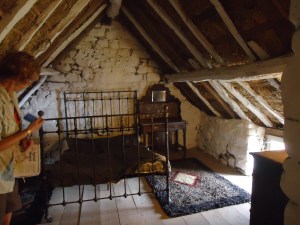
Here are some photos I took of the amazing time capsule that is Spout House.


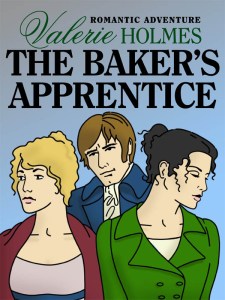
For the love of baking!

The Baker’s Apprentice is now available to download in eBook format for all eBook readers at a special price of $1.50 from Smashwords!

I love baking because it sparks memories of time spent in a warm kitchen with my mother and aunty, chatting and laughing as we enjoyed eating some of the results of our labour. From a young age I would bake the basics for the house: cakes, scones, puddings and pies. The smell of freshly made bread or scones return me to part of my childhood that will forever bring a burst of nostalgic warmth on a cold winter’s day.

A friend commented that among my titles, which focus on my North Yorkshire villages in the early nineteenth century, I had not based one around a bakery. Not everyone had their own oven, so the village bakery traditionally played an important part of village life. One comment sparked an idea and Molly Mason sprang to mind; an impetuous heroine who does not lack the courage to leave the home she dislikes, but has not the foresight to realise the hard work behind the ‘cosy’ surroundings she imagines sharing when helping her friend who runs the village bakery.

Often in life we see our own problems and look at the greener grass growing elsewhere without considering the effort that is needed to sustain the lawn.

TBA KECThe Baker’s Apprentice is set in a fictitious North Yorkshire market town that pops up in many of my titles called Gorebeck. In this story it is in a state of transition as newer Georgian terrace houses line a road replacing the older timber and cottage buildings. Some people will always welcome change seeing it as an opportunity, or others as a threat – they crave the familiar and as the old saying goes ‘If it ain’t broke don’t fix it’. It is at a crossroads for routes north to Newcastle, south to York, east to Whitby and west to Harrogate.

I will talk more about Gorebeck in future as I look at asylums, churches, market towns, inns, new and old money, mills and coaching routes in future posts.

In this story, Molly Mason carries hatred in her heart, convinced her father was murdered or driven to an early grave and seeks to escape from his wife and discover the truth. Sometimes though the truth is not what we want to hear.

Abigail Moor – Biddy’s Bakery

Abigail was rescued as a baby by Lord Edmund Hammond – or so she believed.

Raised as a lady, calling him father, she enjoyed a sheltered life as she grew up and loved her step-brother, Frederick. Life dramatically changes because she has to flee from a forced marriage when Lord Hammond falls ill. With her lifelong maid she travels to the port of Whitby via the beautiful ancient city of York.

To Abigail’s naive eyes Whitby would have been a noisy, bustling place with a myriad of smells from the various industries surrounding the whaling, fishing and boat making industries. Even Abigail’s name, like her situation, has a double irony. Abigail literally means ‘my father’s joy’, yet she does not know who he is. The name is also used commonly to refer to a lady’s maid.

When I explored Whitby I came across a narrow snicket in which was a love old ram-shackled set of buildings I borrowed this setting for ‘Biddy’s Bakery’, placing it next to an old inn like the amazingly well restored White Horse and Griffin and took the extra liberty of placing a laundry opposite. Whitby was so wealthy through the whaling industry that in 1790 there were two street lamps in Church Street outside this original coaching inn.

I had the pleasure of staying in the same room that it is said Charles Dickens once used. It was a lovely friendly place in a fascinating location, and serves excellent food.

The eBook of Abigail Moor: The Darkest Dawn is available from Smashwords and Amazon directly for $2.99/£1.88 from most eBook sellers.

The Wonders of Whitby


Whitby is a place I love to explore. It has a fascinating history, some of which I would like to share with you, from the ruined abbey that dominates the headland, with the unique church of St Mary’s that leads you to the famous 199 steps and the town and harbour below.

The abbey was first settled by St Hilda when she opened the first monastery in 657 AD. Famed for her energy, commitment to learning, and her faith, life could not have been easy in such an exposed place. The original buildings have long since gone but the ruined stone remains of the abbey as it stands has been a symbol of the haven of the port for many a fisherman returning home.

The whaling industry made Whitby an important and lucrative port throughout the eighteenth century until 1830 when it collapsed because of the discovery of the cheaper, cleaner and more accessible paraffin oil. Throughout this successful period other industries flourished: ship building, sailing, fishing, tanning and one which came into popularity during the period of Queen Victoria’s mourning of Prince Albert, Whitby Jet.

James Cook was apprenticed to Captain John Walker in 1746 and served nine years. He went on to be the first European to successfully chart the East Coast of Australia and New Zealand. Walker’s house is now a museum to Cook.

I hope that has given you a flavour of this beautiful and atmospheric port on the northeast coast of England.

Further information

Sharing Places – Part 4

Whilst researching social history for my stories I visit some fascinating places. Here are some of the places that have triggered plots, created characters or inspired a mood or a desire to return to the keyboard and write.

4. Whitby, North Yorkshire, England.


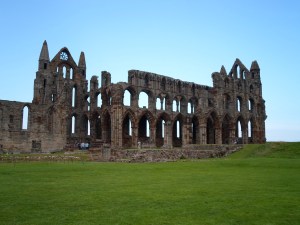
Whitby Abbey
Whitby Abbey, an iconic image on the headland.

One of my favourite places to explore on the North Yorkshire coast is the unique, atmospheric town of Whitby. This ancient port situated on the northeast coast of England is famous for many reasons.

St Hilda founded a double monastery (for monks and nuns) here in 657 AD, making it a valued seat of learning. The famous Synod of Whitby was held here in 664 AD.

Whitby became a famous whaling port with such famous seafaring names associated to it as the Scoresby‘s.

Whitby's 99 steps
The famous 99 steps, better going down than up!

The James Cook Museum is housed in the C17 house where he lived as an apprentice. It is an atmospheric place overlooking the River Esk. There is a large car park nearby so exploring this side of the harbour is not a problem if arriving by car. If you walk into the East side of the harbour from here you can wander through the old cobblestoned streets and explore the many yards and snickets.

Passing the old inns and market square you will reach the bottom of the famous 99 steps which lead up to the unique church of St Mary and then to the abbey beyond. The views across the harbour from here are magnificent.

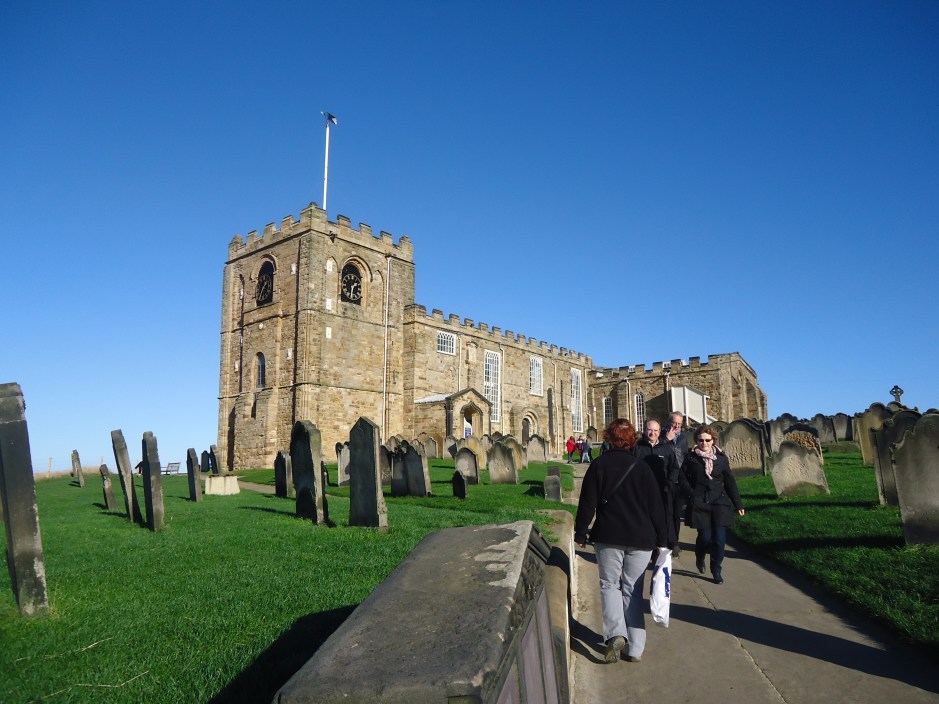
St Mary's Church
The unique St Mary’s church in front of Whitby Abbey has pride of place on the horizon.

To experience staying in one of the original inns, The Whitehorse and Griffin has been lovingly restored and offers excellent food.

Whitby sporadically comes into my stories, either in passing as in Abigail Moor, or as a setting in itself, such as Amelia’s Knight, which is still to be released as an eBook.

Whatever your reason for visiting this fascinating location, being prepared to walk and explore its narrow alleyways, historic places, or the more usual shops and eateries on the west side of the harbour, then there is plenty for everyone to enjoy.

Whitby houses
A glimpse of the red pantile rooves that characterise bay town houses.

For excellent seafood and a great place to eat it, looking back across the harbour to the abbey is The Magpie.

Other places of interest in the area can be found on these helpful websites:


An interview with Bill Spence, a.k.a. Jessica Blair

090

This month’s guest is both prolific and successful saga author, Bill Spence a.k.a. Jessica Blair.

You have such a broad spectrum of life experience on which to draw: from teacher training, to Bomb Aimer in the RAF, to journalist. What triggered your initial venture into fiction?

Brought up among books and magazines; encouraged to read from an early age,  I think, unknown to me, stimulated in me a desire to write.  On leaving the RAF in 1946, I wrote a few articles but I always had the desire to write a book. Liking fact and liking fiction I thought I would write a novel based on my experiences as a Bomb Aimer during the war. I really wrote it  for my own satisfaction. I had no idea of the publishing world at that time. After a chance sighting of a short piece in a local evening newspaper, saying a paperback company was looking for war novels, I thought I might as well send mine. They offered a contract to publish (1959) which of course, knocked me sideways and made me think what do I do next. I had always been interested in the West, knew a lot about its history and had read numerous Westerns, so I wrote one! That eventually landed on John Hale’s desk and he offered to publish (1960)  36 followed, the last in 1993. During that time I also wrote two more War novels. A Romance and 3 non-fiction books about aspects of Yorkshire and had become interested in the history of whaling.

Jessica Blair was a pseudonym created in 1993. Why did you switch both genre and gender at this point in your career?

070The study of the history of whaling over a considerable period of time resulted in Harpooned – the Story of Whaling being published in 1980. It was highly illustrated and writing it and gathering the illustrations was a very interesting experience. I decided I would use the knowledge I had gained as background to fiction. The result was the first Jessica Blair novel, The Red Shawl. (1993) It was submitted under my own name but the publisher, Piatkus, who offered me a contract, wanted to publish it under a female name and suggested Jessica Blair.  The reason, I believe, was all to do with marketing.  It has paid off for me — the twenty-third  Jessica Blair novel will appear early next year.

Whitby is a pivotal town in Jessica Blair’s novels. How and when did your interest in this beautiful northern seaside town begin?

Whitby was an important whaling port in the 18th and 19th centuries and this was the background I used for The Red Shawl. Whaling does appear in other Jessica Blair novels but not in everyone.  I knew Whitby from my school days and then after the war. I realized there was a wealth of stories there, throughout its history and into recent times and I am fortunate to be able to absorb the atmosphere of the times I use.

WHITBY GIRL FINALEvery author has their own preferred method of working. For the benefit of aspiring writers would you share yours with us?

I look into a background I would like to use. I place my main female and male characters against that background and ask myself, ‘What if …?’ That question will keep recurring as the book develops. I work from a brief outline and sample three chapters. If my publisher, Piatkus, like those and the idea behind them they will issue a contract – then my computer gets working over-time ! I cannot work to a detailed outline because at that stage there are aspects of the story I know nothing about. Characters react to circumstances, and to each other – so the story develops as those change.

During your extensive research you must have come across some fascinating local characters. Do you ever use real people within your novels or are they all fictitious?

Yes I have met many interesting characters throughout life and whilst they might stimulate ideas I don’t use real people in my novels.

Of all your published work do you have a ‘favourite child’ or is it impossible to choose?

Probably The Red Shawl; it led me much deeper into the worlds of writing and publishing and extended a fascinating life. I must say that my first Western led me to meet my first other writer and that brought a long friendship.
InTheSilenceOfSnow_DemyHB_9780749956295_LRRecent releases have been The Road Beneath Me and In The Silence Of The Snow. Could you tell us something of your upcoming novel, A Tapestry of Dreams, to be released in 2014?

A Tapestry of Dreams is based in the West Riding of Yorkshire (woollen industry) and the Lincolnshire countryside (sheep farming). Set in the 1850s these were the backgrounds against which I placed my two leading characters and asked myself ‘What if?’

What project are you working on next?

That has yet to be decided wit h my publisher, Piatkus.  Ideas are out there but I don’t want to mention them yet as I don’t know what road they will take.

Many thanks for your time in answering my questions and sharing your career with us.

More by Bill:

Spout House: A step back in time

The old inn is a time-capsule waiting to be explored.  It served  people from C16 right up to to 1931.
The old inn is a time-capsule waiting to be explored. It served people from C16 right up to to 1931.

Many of my historical adventures are set in North Yorkshire, either around the bay town north of Whitby or inland to the moors.

Spout House is a fine example of a thatched, cruck-framed inn, which is open to the public and can be found in the grounds of The Sun Inn, Bilsdale in North Yorkshire. I stumbled across it after a trip to visit the beautiful Rievaulx Abbey.

“Look, Martha, look! Do you see it? A long building, a barn perhaps and it has a light within it.” Abigail felt a surge of excitement stir inside her. She could not allow her mind to dwell on her father’s predicament. Abigail had to be clear and decisive in her thinking. The best she could do for him was to deliver his message to his friend, the solicitor in York, and stay safe until she could return to her beloved home once more. “Perhaps the farmer who lives here would take us to the inn if I paid him for his trouble, Martha,” Abigail said enthusiastically, thinking about a warm fire, food and a softly upholstered chair.

“That’s it, lass.” Martha coughed and laughed. “That ‘barn’s’ The Cruck Inn.”

Abigail sensed a tone of sarcasm in Martha’s voice.

“We’ve made it before the coach. Hurry now, before…” Martha looked around her anxiously, “we catch our death of cold or somethin’ carries us off across that moor…” Martha shivered and looked even more nervously around her.

Abigail stared at the building again.  She was determined not to let her ignorance or naivety show again; she would learn. “I thought you were the worldly one, Martha? Come on before we catch a chill, there’s nothing more than that out here to catch, woman!”

DSC05853 DSC05858 DSC05863 DSC05867

Links:

The World of Valerie Holmes

“…dread of wandering mariner, where often, alas, the proud vessel hath floundered against thy iron ribs, or perished on they cruel rocks!” –W Braithwaite in his “Rural Reminiscences”.

Love is a timeless essential of life. Throughout history, love in all its forms is a constant: be it passionate, caring, needy, manipulative, possessive or one that is strong enough to cross barriers of culture or faith. When two souls meet in a situation which takes them out of their normal social strata or into a shared danger, a relationship forms as the adventure unfolds.

The historical romances are based in the early nineteenth century, set against dramatic social change at a time of war with France. Smuggling, espionage, press-gangs all add to the drama that the hero and heroine can face.

Created to be entertaining reads that pass away a few hours lost to the thrill of an adventure, the core of my work is based around the same area of North Yorkshire. My world features the rugged headland of Stangcliff, the old inn sheltered in the bay of Ebton below and Gorebeck, the fictitious market town on the edge of the moors, marking a major crossroads for travellers to Newcastle, Harrogate, Whitby, and York.