An Interview with Peter Lovesey

DSC_2534Thank you for taking the time to discuss your fascinating career and share some of your experiences with us.

Your love of the English language shines through the quality of your work and the complexity of the plots you weave through your books. When did your love of storytelling begin?

I was a dreadful fibber as a child, so it must have been there from the start. I led a Walter Mitty existence, top of the class, popular, brilliant at games and with a girlfriend called Dahlia, the prettiest in school. None of it was true and Dahlia didn’t even exist. From there it was a smooth progression to making up stories for what was then called composition.

You also had a keen interest in sport which led to your first breakthrough as an author. Can you describe how this came about and if it is still one of your proudest moments?

At twelve I was taken to the post-war Olympic Games in London. There’s a lot of talk about legacy from the recent Olympics and for me the 1948 Games were a rich legacy indeed. I was hopeless at sport but desperately wanted to be a part of it, so I wrote about it, doing unpaid articles for small magazines. Out of it eventually came a book on distance running and then two years later, using distance running as a background, I entered a competition for a first crime novel. Wobble to Death won me £1000 and publication in England and America. A dream start to my career.

Stone Wife (2)From your initial breakthrough, how did you then go on to develop the successful series of Sergeant Cribb and Peter Diamond?

Cribb was the Victorian detective I created to clear up the mystery in that first novel and he went on to seven more, using Victorian entertainments such as boxing, the music hall, boating, spiritualism and Madame Tussaud’s as the backgrounds to whodunits. The eighth, called Waxwork, won the CWA Silver Dagger and was turned into a pilot for a TV series, made by Granada, starring Alan Dobie as Cribb.  Two series followed, based on the books and original scripts written together with my wife Jax.

The more recent series features a contemporary police detective called Peter Diamond, who is with Bath CID. The first book was going to be a one-off, called The Last Detective, and he resigned from the police. But it won the Anthony for best novel at the Toronto Bouchercon and I was asked to follow it up. So I contrived a story called The Summons in which the police needed him back and were forced to ask him to return and reinvestigate an old case. He’s been going ever since. The fourteenth, called The Stone Wife, is published this spring.

In which era do you prefer setting your novels – historical or contemporary, and why?

I wouldn’t say I have a preference. I enjoy the challenges of each. The Victorian period had a rich, rather daunting tradition to work in, thinking of Dickens, Wilkie Collins and Conan Doyle, and the task was to avoid a pale pastiche of those great writers. The research was enjoyable, mainly using the British Library newspaper library. Today, with the internet, it would be quicker and easier. Turning to the contemporary police novel was scary, too. I wasn’t sure how I would cope with modern policing and the huge advances in forensic science, so I made Diamond a bit of a dinosaur. I get a lot of pleasure from using little known historical anecdotes in these modern books. Examples are Jane Austen’s shoplifting Aunt Jane and Mary Shelley’s writing of Frankenstein in lodgings right next to Bath Abbey.

You have had work both televised and filmed. When this happens, do you become involved in the process and maintain control of what the producers can change?

I doubt if any producer allows the author control. They do take liberties and will tell you it’s necessary in visual terms. But I was lucky enough to attend read-throughs of the Cribb series and of Rosemary & Thyme, as the consultant. I was fortunate, too, that the adaptations of my books kept pretty faithfully to the plots – and that includes the movie Goldengirl and the TV drama Dead Gorgeous.

Do you write stand alone novels to have a break from the series, as a kind of refresher?

Yes, it’s fun to break out from time to time. I’ve written several from the point of view of the killer – and that’s very liberating. The False Inspector Dew won the Gold Dagger  and has been translated into more than twenty-five languages, but the one I’m proudest of is The Reaper, a black comedy about a rector called Otis Joy, who murders the bishop in chapter one.

Every writer has their own way of working. Do you plot in detail first and then set wordage targets, or do you let the story grow as it builds on the page?

When I started I would plan meticulously and write the synopsis before beginning Chapter One. I don’t write in drafts. The pages I write each day aren’t altered, except in minor ways, so it’s a slow process. If I tell you how few words I manage in a day you won’t believe me. It has to be right before I can move on. These days I carry much more of the plot in my head, but it’s basically all there. It’s not a method I would recommend to anyone.

I first met you when you did a local library talk, which was both interesting and inspiring. Do you intend to tour again in 2014?

If I’m asked, yes. I’ve done several recent US tours, visiting cities I wouldn’t ever have known otherwise. And it’s lovely to meet readers who enjoy the books. Plus, of course, the occasional writer such as you – and that’s a bonus.

Thanks, Peter! Of all the accolades and achievements you have received in your career to date, which one(s) stand out as something very special to you?

Difficult. The CWA Cartier Diamond Dagger in 2000 was a great honour, but couldn’t quite match the thrill of that first competition win with Wobble to Death. Another unforgettable moment came when I was Chair of the CWA and presented the Diamond Dagger to one of my early inspirations, Leslie Charteris, the creator of The Saint.

The Tooth TattooThe Tooth Tattoo also shows that you have a love and understanding of classical music. The humour within the book works on many levels, which balances the much darker twists of the plot. What inspired this book?

I can answer this with more certainty than any of your questions. A 2004 article in the arts section of the Guardian by David Waterman had this intriguing headline: HOW DO THE MEMBERS OF A STRING QUARTET PLAY TOGETHER AND TOUR TOGETHER YEAR IN, YEAR OUT, WITHOUT KILLING EACH OTHER? The piece stayed in my mind for eight years until I was ready for Peter Diamond to investigate. I’m glad to say The Tooth Tattoo was well received, not least by the writer of the article, who still plays with the Endellion quartet. And it’s just out as a February paperback.

What is next for Peter?

The fourteenth Diamond novel, The Stone Wife, will be in the shops in April and I’m halfway through the one I’m currently calling Diamond Fifteen. Thanks, Valerie, for this stimulating interview.

My sincerest thanks for taking the time to answer my questions. 
Happy, Healthy and Successful 2014!

2014 is already over a week old. New Year resolutions have been made. If starting a creative writing project is one you are considering. Enjoy your writing, whilst experimenting until you find your own voice within your chosen genre.

To get you started here are some top-tips given by a selection of my author guests of 2013.

Margaret James: Stick at it and believe you have something interesting to say. There will be times when the going gets hard and you’ll need to be able to convince yourself that it’s worth going on. Make friends with other writers face to face and online, via Twitter, Facebook and their blogs. Read other people’s novels because then you will absorb good practice and realise there are many different ways in which you can tell a story.

Freda Lightfoot: I put my heart and soul into my stories, which is absolutely essential. You must lose your inhibitions and be entirely sincere, but yes, it does take hard work and dedication. I’d say it demands the three p’s, which stand for practise, persistence, and passion for your craft.

Trisha Ashley: There’s too much temptation now to rush out your first novel yourself as an e-book, so if you take that route I’d advise you to have your novel independently edited, and consider the constructive criticism you receive very carefully.  You want your novel to be perfect and whole, not some poor, half-formed creature, and with a first novel you aren’t going to spot what’s wrong with it yourself.

Jean Fullerton: If it took me three years to become a nurse, another two to qualify as a district nurse and a further three to become a lecturer, why on earth would I think I could learn the craft of writing overnight?  Very few first books are of a publishable standard. Mine wasn’t. Learn your craft and persevere!

Gwen Kirkwood also stresses the need to persevere: Try to write a little every day, even if it is only a couple of sentences. Keep a notepad handy. Consider the strengths and weaknesses of your characters, or improve your plot, while you are travelling, ironing, peeling the vegetables. Thinking time is important too. Listen to the advice of agents and editors, not friends. If you do self-publish pay a reputable copy-editor to check your work first.

Whilst Gwen advocates writing a little every day, Christina Jones, points out it is not essential: Don’t feel you have to write every day. Write the way that suits you. Some people write 10,000 words a day, others write 500. Some (like me) know that if the words aren’t there then it’s best to forget writing until they are and go and scrub the kitchen floor or go for a walk or chat with friends or read or watch telly, whatever – be yourself and do what’s right for you. Just don’t feel pressurised to be like everyone else.

Linda Mitchelmore, the author of many short-stories and now novelist advises: The same premise of ‘person, problem and plot’, with a ‘beginning, middle and an end’, is the same for short stories and novels. The only difference is the time it takes to tell the story. Whilst Valerie-Anne Baglietto reminds us: You can never please everyone, so above all please yourself and write something you feel passionately about. It will show if you don’t.

More advice is offered within the interviews.

If you love creating fictional worlds, have a strong desire to commit them to paper and share them with others, then enjoy the whole process and good luck!

An Interview with Freda Lightfoot

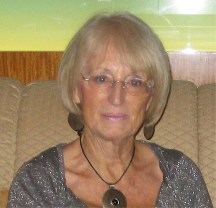
Freda L-close up 6My very special guest for Christmas is prolifically successful historical author, Freda Lightfoot, with an insight into her career and sharing with us how she now enjoys the best of two worlds.
You have served a very interesting writing apprenticeship in order to attain the success you now enjoy. Could you share some of the key moments with us?

My first published piece was called An Elizabethan Toothache, published by Today’s Guide in 1972. I followed this small success with pieces on how to pass various badges, how-to’s, crosswords, quizzes and puzzles, then short stories and a serial, all of which sold to Guide and Brownie magazines and annuals. Fiction was what I really wanted to write but amidst all the child rearing and running a book shop, time to write was hard to come by. It wasn’t until I sold the business and moved out into the country that I started writing articles and short stories for adult magazines. My first success with a novel was a historical romance for Mills & Boon called Madeiran Legacy. I went on to write four more before my plot lines were becoming far too complicated and I wanted to write about real women.

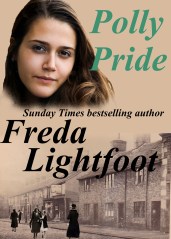
Polly Pride-webYour Lancashire routes have provided a strong background for your Sagas. Have you used some of your own family’s historical experiences within the fiction?
Indeed I have, many times. My grandmother was the spark for Big Flo in Polly Pride. She’d had a hard life but was a real stoic, as Lancashire women were in those days. And the idea for the story came from my Great Aunt Hannah, who did exactly as Polly did and sold or pawned her furniture in order to buy a piece of carpet from a ship in Liverpool. Then she cut it up and sold the squares on the market. But her husband didn’t object as Polly’s did. Family stories may be the inspiration, but the story is fiction.

I often advise new writers that in order to succeed you need to be determined and dedicated. You seem to have these attributes in abundance as you have owned a small holding and a bookshop as well as becoming a successful writer and now live in an olive grove in Spain. Do you have a strong work-ethic, which you apply to your writing routine? 

I dare say that is true, maybe I inherited it from my grandmother, and a long line of Lancashire and Yorkshire weavers. But then I love my work so it is no hardship to spend hours each day at the job. I put my heart and soul into my stories, which is absolutely essential. You must lose your inhibitions and be entirely sincere, but yes, it does take hard work and dedication. I’d say it demands the three p’s, which stand for practise, persistence, and passion for your craft.

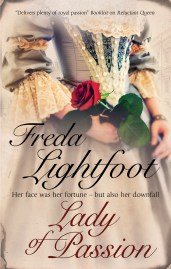
Lady of PassionYour fictionalised biographies must need meticulous research, even more so than historical sagas. How long do you spend researching a new project? Roughly how long do you take to write a completed first draft? 
When I reach a certain stage with my work in progress, I start a little preliminary research on the next book, which gradually builds, taking several months altogether. All my books demand a good deal of research, for which I have a substantial library, plus interviews for my sagas. I’ve met some marvellous old folk who share their working lives and memories with me. The biographical historicals do take longer though, as you can’t make it up, and I like to be as accurate as possible. It’s rather like detective work trying to build the character and life of a real person. Fascinating.

Breaking into the eBook market was another bold move, which has certainly worked. Could you share any tips on how you made this a success? 

I entered the digital market back in 2010, which were pioneering days for ebooks but I taught myself how to do the necessary formatting and put them up by way of experiment to see what would happen. Nothing much did at first but when the UK came on board in December 2011 and Santa Claus delivered a load of Kindles, they really took off. The more books you publish, the more you sell. But they must be good, page-turning stories, well-written and not rushed, error-free and properly edited with good commercial covers.

You now live in Spain. How did this move come about? 

It all began back in 1997 when we bought a holiday home here, a little village house high in the mountains 20 kilometres from the coast. We fell in love with the village and found we were spending more and more time here, so finally bought a piece of land with an olive grove on it and built ourselves a house for our so-called retirement. Of course, writers don’t retire, but we love spending our winters here, and summers in the UK.

Will Spain feature more in your future novels?

I do have one or two ideas, so watch this space. It could happen.

You have the best of both worlds – Would you share a couple of things that you love most about your home country and your new one?

We do have the best of both worlds as here in Spain we can avoid the British winter. Almeria is the last designated desert in mainland Europe so in the daytime we can enjoy some sunshine and gardening, and as the nights grow cold we can light a fire and be cosy. The Spanish people are very friendly and we have a good life here with many friends of all nationalities. In the UK I love taking part in writer’s events, talks and conferences, visiting stately homes, and enjoying all things British.

Could you give a seasonal insight as to how Christmas in Spain varies to our traditional one in England?

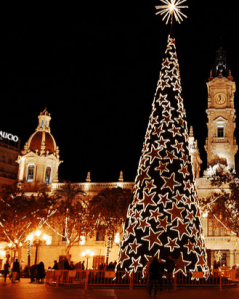
l-ayuntamiento_valencia_navidad-reidrac-14_12_08-cc20.jpg

One of the joys of living in Spain is that there isn’t the same commercial fuss made. Feliz Navidad will be up there in twinkling lights, and pontsettias everywhere, the Nativity scene ‘Nacimiento’ can be seen in plazas as well as many Spanish homes and shop windows, but Christmas itself is fairly low key.

Christmas Eve, Nochebuena, is when the main Christmas meal is taken, often roast lamb or suckling pig, a feast that takes place quite late, as do all Spanish fiestas, starting around 10 p.m. and going on until the small hours. Some families will sing carols around the nativity scene which remains without the baby until the stroke of midnight. Others go to midnight Mass ‘La misa del Gallo’, Rooster Mass, named after the bird who announced the birth of Christ. Many people, of course, like the rest of us, just watch the Christmas programme’s on TV while enjoying the traditional Turrón (nougat), or mantecas (a range of butter-based biscuits) with cava.

The big celebration for the Spanish is Fiesta de Los Reyes, Three Kings Day on January 6th. What we would call Epiphany. Traditionally, this is when Spanish children get their presents, not on Christmas Day from Papa Noel, although these days some enjoy gifts on both days. By then we’re packing our Christmas decorations away, but the Spanish are still partying.

What is next for Freda?

I’m currently working on another saga, which I never talk about until it is done. After that I plan to write a sequel for Polly Pride, and also another biographical historical in my royal mistresses series about Sarah Lennox, who had the chance to marry George III, but blew it. I do like to have lots to look forward to.

More by Freda:

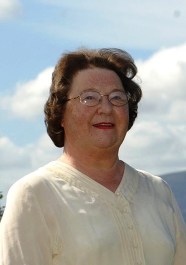
An interview with Gwen Kirkwood

Welcome, Gwen!

Your warm-hearted family sagas are based in rural Scotland. When and where did your love affair with Scotland’s beautiful country and history begin?

I have three Scottish grandparents so I had a yearning to see Scotland for myself. I came to Dumfriesshire to work as a milk officer, inspecting dairy farms. The work was not as I had expected but the people were very friendly and I loved the warmth of the red sandstone buildings and the beautiful landscapes with fresh green hills and glens and lots of trees. I have never wanted to leave, especially not after I met and married my husband, a Scottish dairy farmer.

Are any of your wonderful characters based on real people or are they all purely of your own creation?

My characters are all fictional but I think writers must be influenced by people they have met, even if it is only subconsciously. I had a wonderful mother-in-law so a few of my older characters may have some of her kindness and wisdom. We can read of bad characters every day in the newspapers. I have three adult children who keep me up to date with the opinions of their generation. My grandchildren are of varying ages and I often include children. Writers keep on learning and developing and so do the characters but I have never written about a real person.

You took a six year career break. When you returned to your writing did you feel as if your work had changed at all?

I don’t think my writing changed. I still wrote another series of four in a family saga following the generations. My books are shorter, 100,000 words or less now, but that is due to the policy of different publishers.

To date, what has been the most memorable or significant event within your writing career?

I had written four short romances but it was a tremendous boost to my confidence when an agent sold my first long saga to Headline in a very short time. A good editor can have a big influence and Jane Morpeth helped me a lot.

Secondly, I rarely enter competitions but after a long gap from writing it was a lovely surprise to win the Elizabeth Goudge trophy in 2000 when it was resurrected by the RNA for the millennium. It was judged by Richard Lee of the Historical Novel Society.

What top tip would you give new writers wanting to become published writers in today’s market place?

Persevere. Try to write a little every day, even if it is only a couple of sentences. Keep a notepad handy. Consider the strengths and weaknesses of your characters, or improve your plot, while you are travelling, ironing, peeling the vegetables. Thinking time is important too. Listen to the advice of agents and editors, not friends. If you do self-publish pay a reputable copy-editor to check your work first.

You have seen many changes within the publishing industry. What do you think of the new emphasis on social networking and Internet presence?

Honestly? I hate it – well some of the time! I want to be left in peace to write, BUT writing used to be an isolated occupation so I am pleased we now have opportunities for keeping in touch with other writers, getting and giving help, as well as marketing. Networking has become essential so I do my best, but it can take up a lot of time.

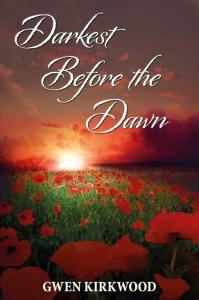
Your new book Darkest Before the Dawn has a very strong cover. Can you tell us something about this novel and what inspired you to write it?

This is the fifth in a series of 5 novels beginning with Dreams of Home at the end of World War II. Darkest Before the Dawn brings the series up to present day with the third generation of the Caraford family. Two of the characters are quite young with problems belonging to their generation so it could almost be a young adult novel, although I did not set out to make it that way. However, it also brings farming up to date with robots for milking cows, arguments between the generations about changes, as well as an unexpected and rather satisfying love affair for two of the older characters.

Darkest Before the Dawn

Joe Lennox becomes bitter and deranged and blames Billy Caraford when his son is killed in a car accident, but Billy has lost his best friend and is badly injured himself. Despite the misgivings of his parents he is still determined to be a farmer. He summons his courage to go to university but privately he regards himself as a cripple now. He is convinced no woman could love him or want to be his wife.

Kimberley is orphaned when her father dies. She moves to Scotland with her aunt but she is nervous about changing schools until Billy helps her find new friends. Both Kim and her aunt become involved in the affairs of the Caraford family and as Kim grows into a lovely young woman she finds the strength of character to confront problems and fight for the life and the love she craves.

What is next for Gwen Kirkwood?

I am going back to the 1800’s and this will be a single novel rather than a series. It has less emphasis on farming but is still set in Scotland. No title yet.

My thanks for taking the time to answer the questions in such an honest and open way. I shall look forward to reading Darkest Before the Dawn when it is available later this month!

More by Gwen: