‘Secrets’ and a Blacksmith: Crafting Tradition and Innovation

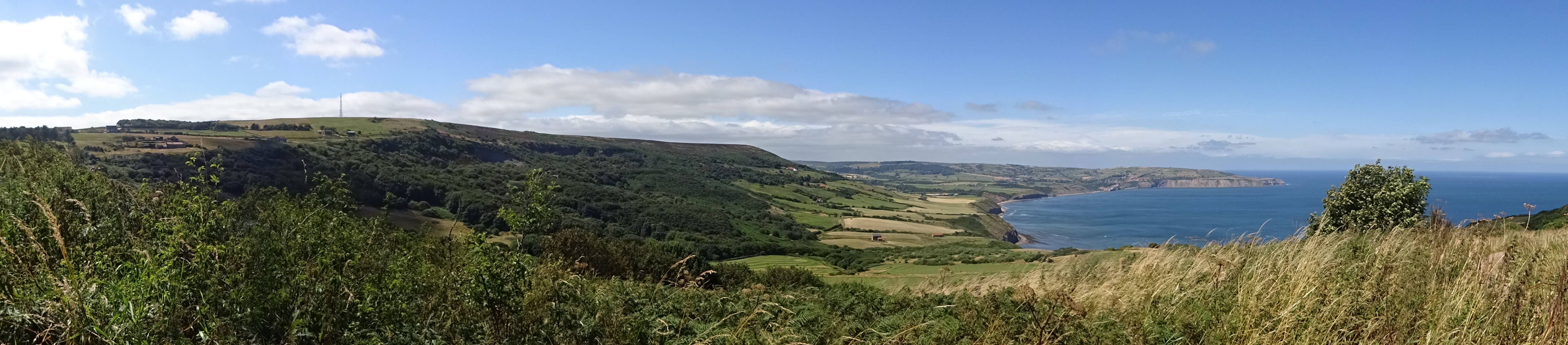
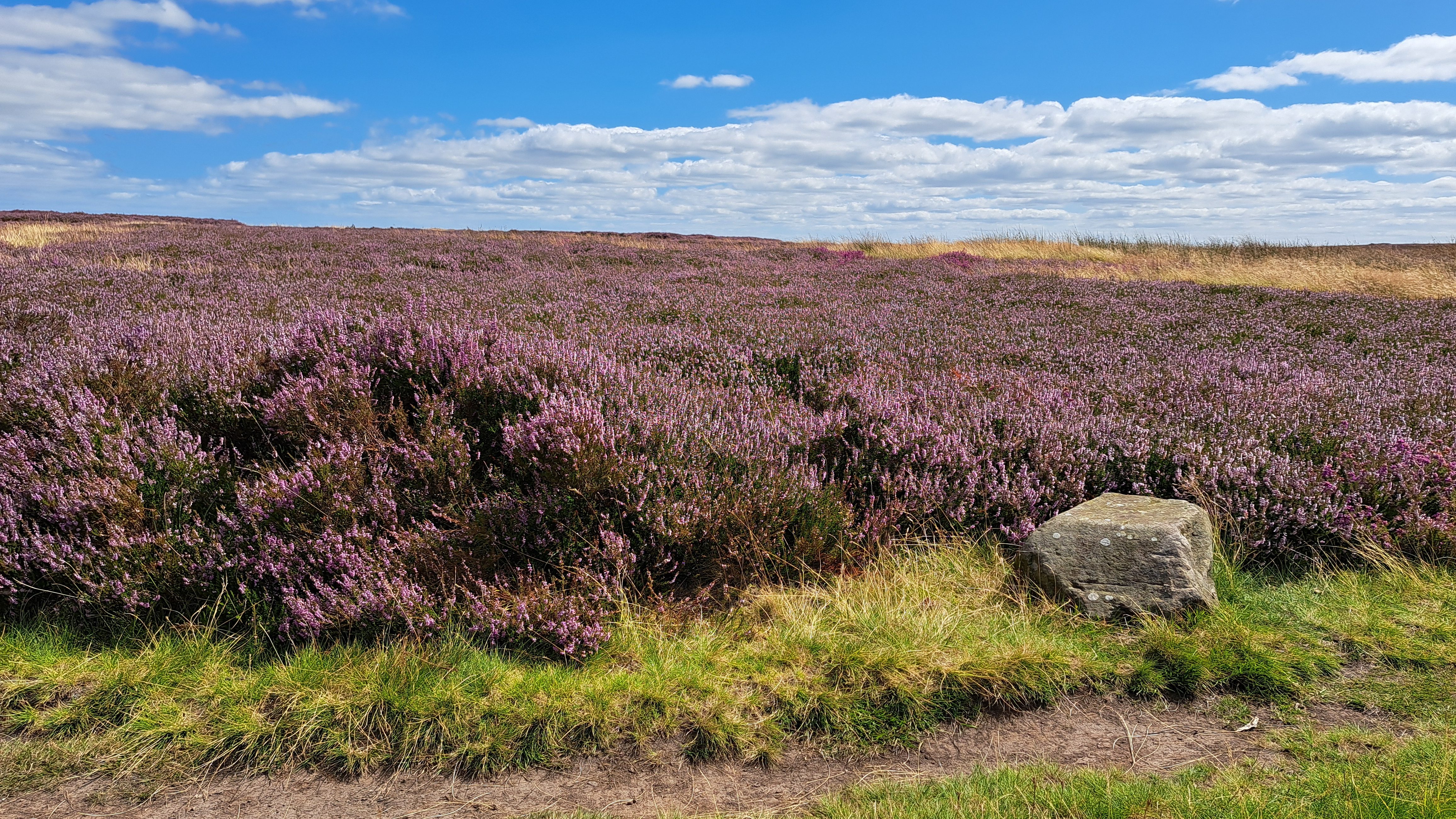
I hope you have enjoyed the sunshine and warmth of June, when the UK sampled temperatures nearing those in the tropics! In North Yorkshire the heather is ready to bloom, bringing swathes of lush purple to the vast expanses of moorland. It is a truly beautiful and everchanging landscape.

Another beautiful county that I visited recently in the South West of England was Somerset. When I stopped at a garden centre I came across a working blacksmiths’ forge and felt as though I’d taken a step back in time. Instantly thoughts of Wilfred Underwood, Imogen’s father in Secrets, came to mind. Although we tend to think of smithing as a traditional craft of yesteryear, the charming owner soon corrected that impression.

There is still a demand for the old skills, used now for restoration work, preserving items from the past. This requires the mastery of the trade and knowledge of old methods, material, tools and skillset of the original worker to recreate or mend the item in question. Past imperfections are what makes an old item interesting today.

We live in a time where we have more technical accuracy and, perhaps as a consequence, less individuality. Science has moved on, providing precision tools and improved understanding of the process, yet a modern day blacksmith has to embrace and learn the old ways as well as the new.

Old skills are called upon to mend traditional machines and objects, some still used in other local trades like the local butcher’s grinder, along with reproducing such basic items as the imperfect nails made at a smithy’s before mass production. Each repair has to be done in the style and materials of that bygone age, but today’s Blacksmith also has to build on this historic knowledge by keeping up to date with modern, contemporary designs changes in style, tools, markets and techniques.

There is a long apprenticeship still required, for this labour of love, as science and art combine.

Historically, a chestnut tree was planted near the large forecourt providing shade and was symbolically associated with the trade. Yorkshire wrought iron was and is highly prized for its quality.

In Secrets Imogen’s father, Wilfred Underwood, is the blacksmith for my fictitious village of Dibbledale – a tranquil unspoilt place inspired by such villages as Hutton-le-Hole in the North Yorkshire Moors Park. His trade was central to the local community for the upkeep of agricultural equipment, as a farrier, and the many other jobs concerning the mending of household and trade goods. Wilfred, a gentle giant of a man, also encouraged Imogen’s creative nature providing her with fine tools and wire to make delicate jewellery, deepening the bond between father and daughter.

Secrets and their consequences worm their way between Micah and Imogen. Will they be able to save Dibbledale’s peace and tranquillity? Only when secrets are revealed can devoted friends be distinguished from destructive foes and allow love to find its true home.

From a writing perspective there is a fine balance between keeping historical fiction accurate to the period it is written about, and accessible to a modern reader, who may be unfamiliar with that period of history.

Trades, like everyday language, evolve and adapt through time. The visual importance and need of a central blacksmith may have changed, but in Regency they were essential and central to a thriving village community. They were also excellently placed to see and hear all the comings and goings of the villagers and pick up information from travellers who crossed their paths. Wilfred as a character is able to keep his finger on the pulse of local events.

I would like to greet and thank my new readers in the United States as well as the UK and Australia who have read and enjoyed Betrayal – Book 1 of Friends and Foes Regency romantic adventure series. The

I hope you go on to read the completed trilogy and discover what happens to Lord Farrington, an enigmatic character who features in Book 3 Silent Revenge , which will be published in paperback on 5th July. More about him next time!

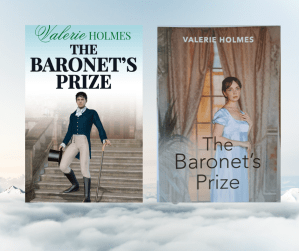
July’s bargain book is The Baronet’s Prize, which is now 77p/$1, which also available on KindleUnlimited.

“A delicious Regency! Eleanor is horrified to be made homeless by her brother’s gambling debts and still more disturbed to find herself falling in love with the man who won the estate. Valerie Holmes resolves this dilemma in a spirited tale that keeps you turning the pages until the final “Ah!” of satisfaction.”
GL Robinson, New York USA, Regency romance author.

Reviews left on Amazon (and sites such as Goodreads) are always welcomed and appreciated by authors, especially if the book has been read and enjoyed. They are what keeps the algorithms working in the competitive world of publishing.

I would love to hear from my readers, wherever in the world you are based, and also from visitors to the region.

Have a lovely and safe weekend.

Secrets of Dibbledale: A Story of Love and Adventure

May’s welcome sunshine seems to be reflected in the vibrant yellow gorse, brightening the moorland, whilst the aroma of the wild garlic’s delicate white flowers lightens shady woodland banks.

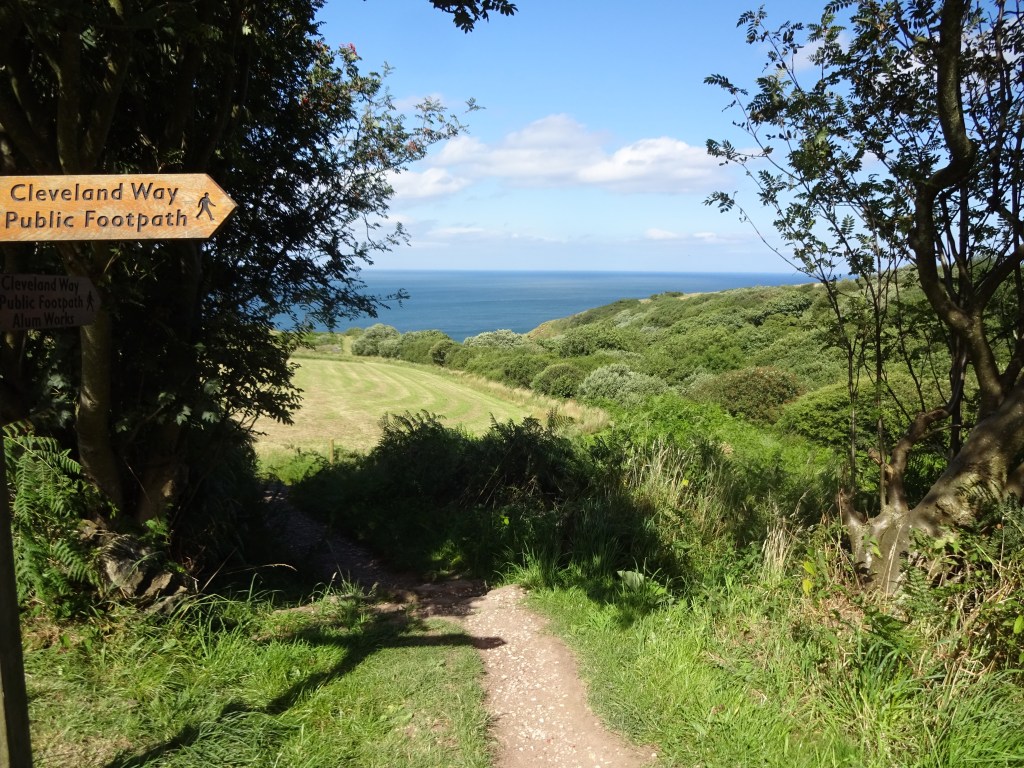
Whether walking through the ancient pathway of Saltburn Gill from the coast or strolling through the grandeur of the grounds of Fountains Abbey and Studley Royal, Mother Nature certainly lifts the spirits and inspires, as it did in Secrets for Lord Farrington’s friend and life-saver Micah Arrow.

The trees were finally showing their new leaves as yellow broom made for a colourful bank in the lane’s hedgerow that dipped towards Dibbledale. Saint Cuthbert’s parish church and the vicarage were on a small hill just outside the village. Micah stopped to admire the newly bloomed clumps of primrose nestling amongst the grass. He breathed deeply – he was home and at peace. Picking his way through the grass, he admired the budding bluebells pushing their way upward. Spring was a time of revival and that is what he planned for Dibbledale.

Dibbledale is a fictitious village, which has elements of real locations, such as, tranquil Hutton-le-Hole and Great Ayton. The latter being where the explorer James Cook went to school. They are villages that have largely remained unspoilt by modernisation and industry, which is what returning soldier Micah Arrow wants to preserve for his family. After witnessing the horrors of war first-hand, peace is what he craves.

Appealing as any setting is, North Yorkshire has dramatic wild beauty throughout the seasons, it acts as a historic backdrop to the characters and their adventures. In writing as in life, you need moments of light and shade to give depth and pace. Here a moment of quiet reflection turns when Micah senses danger…

Micah swung a leg over a fallen tree trunk, but then, as the metal’s edge caught his eye, he mantraps, never had he seen such things around Dibbledale. The woodland had always been open to all. The food it provided was free, the fallen trees taken as needed by the villagers for repairs – so what had changed?…’

Secrets will be on a Kindle Countdown from the 15th to 22nd June on Amazon.co.uk and is freely available on KindleUnlimited now. Micah is an important character to Lord Farrington and reappears in Silent Revenge.

As a thank you to my readers the newly re-edited to extended version of Phoebe’s Challenge is available at 77p till the end of May.

England, North Yorkshire, 1813
Miss Phoebe Elgie and her younger brother, Thomas, flee when an accident results in them being labelled ‘machine breakers’ in the cotton mill where fate had them trapped.
Hunted, with nowhere to run, they are aided by a mysterious stranger called Matthew. They soon discover that he is a man who appears to assume a variety of roles.
Phoebe instinctively trusts Matthew, unlike Thomas who doubts. She is drawn to this stranger; lives and destiny intertwine as their journey crosses the path of smugglers and traitors. This hinders their quest to uncover the truth behind the demise of their family, which left them so vulnerable.
Phoebe’s challenge is three-fold.
She must secure their escape beyond the reach of the overseers of the mill and the crime they have been accused of...

Uncover what happened to their mother.

Cope with the confusion of her developing friendship with the mysterious, Matthew, and determine if there could be a future for them.

Swept along by the swiftness of the serious events that dog their progress to uncover the truth, Phoebe struggles to overcome and resolve these challenges.
Determined, Phoebe has no time to doubt, but how will she succeed…?

If you enjoy any of my books, please leave a review on Amazon or Goodreads – they are much appreciated!

Celebrate Mother’s Day with Silent Revenge: an exciting Regency adventure!

Mother’s Day is rapidly approaching, which also means that my pre-order Regency novel, Silent Revenge, is about to go live on #Kindleunlimted and #Kindle. I am so excited to announce this as it has been a labour of love completing my #FriendandFoes trilogy.

Intelligence Officer, widower, Lord Oscar Farrington, returns to his family estate with mixed emotions. This is unsettling for the powerful, charismatic, and loyal officer who likes to be in control of his own feelings. With his overseas duties finally completed, there is talk of insurgence within the country, so he is still under orders to gather intelligence on his own countrymen, another cause for inner conflict as he has fought alongside his fellow soldiers and has some sympathy for the plight of the returnees.

Sworn never to remarry, he is devoted to his young, adopted daughter, Jessica, who he rescued with her mother in Betrayal. But Lord Farrington of all people should know ‘never to say never’, especially when Miss Jemima Parkes re-enters his life.

Silent Revenge keeps the reader turning the pages and is available for pre-order now!

My other news is that the large print edition of The Baronet’s Prize is available for order directly form the publishers Ulverscroft or via Commonwealth libraries. The original short novel is also available on Kindle.

All my novels are set in the beautiful country of North Yorkshire, England. Littered amongst the actual places of Whitby, York, Harrogate and Northallerton are my fictitious market towns of Gorebeck, Beckton and Dibbledale, which are loosely based on the picturesque Helmsley, Guisborough and Hutton-le-Hole. Please share your favourite places to visit within the region.

Enjoy the coming of Spring and if it triggers the desire to start a new project, write your own adventure, then please check out my manuscript appraisal page. I have over twenty-five years  of experience as a creative writing tutor and love to encourage new writers to explore this fascinating world of possibilities.

Exploring Character Journeys: Upcoming Releases & Updates

Welcome to my new monthly news update. I have had a lapse in posting, but not in writing, and am very excited to announce that Silent Revenge will soon be available for pre-order. This book is close to my heart as it is dedicated to a lifelong friend and supporter, Sue, who sadly died far too soon, and never managed to enjoy Lord Farrington’s last adventure.

Since 2003 I have enjoyed working as a Creative Writing Tutor allowing me to connect with many fellow writers, both published and unpublished, across the globe. Each student unique in their life experiences, yet all share that inner desire to create stories for others to enjoy. This I will continue to do independently, through this website.

Continue reading “Exploring Character Journeys: Upcoming Releases & Updates”

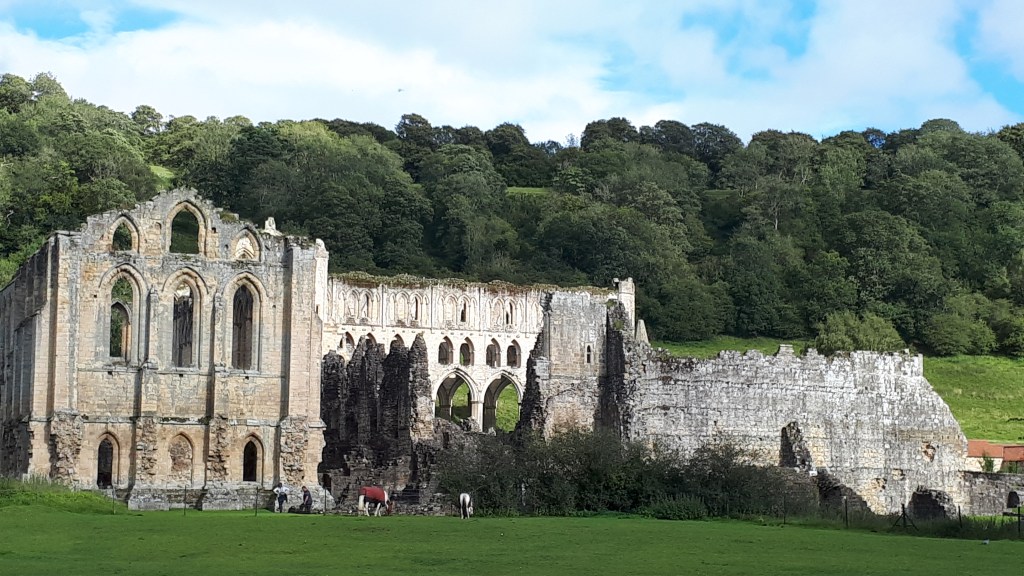
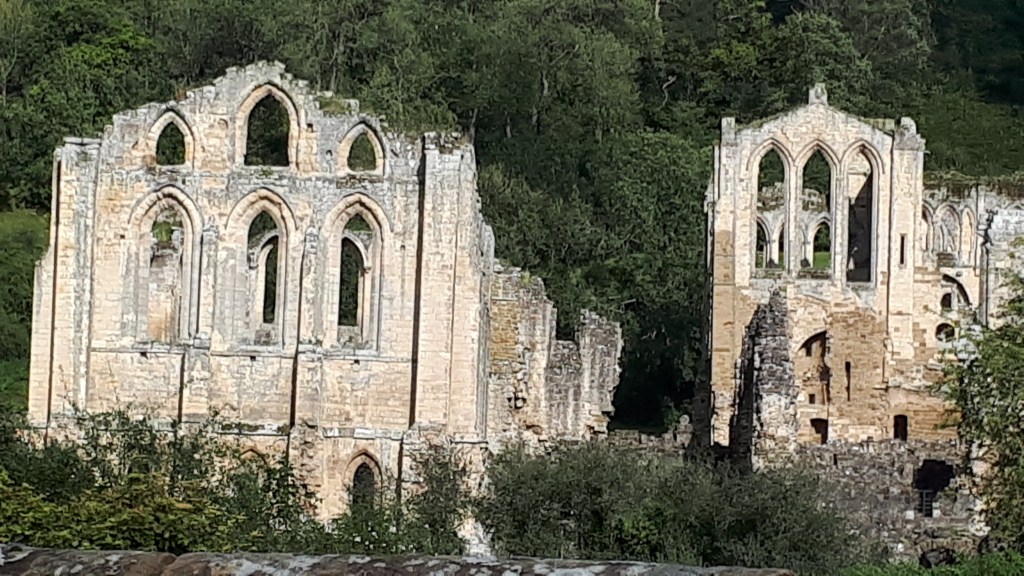
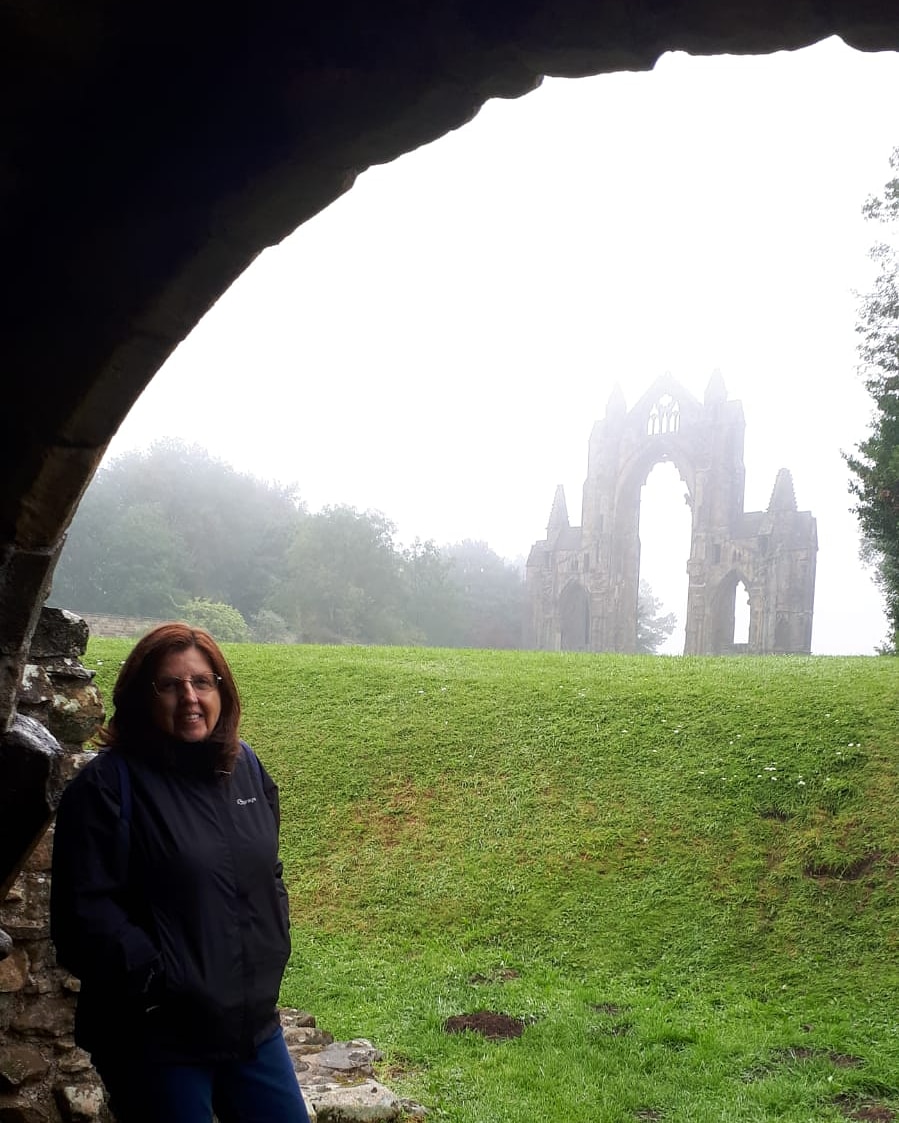
The beautiful abbey ruins of North Yorkshire… 

The beautiful abbey ruins of North Yorkshire 

Henry VIII is perhaps most infamously remembered for his treatment of his six wives. However, this king changed a nation by separating his country from the power of the Roman Catholic church and proclaiming himself head of the Church of England, in 1534.  Two years later the Reformation in England took a more profitable turn for Henry as a destructive and brutal phase began with the dissolution of the monasteries.  

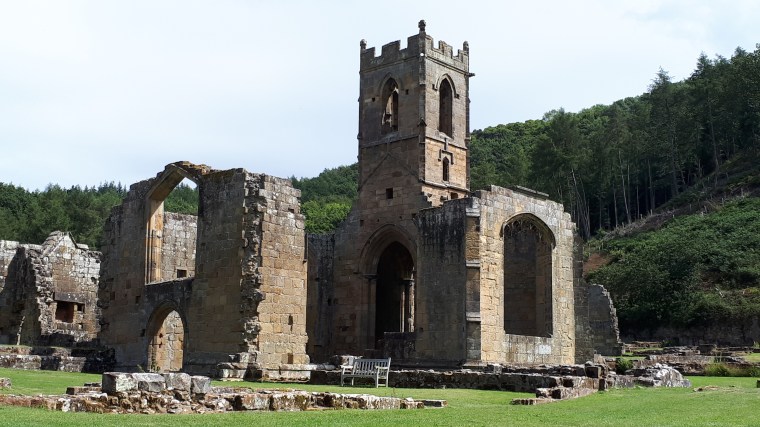
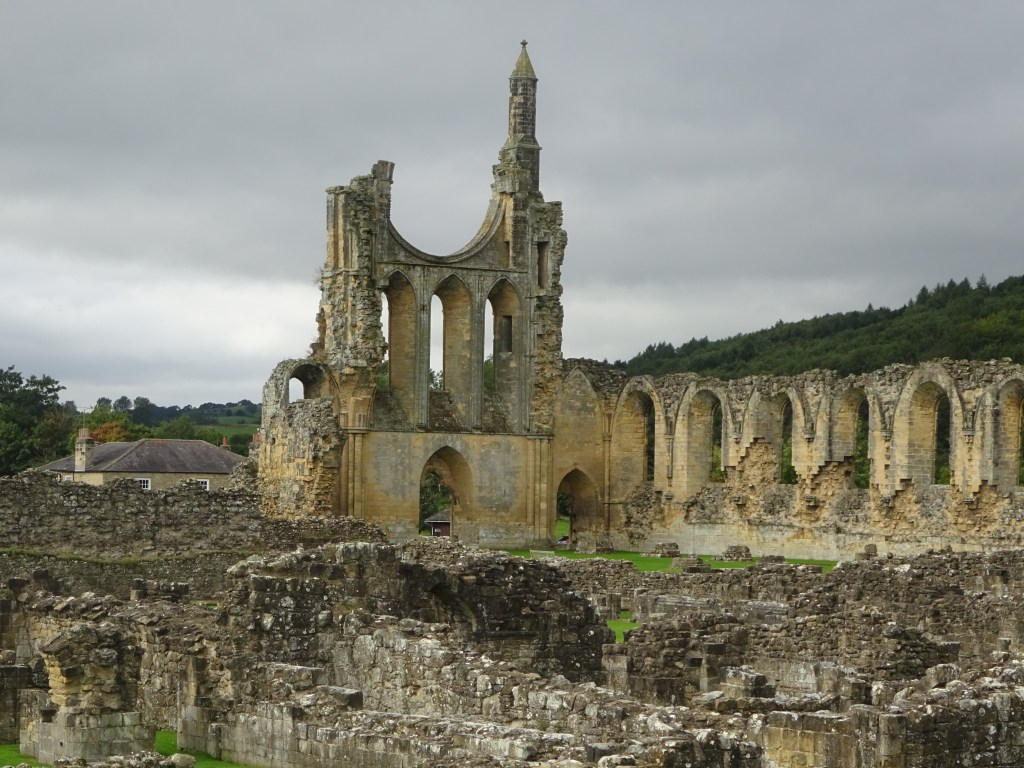
North Yorkshire has many majestic reminders of the magnificent abbeys that once served and dominated local rural life: Rievaulx, Whitby, Fountains, Byland, Ampleforth and Mount Grace Priory to name a few. 

These are fascinating ‘places of interest’. They inspired many during the years they were inhabited and – in a non-pandemic year – are visited by many people now who soak in their history and sense of peace that their lovingly tended sites exude. 

Life in days gone by can be easily imagined; both harsh and cold and yet their lives encouraged selfless devotion whilst supporting their local community.   

Often constructed in beautiful rural surroundings of agricultural land, woods and moors. They would grow crops and raise animals to feed themselves and create profit from a trade, the land they owned and tenancies. The monasteries owned a quarter of the cultural land within the country – a vast wealth and Henry was a man who needed to fund his own lifestyle and wars. 

Their majestic ruins have influenced and inspired some of the scenes with in my novels such as Georgina’s escape in Betrayal, Beth’s and Willoughby’s earnest discussion under the arches of Whitby Abbey in To Love Honour and Obey or Wilson’s hiding place in Dead to Sin. 

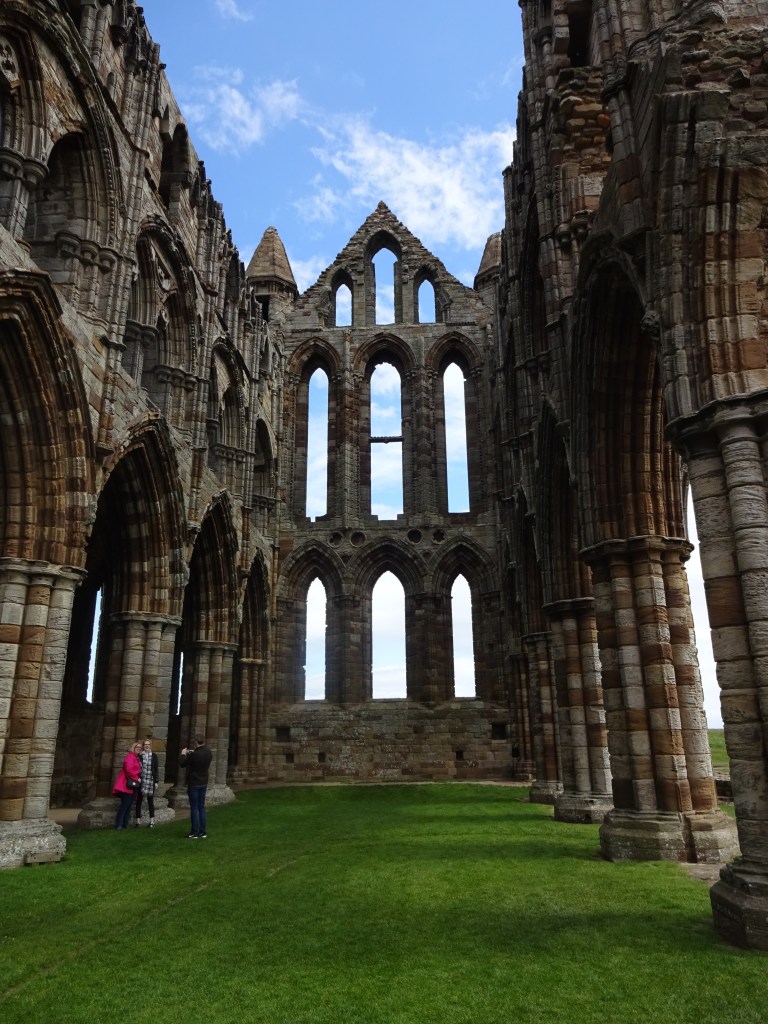
Whitby Abbey

In my most recent novel ‘Betrayal’ Lydia Fletcher is part of a rescue of her friend within the grounds of one such building: 

 The monastery’s stone walls slowly emerged before her – a testament to their ancestors’      achievements and faith. This sanctified place once filled with holy praise, was now losing the fight against the ravages of time as they crumbled back to the earth. Encased within the lush undergrowth it had not been revered for centuries. 

In the novel the ruins are being used by a band of smugglers who dress as the monks of old to keep the superstitious locals away. 

Between the old arches of the ivy clad fallen parapets, moving smoothly through the distant mist, was the distinctive figure of a monk, the ghostly habit covered by a dark hooded cape. Kell looked to see what had caught Jeremiah’s attention.  

“Souls of monks, long gone… they got no truck with us… so dig!” he ordered. Kell stared at him. Both Lydia and Jeremiah watched the monk disappear once more into the forest. The boy’s mouth hung open as the shovel fell from his hand. 
The Pilgrimage of Grace in 1536 consisted of 30000 strong rebel army from the north demanding that the abbeys be reopened. They were promised a pardon and a parliament on York, but once they disbanded their leaders were executed. In 1539 the larger monasteries also fell. Those monks who would not conform were also executed. 

The abbeys were hugely important to the life of the people in the area. Their battered walls and fallen arches are now preserved for all to discover and admire. 

IMG_20210611_221742_609

Whitby: unique, beautiful and historic

dsc01587

The historic maritime port of Whitby conjures up a myriad of images that connect people through time to this beautiful ancient town.


From the iconic Abbey ruins atop its headland, reminding us of its Christian heritage, to the harbour below where the Esk flows into the sea, a booming whaling industry thrived; now it is a tourist magnet and thriving community.

The existing Whitby Abbey ruins date from the Norman period when Benedictine monks founded a new abbey on the site of the original, which had been destroyed by Viking raiders in 867 AD. The order and abbey was to be destroyed and dissolved by Henry VIII.  However, it is the original abbey that holds its lasting place in history, founded by Oswy, King of Northumberland in 657AD and associated with St Hilda. The Synod of Whitby, which was held in 664AD, was noteworthy as Celtic Christians lost the debate with Roman Christians on how the calculation of Easter would be made, the effect of which we still feel today.

Whitby as a settlement can be traced back to the Bronze Age. Brigantes, Romans, Saxons, Vikings all played their part in the town’s development, but it was the abbey that first made the difference between a settlement and the town it would become, between the mid-C18 and C19, a thriving maritime port.

lovehonourobey
The Yorkshire Saga #1

The Alum industry in the C16 century also played an important part in the growth of the importance of the port. Alum was an important fixative used in the dyeing of cloth. The remains of such a works can be explored at Ravenscar further along the coast. In To Love Honour and Obey this is mentioned, as the fires and smells of the process polluted the coastline at the time. Modern methods of production made the century old methods of alum production obsolete, but in the early C19 it thrived.
From the mid C18 to mid C19 the port was an important whaling, fishing, boat-building, rope and sail-making harbour with many associated industries prospering alongside.

One of these ‘trades’ was smuggling and the narrow alleyways and snickets were excellent for moving contraband through the streets unseen to the prying eyes of the customs or revenue men. Another use for them was for young and able men to dodge the pressgang should one dare to come by.


This slideshow requires JavaScript.

Today Whitby is a bustling town where freshly caught fish are savoured in the many restaurants and inns. Whitby crab is delicious.

The White Horse and Griffin is a restored C18 coaching inn on the east side where Charles Dickens once stayed. The cobbled yard to its side, and the style of small brick out houses further along hidden in one of these yards, inspired the bath house where Willoughby takes Beth in The Yorkshire Saga series Book 1.

The visitor can take a trip out of the harbour and see for themselves the view many a returning sailor would have seen, as the church on the headland welcomed them home.


Whitby has many historic sites and buildings to explore, a myriad of gift and crafts shops. It also holds a number of popular festivals including the very lively and colourful Whitby Folk Week, the dramatic costumes of the Whitby Goth Weekend and even a Pirate Festival to name but a few.

The famous cartographer and explorer, James Cook, lived at his master’s house in Grape Lane in 1748 at age 18 as he served a merchant seaman’s apprenticeship.  The house is now the home of The Captain Cook Memorial Museum and is well worth a visit.

Sir William Scoresby is another famous native who invented the ‘crow’s nest’ to protect sailors, and his family’s legacy to the town and whaling industry is also celebrated within the town’s museum.

After the mid C19 the whaling industry and shipbuilding trade died down but a new invention, the railway, arrived and the town on the west side of the Esk developed to accommodate guests in fine hotels. This railway accesses the beauty of North Yorkshire NYMR such as Goathland, Grosmont and Pickering; some of the locations were used in TV’s Heartbeat series and Harry Potter. It is a really beautiful journey to take.

One of the guests who stayed here was Bram Stoker. This gave the town a connection to his famous work ‘Dracula’.


The 199 steps lead up from Church Street from the C15 cottages to St Mary’s church at the top and the abbey beyond it. The church inspired another scene within To Love Honour and Obey because of the unique box pews and the gallery above. The setting, building and views from outside this church are well worth a visit.
When Queen Victoria went into a long period of mourning, another of Whitby’s industries thrived; that of Whitby Jet. The Jurassic period’s fossilised remains were mined and skilfully crafted into jewellery. Once the fashion changed, and association to death dulled its popularity in the early C19, demand faded, but not completely as it has regained some popularity today.


Whitby also features in For Richer, For Poorer as Jerome and Parthena escape their pursuer in a Yorkshire coble. The harbour would have been busy with many vessels leaving from the steps at all times of day and night to catch the tide.


The Yorkshire Saga series is set against the beautiful setting of North Yorkshire weaving fact and fiction, real and imagined towns along the coat and moors.

Untitled design.png

A step back in time!

533900_193142140832995_1059893854_n

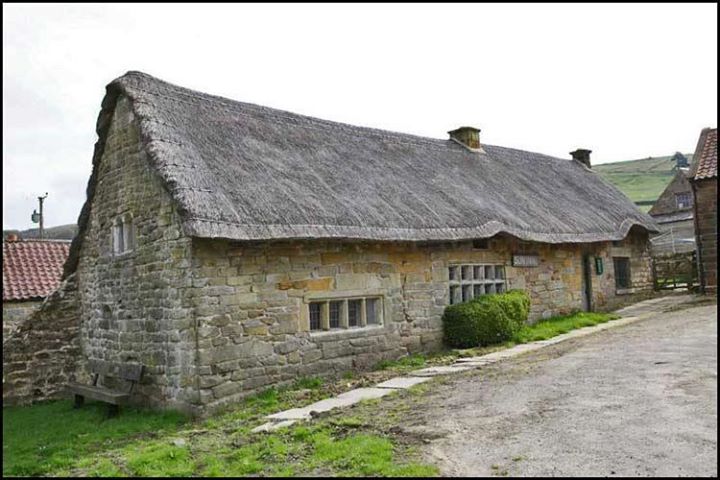
In my book Abigail Moor The Cruck Inn was named after the design of the North Yorkshire cruck-built buildings. There are many examples in the region but none as well preserved as the old inn Spout House which served Bilsdale until it closed its doors in 1914.

I visited it when researching the area for my book and found it was literally like taking a step back in time. Spout House can be visited from Easter – 31st October. It is just one of  many historic places hidden away in the beautiful North York Moors National Park.

The amazing time capsule that is Spout House was the inspiration behind the starting point of Abigail’s adventure that takes her on to the beautiful city of York with its gothic cathedral, then to the amazing historical whaling port of Whitby and further to discover the rugged bays of the North Yorkshire coast.

This slideshow requires JavaScript.


Historic York.

This slideshow requires JavaScript.

The ancient whaling port of Whitby.

This slideshow requires JavaScript.

You can follow Abigail on her journey here!

Abigail Moor: The Darkest Dawn is available at Amazon and Smashwords

AbigailMoorTwitter_1

Ravenscar – The dream resort that was an investor’s nightmare.

dsc09361

Between the famous resort of Scarborough and the ancient port of Whitby lies the little known village of Ravenscar, formerly named Peak. Today this slightly remote headland location is home to a cluster of houses, the National Trust Coastal Centre and the impressive Raven Hall, built C1774, which has fine views over the sea and across the bay to Robin Hood’s Bay.


The Hall became the Raven Hall Hotel in 1895 and now also has a frequently windswept golf course. The impressive castellated hanging gardens even have a sheltered cubby hole in the rock, which could be used to shelter from the storms and north easterlies, or even possibly to have been used to signal out to sea.

The existence of Ravenscar is owed to The Peak Estate Company who wanted to create a holiday resort to rival its successful near neighbours. Their ambition was great. The railway line brought prospectors to this healthy resort between moor and sea. Streets named after previous invaders were planned: Roman, Angle, Saxon and Dane.

The main drawback, other than its exposed position, was that the fine sandy beaches, which can be found at Scarborough or north of Whitby, did not exist here. It is situated on a headland with a cliff face over 600 feet high. The way down to the sea level is precarious and the shore rocky. Although you can sometimes see seals, it was hardly going to attract the traveller who wanted to enjoy seaside walks or dips. Drains and water supply were installed, but of the 1200+ plots there were insufficient buyers to make the town viable and so the company ceased in 1913.

Now, the area is a real draw for walkers, ornithologists, painters, and nature lovers. You can explore the deserted workings of the alum works. It is this history that brought me to this beautiful yet wild spot. When researching for ‘To Love, Honour and Obey’ and the region for Abigail Moor I looked into the history of the Yorkshire alum industry and discovered the Peak site. Admittedly my fictional workings were north of Whitby, but the importance of the industry and the links to London was based on facts.


Today if you visit the National Trust Visitor Centre you can follow a looped path (2.2 km/1.35 miles) that takes you to a viewpoint across the bay, across the golf course past the fresh water pond, skirting the bluebell wood down to the alum works. Once you’ve circled the remains, double back up the other side of the bluebell woods to the brick works and back along by the railway cutting to the coastal centre.

dsc09461You can join the Cleveland Way from here, and in spring the bluebells are beautiful.

The inclines make the walk slightly more challenging, along with the strong winds that were cutting inland from the sea on the day I visited. It is a wild setting, but well worth a visit for the views alone.


Kirkleatham Village, North Yorkshire: A little gem worth exploring

Kirkleatham Village, North Yorkshire, England is definitely a little gem worth exploring.

Three miles from the coastal resort of Redcar, North Yorkshire, lies the beautiful small village of Kirkleatham. Originally known by its Norse name ‘Westlide’. Through time and links to the original ‘Kirk’ (church) lands it evolved from a small village to a prosperous estate with famous links to London.

I often explore such locations when researching the background to my stories, which are set within the region. This beautiful area was once owned by Guisborough Priory, before King William I granted it to The Count of Mortain and Robert de Brus in 1086, down through the centuries, it came into the hands of the Turner family.

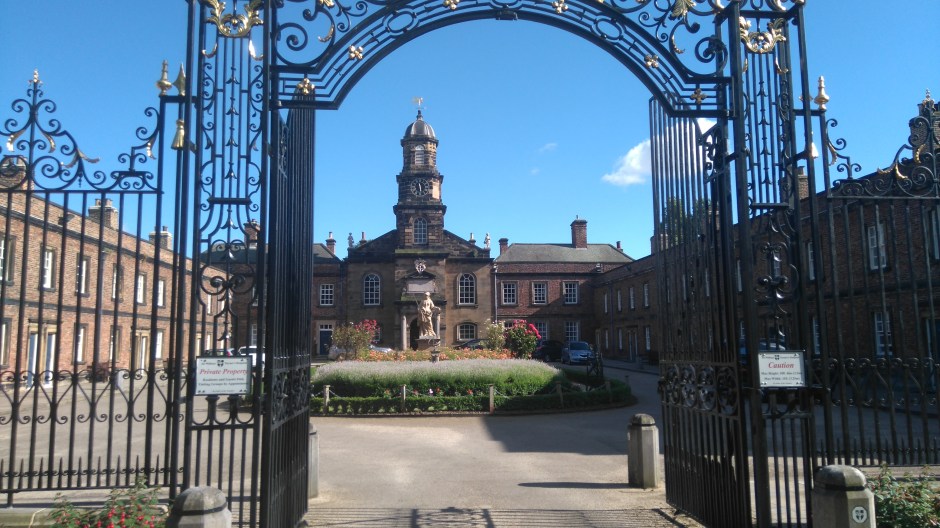
Today the main buildings’ features of the almshouses, the church, mausoleum, and the museum in the Queen Anne building where the old school was housed, they all stand as testament to the legacy left by the Turner family. Sir William Turner (1615-1692) became Lord Mayor of London in 1669. His loyalty to King Charles II and his active involvement in rebuilding the city after the Great Fire were greatly rewarded. However, he was a man who seemingly also showed compassion for the less fortunate. He was President for the Bridewell and Bethlehem Hospitals as well as founding the Sir William Turner Hospital in Kirkleatham (now the almshouse building).

The Hospital was built around a quadrangle, with a chapel opposite the ornate gates separating the quarters of the 10 women and 10 men. There was also accommodation for 10 girls and 10 boys. These children were either orphans or from one-parent families. They were taken in, given a basic education and then would leave to serve an apprenticeship or enter service.

The ancient church was added to in 1740 to commemorate Marwood William Turner who died on his Grand Tour in Lyons in 1739. Charles Turner, who was the first Baronet in 1782, improved the roads in the area. He also built the Turner’s Arms in nearby Yearby to replace the alehouses, ‘wretched hovels’, which had harboured smugglers. Charles encouraged tenants to experiment with new crops and techniques. His son, also a Charles (1773-1810), was the last Turner to own the estates. The estates then passed through marriage to the Newcomen family. Schools and buildings in the local towns have carried the names of these families for years.

Eventually the estate was sold in 1948. The contents of Kirkleatham Hall, the Hospital Library and Museum were sold at auction. The once magnificent Hall was then left to decay and in 1956 was demolished.

Kirkleatham today houses the local history museum which, amongst other exhibits, houses the Saxon Princess Exhibition. The local maritime and industrial historical exhibits cover three floors. Access is good as the site is level; ramps and a lift means that it is accessible to all.

The 15 acre grounds cover a woodland, play area and willow walk. It extends past the old stables to open fields. A café serves hot and cold foods and facilities are good throughout.

Admission to the museum is free but touring exhibitions and events held at the site may be charged for.

More information is available from: http://www.redcar-cleveland.gov.uk/kirkleathammuseum

Crime and Punishment 3: Man-traps

Before moving on from Ripon I would like to mention one exhibit in the Prison & Police Museum that brought home to me the cruelty of the era that my historical stories are set. I found a man-trap displayed on the wall. I have mentioned them in my work, but it is only when you see the ugly things close up that you realise how being caught in such a sprung trap could maim and kill, in what was a slow and excruciatingly painful way.

They were hidden in undergrowth to catch or deter poachers or trespassers. They had a spring mechanism that meant the metal jaws (many had teeth – serrated edges to really lame the culprit). However, the sentences for poachers were also severe and included hanging or transportation. Although they were a fact of life in the early nineteenth century, and had been for some time, fortunately they were banned from England C.1830. Nonetheless some must have stumbled upon them by chance and others by necessity of crossing private land…

Extract from Phoebe’s Challenge

Phoebe's Challenge KEC Thomas closed his eyes fleetingly. “Yes, we will,” he spoke the words after a few moments of silence.

“We’ll what, Didy?”

“Find Levi; he didn’t disclose us – we should help him too.”

His hand, still holding the bottle, dropped down, but his senses awoke as the clang of an iron mantrap snapped viciously shut next to him. His face paled as he looked down horrified at the sight of meshed metal teeth that greeted him. Phoebe had screamed as the great jagged jaws of the mantrap had snapped shut as Thomas lowered his arm, triggering the edge of mechanism, but fortunately his limb had not fallen within its evil grip; instead the bottle was smashed.

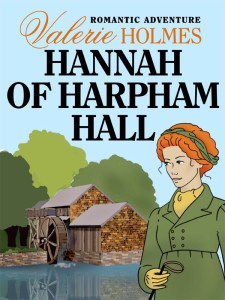
Extract from Hannah of Harpham Hall

HannahShe was gamely running along a path ignoring Betsy’s pleas for her to come back to her, when an arm reached out and grabbed her by the shoulder, pulling her backwards. She landed in a pool of mud and foliage.

“How dare you…you great bully!” Hannah shouted out in indignation at the figure who stood openly laughing at her dishevelled state, whilst boldly standing in front of her. Her ribbon had come loose and her hair started to fall down onto her shoulders. Her anger rose and she was about to vent her opinion at the lad, who must have only been a few years her senior, but he spoke to her first.

“You stupid little spoilt brat! Look what you nearly ran into!” He threw a stick at the ground in front of where she had been heading and, instantly, the metal jaws of a man-trap snapped shut, tearing it in two.

Hannah’s mouth dropped open. She wanted to cry out, but was too scared and confused. Betsy ran up behind her, panting heavily. She slapped the girl hard on her shoulder. Hannah fought hard to hold back her tears. This was not the kind of adventure she had envisaged. The lad looked nervously around him as her father’s voice bellowed to them through the woods, “What is the meaning of this?”

Featured image / RN

Pheobe’s Challenge and Hannah of Harpham Hall are also available to buy on Smashwords!