Meet novelist, poet, philosopher and former barrister, Diana Janney.

image003

I am delighted to welcome novelist, poet, philosopher, former barrister and fashion model Diana Janney as my May guest.

Thank you, Diana, for giving up some of your precious time to answer my questions.

Have you always been a deep thinker, even as a child, searching for answers and looking beyond the obvious to try and understand life?

Reflection and deep thinking have been important to me for as far back as I can remember. As a child, ‘why’ was my favourite word! My late father was a clergyman and he and my mother spent a lot of time discussing big questions as a family and with others, which I enjoyed. I became interested in Philosophy through Latin A level, fascinated by Cicero and Ovid in particular, as well as the poems of Catullus. In my latest novel A Man of Understanding, I have translated part of a Horace ode, which reminded me of those school days! Before going to university to read Philosophy, I had already become fascinated by Eastern Philosophy, and it was a wonderful experience to expand that love of Philosophy at UCL. I’m not sure that I would say that I try to understand life, as this would be an impossible task, but I do search for answers to big questions, especially those related to ethics, aesthetics, personal identity, faith and religion, and the concept of choice, freewill and moral responsibility.  I enjoy the exploration of the questions even if there are no answers.

A Man of Understanding NEW cover

Your careers to date have been varied and impressive, but would you say that your love of creative writing and poetry developed first and has weaved through your professional life until it became your central focus?

My love of creative writing and poetry developed during my schooldays when it became clear that I had a talent for both. Philosophy became very much a part of my life during my years at UCL, first as an undergraduate and then as a postgraduate in Philosophy. That fascination continues to the present day. In all my novels so far (and in the next) I weave philosophy as well as poetry into the plot as I believe they both offer so much on which to reflect.  Having been a barrister gave me the opportunity to be a mouthpiece for those I represented, and it helped me to be persuasive in argument, both of which are good training for being a writer, and Philosophy encouraged me to reflect on important issues, which I weave into my novels.

A Man of Understanding, your third novel, is described as a story of bereavement and healing. This sounds so positive, as anyone who has grieved the loss of a close loved one  – particularly early in life, will know, that healing is a difficult and very personal journey. How was your own life affected by your father’s death and is this healing part of your shared experience?

The death of my father came as a tragic shock to me and my mother. I was an only child, as were both my parents, so the family was already small before we lost him. It was impossible not to admire his positive approach to dying and the strength of his faith. In my writing about loss and grieving, I seek to do justice to the positivity he showed at that time and during his life. In my novels, I want to share that experience in a way that may help others to see that the loss of   loved ones does not mean that the lessons we learnt from them disappear when they do. We reflect on what they showed us during their existence, and in some ways those lessons become stronger through losing those we love. It is at times of loss and tragedy that we reflect most strongly on what really matters in life. We often turn to creative ways of expressing what we are feeling inside, as recently bereaved Blue discovers through the relationship that grows, after the sudden death of his parents, between him and the philosopher-poet grandfather Horatio Hennessy whom he has never met.

The Infinite Wisdom of Harriet Rose cover image, Diana Janney

Being shortlisted for The People’s Book Prize 2023 was obviously a huge achievement as it reflects the readers’ choice. Your novels are written with a unique and enthusiastic insight into their subject matter. Do you write the book that is in your heart and how do you balance this with the commercial side of the publishing industry, of writing for a target market?

Thank you, Valerie. In fact, I was the Runner-Up in The People’s Book Prize, which was an even greater achievement, especially as the Patron Emeritus of the Prize is Frederick Forsyth, and the late Dame Beryl Bainbridge was the Founder. It was a great honour for me. I always write from the heart and from my knowledge and reflections, and it moves me when I read how much my writing has moved others. That is what matters most to me. My target market is always those who enjoy moving and thought-provoking literary fiction with interesting characters and an unpredictable plot. There are a lot of novels published that are quite predictable and are not thought-provoking but nevertheless they sell well, and people enjoy them. The publishing industry needs variety as there are so many readers in the world. But I would not write anything that did not reflect my own questions, knowledge and creativity. Fortunately, my writing seems to appeal to readers, and it is wonderful also to be published in translation in lots of different countries and to have international appeal. I believe that to be a successful writer, it is important to write about what you know (which can include research if necessary) and, as Horatio says to Blue in A Man of Understanding, about what moves you, what stirs your soul.

Do you aim to make your books accessible to people who have had little opportunity to study, or exposure to, the classics or philosophy?

Accessibility is important when weaving philosophy and the classics into novels. It requires interesting characters who really bring these subjects alive, which is what I always aim to do. These subjects do not have to be dry and difficult to understand. Blue is a twelve-year-old boy, and he is fascinated by them. My books appeal to both those who already have a knowledge of philosophy and the classics, and those who do not and are surprised by how much they enjoy these subjects in my writing.

Do you have any plans to publish an anthology of your themed poems?

I haven’t considered an anthology of my themed poems. Maybe I should! They have certainly proved very popular. Some of my poems in my novels are specifically related to the plots, which might not fit easily with an anthology. In my next novel, there is also poetry, but of a very different style.

When not studying, writing, and working what do you do to relax?

Most of my time is spent in writing, especially at the moment as I am finishing my next novel. But I love to play chess, table tennis, swim, play my violin, spend lots of time with my husband discovering new places, new concerts, new plays, new restaurants, new recipes, new people and new music to play together (my husband plays the piano). Of course, returning to old places, concerts, restaurants, recipes, friends, music is also enjoyable! I also find meditation a good way to relax.

Mallorca features in your novels, is it a place that you have strong links to?

My husband and I have spent a lot of time in Mallorca over the years. It is a place we will always return to. Our first ever holiday together was there. My first novel and my latest novel are both set in Mallorca, which says a lot about my love of the island! The north of Mallorca, in the mountains, was the ideal setting for A Man of Understanding as the arts and aesthetics are fundamental to the plot and this area is not only celebrated for its contribution to the arts and culture generally but the island is also a work of art in itself.

The Choice, Diana Janney cover image

The title of your novel is similar to a quote from the Bible. How much has your own faith driven you to succeed and overcome life’s challenges?

Yes, the title is derived from Proverbs 10:23 ‘…a man of understanding hath wisdom.’ Success is such a big word that means something different to each of us, I think. What I hope for most is that I succeed in helping readers reflect on different topics, such as: ways of overcoming loss and grief, exploring their creative side and embracing the importance of the arts and aesthetics in spiritual development, reflecting on the importance of love (as Aristotle teaches, through learning the importance of understanding and respecting the self as well as others), reflecting on religious and philosophical questions from different perspectives, remembering who and what really matters. I believe that my own faith has guided me towards an understanding of where my true talents lie (in the biblical sense of that word), which is what urges me on to write as I do. My faith has also helped and tested me in times of life’s challenges.

Do you create your characters from elements of people you have known or met professionally, or do they walk onto your mind as you write and develop the plot?

There are aspects of myself in my novels, and in The Infinite Wisdom of Harriet Rose, there are aspects of my family in Harriet’s. In A Man of Understanding, I drew the characters from my imagination, they are all unique, with a few touches of myself and my grandfathers (one I knew, the other died before I was born) in poet-philosopher Horatio Hennessy. The characters certainly help to develop the plot – who would dare not to listen to what Horatio had to say?!

Latin is used in the classics, medicine, and law; do you think that basic Latin should still be taught in schools?

The idea of Latin not being taught in schools horrifies me. I found Latin very useful when learning other languages, as it is in the English language. There is something very special about being able to translate the words of some of the world’s greatest thinkers.   

 What do you hope that your readers take away from reading your books?

A strong sense of the importance of valuing love and reflection and creativity. Also, the title, so that if they enjoyed it, they will recommend it to others! 

Have you ever had to deal with work being rejected?

I don’t think that writers should think in terms of rejection. I would call rejection of work a publisher not making an offer to publish, for which there can be a number of reasons (some linked to the work itself, some to the publisher, some to the market at the time of submission). As with most published authors, not every publisher who has received my work has made me an offer to publish, whilst there have been many discerning publishers who have!

What advice would you give new writers starting out?

Reflect long and hard on whether writing is where your true talent lies. It isn’t enough just to like the idea of being a writer. You need to enjoy it, you need to feel you have something to say, you need to be observant (of people and the world around you). Write about what you know. Write about what matters to you. Don’t try to write like someone else. Be yourself. Be unique. Be patient. Listen to your characters.  Write your story, however long it takes, until you feel sad that you have reached the end and that you are leaving your characters and their life behind.

What is next for Diana?

Right now – supper! Writing-wise, I have almost completed the first draft of my next novel, which is being published next year. I am fulfilling my own criteria in that I am enjoying writing it immensely, I love the characters, the plot, the research, the knowledge I’m gaining through creating it, including about myself. It matters to me. It moves my soul. And I don’t want to say goodbye to the characters!

Thank you for taking the time to answer my interview questions. I wish you every ongoing success.

It was my pleasure. Thank you for your interesting questions.
An Interview with Carole Blake

[Update: 27/10/2016]

It is with great sadness and total shock that I have learnt that Carole died last night. She was an amazing lady and inspiration to many, myself included. My sincere condolences to her family, her many friends, colleagues and authors that she represented and respected so much. She will be greatly missed.

Val


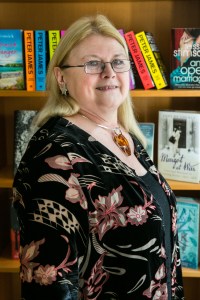
My guest this month is Carole Blake, a lady whose amazing career has taken her from working as a secretary in a packaging company to forming the incredibly successful London literary agency, Blake Friedmann. This journey involved becoming the first Rights Manager for Michael Joseph, then Marketing Director at Sphere, before starting up her own agency in 1977. Five years later she merged with Julian Friedmann’s Agency.

Throughout this time Carole has worked tirelessly to develop the careers of her authors and yet still found time to serve on many boards and institutions to contribute to the industry she loves so much. In 2013 Carole was the recipient of the Pandora Award for her ‘significant and sustained contribution to the publishing industry’.

Photo by Jack Ladenburg
Carole Blake, co-founder of Blake Friedmann. Photo by Jack Ladenburg.

Welcome, Carole!
Did your childhood inspire and nurture your love of books?

My childhood home didn’t have many books, but I was always focussed on them & asked for them as presents. I can remember my first ever rag-books (made of a linen-like material) that I used to ‘read’ in the bath before I could actually read. I loved turning the pages and pretending. Once I could read, my early favourites were the Rupert books, which I still have, with my parents’ messages & dates written inside. When I was 8 I asked for a bookcase for my Christmas present. I got it (& only relinquished it when I moved house 8 years ago). I then set out to catalogue and categorise all the books I owned. I worked out a complicated system of letters and numbers and wrote them inside each book, then listed them all against their titles and authors. Very proud of it. Some years later when I discovered the Dewey System I was crushed. I had thought I was being entirely original!

Was it challenging for a woman in your early career to progress in the industry as you did?

I don’t remember it as difficult. I answered an advert in the Evening Standard, went for an interview & got the job. I commuted from Mitcham in Surrey to Marble Arch, & found myself – a working class girl, in a cotton dress and a white cardigan – working as a secretary to a team of university-educated art experts working on a multi-volume art encyclopedia. I kept a low profile, soaked up information like a sponge (including which pieces of cutlery to use when we went out to restaurants) and made friends there (50+ years ago) that I am still in touch with. It was literally a life-changing experience.

Who inspired you the most to keep moving forward? Are you naturally self-motivated to achieve?

The lovely people I worked with at Rainbirds, in my first job, were extremely encouraging. Working there for 8 years kick-started my life-long love of art. It introduced me to the classics (I compiled a company-wide order of Penguin paperbacks every few months. We could get a discount if we ordered 30 or more. Soon I stopped asking anyone else to mark up the Penguin stocklists, because I was ordering 30 at a time myself. I read my way through all the Russian and French novelists, and I remember crying on the no 16 bus as it went round Marble Arch because I finished Dostoyevsky’s The Idiot and found it unbearably sad. How nerdish is that for a teenager in the swinging 60s?

But later when I was marketing director of Sphere, Edmund Fisher fired me, quite rightly. I was running the marketing, publicity, rights and contracts departments and wasn’t juggling them very well. We were having a row – we had a very volatile relationship over the three companies and 12 years that I worked with him – and I was in the middle of resigning. When I realised he was firing me I withdrew my resignation and sued for wrongful dismissal. I knew he hadn’t followed all the right procedures (indeed he hadn’t followed any procedures at all!) and as I was a director, I was employed by Sphere’s then owners, Thomson Newspapers, so he didn’t actually have the right to fire me at all. I won, they settled out of court, and I discovered I had a list of authors who wanted to be represented by me if I started an agency. So I did. The fact that Edmund fired me was the best thing ever to happen to me. I would never have had the courage to ask someone to stop paying me if he hadn’t. No one in my family had ever started a company. If I hadn’t been out of work for 6 months, dealing with lawyers it would never have occurred to me to do so.

You are also encouraging new blood into the publishing industry through your associations with UCLA postgraduate publishing course. Is this something you feel passionate about as much as discovering new writing talent?

Given my start in the industry, remembering how kind people were, and aware that it’s a much more difficult area to get work in now I think the least I can do is to encourage and help others into a business that has given me such a wonderfully satisfying lifestyle. I’ve been associated with other postgraduate publishing courses as well, and am always happy to talk to people wanting to get into the book world.

I am the only person in my company who doesn’t have a degree; many of my staff have several. I didn’t have to go through the purgatory of unpaid internships, which I think are morally indefensible: we pay our interns properly.

Whenever I can I try to introduce people to others in the industry who can be of use to them. We have actually employed more than a dozen of our interns over the years – it’s so much more successful than a 40 minute interview. We also have an annual get-together of all our past staff, past interns. It’s officially known as networking but we all know it’s a great gossip-fest. So great to see where people have moved on to. You might have heard of the singer Dido? She was my assistant for 4 years and was an ace at selling serial rights!

Her parents were both publishers. I work with her mother at Rainbirds in the 60s, sold books to her father when he was running Sidgwick decades later. He and I used to lunch together and regarded ourselves as in-laws while she was working for me. When she resigned ‘to spend more time on her music’ I gave her a very motherly speech. ‘Can’t guarantee to keep your job open Dido.’ I don’t think she’s ever wanted to come back to publishing again …

I do quite a lot of public speaking – at literary festivals, conferences (I’m an honorary vice-president of the RNA, a member of the HNS) and I teach a course on how to sell rights. I’ve been a board member of The Book Trade Charity, and its Chairman, and President over many years and am now a Patron.

from-pitch-to-publication-cover
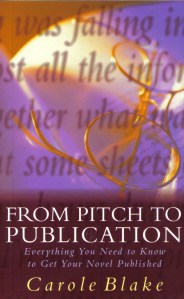
Your guide ‘From Pitch to Publication’ is widely used throughout the publishing industry. How much of a challenge has it been to update it?

An extreme challenge, as you can tell from the fact that I’ve not managed to deliver it yet. It took Boxtree (later to become an imprint of Macmillan) several years to persuade me to agree to write it in the first place. And then I renegotiated the delivery date several times, in order not to be in breach of contract (how embarrassing would that have been for a literary agent?). Same has happened with the contracted update/new edition. My agency is SO much bigger & busier than it was when I delivered the original manuscript – 20 years ago! – and so much has changed. I now know what I want to write, what I need to update, what I need to add … but time is the enemy. My editor at Macmillan (a friend) is understanding … up to a point. I now so want to have this new manuscript behind me. There are so very many more ways to promote a book now (social media?!) and I am now writing it but in such small spaces of time.

You represent many of my favourite authors, but two especially. Could you share with us what it was that you loved so much about ‘Lady of Hay’ and the amazing Barbara Erskine?
Likewise, when Elizabeth Chadwick’s first manuscript arrived on your desk did you instantly realise that you had found gold?

Two authors very close to my heart: both are good friends.

Barbara Erskine: I was already representing her short stories. She wrote many, and magazine editors around the world would line up for them. We had talked about an unusual novel she was thinking about writing. Two time periods, linked. We talked about it for a long time: years. I remember saying at the outset that it would be vital that every time, at the end of each chapter, the reader was required to move from present to past, from past to present, it must be a wrench. Each time period must be equally compelling, and hard to leave or the novel would be broken backed. Oh my … did she deliver. But although publishers and editors always ask for something new, a fresh voice – they always actually want something that is recognisable. I submitted the partial manuscript for 4 years. ‘I don’t know if it’s a contemporary novel, or a historical?’ Me: it’s both. ‘I don’t know if it’s a love story or a mystery?’ Me: it’s both. Every editor who arrived in a new job found the manuscript on their desk. When Maggie Pringle arrived at Michael Joseph in 1983, she read it, loved it, & recognised it as something fresh and new and exciting, and she was allowed to buy it even though it had been rejected twice by other Michael Joseph editors over the years. They auctioned paperback rights back then and it set a record for the highest paperback advance for a British first novel. This summer it celebrated 30 years continuously in print – quite something for a commercial novel. And it’s in print in many other languages too. In 2017 it will be celebrated for its 30th anniversary in German.
Barbara and I are friends. We’ve worked together for so long: we have even been on holiday together. That Nile cruise will never be forgotten. The only holiday that I’ve ever got a holiday-tie-in best-seller novel from – ‘Whispers in the Sand’! Barbara always stays with me at home when she’s in London overnight.

Elizabeth Chadwick: the early chapters of ‘The Wild Hunt’ arrived in the late 80s in a brown envelope – back in the days when submissions were made on paper, via snailmail. And back in the days when I opened my own mail every morning at my desk. I read it as soon as I opened the envelope and knew there was something very special in my hand. A few weeks later I had sold it, via auction, to hardback and paperback publishers (back in the days before publishers always published in both formats themselves.)

‘The Wild Hunt’ won a Betty Trask award, and Prince Charles was the person giving out the prizes for The Society of Authors that year. That was quite a memorable evening!
As with Barbara, this led to publishing success and a long and on-going friendship. Elizabeth stays with me when she’s in London too, and we often talk into the small hours.

I think it is unfair to ask you which are your favourite books or authors, but of all the novels you have read are there a few characters that really stayed with you? If so, why?

There’s no way I could choose between novels by my clients – I represent them all because they are so original, and so special. It would be like asking a mother to choose between her children! Not that I think of my best-selling authors are children for one moment. But the novels – apart from those written by my clients – that always stay with me are Dostoyevsky’s The Idiot (I finished it on a no 16 bus going round Marble Arch roundabout in the late 60s, crying my eyes out), and Alain Fournier’s Le Grand Meaulnes. A haunting work.

You have travelled extensively in your work, but where do you enjoy going to relax and explore?

Italy, always Italy. I go for art, music, food (and Negronis!), shopping. Venice, in particular if I had to pin it down more narrowly. I was lucky enough to take a sabbatical earlier this year and I spent 5 weeks in Italy: Florence, Siena, Padua, Mantua, Venice. Absolutely heaven.

This slideshow requires JavaScript.

Is it your love of detail that first led you to becoming a collector of dolls’ houses and miniatures (OOAK)? Where did this begin? How is the collection growing?

I’ve always loved houses, furniture, interior decoration. My home is full now so miniatures are the way I buy furniture. I dare not add up the number of miniatures I own … they are stored in many boxes, and I’ve had to forbid myself to buy more until I’ve finished building the 5 floor Regency house which will be taller than me. And I’m forbidden to do any more work on that until I’ve delivered my next book. In addition to that house, I have a Georgian hand made one that I bought already finished. That is fully furnished. I also own an antiquarian bookshop which I made from a kit. Every book is real; they can be opened and read (with a magnifying glass). Most of them are miniature copies of real antique illustrated books that I buy from a particular maker whose work I really admire. I have more than 1000. And I have two more kits to build – they are going to become a row of shops. And then there is the greenhouse, and a conservatory, both full of flowers. My favourite collection though is mouth-blown cranberry glass. Five (miniature) cabinets full so far. The most satisfying thing I achieved myself, was laying a floor of terracotta tiles. Real tiles, 1:12 scale. Laying the tiles was easy: the grouting was murder, the air blue!

This slideshow requires JavaScript.

What other interests do you enjoy away from the world of publishing?

Early music – I still buy cds because I enjoy the booklets. I’ve got about 5000, all stored on a hard drive and easy to find. But I also like Meat Loaf (that’s Elizabeth Chadwick’s fault!). Art – I always make time to go to exhibitions. I find cooking very therapeutic, and always have freezers-full of home cooked food. I enjoy a variety of crafts – I make greetings cards, keep scrapbooks, make jewellery (I have 1000s of beads, and like to buy them on my travels), and I love taking photographs (check out my 56 Pinterest boards, and my Instagram posts!). I took 8000 photographs during the 5 weeks in Italy. And of course reading. I read a lot of non-fiction for relaxation as a change from the fiction that I work with. I love history, memoir, African wildlife (I’ve been to Africa on safari many times). And I collect books about the publishing industry. I’ve recently taken up knitting and crochet again. But there’s not a lot of time to fit these in around work!

You have achieved a great deal in your career, but what is next for Carole Blake?

I’ve got to make time to finish the new book. Then I can get back to (miniature) house building …

Thank you for the fascinating insight into your career and for sharing some personal photographs of your lovely miniature worlds!