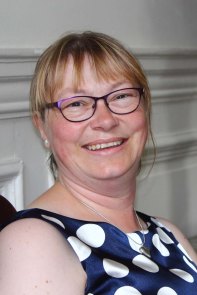
Meet bestselling author Liz Fenwick

Liz F3
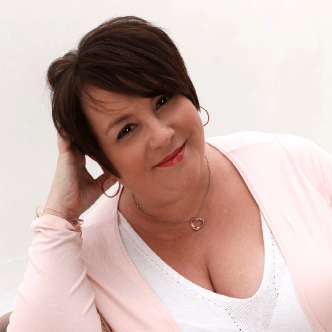
Liz Fenwick


You grew up in Massachusetts, moved to the UK and now commute between London and Cornwall. Did you ever think that you would travel so broadly?

I grew up with an inbuilt wanderlust. My father had travelled a fair bit and I would spend hours looking at his slides and dreaming of a time when I too could venture forth. I hadn’t quite imagined that I would lead the travelling life I did for so long. I moved to the UK when I was 26 and that was when it truly began. I met the man who is now my husband of almost 28 years two weeks after I arrived in the UK. We married two years later and that was when moving about began in earnest. We’ve lived in Canada, Moscow, Houston, Indonesia and Dubai. While in those locations we explored as much as was feasible with three small children in tow. But of course there is still more travelling I want to do!

The variety of cross-cultural experience that this life-style has given you is amazing, but the love of Cornwall shines through each of the books you have set there. When did this love affair begin?

It began with my first trip there one hot weekend in June 1989. My boyfriend of just a few months took me to meet his parents…or so I thought. It was in fact the ‘Cornwall Test’. If I hadn’t fallen in love with Cornwall then we wouldn’t have married. I’m certain of it. But how could I not fall in love with bright blue skies punctuated with foxgloves, cliffs falling into the sea and hidden creeks caressed by low tree branches. Cornwall stole my heart and has never let go…even when the sky feels low and the mizzle is so dense I can’t see the bottom of my garden.

Could you explain how and when your first breakthrough as a published writer happened?

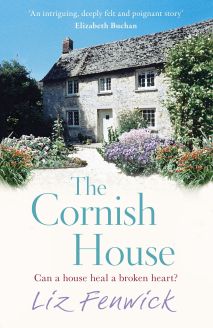
My first breakthrough was finding an agent. I had met Carole Blake on line first via Twitter then in person through a TweetUp. We hit it off on a social level and became friends over our love of wine, shoes and books. I was still in the process of finding my writer’s voice. Finally two years after we became friends I knew what my voice was and what I was aiming for. This coincided with me attending the first York Festival of Writing. There I was to pitch to someone else in her agency. I knew this person wasn’t the right agent for me but I also knew the book wasn’t ready…so it was more for the feedback. During our session he asked me why I hadn’t pitched to Carole…fear was the first thing in my mind. She was Carole Blake but in my heart I knew The Cornish House wasn’t what it could be. So I emailed her…knowing her colleague would feed info back to her, saying the book wasn’t ready but I was aiming for Daphne du Maurier meets Jodi Picoult or Cornwall with issues. She told me to send it to her when it was ready. That was April and in February I sent The Cornish House off to four agents, all who I had met through the Romantic Novelists’ Association. By lunch time I had my first request for a full…but I hadn’t heard from Carole. So I emailed her asking as a friend what should I do because her book From Pitch to Publication didn’t say. She emailed saying as a friend you inform the other agents. Three requested the full and by Saturday Carole had offered me representation. By St Patrick’s Day I had my first publishing deal with The Netherlands and in April I signed with Orion. That was the beginning.
Liz F 4

Of all the impeccable research you have completed, is there one project that has intrigued or surprised you more than you expected?

I loved researching The Returning Tide. I was terrified as growing up in the States the knowledge that people in the UK have is different and I was terrified of getting it wrong…I lost sleep over it. But I love research and my favourite part of the research for this book was interviewing four people who served during WWII. One of them lent me her diary from 1945 and I was able to see first hand how little everyone knew. This was my biggest struggle in the end. Today if a bomb falls we know minutes later. Then they knew only their part and nothing more….

Liz F1

You are a member of the Romantic Novelists’ Association – what does the organisation mean to you?

The RNA is my tribe. I learned so much there during my pre-published days, my apprenticeship. The published novelists were and are so generous with their knowledge. I know that this cut my time waiting for publication. I also know they have my back as I have theirs.

What was the most important piece of advice that you were given that you would like to pass on to as yet unpublished writers?

Don’t rush to publication. I wish I knew who gave me the advice but I am grateful. I would add to it take that time to learn about the industry…because once you are published it all becomes harder!

Each author has their own favoured way of working – would you share yours with us?

Ideally the idea for the story will have been in my head for a year or more. It will slowly build and then I will brain storm with my editor…I love this part. If research is required I will then do the minimum – just enough to write a fast and dirty first draft. This I learned the hard way. I love research and for A Cornish Stranger I thought the historical thread of the story would be about the SOE so I read extensively. I then wrote the story…it’s not about the SOE. So I wasted key time. Now I leave XXXX directly in the text to indicate that more is needed and fly on with the story. What I have discovered is in this more targeted research I have found things that enrich and twist the story…especially since by then I know my characters. Once I have the dirty first draft the real work begins. I write many drafts…not as many as I used to but by the time I send it to my editor this first time it will normally have been through four to six drafts. The final one of these edits will be having my computer read the story to me. Believe me you can’t hide from a clunky sentence, missed word or lack of transition when there is no emotion in the reading voice.

I used to dread the editing process but now I embrace it. With my editor’s input and my own (obtained from stepping back from the book for even as short as two weeks) I can see how to make the story better, stronger and more emotionally charged. So I will normally have two to three rounds of edits with editor then there is the copy edit (hate this bit…when I’m forced to look at the small stuff) and the final proof reading edit is always a bit lost on me…I can’t see a spelling mistake for love nor money. I’m dyslexic.

You are an inspiration to many as you have dyslexia. How much of a challenge has it been to write your lovely novels and overcome the difficulties that this may have presented?

Dyslexia has presented many challenges along the road to writing my novels. Not being able to spell has created two problems one of which has become a blessing. I cannot see a spelling mistake so I need to have someone proof read and a very understanding editor. This is a nightmare. My dyslexia can be so bad sometimes that I can’t look it up in a dictionary or spell it enough for spell check to even offer a possible spelling. This is so frustrating. It has made me many times select a different word, a simpler word. And this has been the bonus. My writing is simple which has brought me many readers who struggle with reading. Unless it is a necessary technical word or the character absolutely would say the simple word the vocabulary used in the books is basic. This means the story can be read by a larger audience. I never thought that my struggles with dyslexia would help others to access stories, but it has.

I was fortunate enough to interview the amazing Carole Blake shortly before her tragically early death. How much of an influence did Carole have on your career?

She was the ideal guide through my first years as a published author. Despite my time pre-published learning as much as I could there is so much to take on board and understand. She answered every question, went to battle for me, reprimanded me if I took a wrong step and laughed with me. She taught me to enjoy every step of the journey, toast every success no matter how small and not to sell myself or my work short. With each and every book she had to sell it back to me because I hated it by the time all the editing was done! She excelled at selling.

Hsjme3ug

Do you embrace technology and social media with enthusiasm?

Yes! As I mentioned earlier it was through Twitter that Carole and I became friends. I also love interacting with readers through the various platforms. It is also where I interact with other writers…making the work process less lonely.

What has been the highlight of your writing career to date?

There are two…the first was when a reader stayed behind at a talk and told me how a story I’d written had helped her. I stood there in shock. I had never imagined reaching someone so deeply. And the second was when The Returning Tide made the short list for the Winston Graham Historical Novel Prize.

What project are you working on now?

I’m doing the preliminary research on a novel that is located on both sides of the Tamar (yes leaving Cornwall briefly) and is set in WWI and the current day. More sleepless nights hoping I don’t mess up the historical details!!

What is next for Liz Fenwick?

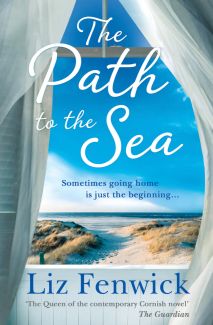
The Path to the Sea is out on 6 June 2019. It is a story of three generations of the Trewin women all with secrets. At Boskenna a large rambling house perched on a cliff above a Cornish beach on a hot August weekend in 2018 the past comes closer to the present. The youngest Trewin, Lottie, tries to keep her own secrets hidden as she searches for answers. But once she uncovers what happened in 1962 what is she going to do?


I wish you every continued success and am looking forward to reading The Path to the Sea!
www.lizfenwick.com
Liz F

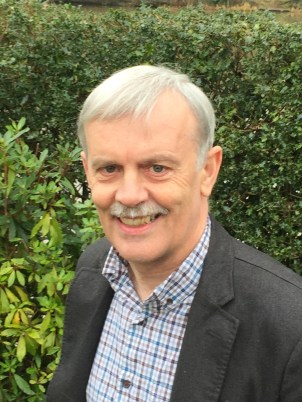
Meet author and self help guru, Peter Jones

Me


Welcome, to my website, Peter, and thank you for taking the time to answer my questions.

When and where did your passion for writing begin?

Pretty much as soon as I could string two words together I was ‘making books’. I would kneel on my grandmother’s living room carpet, fold several sheets of A4 paper in half, staple down the folded edge, then start writing a story and drawing the pictures to go with the story – and once finished my books would be passed around my family on a kind of a ‘read and return’ basis.

Which came first fiction or non-fiction?

Well, technically I guess it was fiction (back when I would visit my grandmother). By my twenties I was writing science fiction short stories (although none of them were ever submitted for publication). In my thirties my wife encouraged me to start writing a rom-com novel… but it was HOW TO DO EVERYTHING AND BE HAPPY – a self-help book – that first made it into print.

How did you become a ‘self-help’ guru?

Well therein lies a tale: I met my wife Kate in my mid-thirties. At the time I was a frumpy grumpy banking consultant. She was a NLP practitioner (a kind of hypno-therapist). She taught me so much about how our brains work, how we motivate ourselves, how to get more out of life… and then she died. Of a brain haemorrhage. Thirty nine years of age. And I was devastated. More than that I was crushed with guilt, because back then I wasn’t a particularly happy person. I had been a misery to live with! What’s more, Kate and I had managed to waste most of our three years together working. Oh, we had big plans about how we’d make enough money to move somewhere sunny… but it never happened. We ran out of time.

So I decided to do something about it. I set about fixing my life. I made lists, drew up plans, devised new habits… and it worked. Some of those ideas actually made me happier. One day a colleague said “you ought to write this stuff down – turn it into a book.” So I did. That ended up being HOW TO DO EVERYTHING AND BE HAPPY. Published by Harper Collins and Audible.

Still not sure about the term guru though! Michelle Ward (of Phoenix FM) gave me that label. But really I’m just a fix it man at heart.

You seem to love public speaking – has this always been the case?

I’m afraid so. I’m just a big show off! No, actually there’s more to it than that. My childhood love of storytelling morphed into a desire to become an actor. To me, writing and acting are the same thing. In fact, one of the joys of writing is that you get to play ALL the parts, even the women. But there’s something utterly amazing about being in front of an audience. I used to be part of a travelling theatre company, but now public speaking fills that need. My talks are quite ‘theatrical’.

You seem to be a very organised person is this essential to the way you approach each project?

I guess I am. I never used to be. In my teens, twenties, even thirties I lived in a perpetual state of barely-organised chaos. Kate was the organised one. Becoming organised was part of my get-happy strategy. A way of taking control of my chaotic, unhappy life.

But you’re right. It bled into everything I do. Becoming organised was how I finally managed to finish that novel that Kate started me writing; THE GOOD GUY’S GUIDE TO GETTING THE GIRL. There have been two more since then and I’m finishing up my fourth.

You are a member of the Romantic Novelists’ Association – what does the organisation mean to you?

I love the RNA! I was a real sceptic at first. Couldn’t see how belonging to an organisation like that would be particularly useful. Surely it would be a lot of flouncey women writing about chiselled jawed heroes? But then my pal Bernadine Kennedy said “it’s quite good fun,” and If anyone knows about having a good time, it’s definitely Berni. And it turned out she was right! It is fun! But more than that it’s been enormously useful rubbing shoulders with all sorts of creative people, all of us trying to carve a living out of what we love.

What key advice would you share on writing or on life.

Write what you love. Do what makes you happy.

Each author has their own favoured way of working – would you share yours with us?

I try to write at least three days a week. I start at 7am and count the number of words I’ve written at the end of each hour. If it’s less than 200 I give myself a good talking to! By midday I’m usually done. In the afternoons I talk about writing or do post, answer emails, tackle the admin…

What has been the highlight of your writing career to date?

The day my agent told me that a producer in Hollywood had enquired about the film rights for THE TRUTH ABOUT THIS CHARMING MAN was pretty special! But actually there have been far more less dramatic, more humbling moments along the way. Recently a teacher’s assistant in Dubai emailed me to tell me that she’d enjoyed my ‘happy book’ and had been asked to do a presentation to the staff about it. Turns out my book is on a recommended reading list, in India. And her school adopts some of my happiness ideas for the children!

That is amazing, Peter. What project are you working on now?

My fourth novel is currently out with my first readers, so in the meantime I’m working on another self-help book. My fifth. I’m particularly excited about this one… though I can’t say much more at this point.

What is next for Peter? 

Who knows!? Hopefully more novels.

Although after some encouraging advice I might take a break to work on a film proposal for MY GIRLFRIEND’S PERFECT EX-BOYFRIEND. So long as I can continue to make a living putting a smile on the faces of my readers (or audience) I really don’t mind.

I wish you every continued success!

Find out more about Peter:-


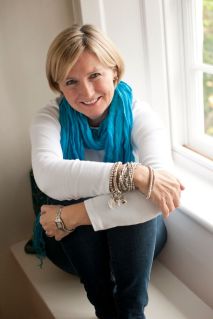
Meet romantic novelist, Virginia Heath

sue squared


I am delighted to welcome prolific romance writer Virginia Heath as my guest today.

  • When and where did your passion for writing begin?

Hard to say, as I think it’s always been there. As a child I loved to read and devoured books like they were going out of fashion. At school I had a talent for writing and secretly fancied myself as an author one day but never dared say that out loud because I came from a very working class, blue-collar background. Girls like me dreamed of working in an office, they most certainly didn’t write books! But I made up stories in my head instead so I suppose it spiralled from there.

  • When did inspiration strike for your successful Wild Warriners Quartet?

The old Hollywood musical Seven Brides for Seven Brothers! I love it, especially the premise – seven down on their luck farmers living in the middle of nowhere, all in desperate want of a wife. The Wild Warriners is my homage to that glorious film – but I thought having seven brothers was a bit much so I settled on four. Like the original brothers, the series starts with them working their land themselves because they cannot afford to hire anyone to help them. Unlike the originals, the Warriners descend from the aristocracy, with the eldest brother Jack being an earl and they tend part of his sprawling but dilapidated country estate in deepest, darkest, dankest Nottinghamshire.

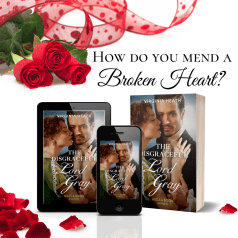
Lord Gray roses instagram

  • Is Regency your favourite period of history or are there others you want to set your future work in?

I’m a proper history nerd – I used to be a history teacher – so I love most periods of history. However, thanks to Mr Darcy, I do have a particular soft spot for the Regency. I think it’s the tight breeches and boots.

  •  Your historical research is impeccable. However, you keep the hero and heroine attractive and the dialogue accessible, whilst giving a flavour that is true to the period. How do you achieve this?

It’s a delicate balance writing a historical. Purists want you to keep everything strictly within the period. Modern readers want characters they can relate to. I figure, no matter what the historical backdrop, people are people so my characters think a lot like we do now. My heroes aren’t misogynists and my heroines aren’t subservient doormats. That said, if you are going to write history you have to get it right. The world my characters live in is completely accurate and although I don’t write hither and thither, I make sure my characters don’t say modern phrases which will pull readers out of the story.

Kings Elite 4

  • You are a member of the Romantic Novelists’ Association – what does the organisation mean to you?

When I first started writing, the only writer I knew was me. I had nobody to talk shop with. Nobody to guide me through the confusing world of publishing and all it entails. Joining the Romantic Novelists Association was a godsend! I’ve made so many friends and learned so many things. It truly is one of the most supportive and nurturing institutions which champions romantic fiction in all its forms and I cannot say enough good things about it.

  • What key advice would you share with aspiring writers?

Write the book! Forget manuals on how to write, don’t get bogged down in everything else to do with publishing; if you want to be a published writer it starts with a completed book. Join a writing group, allow other writers to critique your manuscript. Take their advice on board and be prepared to revise and revise those words until they are perfect. Oh yes – and develop a thick skin! If you are determined to be a writer, you’ll need it.

  • Each author has their own favoured way of working – would you share yours with us?

My books run between 80K and 90K words – that’s a pretty standard sized novel. If I want to publish four a year it means I have to be semi-disciplined. I don’t have the luxury of waiting for the elusive muse to show up. I’m not entirely sure I believe in the muse anyway because it’s my brain thinking stuff up, so I just need to make sure I get my brain in gear. I do that by having a routine. It starts with a cup of tea and a dog walk, I do about 30 minutes of social media or admin, then I take myself up to my office and read only the words I wrote the day before, editing as I go to get me back into the zone. Then I pick up where I left off. There is no magic to it really. I work every day, Monday to Friday from around 8am till 4ish with regular breaks and a long lunch. I stop when the alarm goes off on my computer regardless of where I am in a sentence. In fact, finishing mid-sentence really feeds the muse overnight and ensures I’m raring to go the next morning. I try not to work evenings or weekends unless I am up against a deadline. I also try not to write on holidays or breaks. It’s important to recharge the batteries.

  • What has been the highlight of your writing career to date?

My RONA (Romantic Novel of the Year) nomination in 2017. To be shortlisted was the most amazing feeling in the world. That said, seeing each book on the shelves in a bookshop never gets old either. I always go and visit a new book on publication day.

This slideshow requires JavaScript.

  • What project are you working on next?

I’ve just finished my second series – The King’s Elite. It’s a quartet featuring four Regency spies, which has been huge fun to write. It’s been fascinating researching all the smuggling and shenanigans which went on and then weaving some of that into stories which are best described as romantic suspense with a dash of comedy here and there. I can’t ever seem to write a book without a dash of funny. The final book, The Determined Lord Hadleigh, comes out in June. Then, just for a change, I have a Victorian romance coming out early next year involving my first older hero and heroine. It’s called Lilian and the Irresistible Duke and it’s set mostly in one of my favourite cities – Rome. But this has Renaissance art and the Vatican as a backdrop rather than all the high jinks of smuggling. Right now, I am working on a new standalone story about a nerdy heroine who likes to dig up ruins, and a reclusive earl who is all done with life. It’s a RomCom Beauty-and-the-Beast meets Indiana Jones story. Or at least I think it is. I can’t plot, so I have no idea how it is going to turn out yet! As per usual, I really won’t know what sort of story it truly is until I write the words ‘the end’.

Thank you for taking the time out of your schedule to answer my questions.

Here are Virginia’s social media links:-

Website: https://www.virginiaheathromance.com/

Facebook: https://www.facebook.com/virginiaheathauthor/

Twitter: http://www.twitter.com/VirginiaHeath_

Instagram: https://www.instagram.com/virginiaheathwrites/

Catching up: Sapere Books 1 year on!

logo-1-circle_filled

Congratulations to Amy, Caoimhe and Richard on there first birthday as Sapere Books.

Amy has taken time out of her busy schedule to share some of the events that have happened in this amazing first year.

Since we last caught up in March 2018, a lot has happened at Sapere Books! We now have over 40 authors who have joined the Sapere family, and we have published lots of fabulous novels in our first year.

The genres we were looking for initially are thriving: crime fiction; historical fiction and romantic fiction are all very popular with our readers, and books in a series do particularly well for us. We are just about to publish in a genre we haven’t tried yet: military ‘action and adventure’ fiction, and we are preparing to launch titles in that genre by this time next year, including a Vietnam combat series and Tudor-era naval fiction.

Us with Catherine 2

The team with the winner of The Sapere Books Popular Romantic Fiction Award, Catherine Isaac

One of the most exciting announcements for us in our first year is our sponsorship of two excellent writing awards. In March we sponsored a new award for 2019 from the Romantic Novelists’ Association: The Sapere Books Popular Romantic Fiction Award. The shortlist was very strong and the winner was Catherine Isaac for her wonderful novel YOU ME EVERYTHING. We are also the new sponsors of the Crime Writers’ Association Historical Dagger Award. The shortlist will be announced at CrimeFest in May and I can’t wait to read them all! We are also currently interviewing for our first full-time staff member, which is very exciting, so we should have a new Editorial Assistant to introduce to our authors soon!

Many of the authors we signed up before our launch are working on new projects with us, as they are thrilled with reader feedback and the wonderful work Caoimhe has been doing marketing our books: we regularly feature on Amazon’s best-seller lists, and have been getting Kindle deals world-wide, from the US to Australia – and even India!

We don’t anticipate growing our list hugely in the next year, as we already have so many amazing books scheduled for release, but we will continue to support our Sapere family and we hope all of our authors will continue working with us for many years to come!

party
Happy Birthday Sapere Books!


Catching up with Linda Stratmann

Welcome back, Linda.
Congratulations on becoming the new Chair of the Crime Writers’ Association!
Photographs by Gary Stratmann
Linda, what is your vision for the CWA as the new Chair?
One of the greatest pleasures of being a member of the CWA has been the people I have met and the friends I have made. I joined in 2004 and have served as Membership Secretary, Dagger Liaison Officer and Vice Chair. Seeing the membership numbers grow, with new Chapters formed both at home and abroad has been a rewarding and exciting experience.
The benefits to our members as listed on our website, are substantial. We are doing so much more to interact with other organisations, supporting libraries, booksellers and publishers and have established National Crime Reading Month, and formed the Crime Readers Association, which is free to join, and provides a regular newsletter to over 10,000 subscribers and bi-monthly Case Files.
The CWA has never been in a more vibrant and healthy state than it is now. For that I must express my gratitude to all the former Chairs, whose contribution has made the Association what it is today. I must especially thank Martin Edwards, who in the last two years has striven to make us more businesslike and efficient. Martin has established a CWA archive at Gladstone’s Library, a beautiful location which holds regular events, notably the crime writing related Alibis in the Archive which has proved extremely popular.
I can assure everyone that I do not intend to be the new broom that sweeps away the past. Neither do I want to rush into new ventures before we are ready. The foundation we have now is a firm one, and I want to consolidate what we have before considering how we can move on in the ever-changing world of publishing. I do want to further develop the already formed links with the Romantic Novelists’ Association and the Society of Authors as well as other crime, thriller and mystery writers associations worldwide.
Above all, I see the CWA as an organisation which should serve all its members at whatever stage they are in their writing career; whether debut, mid-career or long-established. We all have something both to contribute and to gain. The CWA is the flagship organisation for crime writers, and a brand of quality. The Dagger prizes we award annually are a recognition of the best in crime writing. My hope is that the future will further strengthen that position.
I wish you and the CWA ongoing and even greater success!

This slideshow requires JavaScript.


Twitter – @LindaStratmann
Linda Stratmann is the author of thirteen non-fiction books mainly about true crime, but her work also includes Chloroform, the Quest for Oblivion, a history of the use and misuse of chloroform, and three biographies, notably The Marquess of Queensberry: Wilde’s Nemesis. The Secret Poisoner chronicles the efforts of science and the law to tackle poison murder in the nineteenth century. She has recently edited a new volume in the Notable British Trials Series, The Trial of the Mannings.
Linda also writes two fiction series. The Frances Doughty Mysteries set in1880s Bayswater, feature a clever and determined lady detective, whose adventures explore aspects of Victorian life such as diet, education, medicine, women’s rights, fear of premature burial and the fashion for cycling.
The second series is set in 1870s Brighton. Mina Scarletti is a deceptively diminutive lady with a twisted spine, whose boldness and confidence enable her to overcome her apparent disadvantages. Mina writes horror and ghost stories and exposes the activities of fraudulent spirit mediums who prey on the vulnerable bereaved.


Meet prolific crime writer Margaret Duffy

I am delighted to welcome crime writer, Margaret Duffy, as my guest this month.

unnamed (2)

Margaret, your website mentions your Czech granddad. Was he the person who inspired your passion for creating and writing stories began?

Although my lovely Czech Grandad told me spooky stories about castles with corridors where candles suddenly blew out he died after having had several strokes when I was quite young so any connection with him must be in my genes. The Czechs apparently are known to be story-tellers. My Dad had a novel called Many Bridges published in the fifties that was based on truth, the Czech Resistance during the Second World War. My flights of fancy started with writing a play with me acting all the parts, six of them, performed in the living room in front of my parents. I really hope they weren’t too bored.

Your work has been delightfully described as ‘police procedural with a touch of romance’, do you have to keep the balance carefully, as crime is your first love – so to speak?

My characters are married which I suppose is also a bit boring. Twice actually as Ingrid (Langley) found Patrick (Gillard) so insufferable at one stage that she threw him out (of her cottage) and went on to smash his classical guitar. She can be like that sometimes. Later, when he was recovering after being horribly injured serving in Special Services and turned up on her doorstep saying he had to find a working partner for a new job in MI5 she took pity on him. But don’t worry he said, no relationship, no sex, just a socialising job, perhaps at house parties given by the rich and famous. In a word, spy-hunting. They soon threw the sex reservation bit out of the window when the old magic of their original relationship resurfaced.
DCI James Carrick of Bath CID eventually marries his one-time DS Joanna Mackenzie too and the four end up working on cases together when Patrick and Ingrid are recruited by the National Crime Agency.

To date you have had over 20 Patrick Gillards, 4 James Carrick and 3 stand alone novels published. Was it the character, setting, or crime that inspired these?

It’s these characters that inspire me all the time, I’m much more interested in how they get the better of serious criminals than the crimes themselves. And criminals are usually rather stupid.

Do you plan each novel out meticulously before writing a first draft?

No, I never know how the plot will develop or end when I start, I just write until it sort of grabs me. I don’t do drafts either, just make corrections and polish it as I go. I find it helps me to picture exactly what’s going on.

What is the most fascinating piece of research you have stumbled across when researching a novel?

The most interesting piece of research I ever did was to read a paper on the various changes that take place with regard to dead bodies when they’re immersed in water.

When did you fall in love with the beautiful city of Bath?

We lived near Bath for several years and I had a job in the City centre. I was struck how, just behind the tourist-thronged streets, beautiful buildings steeped in history and obvious wealth were slum areas, drunks and the homeless. A good place to set crime stories. It’s changed a lot for the better now though.

This slideshow requires JavaScript.

You are a member of the Crime Writers’ Association – what does the organisation mean to you?

The CWA is marvellous from the point of view that it’s so rewarding and valuable to mix and talk to people of like mind.

What key advice would you share with aspiring writers?

Aspiring writers should never take no for an answer, just work hard to improve what you’re trying to achieve.

What has been the highlight of your writing career to date?

The highlight of my writing career was getting my first crime novel, A Murder of Crows, published.

What is next for Margaret?

What next? I’m working on number twenty eight, Gillard’s Sting, and also trying to interest an agent, as mine doesn’t handle it, in a sci-fi crime novel, The Killing Mind.

Many thanks for your time in answering my questions and sharing some insight into your writing world. I wish you every success with your new project and hope you let us know when it is published.

http://www.margaretduffy.co.uk/

An interview with Linda Stratmann: Vice-Chair of the Crime Writers’ Association.


LS_promo (6 of 6) copy300dpi

Welcome Linda,

Your writing career did not begin with fiction, but with non-fiction study of historical crimes. Where did this interest in researching and writing about real crime begin?

It began with my mother! She was an avid reader and a lover of history, and she was fascinated by famous trials. We used to watch true crime programmes on television – we especially liked Edgar Lustgarten – and also discussed cases reported in the newspapers.

In all the cases that you have researched did one motive stand out above all others: greed, hate, love, necessity, premeditated or spontaneous revenge?

The foundation of so many murders is financial, but it is not necessarily always greed, sometimes it is desperation. People kill for insurance money, often to extricate themselves from debt. They kill to escape a relationship because of the costs and consequences of divorce. In the nineteenth century, which is the era I write about most often, poor families poisoned their children just to get the money from burial clubs.

It is not surprising that with such a vast amount of accrued knowledge on true crime that you turned to writing fiction. What was it that enticed you to set both your Frances Doughty and Mina Scarletti series within the Victorian period?

Many years ago I wrote about a Victorian case, the trial of Adelaide Bartlett in 1886 for the murder of her husband. The case was so complex that I realised I needed to understand the Victorians in order to discover the truth behind the lies and the euphemisms; I needed to know how they thought, and how they expressed themselves, and what they believed. The more I researched the more fascinated I became with every aspect of that period. It was natural to want to recreate that time in my fiction.

Both of these women have to overcome difficulties and work to make a life for themselves that is at odds with the expectations of their gender within the period. Were they influenced or based on real characters that you had researched?

Frances is not based on anyone, however Mina Scarletti, who suffers from scoliosis was inspired by two people. Eva, who had a very severe distortion of the spine, was the aunt of a friend of mine. I never got to know her well and she died when I was a child.
Annie Jane Fanny Maclean had a curvature of her spine and walked with a limp. In 1879 a scoundrel called Lewis James Paine romanced her and induced her to transfer her property to him. He then plied her with alcohol and withheld food until she died. A court found him guilty of manslaughter and he was imprisoned for life. Annie’s fate highlighted for me the vulnerability of a disabled young woman in the Victorian marriage market. I wanted a heroine who could overcome this and be strong and independent.

How far did you delve into the world of psychics to help Mina Scarletti unmask the Victorian fraudsters?

I have about a hundred books on the subject – so far! These are both contemporary accounts and modern studies. I have read numerous online journal articles and newspapers, both nineteenth century and more recent. I have also read books by Victorian conjurors and illusionists, and attended a Victorian séance workshop. When I describe a séance in my books I always have to know before I write it how the effects were produced.

This slideshow requires JavaScript.


In the light of all your research would you agree that the truth is often stranger than fiction?

That is often the case, which is why I like to append historical notes at the end of my fiction books. I have just written one for the fourth Mina book because a reference I included was so odd that I felt I needed to reassure the reader I was not making it up.

Are you a detailed plotter when you start a new project?

I always know when I start who the villain is and how and why the crime was committed. I also write what I call the ‘back story’, the details of what has happened up to the point when my book begins. So I know the start and the finish, but what happens between those points has to be natural and organic, as my heroine needs to learn the facts and solve the mystery in a convincing way. That develops as I write.

In all the cases you have studied:-
Which real criminal did you most despise and why?

There are so many! When I wrote The Secret Poisoner I was especially appalled by Richard Overfield who cruelly and cold-bloodedly murdered his baby so he wouldn’t have to support it, by giving it sulphuric acid. He was hanged in 1824.

Was there a real criminal that you admired the cunning of even if not their actual acts?

In cases of fraud there are many clever people who misuse their considerable talents for criminal purposes. Harry Benson and Willam Kurr who I wrote about in Fraudsters and Charlatans were extremely able career criminals who overreached themselves through greed.

Was there anyone you empathised with, or at least understood their motive to commit murder?

Of course I don’t approve of murder, but I did feel sorry for Eric Brown. (Essex Murders) He had suffered constant abuse and cruelty from his father for many years and seen his mother being led a life of terror and misery. He dealt his father a fast and merciful death by planting an anti tank mine under the old man’s wheelchair.

Did you come across anyone who was condemned, yet would have been acquitted as innocent if they had been tried today?

I tend to find that most failures of justice go the other way – people who are almost certainly guilty being acquitted due to insufficient evidence to convince a jury. In the case of Holloway and Haggerty, however (Middlesex Murders) two men were hanged for a murder it is almost certain they did not commit, on the false evidence of a man who was trying to get his own sentence reduced.

What has been your proudest author moment?

The publication of The Marquess of Queensberry: Wilde’s Nemesis. Between forming the determination to write the biography and actually holding it in my hands was eleven years. The first eight were spent trying to find someone who believed in the project as much as I did!

How long ago were you diagnosed with hyperacusis and has it dramatically affected your daily routine?

Hyperacusis is a condition usually resulting from noise damage or physical accident, in which everyday noises, especially if high pitched are painful. The sound of laughter, squeaking brakes, babies crying, electronic beeps, clattering dishware, are all examples. I have had hyperacusis for over twenty years but it took several years to get a diagnosis because it was not well understood or known about. At the time I was working in an office and general office noises and daily travel were hard to tolerate. I can’t wear earplugs all the time as over-wearing makes my tinnitus worse. Since I retired from the day job I have worked from home and been more in control of my daily environment, so life is better. If I go out I carry hearing protection, but even with that, social gatherings are difficult and some locations, especially noisy restaurants, are impossible. I wrote about hyperacusis in one of my novels, The Children of Silence.

What do you do to relax away from the world of writing about crime?

I love cooking, and in the last few years have taken up baking sourdough bread. The scent of a crusty loaf baking in one’s oven is magical!

What is next for Linda Stratmann?

I am near to completion of the fourth Mina book, The Ghost of Hollow House, in which she is asked to investigate a haunting. I have also been commissioned to edit a new volume in the Notable British Trials series, which is a huge honour.

Thank you, Linda, for taking the time to do the interview and I wish you every success with your ongoing and future projects.

www.lindastratmann.com , Facebook and  Twitter 

Meet the inspirational team behind Sapere Books!

logo-3-circle_filled

In March 2016 I interviewed Amy Durant, a successful Publishing Director, as a guest on my blog; two years later I am delighted to welcome Amy back as a co-founder of a new and exciting enterprise, Sapere Books.

Amy

Hi Amy,

Such a lot has happened in a comparatively short space of time. Not only have you started your own imprint, but have also been short-listed for major industry awards. How have these motivated you to build an even more dynamic career and when/how did the idea of ‘Sapere Books’ come into being?

I think all of three of us had been independently toying with the idea of setting up our own business, but none of us had the confidence to voice it publicly or ‘go it alone’. We all decided to move into freelance careers for different reasons after leaving our jobs in publishing, and one day – over a couple of drinks, of course! – we finally all blurted it out and realised this was something we could actually do! We all have strong skills in different areas and I think all of us are confident that we are much stronger in a partnership than we would have been on our own.

It is a lovely name, what was the inspiration behind it?

‘Sapere Aude’ was actually my school motto and roughly translated means ‘Dare to be Wise’, and ‘sapere’ on its own means ‘knowledge’, which we thought was quite appropriate for a publisher. It also links nicely to our owl logo. We wanted something a bit different that would get people talking, and it seems to have worked so far!

What do you think makes Sapere Books stand out from other publishers?

I think that – like many other small, independent publishers – we have the benefit of flexibility. We don’t have any external investors or anyone we have to report to, so we have the freedom to make all the decisions ourselves, which means we can experiment with things and change strategies at the drop of a hat. We have all worked with authors for a long time, and always felt in previous roles that authors got sidelined and somewhat neglected. Our focus is very much geared towards creating author brands and an author community, so everyone feels very much a part of the Sapere team.

What genre submissions are you seeking for Sapere Books?

At the moment we are publishing historical fiction (including crime, thriller, romance and saga); crime fiction; thrillers; romantic fiction; women’s fiction; popular history and historical biography. We are publishing both backlist, out-of-print books and brand new submissions, and we are particularly keen to hear from authors who have either already written more than one title, or plan to continue on a series from their submission.

You are one of three co-founders of Sapere Books, so I am delighted to welcome the other two:  Caoimhe O’Brien and Richard Simpson.

What are your special roles within the company?

AMY: I am the Editorial Director, so all submissions come through to me, and ultimately, I decide what we publish, although this is something we all discuss together, and I often send scripts to Richard and Caoimhe for second opinions. I work one-to-one with authors once the contracts are signed, shaping their novels and getting them ready for the final copyediting and proofreading stage. I’ll then discuss publishing schedules and marketing strategies with Caoimhe to make sure all the books are released at the optimum time and work with her marketing plans.

CAOIMHE: I am the Marketing Director and I am responsible for the marketing and promoting of our books, authors and the company in general.This involves working closely with our authors on author branding, creating websites for them and coordinating social media campaigns.We have a dedicated team of reviewers and bloggers who play a huge role in a successful book launch and dealing with these eager readers is a really fun part of my job. I also spend a lot of time boosting the online profile of the company with the aim of growing our newsletter and reaching more readers.

Caoimhe

RICHARD: I work as the Operations Director for Sapere Books, which basically means that I spend most of my time ensuring that the company’s balances are healthy and that Amy and Caoimhe have enough funds each month so that we can invest as much as possible in all of our books. We constantly reassess whether new methods and strategies that we are implementing are efficient and cost effective to ensure that we are the doing the most we can to help readers see and read our books. However, my time isn’t always spent looking over spreadsheets, as being a small company our roles frequently have to cross over meaning that I often spend some days of my week looking over manuscripts and researching new marketing strategies.

Richard


In my previous interview with Amy she explained that she grew up with a father who was a successful children’s author (Alan Durant) and therefore books had always featured in her life, fuelling her passion. Have you both had lifelong involvement with books and publishing?

CAOIMHE: I spent my childhood with my head in a book and did a degree and Masters in English at university but I didn’t consider publishing as a career choice until after my Masters. I wasn’t sure what career path to choose but when I thought about my constant interest in books throughout my life, it seemed like the only thing that made sense and I am very glad I made that decision.

RICHARD: : Although I spent the vast majority of my childhood with a nose in a book I certainly wasn’t surrounded by a bookish world. But although my parents weren’t avid readers they definitely fostered my love of history and encouraged me to read anything that I could lay my hands on. Perhaps their biggest influence on my life now was due to the fact that when I was a child they jointly began a small company, R & J Simpson Engineering, which builds and repairs historic racing cars. Seeing how a small company develops and works influenced me greatly when thinking about setting up Sapere Books with Caoimhe and Amy, and many of the lessons they learnt in the early years I’ve been very keen to implement into our company. 

What do each of you look for in a book as readers?

AMY: I read widely and across most genres, so what really grabs me when reading a manuscript is the strength of the characters and whether I am compelled to keep reading. We publish ‘popular’ genre fiction, so all our fiction titles have to be plot-driven and to fit within the confines of those genres (we don’t publish anything overly literary or experimental), and we often sign up authors who are either writing a series, or have a few books, so I need to finish a book with the desire to read more by that author. 

CAOIMHE: I mostly read contemporary and crime fiction with some historical fiction thrown in too. I look for plot and character driven novels. Readers enjoy lots of different genres and, as publishers, we must be able to look at a book objectively, not just as something we ourselves would want to read. But regardless of genre, the plot and characters must be strong enough to grab and hold the readers’ attention. 

RICHARD: Unlike Amy and Caoimhe I spend most of my time reading nonfiction, particularly histories and biographies. Firstly what I look for in these books is that it must have a compelling subject, secondly it must be grounded in solid historical research, and thirdly, which historians who focus solely upon the research sometimes forget, it must be well-written. I’ve got a huge range of interests though and will happily read books about almost any subject from ancient Mesopotamia through to the development of Meissen pottery and beyond.

 This is such an exciting venture and I am delighted to have signed up with Sapere Books.logo-1-circle_filled


Nicola Cornick, chair of The Romantic Novelists’ Association (RNA), an historian and award winning novelist, explains what the organisation offers both published and unpublished writers of romance.

9462-EOS16-web

I am delighted to welcome back Nicola as chair of the RNA.

What can the organisation offer romance writers in 2018?

‘The RNA is the professional organisation that supports and promotes romantic fiction in the UK. Membership of the RNA offers authors the chance to strengthen their career through developing their craft at our workshops and conferences and to build a network with other authors who understand the challenges we face and can offer advice and support. We are also building strong links with the industry and our events give authors the chance to meet a wide range of agents, publishers, booksellers, librarians and other professionals.’

That seems to present a broad spectrum of activities and opportunities to support your members.

‘In addition, members receive Romance Matters, our quarterly journal covering all aspects of writing romantic fiction from the craft to industry issues, discounted tickets to all our events and the opportunity to join regional groups. So the benefits are both professional and social.’

Nicola stresses that although the emphasis is on the professional advice, events and networking a friendly and welcoming atmosphere is nurtured. So how does a writer become a member?

‘The RNA welcomes traditionally and independently published authors. Membership is in different bands: A full or independent Author Member is currently £50 (£57 for non EU based) and £60 for Associate Members (£67 for non EU based). All the details can be found online at or by contacting the membership secretary, Gill Stewart, on info@romanticnovelistsassociation.org.

The organisation also welcomes and encourages as yet unpublished writers into its ranks. The New Writers’ Scheme is unique as Nicola explains.

‘We’re very proud of the New Writers’ Scheme (NWS), which provides the opportunity for aspiring authors to submit a manuscript for critique by an experienced writer in the genre. Not only is it a great way for new writers to improve their craft, it also gives encouragement and support. As the RNA has close links with publishers and agents the NWS can provide a route for them to make those connections. Unsurprisingly it is hugely popular and each year a number of NWS members go on to achieve publishing contracts.’

The scheme is open to writers interested in submitting an unpublished romantic novel (or partial) and this year the membership fee cost was £135 (£145 for members outside the EU). This also allows unpublished authors to take part in all RNA activities as well as submitting a manuscript of a full-length novel for appraisal. More details are available by email to: NWS@romanticnovelistsassociation.org There is a cap on the number of submissions that can be accepted each year and acceptance into the scheme is therefore on a ‘first come first served’ basis. The entry slot for submissions closes at the end of August each year.

Today’s publishing environment seems to be becoming more challenging, but Nicola is very optimistic about the present market for the romance genre.

‘I think the romantic fiction genre is changing all the time to reflect both modern life and the changing publishing world. The genre is a broad one. You can find strong romantic elements in many different sorts of novels where people are writing about relationships, whether this is contemporary fiction or epic historicals or books for young adults. Our membership reflects all of these different threads. We also see the books reflecting the concerns of contemporary society, whether it is issues such as work life balance, infidelity or health. The recent return to popularity of Gothic romance perhaps reflects the idea that spooky stories resonate in uncertain times. And of course romantic fiction also continues to provide its readership with the wonderful feel-good stories that readers love.’

Looking forward, I asked Niocla if she thought that the scope for romantic fiction will narrow as lines in the market place are redefined, or do she saw it flourishing as it has done in the past?

‘I see a lot in the press about how the genre is being more and more tightly defined and categorised into sub-genres, but actually at the genre level, in the UK at least, I see it continuing to broaden out. There are romantic relationships represented in a whole range of novels from crime and sci fi to literary fiction. The RNA’s membership reflects that and our awards and events will continue to embrace that wider focus.’

How would Nicola like to see the organisation evolve under your tenure?

‘I’d like to see the RNA continue to provide great support for its membership whilst looking outward a bit more in our promotion of excellence within the genre. We would particularly like to build our relationships within the industry, with booksellers and librarians as well as with publishers and agents. We’d also like to put romantic fiction even more firmly on the map by reminding people what a very successful and dynamic genre it is in business terms.’

Nicola’s natural energy and enthusiasm for the genre shines through her vision, but can romance remain genre specific if there is a need or desire for a more open working relationship within the industry?

‘I think we can do both if we don’t constrain the genre too tightly. Our core role is to support our membership and as this is drawn from a broad range of romantic fiction this fits with the idea of needing a more open working relationship within the industry. With this in mind we are planning a series of joint events with the Crime Writers’ Association and the Historical Writers’ Association, amongst others, where we can explore the things we have in common and the support we give each other as writers more generally.’


Nicola Cornick is the author of dual-time gothic novels House of Shadows and The Phantom Tree (HQ) and also forty plus Regency romances. She is a former trustee of the Wantage Literary Festival and a historian and speaker specialising in public history.


Martin Edwards, chairman of The Crime Writers’ Association (CWA), explains what the organisation offers its members.

Martin 2017 1

‘The CWA is constantly expanding. So are the benefits we offer our members. Writing is a solitary occupation but we offer the chance to join regional chapters, attend our national conference, and receive an excellent monthly newsletter, Red Herrings – plus much more besides. Members value our various social media platforms, and the chance to promote their work to the large subscriber bases of the very popular Case Files and Crime Readers’ Association newsletter. But it’s the collegiate ethos of the CWA that remains its most valuable asset and benefit. In my 30 years of membership I’ve met many wonderful people, and made some very good friends. And their support, through good times and bad, is beyond price.

The CWA has changed a lot in the 64 years since it was founded by John Creasey. Although it is UK based the membership is international and is open to published crime writers, with provisional membership to writers who have a contract but whose book is not yet out: Full or Provisional Membership cost from £55 annually. There is also an option for associate membership for those in the publishing industry.

This does not mean that the aspiring crime writer has been forgotten.

We are keen to encourage new talent within the genre. The CWA is a professional organisation for professional writers, and others in the crime writing business, but – to take just two examples – the CWA Debut Dagger for unpublished novelists and CWA Margery Allingham Prize for new short stories both play an important part in encouraging and developing talent. We also have the CWA Criminal Critique service where, for fees beginning at £87 writers can receive professional feedback on, as yet, unpublished work.

The Crime Readers’ Association, which is free to join, was set up to make the authors, their works and events accessible to their readers. However, the new writer can pick up advice and tips, such as the Do’s and Dont’s when approaching a literary agent.’

Martin is very optimistic about the way the crime genre continues to evolve.

‘Digital publishing is changing the industry fast and nobody knows exactly what the future holds. But crime writing (fact as well as fiction) is as popular as ever. I’m a contemporary crime novelist, but I’ve been delighted by the revival of interest in classic crime fiction, and the truth is that the genre is a very broad church. So is the CWA.’

In light of all the changes that have happened in recent years within the publishing industry Martin views the future of the crime genre and the organisation in a very positive light.

‘I’m confident about the future of both crime writing and the CWA. Despite the fact that we have been around so long, today we have more members than ever before – and the number is rising all the time. That’s genuinely exciting. Writers face many challenges, not just when they are starting out, but throughout their careers, and the CWA is doing more and more to support them. I’ve also just appointed our first Libraries’ Champion and our first Booksellers’ Champion as we seek to collaborate with others for the benefit of all.’

Although the organisation is genre-specific Martin is keen to establish mutual links with other writing organisations within the industry.

‘Whilst the CWA is by definition genre-specific, I’m a firm believer in collaboration, and since becoming Chair I’ve initiated dialogue with a range of groups both here and overseas. A good example is our developing links with the Romantic Novelists’ Association, at both local and national level. Again, these relationships are mutually beneficial, and have great potential for all our members.’

Martin is a relatively new chair but he has already set many new goals to achieve during his tenure.

‘My aim is to oversee the modernisation and professionalization of the CWA, whilst remaining absolutely committed to its core traditional values of collegiality. Achieving this requires action on many levels – local, national, and international. We are modernising our infrastructure, strengthening our finances, recruiting more members here and overseas, and developing relationships with sponsors and other like-minded organisations. What we are seeing really is a quiet revolution, a radical one in some respects, but a process of making sure that the CWA and its members thrive in a challenging environment, and will continue to do so for the foreseeable future. We don’t neglect our past – for instance, we’ve just launched the British Crime Writing Archives at the wonderful Gladstone’s Library, near Chester, with a weekend festival, Alibis in the Archives, that was such a success that we plan to repeat it next year. But we also look to the future – for instance, we’re starting to work with the ALCS, and looking at how we might contribute to the work of the All Party Parliamentary Writers’ Group. A huge amount remains to be done, but our continuing growth illustrates vividly that writers see a real need for the CWA, and are keen to be part of a forward-looking association that always strives to support and promote crime writing in general, and its members in particular, as well as encouraging new writers into the genre.’

When asked what advice Martin would give to new writers of crime he explains that he is a planner.
‘The great thing about writing is this – you can always improve what you have written. A plan works well for me – not everyone is the same, of course. But even the best laid plans are sometimes capable of being changed for the better. So far, I’ve never changed the original solution to any of my novels, but I’ve tinkered with many other elements of my stories.’

Martin Edwards’ eighteen novels include the Lake District Mysteries and the Harry Devlin series, and The Golden Age of Murder won the Edgar, Agatha, H.R.F. Keating and Macavity awards. He has edited thirty five crime anthologies, and won the CWA Short Story Dagger, CWA Margery Allingham Prize, and the Poirot Award. He is series consultant for the British Library’s Crime Classics, President of the Detection Club, and Chair of the Crime Writers’ Association. His The Story of Classic Crime in 100 Books was published in August.