

I was intrigued to read that your first published story was achieved when you were six. You obviously have not looked back since. Could you share with us how this early success came about?
I have to confess, Valerie, that this comment on my home page is actually a bit tongue in cheek and an effort to pretend I am younger than I am. I wasn’t really six. Although I think my very first publication credit, which was a poem in Pony Magazine was actually published when I was about eight 🙂
Would you agree that you are a person who has a natural empathy with people, their problems and situations and that this is part of the appeal of your many successful character driven stories?
I do hope so. I do like people very much. And I think that all writers need empathy and sensitivity in order to step into the shoes of a character who may be quite different than themselves.
How would you describe your work ethic?
Workaholic. Definitely.
To achieve all that you do I can only imagine you are a fantastic organiser of your time. Roughly what percentage of time would you spend researching, writing and promoting a novel on social media?
I spend a little less time on social media that I did once – as it’s not easy to justify spending too much time there. I have a tendency to use it as a procrastination activity to avoid writing. But I would still say, writing a novel 60 per cent, researching 20 per cent, promotion 20 per cent.

I remember driving my son back from college and hearing you on Steve Wright in the Afternoon discussing one of your non-fiction books ‘Eat Loads and Stay Slim’. Then I saw a new title of yours called ‘Ten Weeks to Target’ and I wondered if the research and work on one project creates a ‘spin off’ of ideas for new stories as an ongoing process?
I am thrilled that you heard the Steve Wright Interview – my one claim to fame, that!
Actually, the two books were entirely separate. Ten Weeks to Target came first – it was originally published as a serial in Woman’s Weekly. However, there’s definitely a spin off process that goes on constantly. Both of these titles came from my own experiences of trying to stay slim – and eat loads!
Could you tell us about some of the lovely pets that share your life?
I adore dogs. Currently there is Maggie May, my ten year old white German Shepherd. And Seamus who is a wolfhound, fourteen stone, and five years old.
You are not only a lecturer, public speaker and a creative writing tutor, but you also still attend writing events yourself. How important is this two way interaction?
Writing is my passion as well as my work. So I guess it’s just how things pan out. I think I must be quite boring. So recently I’ve taken up singing lessons and am learning to play the guitar, in an attempt to be more balanced.
Could you give a short piece of advice to as yet unpublished writers who are trying to break into the limited short fiction market, especially in the UK?
Don’t assume that rejections mean you aren’t any good. I still get my fair share of rejections. Not every story is saleable at the time you send it out. That doesn’t mean it won’t be later.

Of all the things that you have achieved within your career what have been the top three most memorable highlights that you hold fondly?
This is tricky. There have been many. I will try and narrow it down.
I quite liked going on the Steve Wright Show.
Selling my first short story was awesome, as was selling my first novel.
And the third one, was when the editor of My Weekly phoned me and asked me if I fancied going on an all expenses paid trip to Malawi – I’m a journalist as well as a fiction writer. That experience and the going bit – I went twice – was fabulous.
The more I researched this interview the more convinced I was that your love of the world of writing is a driving force which means there are many more delights for us to look forward to. Could you share with us what is next for Della Galton?
At the moment I am writing a series for People’s Friend – I can’t tell you too much about this as they haven’t started publishing it yet. Watch this space. But I’m also keen to write a third novel in my Ice and a Slice series. The first novel is called Ice and a Slice. The second is The Morning After The Life Before. I don’t know what the title of the third one will be yet. If any of your readers have any suggestions I’d love to hear them though.
Many thanks for having me as a guest.
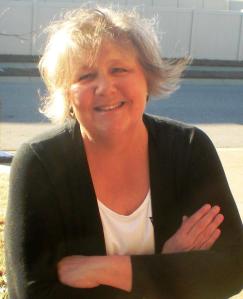 I am delighted to welcome my special guest this month, bestselling Historical Romance author, Cindy Nord.
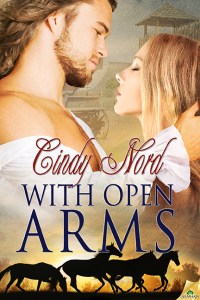
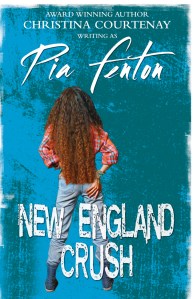 As Valentine’s Day approaches can you share with us some of the major changes you have seen in the last couple of years within the world of romance?
 What better way to usher in the New Year than to share an inspiring interview with Ian Skillicorn who is a very talented and successful writer, publisher, speaker, director, voiceover artist, translator and producer.
 In 2006 you founded
  Your connection with short fiction was further strengthened when you founded National Short Story Week in 2010, which has best-selling author Katie Fforde as its patron. What would you say is the essence of a good short story?
 That is excellent and inspiring for the future.


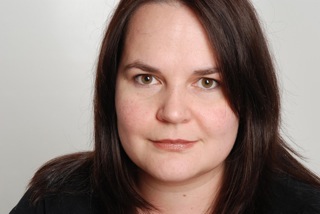 I am delighted to welcome Liesel Schwarz, Queen of Gothic Steampunk to my blog this month. I first came across Liesel’s work when I read her debut novel ‘A Conspiracy of Alchemists’, which is an action packed adventure described as “Combining the best elements of Gothic fiction with contemporary Steampunk”. It was chosen by Random House to launch their SFF imprint (Science Fiction and Fantasy) Del Rey in the UK.
 How do you describe Gothic Steampunk?
 How long did it take you to become a published author?
 Do you constantly jot down ideas for the next book as you work?


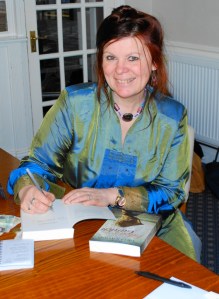 It was a really bad viral infection that left me with ME for years. Before then, I’d been energetic and healthy, holding down a career, cycling, rushing up mountains, and working for hours in my garden. Being so ill for so long, and not knowing if I would ever get better, forced me to completely reconsider my life. That’s when I decided I would work part time in a far less stressful job, and just go for my lifelong dream of being a writer. I’d never had the courage to do it before, in case I failed. Having ME made me realise I’d nothing to lose, so it gave me the courage to try.
 My crog loft is tiny, but it’s nice and cosy and womb-like (and has steep stairs that stop me from sneaking out into the garden when I hit a tricky bit!). When I’m writing serials, I have to plot everything out, as there is no chance of going back and changing things. When I’m writing my novels, I start with a general idea of the plot, but I know that’s going to change as soon as I start, and find the heroine needs a mother, or a brother or best friend, who turns out to be far too interesting to ignore! I generally know the beginning and the end, but once the first draft is done and the real work begins, anything can happen. That’s the exciting, and the scary bit, because I’m never sure if it’s going to work. I love tightening up the plot, and developing the twists and the turns to (hopefully) keeping the readers on the edge of their seats. ‘Eden’s Garden’ was a real challenge, moving between the modern heroine and Victorian times, and keeping the two stories weaving in and out of each other while not giving the twists (especially the one no one ever spots!) away. ‘We That are Left’ had some of its structure dictated by the historical events of WW1, even though the action is focused mainly on the experience of the women and civilians at home. The next book is also based around historical events, but with some family twists and turns too.
 A big emotional story, set in a rambling old house in Cornwall or Snowdonia in Victorian or Edwardian times, with women firmly at the centre of the action, each making her own way towards self-fulfilment. There is a mystery to be solved, and danger to be overcome, and the path of true love definitely never runs smooth. There will be a garden in the background somewhere, and probably cake. For ‘We That are Left’ I researched authentic dishes from WW1 newspapers for my heroine to use, as she struggles to keep her family and the local village fed on limited resources, mainly anything she can grow in the kitchen garden on the family estate.

 Please tell us about your new book
  More from Sue:
 valerie holmes, author