Abigail Moor – Biddy’s Bakery

Abigail was rescued as a baby by Lord Edmund Hammond – or so she believed.

Raised as a lady, calling him father, she enjoyed a sheltered life as she grew up and loved her step-brother, Frederick. Life dramatically changes because she has to flee from a forced marriage when Lord Hammond falls ill. With her lifelong maid she travels to the port of Whitby via the beautiful ancient city of York.

To Abigail’s naive eyes Whitby would have been a noisy, bustling place with a myriad of smells from the various industries surrounding the whaling, fishing and boat making industries. Even Abigail’s name, like her situation, has a double irony. Abigail literally means ‘my father’s joy’, yet she does not know who he is. The name is also used commonly to refer to a lady’s maid.

When I explored Whitby I came across a narrow snicket in which was a love old ram-shackled set of buildings I borrowed this setting for ‘Biddy’s Bakery’, placing it next to an old inn like the amazingly well restored White Horse and Griffin and took the extra liberty of placing a laundry opposite. Whitby was so wealthy through the whaling industry that in 1790 there were two street lamps in Church Street outside this original coaching inn.

I had the pleasure of staying in the same room that it is said Charles Dickens once used. It was a lovely friendly place in a fascinating location, and serves excellent food.

The eBook of Abigail Moor: The Darkest Dawn is available from Smashwords and Amazon directly for $2.99/£1.88 from most eBook sellers.

The Wonders of Whitby


Whitby is a place I love to explore. It has a fascinating history, some of which I would like to share with you, from the ruined abbey that dominates the headland, with the unique church of St Mary’s that leads you to the famous 199 steps and the town and harbour below.

The abbey was first settled by St Hilda when she opened the first monastery in 657 AD. Famed for her energy, commitment to learning, and her faith, life could not have been easy in such an exposed place. The original buildings have long since gone but the ruined stone remains of the abbey as it stands has been a symbol of the haven of the port for many a fisherman returning home.

The whaling industry made Whitby an important and lucrative port throughout the eighteenth century until 1830 when it collapsed because of the discovery of the cheaper, cleaner and more accessible paraffin oil. Throughout this successful period other industries flourished: ship building, sailing, fishing, tanning and one which came into popularity during the period of Queen Victoria’s mourning of Prince Albert, Whitby Jet.

James Cook was apprenticed to Captain John Walker in 1746 and served nine years. He went on to be the first European to successfully chart the East Coast of Australia and New Zealand. Walker’s house is now a museum to Cook.

I hope that has given you a flavour of this beautiful and atmospheric port on the northeast coast of England.

Further information

Sharing Places – Part 4

Whilst researching social history for my stories I visit some fascinating places. Here are some of the places that have triggered plots, created characters or inspired a mood or a desire to return to the keyboard and write.

4. Whitby, North Yorkshire, England.


Whitby Abbey
Whitby Abbey, an iconic image on the headland.

One of my favourite places to explore on the North Yorkshire coast is the unique, atmospheric town of Whitby. This ancient port situated on the northeast coast of England is famous for many reasons.

St Hilda founded a double monastery (for monks and nuns) here in 657 AD, making it a valued seat of learning. The famous Synod of Whitby was held here in 664 AD.

Whitby became a famous whaling port with such famous seafaring names associated to it as the Scoresby‘s.

Whitby's 99 steps
The famous 99 steps, better going down than up!

The James Cook Museum is housed in the C17 house where he lived as an apprentice. It is an atmospheric place overlooking the River Esk. There is a large car park nearby so exploring this side of the harbour is not a problem if arriving by car. If you walk into the East side of the harbour from here you can wander through the old cobblestoned streets and explore the many yards and snickets.

Passing the old inns and market square you will reach the bottom of the famous 99 steps which lead up to the unique church of St Mary and then to the abbey beyond. The views across the harbour from here are magnificent.

St Mary's Church
The unique St Mary’s church in front of Whitby Abbey has pride of place on the horizon.

To experience staying in one of the original inns, The Whitehorse and Griffin has been lovingly restored and offers excellent food.

Whitby sporadically comes into my stories, either in passing as in Abigail Moor, or as a setting in itself, such as Amelia’s Knight, which is still to be released as an eBook.

Whatever your reason for visiting this fascinating location, being prepared to walk and explore its narrow alleyways, historic places, or the more usual shops and eateries on the west side of the harbour, then there is plenty for everyone to enjoy.

Whitby houses
A glimpse of the red pantile rooves that characterise bay town houses.

For excellent seafood and a great place to eat it, looking back across the harbour to the abbey is The Magpie.

Other places of interest in the area can be found on these helpful websites:


Sharing Places – Part 3

Whilst researching social history for my stories I visit some fascinating places. Here are some of the places that have triggered plots, created characters or inspired a mood or a desire to return to the keyboard and write.

3. Ormesby Hall, North Yorkshire, England.

DSC04426DSC04400
This interesting Georgian mansion belonged to the Pennyman family for nearly four centuries and is now open to the public. It is nestled in its own grounds hidden away from the busy modern environment surrounding it.

I was delighted to be shown around the servant’s passageways when I visited. They thread through the house so that the daily running of the hall did not get in the way of the family who lived there.

The Victorian launderette is not as grand as the larger hall of Beningborough near York that gave rise to Chloe’s Friend, but the estate is a joy to walk around. You can visit the local church further up the lane and the stables which are used to this day by The Cleveland Mounted Police.

Also, there is a permanent exhibition for the model railway enthusiast and fine cakes in the tea room.

Sharing Places – Part 2

Whilst researching social history for my stories I visit some fascinating places. Here are some of the places that have triggered plots, created characters or inspired a mood or a desire to return to the keyboard and write.

2. Saltburn Gill, North Yorkshire, England.

67113_135084629972080_1860012131_n534704_137209683092908_823309552_n

A ten mile, fine sandy bay sweeps between Huntcliffe and the mouth of the River Tees on the once remote northeast coast of England. The town of Saltburn nestles in the shadow of the headland and has a fascinating historical connection with smuggling in the region.

I borrowed the location for some of my nineteenth century titles. Saltburn became ’Ebton’ and the headland ‘Stangcliffe’. The location of the actual Ship Inn was used as the heart of the old fishing village. The Saltburn Gill, which runs through an ancient natural oak and ash woodland behind Cat Nab, has a rich undergrowth of Holly and Hazel and a myriad of flowers and wild birds that vary throughout the seasons making it a vibrant and beautiful place to visit at any time of the year.

It was a route used in times past by smugglers and my version of it appears in such stories as Phoebe’s Challenge and many other titles of my back list, many are yet to be converted to their eBook format.


Sharing Places – Part 1

Whilst researching social history for my stories I visit some fascinating places. Here are some of the places that have triggered plots, created characters or inspired a mood or a desire to return to the keyboard and write.

 1. Nunnington Hall, North Yorkshire, England.

Blog1Blog2

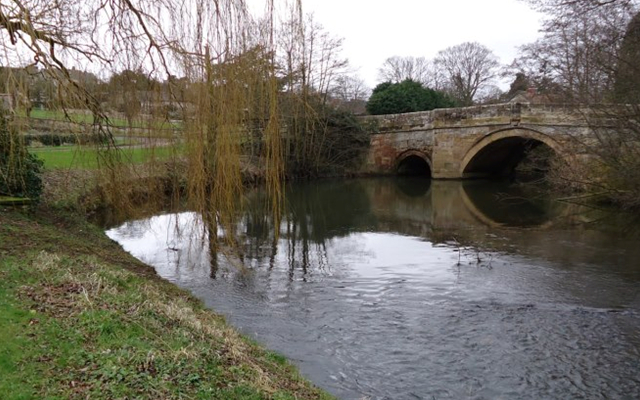
Twenty one miles north of the beautiful city of York is the historic estate of Nunnington Hall. Its history stretches back from Tudor times through the family’s sympathies with the Jacobite’s cause to modern day.

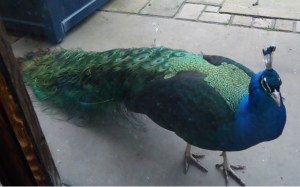
Built on the banks of the river Rye, it is a beautiful location to explore where peacocks roam free. I loved exploring the period rooms and also the old servant’s rooms and attic where the hall houses a fine miniature collection. The views are magnificent. It feels as if the hustle of modern day life has been left behind as you explore this beautifully preserved walk through history.

Meet Janice Rosser

Janice OAPschat

I am happy to welcome the creator of Oapschat.co.uk – a website with a mission to help the community it serves.

Could you tell us something about yourself?

Hello Valerie and thank you so much for inviting me. My name is Janice Rosser, (please call me Jan!) I was born and bred in Hereford, where I still live fifty plus years later. I have one sister, the author Margaret James. On leaving school, I had a career in banking, followed by a few enjoyable years working as a book keeper in a local Veterinary Surgery. I took a career break to look after my two sons. I then spent twelve years working in various Pharmacies. Since 2010, I have looked after my elderly mother full time.

What inspired you to start Oapschat?

A family conversation around the dining room table one lunchtime. We realised there were not many online community pages for the people approaching the silver and golden years of their lives. So, I started a Facebook page in April 2013 and began posting and commenting on various topics to do with the over fifties age groups.

How did you visualise the concept of Oapschat initially?

I thought I would see how the FB page took off and then write a weekly blog to see if any interest was generated. It quickly became clear that people were very interested and commented and posted daily. I was mentioned in The Daily Mail and once I reached 300 plus members on FB, I decided the time was right to launch the website in November 2013.

You encourage interaction between the readers and contributors to the site. Have you found it encouraging to see the response and also the number of sponsors that support it? 

I find it extremely encouraging to read the various viewpoints and comments and to know that I am helping people engage in online conversation. I do not have sponsors as such, I have had various companies and individuals that have donated raffle prizes for me which is fantastic and I also have fifteen contributors to date who have written their own articles for the website.

Did its success surprise you, or were you aware of a need for such site for this age group? 

The website is building very nicely after launching on November 1 2013 and the Facebook page now has 408 members. I realised last year that there is a real need for this age group after the Facebook launch in April 2013.

Being a carer and developing a website are both demanding activities. What do you see as the next step forward for Janice and Oapschat? 

Caring is indeed very demanding. It can also be very tiring and isolating. Oapschat is hard work, but extremely satisfying and rewarding. I want to see it grow and develop in order to reach out and help many people who may be in a similar situation to myself. I receive many messages of support from people who are living alone and they say that it is a good way of interacting and realising you are not on your own. It is a great way to make new friends and develop my writing skills. Oapschat is my baby and I shall nurture it for many months and hopefully, years!

Thanks you for taking the time to answer my questions and I wish you every success in your very worthwhile venture in reaching out to others. 

Character, plot or pace – which one comes first?

One of the most difficult issues a new writer faces is to know where they should begin their story. Creative writing books often advise that a story, whatever its length and genre, should begin at a point where something is happening. Ideally the protagonist, your main character, is facing the essence of drama – a conflict. I agree, but what is essential is that the reader should begin to establish a relationship with that character so that they want to read on to follow them on their journey through the story, to what will hopefully be a satisfying ending.

The initial conflict provides a situation, which brings out aspects of their character that should appeal to the reader as they face their dilemma. The background to these is the place – the setting. This will help set the era, the physical aspects – the stage – against which the characters are performing on the page.

A common mistake is to open with too much explanation about their character’s life before the current situation. This means the reader may become bored before they understand who the protagonist is and become interested in them as a person who they can relate to.

Every writer will be inspired differently by people, places and plot to create that spark, which drives them to convert an initial idea into the first gripping page of a novel.

For example:-

Phoebe’s Challenge: Phoebe is a young woman who works in a mill with her younger brother, Thomas. The idea for the opening was triggered by an illustration in a children’s book written about the hardship of life in cotton mills at the turn of the nineteenth century. I then created the evil overseer Benjamin Bladderwell as the main reason why it became imperative that Phoebe escapes. I liked the idea that the plot would become more complex if a mysterious stranger helped them. Without giving any spoilers away, this then broadened the whole plot out into the world of smuggling around the bay towns of North Yorkshire, England. A time when we were  at war with France. From here Phoebe and Thomas’s adventure involves more conflict amongst the different social classes and a life and death chase with a man who they do not know if they can trust. Over the pace of the adventure another thread is layered, that of the developing romance.

From one initial idea, others spark until what is created is a tightly written romance or mystery to be enjoyed. Wherever my initial idea comes from for a story, I always aim to take my readers on an adventure which will end at an optimistic point, where the main character has overcome problems and survived.

I am always fascinated to hear how other writers work, published or not. What inspires you to write? Where have your best ideas come from?

Peter Lovesey: Master Storyteller

This month Peter Lovesey generously shares some of the highlights of his fascinating career to date as an established and highly respected, internationally acclaimed, crime writer. I found his answer both interesting and inspiring and appreciate him taking time out of his busy schedule to answer my questions.


Cindy A Christiansen has posted an interview she did with me over at http://cadragonfly.blogspot.co.uk/2014/02/in-dog-house-with-me-author-valerie.html.

Happy reading 🙂

Val

Christmas Giving

Nicola and Rochester
Here is a lovely picture of Nicola and Rochester
I have been fortunate to meet some amazing people in my life. I find the most inspirational are those who either live with an ongoing condition, disability or have overcome it. Or those who generously give their spare time to help others.
Nicola Cornick is not only a successful author but also a Guide Dog Puppy Walker. I asked Nicola about how she became involved in the charity and her love of dogs.
You do work for the Guide Dogs for the Blind. Could you explain how you became involved with this charity?
Years and years ago when he was a child, my husband saw an item on Blue Peter about guide dogs and from that moment he wanted to become a puppy walker. We sponsored a guide dog a number of years ago but of course walking and training a puppy is a big time commitment and so for a long time we couldn’t do it. Finally, when we were both working in flexible jobs, we signed up. It is one of the most rewarding and enjoyable things I’ve ever done; we were so proud when our most recent puppy, Rochester, qualified as a working dog last month! I think the dogs are amazing in what they can do and it is extraordinary to look at pictures of the tiny little dog that comes to you at 6 weeks old and then see them fully trained and changing people’s lives.
A puppy is not just for Christmas – but a guide dog puppy can be sponsored as a Christmas gift at http://www.guidedogs.org.uk