Cobles and Contraband

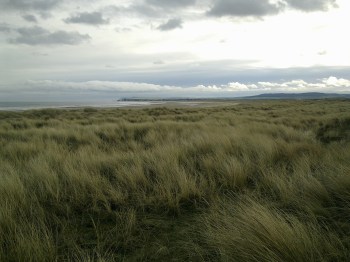
DSC03675My stories are often set around the dramatic coast and countryside of North Yorkshire, where I grew up. It is an area of outstanding natural beauty and fascinating social history, especially around the early nineteenth century when England was at war with France and many things were changing at home.

Smuggling was rife along Britain’s shores. The vast expanses of accessible flat, sandy beaches in the area made it an ideal place for smuggled goods to be brought ashore. Despite the busy German Ocean (known today as the North Sea) with it colliers making their way to London with coal and fetching back urine for the alum works along the northeast coast, privateers still operated freely. The custom coble was often outrun by more superior vessels or their men outnumbered on shore.
05022011320The Yorkshire cobles with their flat bottoms were ideal for beaching loads of contraband. Goods such as tea, cards, ankers of brandy, geneva, pepper, ‘sack’ or sherry, sugar loaves, silk and cards, to name a few were taxed heavily, which meant that common folk felt justified by buying them cheaply from the free-traders. The irony was that the coin, which made its way back to France, helped to fund the enemy that British soldiers were fighting.

Work on the land was seasonal and low paid. Fishermen depended upon hauling in a good catch to feed their families. It was no surprise then that many were involved in the lucrative trade. Despite the Riding officers best attempts to stop it the problem was rife.

20082011431The rugged headlands, flat sweeping fine sandy bays, natural woodland and the beautiful expanse of the North Yorkshire Moors inland add both a great variety of scenery and beauty. The settings for my stories are as dramatic as the plots. I have created my own villages and characters and will introduce you to some of them as I look more closely at the actual history of this fascinating region.

In Phoebe’s Challenge, the hunted brother and sister are rescued by a stranger and brought down to a safe cottage, a haven, on the sandy shoreline, sheltered under my fictitious headland of Stangcliffe. Desperate to escape their past life they have no choice but to trust a man they hardly know in an area where nothing is at it seems – but Phoebe likes a challenge!


Sharing Places – Part 4

Whilst researching social history for my stories I visit some fascinating places. Here are some of the places that have triggered plots, created characters or inspired a mood or a desire to return to the keyboard and write.

4. Whitby, North Yorkshire, England.


Whitby Abbey
Whitby Abbey, an iconic image on the headland.

One of my favourite places to explore on the North Yorkshire coast is the unique, atmospheric town of Whitby. This ancient port situated on the northeast coast of England is famous for many reasons.

St Hilda founded a double monastery (for monks and nuns) here in 657 AD, making it a valued seat of learning. The famous Synod of Whitby was held here in 664 AD.

Whitby became a famous whaling port with such famous seafaring names associated to it as the Scoresby‘s.

Whitby's 99 steps
The famous 99 steps, better going down than up!

The James Cook Museum is housed in the C17 house where he lived as an apprentice. It is an atmospheric place overlooking the River Esk. There is a large car park nearby so exploring this side of the harbour is not a problem if arriving by car. If you walk into the East side of the harbour from here you can wander through the old cobblestoned streets and explore the many yards and snickets.

Passing the old inns and market square you will reach the bottom of the famous 99 steps which lead up to the unique church of St Mary and then to the abbey beyond. The views across the harbour from here are magnificent.

St Mary's Church
The unique St Mary’s church in front of Whitby Abbey has pride of place on the horizon.

To experience staying in one of the original inns, The Whitehorse and Griffin has been lovingly restored and offers excellent food.

Whitby sporadically comes into my stories, either in passing as in Abigail Moor, or as a setting in itself, such as Amelia’s Knight, which is still to be released as an eBook.

Whatever your reason for visiting this fascinating location, being prepared to walk and explore its narrow alleyways, historic places, or the more usual shops and eateries on the west side of the harbour, then there is plenty for everyone to enjoy.

Whitby houses
A glimpse of the red pantile rooves that characterise bay town houses.

For excellent seafood and a great place to eat it, looking back across the harbour to the abbey is The Magpie.

Other places of interest in the area can be found on these helpful websites:


An Interview with Cindy Kirk

My guest this month is prolific American author Cindy Kirk. Cindy is a writer who loves romance and has written many special editions for Harlequin.

When did you first discover the joys of story-telling or writing your own stories down?

I’ve loved books and stories for as long as I could remember.  If I didn’t like a book’s ending, I’d make up my own.  The same held for movies or televisions shows.  For a long, long time I thought that everyone made up different endings.  I wrote my first “book” when I was thirteen.  It was a romance, of course, with a happy ending!  I let one of my teachers read it and I could tell she didn’t think it was very good.  It was a devastating blow to my young writer’s soul.

Which novels inspired you, or you would rate as your all time favourites?

LaVryle Spencer’s Bitter Sweet and Separate Beds; Susan Elizabeth Phillips’s Dream a Little Dream and Nobody’s Baby But Mine; Lisa Kleypas’s Travis Series, Julia Quinn’s Bridgerton Series.

Could you share your journey to becoming a published author with us?

I wrote five books, it was the fifth that sold, 3 years after I started writing in pursuit of publication.  The book that sold won a contest.  The first prize was a critique of the entire manuscript by Harlequin editor, Patience Bloom.  She not only read it, she bought it.  And 15 years later, she’s still my editor!

What advice would you give to a new writer who has not made it into print yet?

To continue to hone your craft.  When I started writing, I began attending regional conferences for writers. Every year I attend the Romance Writers of America‘s National Conference and soak in all the wonderful information on how to write a better book.

Why romance?

I love a happy ending!  Not only in books but in movies.  I want to cheer for the hero or heroine, see them become stronger, learn life lessons, then be rewarded.

How did the ‘Jaunty Quills‘ develop?

I was writing also for Avon (Harper Collins) when a group of Avon authors decided to get together and start a blog.  At the time I was the only contemporary author.  The group has morphed over time to include authors from all different romance genres and publishers.  It’s been fun every step of the way.

What is the essence of a Cindy Kirk novel?

It’s a fun, enjoyable read with a dash of humor.

What is next for Cindy?

More books in my Jackson Hole series for Harlequin.  A return to Harper Collins with a novella that will release in December 2014.  And, who knows? That’s the beauty of writing.

More from Cindy

Sharing Places – Part 3

Whilst researching social history for my stories I visit some fascinating places. Here are some of the places that have triggered plots, created characters or inspired a mood or a desire to return to the keyboard and write.

3. Ormesby Hall, North Yorkshire, England.

DSC04426DSC04400
This interesting Georgian mansion belonged to the Pennyman family for nearly four centuries and is now open to the public. It is nestled in its own grounds hidden away from the busy modern environment surrounding it.

I was delighted to be shown around the servant’s passageways when I visited. They thread through the house so that the daily running of the hall did not get in the way of the family who lived there.

The Victorian launderette is not as grand as the larger hall of Beningborough near York that gave rise to Chloe’s Friend, but the estate is a joy to walk around. You can visit the local church further up the lane and the stables which are used to this day by The Cleveland Mounted Police.

Also, there is a permanent exhibition for the model railway enthusiast and fine cakes in the tea room.

Sharing Places – Part 2

Whilst researching social history for my stories I visit some fascinating places. Here are some of the places that have triggered plots, created characters or inspired a mood or a desire to return to the keyboard and write.

2. Saltburn Gill, North Yorkshire, England.

67113_135084629972080_1860012131_n534704_137209683092908_823309552_n

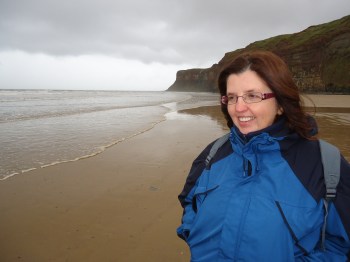
A ten mile, fine sandy bay sweeps between Huntcliffe and the mouth of the River Tees on the once remote northeast coast of England. The town of Saltburn nestles in the shadow of the headland and has a fascinating historical connection with smuggling in the region.

I borrowed the location for some of my nineteenth century titles. Saltburn became ’Ebton’ and the headland ‘Stangcliffe’. The location of the actual Ship Inn was used as the heart of the old fishing village. The Saltburn Gill, which runs through an ancient natural oak and ash woodland behind Cat Nab, has a rich undergrowth of Holly and Hazel and a myriad of flowers and wild birds that vary throughout the seasons making it a vibrant and beautiful place to visit at any time of the year.

It was a route used in times past by smugglers and my version of it appears in such stories as Phoebe’s Challenge and many other titles of my back list, many are yet to be converted to their eBook format.


Sharing Places – Part 1

Whilst researching social history for my stories I visit some fascinating places. Here are some of the places that have triggered plots, created characters or inspired a mood or a desire to return to the keyboard and write.

 1. Nunnington Hall, North Yorkshire, England.

Blog1Blog2

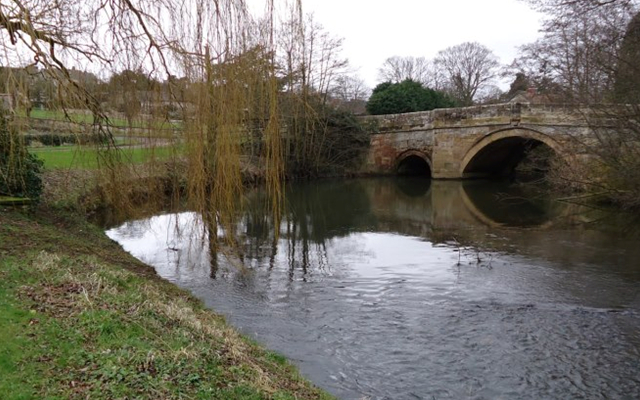
Twenty one miles north of the beautiful city of York is the historic estate of Nunnington Hall. Its history stretches back from Tudor times through the family’s sympathies with the Jacobite’s cause to modern day.

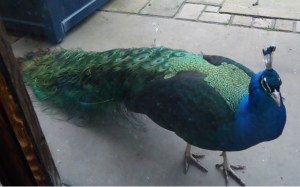
Built on the banks of the river Rye, it is a beautiful location to explore where peacocks roam free. I loved exploring the period rooms and also the old servant’s rooms and attic where the hall houses a fine miniature collection. The views are magnificent. It feels as if the hustle of modern day life has been left behind as you explore this beautifully preserved walk through history.

Meet Janice Rosser

Janice OAPschat

I am happy to welcome the creator of Oapschat.co.uk – a website with a mission to help the community it serves.

Could you tell us something about yourself?

Hello Valerie and thank you so much for inviting me. My name is Janice Rosser, (please call me Jan!) I was born and bred in Hereford, where I still live fifty plus years later. I have one sister, the author Margaret James. On leaving school, I had a career in banking, followed by a few enjoyable years working as a book keeper in a local Veterinary Surgery. I took a career break to look after my two sons. I then spent twelve years working in various Pharmacies. Since 2010, I have looked after my elderly mother full time.

What inspired you to start Oapschat?

A family conversation around the dining room table one lunchtime. We realised there were not many online community pages for the people approaching the silver and golden years of their lives. So, I started a Facebook page in April 2013 and began posting and commenting on various topics to do with the over fifties age groups.

How did you visualise the concept of Oapschat initially?

I thought I would see how the FB page took off and then write a weekly blog to see if any interest was generated. It quickly became clear that people were very interested and commented and posted daily. I was mentioned in The Daily Mail and once I reached 300 plus members on FB, I decided the time was right to launch the website in November 2013.

You encourage interaction between the readers and contributors to the site. Have you found it encouraging to see the response and also the number of sponsors that support it? 

I find it extremely encouraging to read the various viewpoints and comments and to know that I am helping people engage in online conversation. I do not have sponsors as such, I have had various companies and individuals that have donated raffle prizes for me which is fantastic and I also have fifteen contributors to date who have written their own articles for the website.

Did its success surprise you, or were you aware of a need for such site for this age group? 

The website is building very nicely after launching on November 1 2013 and the Facebook page now has 408 members. I realised last year that there is a real need for this age group after the Facebook launch in April 2013.

Being a carer and developing a website are both demanding activities. What do you see as the next step forward for Janice and Oapschat? 

Caring is indeed very demanding. It can also be very tiring and isolating. Oapschat is hard work, but extremely satisfying and rewarding. I want to see it grow and develop in order to reach out and help many people who may be in a similar situation to myself. I receive many messages of support from people who are living alone and they say that it is a good way of interacting and realising you are not on your own. It is a great way to make new friends and develop my writing skills. Oapschat is my baby and I shall nurture it for many months and hopefully, years!

Thanks you for taking the time to answer my questions and I wish you every success in your very worthwhile venture in reaching out to others. 

Character, plot or pace – which one comes first?

One of the most difficult issues a new writer faces is to know where they should begin their story. Creative writing books often advise that a story, whatever its length and genre, should begin at a point where something is happening. Ideally the protagonist, your main character, is facing the essence of drama – a conflict. I agree, but what is essential is that the reader should begin to establish a relationship with that character so that they want to read on to follow them on their journey through the story, to what will hopefully be a satisfying ending.

The initial conflict provides a situation, which brings out aspects of their character that should appeal to the reader as they face their dilemma. The background to these is the place – the setting. This will help set the era, the physical aspects – the stage – against which the characters are performing on the page.

A common mistake is to open with too much explanation about their character’s life before the current situation. This means the reader may become bored before they understand who the protagonist is and become interested in them as a person who they can relate to.

Every writer will be inspired differently by people, places and plot to create that spark, which drives them to convert an initial idea into the first gripping page of a novel.

For example:-

Phoebe’s Challenge: Phoebe is a young woman who works in a mill with her younger brother, Thomas. The idea for the opening was triggered by an illustration in a children’s book written about the hardship of life in cotton mills at the turn of the nineteenth century. I then created the evil overseer Benjamin Bladderwell as the main reason why it became imperative that Phoebe escapes. I liked the idea that the plot would become more complex if a mysterious stranger helped them. Without giving any spoilers away, this then broadened the whole plot out into the world of smuggling around the bay towns of North Yorkshire, England. A time when we were  at war with France. From here Phoebe and Thomas’s adventure involves more conflict amongst the different social classes and a life and death chase with a man who they do not know if they can trust. Over the pace of the adventure another thread is layered, that of the developing romance.

From one initial idea, others spark until what is created is a tightly written romance or mystery to be enjoyed. Wherever my initial idea comes from for a story, I always aim to take my readers on an adventure which will end at an optimistic point, where the main character has overcome problems and survived.

I am always fascinated to hear how other writers work, published or not. What inspires you to write? Where have your best ideas come from?

Roses Are Dead

Roses Are Dead KECBuy and read now!

US Readers: Kindle / iTunes / Nook / Kobo

UK Readers: Kindle / iTunes / Nook / Kobo

Jen, a teacher, has broken away from a stifling relationship with Harris, who runs a gym. Naively, she tried to help him sort out his life, but did not realise that the man was a liar and a control freak until it was too late. Jen walked out on him determined to enjoy her independence once more when strange gifts begin to arrive. With Valentine’s Day approaching, the mystery of who is sending them disturbs her deeply. She fears it could be Harris. When they turn sinister Jen is frightened and does not know who should she trust: her ex, his friend, her neighbour, Sergeant Aidan Lee or just herself? When Jen needs help who will come?

Peter Lovesey: Master Storyteller

This month Peter Lovesey generously shares some of the highlights of his fascinating career to date as an established and highly respected, internationally acclaimed, crime writer. I found his answer both interesting and inspiring and appreciate him taking time out of his busy schedule to answer my questions.


Cindy A Christiansen has posted an interview she did with me over at http://cadragonfly.blogspot.co.uk/2014/02/in-dog-house-with-me-author-valerie.html.

Happy reading 🙂

Val