A Woman’s Options in Regency England.

1811-1820

“It is always incomprehensible to a man that a woman should ever refuse an offer of marriage.”

Jane Austen, Emma
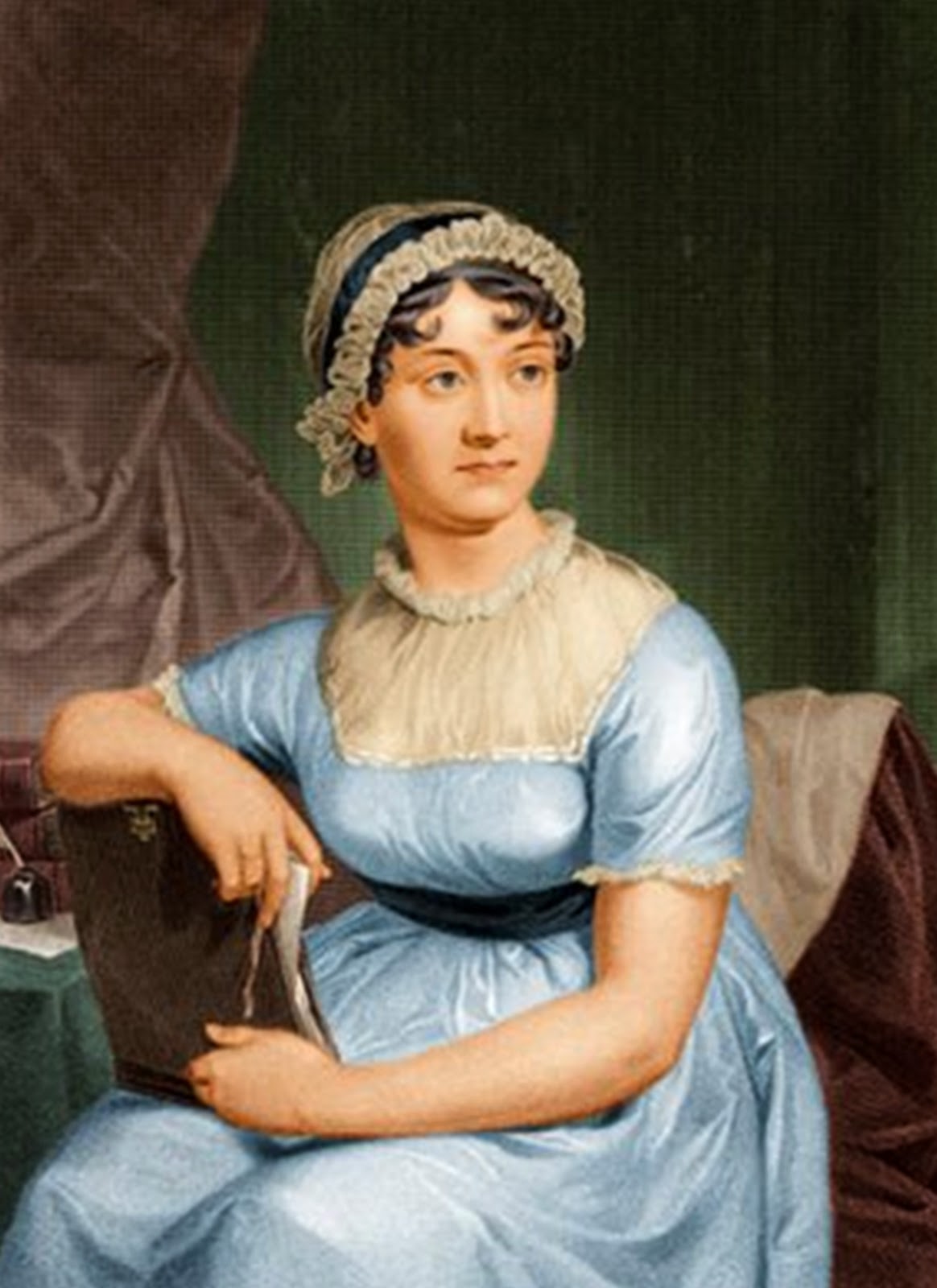
Jane Austen

When George III was declared unfit to function as monarch his son, the Prince of Wales, became the Prince Regent. George the younger had little interest in politics, leaving the wars with France to the politicians, whilst he indulged his friends and himself with a lavish lifestyle of elegance and fashion. The Ton – from the French phrase ‘le bon ton’ meaning ‘elegant style’ represent the fashionable society of London – an elite group. The divide between the extremes of the rich of Mayfair, London, and the poor of St Giles, living in the city slums, could not have been more dramatic.

In Parliament seats in the House of Lords were inherited and in the House of Commons could be corruptly bought, so the working and fighting man and the women who relied upon them, who made up most of the population, had little representation to improve their lot. My stories are set in the north of England away from the Ton and Parliament, but life was influenced by their wars, laws, and taxes.

In the above quote Jane Austen expressed a commonly held view, because women of the time had few legal rights as their lives were basically controlled by men.

Upper- and middle-class single females, under the age of twenty-one in England and Wales, were usually dependent upon their father or nearest male relative. If their male relatives were honest, caring, and loving family members then amicable matches secured the future of both parties, in hopefully wedded bliss, once the dowry, pin money, inheritance and jointure, in the event of death of the husband, had been legally agreed.
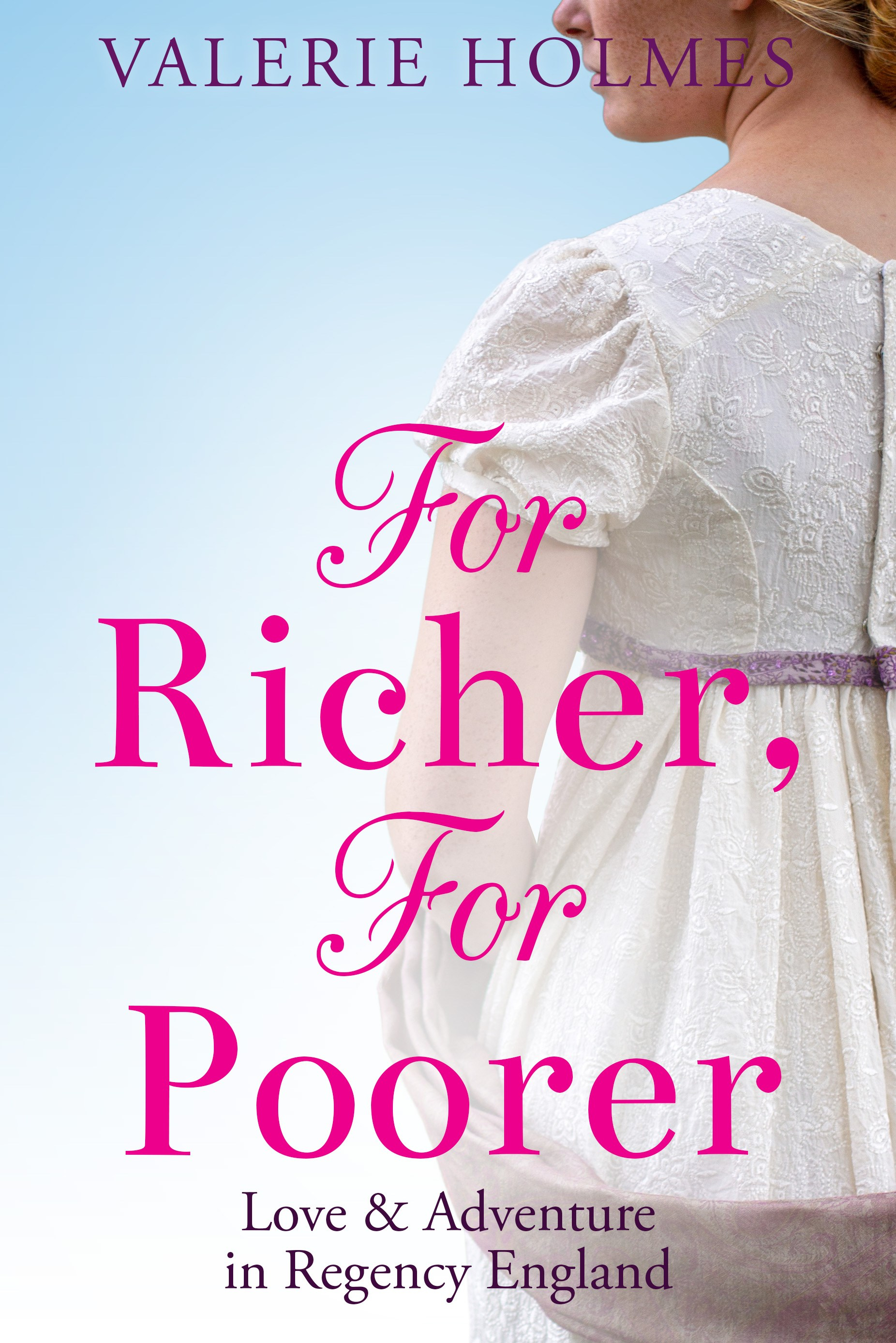
Book 2 http://getbook.at/ForRicher
Book 2

However, fiction requires drama and conflict to spark a good plot, driven by engaging characters. It also reflects the unpalatable truth of the past.

If their male relative were greedy (For Richer, For Poorer), an irresponsible gambler (The Baronet’s Prize) or an overbearing parent (Hannah of Harpham Hall) then the young woman would have few options, left to her own devices unless they had the help of a hero, or a woman of independent means.
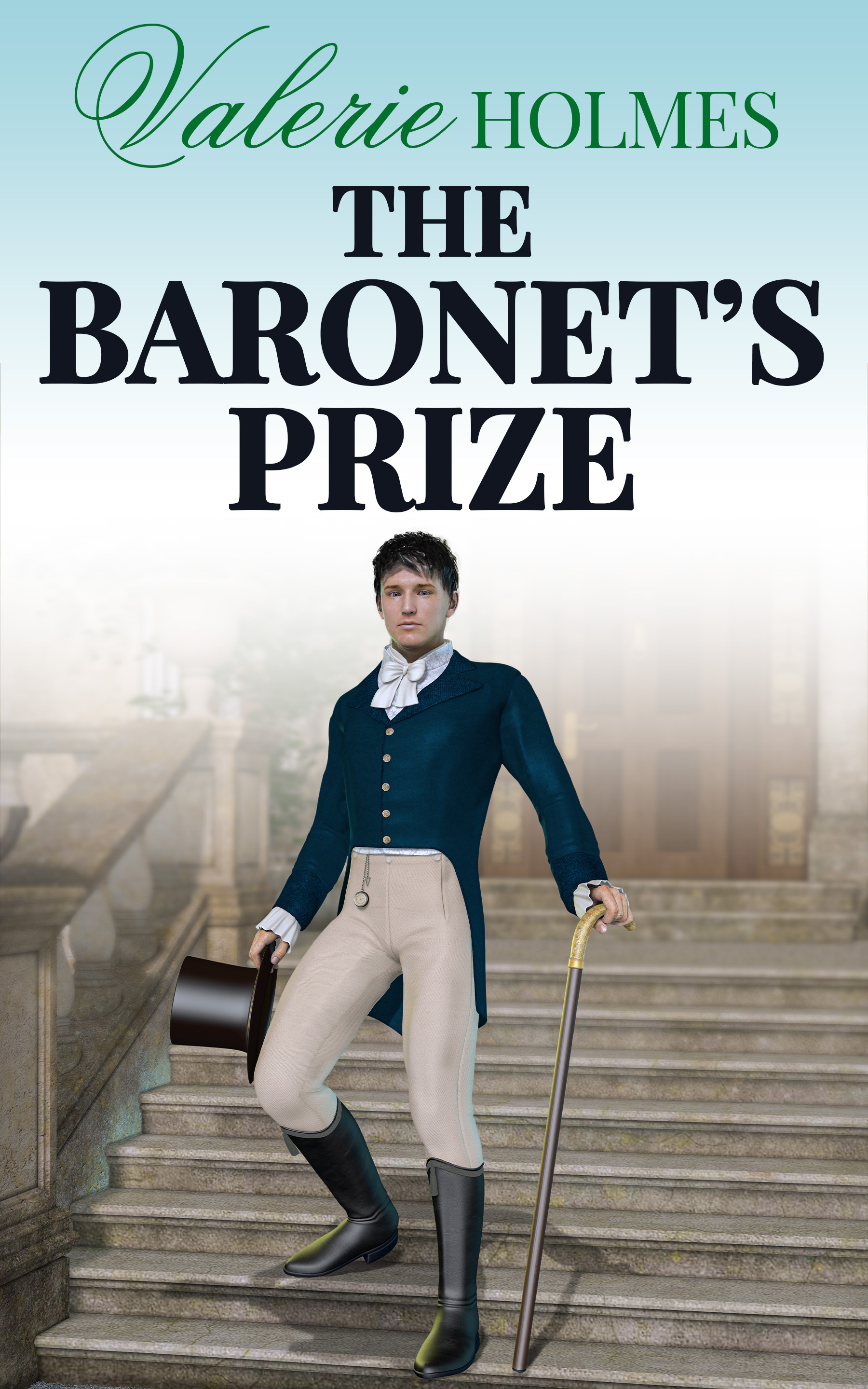
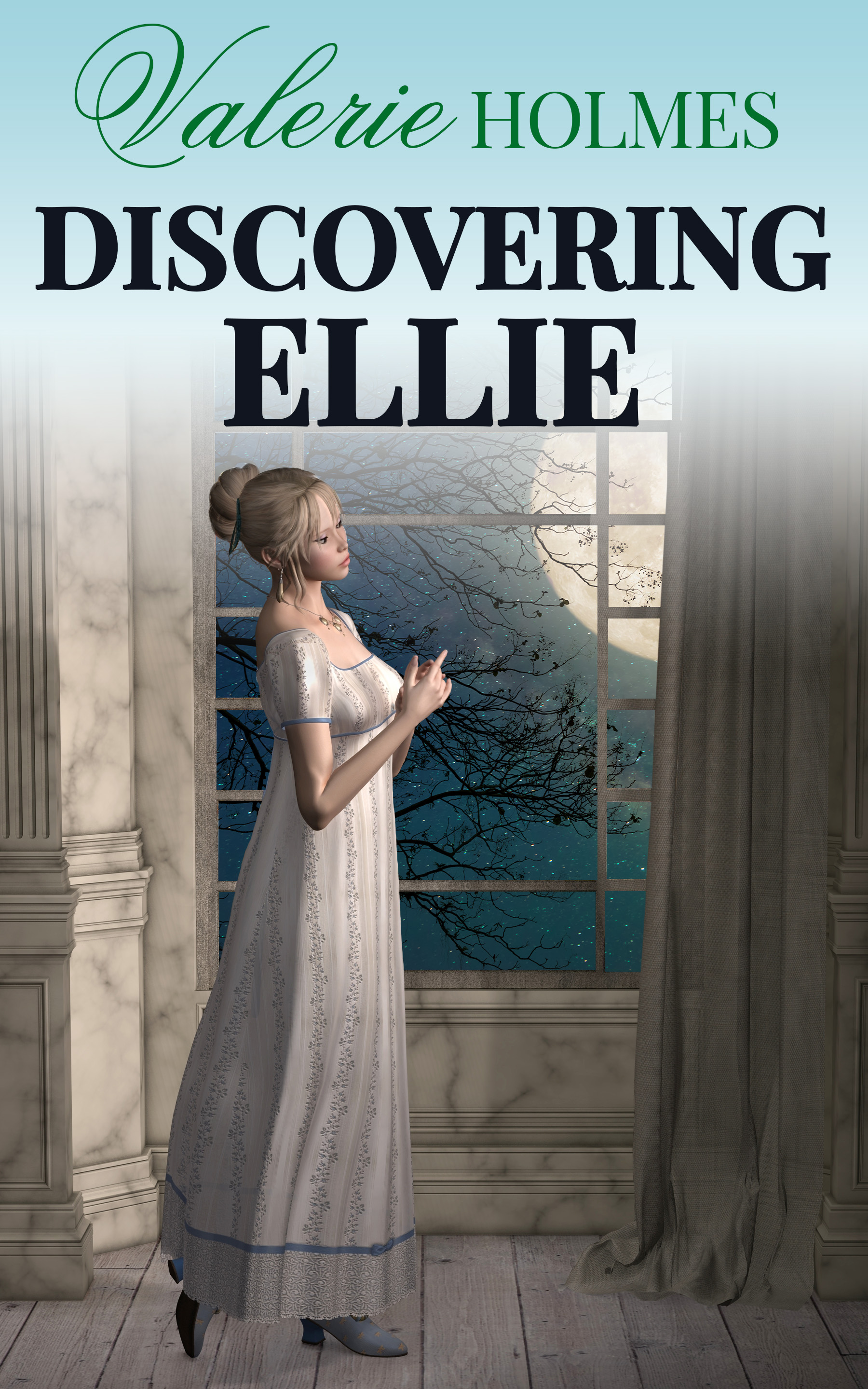
baronets prize (2) (1)When Ellie (Discovering Ellie) is faced with a marriage match, she tries to diplomatically decline her aunt’s intentions without causing further conflict…

“I am not worldly, Aunt. I cannot think how I could make such a man happy…”

Mrs Hemming laughed. “Well, we agree on one point at least, you cannot think!”

Ellie ignored the insult and continued in her conciliatory tone. “I fear I would only annoy him. Therefore, I wish to politely decline this marriage proposal, discreetly of course, before it is made public. I do not want to cause further embarrassment to anyone. Then he would be able to find a more suitable companion, equal to the task.”

Ellie is completely dependent upon her aunt’s charity until she turns twenty-one. This dependency drives the plot,discovering ellie as Ellie must discover who she is, why she has a recurring nightmare, and how she can avoid a match that is being arranged ‘for her own good’ before it is publicly announced. This latter point is especially important because once it was made public, to break such a legal proclamation would be considered scandalous. Ellie is naïve and knows little of the law, or of the greater world, as many young women of the time.
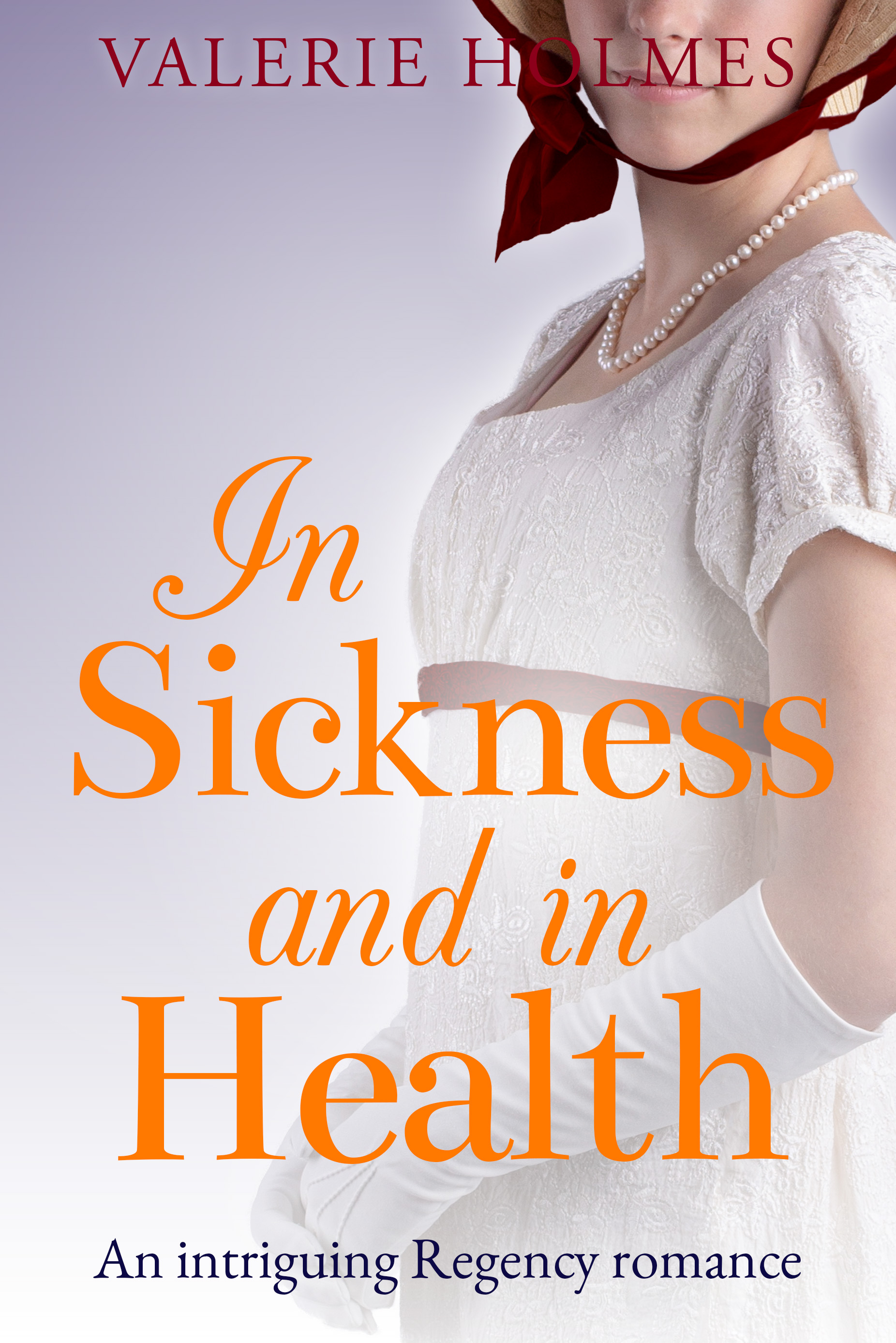
In Sickness and in Health
Book 4

In a situation where an engagement is made between two people if broken, then it could result in a legal action of  ‘breach of promise’. At the very least a reputation could be tarnished or destroyed as happened with Lucas Huntley – In Sickness and in Health.

In England, the Marriage Act of 1753 declared both parties had to have their parents’ consent if under 21. However, in Scotland this was not the case, hence the rush for elopements to the nearest place to wed north of the border, such as the famous, Gretna Green, which provided a reason for a mad dash in For Richer, For Poorer.
betrayal front (2)
Friends & Foes Book 1

It is often claimed that fact is often stranger than fiction, but with historical facts the trigger for dramatic fiction is constantly there. Although women were ruled by the law, deemed unable to run their own lives, own their own wealth or children when married, deny their husband sex, or have rights to defend themselves when employed, there would have been plenty who questioned why this was so, such as:

“I do not wish them [women] to have power over men; but over themselves.”
Mary Wollstonecraft, A Vindication of the Rights of Woman.

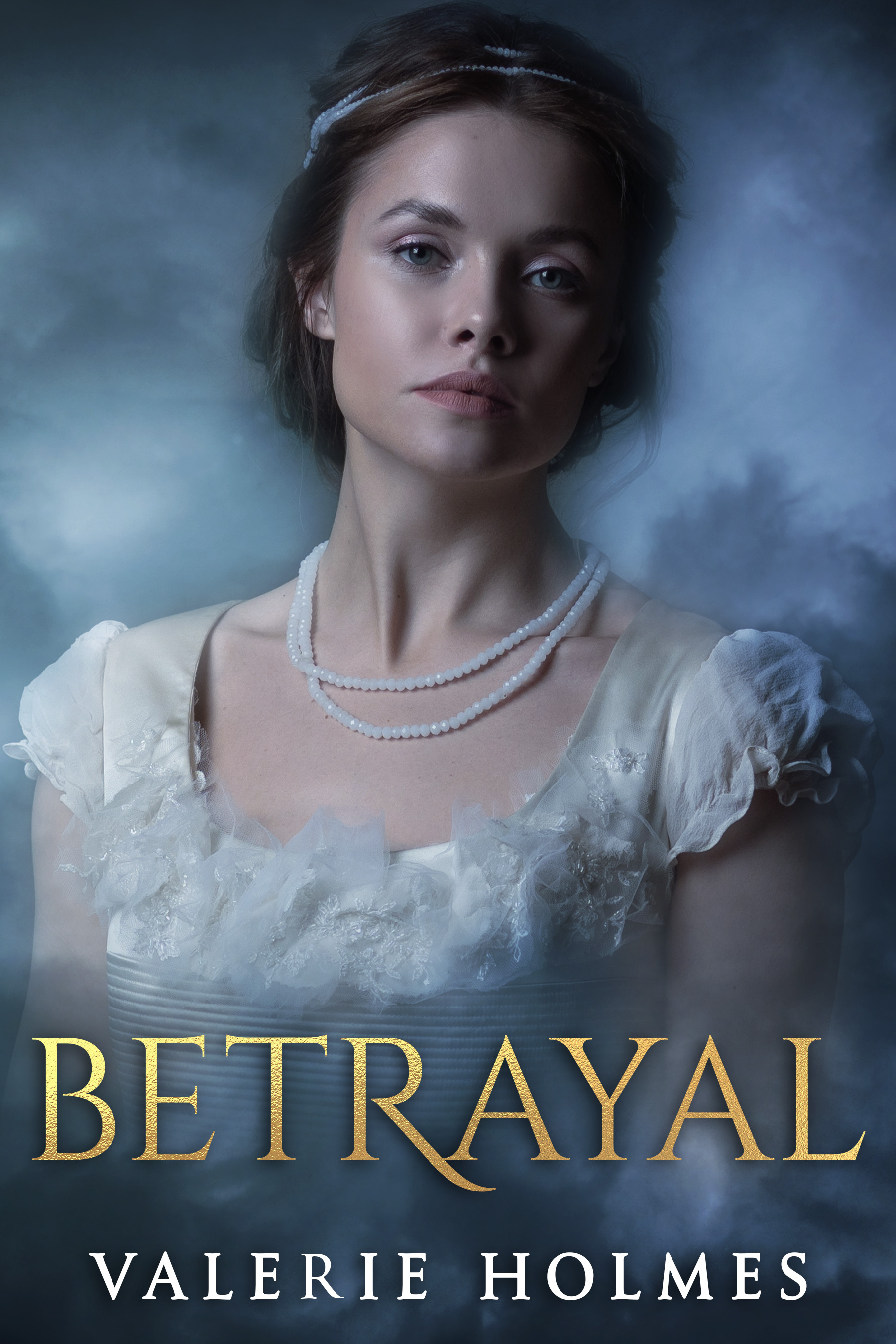
Lydia Fletcher in Betrayal was so influenced. Heroines need to have obstacles to overcome, situations that are a mystery, and the realisation that not all men look upon them in the same light.

Being single by choice was not really an option for a woman, no matter how much she desired to be the arbiter of her own fate. Unless her social status and personal income had been legally entailed and could support her, like the independent Miss Parkes of Penny Manor who befriends Ellie, she would be dependent upon others.

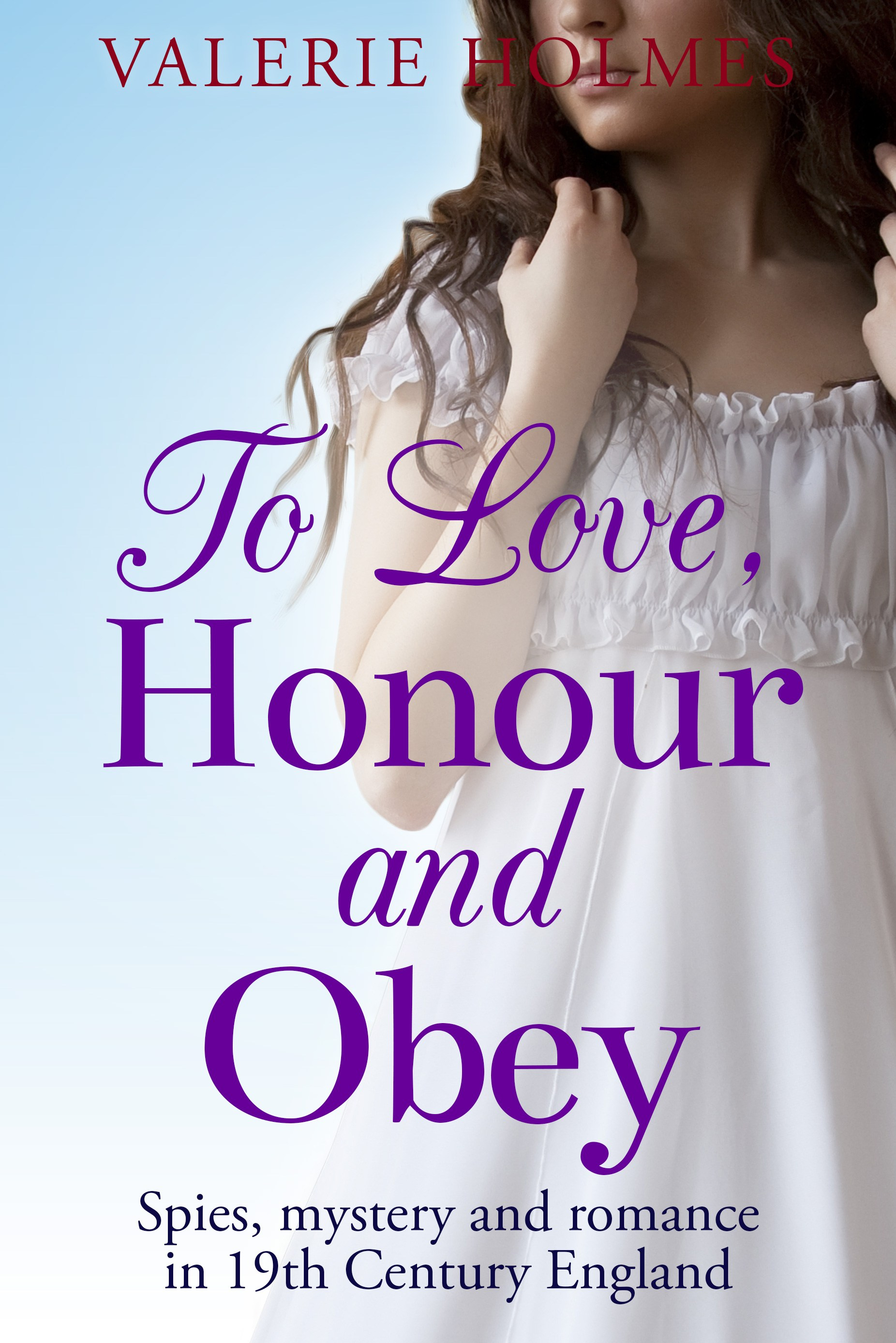
If young women were sufficiently educated, they could try to earn a living as a companion or a governess/teacher, but these were lonely situations with no long-term security. Uneducated or poorer women had less desirable options such as going into service, leaving the cottage to work within the factory or working the land to feed their families. In, To Love, Honour and Obey, Beth is an orphan who has no family or male relative to protect her from the system that was supposed to protect her.
lovehonourobey
Book 1

Prostitution was an option for the truly desperate. Few climbed the social ladder to a happy and long life even as a rich man’s mistress. Although some beauties and actresses managed to acquire rich patrons, such as the exceptional Harriett Mellon, born a pauper in Cork, Ireland but who ended up married to Thomas Coutts of the banking family, who successfully inherited and managed a fortune..

Servants were supposed to be chaste and could be dismissed without reference or notice if they fell pregnant. They were also open to abuse from their employers, as happens to the kindly Georgina in Betrayal. Again, as I write love stories that are aimed to provide adventure and uplift rather than depress, Georgina’s future is much brighter than many a maid who found themselves pregnant and thrown out on the streets without a reference, through no fault of their own.
hannahThank you for taking time out to read my blog and visit my website. Please like or leave any comments or questions below or contact me directly via the form on my Manuscript Appraisal page. If any of the above themes appeal just click the title or cover to be directed to the Amazon page. 

Smuggling, treason and espionage.

Smuggling in Regency times was rife in the rugged and isolated ‘bay towns’ of what was the North Riding of Yorkshire. Although the skill and daring of those involved in the trade can be admired, there was a dark and far-reaching side to their activities.

20181026_145817

In my books there is a recurring element of smuggling showing how it could have affected the lives of those within the region and, inadvertently, helped Napoleon in his war against our own nation.

Being an island, smuggling had been prevalent for many years within the coastal communities nationwide. With a much smaller population than today, most of the inhabitants of these places would be either involved, or at least aware, of contraband being stored or moved through their communities.

This extract from Rudyard Kipling’s’ poem A Smuggler’s Song captured it beautifully:

If you wake at midnight, and hear a horse’s feet,
Don’t go drawing back the blind, or looking in the street,
Them that ask no questions isn’t told a lie.
Watch the wall my darling while the Gentlemen go by.

The reasons the trade existed were complex but huge import taxes applied to certain consumables made brandy, tobacco, tea, silk and many other desired goods far too expensive for most people, instantly creating opportunity to fill a demand illegally.

Napoleon Bonaparte had no wish to lose the income France received from this illicit trade. So, he ordered the French Channel ports be kept open for business. This also created wealth for the organiser of the smuggling gangs’ pockets, some of which were part of the British landed gentry. Their subordinates lower down the chain of command were often unaware of the identity of the ‘top man’ who could only be known by a select few.

This trade was open to being used for further nefarious purposes, as free traders earned even more money by selling government secrets. This shared intelligence could cover troop deployments/movements/logistics, coastal patrols and the names and responsibilities of important people. This information had its value in coin, which Napoleon desperately needed to fuel his war effort. It was aiding treason.

phoebes-challenge

Government agents tried to uncover such traitors. In Phoebe’s Challenge Rev. Matthew Fenton provides information to uncover the local gangs. In The Friends and Foes series, Lord Farrington is a semi-retired Intelligence Officer who has been given the task of unearthing a traitor in Betrayal, but his role is concerned with insurgence and threats to the government at home too. This is a time of hardship and much perceived threats, externally from France and her allies and internally from those deeply affected by the loss of livelihood and the industrialisation, which was bringing huge wealth to a new ‘middle-class’ and displaced communities from the countryside to town and mills.

Revolution on our shores was a fear.

dscn0347Lord Farrington discusses the situation with  Dr. Samuel Speers,  in Betrayal

“I already know they are involved in the business of financing the trade in contraband. But what else? Lord Bagby has influential friends who he meets in his clubs – does he pass on information to our enemies as well as coin? Is he a traitor through and through? These facts I must seek out.”

Samuel looked up, quite shocked. “You think they are traitors. Many people locally dabble in smuggling to eke out their meagre livings…” 

Farrington leaned forward. “Stop my friend if you wish to remain so. Smugglers give coin to Napoleon’s war effort – they help our enemy and our men die. I do not debate the taxes set, but the way they fund our enemies for selfish gain. Do not be so naïve. I shall bring down the Bagby’s and this man Jed Webb who eludes our Riding Officers.”

 Villagers could earn some coin to supplement their meagre incomes by hiding contraband in amazingly inventive places or help to convey goods on arrival from larger vessels at sea in their own fishing boats to hide them on land. Tubmen were men paid to convey the goods from delivery to their next destination. They needed to be strong, often landsmen, who knew the area and walked the trods and snickets that linked the bay towns and crossed the open moors.

IMG-20181103-WA0006

The northeast coast leant itself perfectly to this. Many of these coastal villages have long, flat beaches of fine sand, where the local ‘cobles’, the shallow draught fishing boats could be easily drawn up and the villagers knew how to avoid the scars, the vicious fingers of rocks that extended from the shore. Fishing was the main source of employment on the coast. Whitby and Robin Hood’s Bay are well known for their smuggling links but the coast between Saltburn and Redcar was almost as notorious towards the end of the eighteenth century. The bay towns in my books of Ebton and Allunby are fictitious villages based on the sweeping bay of Saltburn to Coatham, where I grew up and hold a strong affection for.

Three organisations were created to try and stop this trade. The Revenue Cruisers, the Riding Officers and the Preventive Water Guard.

Revenue Cruisers patrolled offshore in ships that with full sail could often overtake smaller vessels once located. The problem they faced was locating ships amongst the many who sailed along the German Ocean, and also the honesty of the crews who were on occasion known to work with some of the smugglers in exchange for a cut of the goods, made discerning their whereabouts even harder.

Riding Officers were based around the coast, living near the suspected communities and riding the coast to try and prevent the collusion between land and sea. A nearly impossible task.

The Preventive Waterguard was established in 1809. They had houses around the coast – Watch Houses, and smaller boat crews which would patrol their stretch of coastland.

Between all three branches the tide was slowly turning in the governments favour. In 1822 they were incorporated into one force, The Coast Guard, charged with stopping the import of these highly taxed goods. They employed ex sailors, strong, tough and knowledgeable who needed employment after the end of the Napoleonic Wars.

This led to a gradual decline of demand and consequently causing the amount of smuggling that was committed throughout the first half of the nineteenth century to dwindle.

Before this happened though the battles fought to catch the smugglers and traitors lay the seed of many a good tale, some yet to be told.

Thank you for taking the time to visit my page. If you like the article please hit the like button and share where you are visiting from in the comments below.

Best wishes

Valerie

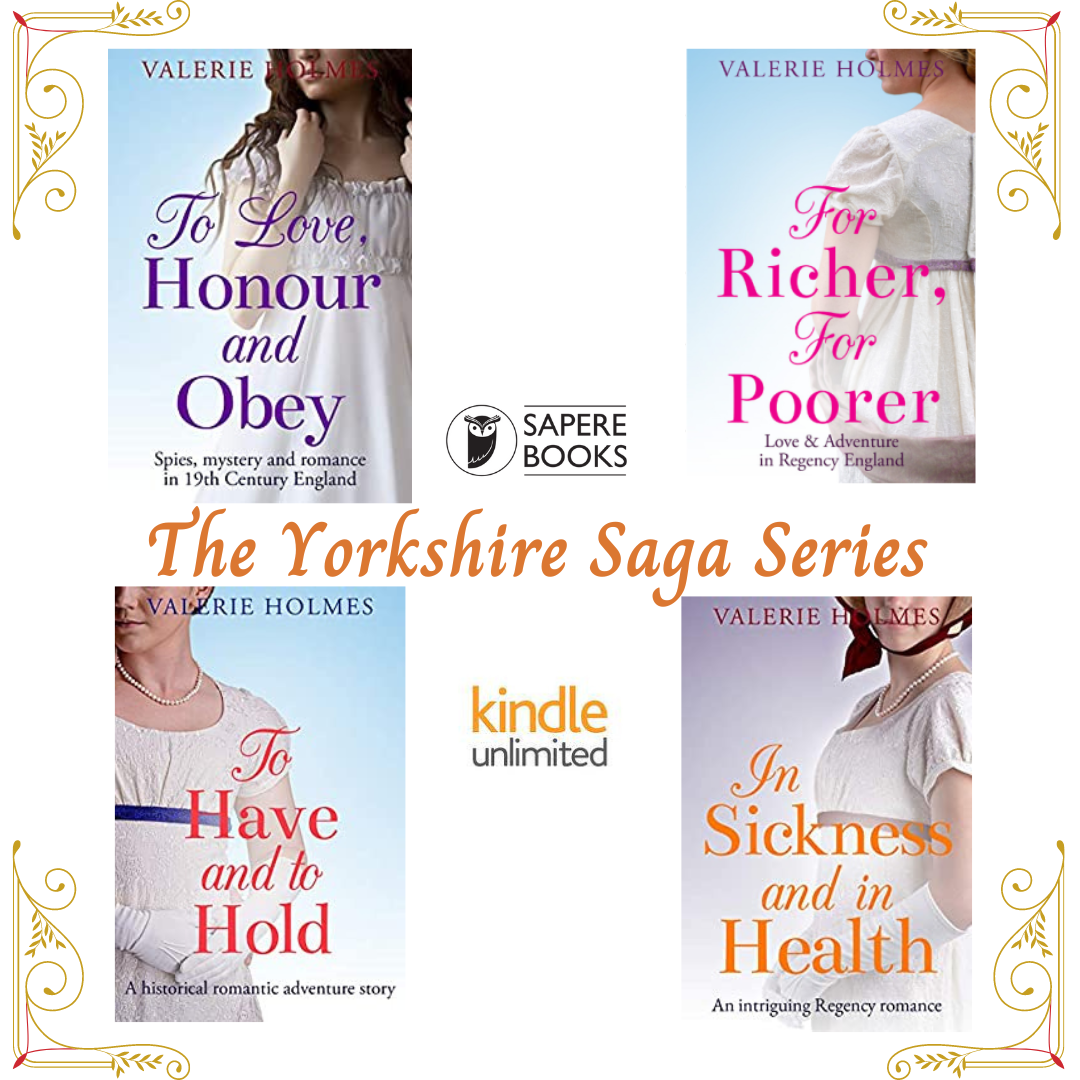
The Yorkshire Saga standalone series published by Sapere Books


series insty (1)

Celebrating: The Romantic Saga Award shortlist!

Romantic saga

Every author has their own unique story to tell about how and why they came to be a novelist. Read on to find out the stories behind the talented authors shortlisted for the prestigious award, as they reveal them, and the inspiration behind their lovely novels.

The Romantic Saga Award

The Girl from the Tanner’s Yard – Diane Allen

Pan

How I became an author.

I always had a love of reading and was always found with a book in my hand when growing up. Once married and my children grown, I found my niche in life working for a large print book firm. It was then I found that I also had the skill of writing. Bored one evening I decided to put pen to paper and now ten years later I have had fifteen books published.

My inspiration for The Girl from the Tanners Yard

My inspiration came when we were visiting an elderly aunt that lived above Haworth. We always passed a pub called THE FLAPPIT and because I have a love of Yorkshire history, I started looking into its past life and the moors around it. Finding that it used to be used by the tannery workers that worked nearby and that thriving industries were based all around that area. With the wild moors as a background and a good base the rest is history.

The Variety Girls – Tracy Baines

Ebury

The inspiration for The Variety Girls stems from my passion and my experience. I love theatre and live entertainment and was surrounded by it when I was growing up. The setting is my childhood playground – the beach, the pier, the theatre. I am fascinated by the way performers leave their worries and heartbreak in the wings when they step out on stage – and by entertaining the audience, allow them to do the same.

The Ops Room Girls – Vicki Beeby

Canelo

I’ve always loved old Battle of Britain films, and often wondered about the WAAFs you’d see in the background, placing blocks on a map using long poles. When I started my research, I discovered they were mapping incoming enemy aircraft. I immediately knew this was the perfect role for my maths-loving heroine, and so THE OPS ROOM GIRLS was born—a story of WAAFs serving in an RAF fighter station during the Battle of Britain.

Bobby’s War – ShirleyMann

Zaffre, Bonnier Books UK

My parents’ wartime romance provided the inspiration for ‘Lily’s War’ and then, because I hadn’t asked enough questions, I raced around the country to talk to service women, already in their 90s to make sure my books were authentic. One of those women was Mary Ellis, the ATA pilot. Once I’d met her, I was hooked, and ‘Bobby’s War’ is a reverential acknowledgment of what these amazing women did. I hope their legacy now lives on.

The Orphan’s Daughter – Sandy Taylor

Bookouture

I believe that it was my love of reading that led to me becoming a writer.

There were no books in my house growing up as I was the only one who could actually read but I found a little library and read everything I could. My family are from Co Cork in Southern Ireland and that was my inspiration for The Orphans Daughter. Money was scarce but love and laughter more than made up for that. I love the Irish humour and use it a lot in my books.

Secrets of the Lavender Girls – Kate Thompson

Hodder & Stoughton

I started writing because I fell in love with a woman named Kate Thompson. Finding out I shared a name with this woman led me on a quest to discover more about my namesake. The other Kate Thompson was a tough mum-of-nine who lived in two rooms of a slum in Bethnal Green, East London. She fought heroically to improve living standards, led a successful rent strike and cared for the women and children of her buildings. She was crushed to death in an entirely preventable accident during WW2. Since then, I’ve discovered that in the 20th century, the East End was full of Kate’s. Resilient, irreverent, subversive, crafty, kind and courageous women. All my wartime novels are a kind of a love letter to these women and discovering the richness and complexity of their lives is what keeps me writing.

The winner will be announced on the 8th March 2021.

Please feel free to leave a comment or like the post.

Meet author and self help guru, Peter Jones

Me


Welcome, to my website, Peter, and thank you for taking the time to answer my questions.

When and where did your passion for writing begin?

Pretty much as soon as I could string two words together I was ‘making books’. I would kneel on my grandmother’s living room carpet, fold several sheets of A4 paper in half, staple down the folded edge, then start writing a story and drawing the pictures to go with the story – and once finished my books would be passed around my family on a kind of a ‘read and return’ basis.

Which came first fiction or non-fiction?

Well, technically I guess it was fiction (back when I would visit my grandmother). By my twenties I was writing science fiction short stories (although none of them were ever submitted for publication). In my thirties my wife encouraged me to start writing a rom-com novel… but it was HOW TO DO EVERYTHING AND BE HAPPY – a self-help book – that first made it into print.

How did you become a ‘self-help’ guru?

Well therein lies a tale: I met my wife Kate in my mid-thirties. At the time I was a frumpy grumpy banking consultant. She was a NLP practitioner (a kind of hypno-therapist). She taught me so much about how our brains work, how we motivate ourselves, how to get more out of life… and then she died. Of a brain haemorrhage. Thirty nine years of age. And I was devastated. More than that I was crushed with guilt, because back then I wasn’t a particularly happy person. I had been a misery to live with! What’s more, Kate and I had managed to waste most of our three years together working. Oh, we had big plans about how we’d make enough money to move somewhere sunny… but it never happened. We ran out of time.

So I decided to do something about it. I set about fixing my life. I made lists, drew up plans, devised new habits… and it worked. Some of those ideas actually made me happier. One day a colleague said “you ought to write this stuff down – turn it into a book.” So I did. That ended up being HOW TO DO EVERYTHING AND BE HAPPY. Published by Harper Collins and Audible.

Still not sure about the term guru though! Michelle Ward (of Phoenix FM) gave me that label. But really I’m just a fix it man at heart.

You seem to love public speaking – has this always been the case?

I’m afraid so. I’m just a big show off! No, actually there’s more to it than that. My childhood love of storytelling morphed into a desire to become an actor. To me, writing and acting are the same thing. In fact, one of the joys of writing is that you get to play ALL the parts, even the women. But there’s something utterly amazing about being in front of an audience. I used to be part of a travelling theatre company, but now public speaking fills that need. My talks are quite ‘theatrical’.

You seem to be a very organised person is this essential to the way you approach each project?

I guess I am. I never used to be. In my teens, twenties, even thirties I lived in a perpetual state of barely-organised chaos. Kate was the organised one. Becoming organised was part of my get-happy strategy. A way of taking control of my chaotic, unhappy life.

But you’re right. It bled into everything I do. Becoming organised was how I finally managed to finish that novel that Kate started me writing; THE GOOD GUY’S GUIDE TO GETTING THE GIRL. There have been two more since then and I’m finishing up my fourth.

You are a member of the Romantic Novelists’ Association – what does the organisation mean to you?

I love the RNA! I was a real sceptic at first. Couldn’t see how belonging to an organisation like that would be particularly useful. Surely it would be a lot of flouncey women writing about chiselled jawed heroes? But then my pal Bernadine Kennedy said “it’s quite good fun,” and If anyone knows about having a good time, it’s definitely Berni. And it turned out she was right! It is fun! But more than that it’s been enormously useful rubbing shoulders with all sorts of creative people, all of us trying to carve a living out of what we love.

What key advice would you share on writing or on life.

Write what you love. Do what makes you happy.

Each author has their own favoured way of working – would you share yours with us?

I try to write at least three days a week. I start at 7am and count the number of words I’ve written at the end of each hour. If it’s less than 200 I give myself a good talking to! By midday I’m usually done. In the afternoons I talk about writing or do post, answer emails, tackle the admin…

What has been the highlight of your writing career to date?

The day my agent told me that a producer in Hollywood had enquired about the film rights for THE TRUTH ABOUT THIS CHARMING MAN was pretty special! But actually there have been far more less dramatic, more humbling moments along the way. Recently a teacher’s assistant in Dubai emailed me to tell me that she’d enjoyed my ‘happy book’ and had been asked to do a presentation to the staff about it. Turns out my book is on a recommended reading list, in India. And her school adopts some of my happiness ideas for the children!

That is amazing, Peter. What project are you working on now?

My fourth novel is currently out with my first readers, so in the meantime I’m working on another self-help book. My fifth. I’m particularly excited about this one… though I can’t say much more at this point.

What is next for Peter? 

Who knows!? Hopefully more novels.

Although after some encouraging advice I might take a break to work on a film proposal for MY GIRLFRIEND’S PERFECT EX-BOYFRIEND. So long as I can continue to make a living putting a smile on the faces of my readers (or audience) I really don’t mind.

I wish you every continued success!

Find out more about Peter:-


Aunty Mary’s Traditional Yorkshire Pudding recipe.


Sunday has always been a family day to me. One traditional dish that I have fond memories of, especially on a wet and windy winter’s day, was a roast dinner with home made Yorkshire Puddings accompanied with a fresh mint sauce.

Although this lovely staple regional food is highly regarded it is very simple to do.

This is the recipe that has been passed on down through time to my Aunty Mary who then gave it to me.

The first recorded reference to this versatile savoury pudding was in the early eighteenth century, when it was described as ‘dripping pudding’ but I suspect it had been used for a long time before that. It started as a way of using up the dripping fat from the roast with a simple batter to make a filling accompaniment to the meal.

Ingredients

4 eggs
200 ml whole milk (you can use semi-skimmed)
200 grams plain flour
pinch of salt
one tablespoon of cold water

Method

Heat up an oven to 200C


Whisk the eggs until light and fluffy in a bowl and then whisk in the milk. A hand whisk is all that is needed for this.

Then spoon in the sieved flour and add the pinch of salt until you have a smooth mixture that just coats the back of a spoon smoothly when poured over it. You can stir in a spoon of cold water or leave the mixture to stand a few hours in a fridge.

Prepare a 12 bun baking tin by coating each bun case with either lard, or a sunflower or vegetable oil that can take high temperatures. Place the tin in the hot oven and leave for 5 minutes until the oil is smoking and hot.

Remove the bun tin from the oven and pour in the batter evenly between the 12 indents. It should instantly begin to fry and bubble.

Replace the tin in the oven quickly and bake for for 15 to 20 minutes at 230C until the Yorkshires rise and are golden brown and crispy on the outside.

Their are all sorts of things written about the height and size of a Yorkshire pudding, but a simple recipe and a wholesome pudding should just be enjoyed as it has for many years.

Yorkshire pudding batter has been used in many variations over the years and I would love to learn of people’s favourite recipes as it is such a feel-good simple part of a meal.

Money Matters in Regency England


Book 2 http://getbook.at/ForRicher
Join Parthena and Jerome on their exciting adventure!

The first conflict in For Richer, For Poorer occurs when heroine Miss Parthena Munro ‘borrows’ a coin purse from Mr Jerome Fender.

I used the term ‘coin purse’ rather than wallet because, unlike the pre-plastic card society where paper money had been the norm it was not so commonly used in Regency England.

Banknotes outside of London were not guaranteed by the Bank of England until 1826 when its first branch outside the City was opened in Gloucester. Privately owned regional banks in England and Ireland had unique notes that were signed by their own chief cashiers and therefore their continued validity depended on the success of the issuing bank. This meant that banknotes were not as secure as they are today, should a run on such an establishment occur, it could wipe out a person’s assets.

Coins had immediate and standardised values and so, although weighty, were accepted everywhere.

The golden guinea had a value of 1 sovereign and 1 shilling making it the highest denomination.

Next was the sovereign (1 pound) worth 20 shillings.

Then a half sovereign worth 10 shillings

A Crown equalled 5 shillings

1 shilling equalled 12d (old pennies)

1/2 shilling was known as a six pence piece.

A groat was 4d

A farthing was 1/4d

However, not everyone in Regency England was expected to pay their bills immediately. The aristocracy, upper and middle classes lived on credit to a large extent. This seems a strange inequality to us today, but it was the lower classes who were expected to pay coin for their goods and services on demand.

This created a highly unfair society. It also led to a number of Debtors’ prisons such as  York prison, Marshalsea and The Fleet. Charles Dickens’ father was in the former under the Insolvent Debtor’s Act of 1813, when he failed to pay his debts to a trader. It was a hard system to break free from even though there was the chance of day-release to go and work, but debts continued to mount.

This period marks the beginning of change in what had previously been the norm because of the inability of debtors to pay their cumulative debts to their creditors, which could then bring these companies down as they also had creditors too. Therefore, the system had to change and settlement by cash was being favoured, yet the debtors still kept these prisons throughout Dickensian times.

What Parthena did could have cost her liberty, her life or seen her transported to the . It was just as well that it was Jerome she borrowed the coin from!

Book 2

Mount Grace Priory
Now a ruin, but once a thriving community, beautifully set against the forestry with the moorland above.