
‘Secrets’ and a Blacksmith: Crafting Tradition and Innovation

I hope you have enjoyed the sunshine and warmth of June, when the UK sampled temperatures nearing those in the tropics! In North Yorkshire the heather is ready to bloom, bringing swathes of lush purple to the vast expanses of moorland. It is a truly beautiful and everchanging landscape.

Another beautiful county that I visited recently in the South West of England was Somerset. When I stopped at a garden centre I came across a working blacksmiths’ forge and felt as though I’d taken a step back in time. Instantly thoughts of Wilfred Underwood, Imogen’s father in Secrets, came to mind. Although we tend to think of smithing as a traditional craft of yesteryear, the charming owner soon corrected that impression.

There is still a demand for the old skills, used now for restoration work, preserving items from the past. This requires the mastery of the trade and knowledge of old methods, material, tools and skillset of the original worker to recreate or mend the item in question. Past imperfections are what makes an old item interesting today.

We live in a time where we have more technical accuracy and, perhaps as a consequence, less individuality. Science has moved on, providing precision tools and improved understanding of the process, yet a modern day blacksmith has to embrace and learn the old ways as well as the new.

Old skills are called upon to mend traditional machines and objects, some still used in other local trades like the local butcher’s grinder, along with reproducing such basic items as the imperfect nails made at a smithy’s before mass production. Each repair has to be done in the style and materials of that bygone age, but today’s Blacksmith also has to build on this historic knowledge by keeping up to date with modern, contemporary designs changes in style, tools, markets and techniques.

There is a long apprenticeship still required, for this labour of love, as science and art combine.

Historically, a chestnut tree was planted near the large forecourt providing shade and was symbolically associated with the trade. Yorkshire wrought iron was and is highly prized for its quality.

In Secrets Imogen’s father, Wilfred Underwood, is the blacksmith for my fictitious village of Dibbledale – a tranquil unspoilt place inspired by such villages as Hutton-le-Hole in the North Yorkshire Moors Park. His trade was central to the local community for the upkeep of agricultural equipment, as a farrier, and the many other jobs concerning the mending of household and trade goods. Wilfred, a gentle giant of a man, also encouraged Imogen’s creative nature providing her with fine tools and wire to make delicate jewellery, deepening the bond between father and daughter.

Secrets and their consequences worm their way between Micah and Imogen. Will they be able to save Dibbledale’s peace and tranquillity? Only when secrets are revealed can devoted friends be distinguished from destructive foes and allow love to find its true home.

From a writing perspective there is a fine balance between keeping historical fiction accurate to the period it is written about, and accessible to a modern reader, who may be unfamiliar with that period of history.

Trades, like everyday language, evolve and adapt through time. The visual importance and need of a central blacksmith may have changed, but in Regency they were essential and central to a thriving village community. They were also excellently placed to see and hear all the comings and goings of the villagers and pick up information from travellers who crossed their paths. Wilfred as a character is able to keep his finger on the pulse of local events.

I would like to greet and thank my new readers in the United States as well as the UK and Australia who have read and enjoyed Betrayal – Book 1 of Friends and Foes Regency romantic adventure series. The

I hope you go on to read the completed trilogy and discover what happens to Lord Farrington, an enigmatic character who features in Book 3 Silent Revenge , which will be published in paperback on 5th July. More about him next time!

July’s bargain book is The Baronet’s Prize, which is now 77p/$1, which also available on KindleUnlimited.

“A delicious Regency! Eleanor is horrified to be made homeless by her brother’s gambling debts and still more disturbed to find herself falling in love with the man who won the estate. Valerie Holmes resolves this dilemma in a spirited tale that keeps you turning the pages until the final “Ah!” of satisfaction.”
GL Robinson, New York USA, Regency romance author.

Reviews left on Amazon (and sites such as Goodreads) are always welcomed and appreciated by authors, especially if the book has been read and enjoyed. They are what keeps the algorithms working in the competitive world of publishing.

I would love to hear from my readers, wherever in the world you are based, and also from visitors to the region.

Have a lovely and safe weekend.

Love the Adventure

To-Love-Honour-and-Obey-267x400Fifty novellas ago, I began writing love stories each wrapped around an adventure, set against the rugged beauty of the North Riding of Yorkshire. These found their home in the Commonwealth library market and from this base a further six novels have evolved.

When To Love Honour and Obey published by Sapere Books, was reviewed by a fellow author, he described it as ‘Where Poldark meets Heathcliff’ – I was delighted.

I have always loved reading both fiction and non-fiction exploring the Regency period. I enjoy the romance whether written from the perspective of the rigid society of London’s ‘Ton’, so beautifully portrayed by Georgette Heyer and more recently Julia Quinn, or the melodrama of the darker more menacing shadows of Daphne du Maurier’s Jamaica Inn.

Basically, my tastes cross genres within the period, from Jane Austen’s and the Bronte’s classics to E.V. Thompson’s20240126_161100 Cornish sagas, or Bernard Cornwell’s action and adventure series about the rifleman who rose from the ranks, Richard Sharpe.

I have worked as a creative writing tutor for years and one piece of advice commonly given to authors starting out, is to write about what you know. That does not mean that you must know everything first – no one can, especially where murder and mayhem is involved. Without a time-travel machine, a writer today cannot depict a bygone age with total accuracy capturing the language, attitude, beliefs, habits, understanding of people centuries ago when travel and knowledge were limited.

Research is the key! Whatever the genre; romance, crime, thriller, horror, fantasy or any other preferred, the author must accrue enough knowledge beforehand to write their story and make it credible and believable to today’s readership. Jane Austen was of course writing in her own time; about the world she knew.

Research can be all encompassing when it is focussed on a topic you are enthusiastic about. In first drafts ‘info-dumps’ can creep into a manuscript, slowing the pace of the story. Which is where an editor’s skills are needed to take out the non-essential information, as the author will always know more that the reader needs to about their created ‘world’.

DSC03023When I began writing I thought about the ‘write about what you know’ advice and started exploring my home area. The North Yorkshire Moors and the bay towns from Whitby to Saltburn provided a dramatic backdrop for many of my stories.
Saltburn-by-the-Sea had its own infamous ‘King of Smugglers’ John Andrew, who in 1780 was landlord of the unique Ship Inn, which nestles to this day under the shadow of the 110m high Huntcliff. My fictitious Ebton is based on Saltburn, my Coble Inn nestles in the shadow of Stangcliffe, the headland based on Huntcliff.

 “We’re on Stangcliffe, the headland!” Joshua exclaimed, as realisation hit him harder than the force of the wind. He was inches away from a sheer drop to the sea below where sharp-edged rocks hid under each of the crashing waves…

To Love, Honour and Obey Sapere Books

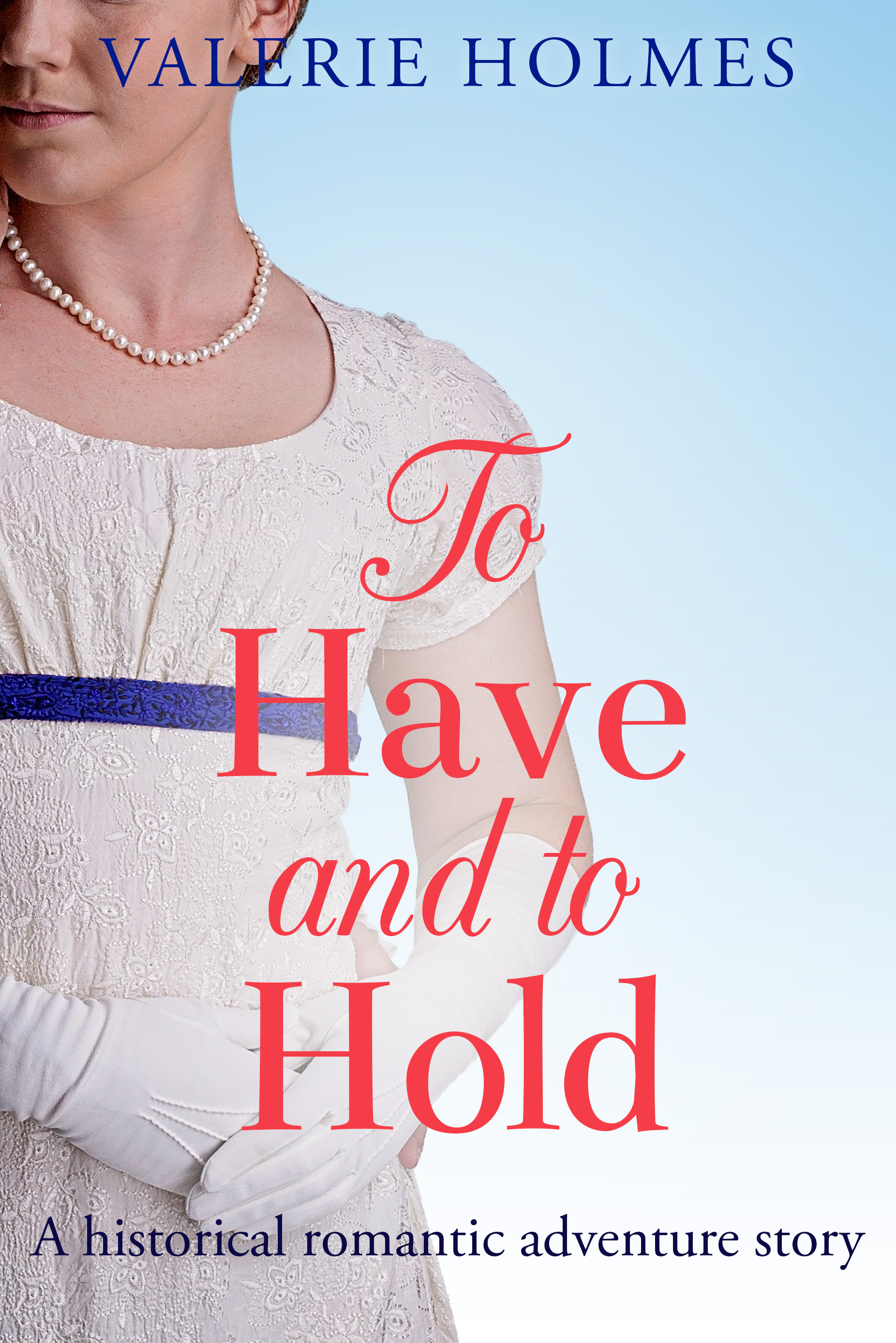
To Have and To Hold
Book 3

This Jurassic coastline encompasses rugged high cliffs and sweeping flat sandy bays. The wild moor inland would have been crossed by locals along small tracks for centuries by the Regency period. The dales, areas of fertile farmland and woodland, dropped down from the moors, with ancient abbeys and small villages of stone-built cottages nestled  within – but cottage industries were being replaced as manufacturing developed in the growing towns causing population shifts, consequently impacting livelihoods, Secrets, due to the Industrial Revolution, a theme resonated in To Have and To Hold, Sapere Books.

Unrest was growing nationally, the Luddite movement triggered fear in Parliament that revolution would happen in England as it had in France. In Phoebe’s Challenge, brother and sister are hunted as machine-breakers – punishment was  anything from a fine, to hanging or transportation to Australia.

secrets front
Friends & Foes Book 2

My books are not dark, but touch on the darker side of human-nature and society, Betrayal, ultimately showing that love and justice will win the day. In real life things may not always work out that way, but in fiction – which is a form of escape from reality – in my stories at least, things do.

The world of Valerie Holmes has the tagline ‘Love the adventure’ – a sentiment that I hope my readers will share.

Beyond the book cover, plot and protagonist, which has a greater influence on your choice as a reader: the physical setting or the period in which it is set?

Please share your thoughts and preferences.

If you are interested in writing, and want to create your own fiction, but need some professional guidance or support, please contact me via my manuscript appraisal page.

I am delighted to announce that Discovering Ellie is now available in Large Print Paperback for those who cannot manage an eReader – just click here

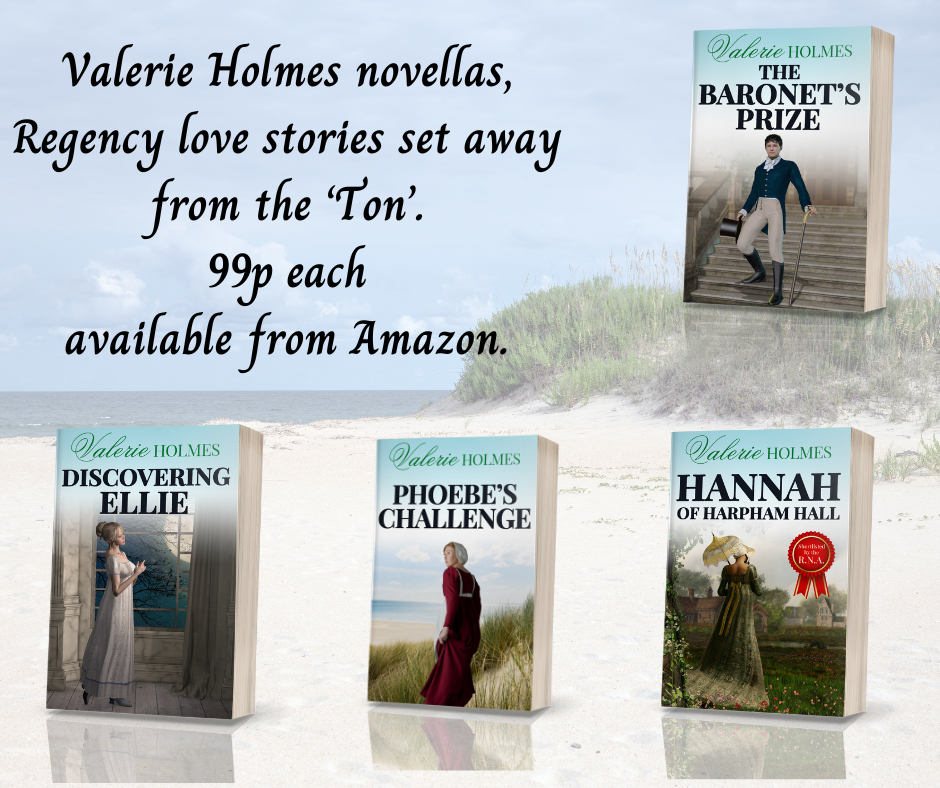
Valerie Holmes novellas. 99p each available in

Ripon Cathedral and the Saxon Crypt

I could not leave Ripon without visiting its ancient cathedral. The ancient building has a fascinating history, the oldest part of which still exists. The ancient Saxon crypt of the original church founded by St Wilfred (AD 634-709) not only still exists, but is open to the public for exploration. Accessed via a narrow staircase and a short narrow tunnel, the small rooms are amazingly peaceful.

(By the way, I’m an author, not a professional photographer!)

St Wilfred influenced the decision of the christian church to move away from the Celtic Church and follow the Roman church. The decisive move been made in 664AD at The Synod of Whitby when the calculation of Easter was decided by following the Roman method. He had a fascinating life and survived many life threatening events.

The main building is a delightful mix of Norman and Gothic styles, reflecting the many periods of history it has survived through. Far from feeling like a museum, which provides cold facts for the casual visitor this is a living house of God. When I visited there were Bible readings in progress, yet we were made welcome giving the palace a warm, homely feel. Other activities were in progress at the same time. There is no set fee to pay, but donations are requested and voluntary.

My visit was quite short as I was en-route to a conference but Ripon is certainly a place I would happily revisit as I am sure that I did not explore all its treasures.

Further sources of information:


[Featured image / The Association of English Cathedrals]