An interview with Pia Fenton, a.k.a. Christina Courtenay

ChristinaCourtenayMarch2013I am delighted to welcome award-winning author and new chair of the Romantic Novelists’ Association, Pia Fenton, who writes as Christina Courtenay.

Congratulations on becoming the chair of the RNA. How much of an influence has the RNA had on your own career?
I think it’s safe to say that without the RNA I wouldn’t be published at all!  I found my way to the association at a time when I was about to give up on writing and it changed everything for me.  When I sent in my first m/s to the New Writers’ Scheme and got a critique back from someone who took my writing seriously and liked what I’d done, it was an amazing feeling.  And although there was a lot wrong with that first novel, I was basically on the right track and needed to be told what my mistakes were, so that was really helpful.  The other thing the RNA has done for me is give me wonderful writing friends and critique partners – I can never thank them enough!

Childhood is a time when imaginations really develop. Do you think that yours influenced your writing style and interests?

 Yes, absolutely.  I was hooked on fairy tales with handsome princes and happy ever afters and that’s what I want now too, albeit a grown up version.  I was also always interested in history, so for me writing historicals was inevitable.

Would you agree that your work reflects your unique cross-cultural experience?

I think so, yes, as most of my books feature heroes and heroines from different cultures who have to overcome their differences and realise that we are all the same underneath.  Also that no one culture is necessarily right about everything, we have to compromise.  Being half Swedish and half English I can see things from two sides, and having lived abroad has given me a different perspective on things as well.

Could you give us an insight into your own preferred way of working when you set out on a new novel adventure?

It’s a bit messy I’m afraid!  It usually starts with a scene that appears in my head, often triggered by something or someone (a handsome actor?) and then the rest of the story develops from there.  That scene can be anywhere in the book, so sometimes I work backwards, sometimes forwards.  As I said, it’s a bit chaotic but somehow it always works out in the end!  And incidentally, I always know how I want it to end, even if I don’t know anything else.

In August your first YA novel is published by Choc Lit. Could you tell us about it and if this is a permanent change of direction for you?

As I’d been writing historicals for many years, with all the research that entails, I decided to give myself permission to write something else just for fun last year.  The result was a contemporary YA book that needed no research and reflected the sort of high school experience I would have liked to have had myself.  Here is the blurb for New England Rocks:-
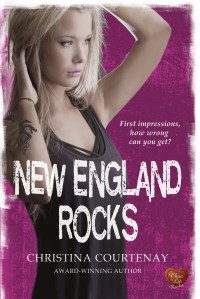
NER FrontFirst impressions, how wrong can you get?

When Rain Mackenzie is expelled from her British boarding school, she can’t believe her bad luck. Not only is she forced to move to New England, USA, she’s also sent to the local high school, as a punishment.
Rain makes it her mission to dislike everything about Northbrooke High, but what she doesn’t bank on is meeting Jesse Devlin…
Jesse is the hottest guy Rain’s ever seen and he plays guitar in an awesome rock band!
There’s just one small problem …  Jesse already has a girlfriend, little miss perfect Amber Lawrence, who looks set to cause trouble as Rain and Jesse grow closer.
But, what does it matter? New England sucks anyway, and Rain doesn’t plan on sticking around…
Does she?

I hadn’t intended to send it to my publisher, but eventually I did and Choc Lit decided they wanted to start a YA line, which was great!  I’ve since allowed myself some more time off from the historicals, so this is the first in a series.  The second one will hopefully be out next year.  But I’ll still be writing historicals and time slips as well.

What is next for Christina Courtenay?

I’ve just finished writing the third book in the Kinross trilogy, Monsoon Mists.  It’s gone off to Choc Lit to see if it passes muster, so now I can concentrate on something else for a while.  In February next year I have another time slip novel coming out, The Secret Kiss of Darkness – I love time slips, so am very excited about that – and as I said, after that hopefully number two in the YA series.

Sincerest thanks for taking the time to complete this interview.

Thank you very much for inviting me!

More by Christina:

  • New England Rocks, paperback out on 7th August:-
An interview with Jean Fullerton

June 2013 Web 1Welcome, Jean!

In 2006 you won the Harry Bowling Prize. How much of an impact upon your writing career did this have?

I can’t even begin to tell you how much winning the Harry Bowling changed my life and writing career. It was my big break. It got me my lovely agent Laura and my first two book contract with Orion. It literally changed everything.

Your love and passion for the history of the East End of London is obvious through your work. Growing up in the shadow of The Tower of London must have been amazing, when did the inspiration come to you to create stories within this setting?

I absolutely adore my birth place of East London and use real places and have my characters walking past actual shops and houses if I can. My family have lived in and around the Hawksmoor church of St George’s in the East since the 1820s. I have drawn on my family heritage for my stories, such as the local charity school, public houses and market. I even had my first heroine Ellen O’Casey living in the old house I lived in as a child.

Do you always create the characters and place them in the accurate historical setting, or do you also use real life personal histories as a basis for them?

I am passionate about historical accuracy and do put my characters in the right time and place. I don’t push the edges of history and so if there weren’t steam boats on the Thames until 1842 then I won’t put one in a story set in 1840.

What is your favourite period of history to read or write about?

My life-long love of all things historical started when I was about 5 or 6 and a very young Roger Moore rode on to our 10 inch black and white TV screen as Ivanhoe. This love grew to fruition when I read Katherine by Anna Seton as a teenager. I love all areas of European history and before settling on East London as my place to weave stories I wrote books set in 10th century Wales, 13th century Scotland, during Hereward the Wake’s rebellion in the Fenlands, in Boston just before the American War of Independence and in the Caribbean during the ages of piracy.

I’m still an avid historical reader and as long as the story is historically accurate and pulls me in I’m happy to read any period. I’m also very fond of alternative histories i.e. what would have happened if Harold had won the Battle of Hastings?

You work very hard as a full-time lecturer as well as a writer. Does this affect the way in which you work? Do you plot ahead and schedule, or still let the story evolve on the page/computer screen?

The only way my full-time job really impacts on my writing is that I have to write in the evenings and at weekends. I do plot out my work on a grid as you can see from the first chapter of Call Nurse Millie below. With so many subplots in my books I find it easy to keep track of characters by plotting out the story. I even colour code the scenes on a grid with a particular colour for some characters to ensure I keep an eye on how often they appear.

Scene Events date
1 VE day Millie delivers a baby as street prepares for a Victory party. blancmange pilchards 8/5/45
2 Gets back & has to take over as the superintendent is drunk.
3 Argues with one of the nurses. Phone rings to say her father’s ill
4 At her father’s bedside with her mother as peace is announced. Churchill spoke at 3pm
5 Calls her Aunt Ruby. King at 9pm?
6 Ch2 Goes back to work and meets her friend Connie

Of course, it’s not written in stone and it changes as I go along but it helps keep me on track. It’s very easy to get lost in a 140,000 word novel. Even your own!

I also have a work schedule on which I mark dates when I should have reached a certain point of the story. I usually start writing for a February deadline after Easter with an aim to finish before Christmas. Of course it doesn’t always work out that way but so far the system has helped me hit my deadline with a week or two to spare.

You are an inspiration to many, overcoming dyslexia to become an author. Have you any advice you could give as to how you determinedly set about achieving this goal?

I’m quite happy having dyslexia as I feel it is one of the components of my creativity. If you’re dyslexic at college or work there has to be provision made for you. There’s no such arrangements are in place in publishing. You just have to work very hard and get professional to edit your work.

The aim for any unpublished writer is to get off the slush pile and to do this your submission to an agent or editor must be word perfect. I would advise anyone who has dyslexia to have their manuscript professionally copy edited. And note that doesn’t mean your friend who’s better than you at English. I know it costs money but it is an investment. I actually did a night duty in a care home each month to fund my copy edits.

As a fellow graduate of the RNA’s New Writers’ Scheme I still remember some of the advice that I was given whilst being an unpublished author. What advice do you consider helped you to make the breakthrough into print?

Firstly, if it took me three years to become a nurse, another two to qualify as a district nurse and a further three to become a lecturer, why on earth would I think I could learn the craft of writing overnight?  Very few first books are of a publishable standard. Mine wasn’t. Learn your craft!

Write what you love. If you’re chasing a bandwagon by the time you’ve jumped on its left town.

And persevere. Getting published is a long, hard road but you’ll never achieve it unless you stick with it.

Click to view this book on Amazon.co.uk

Susan Lamb, the Head of Fiction at Orion books asked me to write this book. Orion publishes Call the Midwife along with Jennifer Worth’s other three books. Susan thought as I’m a District and Queen’s Nurse and an East Ender I would be the perfect person to write a fictitious account of a District Nurse and Midwife’s life and work in post-war East London.

I was apprehensive at first but my wonderful editorial team were so sure I could bring the duel strands of my background and profession together in Millie’s story I decided to give it a go. I’m so glad I did because I had a wonderful time researching my own profession and creating Millie’s family, friends and patients.

I started Millie’s story on VE day May 1945. As the troops begin to return home we see the inhabitants of London attempt to put their lives back together.

For 25-year-old Millie, a qualified nurse and midwife, the jubilation at the end of the war is short-lived as she tends to the needs of the East End community around her. But while Millie witnesses tragedy and brutality in her job, she also finds strength and kindness. And when misfortune befalls her own family, it is the enduring spirit of the community that shows Millie that even the toughest of circumstances can be overcome.

Through Millie’s eyes, we see the harsh realities and unexpected joys in the lives of the patients she treats, as well as the camaraderie that is forged with the fellow nurses that she lives with. Filled with unforgettable characters and moving personal stories, this vividly brings to life the colourful world of post-war East London.

What is next for Jean Fullerton?

Well hopefully a new contract very soon for Millie’s friend and fellow nurse, Connie Byrne’s story set this time in and around Spitalfields and Shoreditch again in the immediate post-war period. Then who knows? I have dozens of stories in my head that I’d like to write so that should keep me out of trouble for a good while yet.

Thanks for such very good questions, Val, and giving me the chance to tell people about my writing life.

More by Jean:

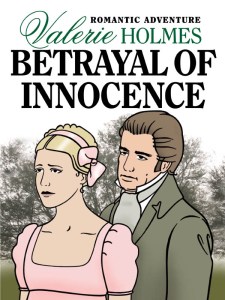
Betrayal of Innocence

Buy and read now!

US Readers: Kindle / iTunes / Nook

UK Readers: Kindle / iTunes / Nook

Early nineteenth century North Yorkshire, England.

Lydia works hard as a servant at Bagby Hall to keep her father, an ailing tenant, from the poorhouse. She is horrified and wracked with guilt as she discovers her friend, the gentle fallen Georgette, being used by Lord and Lady Bagby. Lydia longs to aid Georgette as she fears her life may be in danger – but how? The arrival of the mysterious, Dr Samuel Speer, adds to her dilemma, as Lydia’s concern grows. Does she risk her father’s wellbeing and reveal the truth or remain forever silent and therefore, guilty…

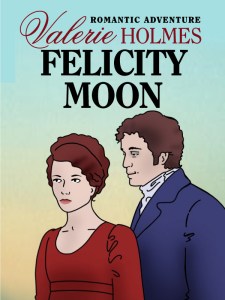
Felicity Moon

Felicity Moon KEC

Buy and read now!

US Readers: Kindle / iTunes / Nook

UK Readers: Kindle / iTunes / Nook

Early nineteenth century North Yorkshire, England.

Felicity Moon strikes the Lord of the manor in self defence and is forced to leave his household. Squire Moon, her father, is in gaol charged with bank-rolling smugglers and storing contraband. Felicity has one last chance to save herself from ruin in the form of a reference to Mr Lucas Packman, a man her father dislikes intensely. She has an impossibly stark choice to make: trust Packman or her obey her father. 


The World of Valerie Holmes

“…dread of wandering mariner, where often, alas, the proud vessel hath floundered against thy iron ribs, or perished on they cruel rocks!” –W Braithwaite in his “Rural Reminiscences”.

Love is a timeless essential of life. Throughout history, love in all its forms is a constant: be it passionate, caring, needy, manipulative, possessive or one that is strong enough to cross barriers of culture or faith. When two souls meet in a situation which takes them out of their normal social strata or into a shared danger, a relationship forms as the adventure unfolds.

The historical romances are based in the early nineteenth century, set against dramatic social change at a time of war with France. Smuggling, espionage, press-gangs all add to the drama that the hero and heroine can face.

Created to be entertaining reads that pass away a few hours lost to the thrill of an adventure, the core of my work is based around the same area of North Yorkshire. My world features the rugged headland of Stangcliff, the old inn sheltered in the bay of Ebton below and Gorebeck, the fictitious market town on the edge of the moors, marking a major crossroads for travellers to Newcastle, Harrogate, Whitby, and York.

Dead to Sin (A Penn Mystery Book 1)

Dead to Sin KEC_1Buy and read now!

US Readers: Kindle / iTunes / Nook / Kobo

UK Readers: Kindle / iTunes / Nook / Kobo

The first Penn Mystery: When duty alone is not enough…

1812 North Yorkshire, England.

Nicholas Penn is summoned to Gorebeck Gaol to visit a man accused of the rape and murder of five wenches. Having been found holding the body of the last victim in his arms his plight seems sealed.
Nicholas is torn between a sense of duty and his feelings of hurt and disgust when being in the presence of the accused. The tables turn abruptly, and Nicholas becomes the incarcerated, duped and incensed he is sworn to find the man, Wilson, before another victim dies and honour can be restored.

Bethany’s Justice

Bethany's Justice KECBuy and read now!

US Readers: Kindle / iTunes / Nook

UK Readers: Kindle / iTunes / Nook

Early nineteenth century North Yorkshire, England.

If you cannot trust your closest friend, then who can you? One young woman is about to find out. When Bethany and Kezzie excitedly walk to a neighbouring village fair, Bethany discovers how fickle her friend is once they meet up with womaniser, local shepherd, Bill Judd. Deserted on the open moor road, Bethany’s feelings are hurt, but she is determined to continue her journey. In her anger she makes a life threatening decision, cutting through a wooded estate, she is shot at, wounded but her rescuer changes her life forever.


Truth, Love and Lies

Truth, Love & Lies KEC

Buy and read now!

US Readers: Kindle / iTunes / Nook

UK Readers: Kindle / iTunes / Nook

Florence Swan escapes before she is forced to work in a cotton mill. Naïve and ambitious, she ventures out into the world alone believing she can work her way up the hierarchy of servants within a manor house or hall.

Major Luke Stainbridge returns to his beloved estate in England after being a prisoner of Napoleon only to discover he has been replaced by an imposter.  Two lives are in chaos. Two destinies combine. Will the love of truth be enough to destroy a sinister network of lies?

The Captain’s Creek

TheCaptain'sCreek KECBuy and read now!

US Readers: Kindle / iTunes / Nook

UK Readers: Kindle / iTunes / Nook

Early nineteenth century North Yorkshire, England.

Maggie Chase discovers an injured stranger fleeing for his life on the isolated beach near her secluded cottage in the nearby wooded gill. Her father, Captain Chase is away at sea, leaving her on her own. Trusting her instincts, she helps the man, Montgomery, to evade capture by a press gang. Little does Maggie realise that this rash act will threaten her reputation, jeopardise her own heartfelt plans to open up a village school and risk her life. Maggie soon sees that the handsome stranger is a dangerous man led by his own private ambitions for justice…

Chloe’s Friend

Chloe's Friend KECBuy and read now!

US Readers: Kindle / iTunes / Nook 

UK Readers: Kindle / iTunes / Nook

Early nineteenth century North Yorkshire, England.

Chloe is hidden in the lowliest place in Hall’s service – the laundry. Here, away from prying eyes she is expected to work until her father sends word that all is safe for her to resume her more privileged life. Mr Thaddeus Poole, the estate’s groundsman, watches her. He is handsome and strong. Chloe is grateful that he has helped her when she weakened. However, Chloe does not know if he will betray her, or become her most trusted and loyal friend or more…