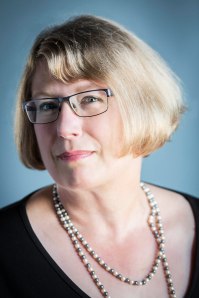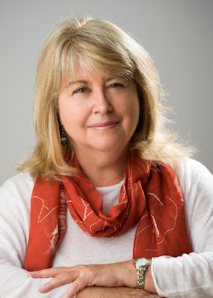
An Interview with Juliet Greenwood

I first met Juliet when we were at Writing Magazine’s awards ceremony back in 2002. We were both winners embarking on our writing careers. A fellow member of the Romantic Novelists’ Association, Juliet had several works of fiction published under the pseudonym Heather Pardoe and is now a novelist under her own name.

Welcome Juliet!

In what way did ME lead you into a writing career?

It was a really bad viral infection that left me with ME for years. Before then, I’d been energetic and healthy, holding down a career, cycling, rushing up mountains, and working for hours in my garden. Being so ill for so long, and not knowing if I would ever get better, forced me to completely reconsider my life. That’s when I decided I would work part time in a far less stressful job, and just go for my lifelong dream of being a writer. I’d never had the courage to do it before, in case I failed. Having ME made me realise I’d nothing to lose, so it gave me the courage to try.

Have you always been a story-teller with a love of the written word?

Definitely! As a child I used to devour books and write my own wild adventures and the only subject I ever wanted to study was English. In my twenties, I lived in a garret (well an attic room) in London, bashing away on a typewriter, sending stories out and finding them flying right back again. Then I did the sensible thing and found a ‘proper’ job and did a bit of living (the best kind of research). But I never quite lost sight of the dream.

You had established your work under the lovely name of Heather Pardoe, why did you decide to revert to your true name for novels?

I’m very fond of ‘Heather Pardoe’, but I’d always known I was going to write under two names. Writing stories and serials for magazines was a really valuable learning curve. I loved doing them, and had great fun with the novellas I wrote for the ‘My Weekly Story Collection’. But my novels are very different. The kind of story you write is a pact with your readers, which is why many authors write under several names. My Juliet Greenwood books aren’t dark, but they deal with much darker themes (like my heroine racing through the battlefields of WW1 in a beaten up ambulance, on a desperate rescue mission), so I’m very happy writing under two names. I definitely see them as two aspects of me, so when I sit down as Heather, it feels different than when I sit down as Juliet. Although Heather is my middle name, so my two writing personas are not that far apart…

Which author’s work have inspired you the most and why?

There are so many! As a child, the novels of Rosemary Sutcliffe gave me a passion for historical fiction. I love Elisabeth Gaskell, George Elliot and the Bronte’s for their portrayal of strong, passionate women trying to make sense of the world around them on their own terms, and I can never get enough of the twists and turns of Dickens’ plots.

I love the description you gave in one interview of your ‘crog loft’. I have just converted my garden shed – it does not quite have the same ring to it. How structured is your writing day/process? Are you a plotter or do you let the ideas grow organically through the story?

WW1 Seed Cake smallMy crog loft is tiny, but it’s nice and cosy and womb-like (and has steep stairs that stop me from sneaking out into the garden when I hit a tricky bit!). When I’m writing serials, I have to plot everything out, as there is no chance of going back and changing things. When I’m writing my novels, I start with a general idea of the plot, but I know that’s going to change as soon as I start, and find the heroine needs a mother, or a brother or best friend, who turns out to be far too interesting to ignore! I generally know the beginning and the end, but once the first draft is done and the real work begins, anything can happen. That’s the exciting, and the scary bit, because I’m never sure if it’s going to work. I love tightening up the plot, and developing the twists and the turns to (hopefully) keeping the readers on the edge of their seats. ‘Eden’s Garden’ was a real challenge, moving between the modern heroine and Victorian times, and keeping the two stories weaving in and out of each other while not giving the twists (especially the one no one ever spots!) away. ‘We That are Left’ had some of its structure dictated by the historical events of WW1, even though the action is focused mainly on the experience of the women and civilians at home. The next book is also based around historical events, but with some family twists and turns too.

You are a member of the Novelistas whose members include amongst others Trisha Ashley and Valerie-Anne Baglietto. How did you become involved with the group?

I’ve been meeting with the Novelistas for years. We all live in very rural parts of Wales and the North West, and writing is a lonely life, so it’s great to be able to meet up and support each other.

How important do you think it is for an author to be a part of a supportive group/organisation?

I feel it’s very important to be part of a supportive group of fellow writers. It’s like any specialism you feel passionate about – you need fellow geeks, and those going through the same experience, otherwise you can bore the socks off family and friends (after all, I’d glaze over if a stockbroker discussed the minutiae with me every day, even if I had some interest in getting rich quick!).

What would you say a reader can expect from a Juliet Greenwood novel?

A big emotional story, set in a rambling old house in Cornwall or Snowdonia in Victorian or Edwardian times, with women firmly at the centre of the action, each making her own way towards self-fulfilment. There is a mystery to be solved, and danger to be overcome, and the path of true love definitely never runs smooth. There will be a garden in the background somewhere, and probably cake. For ‘We That are Left’ I researched authentic dishes from WW1 newspapers for my heroine to use, as she struggles to keep her family and the local village fed on limited resources, mainly anything she can grow in the kitchen garden on the family estate.

What are you currently working on?

I’ve just finished another serial, this time set among the paddle steamers of Conwy in Victorian times. I’m also deep into my next novel, which is a still a secret, but I can reveal that both cake and bricks are involved. And possibly a suffragette or two?

What is next for Juliet?

I’m looking forward to finishing my next book – especially as I’ve already got ideas I’m passionate about for the next one, or even two. The kindle editions of ‘We That are Left’ and ‘Eden’s Garden’ both reached the top five in the kindle store. I never expected it to happen, but it was such an exciting experience, I’m just itching for the chance for it to happen again. Writing is always a rollercoaster ride. Just watch this space…

More from Juliet

Website: http://www.julietgreenwood.co.uk/
Blog: http://julietgreenwoodauthor.wordpress.com/
Facebook: https://www.facebook.com/juliet.greenwood
Twitter: https://twitter.com/julietgreenwood

‘We That Are Left’, Honno Press, 2014

‘Eden’s Garden’, Honno Press, 2012

An Interview with Sue Moorcroft

Sue M Portrait 300px

Sue Moorcroft is an amazingly versatile writer and tutor who has taken time out of her busy schedule to share her world with us. 

Welcome to my blog, Sue!

Thanks for inviting me.

Do you have a very set and organised working week or, with your busy and diverse writing commitments, do you work to ever evolving priority lists?

Both, I suppose. I have deadlines to meet for novels, serials and my monthly columns for Writers’ Forum, and also sometimes for other work including promo. To fulfill those deadlines I have a fairly long working day, often devoted to working with students in the morning and writing in the afternoon. In that way, I keep fresh for both. I punctuate most days with a class such as yoga, Zumba, FitStep or piano. These seem to see to my physical and mental health as I do most of those classes with friends.

Sometimes I have a teaching commitment that takes precedence or I go somewhere for research purposes. I enjoy spots on local radio, too. Variety is the spice of my life.

When did you first make your first breakthrough as a published author?

I sold my first short story, to The People’s Friend, in 1996. It was April 1st and I just hoped it wasn’t someone’s idea of an April’s Fool joke… I stopped counting at 130 short stories so that first one was quite important. The short stories led to serials but it wasn’t until 2004 that I sold a novel.

How important a role has the RNA played in your writing journey to date?

Very. It helped me to make the transition from short fiction to long. I was actually at a party thrown by a short story agency that placed some of my work when somebody told me about the RNA’s New Writers’ Scheme. Then I saw that Marina Oliver was appearing at a library about 20 miles from my home so I went along to that and asked her about the RNA, as she was then (and for many years) a committee member. I applied the next day.

Margaret James was the NWS co-ordinator then and she took a personal interest, including introducing me to someone who became my agent for the next seven years. I left that agent for personal reasons that affected my career in 2009 but have just signed with another, Juliet Pickering at Blake Friedmann.

The RNA members also gave me a ‘can do’ attitude. I’d be at a conference chatting to someone in the lunch queue and realise that they were the author of dozens of novels. But they just seemed ordinary aside from that … It made me realise that it’s hard work, education and talent that makes a writer, rather than some mystical power endowed to people other than myself. And, of course, the RNA gave me a massive number of writing friends.

What can a reader expect from a Sue Moorcroft novel?

A dauntless heroine and an irresistible hero to create sizzle, a contemporary setting, an entertaining read but meaningful subjects explored. Readers say that I make them fall in love with the hero, which is only fair because I fall in love with them all, too!

What have been the 3 stand out highlights of your writing career to date?

When I got ‘the call’ from my agent that began, ‘I have an offer for you.’

When I won Best Romantic Read Award for Is this Love? at the Festival of Romance.

And when a customer at a bookshop signing saw my display, picked up All That Mullarkey and asked, ‘Her! Do you write anything like her? This is what I’m reading at the moment and I love it.’ I squeaked, ‘I am her!’ It turned out that the lady was very ill and had been in hospital a lot. She was reading in the afternoons while she rested and any book that ‘grabbed’ her had become a lifesaver. She bought all of my books apart from Want to Know a Secret? because it had a hospital in it. I felt privileged to have made her illness a little easier to live through.

Sue M Wedding ProposalPlease tell us about your new book The Wedding Proposal and the inspiration behind it?

It’s set in Malta, which is a place I love as I lived there as a child. Because I like to read them I wanted to write a reunion book and that turned out to mean a lot of extra plotting. It was getting the balance right. The reason Lucas and Elle parted four years earlier had to be plausible yet they had to get over it in order to come together when they met again. Lots of backstory plotting required! One of the flats I lived in as a child overlooked a marina so I set the book there, ie I put Lucas and Elle together on a small boat for the summer. I thought it would make it hard for them to avoid one another. (I was right.)

Elle and Lucas have both mellowed while they’ve been apart. Lucas has made his hobby, scuba, into his job, by qualifying as a divemaster. Elle has been made redundant from her whizzy corporate life in IT and in a complete change of direction has begun to volunteer in a drop-in centre for young people. Lucas’s little brother Charlie is loveable but crazy so I brought him on stage to have an accident with far-reaching consequences. Elle still has secrets and Lucas still doesn’t like secrets, so that ignites the plot nicely.

What is next for Sue a) as an author and b) with your upcoming writing events/courses?

I’m writing two things. One is a three-part serial for My Weekly, scheduled to be published over Christmas and New Year. The other is a novel called The Twelve Dates of Christmas which is about dates and Christmas but also revenge porn, hats and ovarian cancer. I know the plot and I’m about one-third of the way through the writing. I’m not sure how I’ve ended up writing about Christmas twice as I actually love summer!

I’ll be at the Festival of Romantic Fiction in Leighton Buzzard on the 13th of September, at the book fair 10am-3pm and the Traditional Afternoon Tea at The Green House 4-5.30pm. I will be at the Romance Readers Awards at Leighton Buzzard Theatre in the evening because I’ve just heard that The Wedding Proposal has been shortlisted for the Best Romantic Read Award!

Next year I’ll be running a week-long writers’ holiday for fabulous Arte Umbria 22-29 July (already filling up) and hopefully one for equally fabby Chez Castillon but I don’t have the dates yet.

Thank you so much for taking the time out of your busy schedule to share some of your writing experiences with my readers.

And thank you for having me.

Sue Moorcroft writes romantic novels of dauntless heroines and irresistible heroes. Is this Love? was nominated for the Readers’ Best Romantic Read Award. Love & Freedom won the Best Romantic Read Award 2011 and Dream a Little Dream was nominated for a RoNA in 2013. Sue received three nominations at the Festival of Romance 2012, and is a Katie Fforde Bursary Award winner. She’s a past vice chair of the RNA and editor of its two anthologies.

Sue also writes short stories, serials, articles, writing ‘how to’ and is a competition judge and creative writing tutor.

Sue’s latest book The Wedding Proposal is available as an ebook from 4 August 2014 and as a paperback from 8 September.

 TWP_RGBpackshotMore from Sue:

Website: www.suemoorcroft.com

Blog: http://suemoorcroft.wordpress.com/

Facebook: sue.moorcroft.3 and https://www.facebook.com/SueMoorcroftAuthor

Twitter: @suemoorcroft

An Interview with Mirren Jones

Mirren Jones
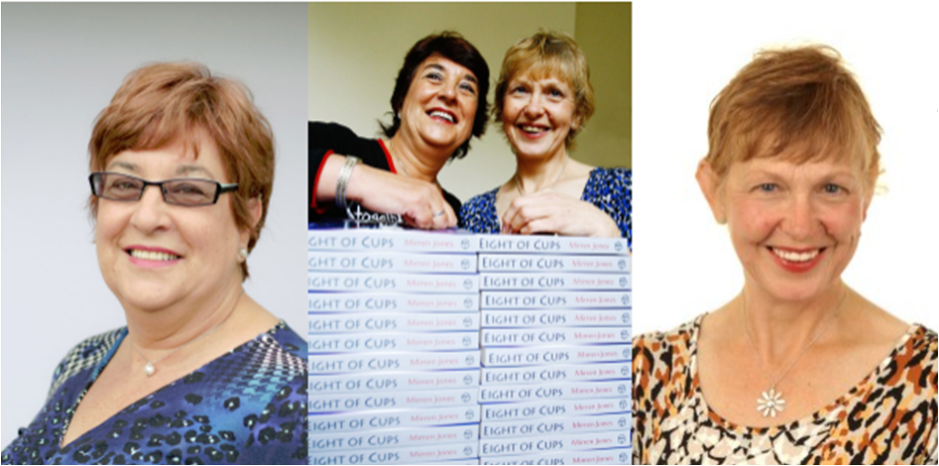
‘Mirren Jones’ is a unique partnership of writers Marion Duffy (left) and Elaine Atkins (right).

Did your partnership form and grow through the collaboration as writers or did your published work evolve as a result of your friendship?

A bit of both! In 1999, we had co-authored two books of non-fiction, published by Radcliffe Medical Press (‘Facilitating Groups in Primary Care’, and ‘Facilitating Organisational Change in Primary Care’), while employed by The University of Dundee. That activity, along with several years of co-tutoring and joint research and consultancy, developed our working relationship and eventually led to our being friends as well as boss and junior!

Our fiction writing partnership – and ongoing friendship – is something newer and different, as we are no longer in a formal work situation. We’ve been writing and working together for 16 years in total and are still great friends, despite now living 500 miles apart.

Please tell us something about ‘Eight of Cups’?

front cover high resolutionThe novel is certainly not chic-lit, and is not intended to be literary; rather it fits the genre of well-written contemporary women’s fiction, although many male readers have told us they’ve enjoyed reading it and learnt a lot about women’s minds in the process! It’s a saga spanning over thirty years, beginning in 1972, as the six main characters arrive at Edinburgh as new undergraduates. After leaving university, their roads lead to England, Wales, Ireland, America and the Middle East; lives intertwine and paths cross.

The story is told from two perspectives. One, from the first-person narrative of the primary character, the rather too selfless (as becomes evident) Scottish lass Diane. The other, third person narrative interlocks all six characters in a brindled strand of narrative priorities. The women are all very different personalities: Nancy, the risk-taking country-loving girl from Yorkshire, Alix, the hedonist from Aberdeen, Carys, the studious one from the depths of West Wales, the quietly anxious Lesley, from Cardiff, and bossy, religious Patricia from Dundee.

The book explores the effects of the various attachments each character possesses on their lives: dreams, ambitions, pleasures, plans, obsessions and fears, and asks the question, “What will it take to set them free?”

Where or who did the inspiration and desire to write the novel come from initially?

Marion (Mirren) describes the impetus as being a combination of challenge and opportunity, with a significant event in her social life providing the seed for the story. She was moving to live part-time on the Isle of Lewis in Scotland when her husband took up a post there in the island dental services. He was concerned that she would be bored (does he really know her??) and challenged her to ‘write that novel you’ve been banging on about for years’. Co-incidentally, she attended a reunion of old university friends where one of her old pals divulged a shocking secret to the group. That set her thinking of how life affects plans and attitudes. On hearing of Mirren’s novel-writing plans, Jones was very keen to join in, making a strong case that if we were able to write non-fiction successfully then we ought to be able to do the same with fiction! So after discussion and negotiation, Mirren Jones was born and ‘Eight of Cups’ quickly began to take shape.

Do you split tasks when you approach producing a novel or do you write alternate chapters, swap them and then smooth out the writing style in redrafting?

 We work in a highly iterative way – creating, structuring, planning, revising, over and over again until we are happy with the product. Interestingly, we always sit down together and read through all the dialogue before signing off the final draft – this does give unique insights. In the end, the finished work is an amalgam of our ideas, plot lines, character development and physical writing (Mirren’s straight on to computer, and Jones on paper first), critiqued and then polished according to our own standards and preferences, as well as feedback from selected trusted reviewers.

You both have had careers dealing with people within the health sector. Do you think this experience has helped you to feel deeper empathy for the characters you create?

alyth town hall - CopyOur work in the NHS, in academia and as organisational development consultants has required us to be attentive listeners, adept at interpreting information from others via all our senses, able to feedback sensitively and imagine ourselves in others’ shoes. We have gained experience over many years of the effects of ill-health on people, and how life impacts on well-being. Hopefully our innate vein of empathy has been enhanced by our real-life experiences which then give us insight that we can apply to our characterisation. Perhaps being co-writers has an advantage over writing solo, in that with our combined life and work experiences we are able to bring a very wide range of knowledges and contexts to our writing, thus giving credibility to our characters and their settings.

How do you keep up the much needed energy and momentum for the projects you start when living so far apart and having such varied commitments and interests?

We put no pressure on each other in terms of deadlines and accept that life will get in the way, as it has done since we became Mirren Jones. We try to fulfil our promises to each other, and to ourselves as best we can, and both would love to have more time to write. Neither of us are the kind of writers who can squeeze in an hour before bedtime, or get up early and write before going to work. But what does help is if one progresses the story and reignites the flame for the next chapter to be written.

Please tell us something about your next novel, ‘Never Do Harm’.

It is a psychological drama about two doctors, friends since childhood, living in the same part of Scotland, but operating in very different settings. Alan is a GP in a busy medical practice, Hugh is a senior hospital consultant in a big teaching hospital. Professional in their working lives, they are rivals as well as friends in their personal life. Alan’s French wife Simone, a sculptress, is the third player in their relationship. Her presence will generate the potential for harm, something the two men promise never to do in their role as doctors, but which doesn’t of course apply outside of work. Our old NHS colleagues will be more than a little worried that we’ve used some real-life experiences to fuel our writing of this novel – and they may well be right!

What is next for Mirren Jones?

Finishing ‘Never Do Harm’ is our immediate aim – we are committed to reaching this goal before the end of the year. Then we have to navigate the world of Indie publishing which has changed considerably since we produced ‘Eight of Cups’, with the advent of digital books on multiple platforms, and embrace marketing with renewed enthusiasm!

As for the future – we have no problem generating ideas for stories, so when we decide to work on a third novel, it will probably progress much as this one has – in a stop-start fashion, with many twists and turns in both the writing and the lives of the writers. Given our personal experiences to date, we can anticipate unexpected changes which might throw up a range of other possibilities. In the meantime, Mirren continues in her role as Practice Manager in her local health centre, and Jones with her work as an Energy Psychology practitioner (humans and horses) / MD of CareandCompare.com – a charitable insurance price comparison website.

More from Mirren Jones

Website: www.mirrenjones.co.uk

Blog: www.mirrenjonesblog.com

Twitter: @MirrenJones

Facebook: Mirren Jones

Google+: +Mirren Jones

Pinterest: http://www.pinterest.com/mirrenjones/

Kindle worldwide: http://authl.it/1qs

An Interview with Louise Allen

A photo of Louise Allen

When did you first decide to become a writer or discover your love for the written word?

I’ve always had a vivid imagination and loved fiction but I think academic work knocked the urge to actually write it out of me. Then I started for all the wrong reasons – I was a librarian and saw how popular Mills & Boon novels were. I thought it would be easy money – idiotic of me, of course. However, by the time I sorted myself out and took it seriously I was hooked.

What appealed to you about the romance genre?

It is a great genre for exploring relationships, which is always interesting, and when I discovered historical romance, there was no stopping me – two passions in one!

Your research is impeccably thorough. At what point do you take a step back from it and begin to write the book?

Walks Through Regency London Cover LARGE EBOOKThe story and the characters have to come first, always, although some plot lines can be sunk from the start if the historical premise is incorrect – 18thc characters getting an easy divorce, for example or a sub-plot that involves getting from London to York in a day. Generally I know what I don’t know and therefore what to research – politics, for example. I’ve got a huge personal reference library. But once I know I have a plot that will work in a particular historical context then I leave the research until afterwards and go back to it so it doesn’t take over. When I wrote a story set in AD410 during the Sack of Rome (Virgin Slave, Barbarian King) I just left questions in red for bits I needed to check and went back to them to be sure my characters left Rome by the right gate onto the right road and I’d got the layout of a bath house correct and so on.

I also write historical non-fiction – Walking Jane Austen’s London (Shire), Walks Through Regency London (Kindle), Stagecoach Travel (Shire, July) and I’m working on something on the Great North Road at the moment, so I can channel the hard facts somewhere they won’t take over.

You must have visited some fantastic locations and discovered some unusual facts during your research. Could you share some of the most memorable with us?

Finding three of the houses that Jane Austen stayed in when she was in London was a thrill. Only one, in Covent Garden has a Blue Plaque, but I discovered the other two when I found a pamphlet about research that was done after the war which revealed that her brother Henry’s homes in Sloane Street and Hans Place were not demolished by the late Victorians, but simply refaced and had new upper floors added. The originals are still there under the later shell.

Practical research is great too – I took carriage driving lessons, for example and I’m about to go on a practical osteoarchaeology course handling real skeletons. Goodness knows when that will come in useful…

Do you have a strict writing routine?

Yes, or I’d never get anything done! I write every afternoon until I have hit at least the minimum number of words I need to do to make sure I finish a week before the deadline, and hopefully a few more. That way I have some time in the bank for catching flu or unexpected commitments.

How do you balance the need of keeping your work accessible to contemporary readers against your desire for historical accuracy?

I won’t distort history but it is possible to use it to appeal to contemporary readers. For example I tend to write heroines who are older and who have the freedom to act in a more assertive, interesting way. They may be widows, or following one of the career paths open to women at the time. Where there are strong differences in beliefs and norms between the time I am writing about and the present – the fact that many wealthy families in the 18th century owed their fortunes to slavery in the West Indies, for example – I simply avoid putting my characters into those situations. On the other hand, the ‘long Regency’, which is the period I usually write about, saw the beginnings of many of the freedoms we are concerned about now, or at least the fight for them. Education for women, abolition of slavery, prison reform, concern for child welfare can all be woven in to some plots and engage the sympathy of readers.

As the New Writers’ Scheme Organiser for the RNA, what key advice would you give to someone who wanted to break into the romantic fiction market?

Read widely in the genre you are interested in and do so analytically as well as for pleasure. What works, what doesn’t? Why? Then work at developing your own voice – there is no substitute for practice!

Please tell us about your latest release?

UnlacingMy latest book is Unlacing Lady Thea (Harlequin Mills & Boon. April). I got the idea for it when we took a small-ship cruise down the eastern coast of Italy. My heroine is no great beauty, and thoroughly practical with it (and I had some fun with the fact that, unlike many romantic heroines, she doesn’t fool the hero for a moment when she disguises herself as a boy). My hero begins the book seriously the worse for drink and talking to the kitchen cat. He’s so drunk that he agrees it would be a good idea to allow Thea to accompany him on his Grand Tour so she can join her godmother in Venice. By the time he sobers up, it is too late and he is stuck with escorting his childhood friend for whom, of course, he has no amorous feelings… None at all, he tells himself.

What is next for Louise?

Scandal’s Virgin is out in June and Beguiled By Her Betrayer, which is set in Egypt in 1801, is released in August. Stagecoach Travel comes out in July.

Currently I’m working on book three in a trilogy, provisionally called Battlefield Brides. Book one is by Sarah Mallory and book two by Annie Burrows. The three books are set before, during and just after the battle of Waterloo and will be released to coincide with the bicentenary of the battle in 2015.

More from Louise

Website: louiseallenregency.com
Blog: janeaustenslondon.com
Twitter: @LouiseRegency

An Interview with Cindy Kirk

My guest this month is prolific American author Cindy Kirk. Cindy is a writer who loves romance and has written many special editions for Harlequin.

When did you first discover the joys of story-telling or writing your own stories down?

I’ve loved books and stories for as long as I could remember.  If I didn’t like a book’s ending, I’d make up my own.  The same held for movies or televisions shows.  For a long, long time I thought that everyone made up different endings.  I wrote my first “book” when I was thirteen.  It was a romance, of course, with a happy ending!  I let one of my teachers read it and I could tell she didn’t think it was very good.  It was a devastating blow to my young writer’s soul.

Which novels inspired you, or you would rate as your all time favourites?

LaVryle Spencer’s Bitter Sweet and Separate Beds; Susan Elizabeth Phillips’s Dream a Little Dream and Nobody’s Baby But Mine; Lisa Kleypas’s Travis Series, Julia Quinn’s Bridgerton Series.

Could you share your journey to becoming a published author with us?

I wrote five books, it was the fifth that sold, 3 years after I started writing in pursuit of publication.  The book that sold won a contest.  The first prize was a critique of the entire manuscript by Harlequin editor, Patience Bloom.  She not only read it, she bought it.  And 15 years later, she’s still my editor!

What advice would you give to a new writer who has not made it into print yet?

To continue to hone your craft.  When I started writing, I began attending regional conferences for writers. Every year I attend the Romance Writers of America‘s National Conference and soak in all the wonderful information on how to write a better book.

Why romance?

I love a happy ending!  Not only in books but in movies.  I want to cheer for the hero or heroine, see them become stronger, learn life lessons, then be rewarded.

How did the ‘Jaunty Quills‘ develop?

I was writing also for Avon (Harper Collins) when a group of Avon authors decided to get together and start a blog.  At the time I was the only contemporary author.  The group has morphed over time to include authors from all different romance genres and publishers.  It’s been fun every step of the way.

What is the essence of a Cindy Kirk novel?

It’s a fun, enjoyable read with a dash of humor.

What is next for Cindy?

More books in my Jackson Hole series for Harlequin.  A return to Harper Collins with a novella that will release in December 2014.  And, who knows? That’s the beauty of writing.

More from Cindy

An Interview with Janet Gover

Janet Gover

My guest author this month is an experienced novelist, TV journalist, and short story writer, as well as an award-winning Australian author, Janet Gover. She has graciously taken time out of her busy, globe-trotting schedule to answer some of my questions and share her vast experience with us.
 
Welcome, Janet!

How did your childhood fuel your love of books, travel and adventure?

Hi Val – thanks for having me here on your blog.

I grew up in a tiny bush town in Queensland. There were only 18 buildings in Bowenville back then – I know this because I counted them. There was no-one else my age in the town, and my school was many miles away. I took a bus there each day – which meant I didn’t get to hang out with the other kids after school. Our nearest ‘big’ town was Toowoomba. It had movies and shops and things – but it was quite a drive to get there and we didn’t go often. I guess would have been lonely without my ponies and my books.

My Dad was a great reader and he taught me to love books as he did. It was such a great escape. I rode to the stars with Ray Bradbury, solved mysteries with Sherlock Holmes and fell in love with many a knight in shining armour.

Books were full of people and places that were such a long way from my tiny bush town. They fired my imagination. And the really great thing is – I have managed to visit some of those places I read about – although I have yet to go into space…

On January 10 2011 floods hit Brisbane and Toowoomba. Has Toowoomba changed greatly from the place you grew up in as a result of the devastation caused?

I was in Miami, Florida, working, when those floods hit. I woke up in the morning and turned on the TV news – and was shocked by the pictures I saw. It was so hard to understand how Toowoomba, a town on the top of a mountain could have a flood. I lived and worked in Brisbane as a young journalist, and that day in Miami I saw pictures of one of my favourite restaurants being washed away.

Floods are not uncommon in Australia – and people fight back. If you went there now, you wouldn’t know what had happened.

One of the things I am very proud of is my involvement with a book called 100 Stories For Queensland. I donated a short story to this project – as did many other writers. All the proceeds from sale of the book went to help flood victims. I was pleased to be able to help, even in such a small way.

You have written stories from an early age, but when did you make that initial breakthrough into print as a fiction writer?

I was a journalist for many years – working mostly in TV. I thought it would be easy to switch from writing fact to writing fiction – but I was very wrong. It was really hard.

I tried my hand at a novel when I was still working as a journalist – and it was really bad. Seriously bad! Some years later, I moved from being a journalist to a more managerial role – where I wasn’t writing daily news stories any more. Something inside me needs to write – and that’s when I seriously started to write fiction.  It took a while to change my style. My first efforts were rejected.

A holiday in Wales changed everything for me. I was very inspired by the places we visited – the fabulous scenery, the people and their history… the dragons.  I wrote a short story called The Last Dragon. It was my first published fiction (and I still love it).

I wrote short stories for a year or two – and each taught me something else about the art of writing. And every one that was published gave me a bit more confidence. My first novel, The Farmer Needs A Wife was published in 2009, and owes a lot to those short stories.

Janet, you travel widely with your work. Do you develop plots/characters for your novels as you journey, being inspired by new experiences?

I love people watching. Everywhere I go, I look and listen and learn. People are endlessly fascinating.

One thing I have learned in my travels is that whatever the cultural differences, deep down people all over the world want the same thing – they want to find someone to share their lives with. They want a home and a family. They want to give their children a good start in life. That’s why I write the sort of books I do.

I feel most comfortable writing about places I have been – I do like to properly capture the essence of a place. As I travel more, some of that is sneaking into my work. A boat cruise around the tip of Norway in mid-winter helped me to write Bring Me Sunshine. A trip to Iraq was the key to writing a troubled ex-serviceman as a hero. Living in New York has given me a heroine – we won’t meet her for two more books, but she is waiting there for me.

What places, of the many you have visited really stand out as memorable and why?

Wow – that’s a hard one. Very place has its own magic. Even though I write contemporary novels, I am a big history buff. I have visited the ruins of Carthage, of old Constantinople and Pompeii. I walked the Great Wall of China – I had a terrible cold at the time and pretty much collapsed at the end of the day, but loved it all the same. I love the ancient feel of places like this – and wonder a lot about the people who lived there.

The other thing I love is wild places – the central Australian desert, the Everglades. A frozen lake in Norway. The Rocky Mountains. Nature is beautiful and powerful…

And, I have to say – my favourite city in the world is London. I just love walking across Waterloo Bridge as the sun sets over the Thames. Beautiful!

What top tip would you give to new writers?

Be passionate about what you write. If you don’t love your story and your characters … no-one else is going to.

And respect your reader – never give them anything but the very best book you can write.

Flight to Coorah Creek, the first in a series based in the Australian outback is out in paperback this month. Could you tell us about this exiting new series?

Flight To Coorah Creek

I am loving writing about Coorah Creek. It’s a fictional town – in the far west of Queensland. Very close to the desert. In this series, I am trying to capture the feel of the small outback towns I have known all my life. These towns are a long way from the sort of amenities we are all used to. There are no shopping centres, or cinemas. Not much in the way of hospitals or schools either. Often, they hover on the brink of collapse. Coorah Creek is a mining town – if the mine was to close, the town would die.

People who live in these towns become very close to each other. They form very tight knit communities. The books are all romances – with new hero and heroine in each one. But the town and the people of the town appear in each book. It’s a chance to see the life the characters live when they move off the centre stage.

I hope to the readers, each new book will feel a little like coming home to a place you know well and to people you love.

By contrast Bring Me Sunshine was set in a much cooler environment. This was quite a change. Where did the inspiration for this story come from?
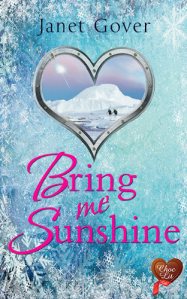
Bring Me Sunshine - small

Bring Me Sunshine is set in as wild a place as I could image – Antarctica. Well, on a cruise to Antarctica. The book was inspired by my sister-in-law – who went there with her mother… who at the time was well into her sixties. What a journey for a woman of her age!

I couldn’t afford to go there myself, but my sister-in-law helped with the research. I did take a cruise to the Arctic by way of research – which was a lot of fun.

I didn’t realise until after I had finished it – but this is the first (and so far only) book I have written that doesn’t have horses in it. There are, however, several million penguins – and who doesn’t like penguins?

It’s also the first (and so far only) book I have written with a wedding in it – which is a bit strange for a romance writer.

What is next for Janet?

I am almost finished writing the second Coorah Creek book – it has a lot of horses in it. And a fabulous hero who was inspired by a trip to Iraq.

There is a third Coorah Creek novel in the back of my head – a New York girl is just desperate to go and visit the town. But she’ll have to wait until I finish book two.

I am also planning another lighter novel – set on an archaeological dig…

And then there is this tropical island – where three sisters organise dream weddings…

And the story about the circus… (which will probably have horses in it too).

I’m not sure what order I’ll be writing these books in – one this is certain though – I am not about to run out of ideas…

More from Janet

Roses Are Dead

Roses Are Dead KECBuy and read now!

US Readers: Kindle / iTunes / Nook / Kobo

UK Readers: Kindle / iTunes / Nook / Kobo

Jen, a teacher, has broken away from a stifling relationship with Harris, who runs a gym. Naively, she tried to help him sort out his life, but did not realise that the man was a liar and a control freak until it was too late. Jen walked out on him determined to enjoy her independence once more when strange gifts begin to arrive. With Valentine’s Day approaching, the mystery of who is sending them disturbs her deeply. She fears it could be Harris. When they turn sinister Jen is frightened and does not know who should she trust: her ex, his friend, her neighbour, Sergeant Aidan Lee or just herself? When Jen needs help who will come?

An Interview with Peter Lovesey

DSC_2534Thank you for taking the time to discuss your fascinating career and share some of your experiences with us.

Your love of the English language shines through the quality of your work and the complexity of the plots you weave through your books. When did your love of storytelling begin?

I was a dreadful fibber as a child, so it must have been there from the start. I led a Walter Mitty existence, top of the class, popular, brilliant at games and with a girlfriend called Dahlia, the prettiest in school. None of it was true and Dahlia didn’t even exist. From there it was a smooth progression to making up stories for what was then called composition.

You also had a keen interest in sport which led to your first breakthrough as an author. Can you describe how this came about and if it is still one of your proudest moments?

At twelve I was taken to the post-war Olympic Games in London. There’s a lot of talk about legacy from the recent Olympics and for me the 1948 Games were a rich legacy indeed. I was hopeless at sport but desperately wanted to be a part of it, so I wrote about it, doing unpaid articles for small magazines. Out of it eventually came a book on distance running and then two years later, using distance running as a background, I entered a competition for a first crime novel. Wobble to Death won me £1000 and publication in England and America. A dream start to my career.

Stone Wife (2)From your initial breakthrough, how did you then go on to develop the successful series of Sergeant Cribb and Peter Diamond?

Cribb was the Victorian detective I created to clear up the mystery in that first novel and he went on to seven more, using Victorian entertainments such as boxing, the music hall, boating, spiritualism and Madame Tussaud’s as the backgrounds to whodunits. The eighth, called Waxwork, won the CWA Silver Dagger and was turned into a pilot for a TV series, made by Granada, starring Alan Dobie as Cribb.  Two series followed, based on the books and original scripts written together with my wife Jax.

The more recent series features a contemporary police detective called Peter Diamond, who is with Bath CID. The first book was going to be a one-off, called The Last Detective, and he resigned from the police. But it won the Anthony for best novel at the Toronto Bouchercon and I was asked to follow it up. So I contrived a story called The Summons in which the police needed him back and were forced to ask him to return and reinvestigate an old case. He’s been going ever since. The fourteenth, called The Stone Wife, is published this spring.

In which era do you prefer setting your novels – historical or contemporary, and why?

I wouldn’t say I have a preference. I enjoy the challenges of each. The Victorian period had a rich, rather daunting tradition to work in, thinking of Dickens, Wilkie Collins and Conan Doyle, and the task was to avoid a pale pastiche of those great writers. The research was enjoyable, mainly using the British Library newspaper library. Today, with the internet, it would be quicker and easier. Turning to the contemporary police novel was scary, too. I wasn’t sure how I would cope with modern policing and the huge advances in forensic science, so I made Diamond a bit of a dinosaur. I get a lot of pleasure from using little known historical anecdotes in these modern books. Examples are Jane Austen’s shoplifting Aunt Jane and Mary Shelley’s writing of Frankenstein in lodgings right next to Bath Abbey.

You have had work both televised and filmed. When this happens, do you become involved in the process and maintain control of what the producers can change?

I doubt if any producer allows the author control. They do take liberties and will tell you it’s necessary in visual terms. But I was lucky enough to attend read-throughs of the Cribb series and of Rosemary & Thyme, as the consultant. I was fortunate, too, that the adaptations of my books kept pretty faithfully to the plots – and that includes the movie Goldengirl and the TV drama Dead Gorgeous.

Do you write stand alone novels to have a break from the series, as a kind of refresher?

Yes, it’s fun to break out from time to time. I’ve written several from the point of view of the killer – and that’s very liberating. The False Inspector Dew won the Gold Dagger  and has been translated into more than twenty-five languages, but the one I’m proudest of is The Reaper, a black comedy about a rector called Otis Joy, who murders the bishop in chapter one.

Every writer has their own way of working. Do you plot in detail first and then set wordage targets, or do you let the story grow as it builds on the page?

When I started I would plan meticulously and write the synopsis before beginning Chapter One. I don’t write in drafts. The pages I write each day aren’t altered, except in minor ways, so it’s a slow process. If I tell you how few words I manage in a day you won’t believe me. It has to be right before I can move on. These days I carry much more of the plot in my head, but it’s basically all there. It’s not a method I would recommend to anyone.

I first met you when you did a local library talk, which was both interesting and inspiring. Do you intend to tour again in 2014?

If I’m asked, yes. I’ve done several recent US tours, visiting cities I wouldn’t ever have known otherwise. And it’s lovely to meet readers who enjoy the books. Plus, of course, the occasional writer such as you – and that’s a bonus.

Thanks, Peter! Of all the accolades and achievements you have received in your career to date, which one(s) stand out as something very special to you?

Difficult. The CWA Cartier Diamond Dagger in 2000 was a great honour, but couldn’t quite match the thrill of that first competition win with Wobble to Death. Another unforgettable moment came when I was Chair of the CWA and presented the Diamond Dagger to one of my early inspirations, Leslie Charteris, the creator of The Saint.

The Tooth TattooThe Tooth Tattoo also shows that you have a love and understanding of classical music. The humour within the book works on many levels, which balances the much darker twists of the plot. What inspired this book?

I can answer this with more certainty than any of your questions. A 2004 article in the arts section of the Guardian by David Waterman had this intriguing headline: HOW DO THE MEMBERS OF A STRING QUARTET PLAY TOGETHER AND TOUR TOGETHER YEAR IN, YEAR OUT, WITHOUT KILLING EACH OTHER? The piece stayed in my mind for eight years until I was ready for Peter Diamond to investigate. I’m glad to say The Tooth Tattoo was well received, not least by the writer of the article, who still plays with the Endellion quartet. And it’s just out as a February paperback.

What is next for Peter?

The fourteenth Diamond novel, The Stone Wife, will be in the shops in April and I’m halfway through the one I’m currently calling Diamond Fifteen. Thanks, Valerie, for this stimulating interview.

My sincerest thanks for taking the time to answer my questions. 

An Interview with Cindy A. Christiansen

Photo - Cindy A. Christiansen (1)

My first guest of 2014 is Cindy A Christiansen. To work as an author takes dedication and determination. Cindy appreciates this more than most as she has had to overcome life-changing illness to achieve her ambitions. She has kindly taken time out of her busy schedule to share her experiences with us.

How dramatic was the illness that caused you to change from your original profession to becoming an author?

It was devastating and confusing. I had no idea what was wrong with me. I got sick all the time and was missing way too much work. I kept falling asleep at my desk. I was a programmer/analyst and I soon found that I couldn’t follow the logic of a simple piece of code. I was sick for my bridal shower and during my honeymoon. I finally ended up in the ER with an enlarged liver and spleen, Mononucleosis and Epstein-Barr virus. The doctor said I had to make a life-changing decision about my future. He said I needed total bed rest.

However after a month of following his instructions, I was even worse. Despite seeking the help of thirteen different doctors, no one could tell me what was wrong with me. I finally had to quit my job. The illness continued to progress. Six or seven years later, I was finally diagnosed with Chronic Fatigue Immune Dysfunction Syndrome, Fibromyalgia, and Chronic Epstein-Barr virus. Since that time, I’ve been diagnosed with over thirty other health-related illnesses that affect me physically and cognitively.


What inspired you to turn around the situation into a positive step by entering the world of fiction?

Having been raised on a farm with a strong work ethic, staying in bed was one of the hardest things I’ve ever done. My self-esteem and self-worth plummeted and depression set in. My husband was working and pursuing hobbies. I felt alone, isolated and down-right bored to death. I needed something else with which to think of in my life.

I got a yellow writing tablet and started writing. Articles and stories soon turned into a book. Sometimes I could barely move my hand across the paper, but I felt such a rush of accomplishment. Then I rescued and adopted a Wire-haired Fox Terrier puppy and my life began to change in the most positive ways.


Did your childhood fuel your imagination and love for animals – especially dogs?

Absolutely! After twelve books, I still haven’t run out of life experiences to use in my books. Growing up on a farm but within a city, I’ve experienced the best of both worlds. Living in Utah, I have enjoyed the most beautiful diverse landscape that has made the setting for every book unique without leaving the state.

I haven’t begun to share all the wonderful experiences I have had living on our farm and loving and working with dogs. Just to give you an idea of my imagination as a kid, I’ll share that our old hay wagon made a very nice stagecoach and our two-horse trailer made an excellent jail for all those desperate outlaws of the west. Our mixed-breed dog, Poncho, quickly became Lassie or Rin-Tin-Tin on a whim.

When did you first break into publication?

Publication didn’t come quickly. I began taking classes, joining writing groups, and doing tons of rewrites on the same book. Although doctors said I would never have children, I found myself in a high-risk pregnancy. Motherhood took everything I had, and when my son was eighteen months he was diagnosed with learning disabilities and special needs. Another child followed three years later, and he was also special needs. My writing was on hold until one day when I read Seabiscuit by Laura Hillenbrand and found out she had one of the illnesses I had. It totally inspired me to seek publication, and I began writing again and submitting to publishers.

I published three books with a publisher but later pulled my rights and published with Sweet Cravings Publishing. I have seven full-length books published with them, not including the two additional books in A Merchant Street Mystery series that will follow. I also have independently published three novellas, one novelette, and a non-fiction book on writing.

When starting a new novel do you begin with the title, plot outline or character profiles? Or just a blank page and the first word?

I start with a plot idea and have a whole batch of worksheets I fill out before actually beginning to write.

Could you describe what experience a reader can expect from one of your books?

I want readers to know exactly what they are going to get from one of my books, especially since I write outside the box. As part of my marketing plan, I developed a list and post it in as many places as I can. Here it is:

  • A clean read with no bedroom scenes or offensive language.
  • A tantalizing, fast-paced plot.
  • A story without a lot of boring description.
  • Down-to-earth heroes and heroines with everyday jobs.
  • A rollercoaster ride of emotions you face right along with the characters.
  • A special dog to steal your heart.
  • A few added facts, a good message, and that important happily-ever-after ending.

German shorthaired pointer posing in the field

What is next for Cindy?

I am right in the middle of my first series. Time Will Tell: A Merchant Street Mystery Book 1 came out in September 2013 and Hunting for Happenstance, the second book in the series, will be released January 6, 2014. It’s been exciting but also a challenging task with my health issues, my two autistic children, and an ill dog.

Hunting for Happenstance is about high-spirited Daniela Estrada. She is tired of waiting for life and love to come to her in her poppa’s butcher shop. She wants to open her own doggie grooming business on Merchant Street and get practical Duston “Buck” Cooper, who owns the Bird Dog Gun Shop, to step out of his shell and ask her out.

Instead, while her Uncle Benito is deer hunting, he ends up missing and the area is swarming with aggressive black bears which holds up the search party. Duston and his dog, Ruger, have helped the police on other cases, and he is training a Karelian Bear dog. Will he help Daniela find her uncle?

Duston adores Daniela but secrets about his brother prevent him from getting close to anyone. He believes that if something is meant to be, it will just happen. Is Daniela’s missing uncle just the shot in the dark the two need to find love and happiness?

I already have plot ideas for other books and plan to continue writing and helping abused and abandoned dogs.

More by Cindy:

Sweet Cravings Publishing – Amazon – Barnes and Noble

Discovering Ellie

Discovering Ellie KECBuy and read now!

US Readers: Kindle / iTunes / Nook / Kobo

UK Readers: Kindle / iTunes / Nook / Kobo

Early nineteenth century North Yorkshire, England.

Ellie has recurring nightmares, always waking to a life devoid of love, but still she dreams. Living in the old hall with her Aunt Gertrude and cousins Cybil and Jane, the scandal of her mother’s elopement with a Frenchman cast a long shadow over her life. Until Mr William Cookson arrives to shine new light onto her past opening the way to an exciting future…