
February has been a time of celebrations for many, with Valentine’s Day and romance in this #RomFicFeb26 month of shared insights into writing romantic fiction.
This year the Christian Lent, the Chinese New Year welcoming in the the year of the Fire Horse, and Ramadan coincided.

Perhaps, you look forward to the first welcome signs of Spring here in the UK after what has been a wet and grey winter.

My year started with a desire to be more creative and so I tried to draw my first horse in ink and watercolour pens inspired by the Chinese New Year. Taking time out to do something completely different is fun.
This month, I have enjoyed sharing writing insights in #RomFicFeb26 and reading other writer’s posts. Writing is a solitary discipline (with some exceptions) so networking is a brilliant way of finding and linking with other authors and readers.
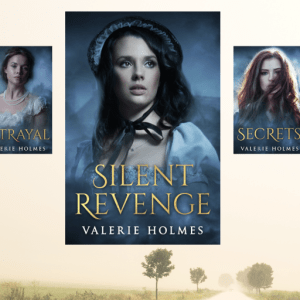
One of the questions posed in #RomFicFeb26 concerned introducing the main character of a novel. Lord Oscar Farrington is my charismatic protagonist in the final book of The Friends and Foes trilogy, where his nemesis, Lady Bagby, from book one, tries to exact her revenge. Oscar provides the link between Betrayal, Secrets and Silent Revenge as each plot unfolds and we delve deeper into the life events that formed his complex character. Here is a slightly longer introduction for anyone who is interested in creating characters or reading into Oscar’s background.
To know Oscar and give him depth, fascinating research needed to be done into his role and the political forces at work in the early nineteenth century that affected his world at war and the very real and dire issues changing life in his homeland. That is part of the challenge and enjoyment of creative writing to research more than is needed for the plot and selectively include on a need to know basis, the facts that support the fiction.
Everyone has their own method of researching and writing. I wanted to develop a credible background based on facts, then build his character based on this as he travels through the plot. Therefore, I created a life timeline for him.
Oscar needed to be: observant, brave, quick wited, healthy, knowledgeable of terrain, a natural linguist, and a loyal gentleman who loathed traitors. The total of all these attributes along with his own family past and upbringing formed the man.
So who is Lord Oscar Farrington?
Born 1780 Oscar carries an honorary title of ‘Lord’ as he is the son of the fictitious Earl Brandon Cross. His Coronet’s commission in the Light Dragoons was purchased in 1796. His adventurous spirit meant rapid promotion to captain. Oscar thrived, matured, loyal to King and country.
In 1801 his father arranged a marriage to the beautiful Countess of Marwick. His visits home were infrequent, as the Napoleonic wars rolled on, but in 1806 Frederick Farrington was born, whilst Oscar served abroad as an exploring officer for Sir Arthur Wellesley, often spying behind enemy lines.
The trilogy is set on his return to, Yorkshire, England, so the logistics of the missions he undertook whilst serving abroad were secondary to the detail of the man himself. I had a very clear physical image of him, but I like to let my reader’s use their own imagination to fill in the gaps.
His short marriage ended in 1809 when his wife fell whilst riding. Oscar returns to France briefly leaving his young son in the care of his trusted guardian on their family estate.
In 1813 Oscar returns wounded to an emotionally distanced son as they set up home in the Jacobean family home, Kepstone Manor, Yorkshire, close to Northallerton, North Yorkshire, and near enough to the major routes to the north and south; York/Durham .

Far from being retired he is commissioned by the Home Office to collect information on possible insurgents at home. Spying on an enemy in a foreign land to protect your own country is one thing, but spying on your countrymen, broken, poor and disheartened by post war hardship and vast social change, is quite another. This does not sit well with Oscar.
The story begins in 1814 in Betrayal, where duty and friendship are challenged and tested.
“Farrington had been the one person who took Samuel’s concerns seriously. The man was used to subterfuge, donning a guise and duping people, or simply disappearing in plain sight, melting into a crowd, when needed, but above all else he knew when to stay silent and listen…”
The series covers several years, carrying over key characters and introducing new ones, whilst subtly building and deepening Oscar’s character.
Book 2, Secrets, 1816, Oscar returns to England, where he meets a man who saved his life at Talavera and dutifully repays a debt..

In Silent Revenge 1818/9 The Home Office are concerned about a resurgence of Luddites and anarchists because of the social unrest and set him to monitoring illegal activities within the area. He can no longer disappear into the crowd, as he is known gentry, but he has local informants and his loyal man, his ex-sergeant, Burgess and a son he hardly knows.
If you want to follow Oscar’s adventures just click here.
What appeals to you in a hero?
Who is your favourite hero, and why?





















 valerie holmes, author