
July’s special guest is award winning crime writer and consultant in a law firm, Martin Edwards. I first heard Martin give a fascinating talk at last year’s CWA conference in the Lake District and could tell that he was not only an authority on the genre, but was passionate about it.
Martin recently won the inaugural CWA Margery Allingham award at the Bristol Crimefest. Congratulations!
You are an accomplished legal consultant and crime writer. When did this love of law turn into the desire to write crime novels?
The love of crime fiction definitely came first. As a small boy, I became fascinated by the idea of telling stories. Once I discovered Agatha Christie at age nine, the die was cast, and I determined to write detective stories. However, we didn’t know anyone who wrote books, and my parents were rather concerned about my ambition of becoming a detective novelist. So they encourage me to get a ‘proper job’, and that’s where the idea of studying law at university came in. I found that I relished the academic challenges of law, and later I enjoyed the practical side of employment law. I’ve been lucky with my legal career, and it’s introduced me to fascinating people and places. But now I’m aiming at long last to focus on my first love. After thirty years as a partner in my firm, I’ve retired to become a part-time consultant. Yippee!
Would you say that your legal work, involving meeting individuals in pressing circumstances and dealing with their problems, has given you a greater empathy and insight into human relationships and conflicts, which can help with fictional character development?
Jobs, and employment issues, are all about human relationships. After a few years as a lawyer, it dawned on me that this was why employment law appealed to me in a way that subjects like conveyancing did not. Of course, the more people and human dilemmas that you encounter, the more you develop an understanding of people’s behaviour – good, as well as bad – that is definitely helpful when you write fiction. You’re not writing about the people you meet, but about the issues that people have to confront in their lives.
New editions of your Harry Devlin novels have been released. Can you share with us how this Liverpool lawyer came to be created?
My first – and never published, or even fully typed – novel was a football thriller. After that, I wanted to write a book that could be published. When I went to work in Liverpool, it seemed like a wonderful setting for a crime series. I didn’t know any cops or private eyes, so I decided that my hero would be a lawyer, like me. Not really like me, though. He would be a criminal lawyer, and have a tough life in various ways, as well as being rather braver than me. To this day, I’m very fond of Harry, and I’d like to write about him some more one day. In the meantime, I’m excited that the novels are now available again as ebooks, and two have actually been republished successfully as mass market paperbacks, as “Crime Classics”, no less…
For your next series you set the first novel ‘The Coffin Trail’ in The Lake District and introduced your readers to Detective Chief Inspector Hannah Scarlett. What was most challenging: moving from a protagonist who was a lawyer to a DCI or from a ‘Harry’ to ‘Hannah’?
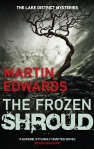 I was moving from one viewpoint character to two – Hannah and Daniel Kind, the historian who gets to know her in The Coffin Trail. I always intended that the series should be about their developing relationship, but Daniel was the starting point. I saw him as the key character, but when Peter Robinson read the book, he said he thought Hannah was the one I was really focusing on, and I saw at once that he was right. By that point, I’d was writing my ninth novel and I was ready and very willing to tackle story-telling from the perspective of a female character. It was a fresh challenge, and one that excited me. It still does.
You have many projects ongoing simultaneously between your two careers as well as being a critic, an anthologist, a contributor to many non-fiction works as well as keeping your very helpful blog updated. Would you describe yourself as an exceptionally disciplined and driven writer/worker?
 I admit to being driven, in that I feel very conscious that life is short and that there are a lot of things I want to achieve. To my mind, being ambitious is a good thing, as long as one tests oneself against one’s own self-imposed standards, rather than against other people, or the standards set by others. However, although to some extent I’m self-disciplined, I sometimes wish I were better organised. I do tend to set myself very demanding targets that I fail to meet with monotonous regularity. Perhaps – in a not very coherent way –that’s the method that works best for me, and even if sometimes I feel I could have achieved more, perhaps this helps to drive me on to do better in future.
In your ‘Writing tips’ you advise: ‘Plan the story before you start’. Once this has been done, would you ever amend or change a plot as you begin writing the first draft?
Yes, I’ve done this from time to time. The great thing about writing is this – you can always improve what you have written. A plan works well for me – not everyone is the same, of course. But even the best laid plans are sometimes capable of being changed for the better. So far, I’ve never changed the original solution to any of my novels, but I’ve tinkered with many other elements of my stories.
Your work as an archivist for the CWA and The Detection Club has been widely praised. Could you please tell us something about The Detection Club?
The Detection Club was founded in 1930 by that wonderful and under-rated writer (and rather strange man) Anthony Berkeley Cox, who wrote innovative whodunits as Anthony Berkeley and superb psychological crime novels as Francis Iles. It was the world’s first social network for crime writers, and attracted the likes of Christie, Sayers and Margery Allingham. The aim was for an elite of crime writers to raise the literary standards of the genre, but above all they liked drinking and chatting together. The extent to which their literary aims were achieved is debatable, but the books produced by the Club – for example, the round robin mysteries The Floating Admiral and Ask a Policeman – remain very readable to this day, and have been very successful in new editions in recent years. I’ve written intros to a couple of them, most recently The Anatomy of Murder, an intriguing book of essays about real life murders. The Club is and always has been in essence a sociable dining club. Membership is by election – there is an annual secret ballot – and the Club flourishes to this day.
As a collector of rare crime novels, is there one particular book you would like to own and, if so, what makes it so special to you?
Now you’re asking! I’d love to own a Sherlock Holmes book, signed by Conan Doyle, but alas, I’m sure that’s an impossible dream…
In ‘Dancing with the Hangman’ you explore the question of ‘justice’. In your crime novels do you enjoy being able to write the conclusion that you personally approve of, wherein your legal career the verdict is, to a degree, beyond the legal representative’s control?
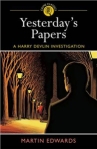 Intriguing question, and I’m not quite sure about the answer. When I was fighting legal cases in the employment tribunal, I always wanted to win, but on the whole I felt that the right result was usually achieved in most cases. With fiction, I like to see some form of justice done at the end, but this doesn’t always mean the conviction of those who are technically guilty. I think it’s good if a novel reaches a conclusion that affords “satisfaction”, but the forms that satisfaction, and indeed justice, can take are many and various. Christie understood that – consider the finale to Murder on the Orient Express.
Could you share with us some of the delights included in the latest anthology that you have edited for the CWA?
Guilty Parties contains more stories than usual, and I really enjoyed reading them. It would perhaps be invidious to pick personal favourites, but my aim was to showcase the variety and depth of the crime genre, and it’s a book that I’m very pleased to be associated with.
What is next for Martin?
I’m currently working on my seventh Lake District Mystery and I have two or three short stories coming out in the near future. Recently I finished a history of detective fiction between the wars – The Golden Age of Murder – which I would love to see published in 2015, as it’s a book I’m really proud of, and I’ve put a huge amount of effort into it over a good many years. At present I’m editing two anthologies of vintage crime fiction for the British Library, a collection of Sherlock Holmes stories, and a book of true crime essays for the CWA. I’m also working on a book that brings together all Dorothy L. Sayers’ reviews of detective fiction from the Thirties. All of which is quite enough to be going on with!
More from Martin
Website: martinedwardsbooks.com
Facebook: Martin Edwards
Twitter: @medwardsbooks







 It was a really bad viral infection that left me with ME for years. Before then, I’d been energetic and healthy, holding down a career, cycling, rushing up mountains, and working for hours in my garden. Being so ill for so long, and not knowing if I would ever get better, forced me to completely reconsider my life. That’s when I decided I would work part time in a far less stressful job, and just go for my lifelong dream of being a writer. I’d never had the courage to do it before, in case I failed. Having ME made me realise I’d nothing to lose, so it gave me the courage to try.
 My crog loft is tiny, but it’s nice and cosy and womb-like (and has steep stairs that stop me from sneaking out into the garden when I hit a tricky bit!). When I’m writing serials, I have to plot everything out, as there is no chance of going back and changing things. When I’m writing my novels, I start with a general idea of the plot, but I know that’s going to change as soon as I start, and find the heroine needs a mother, or a brother or best friend, who turns out to be far too interesting to ignore! I generally know the beginning and the end, but once the first draft is done and the real work begins, anything can happen. That’s the exciting, and the scary bit, because I’m never sure if it’s going to work. I love tightening up the plot, and developing the twists and the turns to (hopefully) keeping the readers on the edge of their seats. ‘Eden’s Garden’ was a real challenge, moving between the modern heroine and Victorian times, and keeping the two stories weaving in and out of each other while not giving the twists (especially the one no one ever spots!) away. ‘We That are Left’ had some of its structure dictated by the historical events of WW1, even though the action is focused mainly on the experience of the women and civilians at home. The next book is also based around historical events, but with some family twists and turns too.
 A big emotional story, set in a rambling old house in Cornwall or Snowdonia in Victorian or Edwardian times, with women firmly at the centre of the action, each making her own way towards self-fulfilment. There is a mystery to be solved, and danger to be overcome, and the path of true love definitely never runs smooth. There will be a garden in the background somewhere, and probably cake. For ‘We That are Left’ I researched authentic dishes from WW1 newspapers for my heroine to use, as she struggles to keep her family and the local village fed on limited resources, mainly anything she can grow in the kitchen garden on the family estate.
 Buy and read now!
 Thank you for taking the time to discuss your fascinating career and share some of your experiences with us.
 From your initial breakthrough, how did you then go on to develop the successful series of Sergeant Cribb and Peter Diamond?
 The Tooth Tattoo also shows that you have a love and understanding of classical music. The humour within the book works on many levels, which balances the much darker twists of the plot. What inspired this book?
 valerie holmes, author