Spring Offers!

Spring time has arrived at last and with it the chance to read a selection of my titles at only £0.99/$1.50 each! The selection of titles includes warm love stories set against mixed with adventure, mystery (or  a mixture of both!) set in the beautiful North Yorkshire countryside of the early nineteenth century.


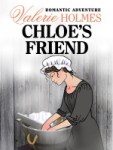
Chloe's FriendChloe’s Friend: Miss Chloe Branton has been found a position as a laundry maid in a wealthy country house. The work is hard and she is slight, but she stays knowing the arrangement is to keep her away from her father’s enemies. Mr Thaddeus Poole, is an unlikely person to offer her help, but Chloe does not know if he will betray her or be a true friend.


The Baker’s Apprentice: Molly Mason dreams of escaping from the control of Mrs Cresswell, her step-mother, by becoming an apprentice to her friend who owns the local bakery. This ill thought-out plan is stopped when Juniper Cresswell’s fiancé, war hero Lt. Cherry, returns accompanied with a soldier who had been presumed dead. The soldier brings with him suspicions of murder, mystery and the key to Molly’s heart.


Truth, Love & LiesTruth, Love & Lies: Major Luke Stainbridge returns to his beloved estate in England after being held prisoner by Napoleon, to discover he has been replaced by an impostor. Meanwhile, Miss Florence Swan, naively, ventures out into the world alone to avoid the drudge of life in a cotton mill.  Two lives are in chaos. Two destinies combine: will the love of truth be enough to destroy a sinister network of lies?


Felicity Moon: Miss Felicity Moon jeopardises her position, her life and her future when she strikes the Lord of the manor in self-defence and is forced to leave his household. Squire Moon, her father, is in gaol charged with bank-rolling smugglers and the storing of contraband. She has one last chance to save herself from ruin in the form of a reference written for a Mr Lucas Packman, a man her father dislikes intensely. She has a stark choice to make: trust Packman or her obey her incarcerated father.


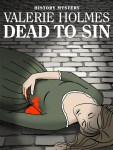
Dead to Sin (A Penn Mystery – Book 1): Nicholas Penn is summoned to Gorebeck Gaol to visit a man accused of the rape and murder of five wenches. Having been found holding the body of the last victim in his arms his plight seems sealed. Nicholas is torn between a sense of duty and his feelings of hurt and disgust when being in the presence of the accused. The tables turn abruptly, and Nicholas becomes the incarcerated, duped and incensed he is sworn to find the man, Wilson, before another victim dies.


Betrayal of Innocence: Lydia works desperately hard at Bagby Hall in order to keep her ailing father from the poorhouse. She is a loyal person, but is racked with guilt as she knows her friend, Miss Georgette, is being cruelly used by Lord and Lady Bagby. It is only when she fears Miss Georgette’s life may be in danger that she acts  – but how?

The future of romance with Pia Fenton

I would like to welcome back Pia Fenton to my blog (Christina Courtenay) who has been the RNA Chair for nearly two years.

Hi Pia!

NEC front LatestAs Valentine’s Day approaches can you share with us some of the major changes you have seen in the last couple of years within the world of romance?

I don’t think the world of romance has changed very much, but rather the publishing industry as a whole.  With the advent of ebooks and ereaders (and especially the Kindle which had a massive impact the year it was first launched in the UK), the way people read books has changed enormously in a very short space of time.  Things seem to have settled down a bit now though and paperbacks are holding their own, which is great (I love proper books myself!), but I think ebooks have given both readers and authors more freedom to read/write what they like.

As for the books themselves, the popularity of certain sub-genres come and go, but editors and agents are always saying they’re just looking for really good stories.  I think that if a story is gripping enough, it doesn’t matter what it’s about – good story-telling is key.

Are you excited about the future of romance as a genre?

Yes, I think it’s going from strength to strength.  The RNA commissioned some research into sales and trends recently, and it showed that figures for romantic fiction are going up year by year, which is fantastic.  People will always want love in their lives and I’m sure they will continue to want to read about it too.

You have branched into the Young Adult market. Could you share with us the inspiration for this exciting new venture?

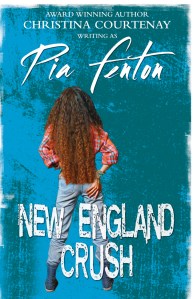
I discovered a while back that I love reading YA fiction – it’s an amazing sub-genre where imagination seems to have no bounds.  Then I went to a high school reunion and it really made me think about my own teenage years, both all the fun I had and the angst that comes with being that age.  I attended an American high school for three years, which was a bit of a culture clash to begin with and it occurred to me that it would be fun to write a series of books with UK heroines and US heroes and so the Northbrooke High series was born.  I have now self-published the second book in the series, New England Crush.

What is next for Pia/Christina?

I have just finished edits for the third book in my Japanese trilogy – sequel to The Scarlet Kimono and The Gilded Fan – which is due out in paperback in August this year.  I’ve also started work on a new time slip novel, which is based on the final few months of the English civil war.  I love that period in history and was inspired to write about it as there are several ruined castles, destroyed during that time, near where I live. (Both these books are for adults, not YA).

More from Pia:

An Interview with Ian Skillicorn

Ian SkillicornWhat better way to usher in the New Year than to share an inspiring interview with Ian Skillicorn who is a very talented and successful writer, publisher, speaker, director, voiceover artist, translator and producer.

Welcome to my blog, Ian! I hope I have not omitted any of the many hats that you wear within your fascinating career.

Thanks for having me! Well, those are all of the various hats I’ve worn over a twenty-five year career to date, but fortunately I haven’t had to wear all of them at the same time!

You obviously have a natural love of language: written and audio, both in English and translation. When and where did this love of words and story-telling begin?

From a very early age. My parents are (and grandparents were) great readers, and so there were always lots of books around the place. The weekly visit to the library was really important in introducing me to a variety of authors, and firing my imagination. At weekends my parents took us to museums, art galleries and historic sites around the country, which gave me a lasting appreciation of art and history, and all sorts of stories about people through the ages. I also had a couple of very supportive English teachers at secondary school who encouraged my own writing efforts. I recently discovered that one of them is a friend of one of my authors, and we have since been in touch, which was lovely.

Did your early career, working for a national magazine in Milan, give you the exposure to the industry that you needed to realise your own literary ambitions and projects?

Not directly, to be honest. I came back from Italy with six years’ solid work experience but at that time, in the 1990s, I think people were expected to follow a much more rigid career path than they are nowadays. I had never worked in the UK, and although I wanted to get into publishing, I found I was over-qualified for some jobs, but didn’t have the relevant experience in this country for others. I ended up taking what was for me the obvious easy route – becoming a freelance translator. It was something I had enjoyed doing in Italy, but literary translation work in the UK was hard to come by, so I went into translating for businesses. It wasn’t really what I wanted to do, but I suppose I was lucky I had it to fall back on. The upside was that being freelance meant I had the flexibility to work on developing my own projects as well. It took many years of working seven days a week, doing lots of projects for free, financing some myself, and numerous false starts before I was finally able to give up the day job. Now I do work in publishing again, with my own imprint, and in the end I was the one who gave me a job!

That has to be one of the main benefits of being self-employed.
Hardacre by CL SkeltonIn 2006 you founded www.shortstoryradio.com. How passionate are you about broadening the market for short story writers?

Very. Short Story Radio was one of those projects I developed in my own time, and initially at my own expense. I often read comments online and in print from creative people who say they refuse ever to work for free, but I don’t completely subscribe to that view. Even if you are passionate about your craft and believe in yourself, in the early days of your career sometimes the only way to get noticed is by creating your own opportunities. Through working on Short Story Radio I learned that there was an appetite for short stories in English not only in this country, but around the world. I met many talented writers and actors, some of whom are now good friends, and realised how difficult it was for short story writers to find paying outlets for their work. After a while I applied for a grant from Arts Council England. My application was successful and that support from ACE financed work for a lot of writers, actors and technicians, and raised the profile of Short Story Radio and its content. It was also a very important morale boost for me, and the start of building up an audio production business which led to many interesting commissions over a number of years. For most of the Short Story Radio writers it was their first experience of being broadcast, and a number have gone on to have successful writing careers.

Do you see a growing trend for shorter fiction evolving both through audio (The Story Player) and eBooks?

I do. However, I think enthusiasm for the short story among readers hasn’t yet caught up with the form’s popularity among writers. It’s often said that the short story is perfect for today’s busy, time-poor lives, but hearing that always makes me cringe. Good writing should be savoured no matter what the length, not because it is “convenient”. I don’t like the idea of a short story being considered the literary equivalent of “wash and go”. That said, I’m sure that new technologies will present all sorts of opportunities for creating, selling and experiencing short stories. We’re only just at the beginning.
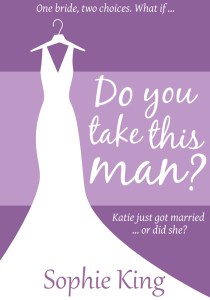
Do You Take This Man by Sophie King coverYour connection with short fiction was further strengthened when you founded National Short Story Week in 2010, which has best-selling author Katie Fforde as its patron. What would you say is the essence of a good short story?

That’s a tough question! I suppose it depends on the opinion of the individual reader and their tastes. Personally, I enjoy stories which manage to say something about the human condition, and which I can relate to even if my life is nothing like those of the protagonists. I think that’s why the stories of authors such as Saki and Katherine Mansfield, mostly written more than 100 years ago, are still fresh and relevant today. Their themes are timeless and universal.

If I could just say something about National Short Story Week. One of the best outcomes, which wasn’t actually an original aim, has been the enthusiasm and involvement of schools and their pupils, librarians and teachers. The National Short Story Week Young Writer competition, for year 7 and 8 pupils, is now in its fourth year and going from strength to strength. I can highly recommend the anthology of last year’s winning stories – The Mistake. It reached Number 51 on Amazon’s book charts last November, and has raised funds for Teenage Cancer Trust. The children’s creativity, imagination and use of language are very impressive. If we are serious about championing the short story form, surely the best way to do this is to get people interested in writing and reading short stories from an early age.

The Property of a Gentleman cover artworkThat is excellent and inspiring for the future.

In 2012 you created your own publishing imprint Corazon Books (I love the tag line: Great stories with heart!). It was launched with a novel by bestselling author Sophie King. However, you have just published an out of print title The Property of a Gentleman by Catherine Gaskin who died in 2009. What inspired you about Catherine’s work and do you intend to publish more of her titles?

I was very lucky to launch my business with a title by Sophie King, who is a great writer (and whose work inspired the Corazon tag line!) and a lovely person. I have been familiar with Catherine Gaskin’s work since I was young, when my mother and grandmothers were reading her novels. Although I knew and loved the books, I didn’t know much about the author before I published The Property of a Gentleman. I have since done some research on her life, and was fascinated to discover she wrote her first book, which became a bestseller, while still at school! I have received many nice comments from readers since Corazon Books started reissuing her novels, and it has been very gratifying to see The Property of a Gentleman back in the bestsellers charts both in the UK and Australia. Corazon Books has also recently published Sara Dane, which is probably Catherine Gaskin’s best known work. The Lynmara Legacy is out in February 2015, and will be followed by Promises in the spring.

I heard you speak at three events last year: Society of Author’s day event in Bristol, R.N.A. conference and at the H.N.S workshop. You inspire, entertain and inform people especially about eBooks. How do you view the major changes happening within this very new industry today impacting upon what for decades has been a very set publishing industry in the future?

Thank you, that’s very nice of you to say so. I really enjoy talking at conferences and giving workshops. When so much of the average working day can be spent in front of a pc screen, it’s a good opportunity to get out there and meet like-minded people, and to share ideas and experiences. Obviously we are living through a period of huge technological change, in many aspects of our lives. The publishing industry is clearly going through a major transformation and as such there will be winners and losers. I think it’s too early to say who will be the winners and who the losers. You have to be able and willing to reappraise and adapt quickly.

What is next for Ian?

I’m very excited about the books lined up for publication by Corazon Books this year, which include a number of novels by new talents and other projects I can’t talk about just yet. Plans for National Short Story Week 2015 and the Young Writer competition are already under way. I’m looking forward to doing more ebook workshops for the Society of Authors in March, and at Sheffield Hallam University in April. I also have a long list of ideas I want to pursue, which are currently at different stages of development!

Thank you for taking the time to share your work and experience with us and every best wish for your continued success with all your projects in 2015.

Thank you very much for having me on your blog Valerie, I’ve enjoyed it. Best wishes to you, and for your writing, and to all of your readers too.

More From Ian:

Bolton Castle

When I was touring North Yorkshire and the Yorkshire Dales National Park this summer, researching scenes for the Penn Mysteries, I was lucky enough to discover the medieval gem that is Bolton Castle.

In the heart of Wensleydale Richard II’s Lord Chancellor of England, Sir Richard le Scrope had the castle built between 1379 and 1399. It is in a remarkable state of repair and is still owned by Lord Bolton who is a direct descendant of its founder.

We had a lovely day exploring its battlements, rooms, stores, armoury, dungeon, kitchen and courtyard. Actors provided a medieval play and archers put on a display. Tents surrounded the entrance showing how people lived in medieval England – a joy to the sound, smells and skills of the time.

Before we left the tea rooms provided a truly lovely light meal in ancient surroundings. If you are in the area during the holiday season, I would recommend a visit. The area is absolutely beautiful for hiking or simply touring.

An Interview with Elizabeth Chadwick

Welcome to my blog, Elizabeth. From the moment you began writing manuscripts you never gave up on your goal of becoming a published writer. How long did this take?

I decided I wanted to write for a career when I was 16. This was after I had spent a year hand writing my first novel. Prior to that I’d always told myself stories verbally as imaginative fun. It wasn’t until I was 15 I wrote anything down, but having done so, I decided that writing novels was what I wanted to do for a living. It took another 16 years for me to realise that dream. Part of that time was taken up by growing up, entering the world of employment, getting married and having a family. During that period I learned to touch type and as technology advanced, transferred from manual typewriter to computer – in those days the Amstrad green screen. I always hoped to get published, but I figured it didn’t matter if I didn’t because this was my hobby and storytelling had been a part of me since I first had language, so I wasn’t just doing it for the fame and fortune (!), I was doing it for me.

Your big break came when Carole Blake became your agent after reading The Wild Hunt. How quickly did your world change as a result of this?

Not immediately because it takes time for contracts to be arranged and for money to begin flowing through so I didn’t give up the part-time day job immediately. When I was first offered a publishing contract, my children were aged six and three, and I was staying at home looking after them during the day and going out to work the twilight shift in a local supermarket at night while my husband took over the childcare. So although I was offered a publishing contract in the summer of 1989, I didn’t give up the job until late autumn of the same year. While my first contract wasn’t exactly enough to move to Millionaire’s Row, it allowed me to be a stay at home mum and write in the spaces between the children. In those early days it was still very much a part time income, but enough to get by when added to my husband’s full-time wage.

Do you look back at your early work affectionately or critically?

Both. I think any writer worth their salt is always learning and seeking to improve. I know I have moved on since my early days, but my early novels were still strong enough to be published and short-listed for awards in a very competitive market. I have since had the great opportunity to overhaul those early novels in the light of experience gained and it was interesting to go back and look at the learning curve. But I am very fond of my early works because they are the foundation stones on which my career has been built.

I totally agree with you. What advice would you give to an author who is about to make the step into the world of an agent and publishing deals?

Be professional. If you don’t know something and it’s genuinely out of your range, then ask. But do some homework first and make sure that it’s not something you can’t answer for yourself. Talk to other writers and professionals who have knowledge of the publishing industry and get a range of opinions. Go to events and network. The more you know the better you will be able to make decisions. You might even decide to go the route of self publishing, but you need to know all the ins and outs of what this entails and be realistic about expectations.

Your love of the medieval period began when you watched your TV hero on screen in the 70’s adventure series Desert Crusader. Which of your heroes/heroines would you love to see televised to inspire a new generation?

Without a doubt it would have to be the great William Marshal and his family. They win hands down! He was a man who took the helm of the country in a time of great upheaval during the early 13th century. Without his political, military and people skills, the pages of England’s history would probably have looked very different.

I would love to see William on TV.

You are renowned for your detailed research and historical accuracy. How has this deepened or broadened over the years since you started writing?

When I began writing it was at the more romantic end of historical fiction and the research books I was using were often fairly general in their outlook although I did even at that time possess a core number of books from university presses. By the very nature of time I gained experience, adding layer upon layer as each successive novel came out. I bought more books; as my knowledge levels increased so did the complexity of my reading. These days I mostly buy my research books from specialist publishers and university presses and my research has become more academic. I am now sometimes asked to give talks at universities and heritage sites – something I couldn’t have envisaged 20 years ago. My research has also become multi-layered. The Internet is obviously a fabulous resource and primary source documents are now available online that couldn’t be obtained when I first began writing. Even so one has to be careful because there is an awful lot of mediocre rubbish out there and all writers need an inbuilt drivel alarm! As well as research reading, I also re-enact with a living history society called Regia Anglorum. This helps me to get a feel for the period by working with replica artefacts and not just reading about how things were done, but having a go – see the next question. I also visit sites mentioned in my novels where possible, and this helps to give a feel for the lie of the land, although Google Earth is also your friend.

Regia Anglorum has obviously been an important part of understanding life within medieval England. What is your favourite artefact/garment that you have had recreated, through knowing the experts associated with the group?

I have a dress. It’s made from woollen fabric especially commissioned and woven to an 11th century pattern using the same loom width that a person of that period would have used. I’m rubbish at needlework and a bit awkward when it comes to cutting out patterns, so I had someone I know make the dress for me. This particular person has degree level knowledge of textile archaeology and mediaeval costumes and was able to design the dress to an 11th/12th century spec. It was then all handsewn using mediaeval stitch techniques. It’s the nearest I’m ever going to get to fully authentic!

In all the places you have been and the artefacts you have studied during your research, do you have a particular favourite(s) that has inspired you or left a lasting memory?

I absolutely love trawling museums, and the London ones are fabulous if one is in the capital. I would say that one of my favourite places to go is the Museum of London which has some terrific exhibits in the mediaeval gallery many of which are ordinary everyday objects and not just the stuff of high aristocracy. There are things like 14th century spades, fish traps, a wonderful little tinned mirror case, a terrific money box that looks like something out of the 1970s! They have a codpiece too!

For a single one I’d have to say the effigy of William Marshal at the Temple Church in London. I always go and see him and honour him when I visit London. He gave me my first New York Times bestseller and he has touched so many people, myself included. He has a life beyond his mortal life, and it always makes my throat tighten with pride when I go to the Temple Church.


What appealed to you most about the character of Eleanor of Aquitaine, inspiring your critically acclaimed trilogy?

I think it’s not so much a case of appealing. It’s more a case of downright curiosity. I had written about her and several novels and at first had followed the usual path of the biographers when I needed to put her in a story. But that came to be not enough. I began to ask questions; I began to see anomalies in her story that didn’t agree with the biographies or what was being accepted as historical veracity. I began to think about Eleanor in a bit more detail. What was she really like? What could she tell me that she hadn’t told anyone else? And the more I researched the more I found out and the more biographical discrepancies came to light. For example you will find her biographers describing her variously as an olive skinned black eyed beauty with a curvaceous figure that never ran to fat in old age, as a saucy blue-eyed blonde, as a humorous redhead with green eyes. And the thing is there is not one single physical description of Eleanor recorded anywhere. Even the supposed mural of her in the chapel of St Radegone in Chinon, is now thought by a leading art historian who has examined the mural in detail, to be a man. A recent academic work on Eleanor titled “inventing Eleanor” by Professor Michael R. Evans, investigates these odd ideas about her appearance, and actually quotes my research into the biographers’ notions about Eleanor’s appearance.

Non-historians also have some strange ideas about Eleanor – that she was a feminist and way ahead of her time, both of which are false assumptions. So I felt I wanted to explore my own version of Eleanor and see if I could discover the 12th century personality behind the detritus of the centuries.

What is next for Elizabeth Chadwick?

First I have to finish and hand in THE AUTUMN THRONE, but when that’s done I strongly suspect that William Marshal is going to be riding again as there are aspects of his story still to be told.

Thank you for taking the time out of your busy schedule to give us an insight into your fascinating career and love of history. Have a lovely Christmas and every good wish for further success in 2015!

An Interview with Cindy Kirk

My guest this month is prolific American author Cindy Kirk. Cindy is a writer who loves romance and has written many special editions for Harlequin.

When did you first discover the joys of story-telling or writing your own stories down?

I’ve loved books and stories for as long as I could remember.  If I didn’t like a book’s ending, I’d make up my own.  The same held for movies or televisions shows.  For a long, long time I thought that everyone made up different endings.  I wrote my first “book” when I was thirteen.  It was a romance, of course, with a happy ending!  I let one of my teachers read it and I could tell she didn’t think it was very good.  It was a devastating blow to my young writer’s soul.

Which novels inspired you, or you would rate as your all time favourites?

LaVryle Spencer’s Bitter Sweet and Separate Beds; Susan Elizabeth Phillips’s Dream a Little Dream and Nobody’s Baby But Mine; Lisa Kleypas’s Travis Series, Julia Quinn’s Bridgerton Series.

Could you share your journey to becoming a published author with us?

I wrote five books, it was the fifth that sold, 3 years after I started writing in pursuit of publication.  The book that sold won a contest.  The first prize was a critique of the entire manuscript by Harlequin editor, Patience Bloom.  She not only read it, she bought it.  And 15 years later, she’s still my editor!

What advice would you give to a new writer who has not made it into print yet?

To continue to hone your craft.  When I started writing, I began attending regional conferences for writers. Every year I attend the Romance Writers of America‘s National Conference and soak in all the wonderful information on how to write a better book.

Why romance?

I love a happy ending!  Not only in books but in movies.  I want to cheer for the hero or heroine, see them become stronger, learn life lessons, then be rewarded.

How did the ‘Jaunty Quills‘ develop?

I was writing also for Avon (Harper Collins) when a group of Avon authors decided to get together and start a blog.  At the time I was the only contemporary author.  The group has morphed over time to include authors from all different romance genres and publishers.  It’s been fun every step of the way.

What is the essence of a Cindy Kirk novel?

It’s a fun, enjoyable read with a dash of humor.

What is next for Cindy?

More books in my Jackson Hole series for Harlequin.  A return to Harper Collins with a novella that will release in December 2014.  And, who knows? That’s the beauty of writing.

More from Cindy