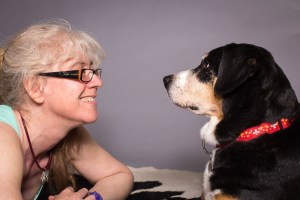
Meet Jan Jones!

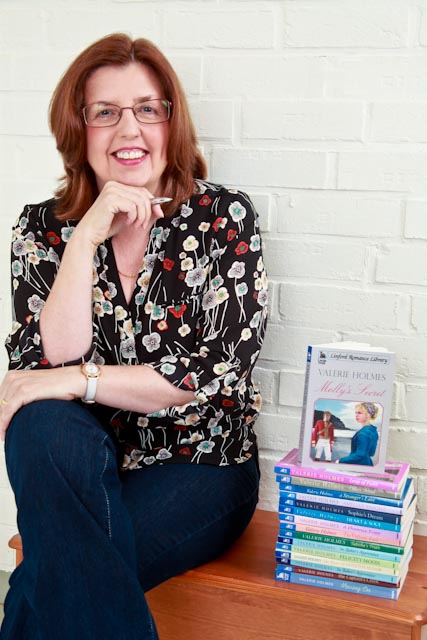
JanJonesI am delighted to welcome Jan Jones as my guest this month. Jan is not only an amazing writer of romantic fiction but the organiser of many successful Romantic Novelists’ Association Conferences.

Hi Jan – thank you for taking the time out of your hectic schedule to complete the interview. This year’s conference at Lancaster University was, amazing, as usual. The speakers were from all sections of the industry. How have you seen the event change and grow since you became the organiser?

Hi Val,

Since 2005 when I took over as organiser, the conference has grown from just over a hundred residential delegates to over two hundred. We’ve also increased the number of choices, added extra Sunday afternoon sessions and offer a Thursday pre-conference arrival.

The Romantic Novelists’ Association is a very supportive organisation. When did you join it and make your first break into print?

I first joined during the 1980s when I was writing magazine stories, took a break, rejoined in 1994, then made the breakthrough from NWS to full in 2005.

Your career began in mathematics and computing, so when did you realise that you were a writer at heart?

Oh, I’ve always known that, but I also knew I wouldn’t be able to live on it. Computer programming was a much more bankable skill.

Do you prefer to write long or short fiction, YA or adult, historical or contemporary?

All of them. I have a dreadfully low boredom threshold. I like the variety and challenge of writing different forms and genres. As to length, I think when you first get the germ of an idea, you know what sort of size the story will be. When writing serials I have to squash the story into a few compact episodes, so it is an immense relief to then expand it to the length it always should have been and self-publish it.

Do you have a strict writing regime and work ethic?

Erm, no. I’d like to, but life keeps getting in the way. I just write whenever I can. Late at night is good, because everything is quiet and I don’t have the sense of having left chores undone. I try to only have one project on the go at one time, but I generally have two or three in various stages. There are very few points during the day when I’m not thinking about whatever the current piece of work is. The worst time for me is during RNA Conference preparations. I can’t keep a book in my head as well as all the conference arrangements, so I have to completely stop writing at the end of April and not pick the book up again until July. The upside is that by then, I’ve forgotten how much I hated it!

That is a long time for preparation. No wonder the conferences are such a success. What was the best piece of advice you were given as a new writer?

That everyone has something useful to teach you and that you never stop learning. What I worked out for myself was to believe in my own voice, to dare to be different, and to never give up.

What inspired The Penny Plain Mysteries?

I came across a strange jigsaw when I was clearing my mother’s bungalow that gave rise to the first Penny Plain story, but as for where the characters came from, I have no idea. I think all writers have people lying dormant in their subconscious, just waiting for the right setting.

What are you working on now?

I have recently got the rights back for the three Regency novels published by Hale, so I am revising them ready to self-publish. I am enjoying it tremendously – it’s just like meeting old friends and falling in love with them all over again.

I love that description. So what is next for Jan?

Keep on keeping on! At the last count I had something like nineteen projects waiting for my attention, ranging from finished novels to be done-something-with to tantalising germs of ideas with half-a-dozen lines of notes to anchor the thoughts in place.

Good luck and I wish you every success with them. Thanks for sharing some of your writing experience and world.

More from Jan

FacebookTwitter Blog RNA


An Interview with Amy Durant

Amy Durant
Amy Durant, Publishing Director of Endeavour Press

Where did your love of books originate?

My dad is a children’s book author, and he worked at Walker Books when I was little, so I grew up surrounded by books, and I fell in love with reading from an early age.
Do you have a favourite genre?
My favourite genres are historical fiction and literary fiction, although I read everything from sci-fi to military history.
Have you any desire to write a novel?
Yes, I have a few ideas and I hope to write something myself eventually.
What was your route into the publishing industry?
I was quite lucky – the first internship I undertook landed me a job! After completing my MA in contemporary literature, I applied to a few internships and a was taken on for a month with Endeavour Press. Straight after that I began working with them full-time as a publishing assistant, and now I act as Publishing Director.
How has Endeavour Press evolved in the time since it first took up the challenge of becoming the UK’s leading independent publisher?
Endeavour Press has evolved enormously since I first started work with them in January 2013. Back then we were publishing around 15 books month, and we only had about fifty authors on our books. Now we have five new imprints (Endeavour Press Germany, Venture Press, Pioneering Press, Albion Press and Endeavour Press Creative) and in total we publish 30 books a week, and we have a list of over 500 authors.
Could you tell us about the History Festival and what has been planned?
The virtual history festival we have set up will run from the 18-22 April. We have 50 authors signed up, some from Endeavour Press, and some from other publishing houses, and we will be running various online events, mainly on Twitter and Goodreads. They will include competitions, author interviews, reader Q&As, cover reveals and exclusive extracts from upcoming novels.
What is next for Amy and Endeavour Press?
The great thing about Endeavour Press is you never know what is around the corner! We are in talks about launching more imprints this year, and we are always scouting for new authors to work with. I have also just started a part-time PhD on English women’s writing in the seventeenth century, so hopefully I will be able to find some interesting forgotten texts to add to our classic books imprint.
Endeavour Press logo

Alfiedog’s guest this week!

colour with books

I would like to thank Rosemary Kind at Alfiedog for making me her featured author in Christmas week.

I would also like to thank all my readers for their support over the last year as I have become more familiar with social media and continued to upload more titles.

I wish everyone a happy, healthy and successful 2016!

An interview with Imogen Howson

imogenhowsonauthorphoto2I would like to welcome award winning YA/adult author, Imogen Howson as my guest. I was intrigued by her story when she spoke at the RNA’s September meeting at The Royal Over-Seas League club, London.

Thanks for giving up some of your precious time to answer my questions.

You were the winner in the young adult category of the Romantic Novel of the Year Award, 2014, and previously of the Elizabeth Goudge Award, 2008, but where did your love of fiction and the desire to write your own begin?

I was really slow learning to read–I remember all the adults around me having despairing conversations about it! Finally I discovered Enid Blyton’s Famous Five books, and, faced with something I actually wanted to read, I just took off. I started telling myself my own stories around the same time, and later on (when I learned to write, another slow process), I started writing them down.

This slideshow requires JavaScript.

Your YA Sci-Fi titles ‘Linked’ and its sequel ‘Unravel’ are based on a high stakes chase for the survival of telepathic twins. What sparked the idea for this series?

I read a real-life article in a teen magazine belonging to my daughters about twins who had a kind of psychic link. One of them was in a car accident and the other knew about it even though she was miles away at home. I said to my daughters that I wanted to write about telepathic twins, so I did. And I made it science fiction just so I could have spaceships and cool futuristic techie gadgets.

By contrast your titles ‘Heart of the Volcano’ and ‘Blood of the Volcano’ are adult fantasy romance. Do you like to have different projects and genres on the go at any one time?

I started off in adult fantasy, because I love reading it, but I realized that I wanted to write about younger characters than the romance market generally looks for. My ideal heroine is 17, which is a bit too young for romance in general. In terms of different projects, I don’t like having them, to be honest, because I get confused and distracted, but sometimes this great new idea lands in your head and you just have to follow it up, even if you’re halfway through another book!

I greatly value the RNA’s New Writers Scheme, as organiser what advice would you pass on to as yet unpublished writers?

Keep writing, and keep reading (especially in the market you’re interested in publishing in). And don’t be discouraged by the almost-inevitable rejections! It only takes one editor to love your book, and I believe if you keep working to get better, and keep trying, you will find that editor. (Or sometimes, such is the weird nature of publishing, several editors all at once, but that’s a fun dilemma to have!)

How organised are you in your writing routine?

I have to be extremely organised otherwise I get exactly nothing done! The morning is my writing (and coffee!) time; in the afternoon I do less mentally taxing stuff, like housework, and organising spreadsheets for my “day job”, my work as a freelance editorial assistant for Samhain Publishing.

What do you do to relax away from the computer?

Running and baking. Running is great, because it’s so different from sitting at the computer using nothing but my brain and fingers, and because of the fresh air. Baking is for when I want to do something creative, but not as hugely creative as writing. Also, cookies always turn out well and people say nice things about them. Writing is a much trickier process!

What is next for Imogen Howson?

Right now, I’m writing on a YA contemporary, plus a YA horror book that I’m really enjoying working on! Plus a top-secret project that, if it works out, will be really fun too.

Thanks for taking the time to share your writing news and good luck with the top-secret project – sounds intriguing!


Congratulations, Sally!

NaNo-2015-Participant-Banner

Congratulations, Sally, for hitting the target!

Now you have reached your goal are you happy with what you have achieved as a result of your Wordathon?

I am very happy to have achieved my 50,000 words in 24 hours goal, and to have had the experience of doing it (although I don’t think I would repeat it – no-one should ever try and do just one thing for 24 hours straight!). It has also meant that I have achieved another part of my purpose in doing it, which was to reach a lot of people and tell them about my writing. At least none of my friends is going to forget that I’m a writer now… 🙂
I am even quite happy with the product of the Wordathon – you can view the raw manuscript here: https://docs.google.com/document/d/1Xswhvv4W9ty7FCXMOXmncH6T0Ge2SOlm6XE8O6SpPcc/pub. It got a lot more messy than I expected – since I disabled the backspace key (which you can do in ‘Typewriter mode’ in the Write or Die program I was using), the typos and the gibberish words and the strings of letters increased exponentially around the 18-hour mark. Even so, I think it has helped me a lot to get a fair way into my plot and start to get to know where the story feels like its going.

What have you learned from doing this challenge?

I have learnt that I can really get a long way in a day, and I hope that I won’t find goals of 3,000 words a day quite as intimidating as I used to. I have also learnt in the aftermath that it took about three days for my brain to stop feeling tired (even with plenty of sleep), and my will-power to get anything done has taken even longer to return! In the end, doing something extreme and pushing my limits is fun (as long as it is a rare occurrence), but I can’t expect it to have a direct effect on my everyday habits or anything.

What is next for Sally?

Next – there is still the rest of the Newbie to Novelist challenge to complete! I set this up in two parts: first, the Wordathon, but second and more importantly, I want to get the rest of my first draft at least roughly sketched out and written by the end of the month. Since I just finished plotting the skeleton of the rest of the story yesterday, I think I have only done about a quarter of the plot so far… so in theory, I could be looking at about another 150,000 words by the 30th November! I doubt I’ll manage that, but I still need to get writing again, and I am still encouraging people to follow me and sponsor me. My website is http://www.sallybridgewater.com/blog.


Sally Bridgewater – From Newbie to Novelist!

I am delighted to be interviewing a ‘Newbie’ writer, Sally Bridgewater, this month. November is the month when many eager writers embark on the challenge of creating 50,000 words in thirty days as they join the NaNoWriMo challenge. Sally has taken this to the extreme and decided to try writing them in one day. 


Welcome, Sally!

Where, when and why did you develop the idea of attempting this personal challenge of moving from ‘Newbie to novelist’ within 24 hours?

Since graduating a couple of years ago I have supposedly been focusing on becoming an author, but distractions (like bills) keep getting in the way. I was getting quite frustrated at not having finished a story yet (apart from one short-ish one here), and never finishing any stage of my goal was really drain my enthusiasm. So actually my primary purpose is to go from Newbie to Novelist in 30 days, and get to ‘The End’ no matter how many words it takes. I added the extra #50Kinaday Wordathon part of the challenge when I stumbled across this podcast from Matt Ahlschlager back in March or April sometime. He makes it sound simple, even quite easy to take on NaNo in a day. I remember I was walking the dog down by our local canal while listening to it, and I could feel the idea of doing it myself getting lodged in my mind. I think I want to do it mainly because it is a neat way to make sure I get a lot of words down on my way to the full first draft. Also, I like turning my life into ‘events’ that I can share with my friends and family, and this one gets particularly fun reactions from people.

This is the equivalent of a writing marathon. How have you prepared for the event physically and for your novel?

Physically speaking, I am just trying to keep myself well and avoid getting too stressed out about it. I could do better though – I often stay up late, I don’t eat enough fruit and I don’t do much exercise, so avoiding the autumn sniffles so far has been mostly luck.
I have been ‘in training’ of a sort over the last few days by trying out a standing desk (I made it myself with two boxes under my laptop and a pile of Writing Magazines under my keyboard). It will definitely help me avoid bad posture if I’m not sitting for the whole day.
Of course, I have also become quite obsessed with my typing speed, and whether I can concentrate for twenty-four hours straight. I don’t know how much direct practice I can do for those things though; I am just going to wait and see. At least I have past experience of working fast when I was writing weekly last-minute essays during my degree.
I have been busy (some might say distracted) preparing the online infrastructure, such as my website and my Facebook page, in time for November. Because of this I have not yet started the plotting for my novel, and at the time of writing there are only 7 days left before it all starts! I have a colleague at work called Tina who has started chanting ‘Plot! Plot! Plot!’ whenever she sees me – I think she’s quite concerned… I work quite well under pressure though so I’m hoping one week is long enough to plan a novel, right?

Have you ever completed the NaNoWriMo challenge before?

Yes, I have ‘won’ (got to the 50,000 word mark) NaNoWriMo for the last two years. I also did Camp NaNoWriMo in July (it is the same concept but less difficult as you can set your own wordcount goal). It really helped me to start writing again. I had heard about it during my degree but didn’t have time to try it, so I promised myself I would do it when I graduated. Both years I worked on a novel about a deaf girl and a Romani boy (they are both prodigies: the boy for music and the girl for mazes). I will finish that novel one day, but I wanted to go with something fresh for this year’s challenge.
The first year I did NaNoWriMo, November 2013, I got as involved as I could with the community, looking around the forums, visiting my local ‘Come Write In’ group each Saturday, and signing up to have a NaNo veteran mentor. I happened to get one of the kindest people on the planet as my mentor, I am sure of it – they even posted me a handmade care package from America, including knitted fingerless gloves and a little jar of coffee. For NaNoWriMo 2016, my fourth, I won’t try and do anything like this Newbie to Novelist challenge again. Instead I will put my experience to some use and take on a couple of mentees myself. My goal is to go above and beyond to encourage them, like my mentor did.

You obviously love writing and reading. Which is your favourite genre to work in?

I’m not sure I know what my favourite genre is to write in, as I have barely started exploring different ones. The story I worked on before for NaNo was a historical adventure set in a slightly-alternative French Revolution; the one I am planning now is science fiction, set in the far future on a different planet. I don’t actually feel qualified to tackle either of those genres, and they are not what I mostly read – they just came out of whatever ideas I had at the time.
I read very widely and in fact I would say that I am addicted to novels. Many a time I read for hours when I should be doing other things, like sleeping. Looking at my bookshelf I can see a lot of fantasy in particular – Game of Thrones, Jonathan Strange and Mr Norrell by Susanna Clarke – and some steampunk sci-fi (the Mortal Engines series by Philip Reeve). There’s a lot of my old favourites from growing up. I don’t think I am particularly original in my tastes, I absolutely adore Harry Potter and I even have all the Twilight books (I know they are very problematic, but I was exactly the right age of teenage girl when they first came out…).

Where did your love of writing begin?

I definitely have my parents to thank for giving me a love of reading and writing. They put in hours of extra work with me outside of school when I was really young to teach me how to understand written language (I remember jumping from word to word on pieces of paper across the floor of the living room). They also read bedtime stories every night for my whole childhood, and when my sister and I got ‘too old’ for such things, we started reading books aloud to our parents instead, or as a family. I still do read aloud with my boyfriend – it is a really good way of sharing a story with someone. I feel that the best characters from those early bedtime stories have stayed with me. For instance, to this day I consider Matilda from Roald Dahl to be a role model (and Tim Minchin’s adaptation as a musical is brilliant too).
Wanting to be an illustrator and an author are the earliest ambitions I can remember. I wrote a lot of story fragments from being very young (some got saved from our ancient PC and I still have them). When I was 12 my sister turned 10 years’ old and I wrote her a toy-sized trilogy about her stuffed Panda going on an adventure with our hamster across the globe. And when I was in high school and not having a great time (some bullying and so on), I would sometimes spend my break times scribbling in a notebook in the toilets. In the only detention I ever had (I was what one calls a ‘swot’) the headmaster set us to writing a story as punishment, and I couldn’t believe I was being told I could sit and just do my favourite thing for an hour. I was very busy practising my musical instruments usually though (I play violin and piano) so I didn’t make time for it properly until NaNoWriMo 2013.

How supportive are people being of your challenge?

I almost feel a bit silly telling people, because everybody does a double-take when I say how many words I am aiming to write in my Wordathon. Then they usually doubt whether such a thing is even possible, and finally express at least some degree of concern about me undertaking such a thing. I am glad I am getting people interested, but I didn’t want to alarm anyone!
I have had some lovely responses when I have asked for help with the project. I still haven’t done that enough though – apparently I just don’t have a knack for delegation. So if anyone can see a way that they could get involved, please don’t hesitate to get in touch. My e-mail address is new2nov@gmail.com.

What is next for Sally both with your writing and in your career?

Well, after getting this first draft under my belt, I want to leave it for a bit and then come back to the manuscript with fresh eyes in 2016 and edit it. I guess in the long run I want to find myself an agent and look at getting published, but I’m not expecting my first novel to be good enough to do that.
In the meantime, I won’t just be waiting around idly for luck and traditional publishing methods to find me. I am hoping to build up support for my writing by using the crowd-funding platform Patreon. I am still figuring out how to run my own blog, so it will take me a while to discover the best way to self-publish, but if I go that route then I want to make a proper go of it.
I also have plans for my parallel career dream: setting up a social enterprise company to build a website of tools and resources to help people use their brains better. I call it ‘Think Sharp.’ It is going to be my attempt at improving the world, but I will only really have time to think about getting started on it in the New Year after I’ve done this!

Thank you for taking the time to share your ambitions with me. I wish you every success in achieving your goal on the day, but more than that in your literary ambitions over a longer and perhaps more sustainable writing career.

Thank you very much for having me on your blog, Val. I really appreciate it.

An Interview with Richard Lee

I am delighted to welcome the chairman of The Historical Novel Society, Richard Lee, as this month’s guest. Richard founded the organisation in 1997 and it is now an international success.

RichardLeeSmallWhen you decided to found an organisation devoted to historical fiction, did you ever envisage it growing into such an amazing international body?
No! I did not know how it would be possible to be international, so I only envisaged a UK membership – though always celebrating international authors. We actually had US members sign up from the very beginning, which caused headaches about currency transactions and postage costs. This made us ‘ready’ for when internet links began to take off – and now we are much more international than British.

What have been the major developments/changes that you have seen in historical fiction since the HNS was founded?

In commercial historical fiction many things have changed. The ‘discovery’ of the significance of women’s lives has transformed the way that, for example, royalty and celebrity is written about. The success of ‘Sharpe’ and ‘Gladiator’ created a genre of military and epic historical fiction. We have also been blessed by literary authors pushing the boundaries in various ways – Michel Faber reconceiving the Victorian authorial viewpoint, many authors revisiting Colonial and World War narratives, Hilary Mantel turning accepted views of Tudor power and honour on their head.

How has historical fiction been influenced by the major changes within publishing in the last decade?

I am no expert here. Traditional publishing still knows how to publish the big books. The Miniaturist and Elizabeth is Missing we both debuts that had multiple agents interested, sold well into many territories, won prizes and became bestsellers. The main change I perceive is that there is much more opportunity for niche historicals to go it alone, often to the author’s benefit.

The HNS conferences have been hugely successful and enjoyable to attend. Could you share a few of your personal favourite highlights?

The things I remember from conferences are usually surprises from authors I admire – Louis de Bernieres, for example, saying that he wrote each chapter of Captain Corelli as a short story, and didn’t decide the running order till the end. Or Conn Iggulden emphasising just how powerful true coincidences are in history. Highlights are more likely downtime with fellow organisers or friends – meeting members off-stage and finding out more about them. It is great when it is all ‘done’!

What period of history do you have a particular interest in and why?

Early 20th C, Late Victorian, High Victorian, Regency, Georgian, Early Medieval, Saxon/Viking, Roman, Ancient Greek… But really anything!

Do you prefer reading or writing historical fiction?

Reading. I haven’t written consistently for a long while, though it remains an ambition.

How would you like to see the HNS develop in the future?

I always see the society as being about what members want – any enthusiasms that members have are for me to try to facilitate and nurture. This for a long time focussed on our magazines and reviews, which actively involve around 100 of us. Conferences are another big active area – this year over 400 will gather in Denver, and we had an inaugural conference in Sydney, Australia. The big ‘new’ areas of involvement are chapters based in different regions (mostly entirely independent) and connections through social media. Our awards are also popular (230 entries for the latest new novel prize), and we are looking into ways that the society can offer help and training to authors. Whether mainstream published or indie, all authors need help with marketing and promotion these days, we can all help each other.

What is next for Richard?

My first child was born a couple of years after I founded the society, two others followed, and the oldest is now 15. They are the real project and joy, but I still have a wish to write. I think I finally have a good idea!

More from the HNS


An Interview with Margaret James and Cathie Hartigan

I am delighted to welcome two successful writers and tutors of creative writing to my blog this month, Margaret James and Cathie Hartigan.

Margaret has been a shining light to me and many unpublished authors as she was the New Writers’ Scheme Organiser for the Romantic Novelists’ Association when I first became published. Cathie is a prolific writer, lecturer and founder of CreativeWritingMatters.

Welcome!

Hello, Valerie –thank you for inviting us to chat with you! It’s lovely to be here.

You are both successful writers so my first question must be where did your own writing journeys begin?

Margaret: I started writing short stories while my children were still babies and eventually I began selling them to women’s magazines.

Cathie: I was a hobby writer until about ten years ago, but after a foundation course with the Open College of Arts, I began having success in short story competitions. Since then I have taken my hobby much more seriously.

CreativeWritingMatters is the inspirational name of the business you founded along with Sophie Duffy. I love the logo. Could you tell us about CreativeWritingMatters and how it came into being?
Cathie: CreativeWritingMatters came into being when I left teaching in mainstream education. The flexibility of being freelance meant we could offer workshops and short courses on all aspects of writing. The competitions came later following the success of a flash competition that we ran for our students.

The name came about because of a conversation I had, during which I became rather too vehement about the importance of creative writing. ‘Creative writing matters,’ I heard myself shriek. Our logo features Sophie’s cat, Henry, the star of her story in our Cat Walks ebook. He’s perky and forward-looking, just like the three of us!

You have jointly written an excellent handbook and a workbook on aspects of creative writing so obviously have a great working relationship, but how do you set about working on a non-fiction joint project as opposed to your independent fiction?

Margaret: I first met Cathie when she joined my local writing group, Exeter Writers. I loved her short stories and she was kind enough to say she liked my own writing, too. We collaborated on producing an anthology of members’ work and found we got on very well. We both teach creative writing (Cathie teaches face-to-face while I teach online) and, after we’d finished editing and producing the anthology, we decided to write a guidebook for our students.

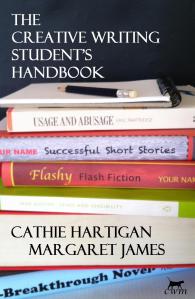
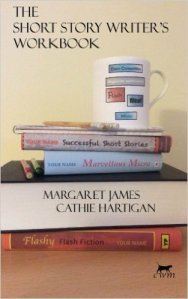
When we wrote The Creative Writing Student’s Handbook, we wrote alternate chapters and then we swapped files and edited these chapters. It all seemed to work well! But when we wrote The Short Story Writer’s Workbook, Cathie wrote the whole of the first draft and then I did a heavy edit, making the second draft twice as long as the first. This approach worked very well, too. We find our non-fiction writing styles are very similar. A few months down the line, we often can’t remember who wrote what.

Will there be more in this series?

We enjoy working together so we intend to produce a handbook for novelists and we have other projects in the pipeline, too. We hope to produce some more anthologies featuring either our own work or that of other people.

You are both very experienced tutors so I would like to ask:-

Margaret, what three tips would you give to an aspiring unpublished novel writer?

  1. Plan your story and know roughly how you want it to end. But don’t be too rigid in your planning. Be prepared for the story to change and grow while you write.
  2. Your reader should want to spend time with your characters. So don’t write about people you don’t actually like or don’t find very interesting yourself. Your characters ought to be your friends.
  3. A novel is a big project. So whenever you get tired or disenchanted – which you almost certainly will – take some time out to reflect and to think about how and where you want this story to go.

Cathie, what three tips would you give to an aspiring unpublished writer of short stories?

  1. Use vivid and specific details that tell a lot, rather than generalisations. If a character puts up an umbrella, we don’t need to be told it’s raining.
  2. How much time you have to set up your story depends on the number of words that have been stipulated by the competition or magazine. Your story needs to develop and reach its resolution without a sudden rush at the end. Once finished, check the balance of set up, development and resolution, then be prepared to cut ruthlessly at the beginning.
  3. Use dialogue and gesture to reveal character rather than word-hungry narrative.

The Exeter Novel Prize is going from strength to strength, what inspired this, and how do you see it evolving?

Margaret: The Exeter Novel Prize came into being because it filled a gap in the world of novel-writing competitions. It’s open to previously published and also self-published novelists. There is more information here: http://www.creativewritingmatters.co.uk/2015-exeter-novel-prize.html

Will there be a CreativeWritingMatters short story competition in 2016? If so, what advice would you give to entrants?

CreativeWritingMatters runs lots of competitions for both short and longer fiction, so here is some general advice.

  • Read the rules.
  • Abide by the rules.
  • Start your story as something interesting happens.
  • Round off your story with a satisfying ending.
Read Making the Grade by Cathie Hartigan
Read Cathie Hartigan’s story, Making the Grade!

What is next for Cathie and Margaret, jointly or independently?

Margaret: I’m about to start the second draft of a novel and to plan a new non-fiction project that has nothing to do with writing.

Cathie: My debut novel, Secret of the Song will be out later this year and there will also be another collection of stories by the three of us at CreativeWritingMatters. Right now, the characters in my next novel are twitching for me to get on with it.

Thank you for taking the time to share your experience and advice with my readers.

Thank you for inviting us! It’s been great to talk to you.

An Interview with Michael Fowler

This month’s guest is a man who has spent his life dealing with crime and now enjoys creating his own – crime writer and artist, Michael Fowler.
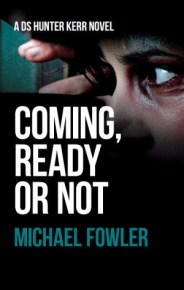
Welcome to my blog, Michael.

Your police career involved a lot of undercover work. Did you sometimes feel that you were in an acting job, however one that had a realistic edge?

Acting is a very good phrase, because it was just that, especially when I was in the Drug Squad. I underwent undercover training by experienced undercover officers. The script they gave me involved learning the ‘language of the street’ together with acting ability on how to buy drugs and set up ‘deals’. My props were a changed appearance – I grew my hair long, wore an earring and changed my dress style. My stage was wherever the drug fraternity hung out. The more time I spent with them the more polished my acting ability improved.

That period of policing was up there as my best, despite being nerve-jangling at times.

When did you discover the desire to become an author?

I never had a desire to be an author. I always wanted to be an artist. My policing and writing career have come by default. I’ll expand on my writing career in a later question.

Were you always drawn to crime?

I’ve been an avid reader since the age of eight. In my early teens I started reading adult books of the Science Fiction and Horror genre. An uncle, who was also well read, introduced me to crime. I initially read cosy crime written by Agatha Christie, Dorothy L. Sayers and Dashiel Hammet, and then I discovered the 87th Precinct series by Ed McBain and I was hooked on police procedurals.

Your first published works were about Mexborough. Have you always had an interest in social history?

The publication of my childhood and teenage nostalgic accounts of growing up in Mexborough came by good fortune. In the late 1980’s I discovered writing groups and began composing stories. My childhood adventures in the 1960’s, within a mining community, were the first things I wrote about. The writing groups were run by the WEA and one of my tutors suggested I approach a local publisher who published this type of work. In 1994 I met the editor at Wharnecliffe Press (Pen & Sword books), pitched my accounts and walked out with my first writing contract. They published three of my books, but I never thought it would progress beyond that because policing and two growing sons took up my life at that time.

Could you tell us about your artwork and what is your favourite medium to use as an artist?

As I have already alluded to painting was my first love. My earliest artistic recollection was sitting at the table drawing with my mum, and all through schooling I pursued art as my passion. My last art teacher introduced me to oil paints and I never looked back. At the age of 16 I passed an interview to attend art college only to return home to be told by my father that he couldn’t afford to support me and so I joined the police cadets. I did paint regularly, all through my policing career – it was a great stress reliever, and I also sold my work. When I retired in 2006, I did so to paint. I rented a studio and painted daily. My work was accepted at major exhibitions at The Mall Galleries, London, and I exhibited with a number of prestigious art galleries. In 2009 I was awarded Professional Artist of the Year. Then came the fall-out from the bank crash. Three of the galleries I painted for closed down and people stopped buying artwork. I knew I had to do something other than paint every day and so I returned to writing and going back to writing groups. I focussed on writing police procedurals and in 2011 I got a publishing contract for my first crime novel. Now I’m hooked on writing. I still paint occasionally, and I tutor an art group once a work, to keep my hand in.

What has been the most important lesson you have learnt as a writer?

That like a good wine you improve over time. I am now on book number seven and I can see a vast improvement from my first book, especially the grammar. A lot of that is thanks to the publishing editor’s skills. I have learned such a lot from the edited proofs that have come back to me prior to publication.

Where did inspiration for DS Hunter Kerr and DS Scarlett Macey come from: reality or fiction?

Hunter Kerr is 95% me and 5% my alter ego, even some of the events he is involved in are based on jobs I have worked on.

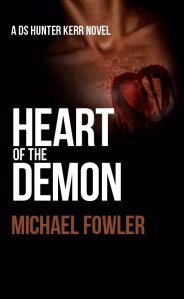
Scarlett Macey is a creation. I wanted to test myself developing her and it’s been a very interesting and enjoyable experience. She gets her first outing this September in ‘Scream, You Die‘ and I’m hoping she’s well received.

What next for Michael Fowler?

My first crime novel was released three years ago. Since then I’ve added another four Hunter Kerr books and I’m amazed at how my readership has grown. It’s been a wonderful experience that I want to build on. My policing career developed my discipline and drive and it would be fair to say that I am striving to be a widely recognised crime author.

More from Michael

An Interview with Rosemary Kind

I am delighted to welcome author Rosemary Kind, who is the founder of Alfie Dog, a publisher of short fiction based in the beautiful county of North Yorkshire.

Welcome, Rosemary.

What was the deciding factor that motivated you to switch from a successful business career to becoming a full time author?

My husband had the opportunity to move to work in Belgium and I said ‘Why not?’ Because we were going back and forth every fortnight to see my stepchildren an ordinary career wasn’t going to work, so as I’d proved everything to myself that I needed to in a traditional working environment it was the perfect time to follow my heart. I’ve always written, but in my spare time. I knew I’d regret it if I never found out if I could do more.

Please tell us about your published work and what inspires you?

I write in a number of genres. Inspiration can come from the strangest places. My first published book (leaving aside ‘Negotiation Skills for Lawyers’ which was commissioned), was a humorous guide to travelling on the London Underground ‘Lovers Take Up Less Space’. I wrote most of the ideas as therapy when I was working in London. ‘Alfie’s Diary’ started as a daily blog in January 2006 when our first dog moved in. I’d been in Belgium for a couple of months and was writing mainly non-fiction, business articles, company newsletters etc. I wanted to write fiction, but it felt like a big step. Writing Alfie’s view of the world was a way to make myself write something every day. I originally intended to write it for a year of two, but nine years on it’s still growing and has spun off into several other projects, not least because he set up his own political party The Pet Dogs Democratic Party.

Inspiration for my novels is more interesting. ‘The Appearance of Truth’ came out of a writing group project to write 300 words on ‘verisimilitude’. Once I’d looked it up in the dictionary I started mulling it over. I was researching my own family tree and had ordered a birth certificate. It occurred to me that it would be quite possible to pass a birth certificate off as belonging to someone that it really didn’t relate to and it all went from there. Lisa was given the birth certificate of a baby who died at 4 months old and the story is her search for who she really is and why it happened. ‘Alfie’s Woods’ came from our woodland walks. We’d just rescued a hedgehog, who was stuck in a fence, when a helicopter passed overhead. The rest of the walk was spent thinking ‘What if they were looking for the hedgehog? What if he had escaped from the woodland prison?’ ‘The Lifetracer’ was inspired by seeing an electronic countdown clock in a catalogue and finding myself thinking ‘What if it could be programmed with Time to Death and used to send a death threat?’ I have more ideas than I have time to write them.

What appeals to you most about Entelbucher Mountain Dogs and Alfie in particular?

I fell in love with the breed long before there were any in the UK. They are incredibly loyal affectionate dogs who are great with children and like nothing more than to be close to you. I also adored the way they look, not only their colouring but the fact they are such happy smiley dogs. Alfie is my pride and joy. He is a gentle giant who is everything I had ever dreamed of in a dog. We are incredibly close.

When did the inspiration for an online digital site for short fiction first occur to you?

Not only do I write short fiction as well as books, but I have many friends who are widely published in that field. The more I talked to other writers the more frustrated I felt that there were so few outlets for short stories and for earning an income from secondary rights. It was January 2012 when I wrote the business plan. I launched to authors in February and to readers in May. I was overwhelmed by the response and we had more than 100 stories by the launch and have rapidly built a library of 1700 stories. I also wanted to set up a site that gave as much back to authors as possible. The culture is very much to give support to the writing community where we can. I was amazed by how word of mouth spread the message across the globe and we very soon had writers from more than 25 countries, all writing in English.

stp version smallWhat can a reader expect to find on www.alfiedog.com?

We carry good quality stories in a wide range of genres. All submissions are reviewed and where necessary edited and only the best are accepted for publication. We want our readers to come away having had a really good read and be looking forward to coming back for more. We carry work by over 400 authors, so there really is something to suit everyone’s taste. Many of our authors are widely published, but we enjoy introducing high quality work from new writers too. Unlike most sites, we carry the stories in a range of formats to suit all types of ereader or to print. We also publish a range of books in both electronic and paper formats. They are mainly short story collections, but we do carry some novels as well.

Of course for writers, our International Short Story Competition may also be of interest. The closing date is the end of September so there is plenty of time to take part. First prize is £200 and book publication.


How do you see www.alfiedog.com developing in future?
PDDP cover final small

The site is already one of the biggest short story publishers in the world, but hopefully it will be the site on everyone’s list when they talk about short stories. I want it to be ‘THE’ place that people go to when they are looking for quality short fiction.

What is next for Rosemary?

I’m writing another novel at the moment. This one was inspired by a chance comment in a meeting. Someone made reference to the ‘Orphan Train’ movement in America in the late 1800s and I had to go and find out more. As soon as I did, I was hooked on a story idea and the lives of three Irish immigrant orphans, fighting for survival, was born. It is my first full historical fiction writing and the research has been fascinating. It even made me get on a plane for the first time in over seven years, but that’s another story!

More from Rosemary