Writing: In the beginning!

For the Love of Writing

From years of writing experience I have discovered that one aspect that should never be undervalued is how the process of writing will affect your health. So before we actually discuss what is going to be written or how in future blog posts – be it a short story, novella, or novel – you need to think a bit about the practicalities.
Writing even a few thousand words requires sitting down for hours and this does, or can, impact on your health mainly because of bad posture. I am not medically qualified to give specific advice but I find considering the following helps.

  • Investing in a good chair that can be adjusted for height and back support. I have written whilst perched on a chair in a shed, the kitchen, or whilst travelling. This is fine for short bursts.
  • Try not to cross your legs. I am terrible at taking this advice as the more absorbed I am in what I am doing my legs will automatically gravitate under my chair. However, it is better not to do this.
  • Take breaks. When a plot is working well and you are in there with your protagonist, time can slip away. RSI is no joke, your body is not a machine, shoulders get hunched and tense. So change posture. Stand, walk, literally take a break and do a completely different set of activities that are the opposite of the static writing activity.
  • Give your eyes a break from the screen too.
    Feed the brain and body. I have lost track of how many hot drinks I have made only for them to be left half full (or half empty! ) and cold, because I was too involved in what I was doing.
  • You want to enjoy the whole process preferably when you’re sitting comfortably.

What tips work for you?


Alfiedog’s guest this week!

colour with books

I would like to thank Rosemary Kind at Alfiedog for making me her featured author in Christmas week.

I would also like to thank all my readers for their support over the last year as I have become more familiar with social media and continued to upload more titles.

I wish everyone a happy, healthy and successful 2016!

An interview with Imogen Howson

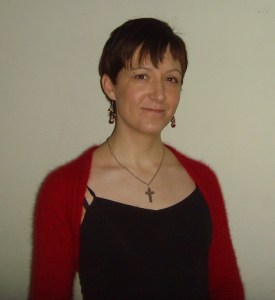
imogenhowsonauthorphoto2I would like to welcome award winning YA/adult author, Imogen Howson as my guest. I was intrigued by her story when she spoke at the RNA’s September meeting at The Royal Over-Seas League club, London.

Thanks for giving up some of your precious time to answer my questions.

You were the winner in the young adult category of the Romantic Novel of the Year Award, 2014, and previously of the Elizabeth Goudge Award, 2008, but where did your love of fiction and the desire to write your own begin?

I was really slow learning to read–I remember all the adults around me having despairing conversations about it! Finally I discovered Enid Blyton’s Famous Five books, and, faced with something I actually wanted to read, I just took off. I started telling myself my own stories around the same time, and later on (when I learned to write, another slow process), I started writing them down.

This slideshow requires JavaScript.

Your YA Sci-Fi titles ‘Linked’ and its sequel ‘Unravel’ are based on a high stakes chase for the survival of telepathic twins. What sparked the idea for this series?

I read a real-life article in a teen magazine belonging to my daughters about twins who had a kind of psychic link. One of them was in a car accident and the other knew about it even though she was miles away at home. I said to my daughters that I wanted to write about telepathic twins, so I did. And I made it science fiction just so I could have spaceships and cool futuristic techie gadgets.

By contrast your titles ‘Heart of the Volcano’ and ‘Blood of the Volcano’ are adult fantasy romance. Do you like to have different projects and genres on the go at any one time?

I started off in adult fantasy, because I love reading it, but I realized that I wanted to write about younger characters than the romance market generally looks for. My ideal heroine is 17, which is a bit too young for romance in general. In terms of different projects, I don’t like having them, to be honest, because I get confused and distracted, but sometimes this great new idea lands in your head and you just have to follow it up, even if you’re halfway through another book!

I greatly value the RNA’s New Writers Scheme, as organiser what advice would you pass on to as yet unpublished writers?

Keep writing, and keep reading (especially in the market you’re interested in publishing in). And don’t be discouraged by the almost-inevitable rejections! It only takes one editor to love your book, and I believe if you keep working to get better, and keep trying, you will find that editor. (Or sometimes, such is the weird nature of publishing, several editors all at once, but that’s a fun dilemma to have!)

How organised are you in your writing routine?

I have to be extremely organised otherwise I get exactly nothing done! The morning is my writing (and coffee!) time; in the afternoon I do less mentally taxing stuff, like housework, and organising spreadsheets for my “day job”, my work as a freelance editorial assistant for Samhain Publishing.

What do you do to relax away from the computer?

Running and baking. Running is great, because it’s so different from sitting at the computer using nothing but my brain and fingers, and because of the fresh air. Baking is for when I want to do something creative, but not as hugely creative as writing. Also, cookies always turn out well and people say nice things about them. Writing is a much trickier process!

What is next for Imogen Howson?

Right now, I’m writing on a YA contemporary, plus a YA horror book that I’m really enjoying working on! Plus a top-secret project that, if it works out, will be really fun too.

Thanks for taking the time to share your writing news and good luck with the top-secret project – sounds intriguing!


Potting Sheds and Pondering

308.JPG

In a very picturesque North Yorkshire village called Hutton-le-hole there is an amazing museum of rural life.
http://www.ryedalefolkmuseum.co.uk/

The buildings link the lifestyle of people in the region throughout the centuries. Folklore, husbandry, social history and crafts, such as: rope making, wheel hooping, saddlery, woodturning and hayrake making are demonstrated to name but a few.

The atmospheric buildings span history from Iron Age to the 1950’s showing the way of life of their inhabitants. It is a great place to take children to show them how we arrived at the lifestyle we have today. By going back to basics they, and adults, can see how labour intensive surviving day to day was. Food had to be grown, harvested or killed and prepared. Clothes had to be made from cloth that was woven or leather that was skinned and tanned. Food was prepared in advance of harsher seasons and had to be safely stored.

Before the Internet and our technological ways information was rarer and precious. News travelled slowly and superstition was rife. Ignorance was not bliss when it came to accusing people out of fear. However, people knew far more about the land and what it gave us that we could use for survival than we generally know today.

I find history fascinating. I love seeing a snippet of yesteryear within various different ages. I imagine characters and the adventures they could have had, set within my favourite periods in time. However, I am rarely nostalgic. When asked I have to say that I would never want to live in a time before antibiotics, washing machines, cars and computers. I love learning from history, but one thing I have learnt is that life was harsh but unfortunately wars still happen. Some lessons are never learnt it seems.

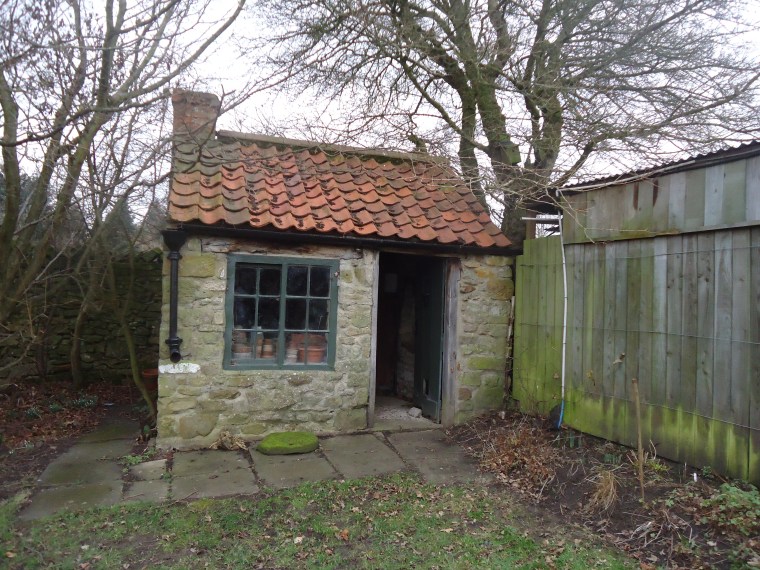
On a lighter note, I found the medieval hall, cottages and herb garden fascinating, but it was the simple potting shed that inspired a tranquil setting for a scene from Thomas’ father’s recovery in Stolen Treasure.

Extract from Stolen Treasure:

Thomas put down the bag and stepped into the half-light inside.
His father was sitting, just as he used to, on a stool with a chisel in one hand and a small mallet in the other as he worked at fixing a broken gate latch.
“Well, doctor, put your potions aside, for I’ll take none. Say your business and leave!” He looked up. “I am not in need of a doctor of body nor mind, so you have had a wasted journey. Whoever sent you will have to be disappointed.”
Thomas slowly removed his hat and propped it on top of the discarded bag. He then stepped a pace nearer to his father. “Pa… Pa what happened? Tell me the truth of it for it is I, Tom?”
His father’s tired eyes squinted and focused on his son’s face. He looked shocked, the chisel fell from his hand, but the mallet was still raised. “Tom, is it really you?” his voice cracked with emotion as he uttered the words.
Thomas stepped forward. “Yes, it is! I sent letters…”
The man stood. “You!” he muttered as he rushed forward.
Thomas opened his arms, but the mallet was still raised high.


Congratulations, Sally!

NaNo-2015-Participant-Banner

Congratulations, Sally, for hitting the target!

Now you have reached your goal are you happy with what you have achieved as a result of your Wordathon?

I am very happy to have achieved my 50,000 words in 24 hours goal, and to have had the experience of doing it (although I don’t think I would repeat it – no-one should ever try and do just one thing for 24 hours straight!). It has also meant that I have achieved another part of my purpose in doing it, which was to reach a lot of people and tell them about my writing. At least none of my friends is going to forget that I’m a writer now… 🙂
I am even quite happy with the product of the Wordathon – you can view the raw manuscript here: https://docs.google.com/document/d/1Xswhvv4W9ty7FCXMOXmncH6T0Ge2SOlm6XE8O6SpPcc/pub. It got a lot more messy than I expected – since I disabled the backspace key (which you can do in ‘Typewriter mode’ in the Write or Die program I was using), the typos and the gibberish words and the strings of letters increased exponentially around the 18-hour mark. Even so, I think it has helped me a lot to get a fair way into my plot and start to get to know where the story feels like its going.

What have you learned from doing this challenge?

I have learnt that I can really get a long way in a day, and I hope that I won’t find goals of 3,000 words a day quite as intimidating as I used to. I have also learnt in the aftermath that it took about three days for my brain to stop feeling tired (even with plenty of sleep), and my will-power to get anything done has taken even longer to return! In the end, doing something extreme and pushing my limits is fun (as long as it is a rare occurrence), but I can’t expect it to have a direct effect on my everyday habits or anything.

What is next for Sally?

Next – there is still the rest of the Newbie to Novelist challenge to complete! I set this up in two parts: first, the Wordathon, but second and more importantly, I want to get the rest of my first draft at least roughly sketched out and written by the end of the month. Since I just finished plotting the skeleton of the rest of the story yesterday, I think I have only done about a quarter of the plot so far… so in theory, I could be looking at about another 150,000 words by the 30th November! I doubt I’ll manage that, but I still need to get writing again, and I am still encouraging people to follow me and sponsor me. My website is http://www.sallybridgewater.com/blog.


Adventure, Mystery and Love

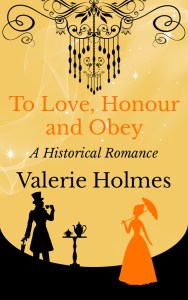
To Love, Honour and Obey!

Available to buy on Amazon.
Australia | Brazil | Canada | France | Germany | India | Italy | Japan | Mexico | Netherlands | Spain | United States of America | United Kingdom

To Love Honour And Obey

1805

Six years ago, Willoughby Rossington’s father was murdered while searching for the kingpin of a smuggling and spy ring. Taken under the wing of his uncle, who is running a counter-intelligence operation against Napoleon’s spies, Willoughby is assigned to take up his father’s last mission—and, hopefully, in the process find who killed his father and bring them to justice.

He encounters a young woman, Beth, who works at the local inn. Her spark and resilience against her master’s attempts to break her will strike a chord in him and he, albeit reluctantly, takes her with him when he leaves town.

As they begin to talk, he finds out that her master is more involved in the ring that could have been thought. She overheard things and knows things about the seedy side of villages that could be helpful to him and his mission.

Though Beth hasn’t had the opportunity for education, she’s smart and quite cunning while still maintaining a child-like wonder. Even as Willoughby makes plans to set her up with a family in order to protect her from the perils of his mission, he finds himself a bit melancholy at the thought of losing her company.

Beth is having none of it. She knows she can be of help to Willoughby and isn’t going to be left behind now that she’s found someone nice. Part on purpose, partly because of fate, their two lives become intertwined as they race against the villains that plot to destroy them both.

Will they uncover the truth behind the smuggling ring and find who is responsible for Willoughby’s father’s death?

Sally Bridgewater – From Newbie to Novelist!

I am delighted to be interviewing a ‘Newbie’ writer, Sally Bridgewater, this month. November is the month when many eager writers embark on the challenge of creating 50,000 words in thirty days as they join the NaNoWriMo challenge. Sally has taken this to the extreme and decided to try writing them in one day. 


Welcome, Sally!

Where, when and why did you develop the idea of attempting this personal challenge of moving from ‘Newbie to novelist’ within 24 hours?

Since graduating a couple of years ago I have supposedly been focusing on becoming an author, but distractions (like bills) keep getting in the way. I was getting quite frustrated at not having finished a story yet (apart from one short-ish one here), and never finishing any stage of my goal was really drain my enthusiasm. So actually my primary purpose is to go from Newbie to Novelist in 30 days, and get to ‘The End’ no matter how many words it takes. I added the extra #50Kinaday Wordathon part of the challenge when I stumbled across this podcast from Matt Ahlschlager back in March or April sometime. He makes it sound simple, even quite easy to take on NaNo in a day. I remember I was walking the dog down by our local canal while listening to it, and I could feel the idea of doing it myself getting lodged in my mind. I think I want to do it mainly because it is a neat way to make sure I get a lot of words down on my way to the full first draft. Also, I like turning my life into ‘events’ that I can share with my friends and family, and this one gets particularly fun reactions from people.

This is the equivalent of a writing marathon. How have you prepared for the event physically and for your novel?

Physically speaking, I am just trying to keep myself well and avoid getting too stressed out about it. I could do better though – I often stay up late, I don’t eat enough fruit and I don’t do much exercise, so avoiding the autumn sniffles so far has been mostly luck.
I have been ‘in training’ of a sort over the last few days by trying out a standing desk (I made it myself with two boxes under my laptop and a pile of Writing Magazines under my keyboard). It will definitely help me avoid bad posture if I’m not sitting for the whole day.
Of course, I have also become quite obsessed with my typing speed, and whether I can concentrate for twenty-four hours straight. I don’t know how much direct practice I can do for those things though; I am just going to wait and see. At least I have past experience of working fast when I was writing weekly last-minute essays during my degree.
I have been busy (some might say distracted) preparing the online infrastructure, such as my website and my Facebook page, in time for November. Because of this I have not yet started the plotting for my novel, and at the time of writing there are only 7 days left before it all starts! I have a colleague at work called Tina who has started chanting ‘Plot! Plot! Plot!’ whenever she sees me – I think she’s quite concerned… I work quite well under pressure though so I’m hoping one week is long enough to plan a novel, right?

Have you ever completed the NaNoWriMo challenge before?

Yes, I have ‘won’ (got to the 50,000 word mark) NaNoWriMo for the last two years. I also did Camp NaNoWriMo in July (it is the same concept but less difficult as you can set your own wordcount goal). It really helped me to start writing again. I had heard about it during my degree but didn’t have time to try it, so I promised myself I would do it when I graduated. Both years I worked on a novel about a deaf girl and a Romani boy (they are both prodigies: the boy for music and the girl for mazes). I will finish that novel one day, but I wanted to go with something fresh for this year’s challenge.
The first year I did NaNoWriMo, November 2013, I got as involved as I could with the community, looking around the forums, visiting my local ‘Come Write In’ group each Saturday, and signing up to have a NaNo veteran mentor. I happened to get one of the kindest people on the planet as my mentor, I am sure of it – they even posted me a handmade care package from America, including knitted fingerless gloves and a little jar of coffee. For NaNoWriMo 2016, my fourth, I won’t try and do anything like this Newbie to Novelist challenge again. Instead I will put my experience to some use and take on a couple of mentees myself. My goal is to go above and beyond to encourage them, like my mentor did.

You obviously love writing and reading. Which is your favourite genre to work in?

I’m not sure I know what my favourite genre is to write in, as I have barely started exploring different ones. The story I worked on before for NaNo was a historical adventure set in a slightly-alternative French Revolution; the one I am planning now is science fiction, set in the far future on a different planet. I don’t actually feel qualified to tackle either of those genres, and they are not what I mostly read – they just came out of whatever ideas I had at the time.
I read very widely and in fact I would say that I am addicted to novels. Many a time I read for hours when I should be doing other things, like sleeping. Looking at my bookshelf I can see a lot of fantasy in particular – Game of Thrones, Jonathan Strange and Mr Norrell by Susanna Clarke – and some steampunk sci-fi (the Mortal Engines series by Philip Reeve). There’s a lot of my old favourites from growing up. I don’t think I am particularly original in my tastes, I absolutely adore Harry Potter and I even have all the Twilight books (I know they are very problematic, but I was exactly the right age of teenage girl when they first came out…).

Where did your love of writing begin?

I definitely have my parents to thank for giving me a love of reading and writing. They put in hours of extra work with me outside of school when I was really young to teach me how to understand written language (I remember jumping from word to word on pieces of paper across the floor of the living room). They also read bedtime stories every night for my whole childhood, and when my sister and I got ‘too old’ for such things, we started reading books aloud to our parents instead, or as a family. I still do read aloud with my boyfriend – it is a really good way of sharing a story with someone. I feel that the best characters from those early bedtime stories have stayed with me. For instance, to this day I consider Matilda from Roald Dahl to be a role model (and Tim Minchin’s adaptation as a musical is brilliant too).
Wanting to be an illustrator and an author are the earliest ambitions I can remember. I wrote a lot of story fragments from being very young (some got saved from our ancient PC and I still have them). When I was 12 my sister turned 10 years’ old and I wrote her a toy-sized trilogy about her stuffed Panda going on an adventure with our hamster across the globe. And when I was in high school and not having a great time (some bullying and so on), I would sometimes spend my break times scribbling in a notebook in the toilets. In the only detention I ever had (I was what one calls a ‘swot’) the headmaster set us to writing a story as punishment, and I couldn’t believe I was being told I could sit and just do my favourite thing for an hour. I was very busy practising my musical instruments usually though (I play violin and piano) so I didn’t make time for it properly until NaNoWriMo 2013.

How supportive are people being of your challenge?

I almost feel a bit silly telling people, because everybody does a double-take when I say how many words I am aiming to write in my Wordathon. Then they usually doubt whether such a thing is even possible, and finally express at least some degree of concern about me undertaking such a thing. I am glad I am getting people interested, but I didn’t want to alarm anyone!
I have had some lovely responses when I have asked for help with the project. I still haven’t done that enough though – apparently I just don’t have a knack for delegation. So if anyone can see a way that they could get involved, please don’t hesitate to get in touch. My e-mail address is new2nov@gmail.com.

What is next for Sally both with your writing and in your career?

Well, after getting this first draft under my belt, I want to leave it for a bit and then come back to the manuscript with fresh eyes in 2016 and edit it. I guess in the long run I want to find myself an agent and look at getting published, but I’m not expecting my first novel to be good enough to do that.
In the meantime, I won’t just be waiting around idly for luck and traditional publishing methods to find me. I am hoping to build up support for my writing by using the crowd-funding platform Patreon. I am still figuring out how to run my own blog, so it will take me a while to discover the best way to self-publish, but if I go that route then I want to make a proper go of it.
I also have plans for my parallel career dream: setting up a social enterprise company to build a website of tools and resources to help people use their brains better. I call it ‘Think Sharp.’ It is going to be my attempt at improving the world, but I will only really have time to think about getting started on it in the New Year after I’ve done this!

Thank you for taking the time to share your ambitions with me. I wish you every success in achieving your goal on the day, but more than that in your literary ambitions over a longer and perhaps more sustainable writing career.

Thank you very much for having me on your blog, Val. I really appreciate it.

An Interview with Richard Lee

I am delighted to welcome the chairman of The Historical Novel Society, Richard Lee, as this month’s guest. Richard founded the organisation in 1997 and it is now an international success.

RichardLeeSmallWhen you decided to found an organisation devoted to historical fiction, did you ever envisage it growing into such an amazing international body?

No! I did not know how it would be possible to be international, so I only envisaged a UK membership – though always celebrating international authors. We actually had US members sign up from the very beginning, which caused headaches about currency transactions and postage costs. This made us ‘ready’ for when internet links began to take off – and now we are much more international than British.

What have been the major developments/changes that you have seen in historical fiction since the HNS was founded?

In commercial historical fiction many things have changed. The ‘discovery’ of the significance of women’s lives has transformed the way that, for example, royalty and celebrity is written about. The success of ‘Sharpe’ and ‘Gladiator’ created a genre of military and epic historical fiction. We have also been blessed by literary authors pushing the boundaries in various ways – Michel Faber reconceiving the Victorian authorial viewpoint, many authors revisiting Colonial and World War narratives, Hilary Mantel turning accepted views of Tudor power and honour on their head.

How has historical fiction been influenced by the major changes within publishing in the last decade?

I am no expert here. Traditional publishing still knows how to publish the big books. The Miniaturist and Elizabeth is Missing we both debuts that had multiple agents interested, sold well into many territories, won prizes and became bestsellers. The main change I perceive is that there is much more opportunity for niche historicals to go it alone, often to the author’s benefit.

The HNS conferences have been hugely successful and enjoyable to attend. Could you share a few of your personal favourite highlights?

The things I remember from conferences are usually surprises from authors I admire – Louis de Bernieres, for example, saying that he wrote each chapter of Captain Corelli as a short story, and didn’t decide the running order till the end. Or Conn Iggulden emphasising just how powerful true coincidences are in history. Highlights are more likely downtime with fellow organisers or friends – meeting members off-stage and finding out more about them. It is great when it is all ‘done’!

What period of history do you have a particular interest in and why?

Early 20th C, Late Victorian, High Victorian, Regency, Georgian, Early Medieval, Saxon/Viking, Roman, Ancient Greek… But really anything!

Do you prefer reading or writing historical fiction?

Reading. I haven’t written consistently for a long while, though it remains an ambition.

How would you like to see the HNS develop in the future?

I always see the society as being about what members want – any enthusiasms that members have are for me to try to facilitate and nurture. This for a long time focussed on our magazines and reviews, which actively involve around 100 of us. Conferences are another big active area – this year over 400 will gather in Denver, and we had an inaugural conference in Sydney, Australia. The big ‘new’ areas of involvement are chapters based in different regions (mostly entirely independent) and connections through social media. Our awards are also popular (230 entries for the latest new novel prize), and we are looking into ways that the society can offer help and training to authors. Whether mainstream published or indie, all authors need help with marketing and promotion these days, we can all help each other.

What is next for Richard?

My first child was born a couple of years after I founded the society, two others followed, and the oldest is now 15. They are the real project and joy, but I still have a wish to write. I think I finally have a good idea!

More from the HNS


New book launch!

To Love, Honour and Obey

Buy on Amazon!
Australia | Brazil | Canada | France | Germany | India | Italy | Japan | Mexico | Netherlands | Spain | United States of America | United Kingdom

To Love Honour And Obey

1805

Six years ago, Willoughby Rossington’s father was murdered while searching for the kingpin of a smuggling and spy ring. Taken under the wing of his uncle, who is running a counter-intelligence operation against Napoleon’s spies, Willoughby is assigned to take up his father’s last mission—and, hopefully, in the process find who killed his father and bring them to justice.

He encounters a young woman, Beth, who works at the local inn. Her spark and resilience against her master’s attempts to break her will strike a chord in him and he, albeit reluctantly, takes her with him when he leaves town.

As they begin to talk, he finds out that her master is more involved in the ring that could have been thought. She overheard things and knows things about the seedy side of villages that could be helpful to him and his mission.

Though Beth hasn’t had the opportunity for education, she’s smart and quite cunning while still maintaining a child-like wonder. Even as Willoughby makes plans to set her up with a family in order to protect her from the perils of his mission, he finds himself a bit melancholy at the thought of losing her company.

Beth is having none of it. She knows she can be of help to Willoughby and isn’t going to be left behind now that she’s found someone nice. Part on purpose, partly because of fate, their two lives become intertwined as they race against the villains that plot to destroy them both.

Will they uncover the truth behind the smuggling ring and find who is responsible for Willoughby’s father’s death?


Majestic Moors

The North Yorkshire Moors are beautiful at this time of year. The heather is just coming into flower as a carpet of purple spread across the land. Bird lovers can see or hear red grouse, curlew and golden plover.

Meanwhile hikers and dog walkers can enjoy the open expanses as they follow the old paths trodden by the monks of old. However, as sheep roam freely over these vast areas of rare moorland, they must be kept on their leads so that both can live in harmony and mutual respect of farmer and walker.

I refer to Monks’ Trods in many of my stories such as To Love, Honour and ObeyBetrayal of Innocence. After the Norman Conquest the growth of monasteries meant that pathways across country were created to transport goods freely and to keep the monasteries and abbeys in touch. The region has many well preserved ruins: Rievaulx, Fountains, Whitby Abbeys as well as Guisborough and Mount Grace Priory to name a few. These pathways could also be used to take fish directly inland across moor to the dales, which made them excellent routes to be used by locals for the distribution of contraband in the heyday of smuggling in the late eighteenth and early nineteenth century.

Many have since become overgrown. But these flagstone paths still exist in some places. The Quaker’s Causeway, where my photos were taken, runs from Guisborough (the setting of my fictitious market town of Gorebeck) to Commondale. Part of these medieval trods can still be used in this wild and beautiful landscape.