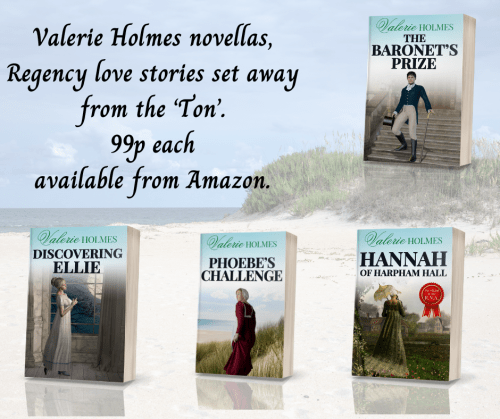
After having written fifty short novels for the library large print market, I am delighted to announce that Discovering Ellie is now available directly from Amazon in traditional large print paperback format.
Large print is defined as 16-to-18-point font size, in a plain font style, which is even spaced, and is primarily targeted at the visually impaired or elderly. Although the font can be changed when reading an eBook, not everyone can manage, have access to or use this technology. Therefore, it is important that those who need or prefer a traditional large print book still have the option to buy one.
The process of turning physical pages is something that many, who have read physical books over many years, find their brains relate to and appreciate. Research is ongoing into this.
Screens emit blue light, this can affect the eyes, fatigue and may, in those who are sensitive to them, trigger headaches.
Other people who may also benefit from reading large print are those who are dyslexic or ADHD. So, from young to old the physical book with clearer larger print can aid more people to have an enjoyable read.
There is also the increased focus on the novel as there is no other distraction of social media, advertisements, or the temptation to check emails etc. also available on some devices. A physical book offers a focused and immersive experience, which for certain groups is beneficial.
After working on a computer or studying – or socialising on a device, tired eyes can also find the large print physical book a relaxing alternative. Reading large print when travelling can also be helpful, especially when being jostled around.
With the challenges facing libraries currently, not everyone can access the large print service where so many have enjoyed these valuable resources over many years. such as provided by F. A. Thorpe Publishing.
Whatever the reason for choosing or preferring a large print book, I hope you enjoy Discovering Ellie.
Choice is important, which is why Discovering Ellie will still be available in an eBook format on Kindle.
Fifty novellas ago, I began writing love stories each wrapped around an adventure, set against the rugged beauty of the North Riding of Yorkshire. These found their home in the Commonwealth library market and from this base a further six novels have evolved.
When To Love Honour and Obey published by Sapere Books, was reviewed by a fellow author, he described it as ‘Where Poldark meets Heathcliff’ – I was delighted.
I have always loved reading both fiction and non-fiction exploring the Regency period. I enjoy the romance whether written from the perspective of the rigid society of London’s ‘Ton’, so beautifully portrayed by Georgette Heyer and more recently Julia Quinn, or the melodrama of the darker more menacing shadows of Daphne du Maurier’s Jamaica Inn.
Basically, my tastes cross genres within the period, from Jane Austen’s and the Bronte’s classics to E.V. Thompson’s Cornish sagas, or Bernard Cornwell’s action and adventure series about the rifleman who rose from the ranks, Richard Sharpe.
I have worked as a creative writing tutor for years and one piece of advice commonly given to authors starting out, is to write about what you know. That does not mean that you must know everything first – no one can, especially where murder and mayhem is involved. Without a time-travel machine, a writer today cannot depict a bygone age with total accuracy capturing the language, attitude, beliefs, habits, understanding of people centuries ago when travel and knowledge were limited.
Research is the key! Whatever the genre; romance, crime, thriller, horror, fantasy or any other preferred, the author must accrue enough knowledge beforehand to write their story and make it credible and believable to today’s readership. Jane Austen was of course writing in her own time; about the world she knew.
Research can be all encompassing when it is focussed on a topic you are enthusiastic about. In first drafts ‘info-dumps’ can creep into a manuscript, slowing the pace of the story. Which is where an editor’s skills are needed to take out the non-essential information, as the author will always know more that the reader needs to about their created ‘world’.
When I began writing I thought about the ‘write about what you know’ advice and started exploring my home area. The North Yorkshire Moors and the bay towns from Whitby to Saltburn provided a dramatic backdrop for many of my stories.
Saltburn-by-the-Sea had its own infamous ‘King of Smugglers’ John Andrew, who in 1780 was landlord of the unique Ship Inn, which nestles to this day under the shadow of the 110m high Huntcliff. My fictitious Ebton is based on Saltburn, my Coble Inn nestles in the shadow of Stangcliffe, the headland based on Huntcliff.
“We’re on Stangcliffe, the headland!” Joshua exclaimed, as realisation hit him harder than the force of the wind. He was inches away from a sheer drop to the sea below where sharp-edged rocks hid under each of the crashing waves…
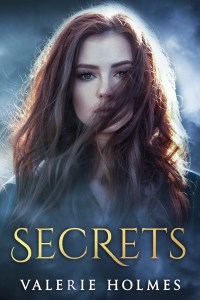
This Jurassic coastline encompasses rugged high cliffs and sweeping flat sandy bays. The wild moor inland would have been crossed by locals along small tracks for centuries by the Regency period. The dales, areas of fertile farmland and woodland, dropped down from the moors, with ancient abbeys and small villages of stone-built cottages nestled within – but cottage industries were being replaced as manufacturing developed in the growing towns causing population shifts, consequently impacting livelihoods, Secrets, due to the Industrial Revolution, a theme resonated in To Have and To Hold, Sapere Books.
Unrest was growing nationally, the Luddite movement triggered fear in Parliament that revolution would happen in England as it had in France. In Phoebe’s Challenge, brother and sister are hunted as machine-breakers – punishment was anything from a fine, to hanging or transportation to Australia.
Friends & Foes Book 2
My books are not dark, but touch on the darker side of human-nature and society, Betrayal, ultimately showing that love and justice will win the day. In real life things may not always work out that way, but in fiction – which is a form of escape from reality – in my stories at least, things do.
The world of Valerie Holmes has the tagline ‘Love the adventure’ – a sentiment that I hope my readers will share.
Beyond the book cover, plot and protagonist, which has a greater influence on your choice as a reader: the physical setting or the period in which it is set?
Please share your thoughts and preferences.
If you are interested in writing, and want to create your own fiction, but need some professional guidance or support, please contact me via my manuscript appraisal page.
I am delighted to announce that Discovering Ellie is now available in Large Print Paperback for those who cannot manage an eReader – just click here


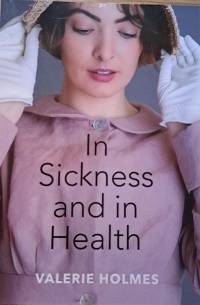
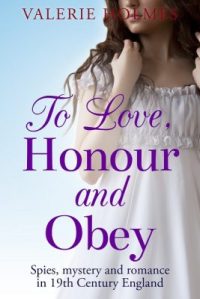
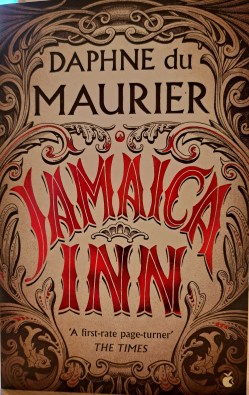 Cornish sagas, or Bernard Cornwell’s action and adventure series about the rifleman who rose from the ranks, Richard Sharpe.
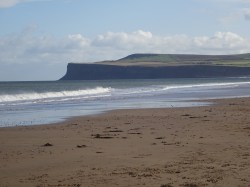 When I began writing I thought about the ‘write about what you know’ advice and started exploring my home area. The North Yorkshire Moors and the bay towns from Whitby to Saltburn provided a dramatic backdrop for many of my stories.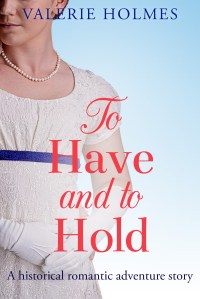
 valerie holmes, author